
Soil Bearing Capacity: Solid Foundations in PA, MD, DE, NJ
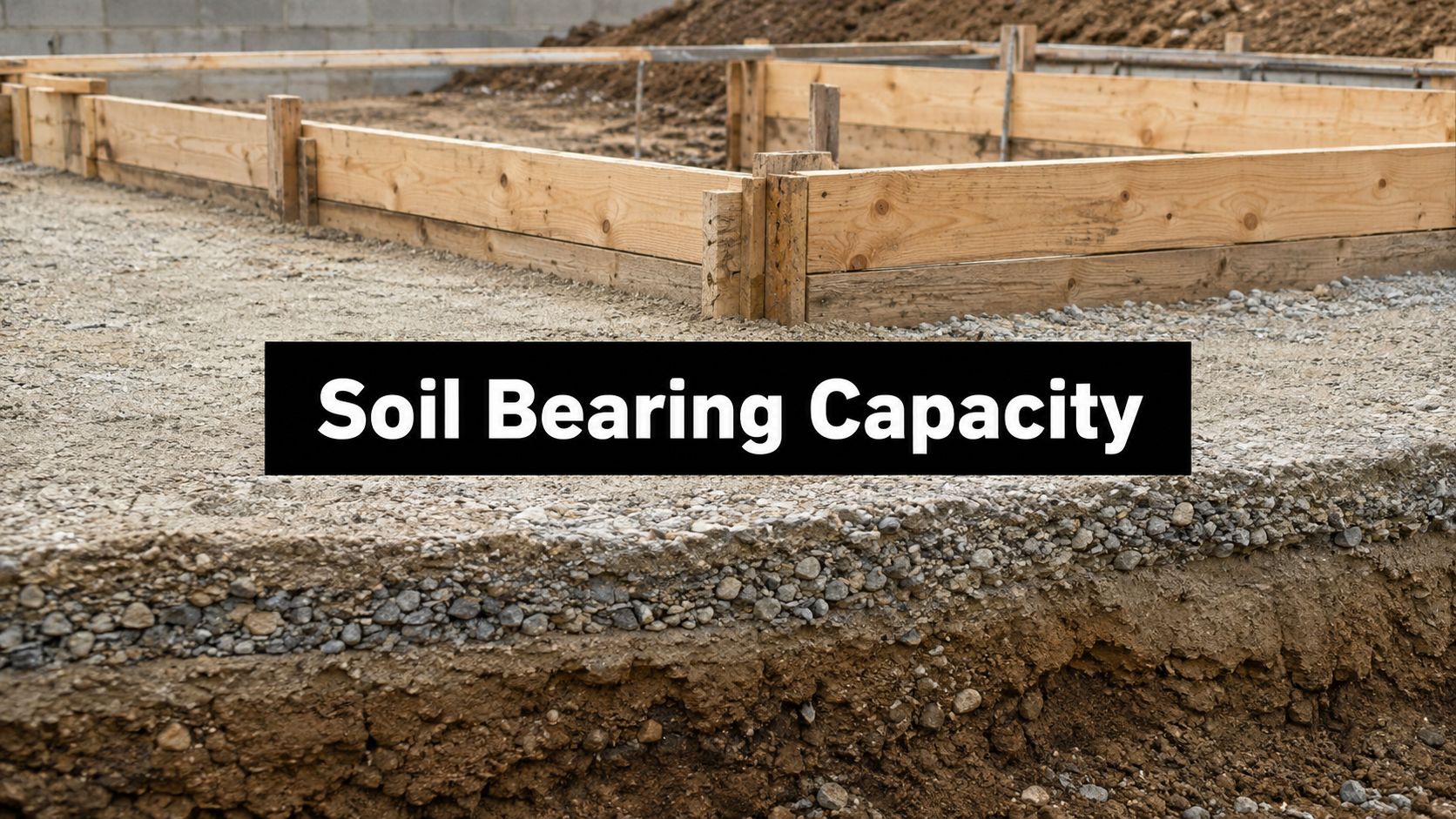
A lot of homeowners start the same way. The shed is picked out, the garage plan looks good, and the spot in the yard seems obvious. Then one practical question shows up late in the process. Can the ground support this thing without cracking, sinking, or shifting?
That question matters more than is often realized. A beautiful building on weak or poorly prepared ground can turn into a crooked door, a settled corner, or a slab that never looks right again. In Pennsylvania, Maryland, Delaware, and New Jersey, that risk gets bigger because soil conditions can change from one property to the next, and even from one season to another.
Your New Shed or Garage Needs a Solid Start
A homeowner might be planning a new barn shed in Chester County, a concrete foundation for garage use in Maryland, or a gazebo foundation closer to the Delaware coast. On paper, these all sound straightforward. Clear the area, bring in materials, and build.
In the field, it doesn't always go that way.
One backyard has firm, well-drained ground that handles a gravel shed foundation well. The next has soft topsoil, old fill, or water that lingers after rain. Both lots may look fine at a glance. Only one is ready for a lasting foundation.
The problem usually shows up after the build
Those searching for shed foundations contractors near me or garage foundation contractors near me aim to avoid the same set of headaches:
- A sinking corner: One side of the structure starts to settle and throws everything out of level.
- Cracked concrete: The slab holds at first, then stress lines show up as the base moves unevenly.
- Drainage trouble: Water collects around the pad, softens the subgrade, and weakens support over time.
- Money spent twice: The original install looked cheaper, but repairs and rebuilds cost more.
Practical rule: The structure gets the attention, but the ground decides whether the project stays straight.
That is why site work can't be treated as an afterthought. Grading, excavation depth, compaction, and drainage all affect how the finished pad performs. If you're comparing options for a shed pad, a garage slab, or a base for storage shed use, it's worth understanding the bigger picture of site preparation for construction. The general principle is simple. Good builds start before the first ton of gravel or the first concrete truck arrives.
What homeowners usually want to know
Most aren't asking for a geotechnical lecture. They want clear answers.
Can this site support a shed or garage?
Will gravel work better than concrete here?
Does the slope need to be corrected first?
Will this hold up through wet seasons and winter weather?
Those are the right questions. Soil bearing capacity is the technical term behind them, but the issue is practical. The ground beneath your project matters just as much as the structure sitting on top of it.
What Is Soil Bearing Capacity Explained Simply
Think of soil bearing capacity like the weight limit on a bookshelf. A sturdy shelf can hold a row of heavy books without bending. A weak shelf might sag, crack, or fail if you load it the same way.
The ground works the same way. Soil bearing capacity is the amount of load the soil can support safely. If the structure is too heavy for the soil, or if the load isn't spread properly, problems begin.
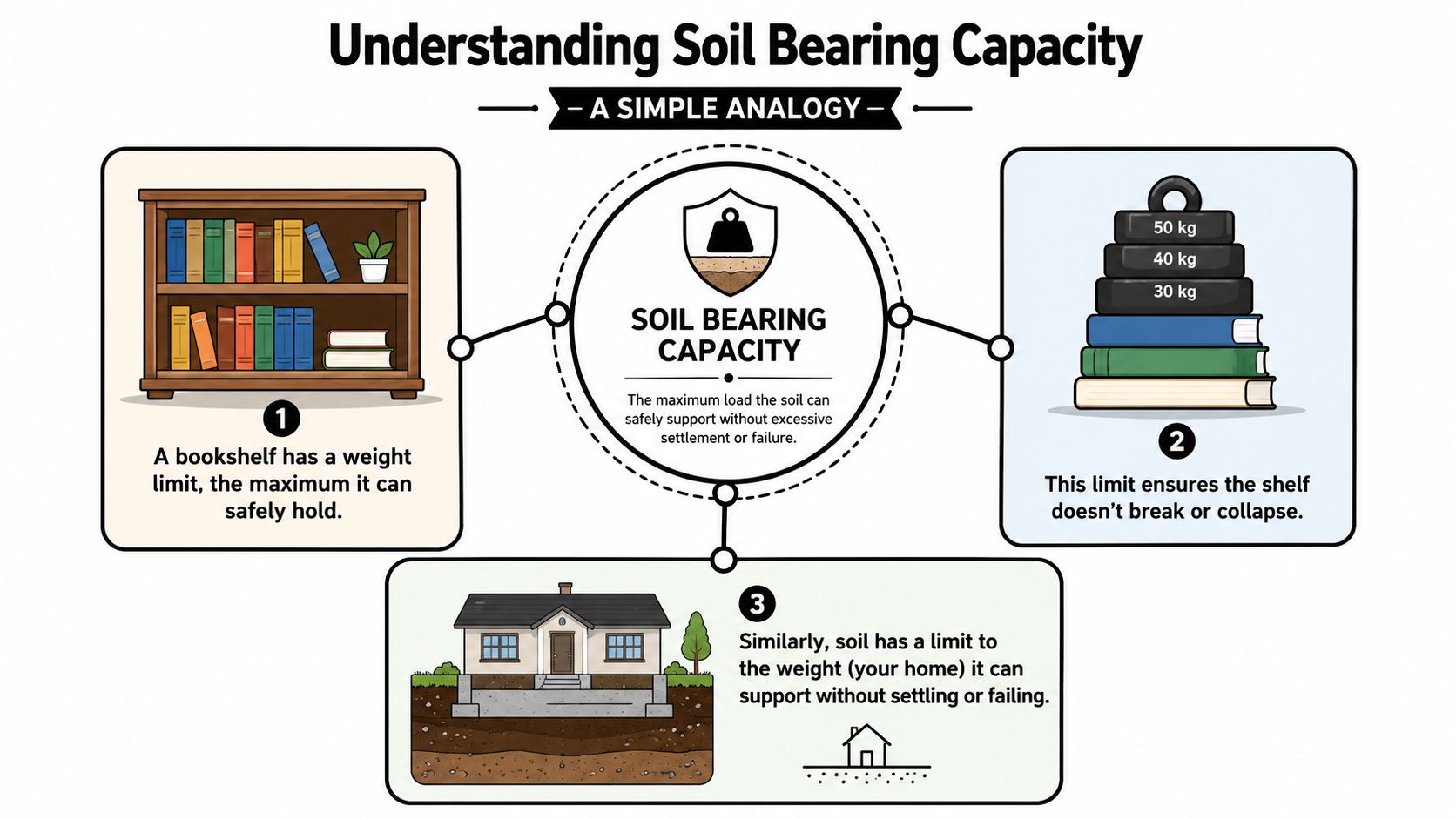
The bookshelf analogy works for a reason
A shelf doesn't have to snap in half to prove it was overloaded. It can bow first. It can loosen at one bracket. It can hold the weight unevenly.
Foundations behave in a similar way. The soil underneath may not fail in a dramatic collapse. More often, it settles, shifts, or compresses in a way that causes visible damage above.
That is why the practical question isn't just, "Will the ground hold it?" The better question is, "Will the ground hold it evenly and over time?"
For readers who prefer a visual explanation, this short video gives a useful overview of how bearing works in foundation support.
Ultimate capacity and allowable capacity are not the same
Homeowners often hear one number for soil and assume that's the whole story. It isn't.
Ultimate bearing capacity is the point where the soil reaches failure. That is not the number you want to build to. Safe construction uses allowable bearing capacity, which is the working limit used for design.
Here is the plain-English version:
- Ultimate capacity: The edge of failure.
- Allowable capacity: The safe operating range used in real projects.
- Practical takeaway: A foundation should be planned for reliable performance, not the point where the soil finally gives up.
Soil can seem strong enough in a simple conversation and still be a poor choice for a slab or shed base once drainage, slope, and consistency across the footprint are considered.
Why this matters for sheds, garages, and pads
Light residential projects often get underestimated. People assume a small garage, hot tub pad, or 10×10 storage shed doesn't need much planning because it isn't a full house foundation. But even smaller structures concentrate load in a limited area.
That means the base has to do several jobs at once:
- Carry the weight.
- Spread the load.
- Stay level.
- Resist movement when the soil gets wet, soft, or uneven.
If you're looking at cement foundations for garage projects or deciding on the best base for storage shed use, understanding bearing capacity helps you make better choices before materials are ordered. It turns an abstract engineering term into common-sense planning.
How We Determine Your Soil's Strength
A backyard can look firm on a dry afternoon and still be the wrong base for a shed, garage, or concrete pad. We sort that out before the build starts, because the soil under the footprint often decides whether a project stays simple or turns into extra excavation, stone, drainage work, or a different foundation system.
On larger or more technical jobs, an engineer may call for field testing such as SPT, CPT, or a plate load test. For many residential projects in PA, MD, DE, and NJ, the first step is a careful site assessment by a crew that knows what problem soil looks like in real life.
We check the lot the way a contractor should. We look at the grade, watch where water wants to go, expose the subgrade, and see how the material responds when it is cut, moved, and compacted. That gives homeowners a practical answer to the question that matters: can this soil support the structure you want, or will the site need work first?
What gets checked on site
A good assessment goes beyond a quick glance at the surface.
- Soil type: Gravel, sand, clay, silt, fill, and organic material each support weight differently.
- Moisture condition: Damp soil and saturated soil are two very different jobs.
- Consistency across the footprint: A strong area on one side does not solve a weak pocket under another corner.
- Slope and runoff: Water moving across or into the build area affects long-term performance.
- Compaction response: Suitable material firms up in lifts. Poor material stays soft, pumps under pressure, or shifts.
Compaction is one of the biggest dividing lines between a pad that performs and one that settles. Homeowners who want a clearer picture of that step can review this guide on soil compaction for shed pads and foundations.
Typical Allowable Soil Bearing Capacity by Soil Type
The table below is a field guide for planning. It is not a substitute for engineered design, but it helps explain why one lot may be ready for a compacted gravel pad while another needs undercutting, replacement stone, or footings taken deeper.
| Soil Type | Appearance / Feel | Typical Allowable Bearing Capacity (PSF) |
|---|---|---|
| Gravel | Coarse, drains quickly, locks together well | Varies by site condition |
| Sand | Granular, loose when dry, drains fairly well | Varies by site condition |
| Clay | Sticky when wet, hard when dry, holds moisture | Varies by site condition |
| Silt | Smooth, fine, often unstable when wet | Varies by site condition |
| Mixed fill | Inconsistent blend of materials | Varies widely by site condition |
| Organic soil | Dark, spongy, may include roots or decomposing matter | Generally among the least reliable for support |
Field note: The soil name alone does not tell you enough. Drainage, moisture, depth of good material, and compaction quality can change what the site will safely carry.
What this means for foundation decisions
Soil bearing capacity shapes budget and design decisions, extending beyond a simple engineering term. Strong, well-draining ground may support a straightforward gravel shed pad or slab preparation with limited correction. Weak, wet, or inconsistent soil often pushes the project toward more excavation, geotextile separation, imported aggregate, thicker base prep, or a foundation type that spreads loads better.
That is the part homeowners need to know early. The right answer for a small storage shed is not always the right answer for a detached garage, and a site that looks flat can still hide soft fill or buried topsoil. Catching those conditions before materials are delivered saves time, avoids rework, and helps match the foundation to the ground instead of forcing the ground to act like something it is not.
Common Soil Challenges in Pennsylvania and the Mid-Atlantic
A homeowner calls after a new shed door starts sticking six months after installation. The shed is fine. The pad underneath it has settled on one corner because the ground looked dry and firm in summer, then stayed wet through fall. That kind of problem shows up all over Pennsylvania, Maryland, Delaware, and New Jersey.
Our region gives you a little of everything. Heavy clay inland. Sandy soils closer to the coast. Old fill around homes that have been regraded, expanded, or built up over time. On many residential lots, the actual issue is not the soil type on paper. It is the weak layer hidden a few inches or a few feet below the surface.
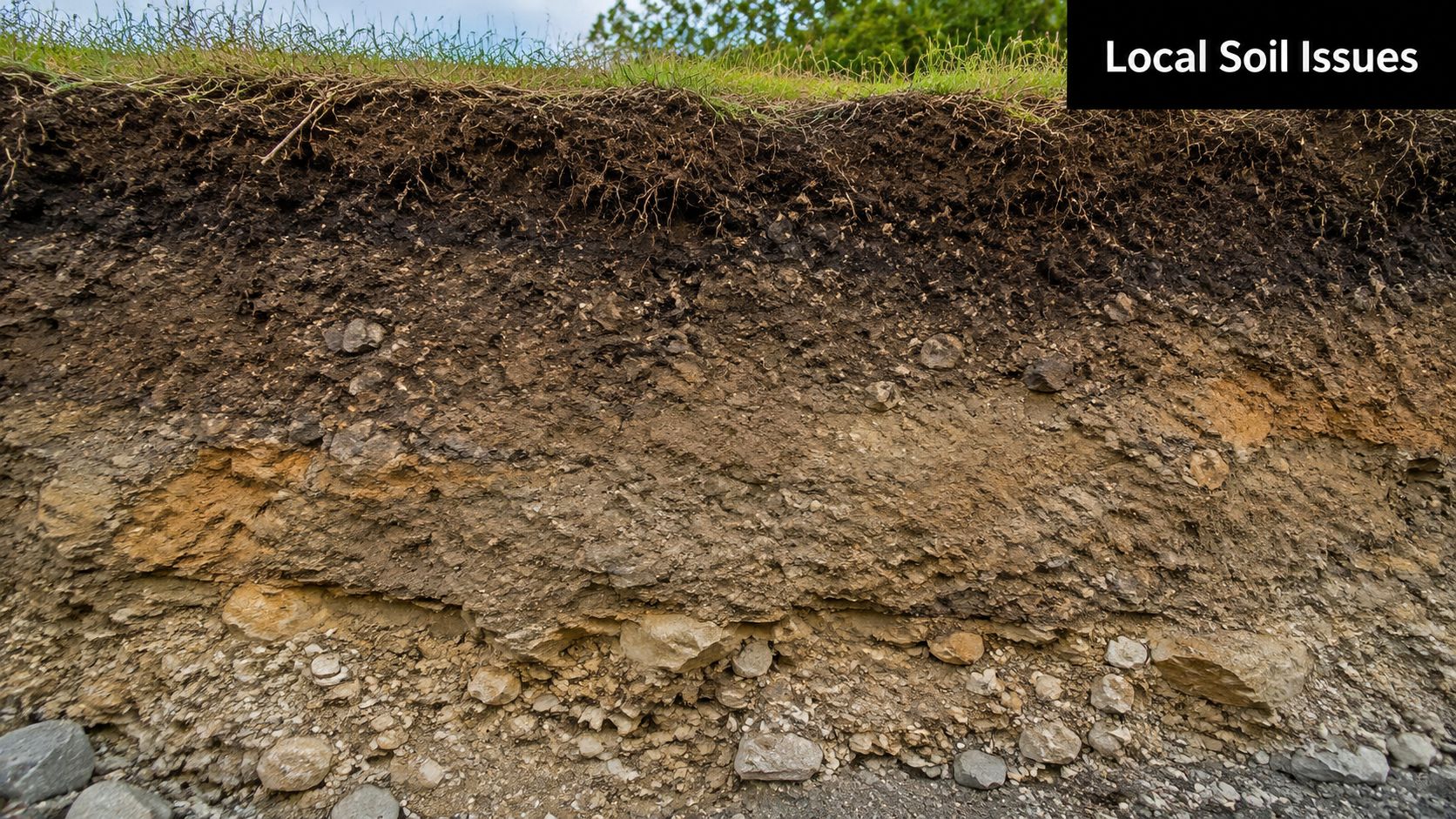
Water changes the job
In the Mid-Atlantic, moisture is often the factor that separates a straightforward pad from an expensive correction. Soil that carries a shed well during a dry stretch can soften after repeated rain, snowmelt, roof runoff, or poor yard drainage. Freeze-thaw cycles add another layer of stress by moving water in and out of the upper soil zone.
For homeowners, that matters because foundation decisions are really risk decisions. If the site stays wet, the budget often needs to cover excavation, stone, compaction, and drainage work before the structure ever arrives. Skipping that step usually costs more later.
Local problems we see repeatedly
Certain site conditions come up again and again across this service area:
- Clay-heavy sites in Pennsylvania: These soils can hold water, swell, shrink, and create seasonal movement under pads and slabs.
- Low or flat lots in Delaware and parts of Maryland: Water has nowhere to leave, so base prep and grading usually matter as much as the foundation itself.
- Sandy areas in Delaware and New Jersey: Drainage is often better, but loose sand still needs confinement and compaction or it can shift under load.
- Cut-and-fill yards throughout the region: One side of the project may sit on firm undisturbed ground while the other sits on placed fill. That difference is a common cause of uneven settlement.
- Sites with buried debris, old topsoil, or unknown fill: These are the jobs where a simple shed pad can turn into a removal and rebuild.
Cold weather matters too. Homeowners planning a slab or footing should understand Pennsylvania frost line depth and foundation planning before they choose depth, excavation limits, and material quantities.
Good drainage is part of the structural plan.
Why packaged solutions miss the real issue
Off-the-shelf block systems and prefab foundation kits are priced for easy sites. Many Mid-Atlantic lots are not easy sites. A yard can look level and still have soft topsoil, trapped water, or a transition from native ground to old fill that will not support a garage the same way it supports a small resin shed.
That is why field judgment matters. The right question is not, "What foundation is cheapest?" The right question is, "What foundation makes sense for this soil, this water pattern, and this building weight?" For some properties, that answer is a well-built gravel pad with proper excavation and compaction. For others, it means more correction up front so the finished structure stays level.
If a property has a history of fill, industrial use, or unknown buried material, homeowners may also want a property contamination survey explained before disturbing the ground. That step does not replace foundation prep, but it can prevent surprises once excavation starts.
Choosing the Right Foundation for Your Soil Type
Once the site conditions are understood, the next decision is practical. What kind of foundation makes sense for this soil and this structure? For most sheds, garages, gazebos, patios, and small outbuildings, the choice usually comes down to a properly built gravel pad, a concrete slab, or a more specialized support system where conditions demand it.
The right answer depends less on preference and more on performance.
Gravel pad versus concrete slab
A gravel shed foundation works well when drainage is a priority and the structure doesn't require a monolithic slab floor. A well-built gravel pad spreads load, drains water, and gives installers a level, compacted base. It is often a strong fit for storage sheds, playsets, some gazebos, horse barn pads, and shipping container bases.
A concrete foundation for garage use makes sense when you need a finished slab, vehicle support, anchor strength, or a more permanent floor surface. Concrete can perform very well, but only if the subgrade below it is prepared correctly. Concrete does not fix bad soil. It reflects what is underneath it.
The real goal is often settlement control
For light structures like sheds and garages, settlement performance is often more important than the ultimate failure threshold. Allowable bearing capacity is used in design because settlement limits often govern before shear failure does, and a soil can appear adequate yet still produce differential settlement if it is poorly compacted or on a slope, as explained in this foundation bearing and settlement reference.
That point matters because homeowners usually notice settlement first, not "failure" in an engineering sense. They see doors rubbing, slab cracks, puddling, and corners dropping out of level.
A pad can be strong enough on paper and still perform badly if one section settles more than the rest.
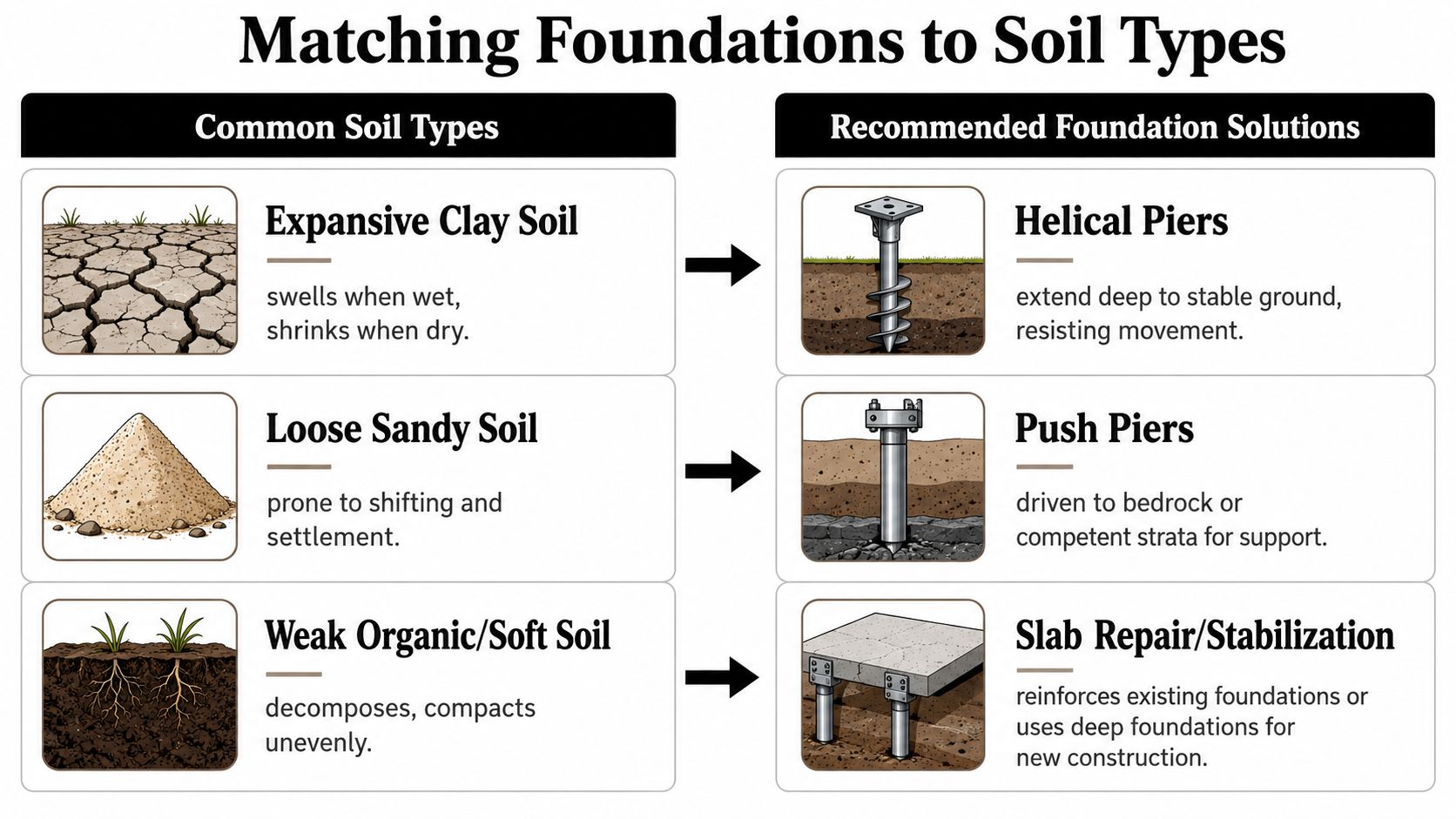
Matching common conditions to practical solutions
Here is the way many residential decisions shake out in the field:
- Well-drained, stable ground: A compacted gravel pad often performs very well for sheds, barns, and detached outbuildings.
- Garage use with a finished floor: Reinforced concrete over a properly prepared base is often the better fit.
- Clay-heavy or wet sites: Extra excavation, imported stone, and careful grading usually matter more than the surface material alone.
- Slope or inconsistent fill: The base may need rework before either gravel or concrete becomes a reliable choice.
- Soft organic zones: Unsuitable material usually has to be removed rather than built over.
Some sites also deserve a wider due-diligence review before excavation starts. If you're dealing with a property that may have a more complicated history, this overview of a property contamination survey explained is a useful background resource.
What works and what tends to fail
What works is building the foundation as a system. Excavation, grading, drainage control, compaction, edge support, and material choice all need to cooperate.
What tends to fail is trying to save money at the wrong step:
- Leaving topsoil under the pad.
- Skipping compaction because the area "feels hard enough."
- Pouring concrete over a weak base.
- Using shed foundation blocks on sloped or wet ground.
- Ignoring runoff from roofs, driveways, or neighboring grades.
That is the decision-making framework homeowners need. Don't start with the material you hope to use. Start with the soil you have.
Get Your Project Started on Solid Ground Today
If you're planning a shed foundation, garage footings and foundations, a gazebo base, or a new concrete pad anywhere in Pennsylvania, Maryland, Delaware, or New Jersey, the smartest move is to treat the ground as part of the build, not just the place where the build sits.
That approach removes most of the problems that cost homeowners time and money later. Instead of guessing, you evaluate the site, choose the right foundation type, and prepare the base correctly from the start.
A simple process keeps the project on track
For most homeowners, the path is straightforward:
- Reach out for a quote: Share the structure type, size, location, and any known site concerns.
- Review the site conditions: Grade, drainage, soil behavior, and access all affect the plan.
- Prepare the area properly: Excavation, grading, and compaction come before the final foundation install.
- Build the right base: That may be a gravel shed foundation, a reinforced slab, or another support approach suited to the property.
Why this matters for local homeowners
The Mid-Atlantic isn't forgiving when site prep gets skipped. Wet seasons, freeze-thaw conditions, clay movement, coastal sand, and sloped yards all put pressure on a foundation over time. A project that starts level should stay level. That only happens when the base is built for the actual conditions on the lot.
This is especially important for homeowners searching for shed foundations near me, gravel shed foundation contractors near me, garage foundation contractors near me, concrete foundations, or even related services like excavation near me and driveway work. These aren't just shopping terms. They reflect a need for a contractor who understands both the structure and the ground beneath it.
The bottom line
A foundation doesn't have to be oversized or overcomplicated to perform well. It has to be appropriate for the soil, the drainage, and the load.
That is the heart of soil bearing capacity in real life. Not theory. Not buzzwords. Just making sure your shed, garage, patio, or outbuilding starts on ground that can support it the way it should.
If you need a shed pad, garage slab, excavation, or concrete foundation built the right way in PA, MD, DE, or NJ, Firm Foundations can help you get started with a clear quote and a practical plan for your site. Reach out to discuss your project, and get a foundation solution that matches your soil, drainage, and long-term goals.