
Shed & Garage Foundations in Pennsylvania: The Importance of Soil Compaction
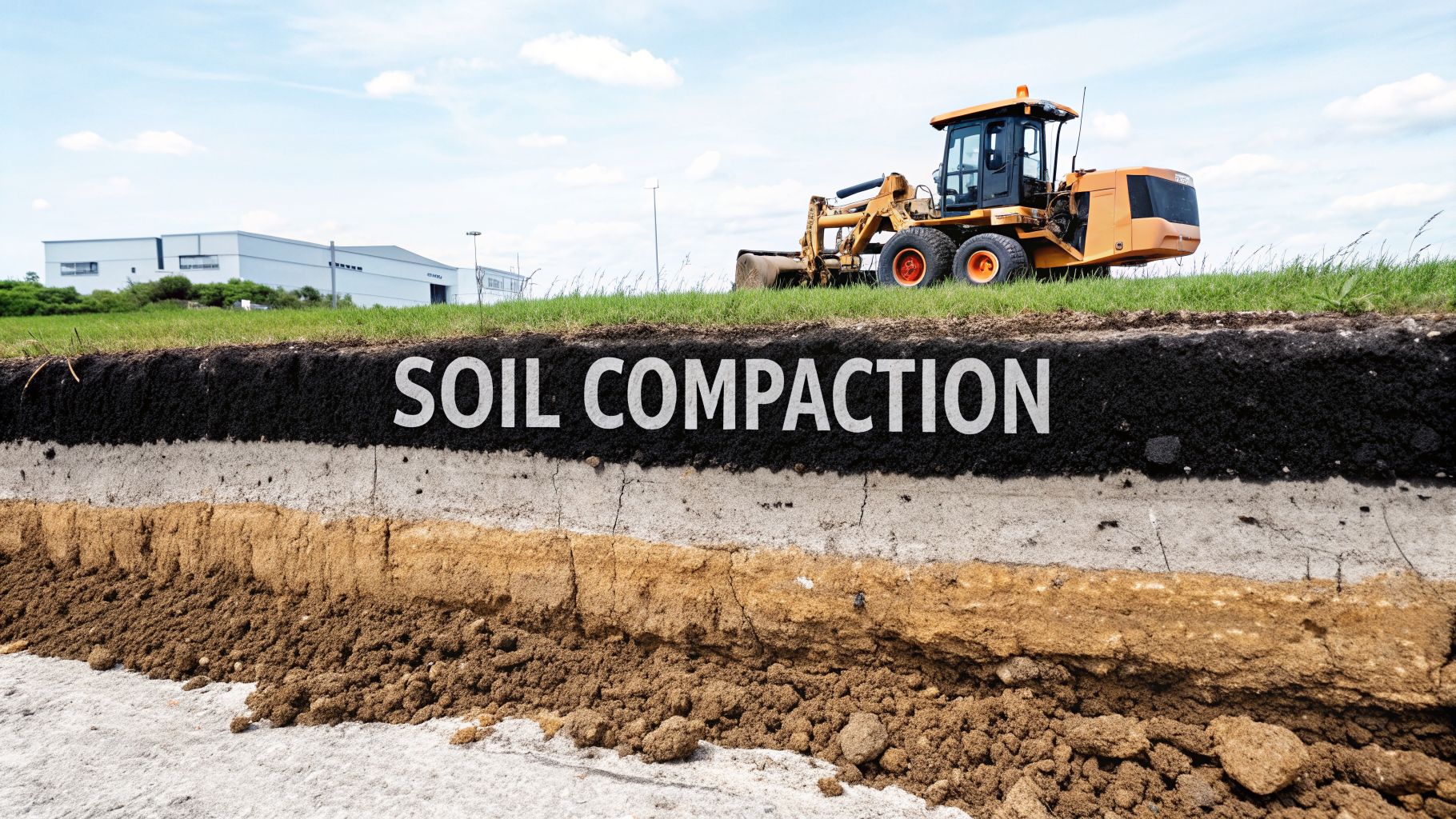
Imagine trying to build your new garage or shed on a giant, fluffy sponge. Now, picture building that same structure on a solid brick. That’s the core difference between loose, unprepared ground and properly compacted soil, and it's why our work at Firm Foundations starts from the ground up.
Soil compaction is simply the process of using mechanical pressure to densify the soil, squeezing out air pockets to create a firm, stable base for your foundation. For any homeowner in Pennsylvania planning a new shed, garage, or patio, this is arguably the most critical first step, and getting it right is non-negotiable for a project that lasts.
What Is Soil Compaction and Why It's So Important for Your PA Home
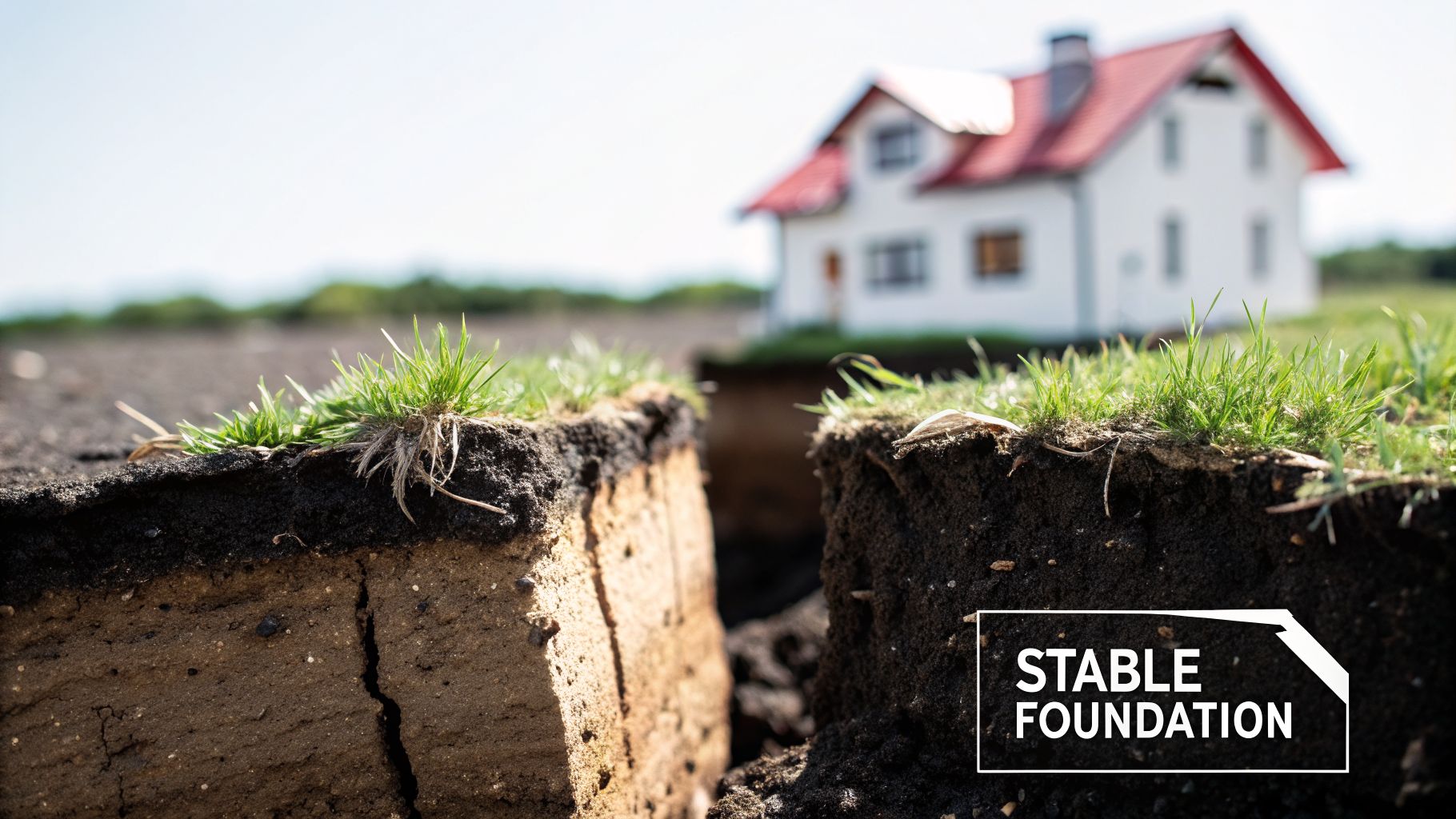
For homeowners across Pennsylvania and our service areas in Maryland, Delaware, and New Jersey, understanding soil compaction is your best defense against very expensive problems down the road. This single process is what prevents a sinking shed foundation, a hopelessly cracked patio, or an uneven garage floor.
It helps to think of the ground under your property not as a solid block, but as a mix of tiny mineral particles, water, and air. When soil is loose, it's full of air voids. These pockets of air make the ground spongy and weak, completely unreliable for supporting any real weight. That’s why hiring professional shed foundations contractors near me is so essential.
The Science of a Strong Base
At its heart, soil compaction is a straightforward concept. As your local foundation experts, we use specialized equipment to press the soil particles tightly together, forcing the air out and drastically reducing the soil's volume. This simple action fundamentally changes the ground, increasing its density, strength, and ability to carry a heavy load. It's the only way to prepare the ground for a structure you expect to last.
The data backs this up. Poor compaction is a primary culprit in structural failures, contributing to an estimated 25% of all road failures worldwide. For a homeowner, the consequences are just as serious. A poorly compacted base can lead to foundation cracks within just 5-10 years, saddling you with thousands in repairs. You can dig deeper into the data on the soil compaction equipment market to see its impact on infrastructure stability.
Here at Firm Foundations, we see this as the make-or-break phase of any foundation build. It’s the difference between a project that stands strong for a lifetime and one that starts failing almost immediately.
Uncompacted Soil vs Compacted Soil At a Glance
This quick comparison really drives home why we are so meticulous about compaction for every shed foundation or garage foundation we build. The difference is night and day.
| Attribute | Uncompacted Soil (The Problem) | Compacted Soil (The Firm Foundations Solution) |
|---|---|---|
| Stability | Spongy and unstable, prone to shifting under load. | Dense and solid, providing a firm, unmoving base. |
| Load-Bearing | Low capacity; can't support heavy structures like a garage or barn shed. | High capacity; engineered to support significant, long-term weight. |
| Water Drainage | Inconsistent; can lead to pooling water or water intrusion. | Controlled drainage, preventing frost heave and erosion. |
| Longevity | Leads to differential settlement, cracks, and structural failure over time. | Ensures a durable, long-lasting foundation that protects your investment. |
By systematically removing air voids from the soil, we create a base that can easily bear the load of your new garage, shed, or home addition for decades to come.
The goal is simple: to create a foundation base that is as strong and immovable as possible.
Whether you’re searching for shed foundations contractors near me in Pennsylvania or need an expert team for garage footings and foundations in Maryland, the entire project’s success starts right here. It’s all about building confidence from the ground up with a trusted local partner.
The Hidden Dangers of Poor Compaction for Your Property
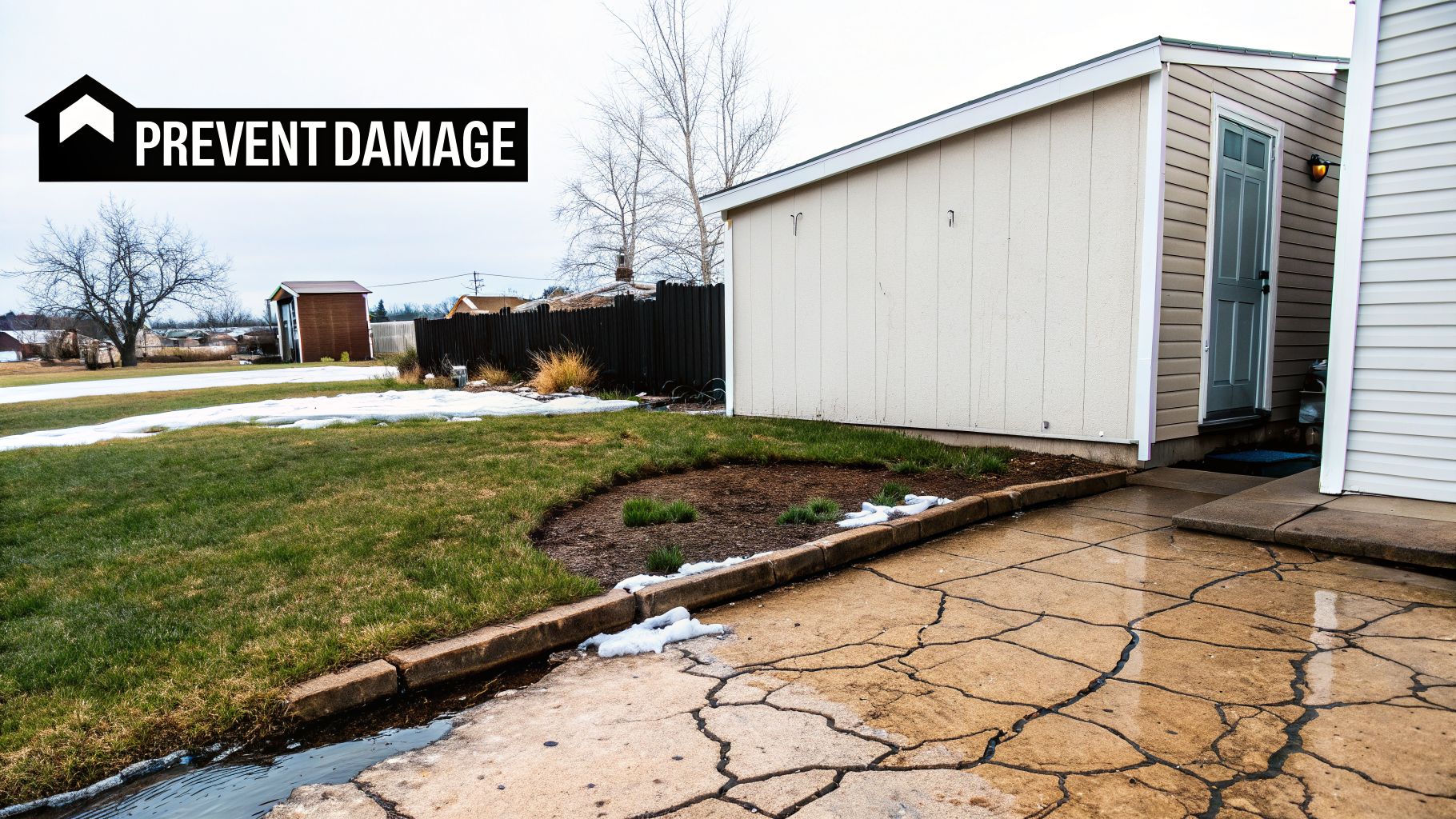
It can be tempting to rush through site prep, but skipping proper soil compaction is a shortcut that almost always backfires. As local garage foundation contractors, we've seen it time and again on projects like shed pads, concrete foundations, and driveways across Pennsylvania. A project that looks perfect on day one can start to fail because of problems hiding right under the surface.
The most frequent issue we see is differential settlement. This is what happens when soil compresses unevenly beneath the weight of your new structure. One side of a brand-new reinforced garage slab might sink just an inch, but that’s all it takes for ugly, spiderweb-like cracks to spread across your investment. For any homeowner, it’s a frustrating and costly scenario.
Water and Weather: The Unseen Enemies
Here in PA, MD, DE, and NJ, we know that water and weather are relentless. Loose, uncompacted soil essentially acts like a sponge, holding water right up against your foundation instead of allowing it to drain safely away. This leads to two major issues that can destroy a project from the ground up.
- Frost Heave: During our winters, this trapped water freezes and expands with incredible force. This process, known as frost heave, can lift and crack concrete slabs, shift shed foundation blocks, and turn a perfectly level surface into a bumpy, uneven hazard.
- Erosion and Washout: When heavy rains arrive, that same water can easily wash away loose soil from underneath your pad. A simple gravel shed foundation will quickly become unstable if the sub-grade wasn't properly compacted to resist being carried away.
This is exactly why meticulous site preparation is the cornerstone of every project we undertake at Firm Foundations. Our entire process is built to prevent these kinds of failures before they can ever start, reassuring you that your investment is secure.
Proper compaction isn't just about making the ground hard; it's about creating a stable, predictable platform that protects your investment from shifting, cracking, and water damage for years to come.
The True Cost of Cutting Corners
Failing to compact the ground properly introduces serious structural risks. On projects like a barn shed or even large playsets, we’ve seen uncompacted soil shift by as much as 6-12 inches over time, creating a genuine risk of collapse.
Following compaction standards, such as achieving 95% Proctor density, is known to prevent up to 30% of all erosion-related failures for structures like new patios or a gazebo foundation. You can find more industry data on the role of compaction in preventing structural damage on ResearchAndMarkets.com.
Ultimately, our job as your trusted local contractor is to deliver peace of mind. By taking the time to do the job right from the very beginning, we ensure your gazebo foundation, driveway, or cement foundations for garage are built on a base that will not let you down.
How We Guarantee a Stable Foundation with Scientific Testing
When we tell our clients in Pennsylvania or Maryland that their new **garage foundation** rests on a rock-solid base, this is not a subjective claim. It is a verifiable fact, proven with scientific testing that removes any mystery from the site preparation process.We don't guess if the ground is properly compacted; we prove it. This commitment to quality assurance is what separates professional shed foundations contractors near me from amateurs. We rely on established principles to guarantee a stable, predictable outcome for every project, building your trust from the very first step.
The Science Behind a Solid Base
The definitive standard for this process is a laboratory procedure known as the Proctor Test. This test allows us to determine the "recipe" for your specific soil by identifying its optimal moisture content—the precise amount of water required to achieve maximum density during compaction.
With this target established, our expert crews at Firm Foundations then employ advanced on-site tools to confirm that our work meets or exceeds that engineering standard.
- Nuclear Density Gauge: This instrument gives us immediate, highly accurate readings of the soil's density and moisture, allowing for on-the-spot verification of compaction levels.
- Dynamic Cone Penetrometer (DCP): We use this tool to assess the strength and consistency of the soil layers, ensuring the entire sub-base is uniformly solid.
This on-site verification is a critical step in our process. These scientific testing procedures are essential for producing a stable foundation, which is a key item on any commercial building inspection checklist.
Our objective is to achieve 95% compaction or higher, depending on the project's specific engineering requirements. This professional standard ensures your base for a storage shed or patio will not settle or fail over time.
Transparency You Can Trust
This data-driven methodology eliminates all guesswork from the foundation work. When we complete your site preparation, you can have full confidence that the ground supporting your gazebo foundation or concrete foundation for garage is verifiably dense and stable.
This methodical testing is a core component of our service, whether the project is a small 4×8 shed with foundation or a large commercial-grade slab. To better understand what to look for in a properly completed project, we recommend reviewing our foundation inspection checklist.
Using the Right Compaction Equipment for the Job
Getting a truly solid base comes down to using the right equipment for the specific job. At Firm Foundations, a critical part of our expertise is selecting the correct tool to ensure a stable, long-lasting cement foundation for your garage or a durable base for your storage shed in our Pennsylvania community.
This isn't just about working faster; it's about matching the machine to the unique demands of your project. The soil type, the project's scale, and the foundation's purpose all influence which piece of equipment will deliver the professional results you need.
Matching the Machine to the Mission
For a large-scale job like a new driveway from local driveway contractors near me or a substantial house foundation, we bring in heavy machinery. A large vibratory roller is the best choice here, using a combination of sheer weight and vibration to densify granular soils like sand and gravel across a wide area.
Of course, that same roller would be impractical for a 10×10 storage shed foundation in a backyard. For these smaller, more common projects, our crews rely on a walk-behind plate compactor. This machine is perfectly suited for creating a dense and perfectly level gravel shed foundation that won’t settle over time.
When working in tight spaces—like preparing garage footings and foundations near existing structures—we use a specialized tool known as a 'jumping jack' rammer. This tool delivers powerful, focused impacts, making it ideal for cohesive clay soils and for areas where larger equipment simply can't fit. You can read more about these critical steps in our guide on site preparation for a concrete slab.
The Economic Sense of Professional Compaction
Using the proper equipment is more than a best practice—it's a smart financial decision. The global soil compactor market is expected to hit USD 7.1 billion by 2033, which shows just how vital this step is in modern construction.
For our projects in the Mid-Atlantic, achieving 98% relative compaction with the right tools helps prevent 15% of foundation failures that are caused by poor soil preparation. Skipping this step can lead to 25-50% higher repair costs within the first five years alone. For more data, you can see the economic impact of proper soil compaction equipment on MarketIntelo.com.
The Firm Foundations Process for Building Your Base
We understand that building a new foundation can seem complex. That’s why we believe in complete transparency with our neighbors throughout Pennsylvania, Maryland, and our surrounding service areas. Walking you through our step-by-step method helps demystify the work, sets clear expectations, and underscores our commitment to quality craftsmanship.
Whether we’re preparing a simple base for a storage shed or a robust concrete foundation for a garage, our process remains methodical and professional.
Our approach always starts with a comprehensive site assessment. To ensure total site readiness, modern construction often relies on advanced evaluation tools, with some projects even seeing the benefits of drone use in construction for surveying. This meticulous planning phase allows us to map out the project with precision before a single shovel of dirt is moved.
Initial Site Excavation and Preparation
With the plan finalized, the first physical step is excavation. Our crews carefully clear the designated project area, removing all topsoil and any unsuitable organic materials to expose the stable subsoil beneath. This initial dig is crucial; it establishes a clean, level canvas for the foundation build and is a core service for clients searching for "excavation near me."
Next, we begin the construction of the sub-base, which serves as the critical load-bearing layer of your foundation. We don’t simply dump a load of gravel and spread it around. Instead, we lay down the aggregate material—typically crushed stone—in thin, uniform layers known as "lifts." Each lift is generally only a few inches deep, a vital detail that ensures thorough and consistent compaction from the bottom up.
This diagram shows the primary compaction tools our team uses, with each one selected based on its specific application and the soil type.
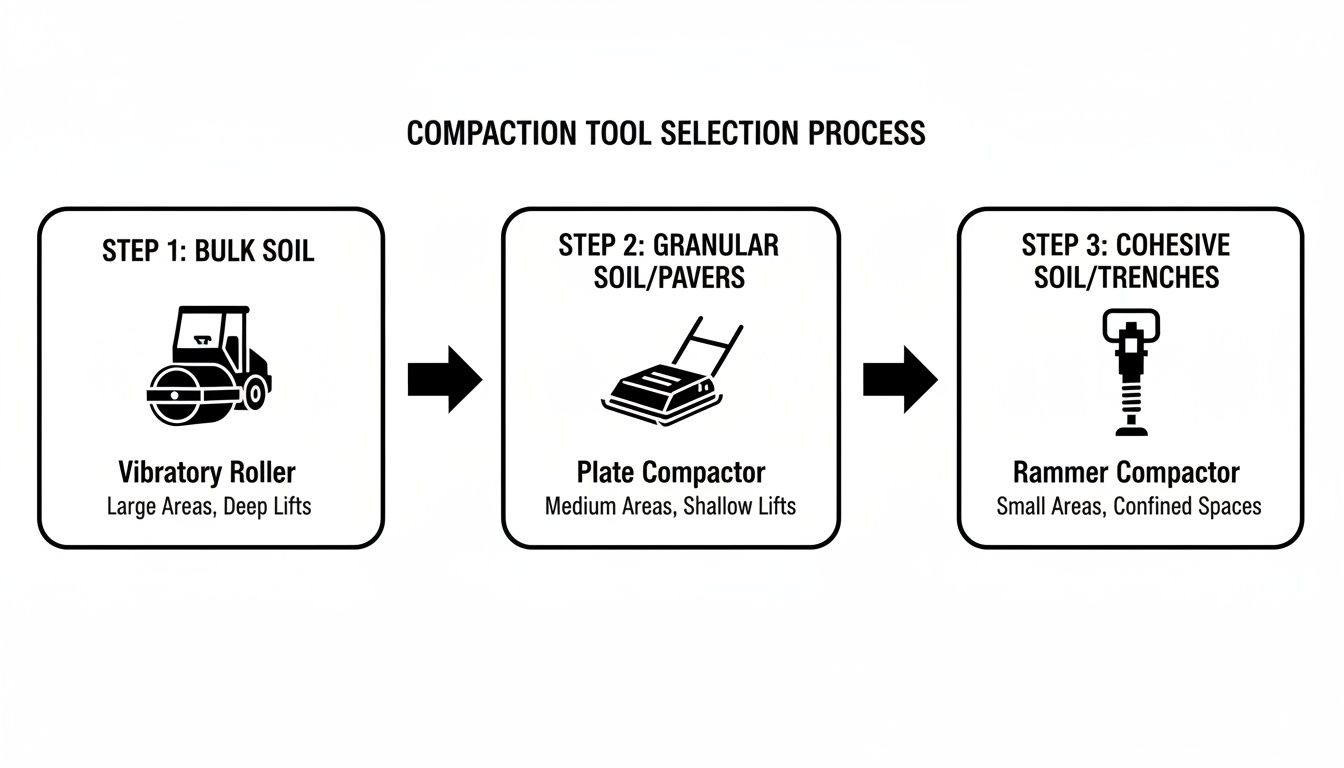
The image illustrates how our selection of the right equipment—from heavy rollers to targeted plate compactors—is key to achieving optimal density for every project.
Compaction and Final Verification
Once a fresh lift of stone is in place, we apply a precise amount of water. This step is essential for achieving the optimal moisture content that allows the soil and aggregate particles to interlock tightly. Our experienced crews know the exact amount required to achieve maximum density.
The core of our process is a disciplined cycle: lay down a lift of stone, moisten it correctly, and then compact it thoroughly with the appropriate equipment. We repeat this cycle meticulously until the sub-base reaches the specified height and density.
Finally, we conduct tests to verify that the required compaction level, typically 95% or higher, has been met across the entire pad. This exacting, repeatable process is our guarantee that whether we are building a small shed foundation or a large commercial slab, the base is prepared to the highest standard. It is this attention to detail that ensures your foundation is truly built to last.
Partner With Us for a Foundation Built to Last
By now, it’s clear that a successful project really does start from the ground up. Proper soil compaction isn't just some technical jargon; it's the most critical step in building a foundation that protects your investment for years to come.
Since 2011, we've been the local team that folks in Pennsylvania, Maryland, Delaware, and New Jersey trust. At Firm Foundations, we're dedicated to delivering quality you can build on, whether that’s a gravel pad, a concrete slab, or professional excavation work.
Your Trusted Local Foundation Contractors
We've earned our reputation by doing things the right way, with trust and top-notch craftsmanship. When you're searching for shed foundations contractors near me or experts in garage footings and foundations, you’re really looking for a local crew that treats your project like their own. We simply don’t cut corners—your new shed, garage, or patio deserves a solid base that will last a lifetime.
Our crews aren't just experienced; they know our local soil and weather inside and out. From a gravel shed foundation in Honey Brook to a reinforced concrete foundation for a garage in Delaware, we bring the same level of care and precision to every single job.
We think a project is only a success if you feel confident and in the loop from the first phone call to the final handshake. Our job is to build something durable together and make sure you’re completely happy with the result.
Let’s Build With Confidence
The moment you reach out, you’ll see what makes us different. You’ll be talking to a friendly, knowledgeable person who is ready to listen, answer your questions, and offer clear advice. We’ll give you a transparent, no-obligation quote so there are no surprises.
Ready to get your project started on the right foot? Contact Firm Foundations today to talk about your plans. Let our expertise in excavation and foundation work provide the peace of mind you deserve.
Frequently Asked Questions About Soil Compaction
We field many questions from homeowners across Pennsylvania and Maryland about the finer points of soil compaction. Below are our answers to some of the most common concerns that come up when planning for a new shed foundation or garage pad.
Can I Just Add More Gravel Instead of Compacting It?
While it might seem intuitive that more gravel equals more strength, this is not a substitute for proper compaction. Think of uncompacted stone like a pile of loose marbles; the individual pieces can easily shift and move around under a load, leading to significant and uneven settling.
Compaction is what locks those individual pieces of aggregate together. The process forces out air pockets and creates a dense, interlocked base that resists movement, especially during the freeze-thaw cycles common in our region. This ensures your base for your storage shed provides stable, long-term support and avoids premature failure.
How Long Does Soil Compaction Take for a Shed Foundation?
For a standard shed foundation, the complete excavation and compaction work is typically finished within one day. The precise timeline can be influenced by the size of the pad, such as for a 10×10 storage shed versus a larger two-car garage, as well as site accessibility and existing soil conditions.
Our experienced crews are efficient and precise, ensuring the site is prepared correctly without adding unnecessary delays to your project schedule.
Is Soil Compaction Necessary for Small Projects?
Yes, it is absolutely essential. Even a small shed represents a considerable investment, and its longevity is entirely dependent on the quality of its foundation. Without proper compaction, the ground beneath the structure will invariably settle unevenly.
This settlement can lead to warped floors, misaligned doors that won't open or close correctly, and even twisting of the entire shed frame. Professional site preparation is just as crucial for a small shed as it is for a large garage foundation.
Ready to get started on a foundation that’s built to last? The team at Firm Foundations is here to provide a durable, professionally installed pad for your project. Request your free quote today and build with confidence.