
8 Garage Floor Ideas Diy for Your PA Home
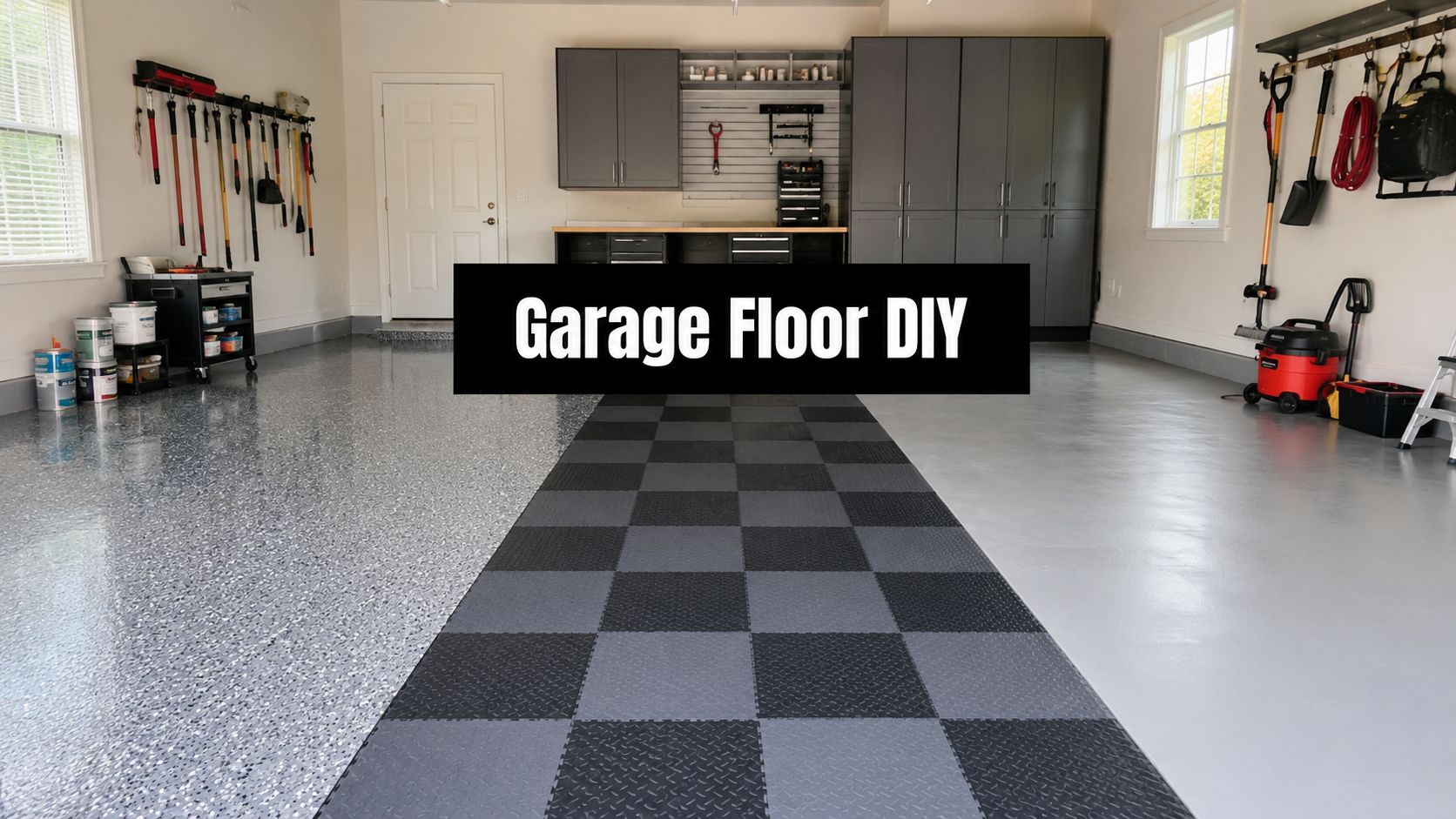
Your garage floor usually tells the whole story. Oil spots that never quite come clean, hairline cracks that keep spreading, tire marks baked into the surface, and that dull gray look that makes the whole space feel unfinished. A lot of homeowners across Pennsylvania and nearby Maryland want a better-looking garage, but they also want a floor that can handle real use, cars, lawn equipment, salt, moisture, and weekend projects.
That's where good DIY finishing choices can make a big difference. But after years in concrete and excavation, we can tell you the same thing on every job. A nice topcoat can only do so much if the slab underneath was poured poorly, drains badly, or already has moisture trouble. The best-looking garage floor ideas DIY homeowners try are the ones built on a solid, properly installed concrete base.
At Firm Foundations, we build concrete foundations, garage footings and foundations, gravel pads, and excavation-ready bases for homeowners across Pennsylvania, Maryland, Delaware, and New Jersey. If you're searching for garage foundation contractors near me, concrete contractors, or help with a concrete foundation for garage projects, the floor finish is the last step, not the first. Start with a sound slab, then choose the finish that fits how you use the space.
1. Epoxy Coating Over Concrete
A homeowner pulls into the garage after a Pennsylvania winter, and the floor takes the hit first. Road salt, wet tires, oil drips, and gritty meltwater all end up on the concrete. If the slab was poured well and cured properly, epoxy is one of the better DIY ways to protect that surface and make cleanup easier.
Epoxy is popular for good reason. It leaves a harder, more chemical-resistant finish than basic floor paint, and it gives a garage a more finished look without changing how the space works. For homeowners who use the garage for parking, storage, and weekend projects, that balance is hard to beat.
Recent pricing guidance from HomeAdvisor places epoxy garage floor coating at roughly $3 to $12 per square foot. That range reflects the two parts of the job that matter most. Surface prep and product quality.
Where epoxy works best
Epoxy fits garages that stay busy. Daily parking, snow shovels, lawn tools, a workbench in the corner, maybe a mower leaking a little gas in summer. It gives you a surface that sweeps clean more easily and stands up better to routine messes than bare concrete.
It also rewards a flat, sound slab. A well-built garage foundation gives the coating a fair chance to bond evenly and cure the way it should.
Practical rule: Test for moisture before you buy your finish, not after it starts peeling.
A separate garage flooring guide recommends a 24-hour plastic-sheet moisture test before applying any coating. If moisture shows up under the plastic, pause the DIY finish and address that problem first.
The practical trade-off
Epoxy gives a cleaner, longer-lasting result than many budget coatings, but it asks more from the installer. The concrete has to be clean, profiled correctly, and dry. You also need to respect mixing times, pot life, and cure time, especially in cool or humid conditions.
If you want to compare products and finish types before you commit, our guide to the best garage floor coating lays out the differences.
One more point specific to epoxy. It is a rigid coating. If your slab is moving, scaling, or holding moisture, that stress transfers straight to the finish and usually shows up as peeling, bubbling, or hot-tire pickup. That is why we tell homeowners to get the concrete base right first. At Firm Foundations, we handle the garage foundation and slab work that makes a DIY epoxy finish worth the effort.
2. Polished Concrete Flooring
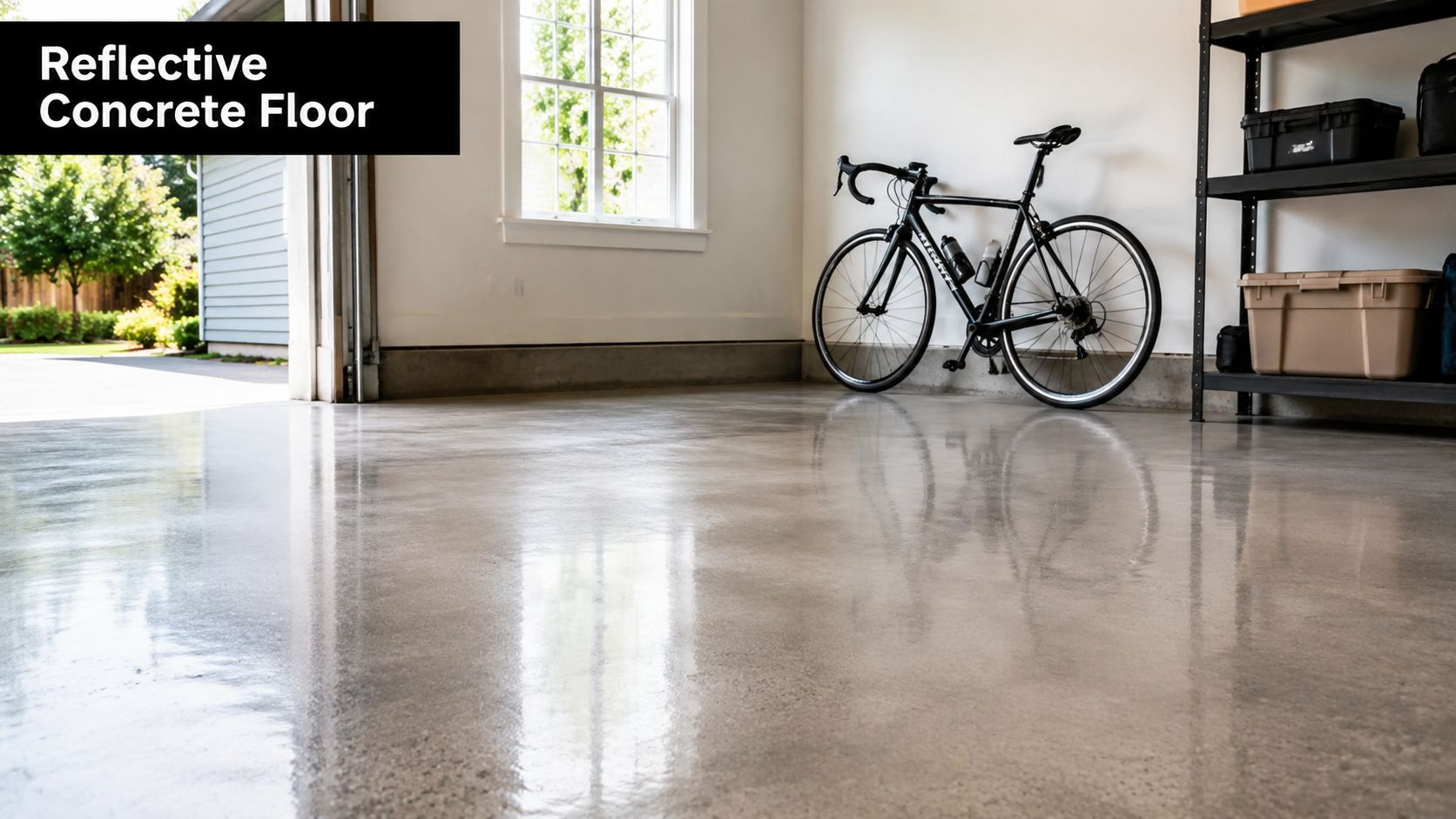
You pull into the garage, the door goes up, and the floor itself does most of the work. A polished slab bounces light around the room, cleans up fast, and keeps the space looking finished without covering the concrete under a thick film.
That clean look has a catch. Polishing does not hide much. It reveals the slab you already have, including saw cuts, patch marks, uneven finishing, and small surface defects that a coating might disguise. On a well-poured garage slab, that honesty looks sharp. On poor concrete, it can make the floor look more unfinished after you spend the time and rental money.
Why polished concrete depends on the original pour
Polished concrete usually makes more sense when the slab was placed correctly from the start. The Portland Cement Association explains that polishing is a multi-step mechanical process that grinds the surface and can include chemical densifiers to improve hardness and sheen, which means the condition of the concrete directly affects the final result (Portland Cement Association guide to polished concrete floors).
That is the trade-off homeowners need to understand. The DIY portion is the finishing work. The foundation for a good result is the concrete itself.
In garages across Pennsylvania and Maryland, polished concrete is a solid choice for homeowners who want a clean utility space, bike storage area, or workshop floor that stays true to the slab. It sweeps easily, reflects light well, and avoids the layered look of paint or epoxy. But it asks for flat concrete, decent finishing, and good drainage planning before the floor ever reaches the polishing stage.
What to expect before you rent a polisher
Use a concrete polisher with proper dust control. Follow the grit sequence instead of jumping ahead. Apply a densifier if the system calls for one, and do not expect the machine to fix structural cracks, settlement, or major low spots.
A realistic setup usually looks like this:
- Best use case: A newer or well-kept garage slab with minor cosmetic wear.
- Biggest advantage: Bright, low-maintenance finish that keeps the natural concrete look.
- Biggest limitation: Surface defects remain visible, and some become more noticeable.
Polishing rewards good concrete and exposes bad concrete.
That is why homeowners who need a new garage foundation in Pennsylvania should think about the finish before the slab is poured, not after. At Firm Foundations, we build garage slabs and concrete foundations for garage spaces with flatness, drainage, and long-term performance in mind. If polished concrete is your goal, getting the base right first gives your DIY finish a real chance to look the way you want.
3. Concrete Staining Acid or Water-Based
Staining is one of the better choices when you want color without making the garage floor look artificial. It can add depth, variation, and a more custom finish than plain paint. Acid stain usually gives a more mottled, earthy appearance, while water-based stain is better if you want a cleaner, more predictable color.
This is a good fit for homeowners using part of the garage as a workshop, utility room, or flex space. In parts of Pennsylvania and Maryland, I've seen stained concrete work especially well in detached garages where owners want something more finished than bare slab, but not as glossy as epoxy.
Coverage catches first-time DIYers
One garage-floor staining guide reports an average application rate of about 200 square feet per gallon using 2 coats, while recommending 2 or more coats and careful surface prep. That's where a lot of DIY jobs go sideways. People buy based on the room size alone, then forget that porous concrete, patch areas, and heavier application can increase material needs.
For a standard one-car garage, that coverage benchmark means you may need more product than expected just to stay on schedule and keep the color even. The floor also has to be clean, dry, and free of sealers, oil, grease, and dust.
What staining does well
Stain penetrates rather than sitting on top like paint. That usually gives a more natural, lasting look. It's especially appealing in garages attached to homes with a more finished design style.
A few practical realities matter:
- Test first: Always sample in a tucked-away spot because concrete color varies from slab to slab.
- Neutralize acid stain properly: If you skip cleanup steps, the final appearance can turn uneven.
- Seal after staining: The stain gives color. The sealer helps with maintenance and wear.
Stain is not a magic fix for rough concrete. It won't hide trowel scars, old patch repairs, or major cracking. If you want consistent stain results, the strongest move is starting with a fresh slab built by experienced concrete contractors. Firm Foundations installs garage slabs, shed foundation pads, and other concrete foundation systems that give decorative finishes a far better chance of looking right.
4. Rubber Tile or Interlocking Mat Flooring
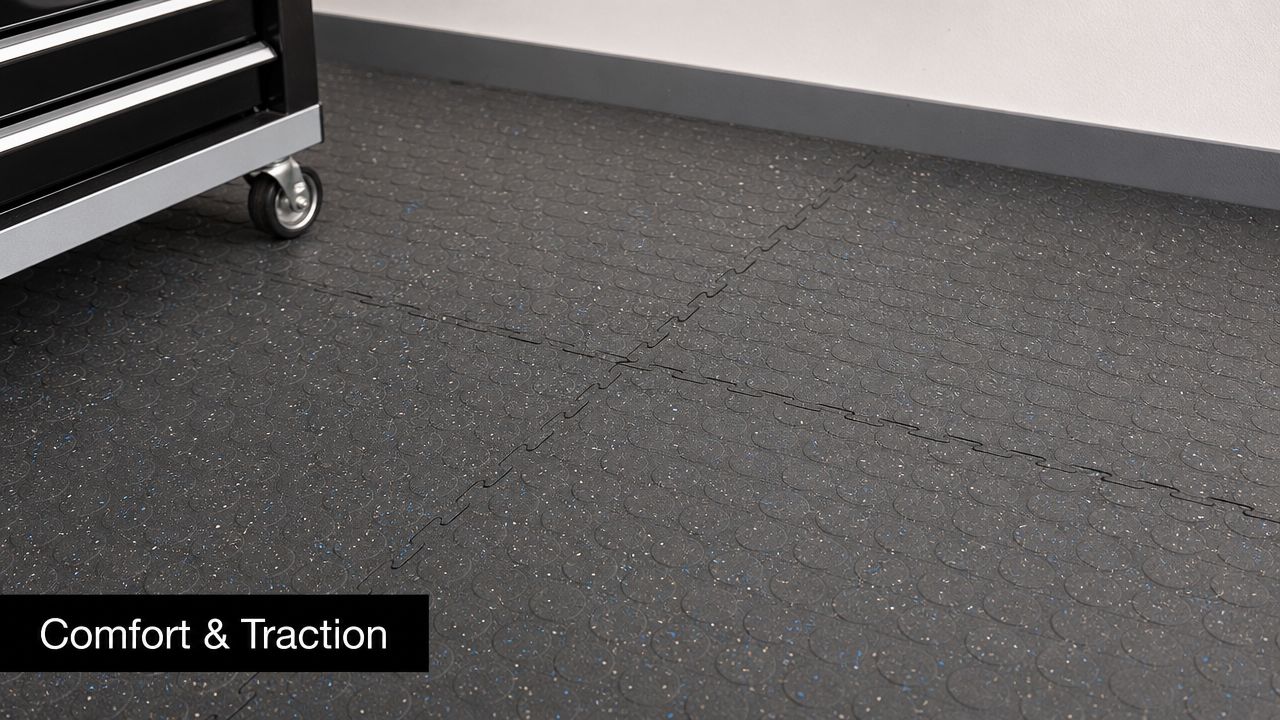
A lot of homeowners reach this option after living with bare concrete for a while. The slab is sound, the garage gets real use, and they want a floor they can install in a weekend without dealing with acid, coating cure times, or a full resurfacing system. Rubber tile and interlocking mats fit that job well.
They also make sense when comfort matters as much as appearance. A garage used for lifting, woodworking, detailing, or kids' gear benefits from a surface with more cushion and grip than sealed concrete.
Cost usually lands in the middle of the pack. Home improvement pricing guides from HomeAdvisor's garage flooring cost overview place garage floor tiles in a moderate range compared with paint on the low end and premium coating systems on the high end. That trade-off is straightforward. You pay more than a basic paint refresh, but installation is simpler and damaged pieces are easier to replace later.
Where interlocking floors work best
This flooring is a good fit for garages with a stable slab underneath and changing uses above it. If one side of the garage is parking space and the other side is a workbench or exercise area, tiles let you improve function quickly without committing to a permanent bonded finish.
They also hide cosmetic wear well. Old discoloration, light surface stains, and mismatched patch color matter less once the floor is covered.
What they do not do is correct slab problems.
If the concrete has settlement, heaving, birdbaths, or cracking from movement, the tile system will reflect those issues. You may cover them visually, but you have not fixed them. From a contractor's standpoint, that is the line homeowners need to keep in mind. A good-looking DIY finish starts with a garage slab that was poured, compacted, and finished correctly in the first place.
Practical installation tips
Start with a dry, swept floor and check the layout before locking rows together. Keep the first run straight, leave the manufacturer's recommended expansion space at the perimeter, and trim edge pieces carefully around steps, posts, or door tracks. If you want a side-by-side look at material choices, our guide to garage floor mats for different garage uses can help you sort out mats versus full tile systems.
It also helps to protect nearby walls, tools, and stored items while you cut or fit pieces. A simple DIY protector guide is useful for setting up the workspace before installation.
Rubber tile and interlocking mat flooring are forgiving, practical, and homeowner-friendly. They perform best over concrete that is already flat, stable, and well built. If your garage floor has movement, soft spots, or drainage trouble, Firm Foundations should be the first call. We build the slab correctly so the finish you add on top lasts.
5. Paint-Based Floor Coating
A lot of homeowners reach this point after the slab is in, the walls are up, and they want the garage to look clean without spending epoxy money. Paint-based floor coating fits that job. It is one of the lowest-cost ways to improve the appearance of a garage floor, and it is manageable for a careful DIYer working over sound concrete.
That last part matters.
Paint works best as a finish layer over a slab that was poured correctly, cured properly, and drained the right way from the start. If the concrete is scaling, holding moisture, or cracking from movement, paint usually highlights the problem instead of hiding it. We see that often in garages where the finish gets blamed first, even though the underlying issue started below it.
Best use for paint
Paint is a reasonable choice for garages used for storage, lawn equipment, bikes, or occasional parking. It can also help an older garage look brighter and more cared for before listing a home for sale.
For a working family garage with daily vehicle traffic, dropped tools, road salt, and hot tires, expectations need to stay realistic. Paint gives you color and a cleaner look. It does not hold up like thicker coating systems.
Where paint usually fails
Failures usually start with prep, moisture, or both. A dusty surface, old oil spots, or leftover curing residue will keep paint from bonding well. Moisture vapor coming through the slab can push it loose. Hot tires then finish the job.
I tell homeowners to be honest about the concrete before they open the first can. If water darkens the slab for a long time, if you have peeling in old coating areas, or if cracks keep returning, solve those issues first. A good DIY finish is the final step, not the repair plan.
A few practical rules make paint perform better:
- Clean aggressively: Degrease, scrub, and remove loose material before anything else.
- Etch or prep as directed: Follow the product label so the coating has a surface it can grab.
- Use thin, even coats: Heavy application dries unevenly and wears faster.
- Respect cure time: Parking too soon can pull paint loose.
- Protect nearby surfaces: A simple DIY protector guide helps keep splatter off walls, tools, and stored items.
Paint-based coating has its place. It is affordable, simple, and useful for a cosmetic reset. But it only looks as good as the concrete underneath it. If your garage floor has drainage problems, movement cracks, settlement, or you need a new slab poured the right way, start with Firm Foundations. We handle the foundation and concrete work correctly so the DIY finish you add on top has a fair chance to last.
6. Self-Leveling Epoxy or Polyurethane
This is the finish homeowners usually choose because they want the smoothest, most continuous appearance possible. Self-leveling products can deliver a sharp, high-end result, especially in garages that hold specialty vehicles, clean storage, or a showroom-style setup.
They're also less forgiving than standard coatings. The material moves, settles, and cures on a strict timeline. If the slab has flaws, poor slope, or hidden moisture, a self-leveling system can turn expensive in a hurry.
Why this isn't a beginner-friendly slab fix
The appeal is obvious. You get a flatter-looking finish with very little surface texture. But self-leveling coatings are not a substitute for correcting structural concrete problems. They need repaired cracks, controlled conditions, and a slab that's already close to where it should be.
The commercial side of the industry reflects how strong demand remains for this style of finish. Market reporting projects the global garage flooring market to reach USD 17.56 billion in 2026 and grow at a 5.5% CAGR to USD 25.54 billion by 2033, with epoxy flooring expected to hold 32.8% of the market in 2026. That doesn't mean every homeowner should install it. It means epoxy-based systems continue to dominate because people value durability and maintenance ease.
A quick visual can help you understand how these systems flow and finish:
Good candidate versus bad candidate
A good candidate is a newer slab in a clean, enclosed garage where temperature and humidity are manageable. A bad candidate is an older floor with chronic dampness, active cracks, and obvious settlement.
Advanced coatings reward precision. They punish bad prep.
If you're planning this level of finish, it makes sense to talk with Firm Foundations first about the slab itself. We install concrete foundations, garage slabs, and site-prep work across PA, MD, DE, and NJ, including projects where the owner wants the finished floor to look as good as the rest of the property.
7. Decorative Concrete Overlay or Resurfacer
An overlay sits in the middle ground between repair and redesign. It can refresh a worn surface, cover cosmetic damage, and create a new look without tearing out the whole slab. For garages with surface scaling, shallow pitting, or old finish failure, it's often the first resurfacing option homeowners ask about.
That said, overlays have a limit. They're good for surface problems. They are not a cure for movement in the base concrete.
Where overlays earn their keep
If the original slab is structurally stable but ugly, an overlay can give you a cleaner canvas for stain, sealer, or a decorative top finish. I like them best where the owner wants to improve appearance and texture but knows the underlying slab is still sound.
A common example is an attached garage floor with old paint scars, minor spalls, and surface wear near the overhead door. In that case, a resurfacer can help create a more uniform look without the commitment of a full replacement.
The trade-off homeowners need to hear
Prep is everything here too. You need a clean, sound surface and proper bonding. Large cracks and broken sections should be repaired before the overlay goes down. Even then, if the slab keeps moving, the overlay can reflect those issues back through.
That's why I never recommend using resurfacer to “solve” foundation trouble. It doesn't. It dresses it up for a while.
A good overlay project usually includes:
- Thorough cleaning: Remove dust, contamination, and weak surface material.
- Crack assessment: Cosmetic cracks can sometimes be managed. Structural movement is another story.
- Product discipline: Use the bonding agent and timing the manufacturer calls for.
If your garage slab has major settlement, edge failure, or drainage issues, skip the patch-and-pray route. Firm Foundations handles excavation, foundation builds, and concrete work for homeowners who need a permanent answer, not just a better-looking surface for one season.
8. Sealed and Stained Concrete with Metallic or High-Performance Topcoat
This is the premium DIY path for homeowners who want a garage floor to feel more like a finished interior space. It layers decorative work and protection together. Usually that means staining or tinting the slab first, then adding a stronger clear sealer or topcoat, and sometimes a metallic-style finish for extra depth.
When executed well, it looks impressive. It also demands the most discipline. Every layer depends on the one below it, and any dust, oil, or moisture issue can show through the final finish.
Who should choose this option
This works best for garages that are partly lifestyle space and partly storage. Think a high-end detached garage, a collector-car setup, or a clean workshop attached to a custom home. Homeowners sometimes love this look because it doesn't scream “industrial coating,” but still feels more refined than plain concrete.
The planning side matters as much as the application. Choose your color direction early, keep the area clean between layers, and don't mix premium materials with bargain prep.
A helpful mindset is simple:
- Decorative first: Decide whether you want earth-tone stain, a richer dyed look, or a more dramatic metallic effect.
- Protection second: Use the topcoat to support cleanup and wear resistance.
- Base first of all: The better the slab, the better the final result.
If you're investing in a finish this custom, it's worth understanding the broader cost picture for the slab itself too. This breakdown of concrete pad costs can help homeowners think through the base before committing to high-end floor treatments.
For homeowners planning a new garage, shed foundation, gazebo foundation, or base for storage shed space in Pennsylvania, Maryland, Delaware, or New Jersey, Firm Foundations is the initial call. We build the slab that makes top-tier decorative work possible. If you also work in the decorative side of the industry, resources like Cherubini Company for concrete leads show how much demand there is for standout concrete finishes once the structural work is done right.
DIY Garage Floor: 8-Option Comparison
| Option | Implementation complexity | Resource requirements | Expected outcomes | Ideal use cases | Key advantages |
|---|---|---|---|---|---|
| Epoxy Coating Over Concrete | Moderate, extensive surface prep; DIY possible | Two-part epoxy kits, grinders/etching, moisture testing, PPE; moderate cost | Durable glossy or satin finish; chemical and oil resistant; 20–30 yr potential with maintenance | Residential garages, workshops, commercial garages | Dramatic visual upgrade; strong stain and chemical resistance; relatively affordable vs full replacement |
| Polished Concrete Flooring | High, multi-stage grinding and polishing; time-consuming | Diamond grinders/polishers, densifier, dust collection, rental costs; skilled labor | Smooth, reflective natural-concrete look; extremely durable; 15–20+ yr | Industrial, high-end homes, showrooms | Long-lasting, low-VOC, enhances light and concrete character |
| Concrete Staining (Acid or Water-Based) | Low–Moderate, surface prep and testing; acid needs care | Acid or water-based stains, neutralizer, sealer, PPE; low–moderate cost | Permanent color penetration; variegated (acid) or uniform (water-based) results | Customized aesthetics, budget-friendly remodels | Unique, permanent coloration; water-based options are eco-friendlier |
| Rubber Tile / Interlocking Mat Flooring | Low, simple modular install, minimal tools | Interlocking tiles or mats, utility knife, occasional underlayment; moderate cost per sq ft | Cushioned, slip-resistant, modular surface; easy repair by tile replacement | Home workshops, gyms, tool areas, automotive workspaces | Comfort and traction; easy DIY install and replacement; good moisture tolerance |
| Paint-Based Floor Coating (Concrete Paint) | Low, straightforward rolling/brush application | Concrete paint (acrylic/latex/epoxy), primer, rollers; low cost | Improved appearance with basic protection; lower durability; 2–5 yr typical lifespan | Budget projects, rentals, quick cosmetic updates | Most affordable and fast-drying; easy DIY for quick results |
| Self-Leveling Epoxy or Polyurethane | High, very precise prep and fast application window | Premium self-leveling resins, moisture testing, professional tools; higher material cost | Seamless, ultra-smooth professional finish; excellent chemical/stain resistance; 10–20 yr | High-end garages, showrooms, commercial spaces | Flawless seamless surface with high durability and visual appeal |
| Decorative Concrete Overlay / Resurfacer | Moderate–High, prep and skill for texture/stamp work | Overlay/resurfacer mixes, bonding agents, stamping or trowel tools; moderate cost | Repairs and refinish in thin layer; customizable textures, stamps, or stains | Floors with cracks/spalls needing cosmetic repair and customization | Repairs damaged slabs while enabling decorative finishes without full replacement |
| Sealed & Stained Concrete with Metallic / High-Performance Topcoat | Very high, multi-stage process with long cure times | Stains, high-performance sealers, metallic epoxy/topcoats, skilled installers; high cost | Gallery-quality depth and finish with superior UV and chemical protection; 20–30 yr potential | Luxury residential garages, designer showcase spaces | Highly customizable, deep visual effects, exceptional durability and protection |
When DIY Isn't Enough Trust Firm Foundations for Your Garage Foundation
You roll a fresh coating onto the garage floor, wait for it to cure, and for a while the space looks great. Then rain tracks in, moisture pushes up from below, a low corner keeps holding water, and the finish starts showing every problem that was already in the slab. That is the point where a lot of DIY projects fail. The finish was never the underlying issue.
Garage floor coatings, stains, mats, and polish all depend on the concrete underneath. If the slab was poured out of level, built on weak prep, or left without proper drainage, even a careful DIY finish has a short life. Cracks print through. Coatings peel. Water keeps finding the same spots. A better top layer cannot correct a bad base.
That is the work we handle at Firm Foundations. We build concrete foundations and site-prep systems for garages, sheds, gazebos, patios, and other outbuildings across Pennsylvania, Maryland, Delaware, and New Jersey. Our team assists with everything from shed and garage foundations to gravel pads, excavation, grading, drainage planning, form work, and concrete placement.
A homeowner can absolutely take on the finishing step. I encourage that when the slab is sound. DIY makes sense for the surface treatment if the concrete was built correctly from the start. It does not make sense to spend weekends applying epoxy or stain over concrete that is already moving, trapping moisture, or breaking down.
We also see how these projects connect on real properties. A garage slab often leads to a driveway upgrade, a shed pad, added grading, or excavation for the next structure. Planning those pieces together helps drainage, elevations, and access work the way they should, instead of creating new water problems beside the garage.
If your current floor has major cracks, settlement, soft spots, recurring dampness, or visible surface failure, address the slab before you buy another coating kit. That decision saves money and frustration. A properly built foundation gives every DIY finish a fair shot at lasting and looking the way it should.
If you're planning a garage project, a shed pad, a concrete foundation, or excavation work in Pennsylvania, Maryland, Delaware, or New Jersey, Firm Foundations is ready to help. Reach out for a free, transparent quote and start with a slab built for drainage, durability, and a finish you'll be proud to put on top.