
Garage Floor Mats: A Contractor’s Guide for PA & MD

Most advice on garage floor mats starts too late. It starts at the top surface, with stains, snow melt, tire marks, and cleanup. A contractor looks at the same garage and asks a different question first. What is the slab doing underneath the mat?
That difference matters for homeowners across Pennsylvania, Maryland, Delaware, and New Jersey. In this region, garages deal with wet vehicles, road salt, freeze-thaw stress, and drainage issues that don't always show up clearly until the slab starts cracking, flaking, or staying damp. If you're searching for garage floor mats, garage foundation contractors near me, or a concrete foundation for garage work, the right answer depends on whether you need protection, repair, or replacement.
Garage floor mats can be a smart purchase. They can also become a very neat way to cover up a concrete problem that keeps getting worse.
Is a Garage Floor Mat the Right Choice for Your Home?
A garage floor mat is often sold as the fix. In plenty of garages, it is only surface management.
If your slab is flat, dry, and structurally sound, a mat can be a smart buy. It helps contain snow melt, road salt, dirt, and oil drips before they stain the concrete. For homeowners who use the garage as a work area, it can also make the floor more comfortable to stand on and easier to clean.
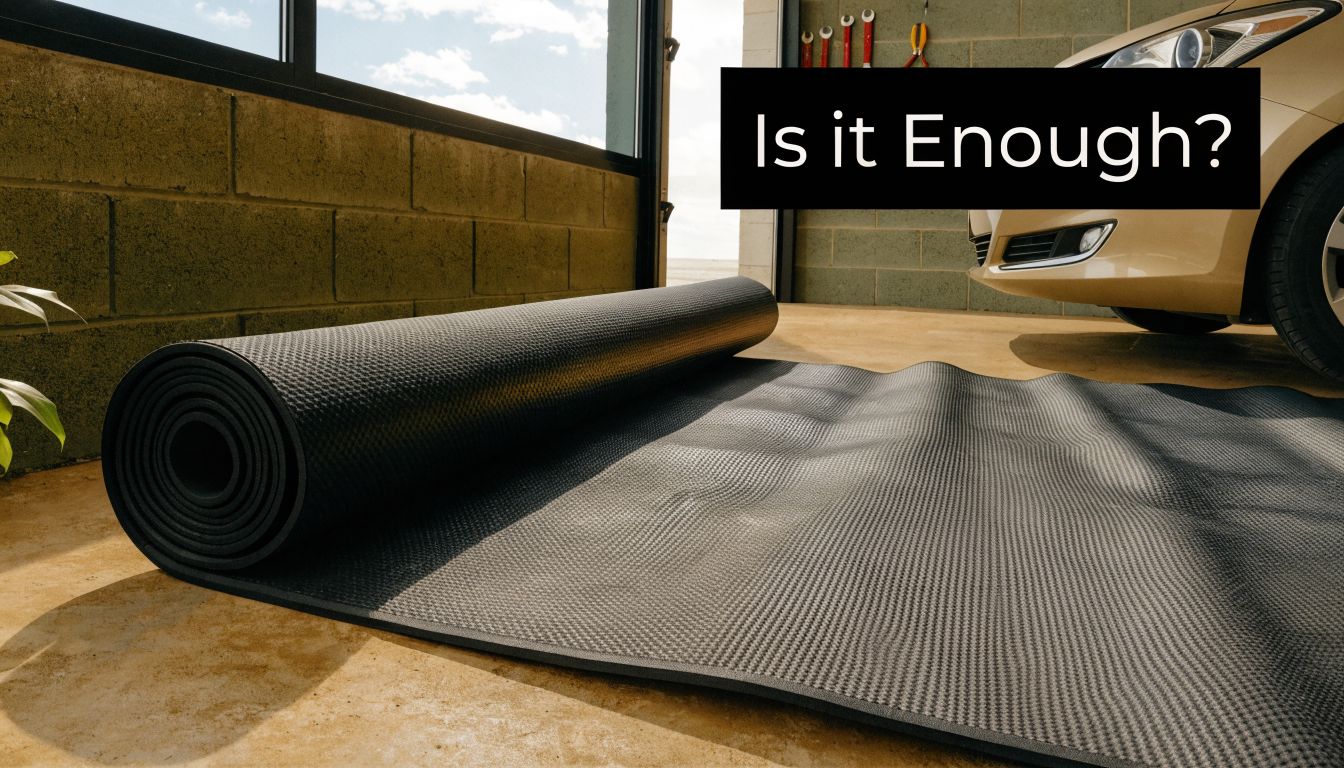
That said, mats do their best work on good concrete. They protect the surface. They do not correct what is happening below it.
What a mat does well
Used in the right setting, a garage floor mat solves a few common problems without a big project.
- Catches routine mess: Water, slush, mud, and vehicle fluids stay on the mat instead of soaking into the slab.
- Reduces surface wear: Salt and grit are less likely to grind into the concrete finish.
- Improves cleanup: Debris is easier to sweep or hose off a mat than raw concrete.
- Adds comfort and a cleaner look: That matters if the garage doubles as a workshop, storage area, or home gym.
What a mat cannot do
A mat will not flatten an uneven slab. It will not stop settlement cracks from widening. It will not solve water coming in at the door, along the walls, or up through the concrete. If the slab is soft, scaled, heaved, or staying damp for days, covering it usually delays a proper diagnosis.
That is the trade-off homeowners need to understand. A mat is affordable and quick. It is also very good at hiding warning signs.
Here is the rule I use on job sites. If the complaint is mess, a mat is usually a reasonable answer. If the complaint is moisture, movement, flaking concrete, or a floor that feels different from one season to the next, the slab needs attention first.
In garages across Pennsylvania, Maryland, Delaware, and New Jersey, freeze-thaw cycles, drainage problems, and poor base prep show up in ways a floor covering cannot fix. In those cases, the right long-term solution may be slab repair or a full replacement, not another product laid on top.
Comparing Common Garage Floor Mat Materials
Material matters more than brand names. I see homeowners compare mats by color, pattern, or price, then miss the part that affects service life. How the mat handles tire load, moisture, road salt, and cleanup usually decides whether it works in your garage.
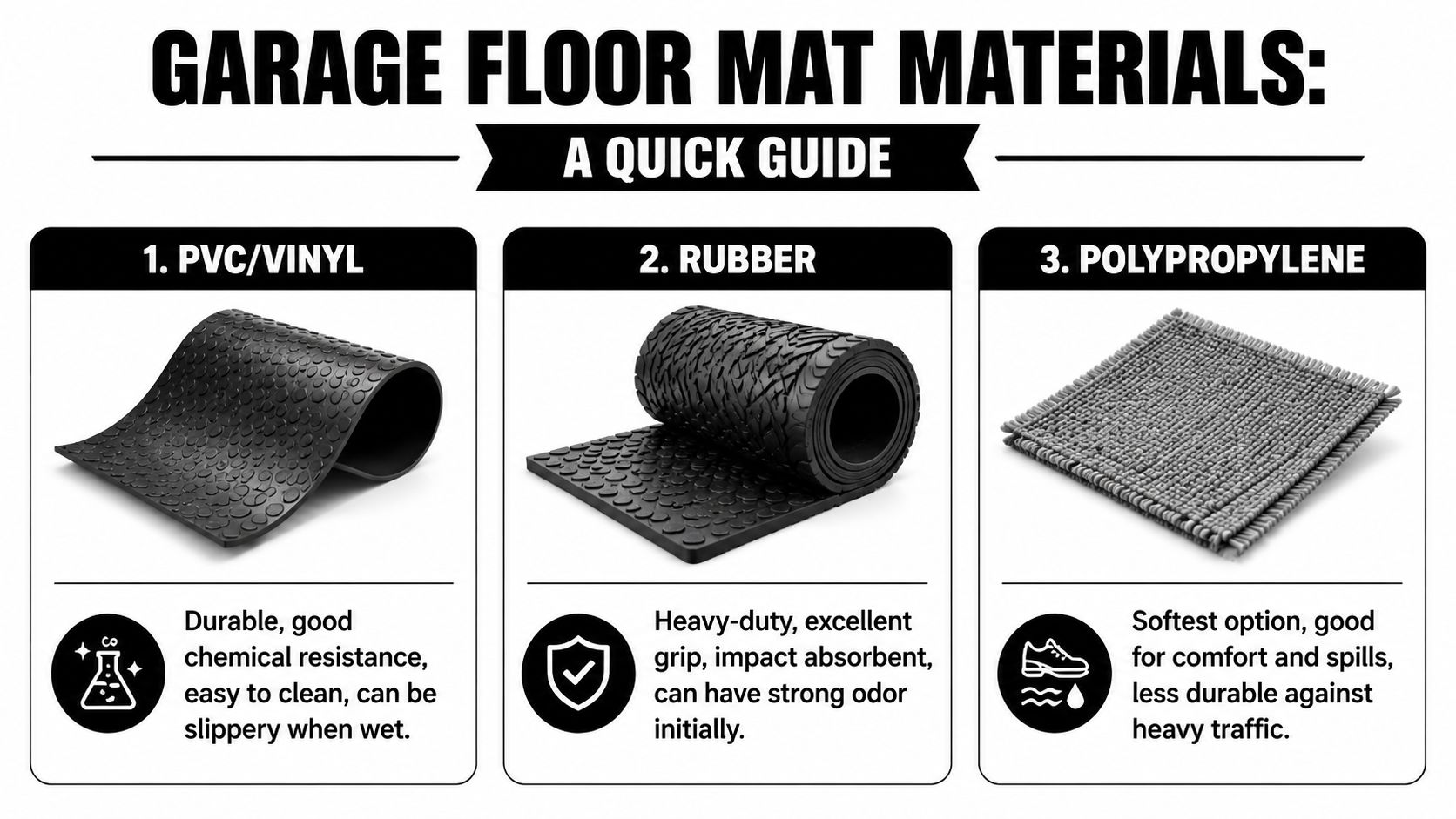
PVC and vinyl mats
PVC roll-out mats are a practical choice for many vehicle bays. Products such as the G-Floor Diamond mat are built for spill resistance, routine traffic, and easier cleanup than bare concrete. They also give the garage a more finished look than pieced-together tiles or soft mats.
The trade-off is rigidity. PVC usually lays flatter than foam, but it still reflects what is underneath. On a slab with dips, curled control joints, or rough spalled areas, the mat can telegraph those defects and wear faster at the high spots. If you are comparing thickness, use the manufacturer guidance noted earlier, but do not treat thickness alone as a fix for a slab issue.
PVC is usually a good fit for:
- vehicle parking on a sound slab
- workshop zones that need easy sweeping
- garages where oil drips, salt, and mud are the main problem
It is a weaker fit where the slab stays damp from below. In that situation, a mat can trap moisture against the surface. Before you cover a floor that always feels clammy, it helps to understand what a garage floor vapor barrier does under a concrete slab.
Rubber mats
Rubber has a different job. It is better where grip, impact absorption, and underfoot comfort matter more than appearance. That makes sense at a workbench, around tool storage, or in a gym corner.
Under parked vehicles, rubber can still work, but it is not automatically the better buy. Some rubber products hold odors, some react poorly to certain chemicals, and some are heavier to remove when you need to clean underneath. In a garage that sees winter brine and regular fluid drips, cleanup can be more labor-intensive than with a smoother PVC surface.
Foam mats and softer modular systems
Foam is for comfort, not punishment. It works well in hobby areas, kids' play spaces, or light exercise zones inside the garage. It does not hold up well where hot tires, jacks, kickstands, or repeated turning loads hit the floor.
That does not make foam a bad product. It just belongs in the right part of the garage.
Containment mats and absorbent mats
Containment mats solve a specific problem. They keep snowmelt, rain, and dirty runoff from spreading across the bay. Absorbent mats do a similar job on a smaller scale, but they are usually better for leaks and drips than for the full mess a wet vehicle brings in.
High-edge containment products can be worth the money in PA, MD, DE, and NJ, where winter slush and road salt are hard on concrete and hard on cleanup. They also tell you something about how much water your garage is seeing. If you regularly need tall perimeter edges to hold standing meltwater, review the floor and insurance side of the risk too. Coverage Axis property damage insights give useful context on how repeated water exposure can turn into larger property issues.
My rule is simple. Choose the mat material based on what happens on top of the floor. Check the slab based on what is happening underneath. If those two decisions get mixed together, homeowners end up buying a decent mat to cover a failing base.
When a Mat Hides a Deeper Foundation Problem
The biggest mistake homeowners make with garage floor mats is asking whether the top layer is waterproof before they ask why the floor keeps getting wet.
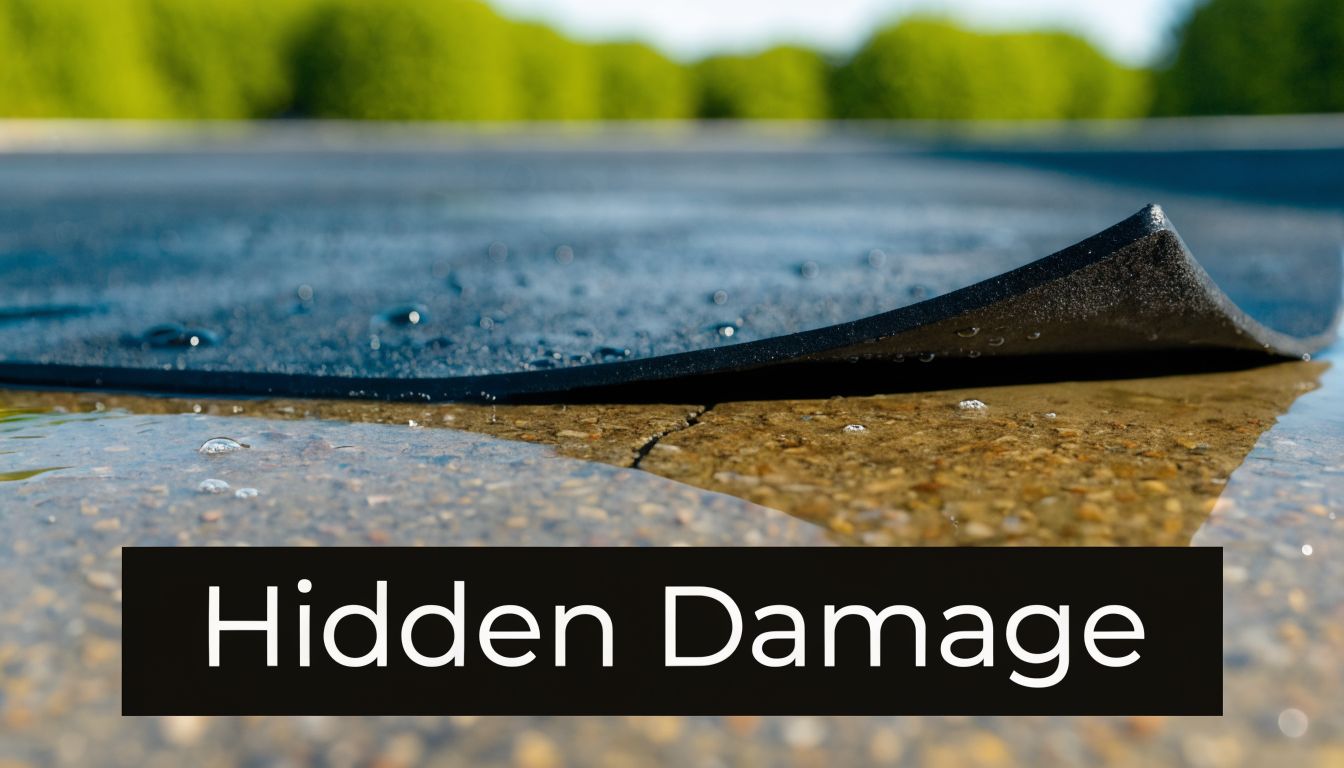
A mat can hide stains. It can hide spalling. It can hide cracks for a while. It can also hide the pattern of moisture that would otherwise tell you something is wrong. That matters in the Mid-Atlantic, where repeated wetting and freezing punish weak concrete and poor drainage.
The hard truth is simple. A mat is a finish product. It isn't a fix for a slab that was poured on an unstable base, built without proper drainage, or left with grading that pushes water toward the garage.
Warning signs a mat can mask
Some garages look acceptable on top and still have problems underneath.
- Recurring dampness: The floor dries slowly or never fully dries.
- White powder on concrete: Efflorescence usually means moisture is moving through the slab.
- Flaking or scaling: Surface damage often points to water and freeze-thaw stress.
- Cracks that change height: Uneven cracks suggest movement, not cosmetics.
- Wet edges along walls or door openings: That often points to drainage or runoff issues.
A useful contrarian point from garage flooring guidance on moisture and drainage limits is that a mat may hide moisture symptoms while leaving the underlying drainage problem unresolved. For recurring wetness, a gravel pad, corrected grading, or a new concrete slab may be the more durable investment.
Surface fix versus structural fix
Often, homeowners need a straight answer. If water is getting onto a healthy slab from a parked car, a mat is a practical tool. If water is coming through or under the slab, a mat is a bandage over the symptom.
Homeowners worried about long-term risk should also understand how moisture problems can spread beyond appearance. Coverage Axis property damage insights offer a useful general reference on how water-related issues can contribute to broader property damage concerns.
If you suspect vapor or ground moisture rather than tracked-in snow, it helps to understand what sits below the concrete and why it matters. This guide on garage floor vapor barrier basics explains why moisture control starts under the slab, not on top of it.
Contractor view: If the floor problem repeats after every rain or every thaw, stop shopping for coverings and start investigating the base, the slope, and the water path.
That's not anti-mat advice. It's a reminder that garage floor mats work best on concrete that's already doing its job.
How to Assess Your Garage's Concrete Slab
A garage floor mat can only perform as well as the slab under it. Before you price mats, coatings, or patch kits, check whether the concrete is sound, dry, and stable enough to support any surface fix.
Read the crack pattern first
Cracks tell you what kind of problem you have. Fine, shallow shrinkage cracks in older concrete are common. Cracks that are wide, growing, or higher on one side point to movement in the slab or the base below it.
Pay close attention to where the cracking shows up. Repeated cracks near the garage door, corners, sidewalls, or where the slab meets the apron usually deserve a closer look because those areas take the most water, freeze-thaw stress, and soil movement. Long continuous cracks running across the bay also matter more than a few scattered surface marks.
One simple test helps. Set a straight board, level, or even a long metal ruler across the crack. If you can feel one side sitting proud of the other, you are looking at displacement, not just age.
Look for signs the slab is holding or pulling moisture
Moisture does not always show up as a puddle. In a lot of garages, the first clues are subtle and easy to miss if you are only looking for standing water.
Check for these conditions:
- Dark spots that stay wet longer than the rest of the floor
- White, chalky residue on the surface
- A damp or musty smell that hangs around
- Peeling paint, lifting patches, or failing coatings
- Moisture lines along the perimeter or at control joints
Those signs matter because they point to water moving through, under, or along the slab. A containment mat can catch water dripping off a car. It cannot correct missing base material, poor drainage, outside grading, or moisture pressure from below.
Check flatness and slope
This is the part many homeowners skip.
A serviceable garage slab does not have to look perfect, but it should sit reasonably flat and pitch water where it belongs. Roll a ball, set down a level, or spray a little water in a few spots and watch where it goes. If water runs back toward the house, settles in the middle of the bay, or collects along one wall, the slab is not managing water well.
That does not always mean full replacement. It does mean a mat may end up covering a floor that already has drainage problems.
Judge the slab by how the garage is used
A slab under a lawn tractor and holiday storage can tolerate more cosmetic wear than a slab carrying two daily drivers, heavy toolboxes, jacks, and constant winter runoff. I tell homeowners to assess performance first and appearance second.
If the surface is ugly but stable, a mat can make sense. If the floor rocks under load, drops near the door, stays damp, or keeps cracking in the same areas, the slab is asking for repair or replacement.
Contractor view: Surface protection belongs on top of sound concrete. If the slab is moving, holding water, or breaking down, fix that first.
If you want a clearer picture of what counts as normal surface cracking versus signs of a base or drainage issue, this guide on how to prevent concrete slab from cracking is a useful reference.
Choosing Your Garage Floor Solution
Once you know what the slab is doing, the decision usually becomes much clearer. Most garages fall into one of three groups.
Option one for a healthy slab
If the concrete is stable, dry most of the time, and pitched reasonably well, a mat is a cost-effective protective layer. For cost-conscious homeowners, standard mats are available at approximately $1.56 per square foot, according to garage floor mat pricing data.
That's a good fit when you want to protect a sound slab from normal use, seasonal mess, and workshop wear. It is not a substitute for structural work.
Option two for a mostly sound slab with cosmetic wear
Some floors don't need replacement, but they also aren't ideal candidates for a simple roll-out mat. If the slab is stable and dry but stained, rough, or lightly worn, a surface repair or coating may be the better route.
A quick comparison helps:
| Floor condition | Better fit |
|---|---|
| Stable slab with minor stains | Garage floor mats |
| Stable slab with cosmetic wear | Surface prep and coating |
| Damp, settling, or badly cracked slab | New slab or foundation work |
This middle group is where homeowners often waste money by covering a floor they would have been happier refinishing.
Option three for structural problems
If the slab has active cracks, settlement, poor drainage, repeated wetness, or freeze-thaw damage, don't expect a surface product to rescue it. That's when the solution is a new concrete foundation for garage use, built with the correct base prep, drainage plan, and slope.
That may mean:
- Excavation and base correction: Removing unstable material and rebuilding the support below.
- Proper gravel preparation: Giving the slab a stable, draining base.
- Correct pitch: Moving water where it belongs.
- Concrete work matched to use: A storage bay, workshop, and vehicle bay don't all demand the same build approach.
Best use of a mat: Protect good concrete.
Worst use of a mat: Cover failing concrete and hope the problem slows down.
That distinction saves money. A cheap surface fix on a bad slab often turns into a more expensive tear-out later.
Build on a Solid Base with Firm Foundations
Homeowners across Pennsylvania, Maryland, Delaware, and New Jersey often start by looking for garage floor mats, then realize the underlying issue is under the surface. When that happens, the right next step isn't another covering. It's a foundation contractor who understands excavation, drainage, gravel base prep, concrete forms, and long-term slab performance.
Firm Foundations builds the kind of base that garage floors need from the start. That includes site preparation, excavation, stable gravel installation, forming, pouring, and finishing for projects that need more than a cosmetic upgrade. If you've been searching for shed foundations near me, gravel shed foundation contractors near me, garage foundation contractors near me, concrete contractors, or driveway companies near me, that same ground-up thinking is what keeps garages, sheds, gazebos, patios, and driveways performing over time.
What long-term garage work should include
A durable garage slab isn't just a flat pour. It should account for water movement, support below the slab, and how the space will be used.
That means paying attention to:
- Excavation quality: Weak or organic material has to be removed.
- Base preparation: The slab is only as reliable as the support under it.
- Drainage planning: Water needs a path away from the structure.
- Concrete placement and finish: The final surface has to match vehicle and storage demands.
When to call instead of cover
If your floor stays wet, shows movement, or keeps breaking down, stop treating it like a cleaning problem. Those are signs that the garage may need a rebuilt base, new slab, or a complete footing and foundation approach.
Firm Foundations serves homeowners and property owners who want that work done correctly the first time. From shed foundation jobs and barn shed pads to concrete foundations, garage slabs, and excavation near me searches that lead to real site work, the goal is the same. Build something that lasts.
If your garage floor needs more than a mat, Firm Foundations can help you sort out the right fix. Reach out for a free, no-obligation quote if you need a new garage slab, gravel base, excavation, or a long-term concrete foundation solution in Pennsylvania, Maryland, Delaware, or New Jersey.