
Foundation Excavation Cost Guide for Pennsylvania Homeowners
Foundation excavation cost for most residential jobs in the U.S. typically falls around $5,000 to $12,000, but scope and site conditions can push it lower or higher fast. A shallow shed pad, a garage footing trench, and a full basement dig are all priced differently because depth, access, spoil removal, and groundwater change the job.
A homeowner usually feels that difference the moment the quotes come in. One contractor numbers a small, clean site tightly, another folds in haul-off and backfill, and a third leaves those items out entirely, which makes the first bid look cheaper until the extras appear later. That's why Pennsylvania homeowners comparing quotes for concrete foundations, garage footings and foundations, or a base for storage shed need to read the scope as carefully as the price.
Planning Your Foundation Excavation Project
A common call starts with a homeowner who wants a new garage or shed and has three excavation quotes that don't even seem to describe the same job. One bid covers digging only, another includes spoil haul-off, and a third assumes the contractor can stockpile dirt on site. The numbers feel random until the scope is matched line by line.
Foundation excavation cost is rarely just a dirt-moving number. It's a site-prep decision, and the total depends on how much material comes out, where it can go, and what has to happen before the concrete crew ever shows up. For Pennsylvania homeowners, the practical starting point is the residential range of $5,000 to $12,000 for foundation-specific excavation, depending on scope and site conditions (HomeGuide's excavation cost guide).
Practical rule: the cheapest quote is only the best quote if it includes the same work the others do.
That's why it helps to compare excavation bids the same way you'd compare a shed foundation kit or a concrete foundation for garage package, by asking what's included, not just what the total is. If you're also planning driveway work, it can be useful to look at concrete driveways and patios in SW Michigan as a reminder that site work often gets bundled, and the scope matters more than the headline number.
For local planning, frost depth matters too. Pennsylvania homeowners often check frost line depth details for Pennsylvania before deciding how deep a shed foundation, gazebo foundation, or garage footing needs to go. That one detail can change the whole project budget and timeline.
What Foundation Excavation Includes
Foundation excavation is more than digging a hole and calling it done. A proper scope usually starts with clearing topsoil and vegetation, then moving into layout, rough digging, and grading the base to the right elevation for footings. If the crew skips preparation, the foundation crew inherits a problem instead of a clean base.
The parts homeowners should expect in a real scope
A complete quote often touches several separate tasks, even if they're wrapped into one line item. That can include:
- Topsoil stripping, which removes organic material that shouldn't sit under a structural foundation.
- Excavating to the planned depth, whether that's for shed foundation blocks, a 4×8 shed with foundation, or a larger house foundation.
- Spoil management, meaning soil is either stockpiled on site or loaded out.
- Bottom trimming and rough grading, so the footing base sits level and at the right elevation.
- Utility locates and site protection, which help avoid damage and delays.
Excavation quotes may also mention temporary shoring, erosion control, or dewatering. Those items are often site-specific rather than automatic, and that's where homeowners can get surprised if the estimate doesn't define them clearly. A standard slab or crawl space may need less attention than a basement dig, but the basics of access, depth, and cleanup still apply.
A good quote also makes clear what's not included. That matters because the work after digging, like drainage prep, backfill, or final grading, can be separate operations. When those lines aren't spelled out, a low bid can turn into a much larger final bill.
Key Cost Drivers for Foundation Excavation
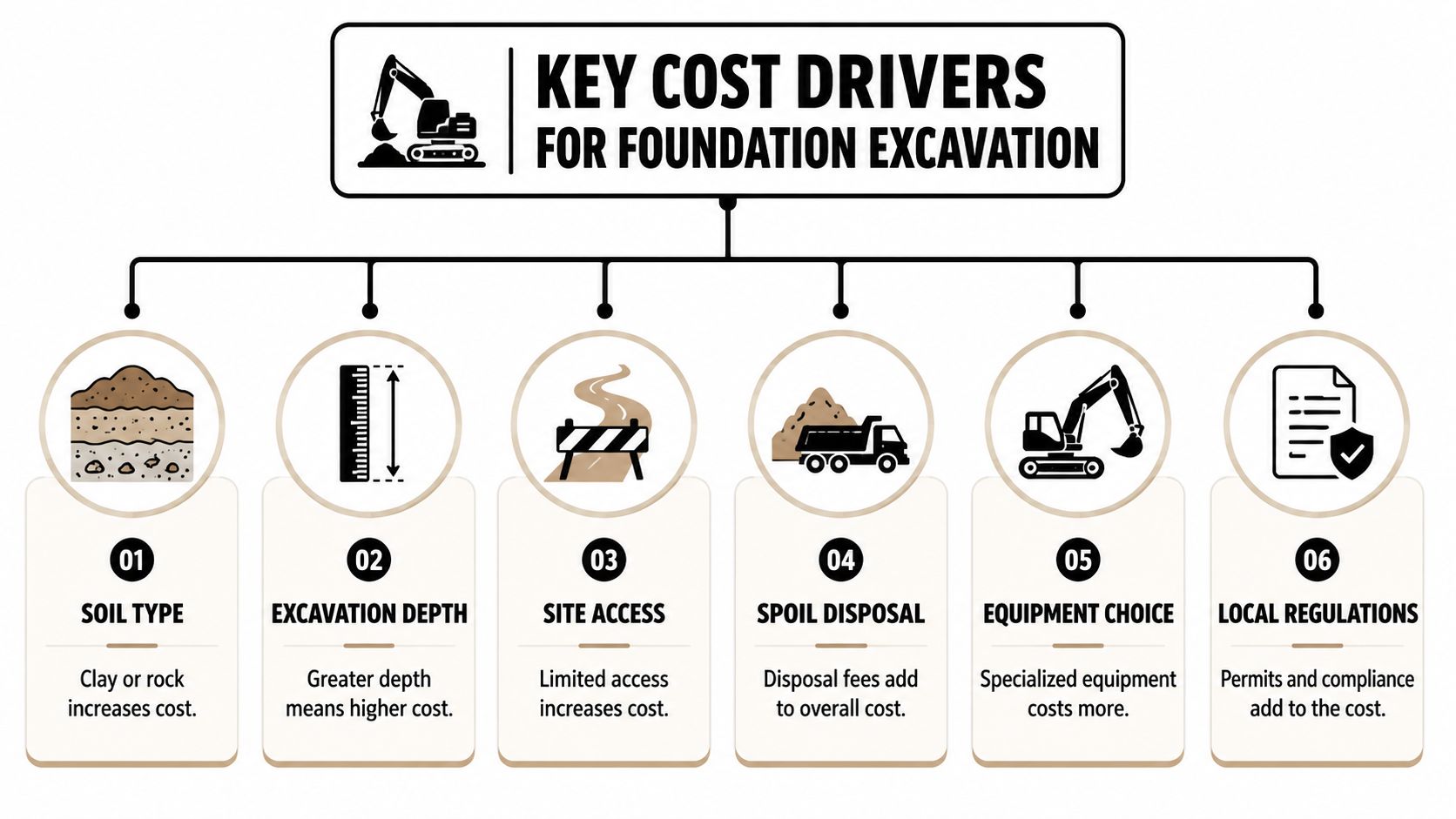
The biggest cost swings usually come from what the lot gives you, not what the blueprint shows. Soil conditions, groundwater management, and utility-locate rules can drive costs more than footprint size, with rock excavation jumping to $35 to $90 per cubic yard (Superior Excavating's foundation excavation guide). That's why two homes with the same foundation size can produce very different bids.
The six pressure points that change the price
Soil type matters first. Clay, hardpan, and rock slow production, wear down equipment, and can force different excavation methods. A clean sandy lot usually moves faster than a site with heavy clay or ledge.
Excavation depth is the next big one. A deeper basement, a taller garage foundation, or a footing that drops below frost line takes longer to cut and usually costs more per unit of work.
Site access changes everything. Tight side yards, narrow driveways, and limited truck access increase the time needed to move spoil and stage equipment.
Spoil disposal can be a hidden budget item. If there isn't room to stockpile dirt, it has to be hauled away.
Equipment choice affects both speed and price. A machine that's too small may save on rental paper, but it can slow the whole project.
Local regulations add another layer. Utility markings, permit checks, and erosion controls can shape the schedule before digging begins.
Dry, open, predictable lots are usually the easiest foundation excavation jobs to control. Rocky, wet, or cramped sites are where estimates start to spread apart.
Typical Price Ranges for Excavation Projects
Different foundation types live in different budget bands, and that's where homeowners can make sense of a quote fast. A shed pad, a garage slab, and a full house foundation don't belong in the same mental bucket, even if they all start with an excavator on site.
| Excavation Project Cost Ranges | Typical Cost Range |
|---|---|
| Small shed pad | Site-specific, often at the low end of residential excavation |
| 2-car garage slab | Mid-range residential excavation, higher if access or depth are difficult |
| Full house foundation | Commonly the highest-cost residential excavation category |
A standard 2,000-square-foot concrete slab foundation costs $12,000 to $28,000, while basement foundations cost $35 to $50 per square foot (HomeGuide's foundation cost guide). That's one of the clearest ways to see how much deeper, more involved foundation builds can become once the job shifts from a simple slab to a basement.
For a smaller project, a 10×10 storage shed on decent ground can stay much closer to the low end of the market than a garage slab with frost-depth footings. A 10×10 storage shed with poor access, wet soil, or haul-off can climb quickly, not because the footprint is large, but because the site work gets awkward.
A full basement dig is where the cost separates most clearly from light excavation. Once the excavation has to reach footing depth, manage spoil, and leave a working base for the foundation crew, the budget starts behaving like a specialized site-work job, not a simple hourly labor task. That's why one homeowner's shed foundation may look modest while another homeowner's basement dig becomes a major line item.
How Contractors Calculate Excavation Costs
Excavation pricing usually lands in one of three buckets. Contractors bill by the hour, by cubic yard, or with a lump-sum project bid when the site is too complex for a simple formula. Residential excavation is commonly priced at $100 to $300 per hour for equipment and operator time, and $50 to $200 per cubic yard for volume-based bids (Autodesk's excavation cost guide).
Why the pricing model matters
Hourly pricing works best when the work is straightforward and visible. If a contractor knows the machine time needed and the site is predictable, the quote can be easier to understand.
Cubic-yard pricing is better when the volume can be measured with some confidence. That's often useful on planned foundation excavations where the footprint and depth are already established.
Flat bids show up when the contractor expects variables. Tight access, uncertain soil, or a basement excavation with possible hauling and cleanup often pushes the job into a project bid, because the true cost is more than a single machine rate.
The important part for homeowners is not which model sounds lowest on paper. It's whether the quote tells you how the contractor got there. If a bid uses machine time but doesn't mention hauling, backfill, or grading, you're probably not looking at the full picture.
Later in the job, the same logic helps with change orders. If the contractor has already defined the scope clearly, the price is much more stable and easier to trust.
A simple video can also help homeowners see how excavation planning and coordination work on an active site.
Ways to Save on Excavation Expenses
The easiest savings usually come from tightening the scope before anyone starts digging. Excavation quotes often exclude spoil haul-off, dewatering, backfill, or final grading, and clarifying scope can save homeowners up to 15% on overall excavation bills (SitePrep's foundation excavation guide). That's not a small tweak. It's often the difference between a budget you can manage and one that keeps creeping upward.
If you're also planning exterior work, it can help to compare the excavation budget with a bigger project like tile roof replacement cost, since homeowners often have to choose which upgrades happen first.
Simple ways to keep the quote under control
- Define the scope early. Ask whether spoil haul-off, backfill, grading, and dewatering are included.
- Bundle related site work. When excavation, forming, and cleanup are coordinated, mobilization is easier to manage.
- Clear the access path. Fewer obstacles usually means fewer delays and less machine time.
- Confirm disposal expectations. Dirt that can't stay on site has to go somewhere.
- Ask about return visits. Backfill after the pour should be spelled out from the beginning.
The best savings usually come from clarity, not cut corners. A quote that names what happens before the pour and after the walls are set is far safer than a bare number that looks cheap today and balloons later.
Checklist for Getting an Accurate Quote
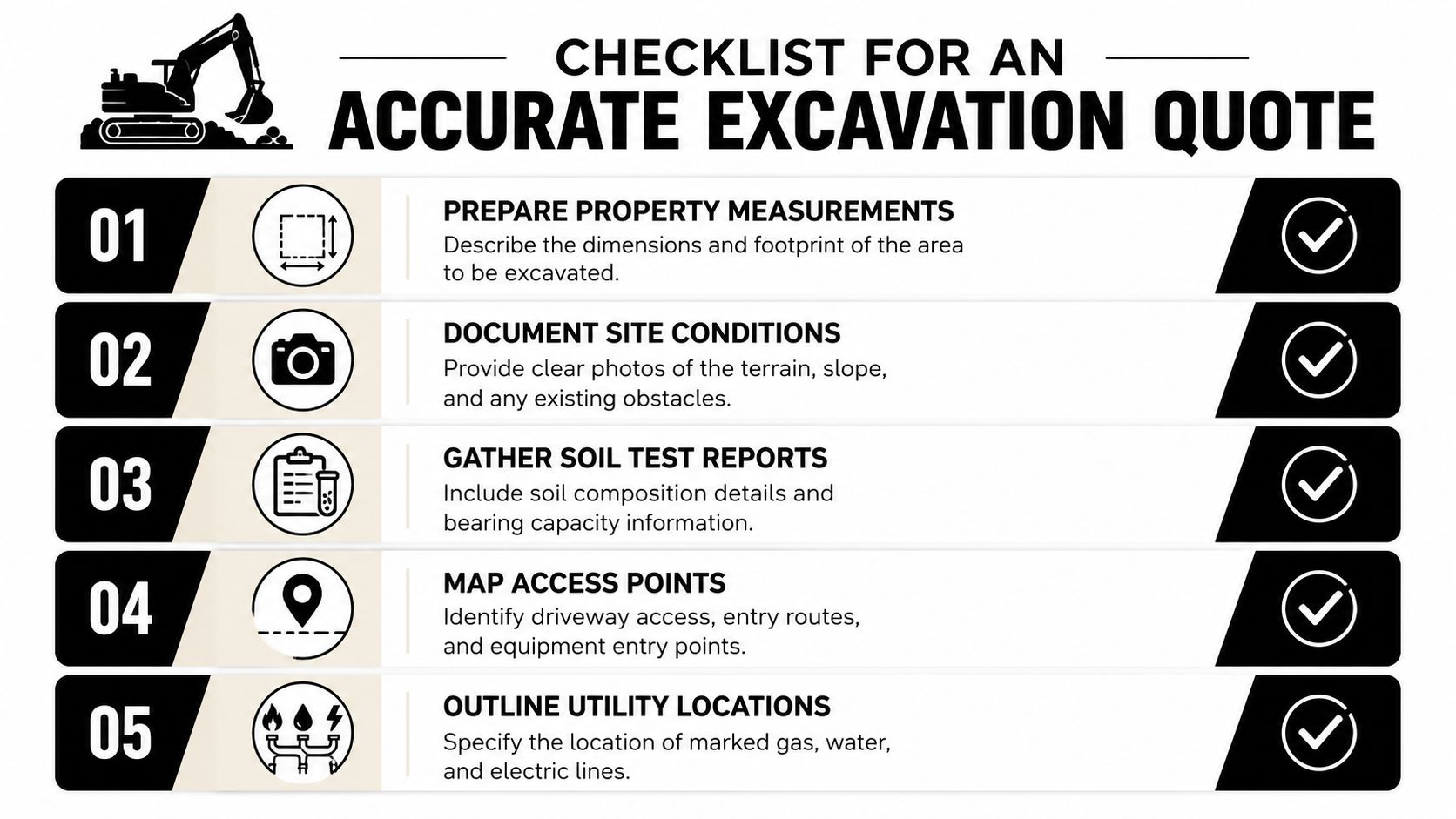
A clean quote starts with good information from the homeowner. When the contractor knows the footprint, the access points, and the site conditions, the estimate gets tighter and the surprises get fewer. That matters whether you're planning a shed foundation, a concrete foundation for garage, or a larger house foundation.
What to gather before you call
- Prepare property measurements. Share the footprint, the planned structure size, and any known depth requirements.
- Document site conditions. Photos of slopes, trees, tight access, or existing utilities help the estimator.
- Gather soil test reports. If you have soil composition or bearing data, send it.
- Map access points. Show where trucks and equipment can enter and turn.
- Outline utility locations. Confirm marked gas, water, and electric lines before work starts.
The more your quote packet looks like a real job file, the less likely you are to get a vague estimate.
If you want a starting point for residential excavation planning, the information on residential excavation services near me can help frame the right questions before you request pricing. The same checklist works whether you're pricing gravel shed foundation contractors near me, garage foundation contractors near me, or a new slab for a barn shed.
Conclusion and Next Steps
Foundation excavation is one of those jobs where the quote only makes sense when you understand the scope. Depth, soil, access, disposal, and site rules all matter, and the line items that aren't included can change the total as much as the digging itself. That's why homeowners who ask better questions usually end up with cleaner budgets and fewer surprises.
The strongest quotes are the ones that spell out what happens before digging, during spoil handling, and after the foundation work is ready for the next trade. When those details are clear, it's easier to compare bids for concrete foundations, garage footings and foundations, shed foundation gravel base work, or a full basement project without guessing at hidden costs.
For homeowners in Pennsylvania, Maryland, Delaware, and New Jersey, the smartest next step is to get a detailed quote that matches your site, not just your square footage. A good contractor should look at access, soil, drainage, and the full scope before naming a price, because that's what keeps the project on budget.
If you're ready to price your project with fewer surprises, Firm Foundations can help with transparent excavation and foundation quotes for your site. Reach out for a detailed estimate on shed foundations, garage slabs, or residential excavation, and get the kind of clear scope that helps you plan with confidence.