
2026 Excavation Cost for Foundation: Expert Guide
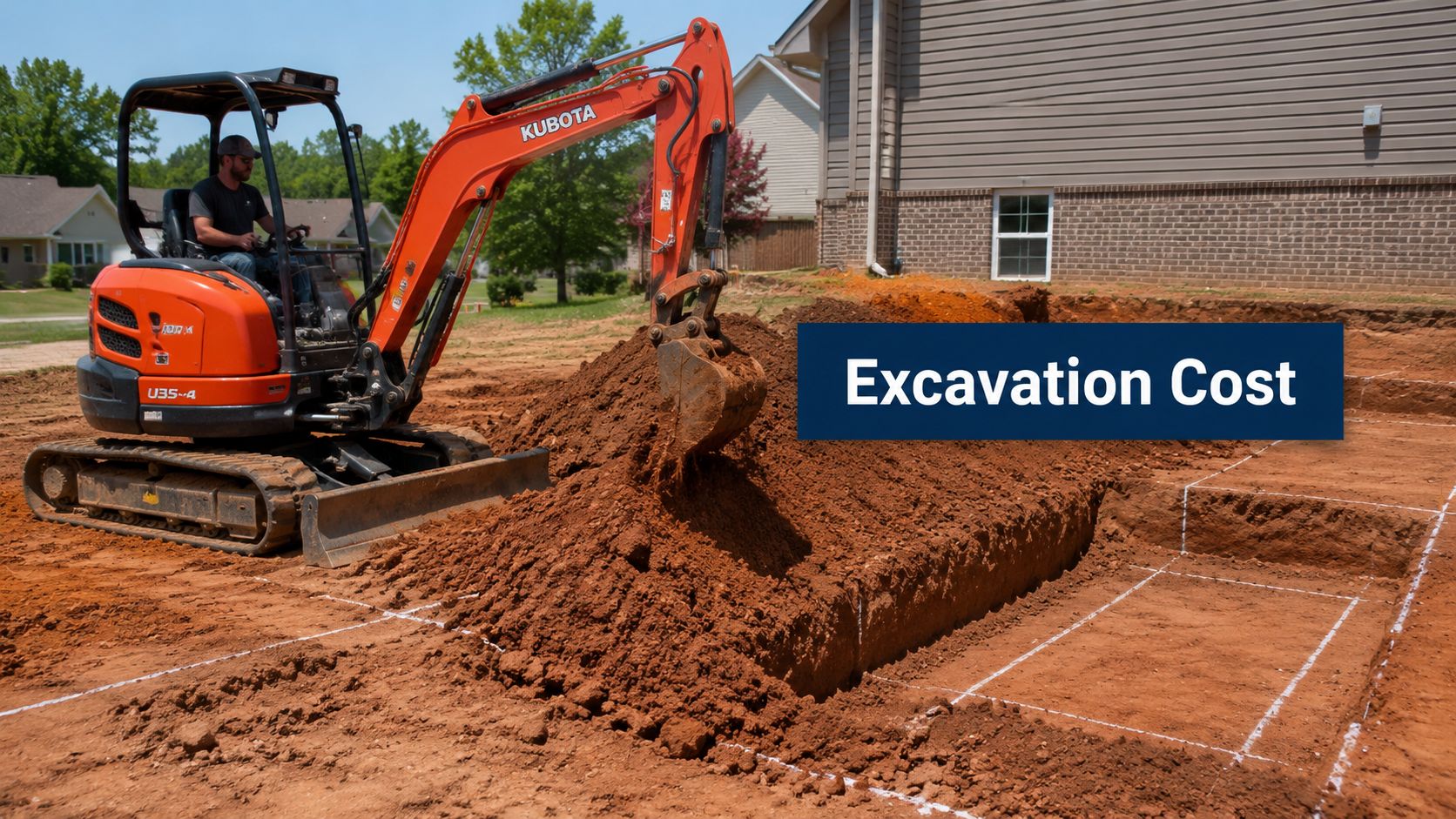
You price a shed, garage, or addition, and the numbers look manageable. Then the site work shows up, and the ground starts deciding the budget.
Across Pennsylvania, Maryland, Delaware, and New Jersey, foundation digging costs can land on the low end for a simple, open lot or climb fast on a tight site with poor access, slope, wet soil, or export hauling. That is why broad national averages only help so much. A backyard project in Honey Brook Township does not price the same way as a build on a sloped lot in Chester County, South Jersey, or a tighter suburban property in northern Delaware.
Homeowners usually want one clear answer. What will it cost to prepare the site for the foundation they need? The honest answer depends first on the type of base. A gravel pad for a shed, a concrete slab for a garage, and full footings for an addition all require different equipment time, excavation depth, grading tolerance, and material handling.
That is the part many online guides miss. Local excavation pricing is shaped by the structure above, the soil below, and how easy it is to get machines in and out without tearing up the rest of the property.
Before choosing a gravel shed base, garage footing, gazebo foundation, or house foundation, it helps to understand what changes the price and why two jobs that look similar on paper can come in very differently once the site is inspected.
Planning Your Project and Understanding the Costs
A homeowner calls about a shed or garage, and the first question is usually, "What does the foundation excavation cost?" The useful answer starts with what the structure needs from the ground, and what the site will let us do without extra labor, extra stone, or extra hauling.
Across PA, MD, DE, and NJ, I see the same pattern. Two projects with similar footprints can price very differently because one needs a simple gravel pad on a level lot, while the other needs deeper excavation, tighter grading, and spoil hauled off a tight suburban property. That is why early planning matters. It keeps the budget grounded in the actual job, not a generic average.
Start with how the structure will be used
A small storage shed, a detached garage, a gazebo, and a home addition do not place the same demands on the site.
A gravel base is often a practical choice for sheds, smaller outbuildings, and some backyard structures where drainage and level support matter more than a finished concrete surface. A garage or heavier building usually calls for a slab or footing system that needs more precise excavation and sub-base work. Additions and house foundations raise the stakes again because elevation, bearing capacity, drainage, and tie-in points all have to be right.
That single choice changes the scope before a machine ever arrives.
- Light-use structures: Gravel pads often keep excavation shallower if the yard is already close to grade.
- Heavier structures: Concrete slab and footing work usually requires tighter tolerances, more base preparation, and cleaner edges.
- Additions and full foundations: These jobs leave less room for error, especially on lots with slope, wet areas, or limited access.
Why local pricing varies so much
Foundation excavation is usually priced by the amount of material moved, the time equipment stays on site, and whether the excavated soil can stay on the property or has to leave. Homeowners sometimes expect a simple square-foot number. In practice, crews price the work based on what the site demands.
A level, open lot in one part of Lancaster County or southern New Jersey is a different job from a fenced backyard in northern Delaware or a sloped property in southeastern Pennsylvania. Access width, tree cover, existing drainage paths, and township conditions all affect machine choice and labor time. In parts of Maryland and Delaware, softer or wetter ground can also change how much base prep is needed before the foundation is ready.
The type of foundation matters just as much. Gravel and concrete do not carry the same excavation cost profile. Gravel pads often save on depth and forming, but they may still need cut-and-fill correction, fabric, stone delivery, and compaction. Concrete foundations add layout precision, deeper sections in some cases, and less tolerance for a rough subgrade.
What to pin down before asking for a quote
Good estimates start with clear project details. Without that, quotes can look similar on paper but cover very different scopes.
- What are you building? A shed base, garage slab, and addition foundation each require a different excavation approach.
- Where will it go? Access through a gate, slope, tree roots, and distance from the driveway all affect labor and equipment.
- What is included? Excavation, stone, grading, spoil removal, concrete prep, and final cleanup are not always bundled the same way.
- Do you want gravel or concrete? That decision affects both the excavation method and the all-in budget.
A search for local shed foundation providers may give you several prices. The better question is what each contractor is including, and what site conditions they are assuming. That is where homeowners either protect their budget or get surprised later.
Clear planning up front leads to a cleaner site plan, a more realistic number, and fewer change orders once digging starts.
Comparing Excavation Costs for Your Foundation Project
A homeowner in Pennsylvania might price a shed pad and assume the garage will scale up the same way. In the field, it rarely works that cleanly. The better comparison is all-in cost by project type, foundation type, and local site conditions across PA, MD, DE, and NJ.
A simple side-by-side view
Below is a practical comparison for common projects in this region. The point is not to chase a generic national average. It is to compare the kind of excavation each project needs before stone, concrete, drainage work, or cleanup start changing the total.
| Project Type | Typical Size | Foundation Type | Estimated Cost Range |
|---|---|---|---|
| Small storage shed | Small footprint | Gravel shed foundation | Lower end on level ground with clean access and minimal grading |
| 10×10 storage shed | 10×10 | Gravel base or shed foundation blocks | Lower to mid range depending on base thickness, grading, and stone delivery access |
| Large shed or barn shed | Larger footprint | Gravel pad or concrete pad | Mid range, especially on sloped sites or where more cut and fill is needed |
| Detached garage | Two-car or similar | Reinforced concrete slab with garage footings and foundations | Mid to upper range because layout, excavation depth, and base prep are usually stricter |
| Gazebo or patio structure | Small to medium footprint | Gravel base or concrete pad | Lower to mid range depending on finish requirements and drainage control |
| Home addition | Varies | Slab, crawl space, or deeper foundation | Mid to upper range based on tie-in work, access, and excavation depth |
| New house foundation | Full residential footprint | Slab, crawl space, or basement | Often spans the full published excavation range depending on lot conditions and scope |
Slab versus crawl space versus basement
Independent cost guidance shows slab prep can start around $2,500 to $6,000, crawl spaces around $3,000 to $10,000, and basements much higher, while difficult sites can push projects to the upper end or beyond, according to Superior Excavating's discussion of building foundation excavation.
For homeowners in PA, MD, DE, and NJ, the decision usually comes down to what the lot allows and what the building needs long term.
- A slab-on-grade often works well on a flat site with stable soils and straightforward drainage.
- A crawl space can be the better fit where grade changes, moisture control, or utility runs make a raised floor more practical.
- A basement takes more digging, more hauling, and tighter water management. It belongs in a different budget category from a simple slab or gravel pad.
On sloped lots, in heavy clay, around shallow rock, or in wet coastal and low-lying areas, a shallower foundation can still cost more once extra prep is added.
Where local site conditions change the decision
Regional conditions matter more than many homeowners expect. In southeastern Pennsylvania and parts of New Jersey, one property may have open access and firm ground, while the next has a narrow side yard, old fill, or a grade break that slows production. In parts of Maryland and Delaware, drainage and groundwater can influence both the excavation plan and the type of base that makes sense.
That is why I do not compare a gravel shed pad to a garage slab by square footage alone. A gravel project may save money on depth and concrete work, but it can still need geotextile fabric, imported stone, multiple compaction passes, and spoil removal. A garage slab usually asks for tighter tolerances, thicker edge support, and more exact subgrade preparation.
Homeowners often call local garage foundation contractors, local contractors for gravel shed foundations, or concrete crews before anyone has sorted out which system fits the structure and the lot. That is how two quotes can look close at first and land far apart by the time the site is ready.
What usually works best
For many sheds, a properly built gravel pad is the most practical choice. It drains well, goes in faster, and usually costs less than a concrete foundation if the site is cooperative.
For garages and heavier framed buildings, concrete usually wins because it handles wheel loads, anchoring, and long-term movement better. For additions and house foundations, the right answer depends on how the new work ties into the existing home, how water moves across the lot, and how much correction the site needs before excavation is even complete.
That is the comparison that protects a budget. Surface type matters, but all-in excavation cost comes from the whole job, not the label on the foundation.
How We Calculate Your Foundation Excavation Estimate
A homeowner in Pennsylvania or South Jersey will often call and ask, "What does it cost to excavate for my foundation?" The honest answer starts with the site, the structure, and what "ready for foundation" includes. In PA, MD, DE, and NJ, two projects with the same footprint can price very differently once access, disposal, and finish requirements are spelled out.
The two units that matter most
I build excavation estimates from two measurements first. How many cubic yards need to be cut, and how many crew and machine hours the job will take under real site conditions.
For a baseline, HomeGuide's excavation cost reference shows excavation often priced by cubic yard and by hourly equipment and labor rates. Both matter. Yardage helps with the math. Hours determine what the job costs once a machine is working on a tight lot, loading trucks, protecting nearby structures, or cleaning the subgrade to the right tolerance.
That is why a square-foot price by itself is usually too loose for foundation work.
How that looks on an actual estimate
A 12×24 shed pad is a good example because the math is simple, but the field conditions are not always simple. We start with length, width, and excavation depth to get a rough volume. Then we adjust for what the crew will face on site.
An open backyard with clean access may only need a compact machine, a short dig window, and light cleanup. The same 12×24 pad behind a fence, near roots, or in a soft area can take much longer because smaller equipment moves less material per hour and the operator has less room to work cleanly.
That estimate usually includes four practical checks:
- Excavation quantity: The amount of soil or mixed material that has to come out.
- Access and equipment size: Whether the crew can use full-size equipment or has to bring smaller machines through a gate or between structures.
- Spoil handling: Whether excess soil stays on site, gets redistributed, or has to be hauled away.
- Foundation finish: A gravel base and a slab base do not get prepped to the same standard.
For slab work, that final prep matters more than many homeowners expect. The subgrade has to be shaped and compacted to support the concrete properly, and site preparation for concrete slab projects usually adds steps that a basic gravel pad may not need.
Why similar projects still price differently
A gravel shed foundation and a concrete garage slab can start with similar excavation footage and still end with different totals. Gravel work may need less exact finish tolerance, but it can still require fabric, imported stone, and cleanup. Concrete work usually demands tighter grading, cleaner edges, and a more controlled base because mistakes show up later as slab problems.
That is a real trade-off, especially in our part of the Mid-Atlantic where older properties, narrow driveways, and limited staging space are common. On a suburban lot in Delaware County or North Jersey, disposal and access can change the number faster than raw digging depth.
Safety planning can affect cost too. If the excavation involves deeper trench-related work, unstable sides, or utility conflicts, the crew may need a different approach to protect people and nearby improvements. Homeowners who want background on trench safety can review this guide to safe UK drainage trenching. The standards are UK-based, but the core point carries over. Safe excavation takes planning, time, and the right setup.
A clear estimate should show what is included, what is assumed, and what could change if the site opens up surprises. If the quote does not explain access, spoil removal, finish level, and the difference between gravel and concrete prep, it is not complete enough to compare fairly.
Major Factors That Influence Your Final Excavation Price
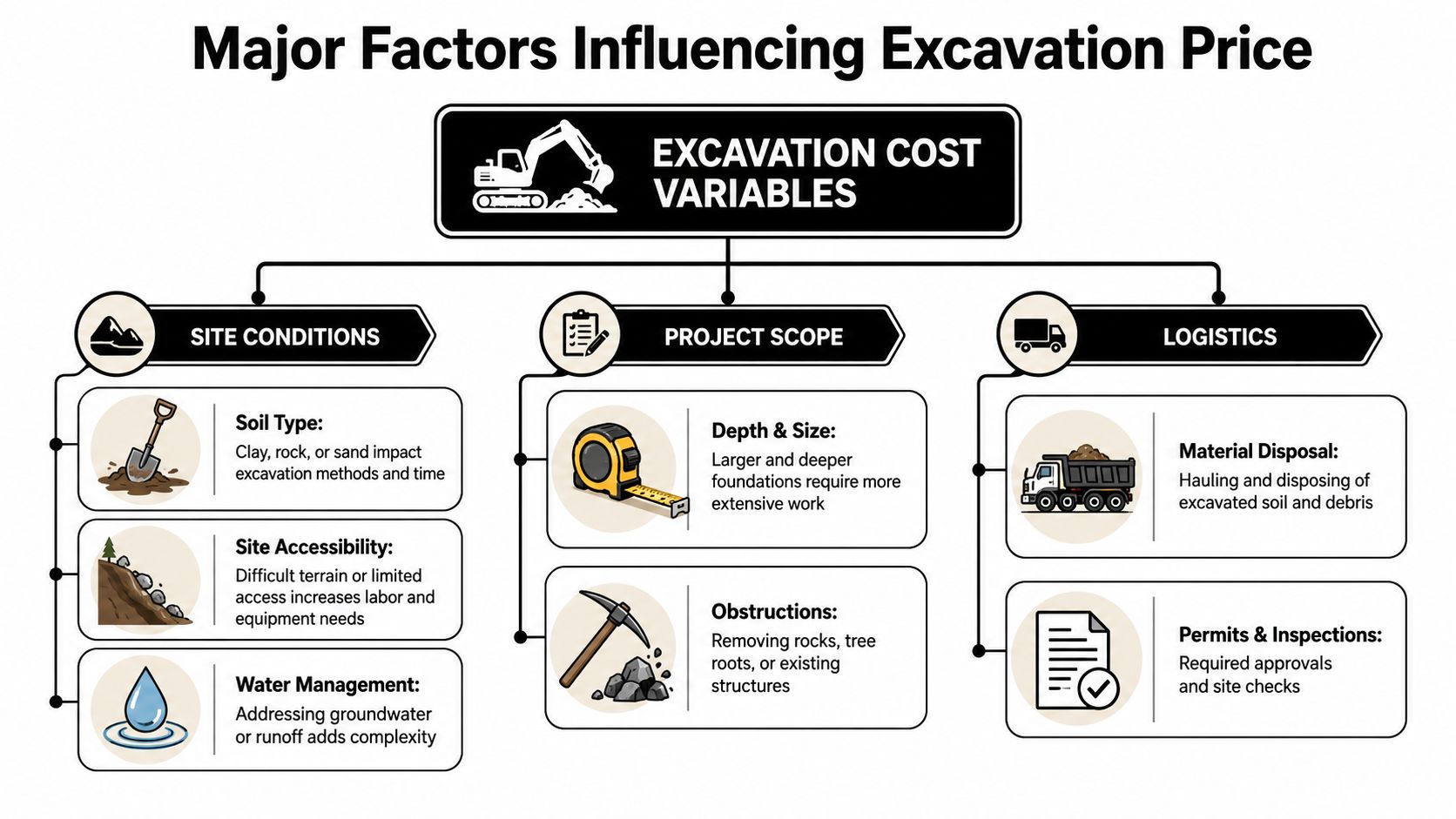
Two foundation jobs can look similar on paper and finish at very different prices once boots hit the site. I see that often across Pennsylvania, Maryland, Delaware, and New Jersey. A flat, open lot in southern Chester County is one job. A tight backyard in North Jersey with limited access and old fill is another.
Ground conditions affect time, equipment, and risk
Soil is one of the first things that changes a price. Clean topsoil over workable subgrade is usually straightforward. Clay, buried debris, old construction fill, shale, wet ground, or a high water table slow the crew down and can require a different excavation plan.
Slope matters too. On a level lot, the machine can often get right to work. On a sloped site, part of the cost goes into creating a safe, workable area before the foundation dig is even at final depth.
If the excavation involves deeper trenching, soft walls, or drainage conflicts, safety setup becomes part of the job cost. Homeowners who want outside context can review this guide to safe UK drainage trenching. The regulations are UK-specific, but the point is the same. Safe trench work takes planning, protection, and time.
The foundation type changes the level of precision
A gravel foundation and a concrete foundation are not priced the same way, even when the footprint is close.
Gravel work usually allows a little more flexibility in finish grading, but it may still need excavation fabric, imported stone, compaction, and careful drainage control. Concrete work usually needs tighter elevation control, cleaner edges, and a more uniform base because any low spot or soft area can show up later as slab cracking or settlement. Homeowners comparing those requirements can get a clearer picture from this site preparation guide for a concrete slab.
That difference shows up a lot in our region. A shed pad in rural Maryland may be mostly about access and stone delivery. A garage slab in an established Pennsylvania neighborhood may cost more because the finished base has to be far more exact and the room to work is limited.
Access and staging often decide whether a job stays efficient
Some sites are easy to dig and hard to service. That is where prices climb.
A narrow gate, overhead wires, septic locations, fences, tree lines, and long pushes from the driveway to the dig area all reduce production. The machine may need to be smaller. Trucks may need to be loaded in a less efficient spot. Material may need to be moved twice instead of once. In older neighborhoods across PA, MD, DE, and NJ, those access issues are common, and they affect labor hours as much as excavation depth does.
A phone quote cannot catch that well. A site visit can.
Local conditions in PA, MD, DE, and NJ matter
Local pricing is shaped by more than dirt. Disposal options, permit requirements, travel time, neighborhood density, and municipal rules all influence the final number.
For example, parts of southeastern Pennsylvania and northern New Jersey often have tighter access and stricter hauling logistics than newer developments in Delaware or more open lots in parts of Maryland. Some areas also have more rock, older buried material, or drainage issues tied to the age of the property. Those are local cost drivers. National averages do not explain them well.
What a careful contractor checks before locking in price
Before finalizing an excavation estimate, a careful crew should look at:
- Machine and truck access
- Slope and drainage patterns
- Surface soil and signs of fill or buried debris
- Trees, roots, stumps, and nearby structures
- Space for stockpiling or loading out material
- The finish standard required for gravel versus concrete
That last point matters more than many homeowners expect. Searches for local shed foundations often pull up broad price ranges, but the key question is what the foundation has to do, how exact it has to be, and what the site will allow. A useful quote should reflect those field conditions, not just the square footage on a sketch.
Uncovering Hidden Costs in Foundation Projects
A homeowner gets a fair digging number, approves the job, and then the budget changes once the trucks start lining up. That usually happens because the excavation itself was only one part of the cost.
Haul-off often swings the budget
For many foundation jobs in PA, MD, DE, and NJ, the biggest cost surprise is not the machine on site. It is what happens to the material after it comes out of the ground.
If clean soil can stay on the property and be used for grading, cost stays more controlled. If there is no room on site, or the material is wet, mixed with debris, or unsuitable for reuse, trucking and disposal can add up fast. Autodesk notes that excavation pricing is often tied to cubic yards or hourly equipment time, and that hauling can become a major part of the total, as discussed in Autodesk's guide to excavation costs.
That is why two projects with similar square footage can land at very different totals.
Costs that are easy to miss on an early quote
A foundation proposal may include more than digging and basic layout. Depending on the site and foundation type, added cost can come from:
- Spoil removal: Loading, trucking, and dumping excavated soil off site.
- Imported material: Gravel, base stone, or backfill brought in after excavation.
- Permit-related items: Erosion control, inspections, or municipal requirements.
- Rehandling material: Moving soil twice because the lot does not have a good staging area.
- Unsuitable subgrade correction: Removing soft or organic material and replacing it with stable stone.
That last item shows up often on older properties in this region, especially where past fill, buried debris, or soft pockets were never obvious from the surface.
Ask this before you sign: "If the excavated material cannot stay on site, where is it going, and is that included in the price?"
What clear pricing looks like
A solid quote breaks the work into parts you can follow. Excavation. Material handling. Imported stone. Disposal. Cleanup.
That matters even more when comparing gravel and concrete foundation projects. A gravel shed pad often shows the imported stone clearly because it is part of the finished base. A concrete slab or garage footing job can hide more cost in spoil hauling, overdig correction, and final subgrade prep. For a house foundation, both can hit the budget at the same time.
Homeowners comparing local excavation services should not focus only on the smallest starting number. The better number is the one that accounts for site conditions, hauling, and material needs before the work begins.
Smart Ways to Manage Your Foundation Budget
Homeowners do have some control over cost. The key is reducing wasted time, not cutting the steps that protect the foundation.
Four practical ways to keep the project efficient
- Clear the work area early: Move trailers, stored materials, vehicles, and personal items before the crew arrives. If operators spend part of the day waiting for access, the project gets more expensive.
- Decide on the foundation type before pricing gets too far: Bouncing between shed foundation blocks, a gravel pad, and a concrete slab can slow estimating and create revisions that don't help you compare bids cleanly.
- Talk through spoil management up front: If you want excavated soil left on site for later grading, say that early. If you want a turnkey cleanup, ask for it in writing.
- Schedule with realistic timing: Rushed starts, partial access, and changing the pad location after layout usually cost more than homeowners expect.
Where saving money usually backfires
Skipping proper site prep is the expensive kind of savings. A base that settles, holds water, or ends up out of level creates trouble long after the equipment leaves. For projects like concrete foundations, garage footings and foundations, and heavier gazebo foundation builds, efficient planning matters. Cheap shortcuts don't.
One practical option for homeowners in the region is working with a contractor that handles both excavation and foundation prep in one scope. Firm Foundations provides residential excavation, gravel pads, and concrete foundation work across PA, MD, DE, and NJ, which can simplify coordination when you're comparing bids for one complete foundation package.
Your Project Timeline and Getting a Clear Quote
A good foundation project should feel organized from the first call. Homeowners don't need a complicated process. They need a clear one.
The usual flow of the job
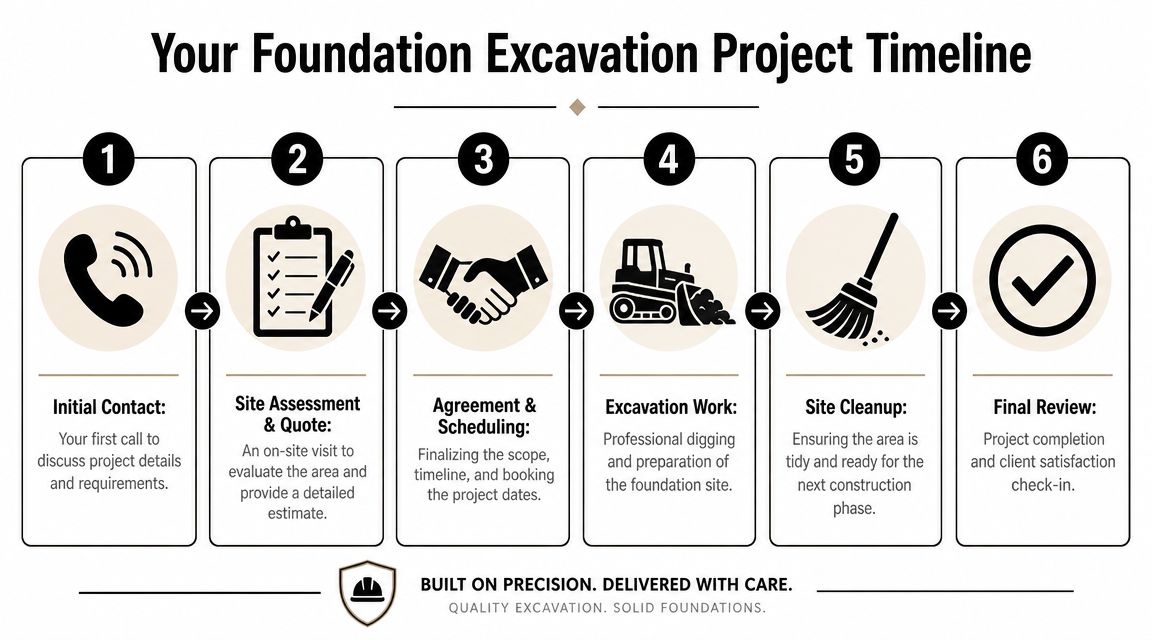
Most projects follow a straightforward sequence.
- Initial conversation about the structure, location, and intended foundation type.
- Site visit to look at grade, access, drainage, and excavation scope.
- Written quote that explains what is included.
- Scheduling and prep so access and site conditions are ready.
- Excavation and foundation work based on the agreed scope.
- Cleanup and final review before the next stage of construction.
If you're comparing local providers, reviewing examples of residential excavation services near me can help you see what a complete service scope should include.
Questions worth asking any contractor
A homeowner doesn't need to know every technical detail, but these questions usually reveal whether a quote is solid:
- Is soil disposal included if material has to leave the property?
- Is imported gravel or base material included?
- What assumptions are you making about access to the site?
- Are permits or required site-control items part of this price?
- What happens if the crew finds rock, roots, or buried debris?
- Are you licensed and insured for work in my state?
A useful quote doesn't just give a number. It tells you what conditions that number depends on.
The right contractor should be able to answer those questions clearly, without hiding behind vague allowances or one-line estimates.
If you're planning a shed pad, garage slab, gazebo base, or house foundation in Pennsylvania, Maryland, Delaware, or New Jersey, Firm Foundations can provide a clear, no-obligation quote based on your actual site conditions. Reach out to discuss your project, compare gravel and concrete foundation options, and get a scope that explains the excavation, material handling, and foundation prep in plain language.