
Erosion Control Measures for PA & MD Foundations
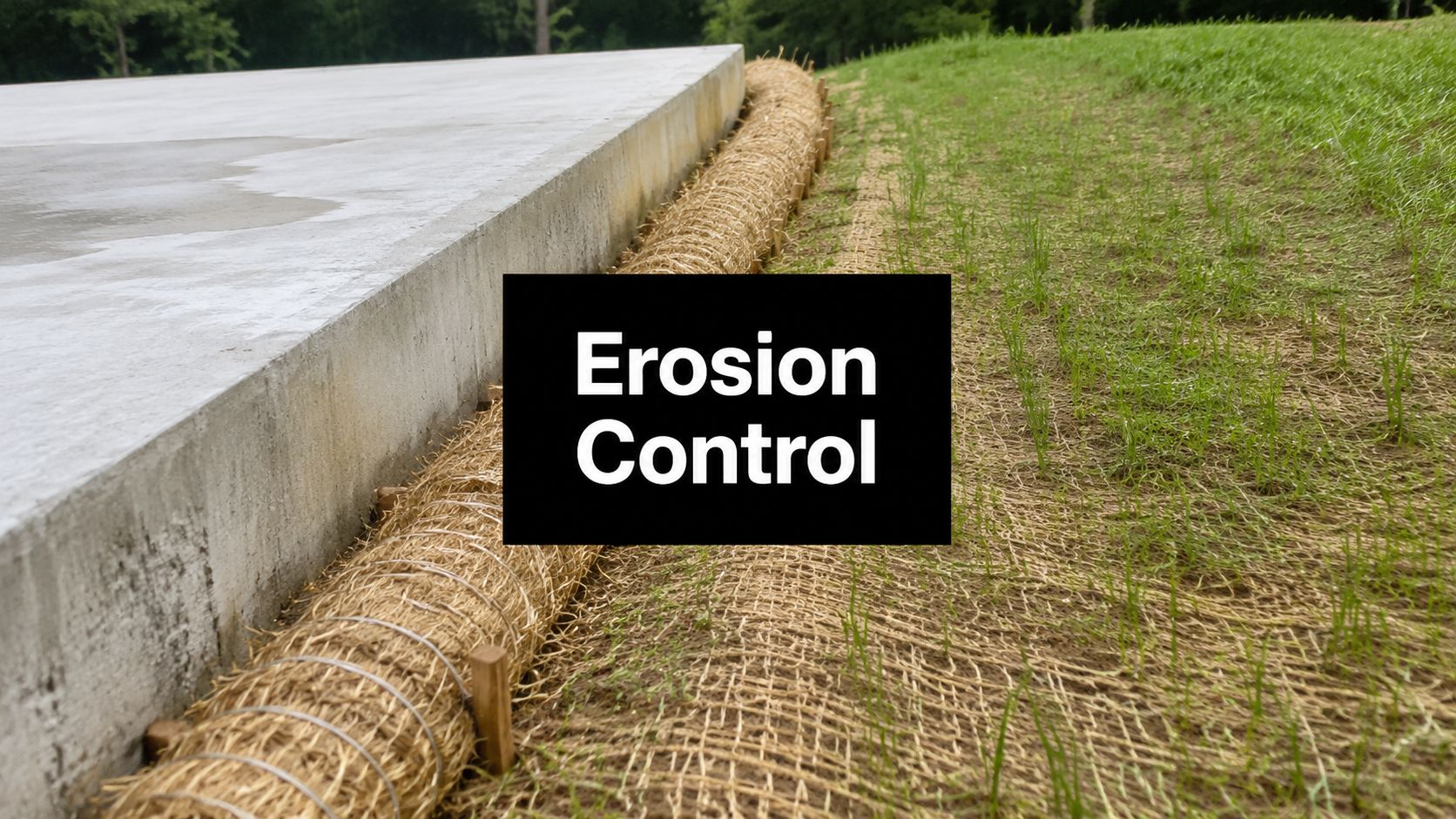
You finally got the shed pad poured. Or the garage slab is in, the forms are stripped, and the site looks clean for the first time in weeks. Then Pennsylvania weather does what it does. A hard rain hits, water runs off the roofline, the edge of the new pad gets soft, and you start seeing muddy tracks, washed gravel, or little channels cutting through bare soil.
That's the moment most homeowners realize the foundation itself may be solid, but the ground around it is still vulnerable.
This matters whether you're searching for shed foundations near me, planning a base for storage shed, or pricing out garage footings and foundations for a larger build in Honey Brook Township and surrounding parts of Pennsylvania, Maryland, Delaware, and New Jersey. The weak point usually isn't the concrete. It's the transition period right after installation, before the site is fully stabilized.
Your New Foundation Is In Now Protect It
A lot of residential erosion problems start the same way. The pad looks finished, so the project feels done. Then the first few storms show what still needs attention.
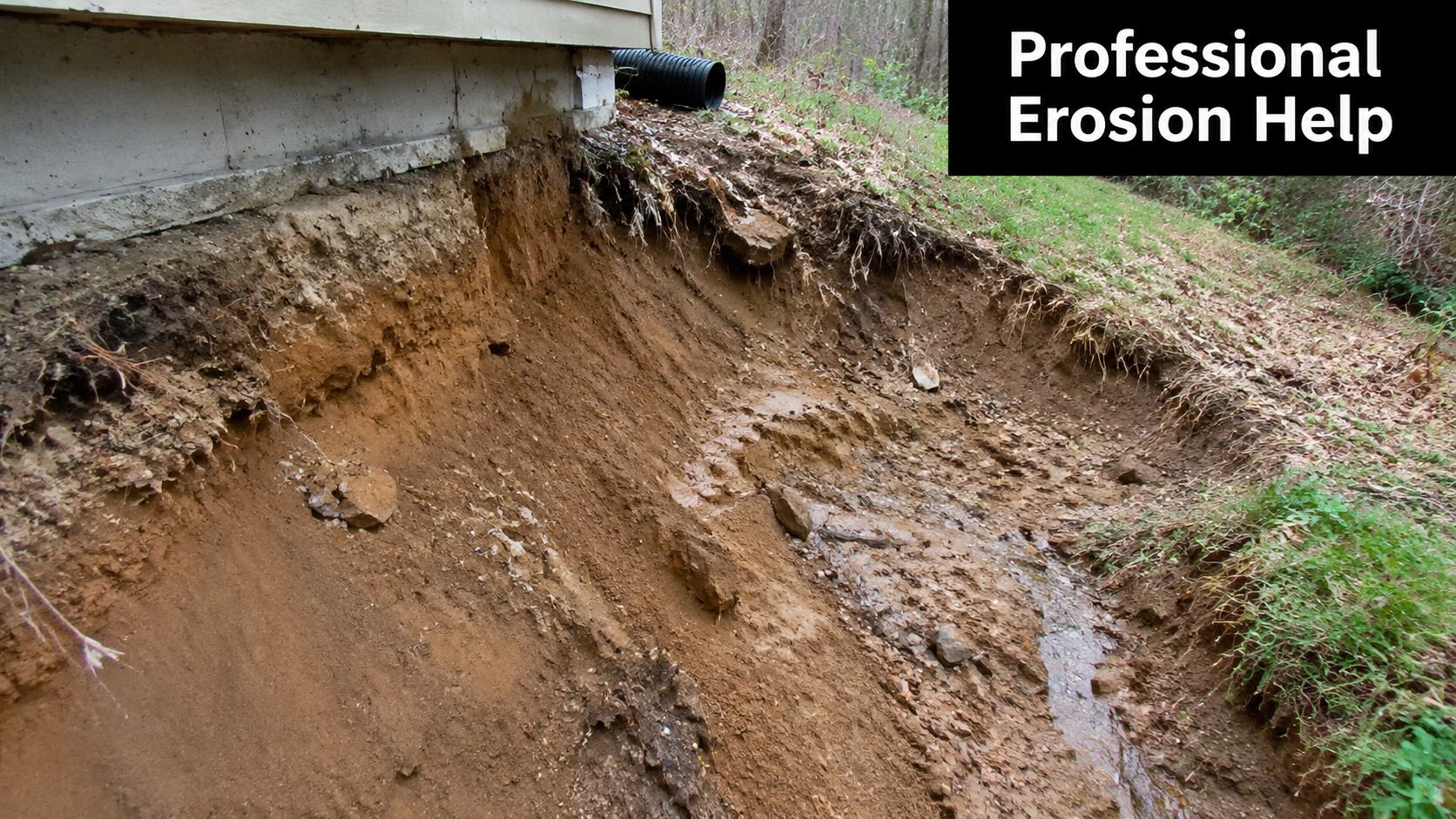
A homeowner installs a new shed foundation gravel base for a barn shed or a cement foundation for garage behind the house. At first glance, everything looks right. But the lot was disturbed during excavation, the soil beside the slab is bare, and runoff has a straight path downhill. After one rain, a thin layer of topsoil moves. After another, the water starts cutting a track. Before long, the clean edge around the foundation turns into a washout.
The part homeowners don't get warned about
The most overlooked issue is the gap between temporary and permanent stabilization. The slab or gravel pad may be complete, but the surrounding ground often isn't ready to handle repeated runoff yet.
The underserved residential guidance on this is worth paying attention to. Data from the Tallgrass Prairie Center says 75% of erosion on residential sites occurs during the 3 to 6 month vegetation establishment period after concrete pouring, which is exactly when many homeowners assume the risky phase has passed (Tallgrass Prairie Center guidance on erosion).
Practical rule: A new pad isn't protected just because the concrete cured. The soil around it still needs a plan.
That's especially true for smaller residential projects that don't get the same attention as commercial jobs. A 4×8 shed with foundation, a 10×10 storage shed, or a simple gazebo foundation can still suffer edge washout, settlement around the perimeter, and drainage problems if the finish grade and temporary protection were skipped.
What protection looks like in real life
For most home sites, the goal is simple. Slow the water down, keep the soil in place, and give vegetation time to establish.
That can mean:
- Protecting bare soil right away with mulch, seeding, or a blanket instead of leaving dirt exposed after excavation.
- Managing runoff paths so roof water and slope water don't dump at the slab edge.
- Stabilizing the transition zone between the new foundation and the existing yard, which is where many failures start.
Homeowners shopping for shed foundations contractors near me, garage foundation contractors near me, or concrete contractors often focus on the pour. They should also be asking what protects the site after the crew leaves.
Why Soil Erodes Around Your Home and Shed
Soil erosion around a home usually isn't dramatic at first. It starts subtly. Water hits bare soil, loosens particles, and carries them downhill. That's all it takes.
If the area around your shed foundation or house foundation was recently excavated, the soil has already been disturbed. It won't resist runoff the way established turf does. Add roof discharge, slope, and repeated storms, and the ground starts moving.
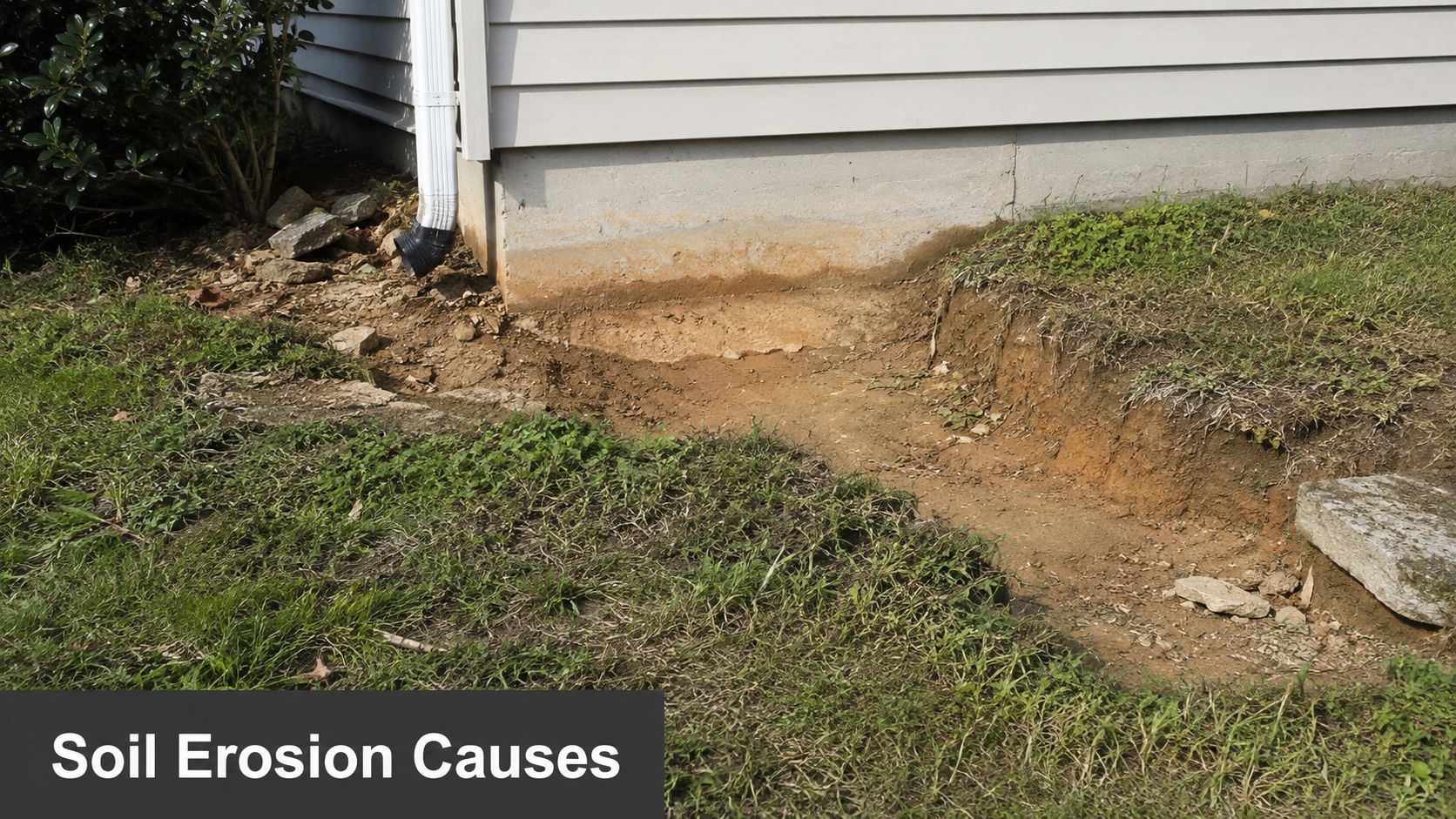
What water is doing to your site
Think of runoff like traffic. Slow, spread-out movement causes less damage. Fast, concentrated movement tears things up.
That's why grading matters so much near concrete foundations. For effective erosion control and drainage around concrete foundations, the ground must slope downward at a rate of 1 inch per foot for the first 5 to 10 feet away from the structure to prevent pooling (grading guidance for concrete foundations). If that slope isn't there, water lingers, saturates the soil, and finds the easiest route out.
Three erosion patterns homeowners actually see
Most residential erosion shows up in one of these forms:
| Type | What it looks like | Why it matters |
|---|---|---|
| Sheet erosion | A thin, almost even loss of soil across the surface | You may not notice it right away, but it strips away support around a pad or slab over time |
| Rill erosion | Small channels or grooves in the soil after rain | These channels direct more water into the same path and keep getting worse |
| Gully erosion | Larger washouts or drop-offs | This is where the site starts becoming a structural and safety concern |
Sheet erosion fools a lot of people because it doesn't look severe. The yard still appears mostly intact. But when fine material keeps washing off around a gravel shed foundation or slab edge, the finished grade starts disappearing.
Rills are the next warning sign. They're those narrow cuts you see in bare dirt beside a driveway, along the side of a base for storage shed, or below a downspout. Once water starts using a channel, it usually comes back to the same spot.
Small grooves after one storm usually mean bigger repairs after the next few storms.
Why grass alone isn't always enough
Homeowners often assume seed solves everything. Seed helps, but fresh seed on a slope isn't the same as established cover.
Forest Research notes that planting vegetation with deep roots, applying mulch, and using erosion control blankets are scientifically proven to hold soil in place, increase water infiltration, and reduce the erosive power of runoff on hillsides and slopes (Forest Research on erosion control methods). The key point is that these measures work together. Vegetation is the destination. Temporary protection is what gets you there.
That matters throughout Pennsylvania and nearby service areas where yards often include a mix of compacted fill, clay-heavy spots, looser topsoil, gravel transitions, and roof runoff concentrated in one area. A site can look mild on a dry day and still behave badly during a storm.
A Guide to Common Erosion Control Measures
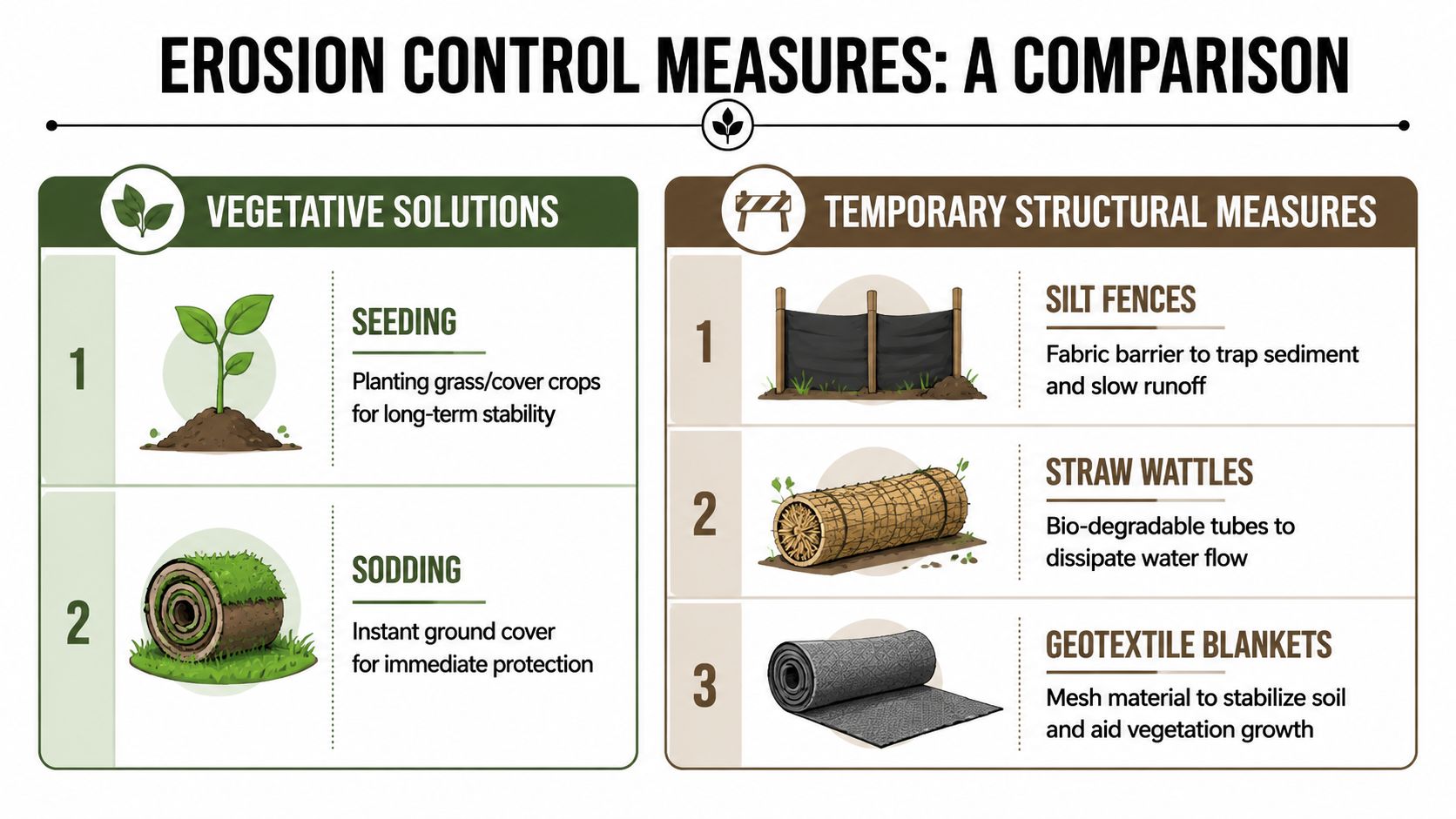
Once you know how the water is moving, the right solution gets easier to choose. Good erosion control measures generally fall into three groups. Vegetative cover, temporary controls, and permanent hard-armored solutions.
This comparison is a useful starting point.
Vegetative solutions
These are the measures that turn disturbed soil back into stable ground over time.
Seeding
Best for broad areas around a new shed foundation or gazebo foundation where the slope is manageable and runoff isn't severe. It's affordable and practical, but it needs time and protection.Sod
This gives immediate cover. It's useful where you want a finished look fast or where loose soil can't sit exposed. Sod costs more, but it closes the vulnerable window much faster than seed.Mulch
Mulch protects bare soil, softens rainfall impact, and helps hold moisture while seed gets started. It's not a complete answer on steeper grades, but it's a solid part of the system.
A good outside example of regional thinking on this is preventing soil loss for North Georgia homes. Different soils and climates behave differently, but the residential lesson is the same. Match the ground cover strategy to how water moves across the property.
Here's a quick field demo worth watching before choosing between basic cover and stronger temporary controls.
Temporary structural measures
These are the tools that protect the site during the vulnerable period after excavation and before permanent stabilization takes hold.
Silt fence
A silt fence is a temporary fabric barrier used to trap sediment and slow runoff. It's common around smaller residential disturbance areas and can help on a 10×10 storage shed site where loose soil would otherwise wash into the yard or driveway.Straw wattles or similar check devices
These sit across the flow path to slow water and catch sediment. They're helpful when runoff is moving down a mild slope and you need to break up the velocity.Erosion control blankets
These are one of the most useful residential tools, especially after grading around a new slab or pad. They hold soil in place while seed grows through them. If you want a good look at proper material placement, this geotextile fabric installation guide shows the kind of site prep and coverage details that matter.
A blanket installed on rough, loose, poorly prepared ground usually fails early. The material matters, but the prep matters just as much.
Permanent hard armor solutions
Some sites need more than temporary protection. If the slope is too steep, the flow is too concentrated, or the ground keeps moving, harder solutions make more sense.
Consider these options:
Riprap
This is placed stone used to absorb water energy and protect a drainage path, ditch edge, or outfall area. It's practical where concentrated water leaves a pipe or swale.Retaining walls
A retaining wall is a structural solution for grade change, not a decorative shortcut. It's used when a slope beside a garage foundation or driveway can't safely hold itself.Energy dissipaters
These are built to absorb the force of flowing water and spread it out before it scours the soil. They're especially useful where runoff exits fast.
What works best for small residential projects
For a lot of homeowners, the best answer is a combination, not a single product.
A shed foundation gravel base may do well with finish grading, mulch, and seed if the site is fairly level. A concrete foundation for garage on a sloped lot may need blankets on disturbed areas, controlled roof drainage, and stone where water exits. The biggest mistake is using a light-duty fix where the site clearly needs something stronger.
Choosing Solutions for Your Specific Site
The right erosion control measures depend on your site, not just the foundation type. Two homeowners can both need shed foundations near me and end up needing completely different protection around the finished project.
One may have a flat backyard with light runoff and room for water to spread out. The other may have a slope behind the garage, compacted soil from excavation, and water leaving the downspout in one concentrated stream. Same kind of project. Different risk.
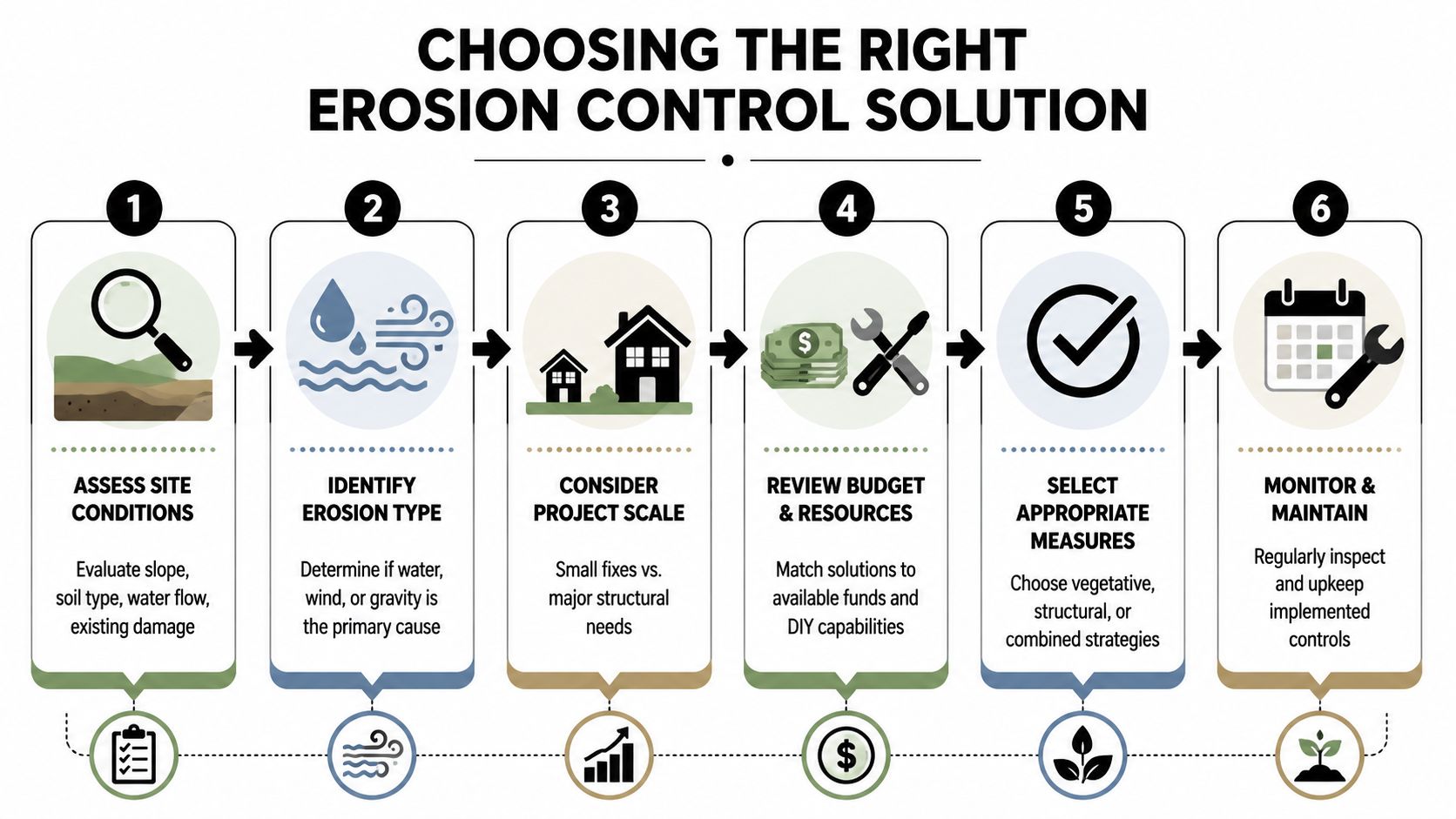
Start with the slope
Slope tells you a lot. A mild grade may only need seeding, mulch, and good drainage. A steeper grade needs more support right away.
Erosion Control Blankets are typically mandated for slopes steeper than 3:1 because they stabilize soil and protect seed until permanent grass establishes its root system (MoDOT erosion control blanket guidance). For homeowners, that's an important threshold. If the area beside your garage footings and foundations drops off sharply, don't assume seed alone will hold.
Match the measure to the foundation type
Different builds create different site conditions.
| Foundation type | Common site issue | Typical response |
|---|---|---|
| Gravel shed foundation | Edge washout and migration of surrounding soil | Grade the perimeter correctly and protect disturbed areas until growth takes hold |
| Concrete foundation for garage | Concentrated runoff at slab edges or corners | Add controlled drainage and stronger stabilization where water exits |
| Gazebo foundation or patio pad | Surface runoff crossing the finished area | Redirect flow before it reaches the pad and protect adjacent bare soil |
A residential site also needs the drainage plan to work with the foundation plan. If water is being directed toward the pad, it doesn't matter how clean the pour was. foundation drainage design then becomes part of the conversation, especially for homeowners comparing concrete foundations, garage foundation contractors near me, or excavation near me options.
Pay attention to how the soil was tracked and finished
This is a detail many residential pages skip, but it matters. The Tallgrass Prairie Center also highlights the overlooked transition period after foundation work, and another underserved residential issue involves excavation grooves. Guidance highlighted through Lakesuperiorstreams says improper cat tracking orientation can increase sediment loss by 40% compared to properly oriented tracks, which is why grooves should run perpendicular to water flow to reduce rilling under blankets on small shed and garage projects (Lakesuperiorstreams erosion guidance).
That sounds minor until you see what bad tracking does on a fresh slope. Water follows those grooves like rails.
If the site is grooved the wrong way, the blanket can end up covering a drainage path instead of stopping one.
A simple decision filter
If you're looking at your own property, use this filter:
- Gentle slope and light runoff means softer measures often work well.
- Bare soil plus concentrated water means you need both drainage control and surface protection.
- Steep drop-offs or recurring washouts usually call for professional grading or a structural solution.
The more water you have and the less room it has to spread out, the less forgiving the site becomes.
Installation and Long Term Maintenance Tips
Most erosion control failures don't happen because the idea was wrong. They happen because the installation was rushed, the drainage path wasn't finished, or nobody checked the site after the first few storms.
Homeowners don't need a full DIY manual for this. They do need to know what a quality job should include and what to keep an eye on after the crew leaves.
What proper installation should look like
A good installation starts before any blanket, seed, or stone goes down. The surface should be shaped correctly, loose problem areas should be addressed, and water should have a defined path away from the structure.
For roof drainage, one rule is straightforward. Downspouts should direct water 5 to 10 feet from the base of the building to help channel rainwater away from the foundation and minimize soil erosion (downspout extension guidance). If a downspout stops right beside a new slab, that area is going to stay under pressure.
What to inspect after storms
Walk the site after heavy rain. Don't just look at the foundation itself. Look at what the water did around it.
Use a short checklist:
- Check slab and pad edges for exposed aggregate, undercut soil, or gravel migration.
- Look at low corners where water tends to collect or turn.
- Inspect blankets and mats for lifted edges, gaps, or soil washing out from underneath.
- Follow the downspouts and make sure they're still discharging where intended.
- Watch for rills forming in newly seeded soil. Small channels are early warnings.
Maintenance is part of the job
Temporary stabilization always needs follow-up. Seed may need reseeding in weak spots. Mulch may need touching up. A stone outlet may need cleanup if sediment builds up and changes the water path.
That doesn't mean the original work was poor. It means outdoor drainage is active. Rain keeps testing the site.
Good erosion control measures aren't “set it and forget it.” They need inspection until the site reaches stable cover.
If you're hiring driveway contractors near me, gravel shed foundation contractors near me, or concrete contractors for related work, ask how they handle the finish grading around the completed project. That answer tells you a lot.
When to Hire Firm Foundations for Your Project
Some residential erosion issues are manageable with basic stabilization. Others need equipment, experience, and a full site plan. The hard part for homeowners is knowing when they've crossed that line.
If you've got a little loose soil around a new base for storage shed, that's one thing. If the yard is washing out below a new slab, water is running toward the foundation, or the grade drops hard off one side of the build, that's different.
Signs the job needs a pro
Call a contractor when you see conditions like these:
- Steep slopes beside the build where runoff accelerates and keeps cutting deeper.
- Recurring washouts after grading, seeding, or small repairs.
- Water concentrating at one corner of a garage slab, house foundation, or shed pad.
- Large disturbed areas where the site needs coordinated grading, excavation, and stabilization.
- Visible settlement or edge undermining around the finished foundation.
If you're searching for garage foundation contractors near me, shed foundations contractors near me, or excavation near me in Pennsylvania, that usually means you already know this isn't just a landscaping touch-up.
Why bigger erosion work changes the conversation
Once drainage areas get large, residential instincts stop being enough. Regulations and sizing requirements can come into play quickly on bigger disturbed sites.
For example, disturbed areas with drainage zones greater than three acres often require sediment basins with a storage capacity of 134 cubic yards per acre, which is work that calls for professional planning and excavation (Virginia erosion and sediment control requirements). Even when a homeowner's project is smaller, that requirement shows how quickly erosion control turns into real site engineering when water volume and disturbed area increase.
Why local homeowners make the call
In Honey Brook Township and across Pennsylvania, Maryland, Delaware, and New Jersey, many residential lots aren't simple rectangles with flat yards and easy runoff. They have slope breaks, detached garages, long driveways, barn shed placements, and additions that change how water moves.
That's where a foundation and excavation contractor earns their keep. Not by pouring concrete alone, but by reading the site, shaping the grade, managing runoff, and protecting the investment so the finished work lasts.
If you need concrete foundations, garage footings and foundations, a gravel shed foundation, a gazebo foundation, or site prep tied to drainage and erosion control measures, getting the job done right the first time is cheaper than repairing washouts and settlement later.
If you're planning a shed pad, garage slab, house foundation, driveway, or excavation project and want the drainage and erosion details handled correctly from the start, contact Firm Foundations. They serve homeowners across Pennsylvania, Maryland, Delaware, and New Jersey with gravel pads, concrete foundations, and site preparation built for long-term stability. Request a free quote and get a clear plan for protecting your investment.