
Your Guide to the Perfect Concrete Shed Pad in Pennsylvania
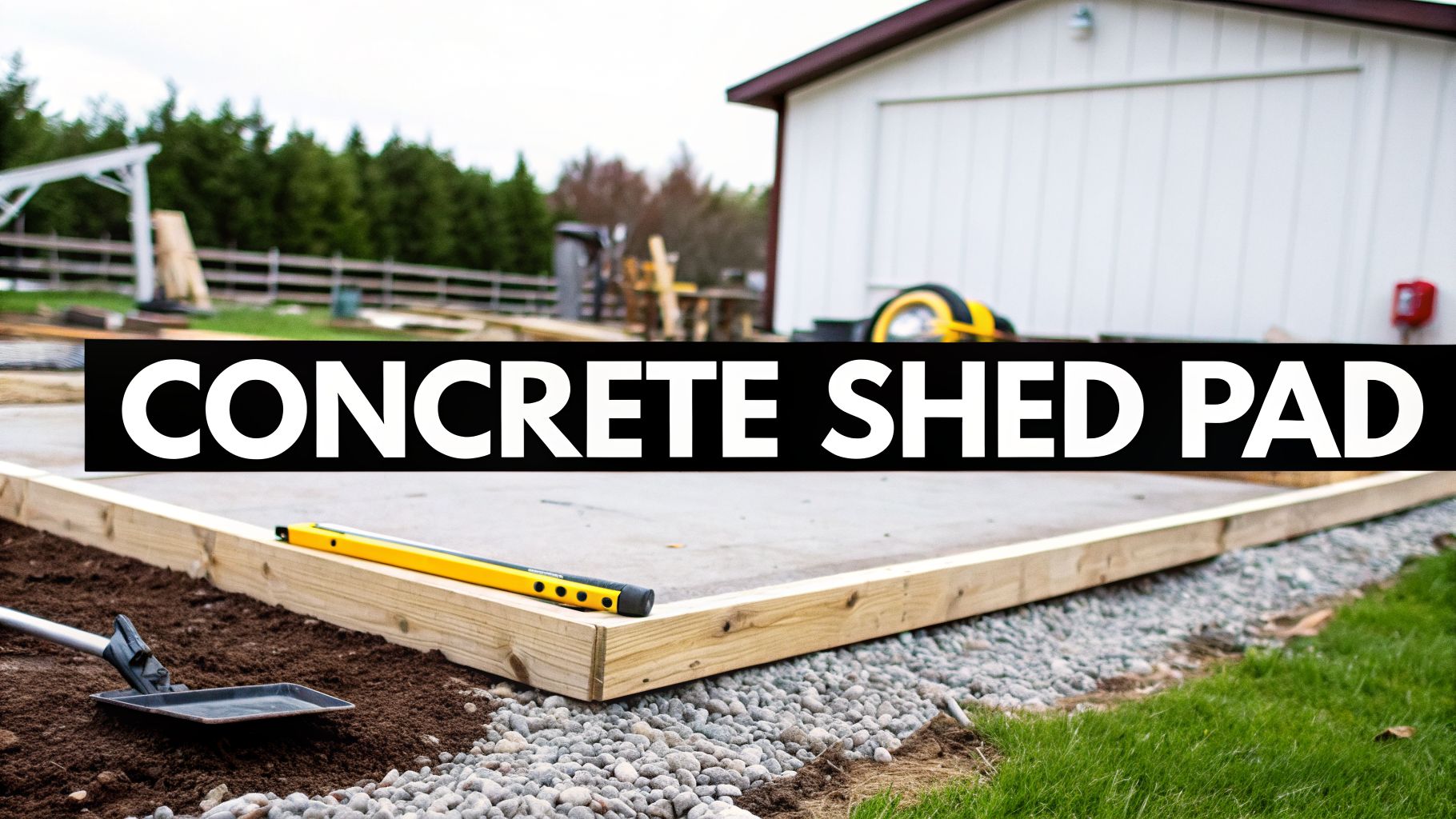
So, what exactly is a concrete shed pad? Think of it as a permanent, solid concrete slab poured over a prepared gravel base. It creates a perfectly level and stable surface for your storage shed, and it's hands-down the most durable and long-lasting foundation you can choose. At Firm Foundations, we believe it’s the best way to protect your investment from moisture, pests, and the shifting ground common here in Pennsylvania.
Why Your Shed Needs a Solid Concrete Foundation
That brand-new shed you just bought deserves better than just being plopped down on the grass. Without a proper base, it’s left vulnerable to the shifting soil and the harsh freeze-thaw cycles we get here in Pennsylvania. Placing any structure directly on the ground is just asking for trouble down the line.
An improper foundation will quickly lead to warping doors that refuse to close, floors that slope, and constant moisture damage that invites rot and decay. A professionally installed concrete shed pad isn't just an add-on; it's a critical investment to protect your property for years to come. As your trusted local shed foundations contractors near me, we’re here to ensure your project starts on solid ground.

The Problem with Temporary Fixes
Many homeowners in our community consider temporary options like cinder blocks or a simple gravel base. They might seem like easy, cost-effective shortcuts at first, but our experience shows they almost always create bigger, more expensive problems later.
- Shed Foundation Blocks: Concrete blocks have a nasty habit of shifting and settling on their own. This causes the shed's frame to twist, leaving you with an unstable and unlevel floor.
- Gravel-Only Bases: While a shed foundation gravel base offers decent drainage, it can easily wash out, settle unevenly, and become a welcome mat for weeds and pests without a solid surface on top.
- Direct Ground Contact: Putting any structure directly on the soil exposes its floor to constant moisture, insects, and decay. Even a small 4×8 shed with foundation kit won't last long this way.
These "quick fixes" simply don't provide the structural integrity needed to support a heavy building, especially with the variable climate we have in PA, MD, DE, and NJ.
The Superiority of a Poured Concrete Base for Your Shed
A professionally poured concrete foundation offers stability and longevity that other options can't touch. It acts as a single, solid slab that distributes your shed’s weight perfectly evenly, preventing any one spot from sinking or shifting. We apply the same principles here that go into building a garage foundation, just scaled for your shed.
For any serious outbuilding—from a 10×10 storage shed to a larger barn—a solid concrete foundation is the only way to ensure it stays level, secure, and protected for decades. It turns a temporary building into a permanent asset.
When you start with a durable, level base from a trusted local contractor like Firm Foundations, you guarantee the structural integrity of your shed from day one. Homeowners across Pennsylvania trust us as their go-to for shed foundations near me because we do the job right. Our process, from excavation to the final finish, ensures your new shed, gazebo, or garage has the strong foundation it needs to last a lifetime.
The Anatomy of a Rock-Solid Concrete Foundation
When we talk about a concrete shed pad, we're talking about more than just a slab of cement. Think of it as the bedrock for your shed—its quality and design dictate the stability and longevity of the entire structure. A handful of critical components work together to create a rock-solid base that's built to last for decades, and as your local concrete foundations experts in Pennsylvania, we obsess over getting every single one right.
It all starts with what’s underneath. Before any concrete is poured, we lay down a professionally prepared gravel sub-base. This layer of compacted stone isn’t just filler; it’s a vital drainage system. It gives water a place to go, preventing it from pooling and freezing under the slab, which is a primary cause of hevering and cracking. Proper site prep is the first—and most important—step for any durable base for a storage shed.
This focus on durable, well-planned construction has helped make precast concrete a go-to choice for homeowners. In fact, the precast concrete market, a key player in creating efficient shed pads, was valued at USD 150.2 billion in 2025 and is expected to hit USD 261.5 billion by 2035. This boom is driven by how precast technology slashes on-site pour times, which is a huge advantage for homeowners in busy areas. You can discover more about these modular construction trends and how they’re shaping the industry.
Reinforcement: The Skeleton of Your Shed Pad
Concrete has incredible compressive strength, meaning it’s great at handling being squeezed. But it’s not so great with tension—the pulling and bending forces that can cause it to crack. That's where reinforcement comes into play.
We embed a steel grid, either rebar or wire mesh, inside the concrete forms before we pour. This steel acts as an internal skeleton, giving the slab the tensile strength it needs to hold itself together against ground movement and heavy loads. For anyone searching for shed foundations near me in Pennsylvania, this is an absolute must for a pad that lasts a lifetime.
Concrete Thickness and Strength Matter
Not all shed pads are created equal, and the thickness of the slab should always match its purpose. For a typical backyard shed storing lawn equipment and tools, a 4-inch thick slab is usually the sweet spot.
But if you’re planning something bigger, like a two-car garage or a large barn shed, we'll often recommend bumping that up to 6 inches to safely support the extra weight. It’s this kind of careful consideration that separates professional garage foundation contractors near me from general handymen.
The concrete mix itself is just as critical. We use a specific blend with a PSI (pounds per square inch) rating formulated to withstand the harsh freeze-thaw cycles we get here in the Mid-Atlantic. This ensures your cement foundation for a garage or shed won’t flake, spall, or break down over the years.
Here’s a quick guide to help you match the right pad specs to your project.
Shed Pad Thickness and Reinforcement Guide
| Shed Size / Use | Recommended Thickness | Reinforcement Type | Common Use Case |
|---|---|---|---|
| Small Shed (Up to 10'x12') | 4 Inches | Wire Mesh | Storing lawnmowers, garden tools, bicycles. |
| Medium Shed (Up to 12'x24') | 4 Inches | Rebar Grid | Workshop space, ATV storage, large equipment. |
| Large Shed / Garage (24'+) | 6 Inches | Heavy-Duty Rebar Grid | Housing cars, tractors, or heavy-duty workshop machinery. |
Choosing the right thickness and reinforcement isn't about overbuilding—it's about building it right the first time so you never have to think about it again.
A properly designed and installed concrete shed pad combines a stable gravel base, robust steel reinforcement, and the right concrete thickness. These elements work in concert to create a permanent, worry-free foundation for your valuable outbuilding.
By paying close attention to every detail, from the first shovel of dirt to the final trowel finish, we build foundations that offer true durability. It’s the kind of quality and peace of mind every Pennsylvania homeowner deserves.
A Look at Our Installation Process
Ever wonder what actually happens on the day we pour your new concrete pad? We've found that when our clients understand the process, they feel much more confident in the final product. At Firm Foundations, we’ve developed a transparent and efficient workflow for every project we handle across Pennsylvania, from the moment we arrive to the final sweep.
Our approach is about more than just pouring concrete; it’s a detailed system for building a foundation that truly lasts, whether it's for a gazebo foundation or a new shed. This walkthrough will show you exactly what to expect and how our team’s precision work ensures your project is in the best hands.
Initial Site Evaluation and Preparation
Every great concrete shed pad starts with a solid plan. The very first thing our crew does on-site is a final evaluation, double-checking the location, measurements, and grade. We make sure we know about any underground utilities and finalize the slope to ensure water drains away properly—protecting both your new shed and your yard.
With the plan confirmed, the real work begins: site preparation. As your go-to local service for excavation near me, we bring in the right equipment to clear and level the area. You just can't compromise on proper ground prep if you want a stable foundation. If you're curious about the nitty-gritty of getting a perfectly flat surface, you can learn more in our guide on how to level ground for a concrete slab.
Building the Framework for Success
Once the site is perfectly graded, our team gets to work building the concrete forms. Think of these wooden frames as the mold that will define the exact shape and size of your pad, whether it’s for a small 4×8 shed or something much larger. We make sure these forms are perfectly square, level, and braced to withstand the pressure of wet concrete.
Next up is the sub-base. We lay down and compact a thick layer of crushed stone, which creates a stable, well-draining base. This gravel layer is crucial for preventing the ground from shifting or heaving during the freeze-thaw cycles we get here in our region.
This flowchart shows how these essential layers work together to create a durable, long-lasting concrete pad.

As you can see, each layer builds on the one before it—from the gravel up to the concrete surface—to create a system built for strength and stability.
The Pour and Finishing Touches
Before any concrete shows up, we install a grid of steel reinforcement, either rebar or wire mesh. This internal "skeleton" is what gives the slab tensile strength, preventing cracks and ensuring it can handle heavy loads for years. It's this step that really makes the difference for a dependable garage footing and foundation.
A concrete pad isn’t just a flat surface; it's an engineered system. It’s the combination of expert excavation, a compacted gravel base, steel reinforcement, and high-quality concrete that guarantees a foundation that lasts a lifetime.
When the concrete truck pulls up, the pour begins. Our crew works quickly but carefully to spread the concrete evenly within the forms. We then use specialized tools to screed the surface, striking off any excess to make it perfectly flat.
Finally, we add the finishing touches. Our finishers use trowels to create a smooth, dense surface that not only looks professional but also makes the pad more durable and weather-resistant. Once the finishing is done, the concrete starts to cure, gaining strength over the next few days. This is the proven process that makes us the first call for so many in Pennsylvania searching for shed foundation contractors near me.
Concrete Pads vs. Gravel Bases: A Clear Comparison
When you’re ready to put a shed in your backyard, one of the first big decisions is what to put it on. You’ll pretty much always land on two options: a permanent concrete shed pad or a simpler gravel base. Both have their uses, but understanding the long-term difference is key to protecting your investment, especially for those of us dealing with Pennsylvania weather.

We get the appeal of a gravel shed foundation contractors near me might recommend. Let's be honest, its main selling point is the lower price tag, which is always tempting when you're trying to keep a project on budget. Gravel also drains water really well, and that’s a plus for keeping the underside of your shed dry.
But those initial perks often lead to long-term headaches. Around here, with our constant freeze-thaw cycles, gravel shifts and settles over time. Before you know it, your shed isn't level anymore. Doors start to stick, the frame gets stressed, and you've got a problem. And don’t even get us started on the weeds that inevitably pop up, creating yet another weekend chore.
Why Concrete Is the Wiser Long-Term Investment
On the flip side, a concrete shed pad is a permanent, set-it-and-forget-it solution. It gives you a level of stability that loose stone just can't compete with. Once that concrete is poured and cured, it's a single, solid slab that won't shift, settle, or wash away. This is non-negotiable for bigger buildings like a two-car garage or a heavy-duty barn shed.
- Unyielding Stability: A concrete slab creates a perfectly flat, rigid surface that spreads the shed's weight evenly. No more stress on the structure.
- Zero Maintenance: You can officially say goodbye to weeding and re-raking. A concrete pad is a clean, finished surface that doesn’t ask for anything in return.
- Enhanced Security: It forms a solid barrier that pests and burrowing animals can't get through, keeping your tools and equipment much safer.
Choosing between gravel and concrete is really about deciding between a temporary fix and a permanent asset. A concrete foundation transforms your shed from a simple outbuilding into a lasting feature of your property.
When you start searching for shed foundations contractors near me, you're looking for someone who gets this distinction. A professional concrete installation isn't just a cost—it's an investment in your property's value and the life of your shed.
Making the Right Choice for Your Property
Look, for a small, temporary shed, a gravel base might be perfectly fine. But if you’re investing in a custom-built workshop, a serious storage shed, or a garage, the durability of concrete is essential. It's the same logic we use for garage footings and foundations; the base needs to be as strong and permanent as the building it supports. As you compare options, it’s always smart to look for ways to reduce construction costs so you can make the best long-term decision for your budget.
Concrete’s role in modern construction is massive for a reason. The global concrete market hit an incredible USD 1.82 trillion, a number that shows just how critical it is for everything from skyscrapers to the shed pad in your backyard. For homeowners in Pennsylvania, Maryland, Delaware, and New Jersey, a professionally installed pad means your shed can handle our heavy snow loads and stay perfectly level for decades.
Ultimately, choosing a concrete shed pad from a trusted contractor like Firm Foundations means choosing peace of mind. You get a foundation that is built to last, giving your shed a stable, secure, and maintenance-free home for years to come.
How to Choose the Right Foundation Contractor in Pennsylvania
Picking the right crew to build your concrete shed pad is every bit as important as the concrete mix itself. The quality of the installation is what dictates whether your foundation lasts for decades or becomes a headache in just a few years. Especially here in Pennsylvania, you need a contractor who understands our unique soil conditions and freeze-thaw cycles.
This isn't just about hiring someone to pour a slab of concrete. You're entrusting them to protect your investment in a new shed, garage, or gazebo. It's so important to look past the cheapest bid and find a team that delivers real value through skill and dependability.
Differentiating a Specialist from a Generalist
When you start searching for shed foundations contractors near me, you’ll run into a mix of general handymen and dedicated concrete pros. While a handyman might be perfect for odd jobs around the house, building a solid foundation is a different game altogether—it requires specialized skills in excavation, grading, and concrete finishing.
A true foundation contractor brings a level of precision that a generalist typically can't match. They understand the science behind proper garage footings and foundations, know exactly how to reinforce a slab to fight off cracking, and can guarantee perfect drainage. Going with a specialist means your project gets the focused expertise it demands.
Key Credentials to Look For
Before you sign any contracts, make sure your potential contractor ticks a few crucial boxes. Think of these as non-negotiables that protect you and your property.
- Licensing and Insurance: Any legitimate contractor will be fully licensed and carry comprehensive liability insurance. This is your safety net, covering you in case anything unexpected happens on your property.
- Local Experience: A company with a long track record in Chester County and the surrounding Pennsylvania area, like us at Firm Foundations, knows the local building codes and soil types like the back of their hand.
- Transparent Quoting: You deserve a clear, itemized quote with no hidden surprises. A trustworthy contractor will offer a free estimate and walk you through every single line item.
A professional foundation contractor doesn't just sell you a slab of concrete. They provide a complete service that includes site prep, expert installation, and the peace of mind that comes from knowing the job was done right from the ground up.
The need for reliable foundation builds is part of a huge global industry, with foundation contractors playing a major role in a market expected to hit $1,617.92 billion by 2035. In a state like Pennsylvania, where the frost line demands deep footings, the need for seasoned professionals is even greater. You can see how these services fit into the bigger picture by checking out this global construction market report.
Why Firm Foundations is the Trusted Choice
Here at Firm Foundations, we’ve built our name on being the specialized concrete foundations experts that homeowners and shed dealers turn to. Our crews aren't just general laborers; they are skilled craftsmen who focus on one thing: building durable, reliable foundations. We manage the entire process, from the first scoop of dirt during excavation to the final smooth finish, ensuring every detail is handled correctly.
We are all about clear communication and straightforward pricing, which is why so many people make us their first call when looking for concrete foundations contractors in the region. We believe an informed customer is a happy one, and we're here to be your trusted partner from start to finish.
Common Questions About Concrete Shed Pads
We get asked a lot of the same questions by homeowners across Pennsylvania, and we love answering them. An informed customer is a happy customer, and we believe that a solid project starts with a solid foundation of knowledge.
So, let's tackle the details head-on. Here are the clear, straightforward answers you need as you think about building a durable base for a storage shed.
How Much Does a Concrete Shed Pad Cost in Pennsylvania?
This is usually the first thing on everyone's mind, and the honest answer is: it depends. The final price tag for a concrete shed pad hinges on a few key variables, like its overall size, thickness, and how much site prep is involved. A nice, level yard is naturally going to cost less to prepare than a sloped, rocky one.
Since every property is different, we provide transparent, detailed quotes tailored to your specific site. The only way to get a truly accurate number is for one of our experts to come out and assess your yard. That way, we can give you a firm price with no hidden fees or surprises down the road.
Do I Need a Permit for My Shed Foundation?
Navigating local rules can feel like a headache, but it’s a critical step. Permit requirements for a shed foundation almost always vary from one township to another and are usually based on the size of the shed itself. Many smaller sheds fly under the radar, but larger structures often need an official green light.
It’s crucial to consider local codes, and having a good handle on understanding local building codes can help you navigate these requirements. Our team has years of experience working with municipalities across Pennsylvania, Maryland, and Delaware. We'll guide you through the whole process to make sure your project is fully compliant from day one.
How Long Does the Installation Take?
We pride ourselves on working efficiently. For a typical residential concrete shed pad, the entire on-site job—from excavation and forming to the final concrete pour—usually takes just a few days. Of course, Mother Nature always gets a say, so weather can sometimes adjust that timeline.
We promise to keep you in the loop on the project schedule every step of the way. Our goal is to get the work done with minimal disruption to your life, leaving you with a perfect foundation, ready for your new shed.
Can You Build a Foundation on a Sloped Yard?
Absolutely. This is probably one of the most common challenges we solve for homeowners in our area. Let's face it, not many yards in Pennsylvania are perfectly flat, but that's where our expertise in site preparation and excavation near me comes in. Our skilled crews use professional-grade equipment to grade sloped terrain, creating a perfectly level and stable base for your shed pad.
Don't let a sloped yard stop you from getting the shed you want. Proper excavation and grading are part of our standard process, ensuring your foundation is built on solid, level ground, no matter the initial terrain.
This is a huge advantage of working with experienced concrete contractors. We handle the tough jobs that others might walk away from, transforming a challenging spot into the ideal location for your new structure. Whether it’s for a small 10×10 storage shed or something much larger, we have the skills to build it right.
Ready to lay the groundwork for a shed that will last a lifetime? The team at Firm Foundations is here to provide a durable, professionally installed concrete pad tailored to your exact needs. Request your free, no-obligation quote today!