Finding Trusted Concrete Foundations Contractors in Pennsylvania
Are you searching online for "concrete foundations contractors near me" for an upcoming shed, garage, or barn project? Before you go any further, it's crucial to understand a key first step: figuring out exactly what kind of foundation your new structure needs.
Getting this right from the start ensures your investment is stable and long-lasting. Getting it wrong can lead to costly repairs and headaches down the line. For most homeowners and businesses we work with in Pennsylvania and surrounding areas, the choice comes down to two solid options: a versatile gravel pad or a heavy-duty reinforced concrete foundation. At Firm Foundations, we're here to help you make the right choice for your property.
Matching Your Project to the Right Foundation
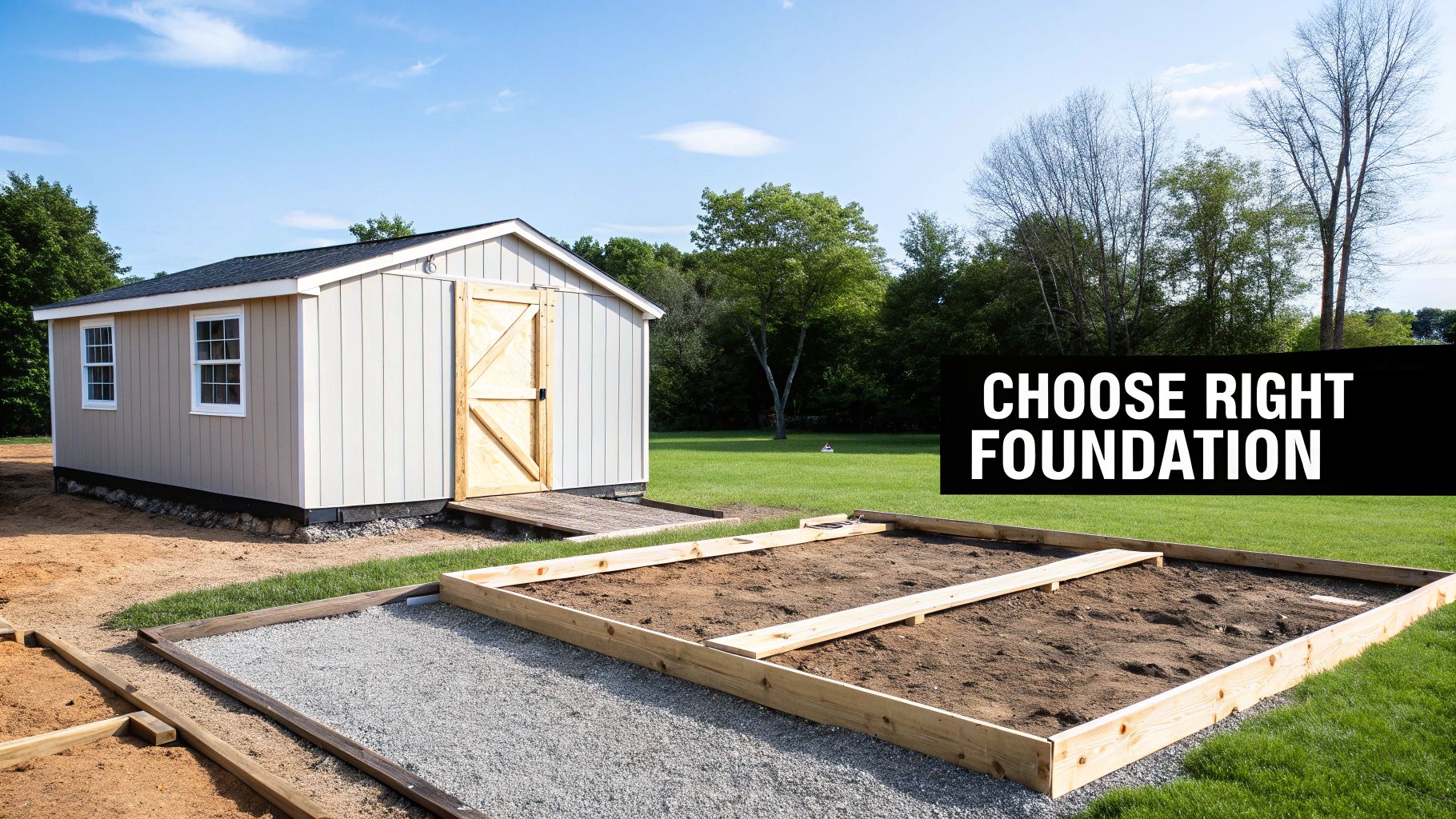
Choosing the right base for your shed, garage, or barn is one of the most important decisions you'll make. Here at Firm Foundations, we’ve helped countless homeowners and businesses across Pennsylvania, Maryland, Delaware, and New Jersey select and install the perfect foundation. The best choice depends on your budget, local soil conditions, and what you’re building on top of it.
Gravel Pads: The Versatile and Cost-Effective Choice
For many backyard structures, a gravel shed foundation is the ideal solution. It’s not just a pile of rocks; it's an engineered base of compacted crushed stone, meticulously built to provide excellent drainage and a perfectly level surface.
This is our trusted recommendation for projects like:
- Storage Sheds: From a small 4×8 shed with foundation to a larger 10×10 storage shed, a gravel pad provides all the stability needed.
- Gazebos and Playsets: The superior drainage of a gravel base for a storage shed or gazebo foundation is key to preventing wood rot from ground moisture.
- Hot Tubs: A professionally compacted gravel base can easily support the immense weight of a hot tub while allowing splashed water to drain away safely.
The true value of a gravel pad is its speed and affordability. Our local crews can often complete the site prep, excavation, and installation in a single day. It's the perfect base for most storage sheds where the absolute permanence of concrete isn't required.
Concrete Foundations: For Ultimate Strength and Permanence
When your project demands serious, uncompromising strength, nothing beats a reinforced concrete foundation. This is a more involved process, requiring excavation for footings, building concrete forms, laying a grid of steel rebar, and pouring a solid slab of high-strength concrete.
Concrete is the only choice for:
- Garages: The immense weight of vehicles and the structural load of a garage—whether attached or detached—demand proper garage footings and foundations. A solid cement foundation for a garage is non-negotiable.
- Houses: Every home is built on a house foundation made of concrete. It’s what supports the entire structure.
- Large Barns: If you're building a large barn shed, you need a solid concrete base to handle heavy equipment and animal traffic safely.
A concrete foundation for a garage is a larger investment, but its durability is unparalleled. It provides a permanent, solid floor that can withstand heavy loads and harsh weather for decades. You can learn more about how we build them to last by exploring our concrete foundations services.
A strong foundation is the backbone of any structure. Experience matters deeply when selecting concrete foundation contractors, especially for custom builds that demand stronger loads, special reinforcement, and high precision.
It's also worth remembering that other outdoor projects need proper foundations, too. For instance, understanding the different requirements for foundations for custom shade structures and pool houses shows that the same principles of support and drainage apply whether you're building a simple shed or a fancy poolside cabana.
Gravel Pad vs. Concrete Slab at a Glance
Still deciding? This quick comparison can help you determine which foundation is the best fit for your project's needs, budget, and timeline.
| Foundation Type | Best For | Typical Cost | Key Benefit |
|---|---|---|---|
| Gravel Pad | Sheds, playsets, hot tubs, gazebos | $5 – $10 per sq. ft. | Excellent drainage & quick install |
| Concrete Slab | Garages, homes, barns, heavy-duty pads | $9 – $20+ per sq. ft. | Unmatched strength & permanence |
Ultimately, whether it’s the affordability of gravel or the brute strength of concrete, choosing the right base is the first step toward a successful build.
How to Find and Vet Local Foundation Contractors
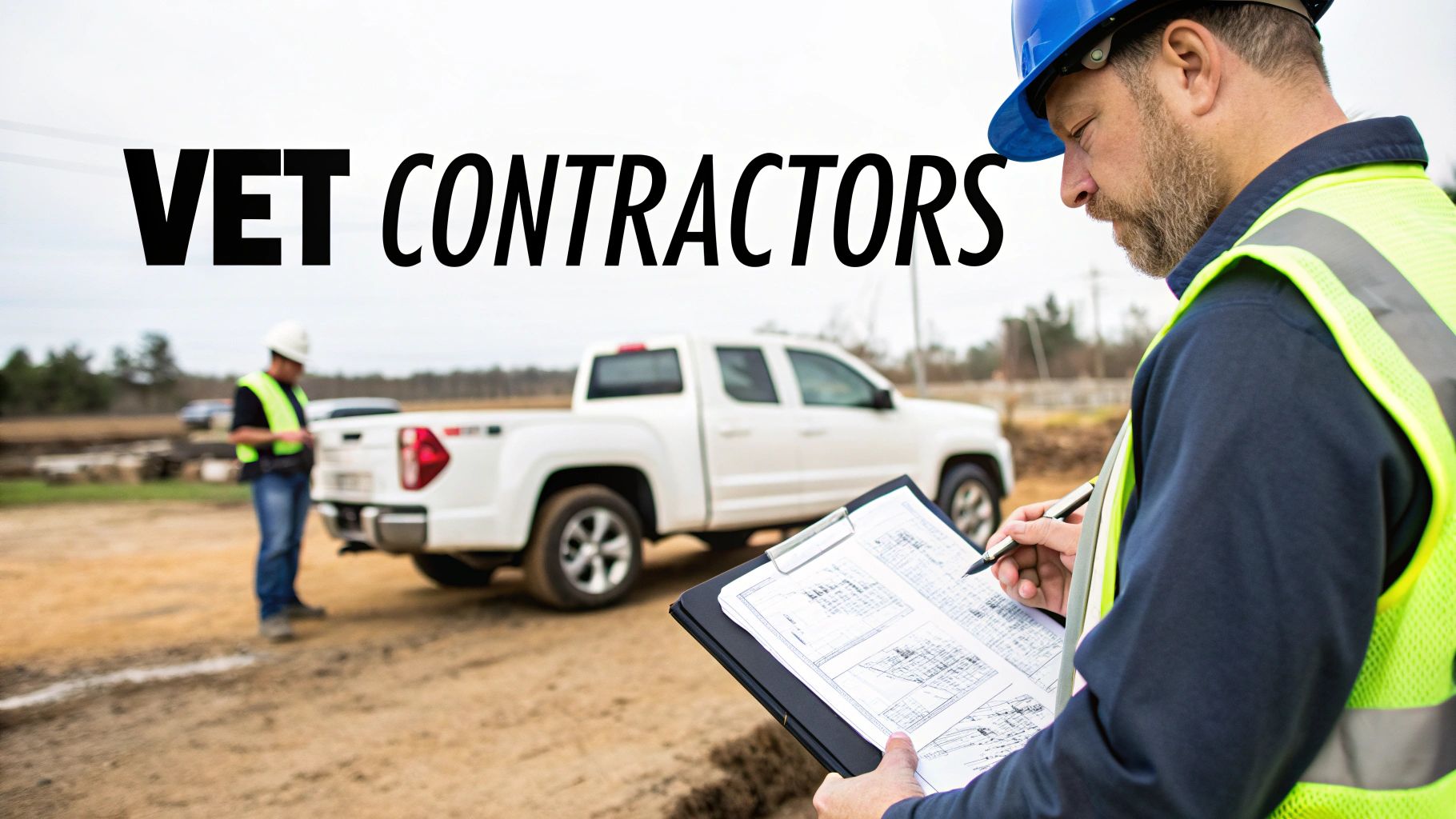
So, you've decided between a gravel pad and a concrete slab. Now comes the most critical part: finding the right local professional to build it. A quick search for "shed foundations contractors near me" will give you plenty of options, but how do you identify the true experts?
Choosing the right contractor means your foundation will last a lifetime. The wrong one could leave you dealing with problems for years. This is where taking your time pays off. It’s not just about the lowest bid; it’s about finding a team with proven expertise and a solid local reputation. Think of it as an investment in your property's future.
The demand for concrete work is booming, driven by a surge in residential projects. The global market is projected to jump from $464.13 billion in 2025 to a massive $611.71 billion by 2030. This growth means more companies are entering the industry, making it more critical than ever to do your homework.
Building Your Shortlist of Contractors
The best way to start is by asking for local recommendations. Word-of-mouth is still powerful, especially from someone you trust in the local building community. For example, reputable shed builders in Pennsylvania usually have a shortlist of foundation contractors they rely on to get the job done right.
Beyond referrals, a smart online search can lead you to top-rated local companies. Look for contractors with a professional website that clearly showcases their work—whether it's a simple pad for a storage shed or more complex garage footings and foundations.
As you evaluate them, it helps to understand the basics of good contractor management. A well-run company will communicate clearly, have streamlined processes, and maintain high standards for quality and safety on every single job.
Key Questions to Ask Potential Contractors
Once you have a few names, it's time to call them. This initial conversation is your screening process. Don't hesitate to ask detailed questions—a confident, experienced contractor will be happy to answer them.
Here are a few must-ask questions to get started:
- Are you fully licensed and insured? This is non-negotiable. Ask for proof of general liability insurance and worker's compensation. This protects you from liability if someone gets hurt on your property.
- Can I see your portfolio of recent projects? Any contractor proud of their work will be eager to show it off. Ask for local examples similar to your project, whether it’s a gazebo foundation or a large barn pad. You can see a wide range of our completed work by visiting https://shedpads.com/projects/.
- What’s your experience with our local soil and weather? The Mid-Atlantic has challenging soil types and a climate that can be tough on concrete. A local pro will know exactly how to prep a site in Pennsylvania, Maryland, Delaware, or New Jersey for proper drainage and long-term stability.
- Who will be on-site managing my project? It’s important to know who your main point of contact is and who is leading the crew. This ensures clear communication and accountability.
A contractor's willingness to answer your questions thoroughly is a strong indicator of their transparency and customer focus. If they seem evasive or impatient, consider it a red flag.
By taking the time to carefully vet your options, you can feel confident that you’re partnering with a true professional. This due diligence ensures your project starts on solid ground, with a foundation built by a team like Firm Foundations that has a proven track record of quality since 2011.
Decoding Your Contractor's Quote
When a contractor provides a quote, they're giving you more than just a price. It’s your first real insight into their professionalism. A vague, one-line cost is a serious red flag. What you want to see from a professional concrete foundations contractor is a clear, detailed breakdown that tells you exactly where your money is going.
Think of the quote as the roadmap for your project. It sets clear expectations from the start and helps you avoid surprise costs that can turn an exciting build into a stressful experience. Understanding the quote is the only way to fairly compare bids and ensure you're evaluating the complete scope of work, not just the final price.
What a Professional Quote Should Include
A detailed quote, like the ones we provide at Firm Foundations, breaks the project down into easy-to-understand line items. It should read like a receipt—you see exactly what you’re paying for. Vague terms like "site work" or "materials" aren't specific enough.
You should be looking for details like:
- Excavation and Site Preparation: This isn't just digging a hole. The quote should detail the cost of clearing the land, grading for proper drainage, and compacting the soil. For any project in a place like Honey Brook Township, where managing water runoff is critical, this step is vital.
- Materials Breakdown: Your quote needs to list the exact materials. This includes the quantity and cost of crushed stone for a gravel shed foundation, the specific type and amount (in cubic yards) of concrete, and the steel rebar for reinforcing garage footings and foundations.
- Labor Costs: This covers the time and skill of the crew building your foundation. It’s the cost of the professionals who handle everything from building the concrete forms and tying rebar to pouring and finishing the concrete.
- Permits and Fees: If your project requires a permit, the quote must clearly state who is responsible for obtaining it and what the associated fees are.
- Cleanup and Debris Removal: A true professional considers the job done only after cleanup. The quote should include the cost of hauling away excess materials and all construction debris, leaving your property tidy.
Comparing Apples to Apples: A Honey Brook Township Scenario
Let's imagine you're planning a new two-car garage foundation in Honey Brook Township, PA, and you receive two quotes.
Contractor A sends a quote for $10,000. It just says, "concrete slab for garage."
Contractor B sends a detailed quote for $11,500. It breaks down everything: the excavation, the specific 4000 PSI concrete, the #4 rebar grid, all labor, and permit assistance.
At first glance, Contractor A seems cheaper. But their quote leaves you in the dark. Are they using quality materials? What happens if they encounter rock during excavation and add a huge extra fee?
Contractor B’s quote, while slightly higher, gives you the full picture of a quality job built to last. You know precisely what you're getting, and that transparency is the foundation of a trustworthy partnership.
The cheapest bid is almost never the best value. A detailed, transparent quote shows a contractor is committed to quality and open communication, protecting you from expensive surprises later on.
Red Flags to Watch Out For in a Quote
Beyond what’s in the quote, pay attention to its presentation. Some things can be a giveaway that a contractor may not be the right fit. Trust your instincts—if an estimate feels rushed or unprofessional, it likely is.
Here are a few common red flags to watch for:
- Vague or Missing Line Items: A lack of detail means you have no way of knowing what’s covered. This ambiguity can lead to disputes over what was included in the original price.
- High-Pressure Sales Tactics: A good contractor will give you time to review their quote. Be cautious of anyone pushing you to sign immediately with a "special deal that expires today."
- An Unusually Low Bid: An estimate that's significantly lower than others is a major warning. It often means the contractor is cutting corners on materials, skipping critical steps, or lacks proper insurance.
- No Mention of a Contract: The quote is the first step, always followed by a formal contract. If a contractor is hesitant to put everything into a signed agreement, it's time to walk away.
A clear, itemized quote is the first sign of a successful project. It’s proof that your contractor respects your investment and is committed to doing great work without hidden costs.
What to Expect: Our Foundation Installation Process, Start to Finish
It helps to know what to expect when our trucks arrive at your property. Understanding the process can make the entire experience feel less like a mystery and more like a well-organized plan. Here is a behind-the-scenes look at how our team at Firm Foundations transforms a patch of land into a solid base built to last.
It all begins with meticulous site preparation. This is the work you'll never see in the finished product, but it is absolutely critical for a foundation that can withstand the Mid-Atlantic’s climate and soil.
This diagram breaks down the key parts of a professional construction quote—materials, labor, and permits.
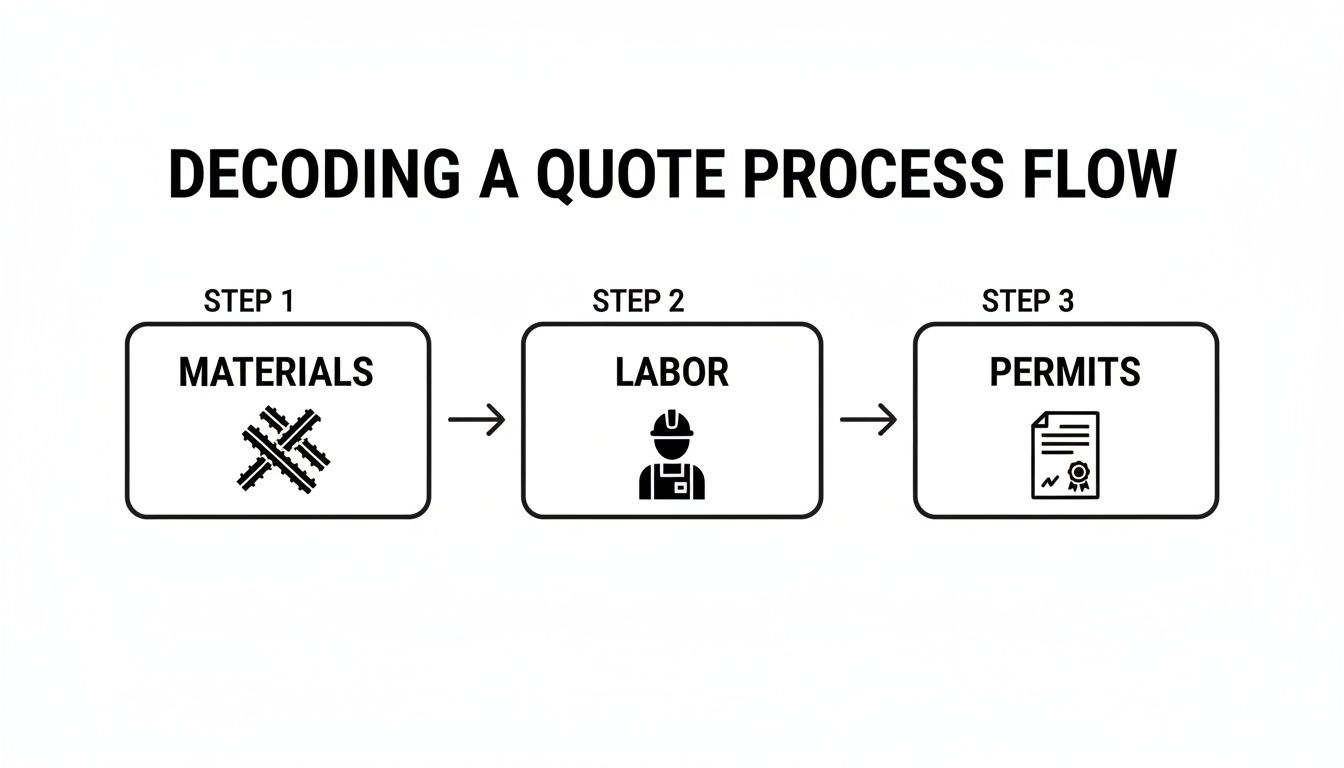
Understanding where your money goes helps you see the true value and expertise that goes into the price on your estimate.
Site Preparation: The Most Important Step
Long before we pour any concrete, our excavation near me crews get to work. We don't just level the ground; we engineer the site for proper water drainage. This is an essential step that prevents water from pooling and damaging your foundation over time—a common cause of shifting and cracking.
For a simple gravel pad, this means digging down to solid earth and building up a perfectly compacted base. When we’re installing garage footings and foundations, we dig trenches deep enough to get below the local frost line, which prevents your foundation from heaving during freeze-thaw cycles.
Forming and Reinforcement
Once the site is properly prepped, it’s time to build the mold. We use sturdy concrete forms to create the precise shape and dimensions for your slab or footings. Precision here is everything, as these forms dictate the final look and structural integrity of the foundation.
Inside this framework, we place a grid of steel rebar. Think of this steel as the skeleton of your foundation. It provides the tensile strength needed to resist cracking under heavy loads. A larger project like a house foundation or a heavy-duty barn shed pad requires a specific rebar pattern designed to distribute weight evenly.
The quality of a foundation is determined by the work you can't see. The depth of the excavation, the compaction of the base, and the placement of the rebar are what separate a foundation that lasts five years from one that lasts a lifetime.
The Concrete Pour and Finishing Touches
With all the prep work complete, it's time for the main event: pouring the concrete. We coordinate the delivery of a high-strength mix and carefully pour it into the forms. Our experienced finishers immediately get to work, using specialized tools to level the surface and remove any air pockets.
The finish we apply depends on the intended use of the surface. A broom finish creates a non-slip texture, perfect for a garage floor or walkway. A smooth trowel finish, on the other hand, is ideal for an interior floor that will be covered later. It’s this attention to detail that ensures your new foundation is both strong and practical.
The concrete industry, which covers everything from foundation builds to excavation, is a cornerstone of construction. In the United States—where Firm Foundations serves Pennsylvania, Maryland, Delaware, and New Jersey—revenue for concrete contractors was projected to reach $110.5 billion in 2026. This shows just how consistent the demand is for quality work. You can dig into the numbers and see the full research about concrete contractor market trends.
Whether we’re pouring a simple pad for a 4×8 shed or a complex commercial slab, our process is always rooted in craftsmanship. We manage every step to keep your project on track and up to our high standards, so you always have a clear picture of the quality work happening on your property.
Sealing the Deal: Your Contract and Foundation Care
Once you've selected your contractor, it’s time for the most important document in the project: the contract. Before any work begins, this agreement locks in every detail and protects you, your property, and your investment.
Don't view it as a mere formality. A good contract is the blueprint for your relationship with your concrete foundations contractor. It transforms verbal promises into legally binding commitments, preventing misunderstandings that can derail a project. It’s about getting everyone on the same page from day one.
A professional agreement should feel tailored to your job, not like a generic template. It lays out the entire plan, from scope to payment, setting the stage for a smooth and successful build.
What to Look for in a Rock-Solid Contract
Your contract should be specific to your project, whether it’s a simple shed foundation or more complex garage footings and foundations.
Here are the non-negotiables you need to see in writing before you sign:
- Detailed Scope of Work: This needs to be crystal clear. It should spell out exactly what will be done, including excavation depth, gravel base thickness, concrete mix specifications (like 4000 PSI), and the steel rebar grid layout.
- Clear Payment Schedule: The contract should link payments to specific project milestones. Be wary of any contractor demanding a large portion of the total cost upfront. A common structure includes a deposit to start, another payment midway, and the final balance upon completion.
- Project Timeline: A professional will provide a realistic start date and a target for completion. The contract should also address how potential delays, like bad weather, are handled.
- Warranty Information: What happens if a crack appears a year later? The contract must clearly state the warranties covering both materials and workmanship, giving you long-term peace of mind.
- Permit Responsibilities: It must be clear who is responsible for obtaining necessary building permits. At Firm Foundations, we manage this for our clients to ensure full compliance with local codes across Pennsylvania, Maryland, Delaware, and New Jersey.
A contract isn’t about mistrust; it’s about clarity. A contractor who provides a detailed, fair agreement is demonstrating their commitment to professionalism and accountability from the very beginning.
Taking Care of Your New Foundation
Once our crew has cleaned up and left your property looking its best, your new foundation begins its real work. A little care from you at this stage will ensure it lasts a lifetime.
Proper maintenance protects your investment, whether it's a freshly poured concrete slab or a new gravel pad. A few simple steps can prevent future problems and keep your foundation performing as it should for decades. The work done by foundation contractors is a major part of a massive global industry. In fact, the worldwide market for foundation, structure, and building exterior contractors is on track to hit an incredible $1,617.92 billion by 2030. This just shows how critical a properly installed and cared-for foundation is. You can discover more about these industry insights on The Business Research Company.
Protecting Your Concrete and Gravel
For a new concrete slab, the first few days are the most critical. This is the curing phase. Concrete doesn't just "dry"; it undergoes a chemical reaction to build strength. For the first week, especially in hot weather, try to keep the surface lightly damp by misting it with a hose a couple of times a day. This slow, steady cure prevents surface cracks and helps the slab reach its maximum design strength, which takes about 28 days.
If you have a gravel pad, upkeep is even easier. Check it periodically to ensure the crushed stone is still level and that rainwater is draining away from your shed. If you see displaced stones, a quick rake will put them back in place, keeping the surface solid and even.
Your Top Foundation Questions Answered
We receive many questions from homeowners and businesses about concrete work, and we believe in providing clear, honest answers. You should feel completely confident from our first conversation to the final inspection. Here are some of the most common things people ask.
What's a New Concrete Foundation Going to Cost Me?
Foundation costs can vary significantly based on the size, the type you choose (gravel vs. concrete), and the amount of site work required. A simple gravel pad for a shed is the most affordable option.
However, a reinforced concrete slab for a two-car garage involves more materials, labor, and a higher price tag.
That’s why we provide a detailed, free quote for your specific project in PA, MD, DE, or NJ. You'll get an exact price with no guesswork. Just contact us, and we’ll create a personalized estimate for you.
Will I Need a Permit for My Shed or Garage Foundation?
Permit requirements are determined by your local township or municipality. In many areas, any structure over a certain size requires a permit, which automatically includes its foundation.
For larger jobs like garage footings and foundations or a new house, a permit is almost always required. We can help you navigate local rules to ensure your project is 100% compliant, but a quick call to your local building authority is always the best first step.
How Long Does the Installation Take?
The timeline depends on the job's complexity and the weather. A skilled crew can often complete a typical gravel shed foundation in a single day.
A concrete foundation for a garage, however, is a multi-day process. We might spend one day on preparation and forming, then pour the concrete on another. You can typically walk on new concrete within 48 hours, but it needs a full 28 days to properly cure and reach its maximum strength. We’ll always provide a clear timeline in your quote so you know what to expect.
Many people think concrete just "dries" like paint. It actually undergoes a chemical process called curing to build strength. Rushing this process is a big mistake that can permanently weaken the foundation.
Why Is Site Prep Such a Big Deal?
Proper site preparation is the most critical part of building a foundation that lasts. It's much more than just leveling the ground, which is why hiring experienced concrete foundations contractors is so important.
Our local teams ensure the site is perfectly graded so water drains away from your building—this prevents the shifting, cracking, and heaving that can ruin a foundation over time. We compact the soil and lay down a solid base to create an unyielding platform that will support your structure for decades.
What proper site prep looks like:
- Excavation: We dig past the weak topsoil down to solid, undisturbed earth.
- Grading: The land is carefully shaped to direct rainwater away from the foundation.
- Compaction: We use professional machinery to create a dense base that won't settle later.
Cutting corners on site prep is a recipe for expensive problems down the road. That’s why we are meticulous about it for every shed foundation and concrete slab we build in our community.
Ready to start your project on solid ground? The team at Firm Foundations is here to answer any other questions you have and provide a free, no-obligation quote for your foundation needs. Visit us at https://shedpads.com to get started today.