
Concrete Pad Installation: A PA & MD Homeowner’s Guide
If you're planning a shed, garage, gazebo, hot tub, or small outbuilding in Pennsylvania or Maryland, you're probably looking at a patch of yard and wondering whether a simple slab will do the job. That's where many projects go sideways. A concrete pad can look straightforward from the surface, but in the Mid-Atlantic, long-term performance depends on what happens underneath it just as much as the concrete you see on top.
Homeowners searching for shed foundations near me, garage foundation contractors near me, or a reliable base for storage shed usually want the same thing. A pad that stays level, drains well, and doesn't crack apart after the first few winters. In PA, MD, DE, and NJ, the climate makes that more important. Seasonal moisture, freeze-thaw cycles, and soft spots in the yard can turn a rushed pour into a repair job.
A good concrete pad installation isn't just about placing concrete. It starts with site prep, careful forming, the right reinforcement, and a crew that understands drainage and frost conditions common around places like Honey Brook Township and surrounding service areas. When that work is done correctly, your concrete foundation for garage, shed, patio, or gazebo has a much better shot at lasting for years.
Your Concrete Pad Starts with Smart Planning and Prep
The strongest slab on the truck won't save a bad base. For a shed foundation, gazebo foundation, or cement foundation for garage, the first decisions happen before any forms are built.
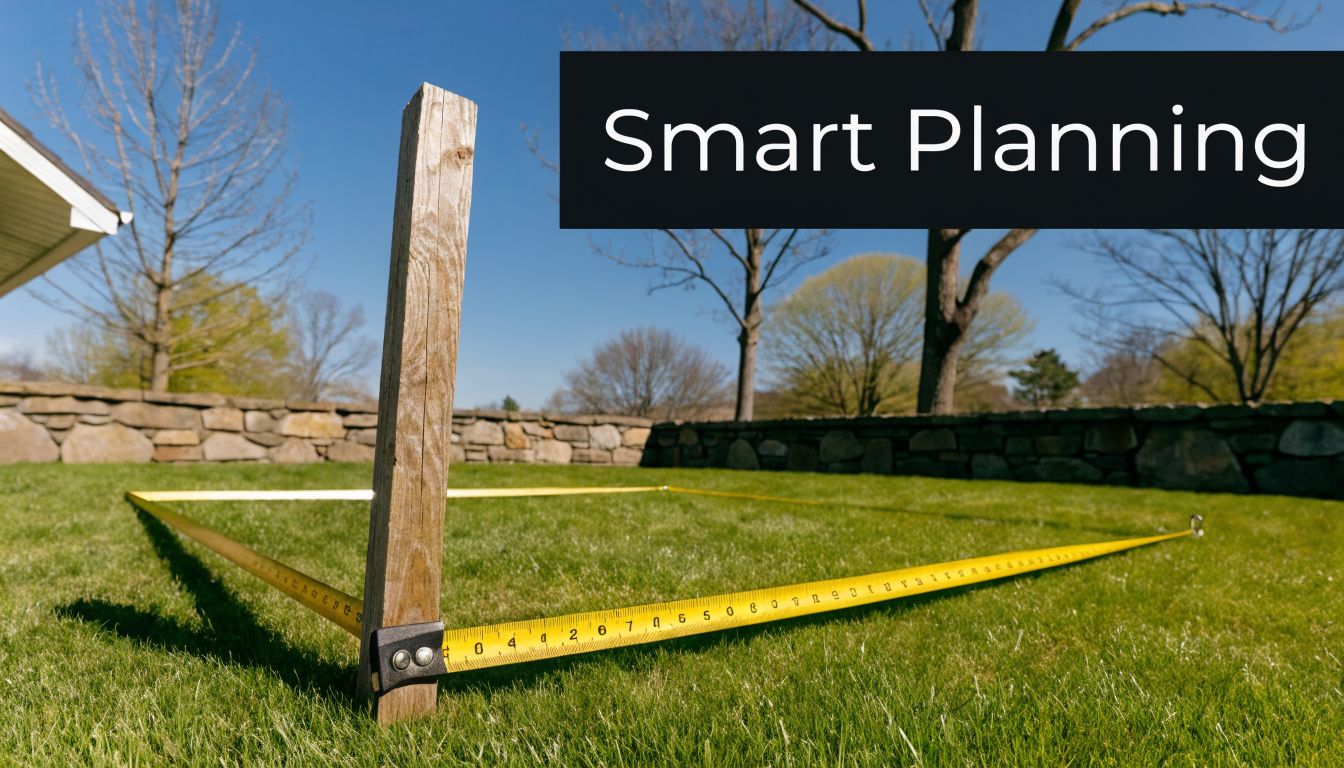
Homeowners often focus on size first. Size matters, but site conditions matter more. A pad needs to fit the structure, shed water away from the slab, allow room for excavation equipment, and respect setbacks or local permit requirements. In some townships, even a simple base for a storage shed can trigger zoning or permit questions depending on size, placement, and use.
Look at drainage before you look at level
A flat-looking backyard can still be a poor slab location. Water may already move across that area during heavy rain, or the ground may stay damp long after the rest of the yard dries out. If runoff heads toward the planned pad, the slab edge and base will deal with that water every season.
That's why a proper layout checks more than measurements:
- Surface flow: Watch where water moves during and after rain.
- Access for equipment: Tight gates, fences, and septic areas can affect excavation and pour logistics.
- Structure use: A patio slab and a load-bearing garage foundation don't ask the same thing from the soil.
- Property line setbacks: Placement can create problems long before the concrete truck arrives.
Practical rule: If the yard already holds water, the pad shouldn't be expected to fix it by itself.
Excavation and the gravel base do the real heavy lifting
A technically sound concrete pad installation starts with removing organic material, excavating to the required depth, and placing about a 4-inch layer of compacted gravel or crushed stone, because that subbase improves drainage and support. Major slab guidance also notes that the most common failure mode is differential settlement from an under-compacted or uneven base in this concrete slab installation reference from Concrete Network.
Organic topsoil, roots, and loose fill don't belong under concrete. They break down, shift, and trap moisture. A contractor doing this work right will strip that material out, establish the needed depth, bring in gravel or crushed stone, and compact it thoroughly. That compacted base is what helps a slab stay uniform instead of settling differently from one corner to the next.
For homeowners comparing DIY methods with professional site work, the biggest hidden difference is compaction. A hand-tamped patch might look solid on pour day. It often tells a different story after a wet season and a winter freeze. If you want a deeper look at what proper groundwork involves, this guide to site preparation for a concrete slab is worth reviewing before you commit to a layout.
Small pad or structural support
Not every slab should be treated the same. A simple sitting area may only need a straightforward slab-on-grade approach. A garage footings and foundations project or support for a heavier outbuilding may need a different design entirely, especially if the slab is carrying structure instead of just serving as a walking surface.
That's where local judgment matters. In southeastern Pennsylvania and nearby Maryland service areas, the right answer depends on drainage, soil behavior, and what the slab is supporting. Pouring first and figuring that out later is what usually causes expensive callbacks.
Proper Forming and Reinforcement for a Strong Foundation
Once the base is ready, the hidden structure of the pad takes over. This is the part most homeowners never see once the job is done, but it has a lot to do with whether the slab stays true or starts showing trouble early.
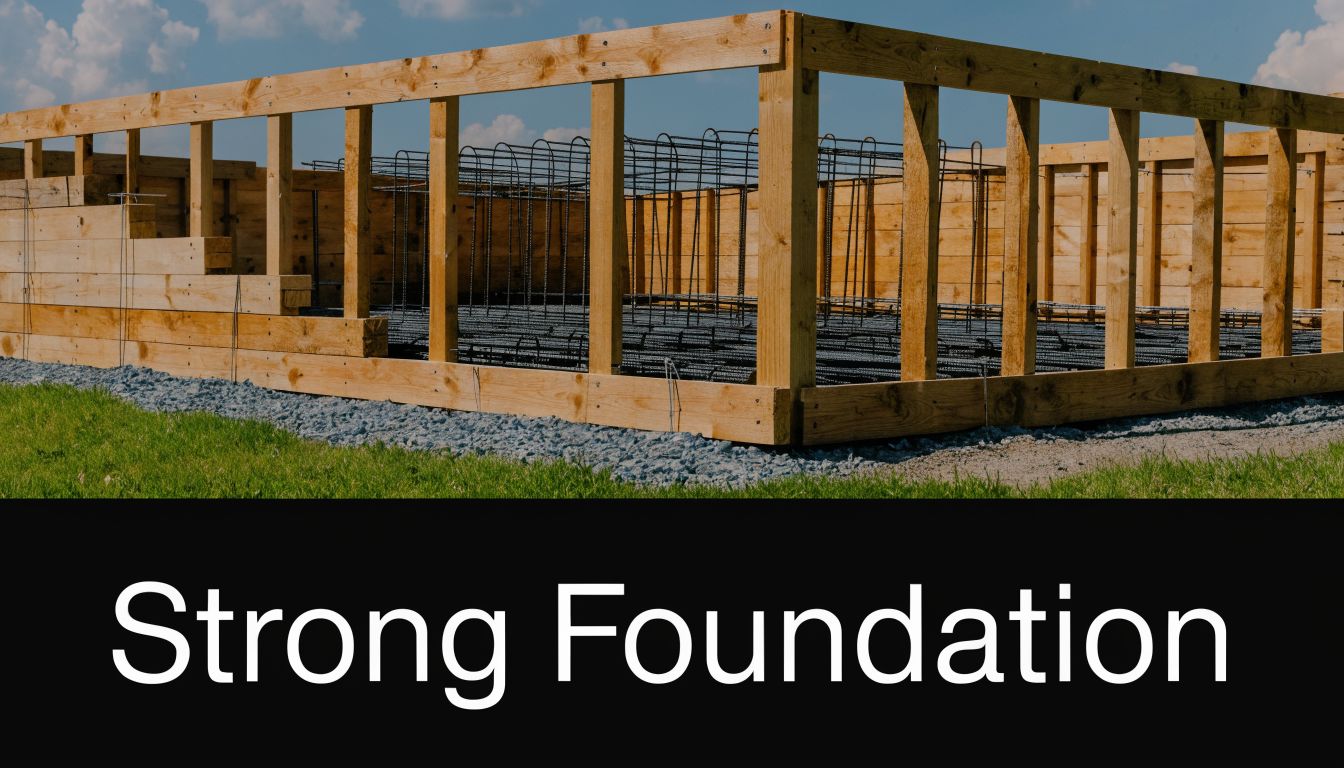
Forms aren't just temporary boards around wet concrete. They control the slab's footprint, thickness, edge shape, and slope. If the forms are out of square, the building placed on that pad will be out of square too. If they're weak or poorly braced, wet concrete can push them out and change the dimensions during the pour.
Good forms hold line, grade, and slope
A professional crew checks the formwork for straightness, square corners, and elevation before concrete arrives. That matters for more than appearance. The slab may need a subtle pitch so water sheds away instead of sitting against a building wall or pooling near the entrance.
What works on site is simple but disciplined:
- Set forms to the exact pad dimensions.
- Brace them well enough to resist the lateral pressure of wet concrete.
- Confirm height and drainage direction before the pour starts.
Wet concrete pushes hard. If the forms aren't staked and braced correctly, the slab shape changes before the crew can fix it.
For a 4×8 shed with foundation, a small storage building, or a barn shed, that precision keeps the building base uniform. For concrete foundations supporting garages or heavier equipment, it becomes even more important.
Reinforcement depends on the load
A lot of homeowners ask whether wire mesh is enough or if rebar is necessary. The answer depends on what the slab will carry and how it will be used. Light-duty flatwork and heavier structural slabs are different jobs.
One clear example comes from power equipment pads. A generator pad may require 2,500 psi concrete reinforced with #6 rebar on 12-inch centers, and the pad's depth is often calculated as 125% of the unit's wet weight, which shows how load-based pad design is more engineering than guesswork, as described in this load and reinforcement overview.
That doesn't mean every shed or gazebo needs that exact spec. It does mean the reinforcement choice should match the actual load, the slab thickness, and the site conditions. A simple shed foundation gravel base may make more sense for some structures. A reinforced slab may be the better call for others. The mistake is assuming all pads are interchangeable because they all look similar from the top.
What homeowners should ask before the pour
If you're getting quotes from concrete contractors or garage foundation contractors near me, ask direct questions:
- How will the forms be set and checked for square?
- What reinforcement is planned, and why?
- Is the slab designed for a shed, a garage, a hot tub, or another heavy load?
- How will water move away from the finished pad?
Those answers usually tell you whether you're getting a basic pour or a foundation built with the actual use in mind.
The Pouring and Finishing Process for a Flawless Surface
Pour day is where planning meets execution. This is the phase homeowners notice most because the job changes fast, but it's also the part where small mistakes become permanent.
A well-run concrete pad installation has rhythm. The truck arrives. The crew places the mix into the forms, spreads it, and works it into place without leaving voids. Then comes screeding, floating, edging, and finishing, each step timed to the condition of the concrete rather than rushed by guesswork.
Placement and screeding have to happen in sequence
Fresh concrete needs to be placed evenly in the forms and spread so the slab thickness stays consistent. Crews then use a straightedge or screed board to strike off the surface to the planned grade. That's what gives the slab its flat plane or intentional slope.
If that sounds simple, it isn't. The concrete has to be workable enough to move but not watered down to make finishing easier. Too much water weakens the surface and can lead to durability issues later. Poor consolidation can leave air pockets. Overworking the slab can hurt the finish.
A practical timing benchmark from an installation guide is that initial setting can begin in about 2 to 4 hours, with hardening in 24 to 48 hours, so the workflow for placing, screeding, and finishing has to stay tight from the start in this concrete slab workflow guide.
Finishing is where experience shows
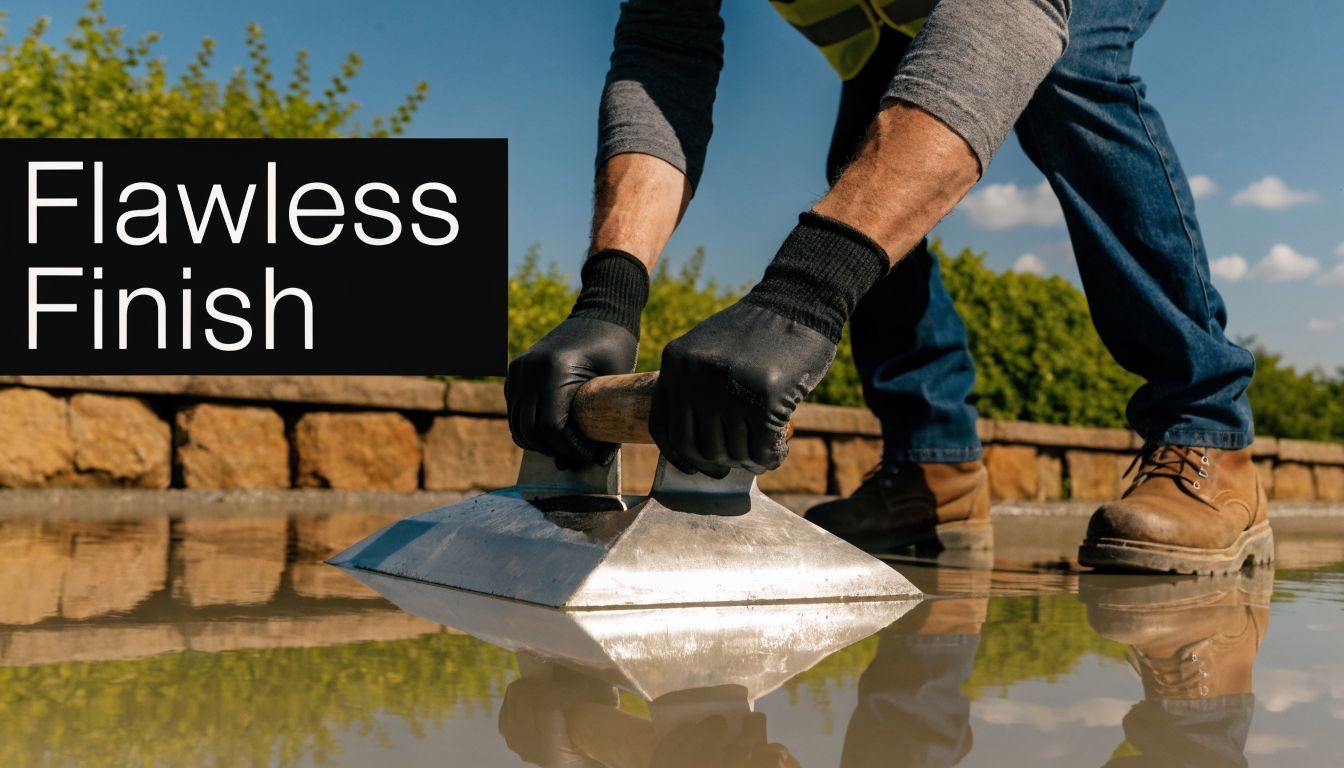
After screeding, the surface is floated to smooth ridges and bring the slab into shape. Depending on the intended use, the finisher may then edge the perimeter, cut control joints, and apply the final surface texture.
For a patio or walkway, the finish may prioritize appearance and traction. For a garage slab or equipment pad, flatness and durability may matter more than a polished look. The crew has to read the concrete as it changes, because finishing too early or too late creates problems.
A slab can look fine when the crew leaves and still show weakness later if the water content, timing, or finishing steps were off.
That's one reason so many DIY slabs end up with birdbaths, rough patches, flaky surfaces, or crooked edges. Homeowners often underestimate how quickly the window closes once the mix is down. If you want to understand one of the most common long-term issues, this article on how to prevent concrete slab from cracking gives useful context.
Here's a short visual of the kind of surface work homeowners often see during this stage:
What a clean finish should and shouldn't look like
Homeowners don't need to judge a slab like a finisher, but a few signs stand out.
- Consistent surface texture: The slab should look intentional, not patchy.
- Clean edges and joint lines: Sloppy borders usually point to rushed work.
- Proper drainage: Water should have a planned path off the pad.
- No obvious low spots: If the surface already looks uneven when fresh, it won't improve later.
For a concrete foundation for garage, patio, or base for storage shed, the finish isn't just cosmetic. It affects drainage, wear, and how well the slab performs through weather swings in PA and MD.
Budgeting for Your Concrete Foundation Project
Budgeting for a concrete pad in Pennsylvania or Maryland starts with one simple point. The slab itself is only part of the price.
A pad on a flat, dry site with easy truck access costs less to build than one tucked behind a fence, cut into a slope, or placed in soft ground that holds water after a storm. In this region, site prep and drainage work often separate a pad that lasts from one that starts moving after a few freeze-thaw cycles. That is why a low number on paper can turn into an expensive slab if the base, grading, or runoff control was skipped.
The clearest benchmark is square footage. In 2026, professional concrete slab installation typically costs about $6 per square foot on average, with an average project total of $5,400, according to Angi's 2026 concrete slab cost guide. That same source lists a 10×10 slab at about $600, a 20×20 slab at about $2,400, and a 30×30 slab at about $5,400.
What drives the final quote
Two slabs with the same square footage can have very different prices.
A small 10×10 storage shed slab and a larger concrete foundation for garage may both be measured by area, but labor and prep change fast once the site gets tricky. If we have to remove organic soil, import compactable fill, build up a stone base, or correct drainage so roof runoff and yard water do not wash along the slab edge, the quote goes up for a good reason. Those are the details that help prevent settlement, frost heave, and cracking in PA, MD, DE, and NJ.
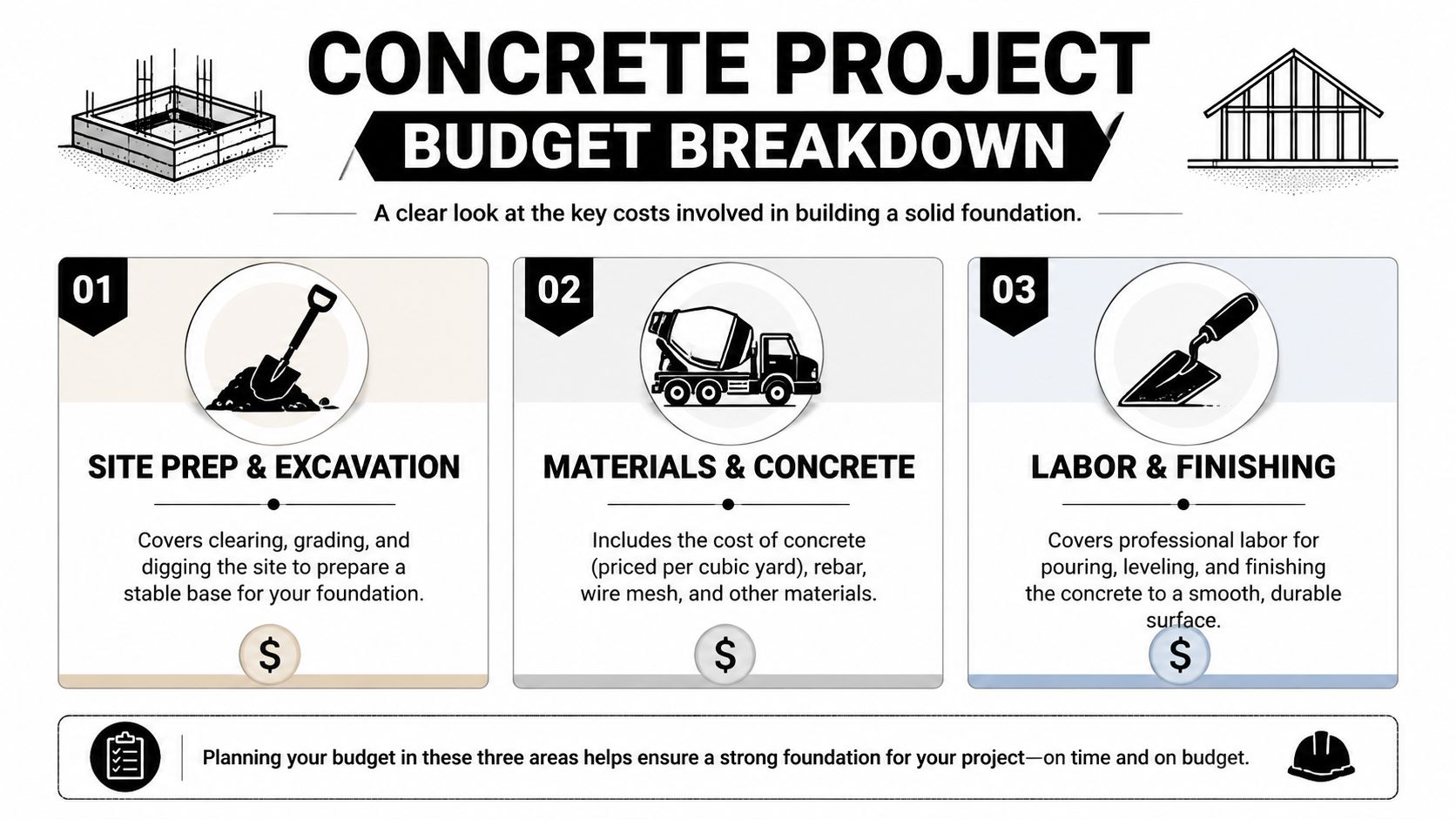
Three cost buckets usually shape the quote:
- Site prep and excavation: Clearing, digging, hauling spoils, grading, base installation, and compaction.
- Materials and concrete: Concrete volume, gravel, reinforcement, forms, vapor barrier if needed, and accessories.
- Labor and finishing: Layout, forming, placing steel, pouring, screeding, finishing, cutting joints, and cleanup.
The cheapest quote often leaves out the work you cannot judge after the slab is finished. Base depth, compaction, and water management are common examples.
Common project examples
These numbers help with early planning. A site visit still matters, because access, drainage, and soil conditions can change the final cost more than homeowners expect.
| Project Type | Typical Size | Estimated Cost |
|---|---|---|
| Shed foundation | 10×10 | about $600 |
| Garage foundation | 20×20 | about $2,400 |
| Larger slab | 30×30 | about $5,400 |
| Parking pad | 200 sq. ft. | about $1,200 |
| Patio | 450 sq. ft. | about $2,700 |
| Garage floor | 350 sq. ft. | about $2,100 |
| Two-car driveway | 500 sq. ft. | about $3,000 |
Broad ranges can be useful for ballpark planning, but they do not show the full scope. A basic shed pad, a reinforced garage slab, and a house foundation may all be called concrete slabs, yet they involve different excavation depths, edge requirements, reinforcement plans, and drainage needs.
Price matters, but scope matters more
Homeowners should compare estimates line by line. One contractor may include excavation, dense graded stone, compaction in lifts, forming, reinforcement, and final grading so water sheds away from the pad. Another may price only the concrete and finish work, then charge extra once the crew finds soft soil or poor access.
That difference matters in the Mid-Atlantic climate. Water under or beside the slab is one of the costliest problems to ignore, because it can lead to movement in winter and edge erosion in spring. A careful proposal should spell out what happens before the truck arrives, not just the day of the pour.
For garage footings and foundations, shed foundation blocks, shed foundation kit alternatives, or a full concrete pad installation, the right comparison is the installed system, not just the total at the bottom of the page. Contractors who invest in clear estimating, scheduling, and communication often run tighter projects too. That same discipline shows up in areas like modern digital marketing for construction pros, where clear process usually leads to better results. If you want a pad that holds up through wet springs and freezing winters, Firm Foundations should be able to explain the prep, drainage, and reinforcement in plain language before any work starts.
Avoid Common Mistakes When to Hire a Shed Foundation Contractor
A lot of homeowners call after the shed is already leaning, the garage slab has a corner crack, or spring runoff keeps washing soil away from the edge. In PA, MD, DE, and NJ, those problems usually start long before the concrete cures. They start with site prep that looked acceptable on pour day but could not handle wet winters, freeze-thaw cycles, and heavy spring moisture.
Concrete itself is rarely the problem. The failures usually come from shallow excavation, soft subgrade left in place, stone that was dumped but not compacted properly, or runoff that was never directed away from the pad.
The mistakes that keep showing up
Some issues appear fast. Others do not show up until the first hard winter or the first soggy spring.
Common trouble spots include:
- Poor compaction: The slab can settle unevenly because one part of the base is denser than another.
- Weak drainage planning: Water collects along the edge or works below the slab, softening support and increasing frost movement.
- Too much water in the mix: The crew may get an easier finish, but the slab surface and long-term durability suffer.
- Reinforcement that does not match the use: A light patio and a shed, garage, or hot tub pad do not need the same support.
- Wrong foundation choice for the site: Some yards need a gravel foundation system instead of a concrete pad.
These are not unusual jobsite surprises. They are predictable results when the contractor skips evaluation of soil, water movement, and intended load.
Frost heave is where DIY work often falls short
In this region, frost heave is a practical problem, not a theory. Water gets into the soil below or beside the slab, temperatures drop, the soil expands, and the concrete moves with it. Then the thaw comes, support changes again, and cracks or settlement follow.
That is why the base and drainage matter as much as the concrete thickness. A shed foundation, gazebo pad, or small garage slab may look fine in August and still move by February if runoff is feeding the subgrade. Water under the slab is often the primary enemy. Strength in the concrete mix does not fix poor drainage.
A local contractor should be able to explain how water will leave the site, whether the slab needs thicker edges, whether the subgrade needs undercutting, and whether a gravel foundation is the better choice for that structure and yard.
Hiring the right contractor means asking better questions
If you are searching for shed foundations contractors near me, gravel shed foundation contractors near me, excavation near me, or driveway contractors near me, ask about the work you will never see after the job is done.
Start with these:
How do you handle drainage on this site?
Look for a clear answer about slope, runoff direction, and how water will stay away from the pad after installation.What happens if you find soft or wet soil?
Good contractors have a plan for undercutting unsuitable material and rebuilding the base correctly.How is the stone base installed and compacted?
Stone should be placed and compacted in lifts, not dumped in one thick layer and flattened at the top.What is the slab supporting?
A 10×10 storage shed, a prefab garage, and a hot tub all load the pad differently.Is concrete even the right answer here?
An experienced foundation contractor will tell you when gravel makes more sense than a slab.
Firm Foundations handles excavation, gravel pads, concrete foundations, and related site work across PA, MD, DE, and NJ. That matters because the right recommendation is not always the one with the most concrete in it.
A low number on the estimate can get expensive fast
The cheapest quote often leaves out the work that prevents callbacks. Homeowners should be cautious when an estimate sounds simple but says little about excavation depth, compaction, drainage correction, or what happens if the crew hits unstable soil.
That same attention to process shows up in other parts of a well-run business. If you're curious how reputable builders improve communication and reach local customers, this overview of modern digital marketing for construction pros is a useful side read.
For homeowners in Honey Brook Township and across Pennsylvania, Maryland, Delaware, and New Jersey, the safe approach is straightforward. If the pad will support a structure, carry meaningful weight, or sit on a site with drainage concerns, hire a contractor who can explain the prep work in plain language and back it up in the field. Doing the job right the first time usually costs less than replacing cracked concrete, rebuilding the base, and fixing water problems after the fact.