
Base for Storage Shed
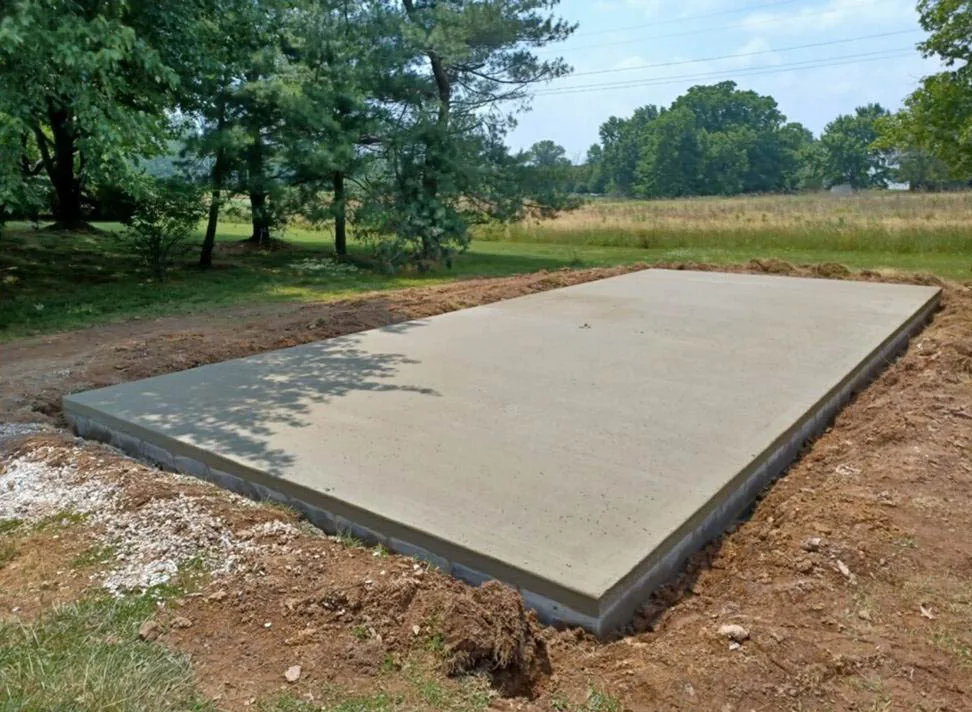
Base for Storage Shed: Choosing a Durable and Long-Lasting Base
Every sturdy structure begins with a solid foundation, and your new storage shed is no exception. While it’s tempting to focus solely on the aesthetics of the shed itself—the color, the roof style, or the door placement—the longevity of that investment is directly tied to what sits underneath it. A poor foundation is the primary cause of structural failure in outdoor buildings, leading to racked frames, binding doors, and rot. Skipping the critical step of installing a proper base often results in costly repairs or even the need for a complete replacement far sooner than anticipated.
Think of base for storage shed as an insurance policy for your outdoor storage. By investing in a durable, level platform, you protect the structure from the environmental factors that threaten its integrity, such as ground moisture, soil shifting, and freeze-thaw cycles. A well-constructed foundation elevates the shed off the ground, ensuring proper airflow and keeping water away from susceptible wood materials. This guide explores the technical aspects of selecting the right foundation, from assessing soil conditions to understanding the benefits of crushed stone versus concrete, ensuring your project starts on solid ground.
Why Soil Conditions Dictate Foundation Choice
Assessing Soil Stability and Composition
Before selecting a base for storage shed projects, evaluating the existing soil composition is a technical necessity. Different soil types—such as heavy clay, shifting sand, or stable loam—possess varying load-bearing capacities and drainage characteristics. Clay, for instance, retains water and expands, while sand drains well but can shift under weight. Understanding these properties ensures that the chosen foundation type can adequately support the shed’s load without succumbing to differential settling or sinking over time.
Understanding Frost Heave and Ground Movement
In many climates, the mechanics of freeze-thaw cycles in the soil present a significant threat to structural integrity. When moisture in the ground freezes, it expands, pushing the soil upward in a process known as frost heave. If a foundation lacks proper depth or drainage, this movement can lift and twist the shed, causing the frame to rack and doors to become misaligned.
Drainage Requirements for Site Longevity
Water is the enemy of any wooden structure, making drainage a critical factor in site preparation. Evaluating the natural slope of the land and the soil’s absorption rate helps determine how water will flow around the foundation. A site that allows water to pool near or under the shed will inevitably lead to moisture wicking up into the floor system.
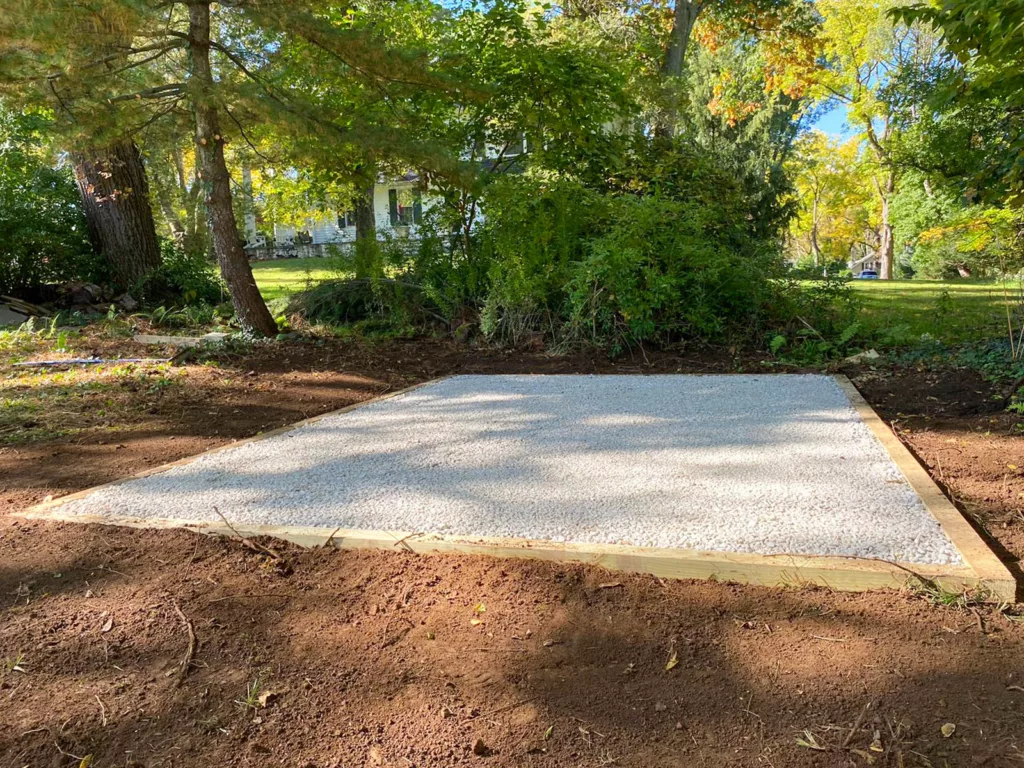
The Advantages of a Crushed Stone Pad
Superior Drainage and Moisture Control
A crushed stone pad is frequently cited as the industry standard for shed foundations due to its exceptional drainage capabilities. Unlike a solid slab that might trap moisture, a gravel pad consists of clean, angular stone that creates a permeable layer. This design allows rainwater and runoff to flow freely through the stones and away from the shed’s pressure-treated floor joists.
Even Weight Distribution Across the Pad
The structural integrity of a gravel pad relies on the interlocking nature of the crushed stone aggregate. When properly installed and compacted, the angular stones lock together to form a stable, non-shifting surface. This uniform base distributes the weight of the shed evenly across the entire footprint, rather than concentrating the load on specific points like concrete blocks would.
Cost-Effectiveness and Efficiency
From an economic perspective, a crushed stone pad offers a robust, professional-grade solution at a generally lower price point than poured concrete. It provides the necessary stability and drainage for most residential storage sheds without the labor-intensive process of building forms and pouring cement. This makes it an efficient choice for homeowners looking for a durable base for storage shed installations that balances performance with budget, without sacrificing the essential stability required for a long-lasting building.
When Concrete is the Necessary Solution
Heavy-Duty Applications and Vehicle Storage
While gravel pads are sufficient for standard storage, specific scenarios mandate the superior strength of a poured concrete slab. If the shed is intended to house heavy machinery, large tractors, or riding mowers, the point loads exerted by these vehicles can displace gravel over time. Similarly, if the structure will serve as a workshop with heavy equipment, a concrete floor provides the rigid, unyielding surface necessary to support significant weight without shifting or cracking.
Permanent Anchoring for High-Wind Areas
In regions prone to severe weather events or high winds, a concrete foundation offers distinct structural advantages for anchoring. Concrete slabs allow for the use of specialized anchor bolts or straps that are embedded directly into the cured material, securing the shed frame firmly to the ground. This level of connection provides the highest resistance against uplift forces, ensuring the structure remains stationary during storms where a lighter foundation might fail.
The Importance of Vapor Barriers
When opting for a concrete slab, the installation of a vapor barrier is a critical technical specification. Concrete is porous and can wick moisture from the ground up through the slab via capillary action, leading to a damp floor that can rust tools and mold stored items. Placing a heavy-duty plastic vapor barrier between the subgrade and the wet concrete prevents this moisture migration, ensuring the interior surface remains dry and suitable for long-term storage.
The Risks of “Quick Fix” Foundation Methods
The Instability of Concrete Blocks on Dirt
Placing concrete blocks directly on the grass or dirt is a common “quick fix” that often leads to long-term disappointment. Without a prepared substrate, these blocks are subject to the independent movement of the soil beneath them. As the ground freezes, thaws, or softens with rain, individual blocks will settle at different rates.
Direct-to-Ground Contact Issues
Resting a wooden shed floor directly on soil is a recipe for accelerated decay, regardless of the quality of the pressure treatment used on the lumber. Direct contact exposes the wood to constant moisture and soil bacteria, breaking down the fibers much faster than wood that is elevated and ventilated.
Inadequate Leveling and Structural Integrity
Relying on rudimentary leveling methods without a stable, prepared base compromises the structural integrity of the entire building. Manufacturers design sheds to be supported evenly; when corners sag or the center is unsupported, the stress is transferred to the walls and roof system. This can lead to roof leaks, gapping siding, and structural failure.
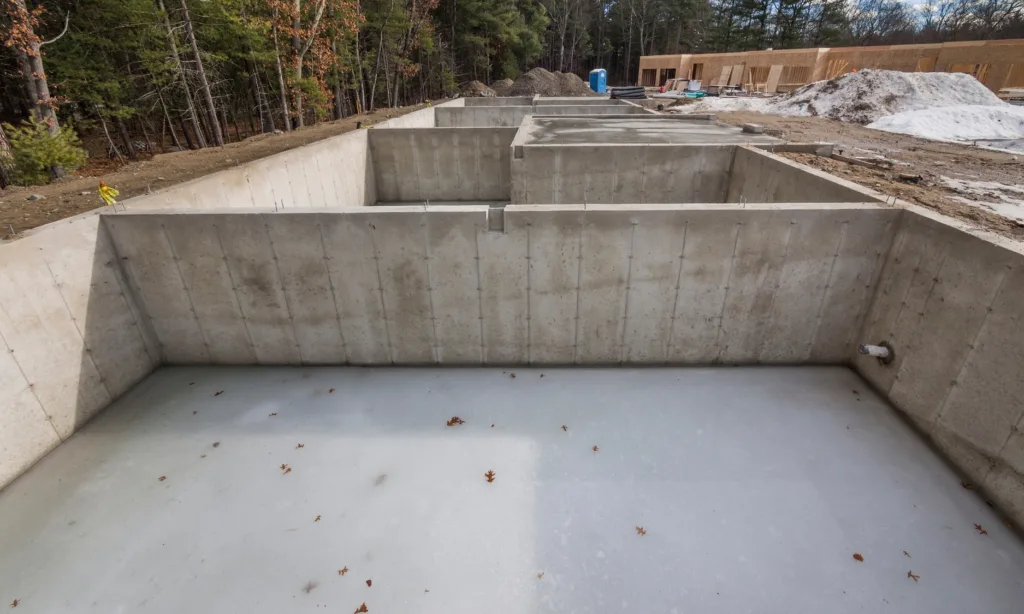
Site Preparation: The Firm Foundations LLC Standard
Precision Excavation and Sod Removal
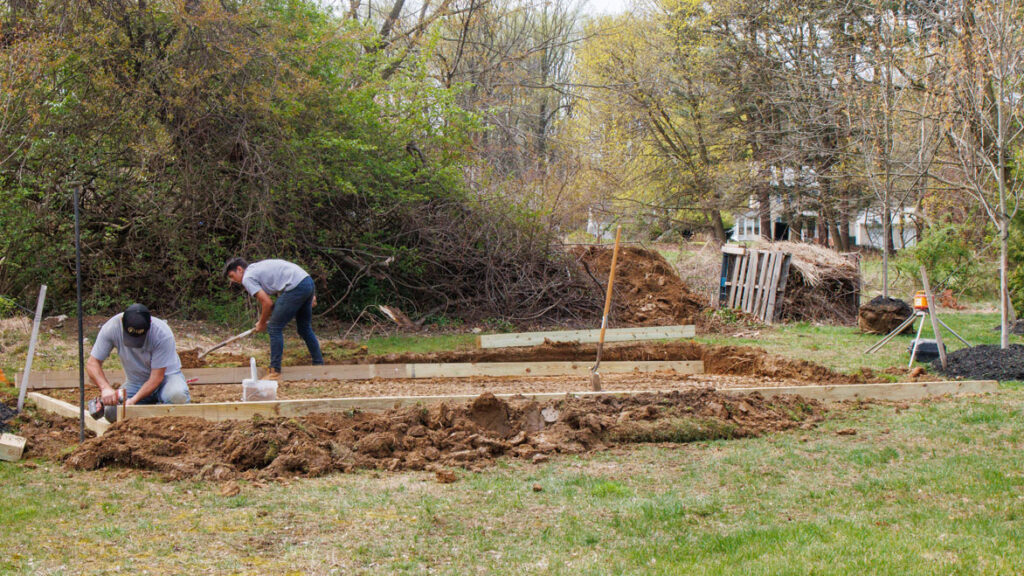
Professional site preparation begins with the removal of organic topsoil and sod to reach the more stable subsoil layer. Organic material compresses and decomposes over time, which causes significant settling if left beneath a foundation. By excavating down to the inorganic subsoil, Firm Foundations LLC ensures that the base is built on ground that will not compress under the weight of the aggregate and the shed, eliminating future shifting issues.
Laser-Level Accuracy for a True Base
Achieving a truly level foundation requires more than a carpenter’s level and a visual check. Advanced laser-leveling technology allows for precision that far exceeds standard manual tools, ensuring the site is perfectly flat across the entire footprint. This meticulous attention to detail prevents the shed from “racking” or twisting during installation, ensuring that doors operate smoothly and the structure settles evenly over its lifetime.
Geotextile Barriers for Vegetation Control
To maintain the integrity of a stone foundation, a heavy-duty geotextile fabric is installed between the subsoil and the crushed stone. This commercial-grade barrier serves a dual purpose: it prevents the aggregate from mixing with the soil below, which would weaken the base, and it stops weeds from growing up through the stone.
Access and Placement Considerations
Navigating Property Setbacks and Zoning
Before breaking ground, it is imperative to verify local building codes and HOA regulations regarding property setbacks. Many municipalities require accessory structures to be placed a specific distance from property lines, fences, or other buildings. Failing to adhere to these zoning laws can result in fines or, worse, a mandatory order to move the shed, which is a costly and difficult endeavor once the foundation is set.
Ensuring Delivery Accessibility
The logistics of shed delivery require careful planning to ensure the delivery vehicle has a clear path to the prepared site. Whether the shed is delivered fully assembled on a trailer or moved into place with a specialized “mule,” the path must be free of obstructions like low-hanging branches, narrow gates, or steep inclines.
Future-Proofing for Maintenance
Strategic placement of the foundation involves more than just fitting the shed into a corner; it requires forethought regarding future maintenance. Positioning the base to allow sufficient clearance—typically at least 18 to 24 inches—around the entire perimeter is essential. This access space permits necessary tasks such as painting, cleaning siding, repairing the roof, or managing vegetation, ensuring the shed can be properly maintained without obstruction.
The Value of Professional Installation
Avoiding Physical Strain and Improper Execution
Constructing a proper shed base involves moving tons of aggregate and precise leveling, tasks that are physically demanding and technically challenging for the average homeowner. DIY attempts often result in uneven surfaces or inadequate material depth, leading to the very structural issues the foundation is meant to prevent.
Ensuring Warranty Compliance
Most reputable shed manufacturers include specific clauses in their warranties regarding the foundation. Professional installation by experts like Firm Foundations LLC ensures that the base meets these strict specifications. By adhering to manufacturer guidelines for material, depth, and leveling, the installation guarantees that the shed’s warranty remains valid, providing protection against potential defects.
Long-Term Peace of Mind
Ultimately, choosing professional installation guarantees that the job is done correctly the first time. A professionally installed base provides a reliable, permanent platform that will likely outlast the shed itself. This investment offers peace of mind, knowing that the structure is secure, level, and protected from the elements, allowing you to focus on utilizing your new storage space rather than worrying about its stability.
Build on a Platform of Quality
The longevity of your outdoor storage depends heavily on the choices made before the first wall is ever erected. By prioritizing drainage, soil stability, and proper material selection, you ensure that your shed remains a functional and attractive asset for years to come. Whether the site demands the robust drainage of a crushed stone pad or the heavy-duty permanence of concrete, the principles of a solid foundation remain the same: stability and moisture control.
Cutting corners on the foundation is a decision that often leads to higher costs down the road, manifesting as structural repairs or the need for premature replacement. Do not let a “quick fix” undermine the value of your investment. For a site assessment that guarantees your project starts on solid ground, consult with Firm Foundations LLC. Their expertise ensures your shed is built on a base for storage shed excellence, securing your property’s future.
Firm Foundations LLC
https://maps.app.goo.gl/Uf6XdgtpBTETgNrr7
1535 White School Rd, Honey Brook, PA 19344, United States
(717) 716-7267
https://shedpads.com/