
Shed Foundation
How to Pick the Perfect Shed Foundation for Your Backyard
So, you’re buying a new shed. You’ve picked the color, style, and layout, and you’re already imagining a more organized, peaceful backyard. But before you get ahead of yourself, there’s one crucial, less-exciting detail to handle: the foundation.
While it’s tempting to save money by placing your shed directly on the grass or a few cinder blocks, a poor foundation is a recipe for disaster. Without a proper base, moisture will rot the floor, the structure will shift, and your investment will slowly fall apart.
Choosing the right shed foundation depends on your shed’s size, local soil conditions, and budget. This guide will walk you through everything you need to know, from assessing your site to deciding between gravel and concrete.
Understanding the Importance of a Solid Shed Foundation
A shed foundation has three primary functions: distributing weight evenly, leveling the structure, and managing water.
A solid base prevents a heavy shed from sinking into soft ground or twisting on uneven terrain. This twisting, or “racking,” can cause windows to crack and doors to jam.
However, water is the biggest threat. A foundation lifts the shed off the ground, creating a barrier against moisture that would otherwise seep into the wood and cause rot, mold, and rust. It also allows air to circulate underneath, keeping the structure dry and ensuring its longevity.
Different Types of Shed Foundations: Pros and Cons
Not all foundations are created equal. The right choice often depends on what you plan to store and how permanent you want the structure to be. Here is a look at the most common options.
Crushed Stone (Gravel Pad)
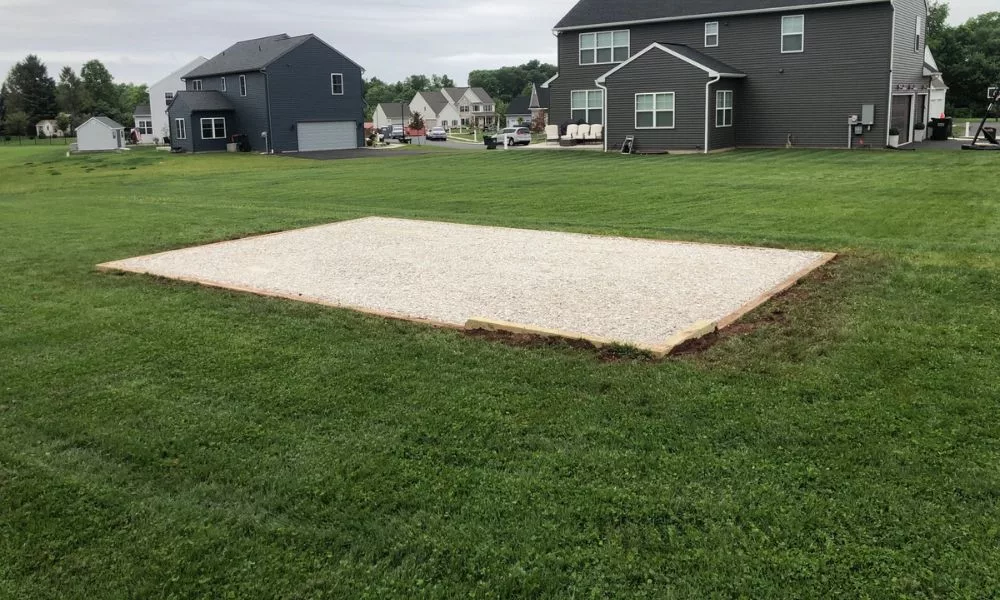
This is widely considered the best all-around foundation for pre-fabricated sheds with a wood floor. It consists of a timber perimeter filled with crushed stone.
Pros:
- Drainage: It offers superior drainage compared to concrete. Water flows right through the stone and into the ground, keeping your floor joists dry.
- Cost-Effective: It is significantly cheaper than pouring a concrete slab.
- Ease of Installation: It can be installed in a day and is ready for the shed immediately.
- Adjustable: If the ground settles slightly, the gravel moves with it, supporting the shed evenly.
Cons:
- Sloped Terrain: It is harder to install on very steep slopes without significant excavation or retaining walls.
- Not for Anchoring: It is difficult to anchor a shed to gravel if you live in a high-wind area (though auger anchors can be used).
Concrete Slab
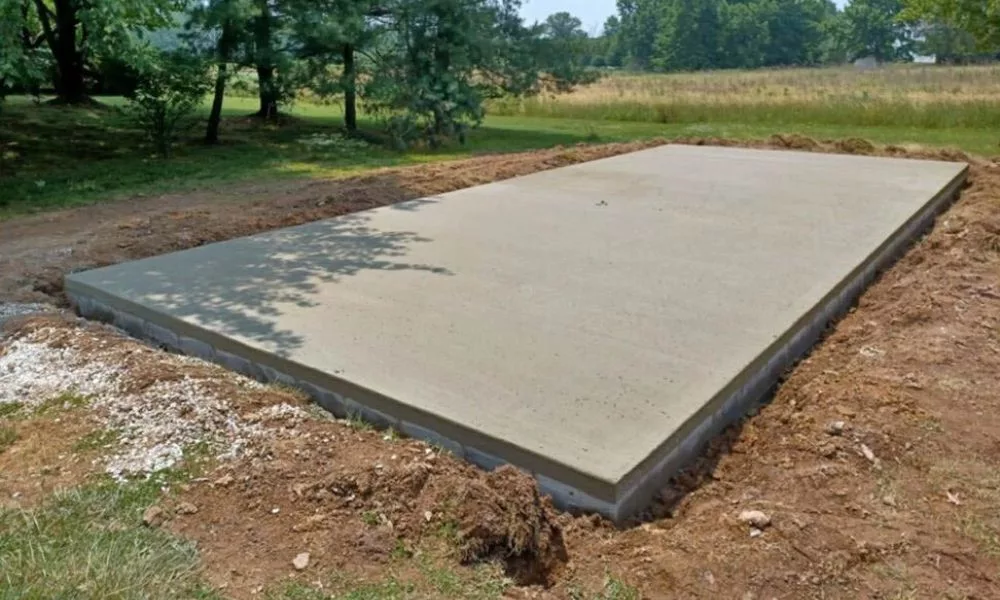
A concrete slab is a permanent, solid base. It is ideal for garages or sheds that will house very heavy equipment.
Pros:
- Durability: It is the strongest option available. It won’t shift, rot, or degrade.
- Floor Included: If you pour a slab, you don’t need a wood floor in your shed. This is great for messy workshops or storing tractors that might leak oil.
- Low Profile: It sits close to the ground, making it easy to roll wheeled equipment in and out.
Cons:
- Price: It is the most expensive option due to materials and labor.
- Water Splash: Rain can splash off the concrete and onto the bottom of the shed siding, potentially causing rot if not flashed correctly.
- Permanence: Once it’s there, it’s there. Removing a concrete slab is a major demolition project.
Concrete Pavers or Blocks
This method involves placing individual concrete blocks at the corners and stress points of the shed.
Pros:
- Cheapest Option: Requires very little material.
- DIY Friendly: Easy for a homeowner to do in an afternoon.
Cons:
- Instability: Blocks sink independently. If one corner sinks and the others don’t, your shed twists.
- No Center Support: The floor often feels bouncy because there is no support in the middle of the joists.
- Pest Issues: The open space under the shed is inviting for groundhogs and skunks.
Skid Foundation
Some sheds are built on pressure-treated runners (skids). These can be placed directly on a gravel bed or even concrete blocks.
Pros:
- Mobility: It makes the shed easier to move later if necessary.
- Airflow: Excellent ventilation under the floor.
Cons:
- Ground Contact: If the skids sit directly on dirt, they will eventually rot, even if treated. They need a gravel base.
How to Assess Your Soil and Backyard Terrain
Before you buy materials, walk your property. The condition of your yard dictates which foundation will work best.
Check the Grade (Slope)
Choose a flat spot for your shed if possible. If your yard slopes more than 6 inches, you’ll need to level it. Gravel pads require excavation, while concrete may need a deeper footing on the low side. Avoid propping up the shed with extra blocks—it’s unsafe and unstable.
Identify the Soil Type
- Sandy Soil: Drains well and is easy to dig. This is ideal for foundations.
- Clay Soil: Holds water and expands when wet. If you have heavy clay, you need a deeper gravel base to prevent frost heaving (where frozen wet soil pushes the foundation up).
- Rocky Soil: difficult to excavate. You might need to rent heavier machinery or opt for a foundation that requires less digging, like a raised post-and-beam system.
Check for Obstacles
Before starting any digging, check above for overhanging branches and below for underground hazards. Call 811 to have utilities marked and avoid hitting gas lines or cables. Be mindful of tree roots—cutting large ones can damage trees, increasing the risk of them falling later. Plan carefully to avoid costly or dangerous mistakes.
Step-by-Step Guide to Installing a Gravel Pad or Concrete Slab
If you are handy, you might tackle this yourself. Here is a high-level overview of what the process looks like for the two most popular options.
The Gravel Pad Method
Mark the Site: Use stakes and string to outline the shed footprint. Make the pad 2 feet wider and longer than the shed (1 foot extra on all sides) to prevent dirt from splashing onto the siding.
Measure the Slope: Use a laser level or a string level to find the highest point.
Excavate: Remove the grass and topsoil. You want to dig down about 4 to 6 inches. The goal is to make the bottom of the hole flat and level.
Weed Barrier: Lay down a heavy-duty geotextile fabric. Do not use cheap garden weed block; you need commercial-grade fabric to separate the stone from the dirt.
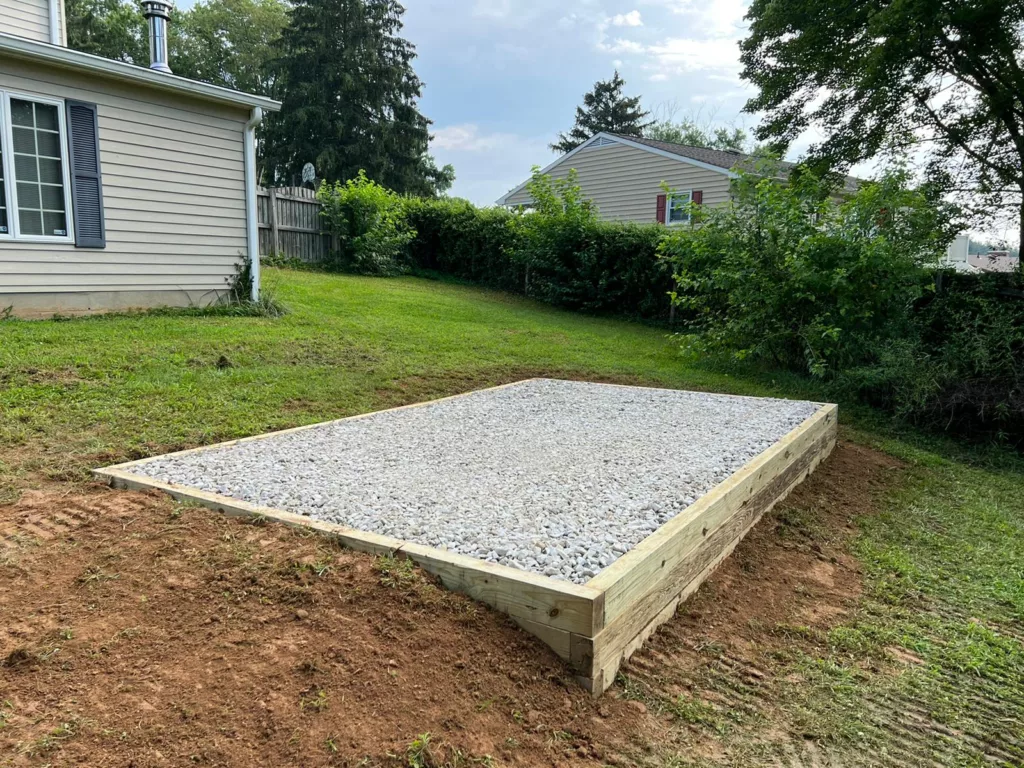
Perimeter Timber: Lay 4×4 or 6×6 pressure-treated timbers around the edge to hold the stone in. Fasten them together with long timber screws or rebar driven into the ground.
Fill and Tamp: Fill the box with 3/4-inch clean crushed stone (not river rock—river rock rolls and won’t compact). Spread it out and tamp it down until it is firm and level.
The Concrete Slab Method
Excavate: Remove organic topsoil. You need to dig deep enough for a 4-inch gravel sub-base and a 4-inch concrete slab.
Formwork: Build a wooden frame using 2x4s or 2x6s around the perimeter. This holds the wet concrete. It must be perfectly square and level.
Sub-base: Add 4 inches of gravel and compact it thoroughly.
Reinforcement: Add a vapor barrier (plastic sheeting) and steel reinforcement, such as rebar or wire mesh, to prevent cracking.
Pour and Finish: Pour the concrete, use a straight board to “screed” (level) it off, and then use a float to smooth the surface.
Cure: Keep the concrete damp for several days so it cures slowly and reaches full strength.
Why Professional Installation with Firm Foundations Saves Money Long-Term
There is a strong “do it yourself” culture among shed buyers, and that is admirable. However, site preparation is deceptive. It looks like simple digging, but it requires precision. This is why many homeowners turn to experts like Firm Foundations.
Hiring a professional for shed foundation might seem like an added expense upfront, but it often costs less over the lifespan of the shed. Here is why.
Avoid Tool Rental Costs
To do a gravel pad correctly, you need a skid steer or excavator, a laser level, and a heavy plate compactor. Renting this equipment for a weekend can cost hundreds of dollars. Professionals own this equipment, meaning you aren’t paying rental markups.
Material Efficiency
Calculating exactly how many tons of stone or yards of concrete you need is difficult. DIYers often under-order (paying for a second delivery fee) or over-order (paying to haul away excess). Firm Foundations calculates specific material needs based on site visits, eliminating waste.
The “Do Over” Factor
The most expensive foundation is the one you have to do twice. If a DIY concrete slab cracks because the sub-base wasn’t compacted, or if a gravel pad washes away because the drainage wasn’t managed, fixing it is a nightmare. It usually involves jacking up the shed, moving it, and starting over. Professional installation comes with the assurance that it is done right the first time.
Site Access and Damage Control
Moving tons of stone or wet concrete into a backyard without destroying the lawn requires skill. Professionals use specialized equipment, like motorized wheelbarrows or concrete buggies, to minimize turf damage. A novice running a skid steer across a wet lawn can cause thousands of dollars in landscaping damage.
Common Mistakes to Avoid When Prepping Your Site
Even if you hire a contractor, you should be aware of these common pitfalls to ensure the job meets your standards.
- Using the Wrong Stone: Never use round stone (pea gravel or river rock). It acts like ball bearings. Your shed will shift and settle. You must use crushed stone with angular edges that lock together.
- Building Too Low: The top of your foundation should be at least 4 to 6 inches above the surrounding grade. If it is level with the grass, water will run onto the pad and pool under the shed during heavy rains.
- Ignoring Local Codes: Every municipality has different rules regarding setbacks (how close you can build to the property line). If you build your foundation 3 feet from the fence and the code says 10 feet, the town can force you to tear it down. Always check zoning before digging.
- Forgetting the Vapor Barrier (Concrete): If you pour concrete directly on the ground without a plastic vapor barrier, moisture will wick up through the slab. Your shed floor will be perpetually damp, causing tools to rust and cardboard boxes to turn to mush.
Build It Right, Build It Once
The foundation is the unsung hero of your backyard project. It doesn’t get the compliments that the barn-style doors or the cupola will get, but it is doing the heavy lifting. A solid base ensures your doors open smoothly in December just as well as they did in July. It keeps your expensive lawn mower dry and your holiday decorations free of mold.
Take the time to assess your land, choose the right material, and don’t hesitate to call in experts like Firm Foundations if the job feels too big to handle alone. When you build on solid ground, you are building for the future.
Firm Foundations LLC
https://maps.app.goo.gl/Uf6XdgtpBTETgNrr7
1535 White School Rd, Honey Brook, PA 19344, United States
(717) 716-7267
https://shedpads.com/