
Best Concrete Patio Paint for PA, MD, DE and NJ Homes
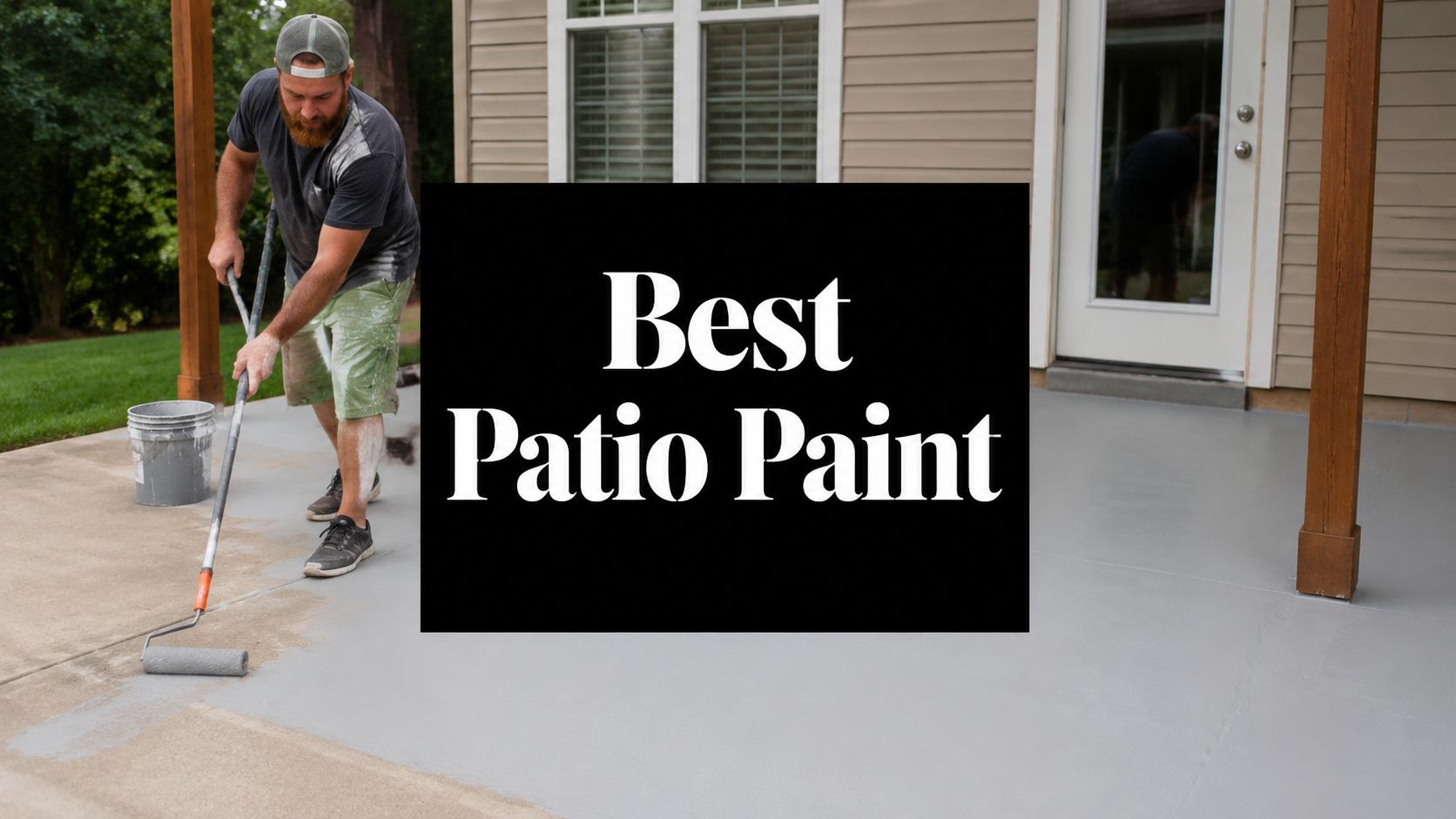
If you're searching for the best concrete patio paint in Pennsylvania, Maryland, Delaware, or New Jersey, the most popular advice is also the most misleading: clean the slab, roll on any exterior paint, and call it finished. Concrete isn't wood, and patio paint isn't interchangeable with wall paint. Moisture below the slab, a surface that's too smooth, winter movement, strong summer sun, and wet-weather traction all determine whether the coating bonds or peels.
A durable patio finish starts before the paint can is opened. Firm Foundations works with homeowners throughout the Mid-Atlantic on concrete foundations, patios, excavation, shed pads, garage slabs, and other site-work projects where drainage and the condition of the base matter as much as the visible finish. The guidance below will help you decide whether your existing slab is a reasonable coating candidate, what chemistry fits the exposure, and when a new concrete patio may make more sense than repainting a failing surface.
| Patio condition | Better coating direction | Main concern |
|---|---|---|
| Sound, lightly used slab with a dry surface | Exterior acrylic or breathable coating | Surface profile and moisture |
| Covered patio with heavy furniture traffic | Epoxy with a compatible UV-stable topcoat | Sun exposure and abrasion |
| High-sun patio needing a fast return to service | Polyaspartic or polyurea system | Temperature, pot life, and installer speed |
| Wet, shaded, or poolside area | Textured system with anti-slip aggregate | Traction when wet |
| Older slab with movement or hairline cracking | Flexible or elastomeric system, after evaluation | Crack activity and water entry |
| Repeatedly peeling patio | Professional assessment or replacement | Hidden moisture, contamination, or weak concrete |
Why Most Concrete Patio Paint Fails Within a Year
Any paint won't work on any patio slab. A coating can look excellent on installation day and still fail because the concrete beneath it is damp, contaminated, or too smooth to hold the resin. In Pennsylvania and New Jersey, freezing and thawing can stress the bond. Humid summers in Maryland and Delaware can push moisture vapor through porous concrete and lift the film from below.
The three failure paths
Hydrostatic or vapor pressure is the first problem. Concrete can appear dry at the top while moisture remains in the slab or moves upward from the ground. A sealed surface gives that moisture fewer ways to escape, so the coating may blister, bubble, or detach.
Poor surface profiling is another common cause. Dirt removal isn't the same as creating a bondable surface. Old sealer, wax, curing compounds, grease, laitance, and smooth troweled concrete can prevent the coating from gripping. Mechanical abrasion or a suitable etching process exposes a surface with enough texture for the resin to key into.
Weak exterior binders fail under ultraviolet exposure and movement. Low-cost acrylic products may chalk, fade, or lose flexibility, especially when the patio receives direct sun and repeated wetting. A decorative finish that has little resistance to abrasion or water may be a poor choice for dining furniture, pets, toys, and regular foot traffic.
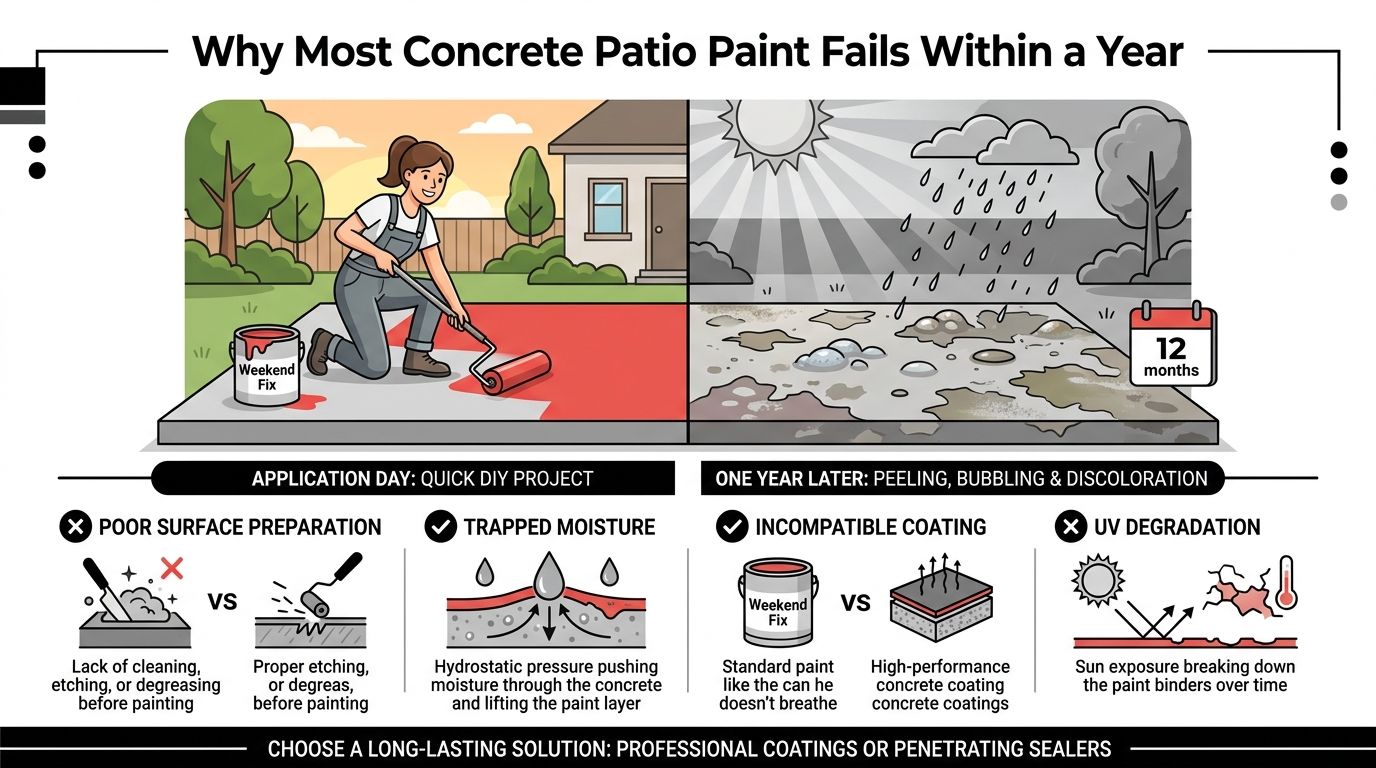
Field rule: The coating can't compensate for a damp slab or a contaminated surface. Preparation is part of the coating system, not an optional chore before it.
The market's scale reflects the demand for more durable concrete finishes. One estimate places the concrete floor coatings segment at USD 6.0 billion in 2026, with a projection of USD 9.7 billion by 2036 at a 4.9% CAGR, including products used on patios and other exterior concrete surfaces (Future Market Insights concrete floor coatings market). That growth doesn't make every retail paint suitable for a patio, but it does show why buyers are moving toward purpose-built coatings that address adhesion, weather exposure, and maintenance.
Understanding Concrete Coating Chemistries
The label “concrete paint” covers several very different resin systems. Color matters for appearance, but resin chemistry determines how the coating handles sunlight, abrasion, moisture, and slab movement.
How the main systems behave
Acrylic latex is usually the most approachable option for a sound, dry patio. It's relatively breathable, easier to apply, and commonly available in low-odor formulations. The trade-off is film thickness and mechanical strength. A thin acrylic finish can suit a lightly used covered porch, but it isn't the first choice for constant wetting, heavy furniture, or aggressive winter exposure.
Epoxy bonds strongly and builds a harder film. Independent TxDOT testing found water-based coatings averaging 173 to 302 psi, while solvent-based coatings averaged 394 to 503 psi in comparable concrete adhesion testing (TxDOT coating-performance evaluation). That difference helps explain why concrete-specific, solvent-borne systems can retain a bond more effectively in demanding conditions, although solvent handling and local VOC requirements still matter.
Epoxy's weakness outdoors is ultraviolet exposure. Without a compatible UV-stable topcoat, some epoxy systems can yellow, chalk, or lose color. They're often better suited to covered patios or to assemblies designed with a protective top layer.
Polyurethane provides strong abrasion resistance and can serve as a durable topcoat over a compatible base. A scholarly comparison reports excellent abrasion resistance and more than 85% chloride-ingress reduction for polyurethane and epoxy systems, with reported adhesion of about 2 to 3 MPa for polyurethane and 2.5 to 3.5 MPa for epoxy (scholarly coating comparison table). Those results are relevant where patio surfaces face abrasion, moisture, or de-icing residue, but the complete assembly still has to be compatible with the concrete and outdoor exposure.
Polyaspartic and polyurea systems cure quickly and can handle demanding installation schedules. Their speed is useful when weather windows are narrow, but it leaves less room for correcting roller marks, uneven coverage, or missed preparation. These products are usually better handled by an experienced applicator than by someone learning on a small patio.
| Coating type | Solids content | UV stability | Flexibility | Cure time | Moisture tolerance | Typical lifespan |
|---|---|---|---|---|---|---|
| Acrylic latex | Varies by product | Generally good | Moderate | Usually forgiving | More breathable, but still requires a dry slab | Product- and exposure-dependent |
| Epoxy | Often higher-build | Limited without a topcoat | Rigid to moderate | Longer working and cure requirements | Poor choice over active moisture | Product- and assembly-dependent |
| Polyurethane | Higher-build options available | Good with exterior-rated chemistry | Moderate | Requires careful recoat timing | Requires moisture-controlled concrete | Product- and exposure-dependent |
| Polyaspartic | High-build systems available | Good when exterior-rated | Moderate to flexible by formulation | Fast | Not a substitute for moisture testing | Product- and installation-dependent |
Manufacturers don't all publish solids, vapor, or adhesion information in the same way. Read the technical data sheet, not just the color card. If the product doesn't clearly identify exterior concrete use, surface moisture limits, recoat requirements, and slip-resistant options, treat that omission as a warning.
Comparing Patio Paint Types for Outdoor Durability
A patio needs more than a coating that looks good in a dry photograph. The finish must remain usable when rain hits it, comfortable under foot traffic, and stable through sun and seasonal movement. Slip resistance deserves the same attention as color, especially around pools, steps, shaded walls, and doors where algae or moisture can keep the surface wet.
What each option does well
Acrylic latex is the easiest category for many homeowners to understand. It works best on a structurally sound slab with moderate traffic and manageable moisture. Choose a low-sheen or textured finish rather than a slick, high-gloss surface, and confirm that the product is rated for exterior horizontal concrete.
Epoxy creates a dense, cleanable surface and handles abrasion well. It can make sense for a covered entertaining area, but an outdoor epoxy needs a compatible UV-stable topcoat and careful moisture control. A rigid film over a moving or damp slab is a recipe for peeling, regardless of its initial hardness.
Concrete stain and sealer behave differently from film-forming paint. Stain penetrates or reacts with the concrete rather than creating the same surface film, while the sealer controls appearance and protection. This approach can be useful when vapor movement or a natural concrete look makes a thick paint film undesirable, though it won't hide every discoloration or patch.
Polyurethane, polyaspartic, and polyurea systems are more specialized. They suit patios where abrasion, sunlight, and schedule pressure justify a higher-performance assembly, but application errors become more expensive because the products cure quickly or require precise compatibility.
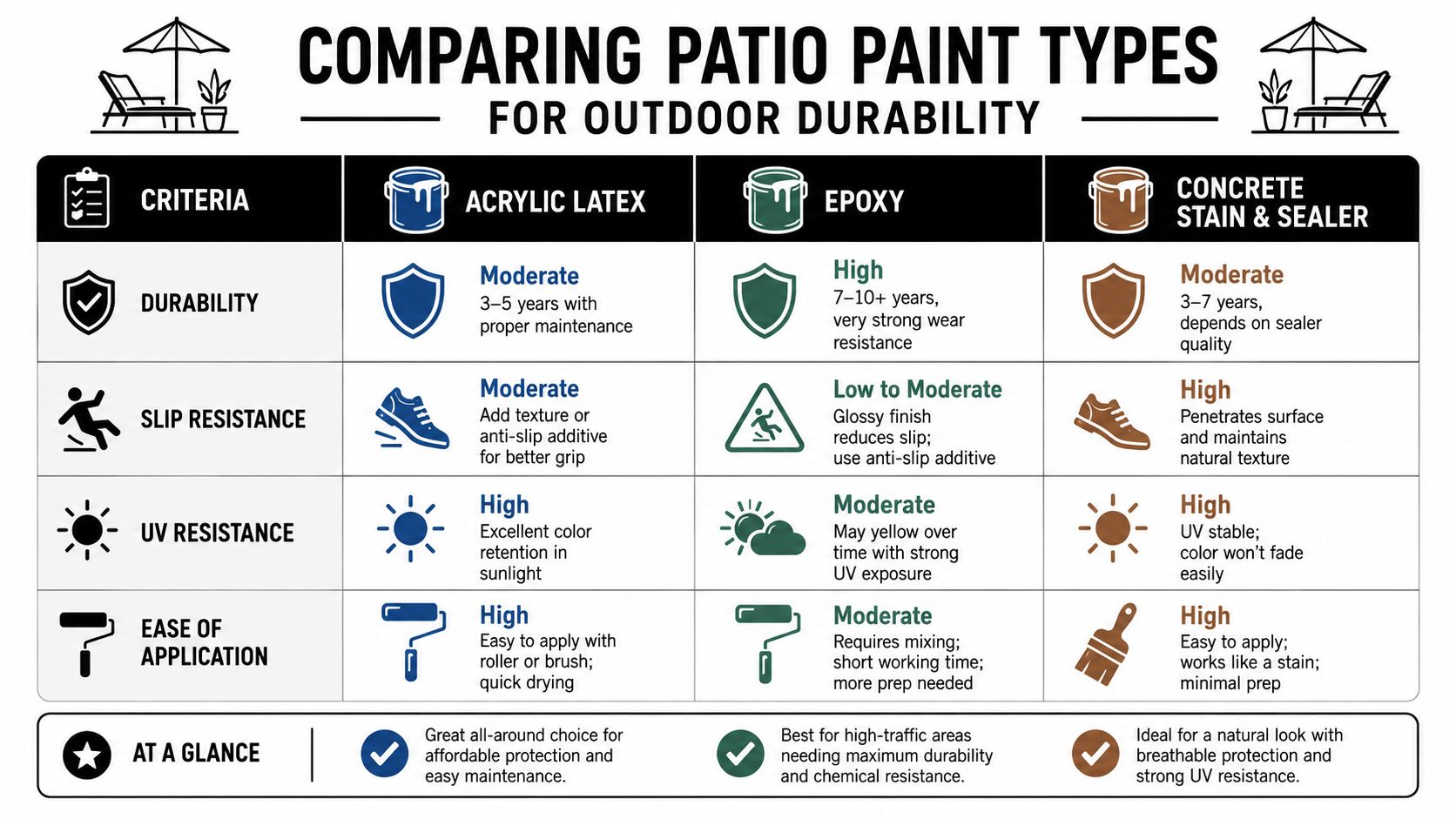
Industry product information increasingly emphasizes textured finishes, anti-slip aggregate, and low-VOC exterior formulations for patio use, reflecting a practical issue that color-focused guides often miss (exterior textured concrete coating information). A glossy coating may be easy to clean, but it can become uncomfortable or dangerous when wet.
For a more detailed look at protecting an outdoor slab, these concrete slab sealer considerations can help you compare a penetrating or film-forming approach. The right answer depends on whether you need color change, waterproofing support, traction, or a cleaner appearance.
Surface Preparation and Moisture Testing Essentials
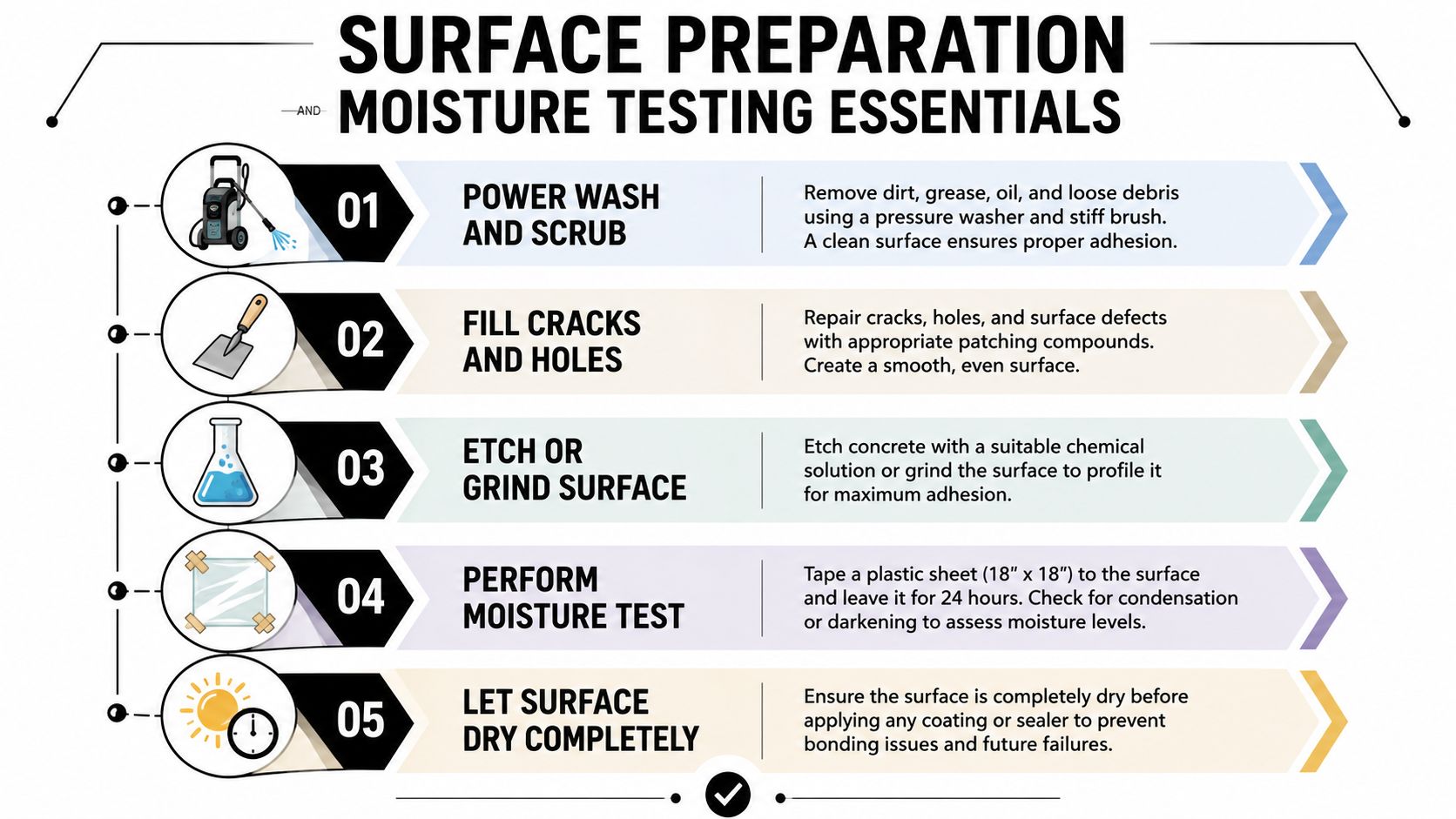
Preparation decides whether the coating bonds. Start by removing furniture, dirt, leaves, grease, algae, and loose paint. Pressure washing helps, but excessive pressure can damage weak concrete or drive contaminants deeper into cracks, so the operator should use the least aggressive method that produces a clean surface.
Build a bondable slab
Repair cracks and holes before coating. Flexible polyurethane fillers can suit moving hairline cracks, while epoxy repair materials are better for certain stable defects. Neither product can solve an actively shifting slab or a structural crack, so recurring movement needs a contractor's evaluation.
Etch or mechanically abrade the concrete after cleaning. Acid etching can open the pores when used correctly, but it requires protective clothing, eye protection, controlled runoff, thorough rinsing, and neutralization where the product instructions call for it. Diamond grinding or shot blasting gives a more consistent profile on smooth, previously coated concrete and is usually the more reliable approach for a large patio.
Efflorescence, the powdery salt deposit that appears as moisture moves through concrete, must be removed rather than painted over. Muriatic acid may be used in carefully controlled situations, but it's hazardous around people, plants, metals, and drainage areas. Follow the product instructions and local disposal requirements.
Test before coating
Tape a clear plastic sheet tightly to several areas of the slab and inspect it after 24 hours. Condensation beneath the plastic or darkening of the concrete indicates moisture that can interfere with adhesion. This common diagnostic is discussed in concrete maintenance for homeowners, along with practical cleaning considerations.
Don't paint immediately after rain or while the slab still feels cool and damp. Read the coating's humidity, temperature, dew-point, and moisture limits rather than relying on a calendar. Spring and early fall can offer more manageable conditions in PA, MD, DE, and NJ, but a dry-looking day isn't enough if moisture continues moving through the concrete.
For slabs over soil, moisture control begins below the visible surface. A foundation moisture barrier is part of a broader foundation and drainage conversation, particularly when a new patio, shed base, or garage slab is being planned rather than merely recoated.
Choosing the Right Coating for Your Climate and Slab
Mid-Atlantic patios need a coating that matches both the slab and the exposure. A south-facing patio with intense sun has a different problem from a shaded slab beside a wooded property. A covered patio with heavy furniture needs abrasion resistance, while a poolside surface needs dependable traction when wet.
Match the system to the conditions
For a sound, dry slab on a limited budget, a quality exterior acrylic can be sensible. It's easier to maintain and more forgiving than a fast-curing resin, but it still needs a properly profiled surface and shouldn't be treated as a cure for damp concrete.
For a covered patio with heavy furniture traffic, epoxy can provide a hard, cleanable surface. Use an exterior-compatible topcoat where sunlight reaches the slab, and avoid this route if moisture testing shows vapor pressure or dampness.
For high-UV exposure, polyaspartic or polyurea systems offer a rapid-cure option when the installer can control timing and application. Polyurethane is another strong candidate where abrasion resistance matters. Verify that the complete system, not just one component, is rated for outdoor use.
For an older slab with hairline cracking, a flexible or elastomeric coating may accommodate minor movement better than a rigid film. It won't repair structural cracking, settlement, drainage problems, or an unstable base.
| Patio condition | Recommended coating type | Key benefit | Best climate fit |
|---|---|---|---|
| Covered, dry, high-traffic area | Epoxy with compatible topcoat | Hard abrasion-resistant film | Sheltered Mid-Atlantic patios |
| Sound slab with moderate use | Exterior acrylic latex | Simple application and breathability | Dry, less demanding exposure |
| Direct sun and narrow weather window | Polyaspartic or polyurea | Fast return to service | High-UV areas with controlled installation |
| Minor hairline movement | Elastomeric or flexible coating | Better accommodation of small movement | Older slabs after crack evaluation |
| Wet or shaded patio | Textured system with aggregate | Better traction | Poolside, shaded, or algae-prone areas |
VOC requirements also deserve attention in New Jersey and Maryland. Water-based products may be preferable for odor and regulatory reasons, but “water-based” doesn't automatically mean durable or suitable for a horizontal slab. Ask for the technical data sheet and confirm the product's permitted use, cleanup method, and moisture limits.
If the slab is badly settled, repeatedly peeling, or poorly drained, coating selection is secondary. A new concrete patio, properly formed and finished, may provide a better foundation for the outdoor space than another layer over a failing substrate.
Application Steps for a Long-Lasting Patio Finish
Start with the coating manufacturer's data sheet, then plan the work around the slab rather than around a convenient weekend. Confirm the surface is clean, profiled, repaired, and dry before mixing or opening the product.
Apply in a controlled sequence
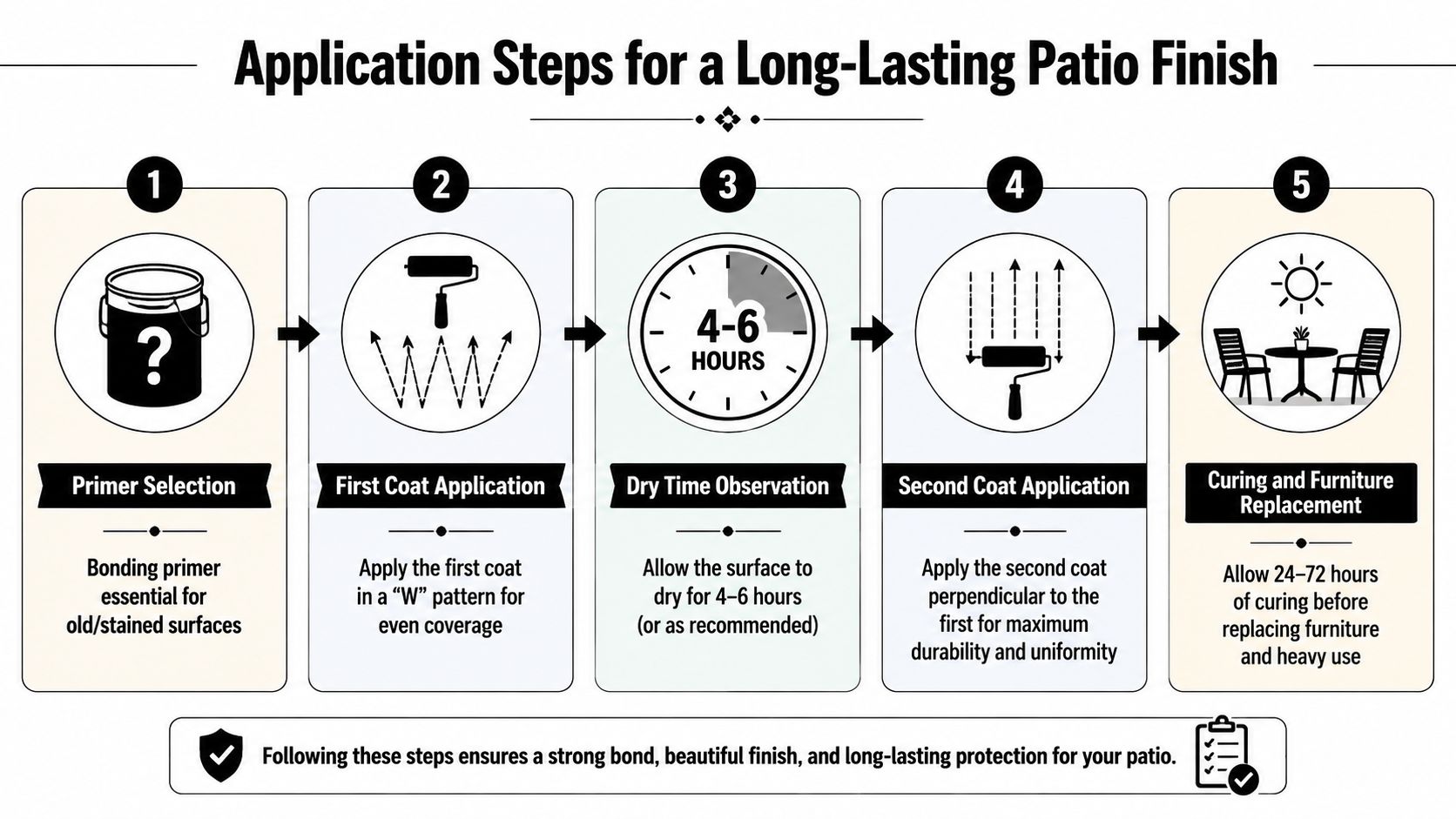
Choose primer carefully. A bonding primer is especially useful on old, stained, porous, or previously coated concrete when the coating manufacturer specifies it. Some products are self-priming, while others need a dedicated primer for adhesion and uniform absorption.
Cut in edges first. Use a brush around walls, steps, posts, and joints. Keep the roller loaded enough to distribute an even film without leaving puddles.
Maintain a wet edge. Work in manageable sections, overlapping the previous pass while it's still workable. Back-roll in a consistent direction to reduce lap marks and uneven sheen.
Respect the recoat window. Rushing can trap moisture or disturb the first layer. Waiting too long may require additional scuffing before the next coat. The correct interval depends on the product and site conditions, so follow the data sheet rather than the clock shown on a generic online graphic.
Add traction before the film sets. Broadcast the manufacturer-approved anti-slip aggregate evenly, or use a pre-blended textured coating. Concentrate on transitions, steps, and areas that stay wet.
Cleanup depends on chemistry. Water-based acrylic tools may clean with water while the material is fresh, but epoxy, polyurethane, polyaspartic, and polyurea systems require the solvent specified by the manufacturer and careful disposal. More practical concrete surface painting tips can help with roller technique, edge work, and avoiding common finish defects.
Keep furniture, pets, and foot traffic off the surface until the coating has cured according to its technical data sheet. Full weather exposure and heavy furniture usually require more patience than light walking, particularly in cool or humid conditions.
When to Call a Professional Concrete Contractor
DIY coating makes sense when the slab is sound, dry, clean, accessible, and free from repeated failures. Call a professional when moisture remains beneath plastic testing, cracks continue to move, the concrete is spalling, or previous coatings have peeled more than once. Those conditions point to a substrate or drainage problem, not merely the wrong color.
A contractor can use diamond grinders, shot blasters, moisture-testing equipment, industrial vacuums, and commercial coating systems that aren't practical for many homeowners. Consistent surface profiling matters because it gives the coating a uniform bond, while proper mixing and film thickness prevent soft spots, pinholes, and early wear.
For large patios, freeze-thaw-damaged slabs, clay-heavy sites with water pressure, or surfaces connected to a new patio foundation, professional planning reduces the chance of paying twice. The same judgment applies when the project is really a new slab, garage foundation, gazebo foundation, shed foundation, or base for a storage shed rather than a paint refresh.
Ask any contractor:
- Moisture testing: How will you check the slab before coating?
- Surface preparation: Will you grind, shot blast, etch, or wash?
- System compatibility: Which primer, base coat, topcoat, and aggregate work together?
- Warranty terms: What defects are covered, and what substrate conditions void the warranty?
- Drainage planning: How will water move away from the patio and adjacent foundation?
Firm Foundations handles excavation, forming, pouring, finishing, gravel shed foundation work, concrete foundations, garage footings and foundations, and patio slabs across Pennsylvania, Maryland, Delaware, and New Jersey. If your existing patio is not a reliable coating candidate, the team can discuss whether correcting the base or building a properly planned slab is the more practical route.
Firm Foundations can evaluate your patio conditions, prepare a new concrete slab, or help plan the excavation and foundation work for a shed, garage, gazebo, or other outdoor structure. Visit Firm Foundations to request a free quote and discuss the right foundation or patio solution for your property.