Concrete Slab Sealer: A PA Homeowner’s Guide for 2026
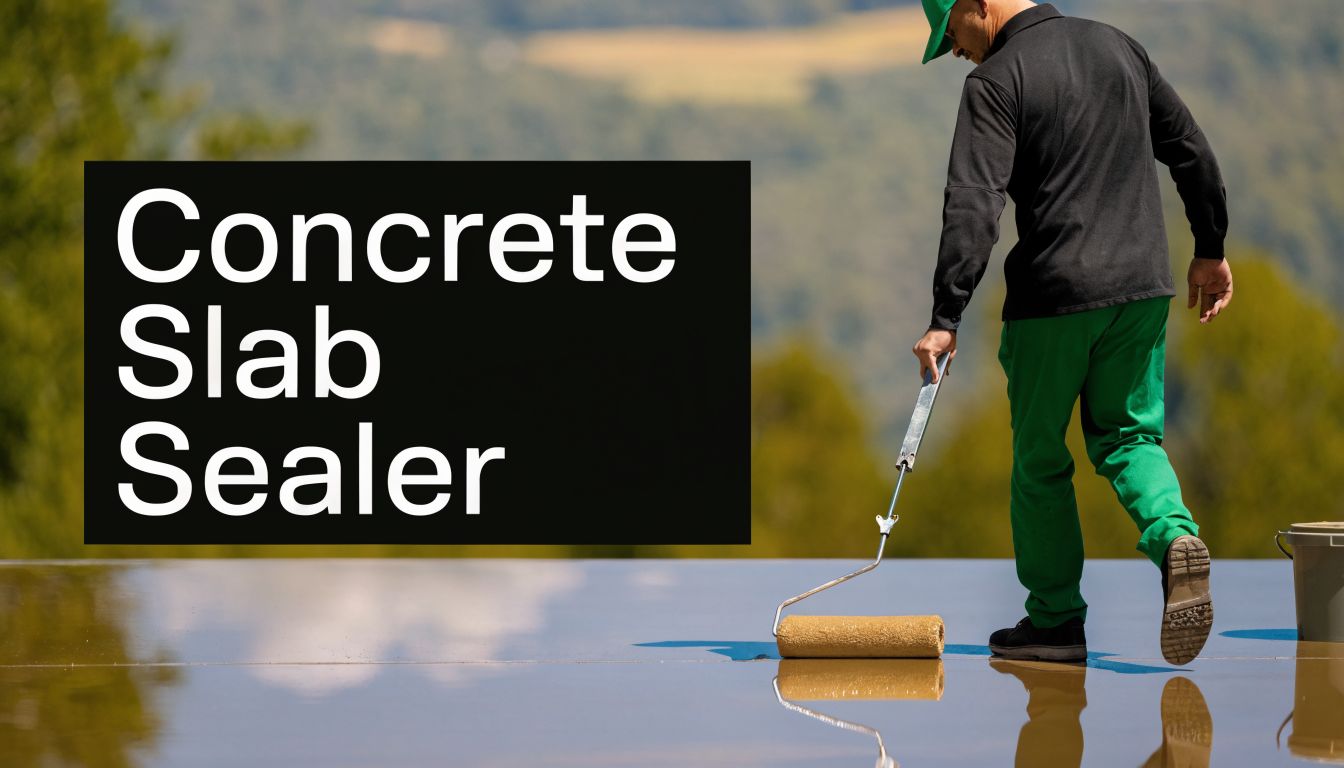
A new slab always looks solid on day one. The edges are crisp, the finish is clean, and you can already see the shed, garage, patio, or barn sitting on it for years. Then Pennsylvania weather gets involved. Water sits on the surface, winter salts get tracked in, and repeated cold snaps start working on the concrete long before most homeowners notice anything is wrong.
That's why a concrete slab sealer matters. It's not a cosmetic extra. For many projects in PA, MD, DE, and NJ, it's the layer of protection that helps a good slab stay a good slab. The right sealer can limit moisture intrusion, reduce staining, and help the surface handle the kind of freeze-thaw stress that damages outdoor concrete over time.
Protecting Your New Concrete Foundation in Pennsylvania
A lot of homeowners call after they've already made the big investment. The shed is ordered. The garage plans are approved. The patio or gazebo foundation is finally in place. At that point, the concrete itself feels like the job is finished.
It usually isn't.
A slab in Pennsylvania has to deal with wet springs, hot summers, falling leaves that hold moisture against the surface, and winter conditions that are hard on concrete. The same goes for nearby properties in Maryland, Delaware, and New Jersey. A plain, unprotected slab may still perform, but it's more exposed to water, stains, surface wear, and the cycle of seasonal expansion and contraction that can shorten its service life.
Homeowners searching for shed foundations near me, garage foundation contractors near me, or a concrete foundation for garage are often focused on thickness, reinforcement, and finish. Those are important. Sealing is the next practical step because it protects the surface you just paid to have installed.
The broader market reflects that demand for protection. The global concrete sealers market was valued at USD 1.58 billion in 2020 and has been expanding at a 7.1% CAGR, driven by demand in flooring applications like patios, driveways, and garage slabs, according to Grand View Research on the concrete sealers market.
What homeowners usually notice first
The early warning signs are rarely dramatic:
- Dark wet spots that seem to linger longer after rain
- Rust, leaf, or oil marks that don't clean off easily
- Surface scaling near the apron, walkway, or slab edge
- A dusty or tired-looking finish on a newer slab than expected
Practical rule: A slab doesn't need to be visibly failing before sealing makes sense. Protection works best before water and salts get established in the surface.
If you're still weighing slab options for a shed, garage, or outbuilding, it helps to look at the bigger picture of durability, drainage, and maintenance. This guide to concrete slab foundation pros and cons is a useful starting point for homeowners comparing foundation builds in the region.
Penetrating vs Film-Forming Sealers Explained
Most homeowners don't need a chemistry lesson. They need a clear answer on what they're buying and why one product fits a slab better than another.
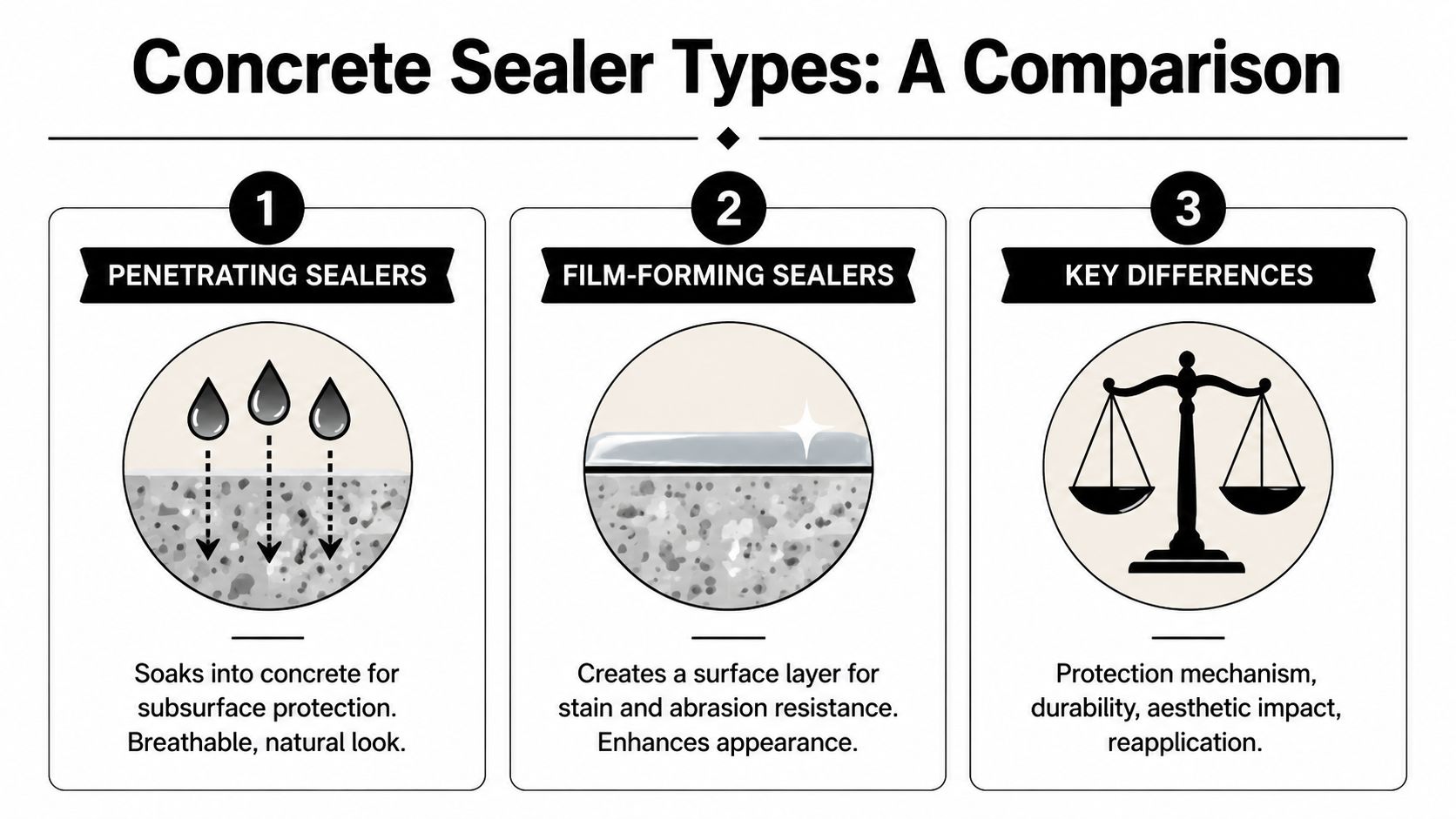
The simplest way to think about it is this. Penetrating sealers act more like lotion. They soak into the concrete and protect from within. Film-forming sealers act more like a raincoat. They sit on top and create a visible protective layer.
How each type works
Penetrating sealers usually include silane, siloxane, or silicate-based products. These are commonly used where homeowners want a natural look and strong moisture resistance without leaving a coating on top.
Film-forming sealers include acrylics and some coating-style products. These are often chosen when appearance matters, especially on decorative concrete, patios, or residential slabs where a richer color or slight gloss is part of the goal.
One common acrylic example is a solvent-based film-forming sealer with 25% solids that covers 175-225 sq. ft./gal and creates a protective membrane that resists freeze-thaw cycles and stains, as shown in the TS201 technical data sheet from Concrete Sealers USA.
Penetrating vs Film-Forming Sealer Comparison
| Feature | Penetrating Sealer (Silane/Siloxane) | Film-Forming Sealer (Acrylic/Epoxy) |
|---|---|---|
| Protection method | Soaks into pores and reacts within the concrete | Forms a layer on the surface |
| Appearance | Natural look with little visual change | Can deepen color or add gloss |
| Breathability | Usually more breathable | Can be less forgiving if moisture is present |
| Best fit | Outdoor slabs, driveways, shed pads, garage aprons | Decorative slabs, patios, some residential surfaces |
| Failure pattern | Wears down more quietly | Can peel, haze, or show wear on the surface |
| Maintenance feel | Lower visual drama when it ages | More noticeable when recoat time comes |
A sealer isn't automatically good just because it adds shine. The best product is the one that matches the slab's use, exposure, and moisture conditions.
What works where
For a base for storage shed, exterior gazebo foundation, or a slab exposed to weather year-round, a penetrating sealer is often the safer choice because it protects without trapping as much moisture at the surface.
For a residential slab where appearance matters more, a film-forming acrylic may make sense. Homeowners often like the enhanced finish on patios and some garage floors. But that look comes with trade-offs. Surface films can show wear faster, and mistakes in prep or timing are much more obvious once the product dries.
If the slab is still new, cure time matters just as much as product choice. Homeowners often rush this part. Before any concrete slab sealer goes down, it helps to understand how long a concrete slab takes to cure, because sealing too early is one of the easiest ways to create long-term problems.
Key Benefits of Sealing Your Foundation or Patio
A slab sealer earns its keep when it prevents damage you'd rather never deal with. That is where the value lies. Fewer surface issues. Less cleanup. Better long-term protection for a slab that supports something important on your property.
For outdoor concrete, moisture control is usually the biggest reason to seal. Penetrating sealers like silanes and siloxanes react within the concrete's pores and can reduce water absorption by up to 95%, helping protect against freeze-thaw spalling and offering 10+ years of longevity on exterior driveways, according to PROSOCO's guide to concrete sealer types.
Where homeowners see the difference
On a garage slab, sealing helps with day-to-day mess. Oil drips, road grime, salt residue, and general dirt are easier to manage when the surface is protected.
On a patio or driveway, the benefit is more about weathering. Rainwater, snowmelt, and seasonal debris don't soak in as easily. That can help preserve both the look and the integrity of the slab over time.
For shed foundations, barn pads, and similar outbuilding projects, sealing is part of keeping the slab from becoming the weak point. The structure on top may be simple, but the base still has to handle water exposure, edge wear, and seasonal movement around the property.
The practical benefits most people care about
- Moisture defense: Water is one of concrete's biggest long-term enemies, especially outdoors.
- Salt resistance: Deicing materials can be hard on unprotected surfaces.
- Cleaner appearance: Leaves, mud, tire marks, and spills are easier to clean off a sealed slab.
- Less surface wear: A sealed top layer or protected pore structure helps the slab hold up better under regular use.
- Better curb appeal: Decorative and visible residential slabs usually look better longer when they're protected.
Sealing won't fix bad concrete, poor drainage, or structural cracking. What it does well is help a sound slab stay sound.
That distinction matters. If you're investing in garage footings and foundations, a cement foundation for garage, or a shed foundation for a prefab structure, a sealer should be viewed as protection for a well-built slab, not a shortcut around design or drainage.
The Professional Process for Sealing Concrete
A professional sealing job looks simple when it's done right. Most of the work is in the decisions before the product ever touches the slab.
Surface prep comes first
Concrete has to be clean, sound, and ready to accept the sealer. That means removing dust, residue, construction debris, organic staining, and anything else that blocks absorption or adhesion.
Rushed jobs fail for these reasons. If a film-forming product goes over contamination, it may not bond properly. If a penetrating sealer goes onto a surface that's already sealed, dirty, or not prepared correctly, it may not soak in the way it should.
Professionals also look at the slab's condition in context. Is this a new garage floor? An exterior patio under trees? A shed slab near a gravel driveway? The prep changes with the environment.
Timing matters on new slabs
Fresh concrete needs time to cure before most full sealer applications. On new work, that timing affects performance more than many homeowners realize.
A contractor should also consider the slab's moisture condition, weather window, and intended use. A decorative patio doesn't get treated exactly like a utility slab for a barn shed, and a slab that will carry vehicles deserves a different maintenance mindset than a simple walkway.
Concrete sealing is less about rolling on a product and more about matching timing, surface condition, and sealer type.
Application is controlled, not rushed
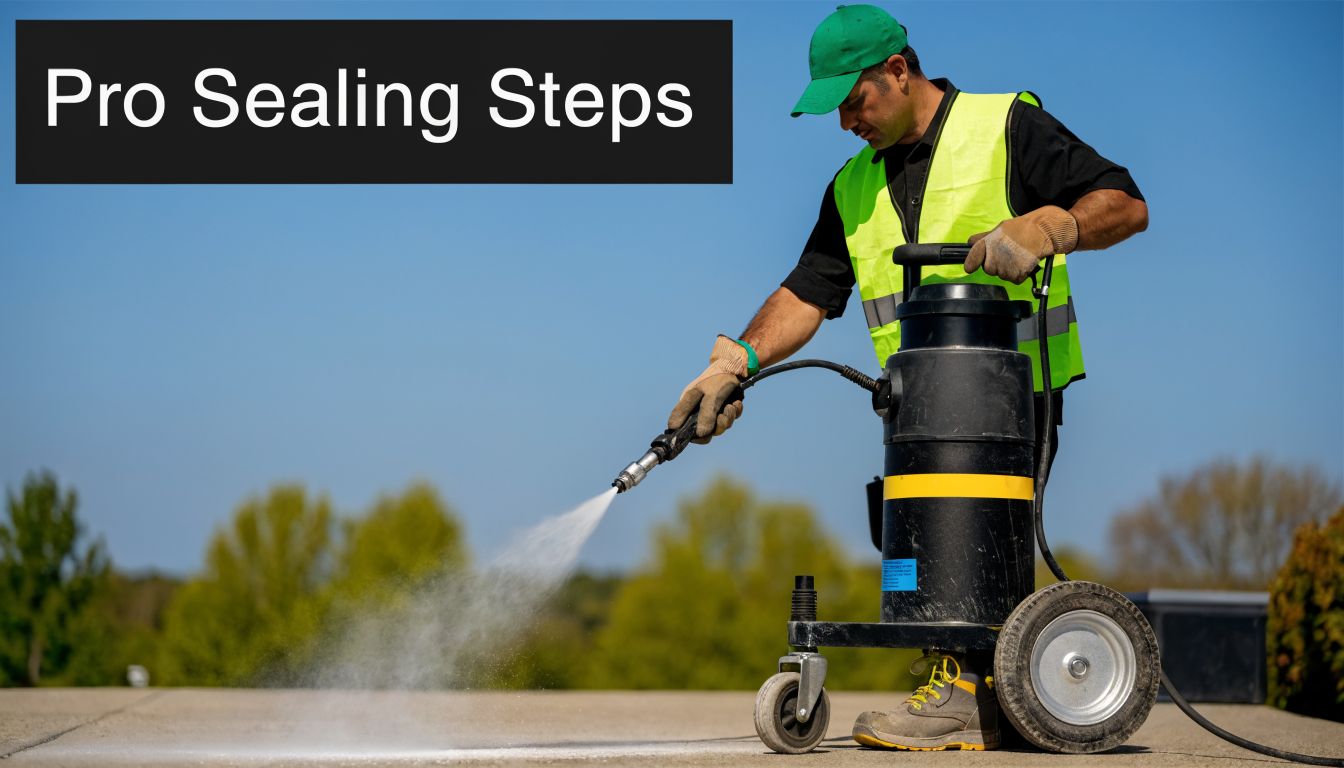
Professional crews typically apply concrete slab sealer with sprayers, rollers, or a combination of both, depending on the product and the finish required. The goal is even coverage, not heavy coverage.
Over-application creates problems. On penetrating products, it can leave residue or uneven appearance. On film-forming products, it can increase the risk of a patchy finish, tacky spots, or premature failure.
A careful application process usually includes:
- Evaluating the slab for age, condition, prior coatings, and exposure
- Cleaning and drying the surface to suit the product requirements
- Applying at the right rate so the sealer performs as intended
- Allowing proper cure time before foot traffic, storage, or vehicle use resumes
What a quality job should leave behind
A good sealing job shouldn't look sloppy or overdone. The surface should look intentional. On a penetrating sealer, that may mean very little visual change. On a film-forming product, it may mean a more noticeable finish, but still with consistency across the slab.
Homeowners hiring concrete contractors, driveway contractors near me, or excavation near me for a broader project should expect this same level of care. The slab and the sealer both need to fit the way the site drains, dries, and gets used.
Sealer Selection for PA MD DE and NJ Climates
Generic sealer advice breaks down fast in the Mid-Atlantic. A product that performs fine in one climate may be the wrong call for a slab in Pennsylvania, Maryland, Delaware, or New Jersey.
The reason is simple. Outdoor slabs here don't just get wet. They get wet, freeze, thaw, get salted, dry unevenly, and then repeat that cycle over and over. That's especially hard on a concrete foundation for garage, a patio slab, or a gazebo foundation with lots of weather exposure.
Why breathable protection matters here
In regions like Pennsylvania with 30-50 freeze/thaw cycles per season, breathable silane/siloxane penetrating sealers outperform non-breathable options by preventing delamination from trapped moisture, with studies showing 40% less salt penetration after two years, according to V-Seal's discussion of common sealer questions.
That local reality changes the recommendation for many exterior projects. If a slab needs to shed water but also release moisture vapor, a breathable penetrating sealer often makes more sense than a surface film that can struggle if the slab stays damp underneath.
Better choices for common local projects
For many Mid-Atlantic properties, these pairings are practical:
- Exterior shed slab or storage building pad: Penetrating sealer is often the better fit because the surface is utility-focused and exposed to weather.
- Garage apron or driveway approach: Breathability matters because road salts and repeated wet-dry cycles are hard on the slab face.
- Patio or decorative slab: A film-forming product may still be appropriate if appearance is a priority and the slab conditions are right.
- Barn or outbuilding slab: A natural-looking penetrating option often suits the use better than a glossy finish.
In this region, the wrong sealer usually fails for a moisture reason before it fails for any other reason.
Trade-offs homeowners should know
Acrylics have their place. They can improve appearance and create a more finished look on certain residential surfaces. But for outdoor slabs in PA, MD, DE, and NJ, appearance can't be the only decision point.
If a slab sits in shade, near landscaping, beside a gravel drive, or where snow and salt collect, breathing room matters. A breathable sealer is often better aligned with local conditions than a coating-first approach.
That's especially true for homeowners planning shed foundations contractors near me, gravel shed foundation contractors near me, or a base for storage shed where durability matters more than shine. The local climate rewards products that manage moisture well.
DIY Sealing vs Hiring a Foundation Contractor
A lot of homeowners look at sealing and think it should be a simple weekend project. Sometimes it can be. The problem is that simple jobs go bad quickly when the slab is new, the product is wrong, or the site conditions aren't as straightforward as they seem.
DIY usually looks cheaper at the start. You buy a product, clean the slab, and apply it. If everything lines up, you may get a decent result. But if the slab still holds moisture, if residue remains on the surface, or if the product isn't suited to the slab's use, you can end up with peeling, blotchy appearance, reduced traction, or poor long-term protection.
Where DIY runs into trouble
The biggest mistakes aren't usually dramatic. They're basic judgment calls that look harmless at the time.
- Sealing too soon: New concrete often gets closed up before it's ready.
- Using appearance as the only standard: A glossy finish can hide a poor product choice.
- Skipping slab history: Old cure compounds, prior coatings, and contamination matter.
- Treating every slab the same: A patio, a shed pad, and a reinforced garage slab don't have identical needs.
A professional foundation contractor also looks beyond the surface. Drainage around the slab, reinforcement inside it, how close grade sits to the edge, and what the slab will carry all affect sealer selection.
A good visual overview of common application issues is below.
Reinforcement changes the risk
One issue most DIY guides miss is compatibility with reinforced concrete. The wrong sealer can trap alkaline leachate and accelerate steel rebar corrosion by up to 25%, according to recent ASTM-based information summarized by Concrete Network's sealer FAQ discussion.
That matters for garage footings and foundations, larger slabs, and any project where reinforcement is part of the design. A homeowner may only see a clean surface. A contractor sees the whole assembly and chooses products with that in mind.
Hiring a pro isn't just about labor. It's about avoiding the expensive mistake of protecting the surface while creating a problem underneath it.
For homeowners comparing options, the decision isn't DIY versus professional pride. It's trial and error versus controlled risk. On a basic patio, the stakes may be modest. On a reinforced slab supporting a garage, storage building, or heavy-use outbuilding, the safer path is usually expert application.
Protect Your Investment with Firm Foundations
A slab for a shed, garage, patio, or barn isn't a small purchase. It's the base that everything else depends on. If that slab takes on water, holds stains, or starts wearing early from Mid-Atlantic weather, the whole investment feels it.
The right concrete slab sealer helps protect what good site prep, forming, pouring, and finishing already accomplished. It won't replace proper drainage. It won't correct bad concrete. But on a well-built slab, it adds a layer of protection that makes practical sense in Pennsylvania and throughout nearby parts of Maryland, Delaware, and New Jersey.
That's especially important for homeowners planning concrete foundations, cement foundations for garage, shed foundation projects, and other long-term improvements where durability matters as much as appearance.
If you want a slab that's built correctly from the ground up and protected with the local climate in mind, professional guidance is worth it from the start.
If you're planning a shed pad, garage slab, patio, driveway, or excavation project in Pennsylvania, Maryland, Delaware, or New Jersey, Firm Foundations can help you choose the right foundation and protect it for the long haul. Reach out for a free, no-obligation quote and get clear advice from a licensed, insured contractor that understands local soils, drainage, and concrete performance.