
Rebar vs Wire Mesh: The Right Foundation for Your Project in 2026
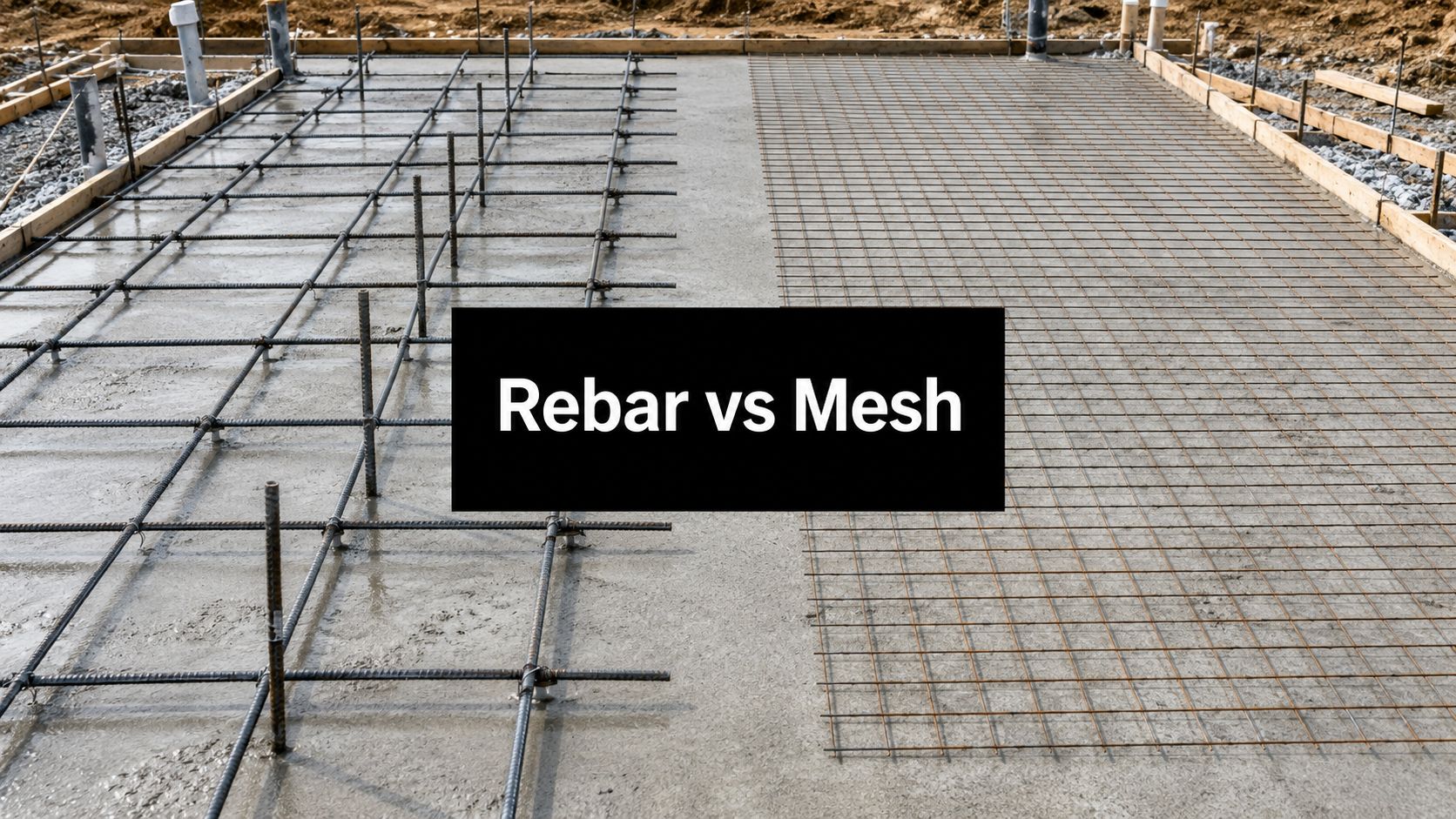
When you're planning a new concrete project, the conversation shouldn't be about whether rebar or wire mesh is "better." The real question is, which one is right for your home or business in our local area? For heavy-duty applications, like a garage foundation in Pennsylvania or a new barn floor, rebar’s structural strength is non-negotiable. For lighter projects, such as patios or walkways where crack control is the main concern, wire mesh is often the perfect solution. As your local foundation experts, we at Firm Foundations are here to ensure your project is built to last.
Choosing Between Rebar and Wire Mesh for Your Foundation
Deciding between rebar and welded wire mesh is one of the most critical choices for your concrete project. As local foundation contractors near you serving Pennsylvania, Maryland, Delaware, and New Jersey, we at Firm Foundations have seen firsthand how the right reinforcement defines the lifespan of a concrete foundation. This decision directly impacts everything from structural integrity to long-term crack resistance, and getting it right is key to protecting your investment.
Making the right selection is essential. Whether you're pouring a simple base for a storage shed or a full garage footing and foundation, understanding their distinct roles will help you appreciate why professional guidance is so vital. We're here to build that trust and deliver a foundation you can depend on for years to come.
Core Differences at a Glance
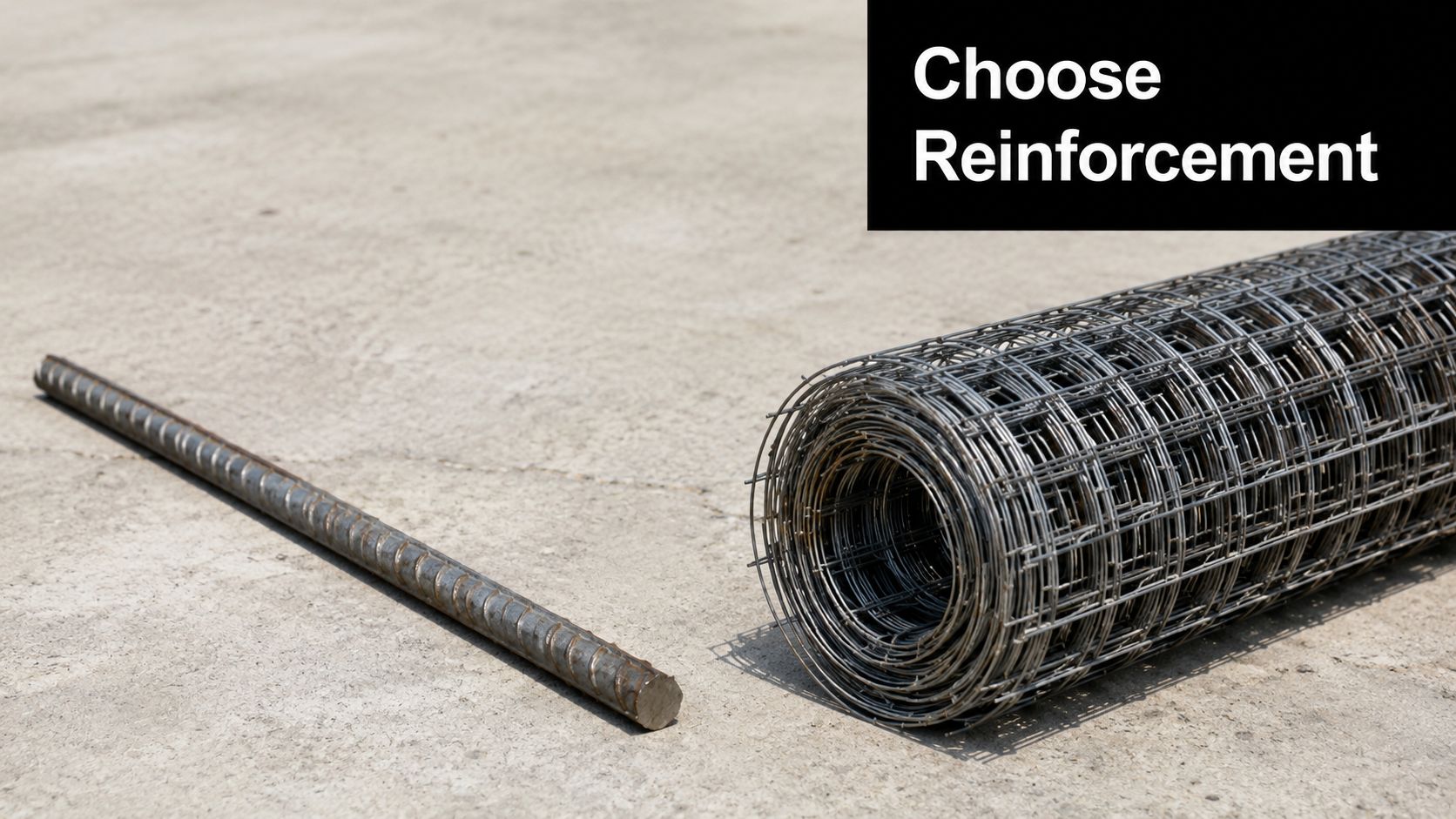
Let's begin with a straightforward, side-by-side comparison. This table clearly illustrates what sets these two reinforcement materials apart and explains why one is suited for heavy loads while the other excels at maintaining the surface integrity of your concrete.
| Feature | Rebar (Reinforcing Bar) | Wire Mesh (Welded Wire Fabric) |
|---|---|---|
| Primary Function | Provides structural, load-bearing strength. | Controls surface-level shrinkage cracks. |
| Material Form | Thick, ribbed steel rods. | A grid of thin, welded steel wires. |
| Best For | Foundations, driveways, and pads for heavy loads. | Patios, walkways, and light-duty shed pads. |
| Strength Style | Concentrated strength in a grid pattern. | Distributed strength across the entire slab. |
| Installation | More labor-intensive; requires tying and support. | Faster to lay out, but requires proper lifting. |
Why This Choice Matters for Your Project
The table above clarifies the fundamental roles of rebar and wire mesh. Think of rebar as the skeleton for your concrete, actively resisting bending forces and supporting significant weight. This is precisely why it's a mandatory component for a cement foundation for a garage or any structure intended to bear a heavy load.
The most common issue we see in DIY concrete work is using wire mesh for a job that demanded rebar. It’s a shortcut that almost always leads to costly structural cracks down the line. As your neighbors, we want to help you avoid that headache.
On the other hand, wire mesh is excellent at its intended purpose: holding the concrete slab together as it cures and preventing unsightly surface cracks. For a gazebo foundation or a simple patio, it delivers exactly the kind of protection required to keep the surface looking pristine for years. At Firm Foundations, we ensure your project receives the correct reinforcement it needs for lasting success.
Why Concrete Needs Reinforcement to Last
To really understand the rebar vs. wire mesh discussion, you first have to know why reinforcement isn't just an option—it’s essential for a foundation that lasts. By its very nature, concrete is incredibly strong when compressed. It can easily handle thousands of pounds of weight pushing down on it, which is why it's the go-to material for supporting structures.
The problem is, concrete has a critical weakness: it has almost no strength when pulled, bent, or stretched. These forces, known as tensile forces, are everywhere. They are caused by the ground settling underneath, soil pressure pushing from the sides, and even the simple expansion and contraction that comes with daily temperature swings in our area.
The Role of a Concrete Skeleton
This is where steel reinforcement comes in. Think of rebar or wire mesh as a structural "skeleton" embedded within the concrete. This skeleton provides the tensile strength that concrete lacks. When forces try to pull the slab apart, the steel inside absorbs that tension, holds the concrete together, and stops small surface cracks from turning into deep, structural failures.
This is a fundamental principle, and it’s why cutting corners on reinforcement is never an option for quality work. Whether you're planning a simple base for a storage shed in Delaware or a heavy-duty garage foundation in New Jersey, proper reinforcement is what will prevent expensive cracks and headaches down the road.
A properly reinforced slab can last for decades. An unreinforced slab, especially for a garage or shed, is an expensive failure waiting to happen. Our team at Firm Foundations sees this all too often, and it's a completely avoidable problem for homeowners in our community.
Without this internal support system, a concrete slab is just waiting to break apart from everyday stresses. You can learn more about protecting your investment by reading our guide on how to prevent concrete slab cracking. Investing in the correct reinforcement from the very beginning is the single most important decision you can make for a stable, long-lasting cement foundation for a garage, shed, or patio right here in Pennsylvania.
A Detailed Comparison of Structural Performance
When you get down to it, the whole “rebar vs. wire mesh” debate boils down to one simple thing: what job do you need the concrete to do? One material provides serious structural muscle, while the other is more about keeping up surface appearances. Getting this right is absolutely critical for the long-term stability of your investment, whether that’s a shed foundation or a heavy-duty garage slab.
The Structural Power of Rebar
Rebar—those thick, ribbed steel rods—creates a powerful internal framework inside the concrete. It’s what gives a slab the tensile strength to resist bending, flexing, and cracking under heavy loads. Think of it as the concrete’s skeleton. This is precisely why rebar is the only option for any slab that has to support significant weight.
We use it in projects like:
- House Foundations: Where it supports the entire load of a home.
- Garage Footings and Foundations: Built to withstand the weight of multiple vehicles, tools, and storage.
- Heavy Equipment Pads: Absolutely essential for pads meant to hold horse trailers, tractors, or commercial equipment common in PA.
Any professional garage foundation contractor near you worth their salt will lay a grid of rebar. It's the only way to guarantee a slab has the backbone to last for decades without failing.
The Role of Wire Mesh
Welded wire mesh, on the other hand, is considered secondary or non-structural reinforcement. Its main job is to hold the slab together as it cures and shrinks, helping to minimize and control small surface cracks. While it’s great for keeping the surface looking uniform, it adds virtually no load-bearing capacity. It's best suited for light-duty flatwork where the biggest concern is preventing cosmetic cracks.
This is exactly where we see so many DIY projects go wrong. A homeowner might use mesh for a garage slab thinking they're saving money, but they're really just setting the stage for deep structural cracks and an expensive replacement down the road.
Key Takeaway: Rebar provides the structural strength needed to bear heavy loads. Wire mesh is for surface crack control on light-duty slabs. They are not interchangeable.
The history of rebar itself shows why it's the go-to for tough jobs like garage slabs in Pennsylvania and New Jersey. Modern rebar, which has been evolving since the mid-19th century, boasts a tensile strength of 60,000 psi. That level of strength is critical for foundations bearing over 3,000+ lbs per square foot—a common spec for the horse barns we build pads for across Delaware. As experienced contractors serving PA, MD, DE, and NJ since 2011, we know rebar is non-negotiable for a foundation build that's made to last. You can find more background on the history of concrete reinforcement on mudmixer.com.
Comparing Installation Process and Common Mistakes
Even the best reinforcement is completely useless if it’s not installed correctly. When it comes to rebar vs. wire mesh, the installation process itself is often what separates a professional, long-lasting slab from a future failure. Understanding how these materials are put in place helps homeowners in Pennsylvania appreciate the real craftsmanship behind a durable concrete pad.

The placement of reinforcement inside the concrete is everything. This single detail is where true expertise shines and is a non-negotiable focus for any professional concrete contractor.
Rebar Installation: A Job for Professionals
Putting in a rebar grid is a meticulous, labor-intensive job, but it’s how we guarantee unmatched reliability for our clients. The process is precise and methodical.
- Cutting and Placing: We cut individual bars to size and lay them out in a specific grid pattern, which is often specified by an engineer.
- Tying Intersections: Every single point where the bars cross is then hand-tied with wire. This ensures the grid stays perfectly in place during the pour.
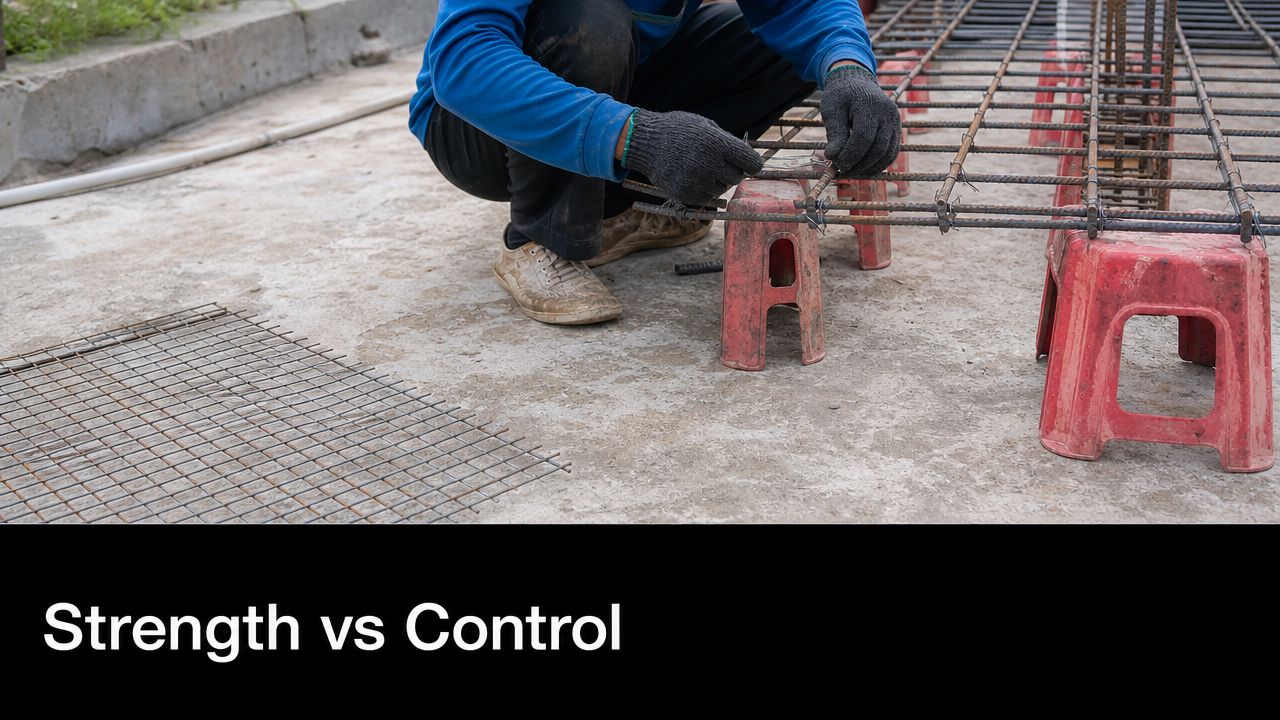
- Proper Elevation: Most importantly, the entire rebar grid gets lifted off the ground using supports called "chairs." This positions the steel right in the middle third of the slab's thickness, where it can provide maximum tensile strength.
This careful, step-by-step process is what ensures the rebar can do its structural job. It’s an essential part of how we build any garage footings and foundations.
The Most Common Wire Mesh Mistake
Wire mesh comes in large rolls or flat sheets, which makes it much faster to lay out than rebar. Unfortunately, this speed is also where a critical—and incredibly common—mistake happens. Many inexperienced installers simply lay the mesh flat on the ground before pouring the concrete.
The single biggest mistake with wire mesh is leaving it on the ground. If the mesh sits at the bottom of the slab, it provides almost zero reinforcement. It has to be in the middle of the concrete to do its job.
A true professional knows better. We use a "hook and pull" method during the pour, actively pulling the mesh up into the wet concrete to make sure it becomes properly embedded. This simple but vital action is what allows the mesh to effectively control shrinkage cracks. A project’s success often hinges on this kind of attention to detail, a standard you'll find when building durable foundations in Georgia.
This is a key differentiator you'll see with experienced contractors. At Firm Foundations, we don’t take shortcuts. We invite you to learn more about our process by checking out our guide on concrete pad installation.
Project-Specific Recommendations for Your Foundation
When deciding between rebar and wire mesh, the best choice always comes down to the specific demands of your project. Our advice is based on years of field experience as shed foundation contractors near you across Pennsylvania, Maryland, Delaware, and New Jersey, combining practical knowledge with established engineering principles to ensure your investment is built to last.
This guide is designed to move beyond a simple debate and give you the knowledge to understand what your foundation truly needs, whether you're planning a small shed foundation or a major garage build.
For Shed Foundations
For a standard 10×10 storage shed on level ground, wire mesh is often perfectly adequate. For this job, its main role is to manage temperature and shrinkage cracks, preventing unsightly surface fissures as the concrete cures. It provides excellent control for these lighter-duty slabs, like those needing a shed foundation gravel base.
However, if you are planning for a larger, heavier barn shed or if the structure will be placed on soft or uneven ground, upgrading to a rebar grid is a wise investment. The rebar provides the necessary structural integrity to prevent the slab from bending or failing under more significant, concentrated loads.
As local shed foundation contractors, we've seen a rebar-reinforced pad save a homeowner from costly repairs when they decided to store heavier equipment in their shed years later. It's about planning for both current and future use.
For Garage Foundations
For any garage that will house a vehicle, rebar is the only correct choice. A cement foundation for a garage must support the immense, concentrated weight of cars and trucks, in addition to heavy tool chests and stored equipment. Wire mesh simply does not possess the structural, load-bearing capacity to prevent a garage slab from cracking under these dynamic loads.
As professional garage foundation contractors near you, we exclusively use a properly spaced and supported rebar grid for all garage slabs. This is a non-negotiable standard to ensure the foundation can withstand decades of use. This includes engineering robust garage footings and foundations that are capable of handling our region's demanding freeze-thaw cycles.
Reinforcement Guide by Project Type
This table offers a quick-reference guide to help you choose the right reinforcement based on the intended use of the concrete slab.
| Project Type | Recommended Reinforcement | Reasoning |
|---|---|---|
| Gazebo or Small Shed | Wire Mesh | Provides excellent surface crack control for light-duty slabs where structural loads are not a concern. |
| Driveways & Patios | Wire Mesh or Rebar | Mesh is fine for light foot traffic, but rebar is recommended for driveways that will see regular vehicle traffic. |
| Garage or House Foundation | Rebar Grid | Essential for providing the structural strength needed to support heavy, concentrated loads safely and permanently. |
| Barn or Equipment Pad | Rebar Grid | Necessary to handle the extreme weight of agricultural machinery, horse trailers, or commercial equipment. |
This clear distinction is why partnering with an experienced team is so critical. We ensure the right materials are specified and correctly installed for the job every time. For further insights into the requirements for larger structures, you can compare barndo concrete foundation builders to understand their processes.
Frequently Asked Questions About Concrete Reinforcement
We get a lot of questions from homeowners in Pennsylvania and the surrounding areas about the difference between rebar vs wire mesh. It's a crucial decision, so we want to give you the straight answers you need to feel confident about your new foundation.
To make it simple, we put together this quick guide comparing reinforcement options for the most common jobs we do, from a basic base for a storage shed to heavy-duty concrete foundations.
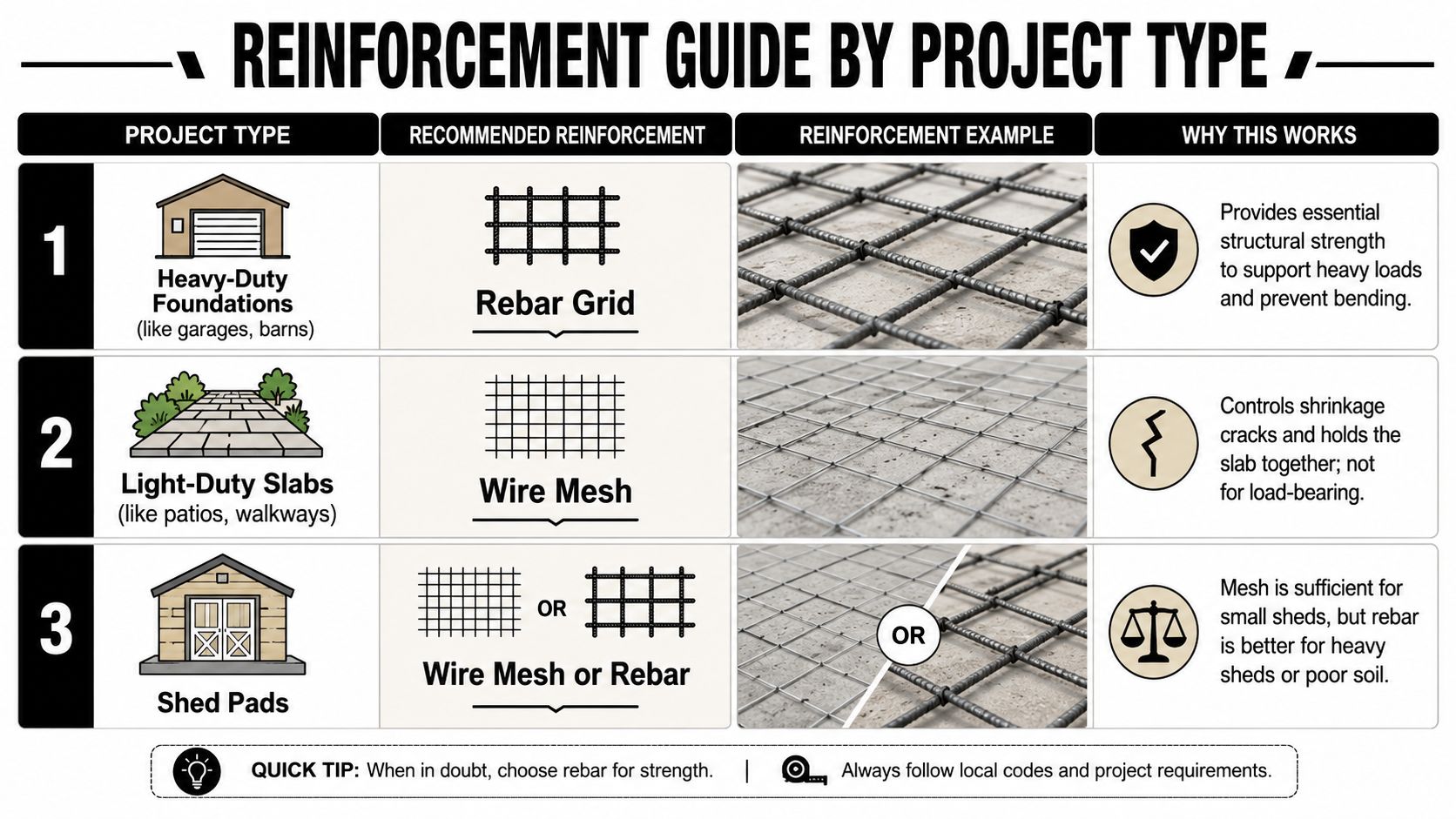
As you can see, the choice is pretty clear. While wire mesh works great for lighter-duty projects, the moment you introduce heavy loads—like for a garage or a large barn—rebar becomes absolutely essential.
Is Reinforcement Necessary for a Small Shed Pad?
Yes, absolutely. Even for a standard 10×10 storage shed, we always recommend reinforcement. A simple layer of wire mesh is an inexpensive way to keep ugly cracks from forming as the ground shifts and temperatures change. Without it, you're taking a chance on the lifespan of your concrete.
Can I Use Both Rebar and Wire Mesh Together?
You could, but there's rarely a good reason to. It’s not a cost-effective way to build, and it's usually just overkill. A properly installed rebar grid, like what’s required for a garage foundation, provides all the strength and crack control you need. The key is to choose the right reinforcement for the job from the start.
Using the wrong reinforcement—or none at all—is a common but completely avoidable mistake. An unreinforced slab cannot handle ground settlement or heavy loads, making it unsuitable for any type of foundation, from a simple shed base to a full garage.
At Firm Foundations, we take the guesswork out of the equation. We’ll make sure your project, whether it’s in Maryland, Delaware, or New Jersey, is built correctly right from the ground up.
Get Your Foundation Project Done Right the First Time
Deciding between rebar and wire mesh is a technical choice that directly influences the long-term performance and safety of your structure. An incorrect choice can result in premature cracking and costly repairs, whether you're building a simple gazebo foundation or a heavy-duty cement foundation for a garage.
Since 2011, Firm Foundations has been the trusted expert for homeowners and businesses throughout Pennsylvania, Maryland, Delaware, and New Jersey. We provide the necessary expertise to ensure every project, from site excavation near you to the final pour, is built with the right materials and superior craftsmanship.
Partner with a Trusted Local Professional
Rather than getting lost in the technical details of the rebar vs wire mesh debate, partnering with a licensed and insured professional ensures the job is completed correctly from the start. We manage every phase of the project, from site preparation to the final concrete pour, so you can be confident your foundation is built to last.
Our extensive experience means we are intimately familiar with the unique soil conditions and building codes across PA, MD, DE, and NJ. This allows our team to specify and install the appropriate reinforcement for projects such as:
- Shed Foundations
- Garage Footings and Foundations
- Barn Shed Pads
- Driveways and Patios
Choosing the right contractor is just as important as choosing the right materials. A professional ensures proper installation, which is the key to unlocking the full strength and durability of either rebar or wire mesh.
To ensure your project results in one of many quality concrete foundations in the area, it is advisable to work with seasoned professionals. Our team at Firm Foundations is committed to delivering that standard of excellence on every job we undertake.
The expert team at Firm Foundations is prepared to provide a solid, reliable base for your shed, garage, or barn. Contact us today for a free, transparent quote to get your project started correctly. Visit us online at https://shedpads.com.