
Hot Tub Base Pavers: Your Guide to Solid Foundations


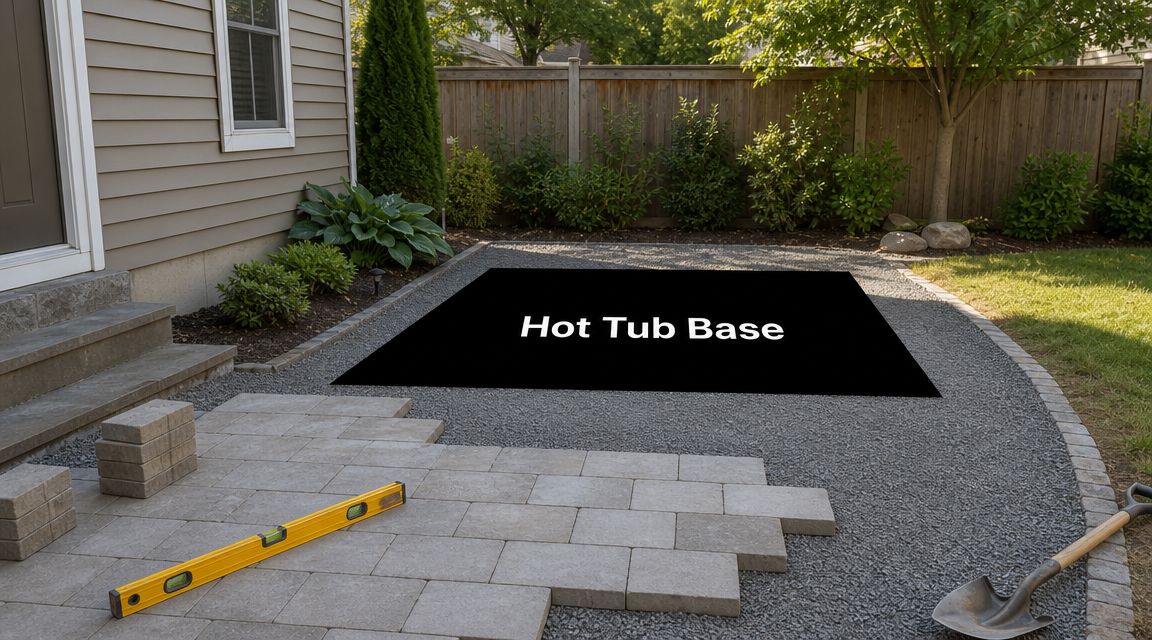
You've picked the hot tub, chosen the spot in the yard, and started picturing the first evening soak. Then the practical question shows up fast. What is this thing going to sit on?
That question matters more than most homeowners expect. A hot tub base isn't trim work. It isn't landscaping detail. It's the structure that protects the shell, keeps the spa level, and prevents the kind of settling that turns a good installation into an expensive problem.
For homeowners across Pennsylvania, Maryland, Delaware, and New Jersey, that matters even more because soil conditions, drainage, and winter weather don't forgive shortcuts. The same principles that apply to a shed foundation, gazebo foundation, or a concrete foundation for a garage apply here too. The load is real, the ground moves, and the base has to be built to handle both.
Planning the Perfect Foundation for Your New Hot Tub
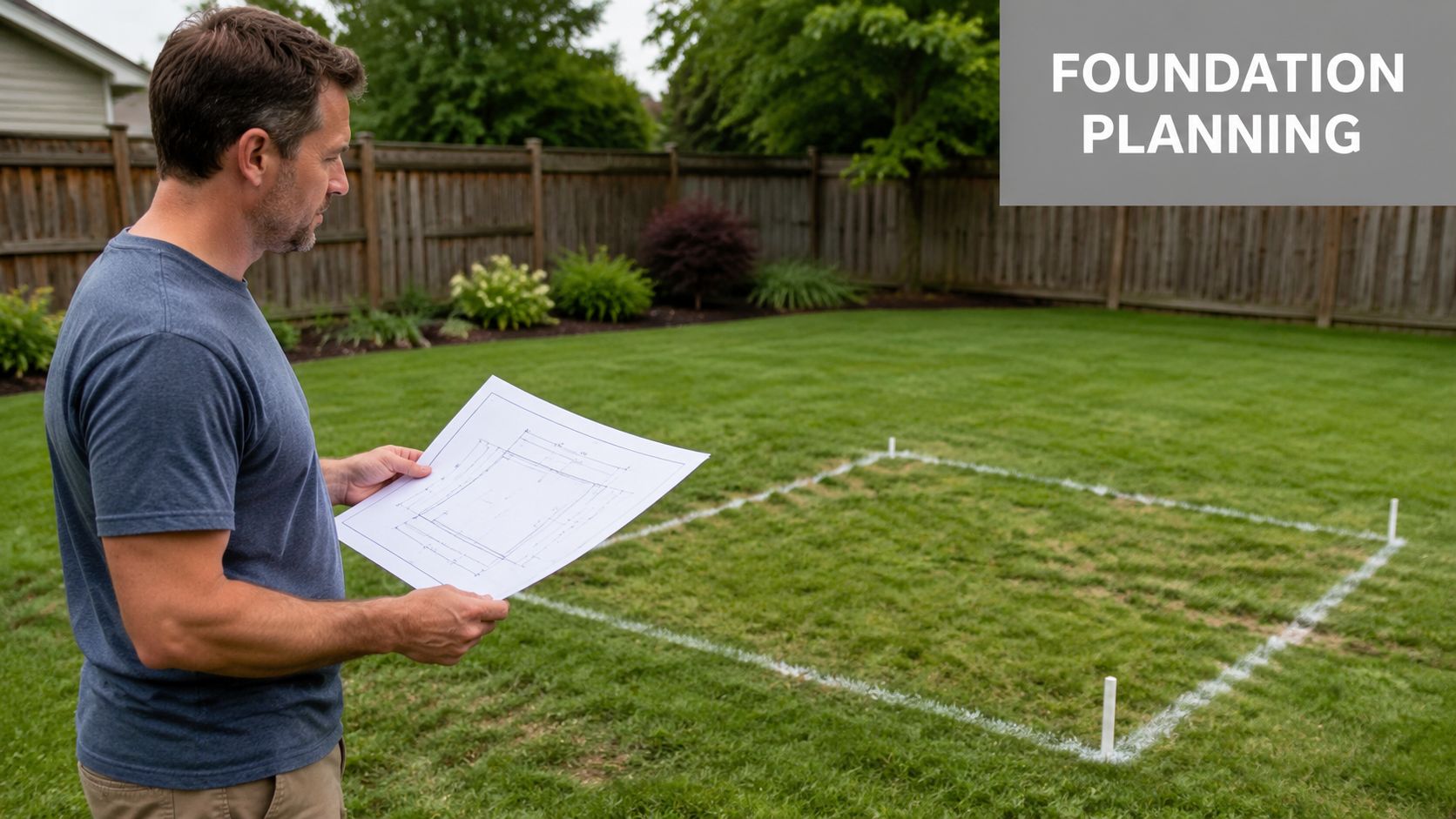
A common approach is to start by thinking about the finished look. They compare patio styles, paver colors, and where the steps will go. The right starting point is simpler. Ask whether the ground under that hot tub can stay flat, stable, and well-drained year after year.
A filled hot tub can weigh upwards of 8,000 pounds, and guidance for support calls for the base to extend at least one foot beyond the tub's perimeter while staying level within 1/2 inch across the area, according to hot tub support guidance from Pool King Recreation. That's why hot tub base pavers should never be treated like loose patio decoration. They're part of a structural system.
Why the foundation comes first
A hot tub shell needs uniform support. If the base has dips, soft edges, or weak spots, the shell can sag and the frame can take stress it wasn't meant to carry. That's the same basic logic used when planning garage footings and foundations, a base for storage shed placement, or cement foundations for garage projects. The surface you see only performs well if the structure below it was built correctly.
Practical rule: If a base can't stay flat under load, it isn't ready for a hot tub, no matter how good it looks on day one.
The biggest mistake is treating the pad like a finishing touch. It's the opposite. The foundation determines whether the spa stays stable through heavy use, storms, wet seasons, and winter freeze-thaw movement common in PA, MD, DE, and NJ.
Planning the footprint the right way
Before excavation starts, confirm three things:
- Exact spa dimensions: The footprint needs to match the actual installed size, not a rough estimate from a brochure.
- Working space around the pad: You'll want room for access, cleanup, and service.
- Entry path and equipment access: A beautiful backyard corner isn't useful if the tub can't be delivered there safely.
If you're also planning nearby storage, privacy walls, or a small outbuilding, it helps to think through the whole yard layout in advance. Homeowners comparing spa placement with utility structures sometimes find it useful to review planning ideas like how to build a 120 sq ft shed, because the same spacing and access mindset can keep a backyard project from feeling crowded later.
Site Prep and Material Choices for a Lasting Paver Base
Choosing between hot tub base pavers and a concrete slab isn't just about appearance. It's a decision about soil behavior, drainage, installation speed, and how permanent you want the pad to be.
The spa industry has largely standardized acceptable foundations to include concrete pads, paver systems, and compacted gravel beds, with 4 inches showing up as the most common minimum thickness in manufacturer guidance, and paver systems became popular as a durable, more economical, and faster-to-install option, according to foundation guidance from Bullfrog Spas. That gives homeowners real options, but it doesn't mean every site is a good fit for every option.
What to assess before you choose
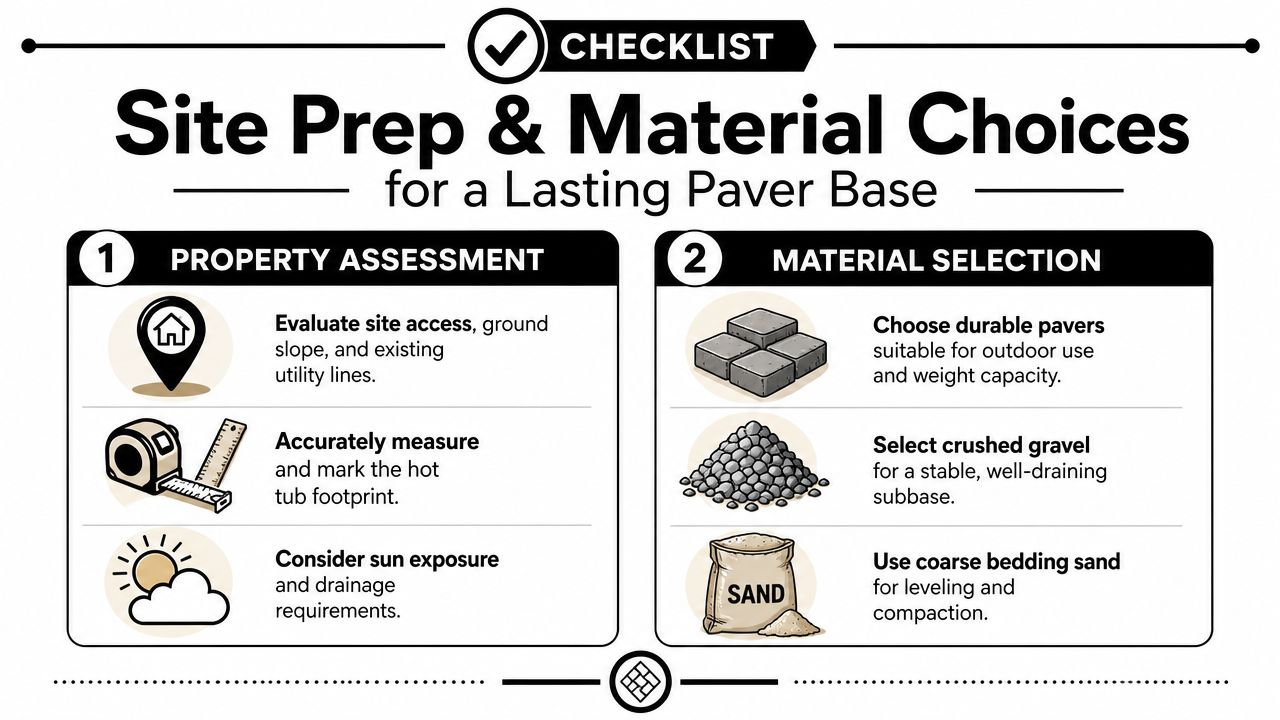
Start with the property, not the materials list. A flat backyard corner with easy access and good drainage opens up more options. A sloped site, soft ground, or a location that holds water narrows them fast.
Three checks matter most:
- Slope and runoff: Water should move away from the pad, not collect around it.
- Access for installation: Tight gates, fences, retaining walls, and utility lines can affect both delivery and construction.
- Soil behavior: Some yards stay firm. Others pump, settle, or soften after rain.
Tree roots can also complicate foundation work around patios and structures. The conditions differ by region, but homeowners thinking about nearby root pressure may find value in this overview of protecting Texas foundations from tree roots, especially for understanding why root movement and moisture changes matter around any supported surface.
Pavers or concrete
Pavers can be an excellent choice when the subbase is built correctly. They offer design flexibility, easier spot repair, and a more finished patio look. Concrete offers a more monolithic surface and can be the better fit when the load is high, the soil is questionable, or the site needs maximum rigidity.
Here's the practical comparison.
| Factor | Hot Tub Base Pavers | Poured Concrete Slab |
|---|---|---|
| Appearance | Blends well with patios and landscape design | Cleaner, simpler finished look |
| Repairability | Individual units can be lifted and reset | Repairs are more invasive and visible |
| Installation speed | Often faster once site prep is complete | Requires forming, pouring, and curing |
| Base sensitivity | Depends heavily on compaction and edge restraint | Depends heavily on slab prep and reinforcement |
| Drainage behavior | Water can move through joints and around system design | Drainage depends on slab pitch and surrounding grade |
| Best fit | Decorative outdoor spaces with properly prepared structural base | Heavier loads, challenging sites, or owners wanting a rigid pad |
A paver surface only performs as well as the layers beneath it. If the base is weak, the pavers simply mirror that failure.
When pavers make sense
Hot tub base pavers usually make the most sense when the site is already being tied into a patio project, when aesthetics matter, and when the excavation and compaction can be done thoroughly. If the area is uneven, wet, or prone to movement, a concrete pad often becomes the safer choice.
That's the same decision logic used on shed foundations near me searches, gravel shed foundation contractors near me jobs, and gazebo foundation installs. The visible surface is one decision. The support strategy is the real one.
Proper Excavation and Subbase Construction
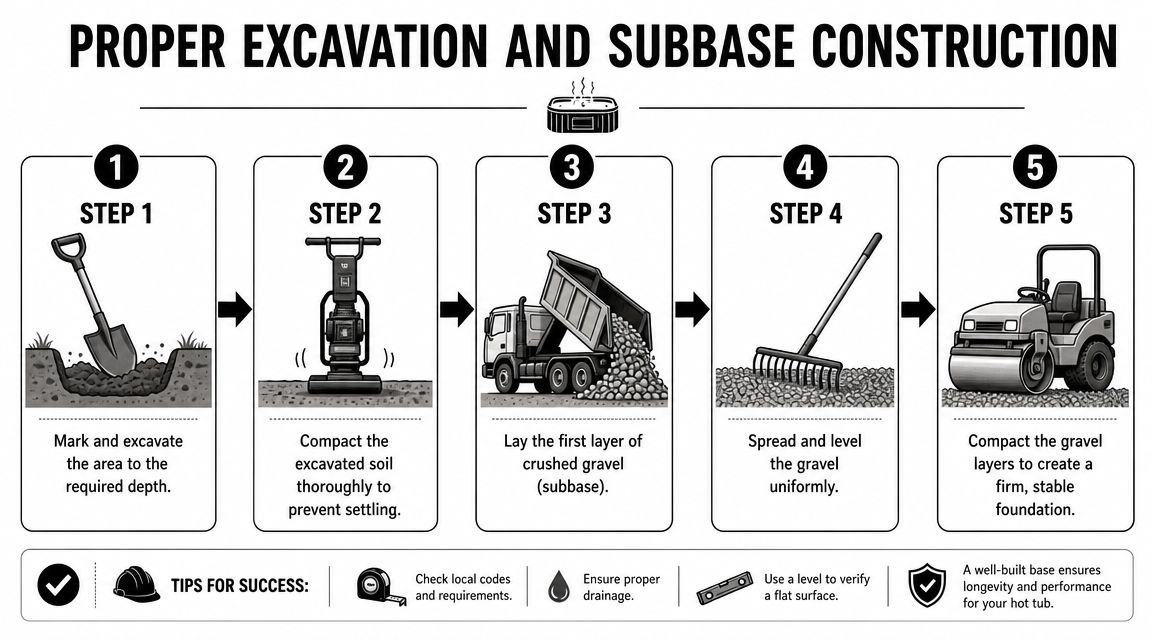
The strength of a paver hot tub pad is mostly underground. If the excavation is shallow, if the rock is wrong, or if the layers aren't compacted properly, the finished surface may look fine at first and still fail under load later.
A proper paver base requires excavating 6 to 8 inches deep, installing geotextile fabric, building with 3/4-inch crushed rock in compacted 3 to 4 inch layers, and using edge restraints to keep the perimeter from spreading, according to hot tub base construction guidance from Utah Deck Supply.
The build sequence that matters
The order of operations matters just as much as the materials.
Mark the full pad area
Include the spa footprint and the extra width around it. Clean layout prevents cramped edges and weak borders.Excavate to full depth
Remove sod, organic material, and loose topsoil. A hot tub pad should bear on stable ground, not decomposing material.Compact the native soil
This step gets skipped too often. If the subgrade is soft, the entire system above it can settle.Install geotextile fabric
The fabric separates the native soil from the stone base. That helps preserve the integrity of the aggregate layer over time.Add crushed rock in lifts
Build the base in layers rather than dumping it all at once. Compaction works best when the material depth is controlled.Compact each lift thoroughly
A plate compactor is the standard tool here. The goal is a dense, stable base, not loose fill that happens to be level.
A good visual can help if you want to see the sequence in motion.
Why compaction decides the outcome
Compaction is the hidden make-or-break factor. The pavers don't carry the job by themselves. The crushed rock base spreads load and resists settlement, but only if it's compacted correctly.
For a deeper look at why that step matters so much, this guide on soil compaction and foundation performance is worth reviewing. It explains the basic issue homeowners run into with gravel pads, shed foundations, and excavation near me projects. Loose material doesn't magically become structural just because it was dumped in place.
If a base feels solid only at the surface, it isn't ready. A heavy load will find the weak layer underneath.
Regional conditions change the build
Across Pennsylvania, Maryland, Delaware, and New Jersey, freeze-thaw cycles and wet seasons can punish a poorly prepared base. That's why edge restraint, separation fabric, and dense compaction matter so much on paver systems. The visible layer might be the pavers, but the real work is being done by the excavation crew, the aggregate, and the compactor.
Laying Pavers and Managing Heavy Loads
Once the subbase is built, the visible part of the project starts. At this stage, many DIY guides become too casual. They talk about pattern, color, and joint lines, but skip the structural question that controls success.
The common assumption is that a hot tub's weight presses evenly across the entire bottom. That isn't always true. According to load distribution guidance from Brock PaverBase, about 75% of hot tubs are framed so the weight bears mainly on the perimeter, which makes under-support at the frame area a major design risk.
The bedding layer is not the structural layer
Pavers are usually set over a thin, leveled bedding layer above the compacted base. That bedding layer helps seat the pavers uniformly. It does not replace the need for a dense structural base.
That distinction matters because installers sometimes try to solve unevenness with extra sand. That's a mistake. Thick loose bedding can shift under concentrated load, especially near the perimeter where many tubs carry most of their weight.
What works when setting the pavers
A reliable installation usually includes:
- A true screeded bedding course: The surface should be even before the first paver goes down.
- Consistent paver placement: Units should sit tight and flat, without rocking.
- Locked perimeter edges: Restraints keep the system from migrating outward under weight and weather.
- Verification of frame support: The base should support where the spa bears, not where you assume it bears.
If you're comparing finishes with other backyard hardscape work, this overview of stone patio materials and cost is useful for understanding surface choices. Just remember that a hot tub pad has a higher support standard than a simple sitting area.
The pattern can be beautiful and still fail. Load path matters more than layout.
The mistake that causes trouble later
The most common failure isn't dramatic. It starts as slight movement. Then a corner settles, joints loosen, or the tub no longer sits uniformly. Homeowners often think the pavers failed. In reality, the support under the high-load areas was never adequate.
That's why hot tub base pavers can't be approached with a one-size-fits-all patio method. A framed spa needs support where the frame carries. If the tub design puts weight around the edge, the base design has to respect that.
Finishing Your Hot Tub Pad Drainage and Long-Term Care
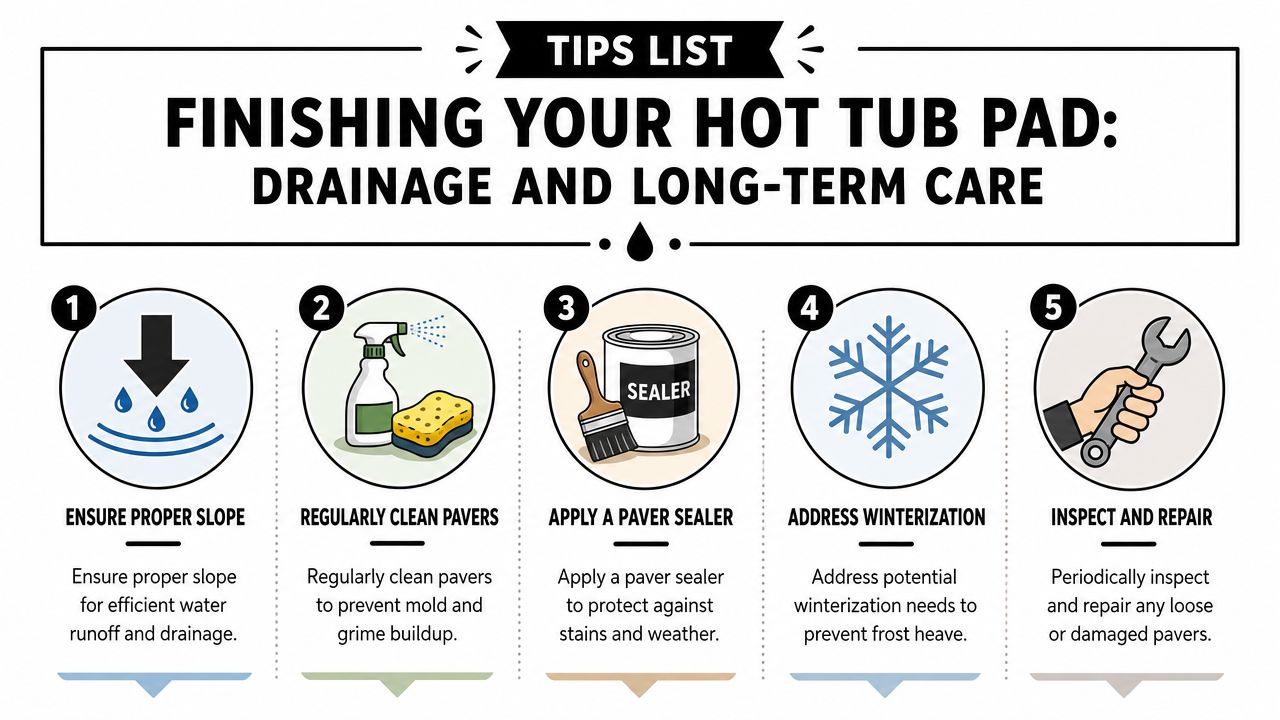
The last stage of the job decides how well the pad handles weather. Jointing sand, drainage shape, edge stability, and seasonal maintenance all work together. If one of those gets ignored, the base can slowly lose performance even when the original install looked solid.
Many online guides spend too much time on appearance and not enough on structural performance. As noted by Hydropool's discussion of hot tubs on pavers, the issue isn't whether the pavers look good. It's whether the base prevents movement, sagging, and uneven support that can damage the tub.
Finish the surface like it has a job to do
Jointing sand helps lock pavers together and reduce lateral movement. It also helps the surface act like a unified system rather than a row of independent pieces. That's especially useful around a hot tub, where vibration, foot traffic, splash-out, and seasonal movement all add stress.
Drainage matters just as much. Water should move away from the pad and away from nearby structures. The goal isn't a visibly sloped spa. The goal is a site where surrounding grade sheds water instead of trapping it around the foundation zone.
Smart long-term care
A hot tub pad doesn't need constant attention, but it does need occasional inspection.
- Check the joints: Refill jointing sand if washout appears.
- Watch the edges: If the perimeter starts spreading, address it before the field shifts.
- Clean organic buildup: Leaves, mulch, and soil hold moisture where you don't want it.
- Inspect after winter: Frost movement often reveals weak spots that weren't obvious during warm weather.
A durable pad is never just pavers. It's drainage, restraint, compaction, and maintenance working together.
This bigger view matters for the whole property. Water that sits near a spa pad can affect nearby walkways, patios, and even larger foundation builds over time. Good grading protects more than the hot tub.
Know When to Call a Pro for Your Hot Tub Foundation
Some hot tub paver bases are straightforward. Others aren't. The hard part is that many difficult sites don't look difficult until the excavation starts.
If the site is sloped, the soil stays soft, access is tight, or the hot tub is especially large, it's smart to get professional input before materials are delivered. The same goes for yards with existing drainage problems, previous settlement, or nearby structures that limit layout options. That's where a base stops being a weekend hardscape project and starts becoming foundation work.
A professional assessment also helps when you're deciding between pavers and concrete. Sometimes pavers are the right finish, but only after deeper excavation, better subbase work, and tighter edge control than a typical patio would get. In other cases, a slab is the safer answer.
Homeowners comparing options can review professional hot tub pad foundation solutions to see how site conditions often drive the final recommendation. That's especially relevant in PA, MD, DE, and NJ, where frost, rain, and mixed soils can expose weak prep quickly.
If you've been searching for concrete contractors, garage foundation contractors near me, shed foundations contractors near me, or help with a gazebo foundation, the same principle applies here. A structure is only as good as what supports it. Hot tubs just make that truth obvious faster because the load is concentrated and the consequences of poor support show up right on the shell.
A professionally built base gives you confidence before the spa arrives, not after something shifts.
If you want a hot tub base built for real soil conditions in Pennsylvania, Maryland, Delaware, or New Jersey, Firm Foundations can help. The team builds gravel pads, concrete foundations, garage slabs, shed foundations, and hot tub pads with the excavation, compaction, drainage, and structural detail these projects need. Request a free quote and get a clear recommendation for the right foundation on your property.