
Hot Tub Pad
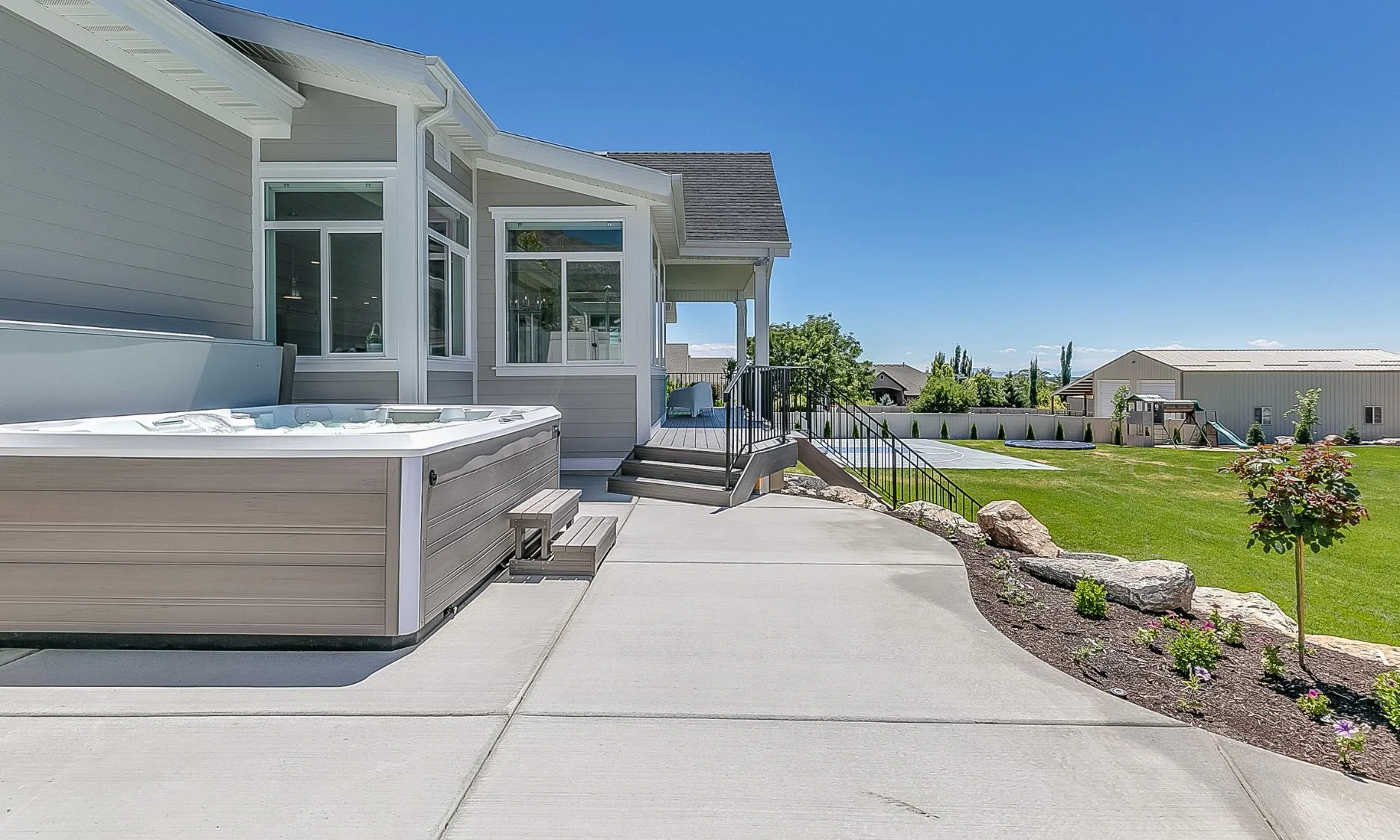
Hot Tub Pad: Expert Tips for a Stress-Free Setup
Investing in a hot tub is an exciting step toward better health and relaxation. But before you start soaking, it’s crucial to prepare the right foundation. A proper hot tub pad is a necessity, not just a recommendation.
A full hot tub can weigh up to 6,000 pounds. Placing it on an uneven or weak surface like grass or a flimsy deck can lead to sinking, cracking, and costly structural damage, often voiding your warranty.
Creating a solid base doesn’t have to be complicated. This guide will walk you through everything you need to know about hot tub pads—from picking the best location to choosing the right materials—to ensure your investment provides relaxation for years to come.
Importance of a Solid Foundation
Why does the ground underneath your hot tub matter so much? It comes down to physics and longevity. When you fill a hot tub with water and people, you are dealing with immense pressure per square foot. If the surface beneath isn’t capable of supporting that load evenly, the consequences can be expensive.
- Preventing Structural Damage: An uneven surface can cause the hot tub’s shell to twist and crack under the immense weight of the water. This kind of damage is often irreparable and not covered by warranties.
- Protecting Internal Components: Shifting or settling can strain the internal plumbing and machinery, leading to leaks that can damage the frame and electrical parts.
- Ensuring Warranty Compliance: Most manufacturers’ warranties are void if the hot tub is installed on an improper foundation. A solid pad protects both your hot tub and your financial investment.
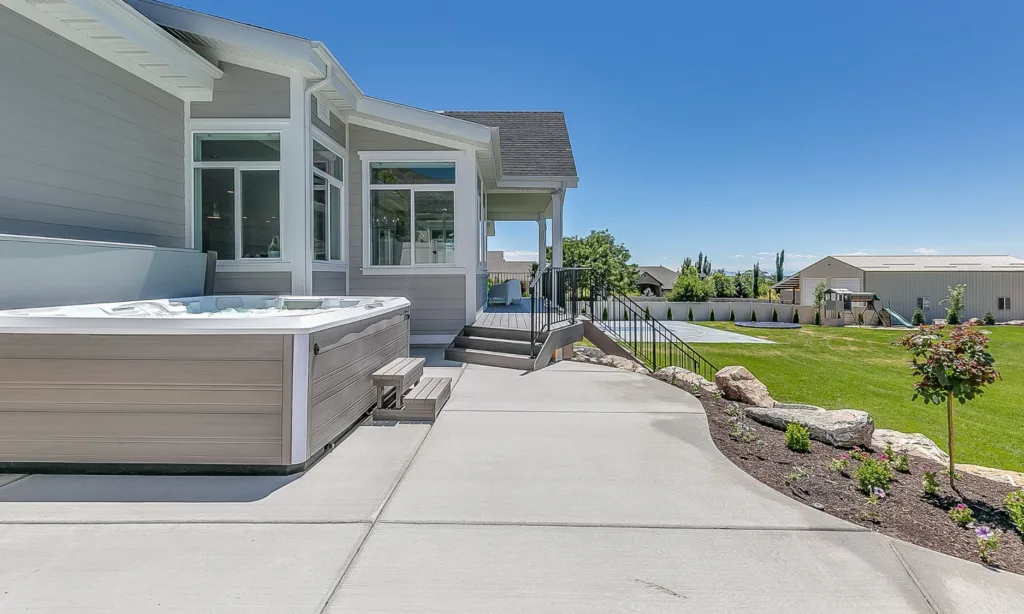
Key Considerations for Hot Tub Placement
Before you buy materials or start digging, you need to pick the perfect spot. It’s not just about where the hot tub looks best; it’s about where it will function best.
Ground Stability: Choose a flat, stable area with compacted soil. Avoid locations with fresh backfill, as it will settle over time, causing the hot tub to shift. For sloped yards, excavation or a retaining wall may be necessary.
Delivery and Maintenance Access: Ensure there’s a clear path for delivery with enough clearance from the driveway to the installation spot. Leave 18–24 inches of space around the tub for easy access to the equipment panel for future maintenance.
Privacy and Views: Prioritize privacy by considering sightlines from neighbors and the street. Opt for a location with relaxing views, such as a garden or open sky, instead of unsightly areas like trash bins or utility units.
Types of Hot Tub Pads
There is no “one size fits all” solution for hot tub foundations. The best choice depends on your budget, your yard’s aesthetic, and your DIY skills. Here are the three most common options.
Concrete Slabs
A reinforced concrete slab is the gold standard for hot tub pads. It offers the most stability and longevity.
- Pros: Extremely durable, supports immense weight without shifting, easy to clean, and looks professional.
- Cons: Most expensive option, requires professional installation or advanced DIY skills, permanent (hard to remove if you move the tub).
- Best for: Heavy hot tubs and homeowners who want a permanent, low-maintenance solution.
Gravel or Crushed Stone
A gravel pad is a popular, cost-effective alternative to concrete. It involves digging out the topsoil, laying a weed barrier, and filling the space with crushed stone.
- Pros: Excellent drainage (water flows through rather than pooling), affordable, easier to install than concrete, aesthetically pleasing if done right.
- Cons: Can shift over time if not properly contained with a frame, rough on bare feet.
- Best for: DIYers on a budget and yards with drainage concerns.
Reinforced Plastic Pads
These are interlocking plastic grids (often called “spa pads”) that lay on top of a level gravel or grass surface.
- Pros: Very easy to install (can be done in an hour), portable (you can take them with you if you move), lightweight.
- Cons: Requires a perfectly level subsurface to work correctly; some people dislike the plastic aesthetic.
- Best for: Renters or those who want a quick, non-permanent setup.
The Firm Foundations Advantage
While many homeowners attempt to build their own hot tub pads, there is a distinct advantage to working with specialists. This is where a company like Firm Foundations shines.
Professional Installation vs. DIY Methods
DIY projects can be rewarding, but they also carry risks. If you mix your concrete incorrectly, it can crack during the first freeze-thaw cycle. If you don’t compact your gravel base enough, the tub will settle.
Professionals like the team at Firm Foundations have the equipment and expertise to guarantee the job is done right. They understand local soil conditions, frost lines, and drainage requirements. They use laser levels to ensure the pad is perfectly flat—something that is surprisingly difficult to achieve with a standard carpenter’s level and a 2×4.
Customization and Aesthetics
A professional installer doesn’t just pour a slab; they integrate the pad into your landscape design. Firm Foundations can create stamped concrete patterns, integrate retaining walls, or build custom timber frames for gravel pads that complement your deck. They turn a functional necessity into a beautiful hardscape feature.
Time and Stress Savings
Excavating soil is back-breaking work. Hauling wheelbarrows of stone or concrete is exhausting. By hiring Firm Foundations, you save yourself a weekend (or two) of hard labor. You also get peace of mind knowing that if anything goes wrong with the base, you have a company to call, rather than having to fix it yourself.
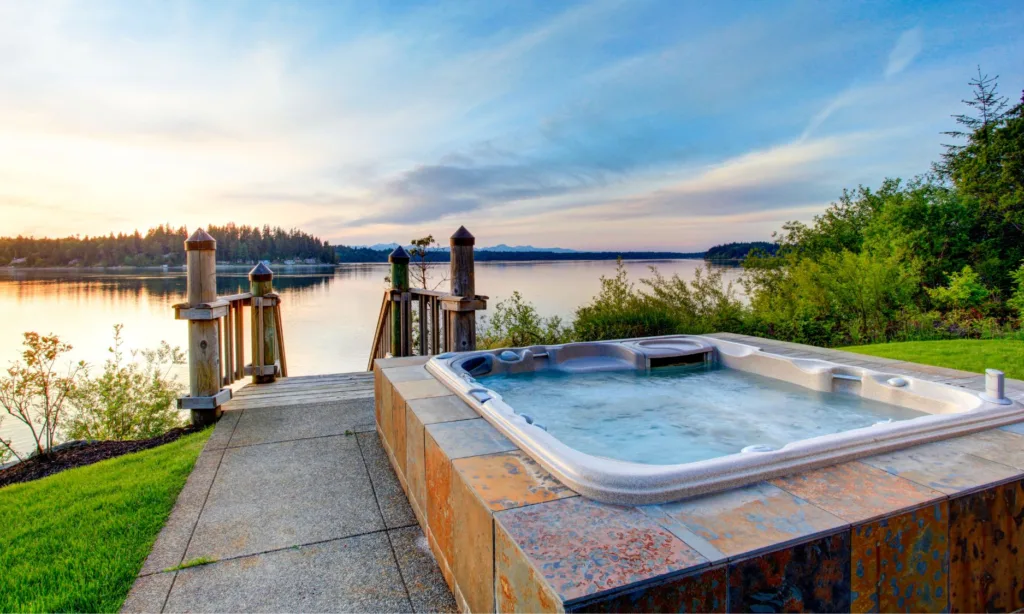
Step-by-Step Installation Guide
If you decide to tackle this project yourself, particularly a gravel pad (which is the most common DIY choice), preparation is everything. Here is a general guide to getting the site ready.
Mark Your Area
Determine the dimensions of your hot tub and add at least one foot to each side. This allows for safe entry and exit and prevents grass and dirt from splashing onto the acrylic. Use stakes and string to mark the perimeter.
Excavation
Remove the sod and topsoil within your marked area. You generally need to dig down about 4 to 6 inches. It is crucial to remove all organic material (grass and roots) because as they decompose, the ground will settle.
Level the Sub-base
Once you have dug out the area, use a long level to check the dirt surface. It should be relatively flat. If you have significant high spots, dig them out rather than trying to build up low spots with loose dirt.
Install a Weed Barrier
Lay down a heavy-duty landscape fabric. This prevents weeds from growing up through your stone and keeps your gravel from mixing with the mud below, which helps with drainage.
Add the Base Material
Fill the excavated area with “3/4 inch minus” crushed stone or a similar road base material. Do not use pea gravel or round river rock; round stones roll against each other and won’t lock into place, making for an unstable base.
Compact the Stone
This is the most critical step. Spread the stone in layers. Rent a plate compactor from a local hardware store. Run the compactor over the stone until it is rock hard and level. If you skip this, your hot tub will sink.
Final Check
Use your long level again. The pad must be level in all directions. If it’s not, add more stone to the low spots and compact again.
Common Mistakes to Avoid
Even with a guide, things can go wrong. Here are the pitfalls that catch many homeowners off guard.
Ignoring Drainage
Water is the enemy of a stable foundation. If rainwater pools around your hot tub, it can erode the soil beneath the pad.
- The Fix: Ensure the ground around the pad slopes slightly away from the hot tub. If you are installing a concrete slab, a very slight slope (1/8 inch per foot) helps water run off the surface without affecting the tub’s water level noticeably.
Relying on an Existing Deck
Many people assume their existing wooden deck can hold a hot tub. This is rarely true. Standard decks are built to hold people and furniture, roughly 50 to 100 pounds per square foot. A hot tub requires support for over 100 pounds per square foot.
- The Fix: You must reinforce the deck with additional posts and joists, or cut a section of the deck out and build the hot tub pad on the ground below it. Always consult a structural engineer before putting a spa on a deck.
Using Hollow Blocks or Pavers Without a Base
Simply laying concrete pavers on top of grass is a bad idea. The pavers will shift, crack, and become uneven within months.
- The Fix: Pavers can look great, but they require the same excavated and compacted gravel base as a gravel pad described above. The pavers are just the decorative top layer; the gravel underneath does the actual work.
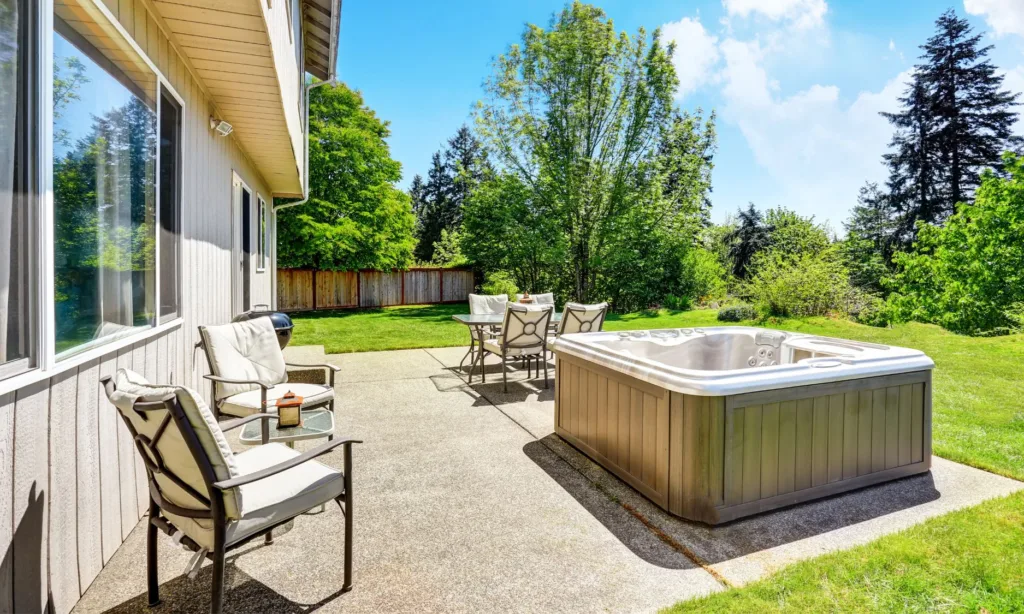
Maintenance and Upkeep
After hot tub installation, your foundation needs very little attention, but it shouldn’t be ignored completely.
Inspecting for Settling
Every few months, take a walk around the tub. Look at the water line inside the spa. Is it level? If the water is higher on one side than the other, your pad may be settling. If you notice a significant shift, you may need to drain the tub and have a professional re-level the pad.
Vegetation Control
If you have a gravel or stone pad, keep an eye out for weeds. Even with a barrier, nature finds a way. Pull weeds early so their roots don’t disrupt the stone base. Trimming back bushes and trees around the perimeter also prevents roots from growing under the pad and lifting it.
Concrete Care
If you have a concrete slab, seal it every year or two to prevent moisture from penetrating the surface, which can lead to cracking during freezing temperatures. Keep the concrete clean of moss and algae, which can become slippery and dangerous.
Final Thoughts: Build It Right, So You Can Relax
The anticipation of owning a hot tub is all about the relaxation that awaits. You don’t want that relaxation interrupted by a sinking shell or a voided warranty. By taking the time to understand the importance of a hot tub pad and choosing the right material for your needs, you ensure that your spa remains a stress-free sanctuary.
Whether you choose to pour a slab, compact gravel, or hire the experts at Firm Foundations to handle it for you, a solid base is the best accessory you can buy for your hot tub. Get the groundwork right, and the only thing you’ll have to worry about is which jet setting feels the best.
Firm Foundations LLC
https://maps.app.goo.gl/Uf6XdgtpBTETgNrr7
1535 White School Rd, Honey Brook, PA 19344, United States
(717) 716-7267
https://shedpads.com/