
Garage Floor Non Slip Paint: A PA Contractor’s Guide
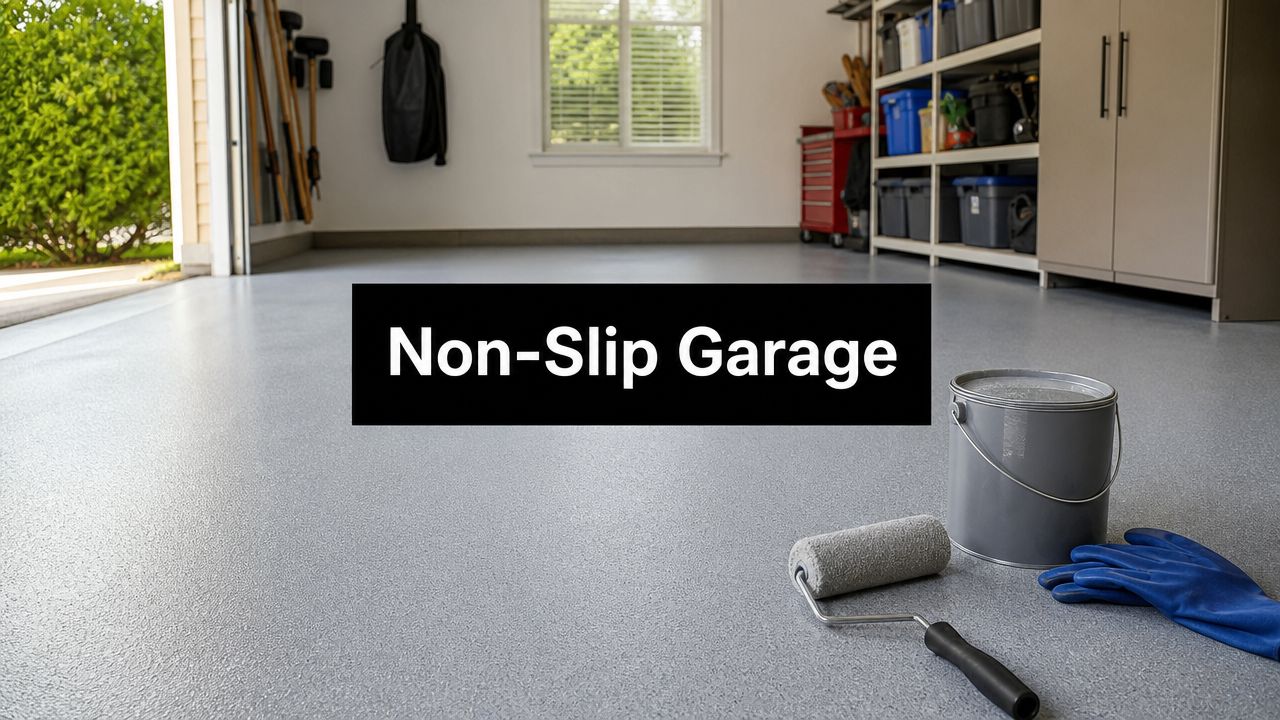
A lot of homeowners start looking for garage floor non slip paint after the same kind of morning. You walk into the garage with wet boots, road salt is melting off the tires, and that smooth concrete suddenly feels slick in a way that gets your attention fast. The floor may also be dusty, stained, or starting to show small cracks, which makes the whole space feel older than it is.
That surface problem is real, but as a foundation contractor, I can tell you the coating is only part of the story. A non-slip finish works best when the concrete underneath is sound, dry, and properly built. If the slab is moving, holding moisture, or breaking down at the surface, even a good coating system will struggle.
Homeowners across Pennsylvania, Maryland, Delaware, and New Jersey run into this all the time. They search for a safer garage floor, but the better question is whether the slab itself is ready for paint. That same thinking applies to bigger projects too, whether you're comparing garage foundation contractors near me, planning concrete foundations, or pricing out a cement foundation for garage work before a new build.
Protecting Your Investment from the Ground Up
In the Mid-Atlantic, garages take a beating. Winter runoff, de-icing residue, damp spring air, and tracked-in grit all end up on the slab. A plain painted floor might look decent for a while, but once moisture and wear get involved, slick spots and peeling usually follow.
That helps explain why anti-slip coatings have moved well beyond a niche product. One market report cited by SlipDoctors valued the global anti-slip coatings market at USD 116.1 million in 2022 and projected it to reach USD 176.2 million by 2028, which implies roughly 7.2% annual growth (anti-slip coatings market growth). For garage owners, that matters because these coatings are now treated less like a decorative extra and more like a practical safety layer for concrete.
Why the slab matters more than the label
A lot of paint failures get blamed on the product. Sometimes that's fair. More often, the issue starts below the coating.
If the concrete was poured poorly, if drainage directs water toward the garage, or if the slab surface is weak and dusty, the coating has nothing reliable to bond to. You can buy the best bucket on the shelf and still end up with peeling, gloss variation, or texture that wears unevenly.
Practical rule: A non-slip coating can improve traction, but it can't correct slab movement, trapped moisture, or a failing surface layer.
That's the same reason people planning a new garage should think beyond paint from day one. Good garage footings and foundations and a properly finished slab set up every later step, from sealing to coating to daily cleanup.
What I look for first
Before talking products, I'd want to know three things:
- How the floor handles water: Does moisture sit on the slab, move toward the house, or gather at the edges after snow melts?
- What the concrete surface feels like: Is it hard and tight, or dusty and chalky when you drag a boot across it?
- Whether cracks are cosmetic or active: Hairline shrinkage is common. Ongoing separation, heaving, or edge movement is not.
Those clues tell you whether you're choosing a finish or trying to hide a bigger problem. For homeowners searching local terms like garage foundation contractors near me or concrete contractors, that distinction saves time and money.
Choosing the Right Non-Slip Paint and Primer
Most homeowners don't need a chemistry lecture. They need to know what will hold up in a real garage, what's forgiving to apply, and what tends to disappoint.
The basic choice usually comes down to one-part epoxy style coatings, two-part epoxy systems, or acrylic/latex concrete paint. All three can be marketed for garages. They do not perform the same way.
What separates the main options
Two-part systems usually give you the hardest finish and the best chance at long-term wear when the slab is prepared correctly. They're less forgiving, though. Once mixed, the clock starts, and sloppy application shows up quickly.
One-part epoxy style products are simpler for DIY work. They're generally easier to roll and less intimidating for a homeowner doing a weekend project. The tradeoff is that they usually don't match the toughness of a properly installed two-part system.
Acrylic or latex concrete paint is the light-duty option. It can freshen up an older floor, but it's not my first pick for a garage that sees wet tires, seasonal mess, tool traffic, and repeated cleaning.
Non-Slip Garage Floor Paint Comparison
| Paint Type | Durability | Application | Cost |
|---|---|---|---|
| Two-part epoxy | Best for heavy garage use when slab prep is done right | Most demanding, mixing and timing matter | Higher |
| One-part epoxy style coating | Better than basic paint for many residential garages | Easier for DIY use | Mid-range |
| Acrylic or latex concrete paint | Light-duty, more likely to wear sooner in active garages | Simplest to apply | Lower |
Primer is not optional on a questionable slab
A lot of failed garage floor jobs come from skipping primer or using the wrong one for the slab condition. Primer does the unglamorous work. It helps the coating bond, reduces uneven absorption, and exposes weak areas early.
If the concrete is porous in one spot and tight in another, the topcoat won't dry or build evenly. That's when you see blotchy sheen, thin spots, or peeling around old stains. On a good concrete foundation for garage work, the slab is more predictable. On an older floor, primer becomes even more important.
The right primer won't rescue bad concrete, but it does give a good slab a fighting chance.
Match the system to how you use the garage
Different garages need different finishes. I'd think about use before brand names.
- Daily parking and winter mess: Lean toward a tougher epoxy-based system with a moderate anti-slip texture.
- Workshop or tool storage: Prioritize durability and chemical resistance over a perfectly smooth decorative look.
- Light-use storage garage: A simpler system may be enough if the slab is clean, dry, and sound.
- Frequent sweeping and easy cleanup: Don't choose the most aggressive texture unless safety needs clearly justify it.
That last point matters. More traction usually means a rougher surface, and a rougher surface tends to hold more dirt. You can absolutely improve safety, but there's always a balance between grip and cleanability.
Garage Floor Prep A Job Done Right
If a garage floor coating fails, prep is usually where the job went wrong. Not color choice. Not roller technique. Prep.
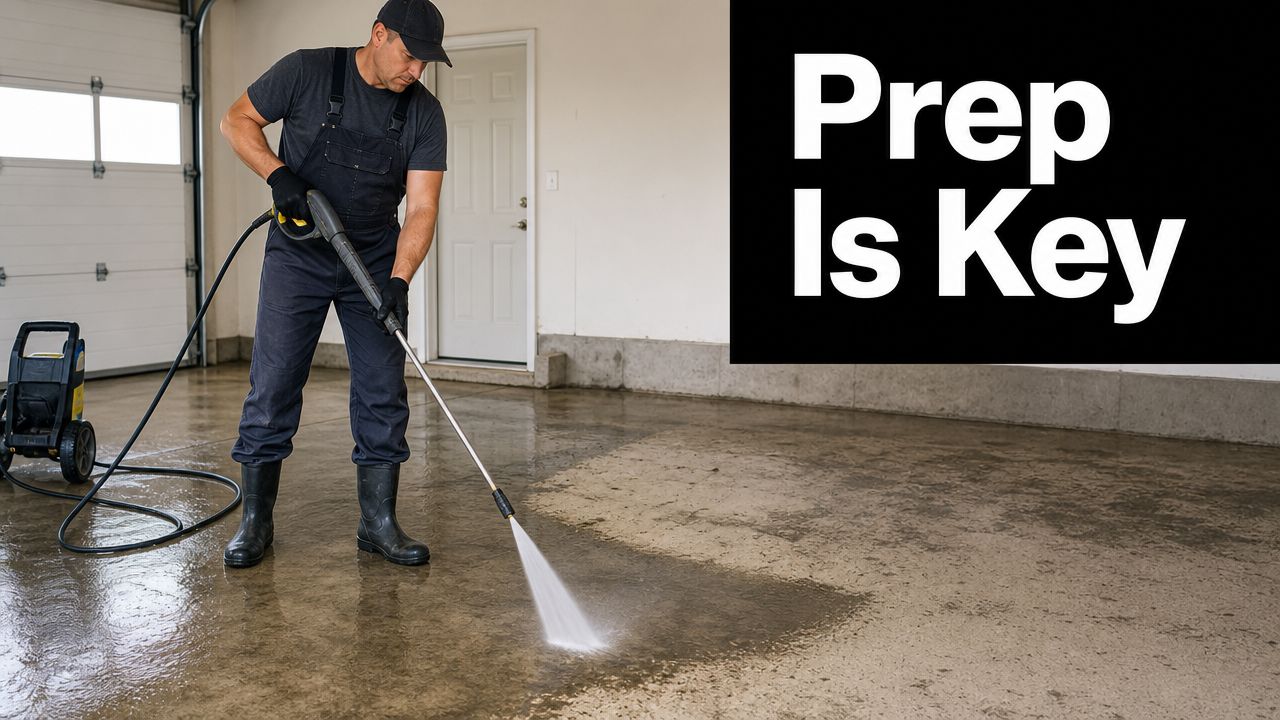
A proper workflow for a non-slip garage floor typically includes mechanical cleaning and degreasing, making sure the slab is fully dry, profiling the concrete, applying epoxy in thin even passes, and then building traction with texture in the top layer. When installers skip or rush those steps, problems show up fast.
Clean first, then decide if the slab is paintable
Start by removing everything. Sweep out loose debris, scrape off heavy buildup, and degrease the floor thoroughly. Oil contamination matters more than many DIY kits admit. If dark spots still repel water after cleaning, coating over them is asking for bond failure.
This is also the stage where grinding can make a big difference. If you want a practical look at equipment and process, this guide to a garage floor grinder helps show why mechanical prep often outperforms shortcut methods.
If you want a second industry perspective, NSP Coatings has a useful piece on understanding coating pre-treatment. Their main point lines up with what contractors see in the field. Surface prep isn't busywork. It's the job.
Etching and profiling need precision
On one industrial non-slip epoxy system, the manufacturer specifies a 2:1 water-to-muriatic-acid wash and TSP neutralization at 1 lb per 1,000 sq ft for surface prep (garage floor etching specifications). That's a good reminder that prep chemistry isn't guesswork.
Some slabs respond well to grinding. Some can be acid-etched if handled correctly. Either way, the goal is the same. You need a profile the coating can grip.
A slick, sealed, or contaminated surface may look clean and still reject the coating. A floor that's too wet will do the same thing.
Know the difference between a paint issue and a foundation issue
Many homeowners need to slow down. Not every crack means you need new concrete. But not every crack is harmless either.
Look more closely if you see:
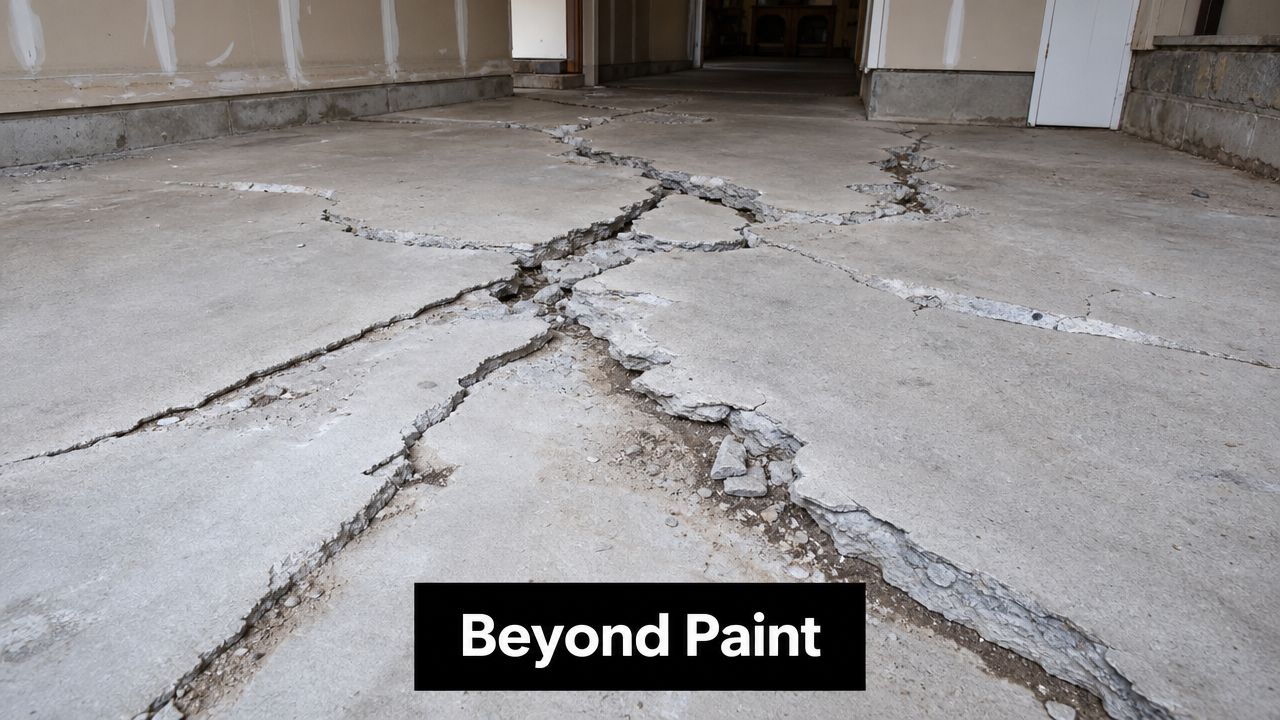
- Wide or changing cracks: If the gap is growing, offset, or reopening after patching, the slab may be moving.
- Spalling or surface breakdown: Flaking concrete can point to moisture problems, freeze-thaw damage, or a weak top layer.
- Heaving or settlement: If one section sits higher or lower than another, paint won't fix it.
- Persistent dampness: Moisture pushing through the slab often ruins coatings from below.
If the floor is moving, the coating is along for the ride.
That's the point where the conversation shifts from paint to garage foundations, slab replacement, drainage correction, or other structural work. Homeowners shopping for garage foundation contractors near me often start with surface symptoms, then realize the underlying issue is below the finish.
Applying Non-Slip Paint Like a Professional
Application is where a decent prep job can still be ruined. The product may be good. The slab may be ready. But if you mix too much, work too slowly, or lay the coating too heavy, the texture and finish can get away from you quickly.
Mix and stage the job before the coating opens
Read the product instructions all the way through before opening anything. Lay out rollers, extension poles, mixing paddle, edging tools, shoes, and your anti-slip additive or textured topcoat plan. Most DIYers lose quality because they start solving logistics after the pot life clock has already started.
One industrial non-slip epoxy system specifies a 4:1 mix ratio, a 30-minute pot life, and one-direction application, with different coverage depending on whether you roll or squeegee. The bigger lesson is simple. Once the pot life is exceeded, viscosity rises and texture distribution gets uneven, which can reduce traction uniformity and show poor application control. That pitfall is noted in the same manufacturer guidance discussed earlier.
Work in sections, not all at once
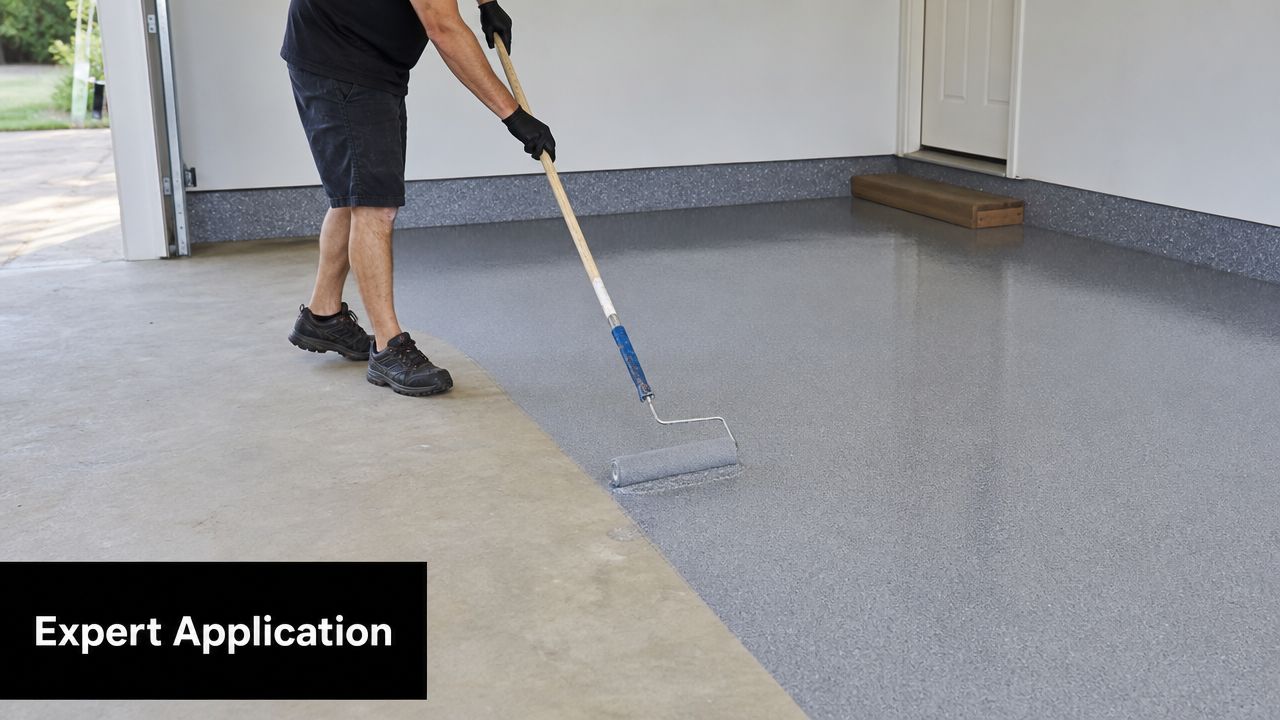
A garage floor is easier to manage when broken into lanes or zones. Cut in edges first, then roll field areas while maintaining a wet edge. Don't box yourself into a corner. Always know your exit path before the first pass.
A few habits separate a cleaner job from a frustrating one:
- Use thin coats: Heavy application looks productive but usually creates more problems than it solves.
- Keep roller pressure consistent: Pressing harder in one area leaves visible differences in film build and texture.
- Broadcast or texture evenly: If one area gets more aggregate than another, the floor will feel patchy underfoot.
- Watch the clock: Mixed material doesn't care how much floor you have left.
On-site advice: The floor should look controlled while it's wet. If it already looks blotchy, thick, or uneven during application, it won't cure into something better.
Here's a visual walkthrough that helps show the pace and sequence involved during installation:
Texture should fit the way the garage is used
Not every garage needs the roughest possible finish. For most homes, a moderate non-slip profile is the better target. It improves traction without making the whole floor feel harsh or harder than necessary to clean.
If the garage doubles as a workshop, tire traffic area, and entry point into the house, aim for consistency more than aggression. A uniform medium texture usually performs better in daily life than random heavy grit with smooth spots between it.
That's where contractor thinking helps. Good application isn't just putting material down. It's controlling thickness, timing, and surface feel so the finished floor behaves the same from one side of the garage to the other.
Curing, Troubleshooting, and Long-Term Care
A garage floor coating can be dry enough to touch and still not be ready for real use. That difference matters. If you load the floor too early, you can damage the coating before it has developed full strength.
A DIY anti-slip floor coating source reports that light foot traffic is possible after 6–8 hours at 70°F, but application should not occur below 50°F, and cure time should be extended if humidity drops below 50% (garage floor cure conditions). In practical terms, stable conditions matter just as much as the product.
Dry is not cured
The most common mistake I see is homeowners assuming the floor is ready because it no longer feels tacky. That only tells you the surface has changed. It doesn't tell you the coating has fully cured through its depth.
Cool concrete slows things down. So does moisture in the slab, a cold garage overnight, or film that was applied too thick. That's why a patient schedule beats a rushed one every time.
Common failures and what they usually mean
If the coating starts acting up, the pattern usually points to the cause.
| Problem | Likely Cause | What to Check |
|---|---|---|
| Peeling | Poor prep or moisture | Was the slab fully clean, dry, and profiled? |
| Uneven texture | Inconsistent application | Did the material thicken during use or get laid too heavy? |
| Premature wear in traffic paths | Thin film build or early loading | Was the floor put back into service too soon? |
For homeowners thinking ahead on maintenance, a quality garage floor sealer strategy can help protect the surface and make cleanup more manageable over time, especially where road salt and grime get tracked in regularly.
Keeping traction without turning cleaning into a chore
Textured floors need a little more attention than smooth decorative ones. Dirt, oily film, and fine dust can settle into the profile and reduce the benefit of the texture if the floor is neglected.
A practical routine usually looks like this:
- Sweep often: Grit acts like sandpaper under shoes and tires.
- Degrease spills promptly: Oil and residue can sit in the texture and make the floor feel slicker.
- Use gentle cleaning methods: Aggressive metal tools can damage the coating surface.
- Inspect wear zones: Entry points and tire paths tell you early when maintenance is falling behind.
A non-slip coating stays useful when the texture stays exposed. If grime fills that texture, the floor may still look coated but won't perform the same way.
When Your Garage Needs More Than Just Paint
Some garage floors are good candidates for non-slip coating. Others are asking for structural work, whether the owner realizes it yet or not.
If the slab has active movement, widespread surface failure, chronic moisture, or drainage problems, paint is only a cosmetic pause. It may improve appearance for a while, but it won't correct the cause. That's true whether you're dealing with an older detached garage, a planned addition, or a property where the garage slab was never built on a stable base in the first place.
Red flags that point below the surface
A few warning signs should change the conversation immediately.
- The floor is no longer level: That suggests settlement, heaving, or sub-base issues.
- Cracks have depth and movement: Surface patching may hide them briefly, but the slab is still unstable.
- Water keeps returning: Moisture intrusion often starts with drainage, grading, or slab conditions, not paint failure.
- The top surface is coming apart: Once the concrete itself is deteriorating, coatings become temporary.
This is also where homeowners run into a key tradeoff that gets ignored in a lot of product marketing. A heavily textured finish gives better grip, but it can also be harder to sweep or mop, which is a practical issue for everyday use in a home garage (texture versus cleanability in non-slip coatings). If the slab is already rough, broken, or dirty by nature, adding more texture may only make a bad floor more frustrating to live with.
Think bigger than the coating
When a garage floor has underlying structural issues, the right fix may involve replacing the slab, improving grading, correcting drainage, or rebuilding the base. That same logic carries over to more than garages.
If you're planning a new structure, the smartest place to invest is almost always the ground-up work:
- Garage projects: Proper concrete foundation for garage construction and stable subgrade prep
- Outbuildings: Durable shed foundation solutions and the right base for storage shed
- Backyard structures: Reliable support for a gazebo foundation
- Site work: Professional excavation near me services before the concrete crew arrives
- Access improvements: Coordination with driveway contractors near me when drainage and grade affect the garage entrance
A floor coating can make a sound slab safer. It cannot turn a failing slab into a lasting one.
If you're in Pennsylvania, Maryland, Delaware, or New Jersey and your garage needs more than a cosmetic fix, Firm Foundations can help. We build and prepare the surfaces that coatings depend on, from garage slabs and concrete foundations to shed pads, gazebo foundations, excavation, and site prep. If you're comparing shed foundations contractors near me, gravel shed foundation contractors near me, garage foundation contractors near me, or concrete contractors for a new project, reach out for a quote and start with a base that's built to last.