
Garage Floor Grinder: A Pro Guide to Concrete Prep


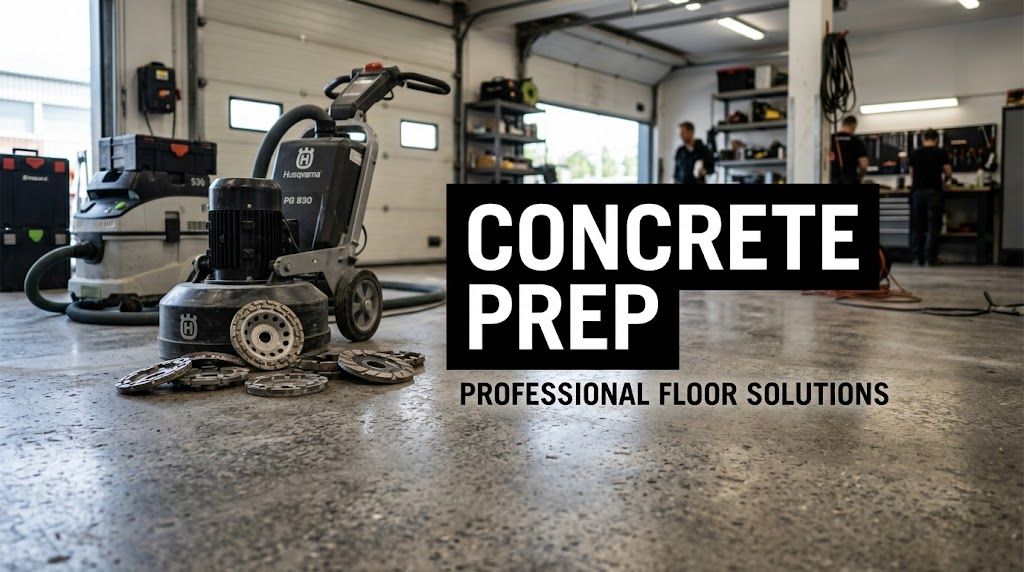
If you're standing in your garage in Honey Brook Township, looking at oil stains, old paint, hairline cracks, and a surface that never seems clean, you're probably thinking about a fresh start. Most homeowners jump straight to epoxy, paint, or sealer. The problem is that the finish isn't the hard part. The prep is.
A garage floor grinder is what separates a floor that looks good for a few months from one that holds up. If the concrete isn't opened up correctly, if the high spots aren't cut down, or if dust and contamination stay on the slab, the new coating has nothing reliable to grab. That's when people end up searching for garage foundation contractors near me, concrete contractors, or concrete foundations after a floor project goes sideways.
Good surface prep also connects to bigger concrete decisions. Sometimes a garage floor only needs grinding and repair. Sometimes the slab is telling you something more serious about movement, drainage, or wear. Homeowners across Pennsylvania, Maryland, Delaware, and New Jersey often start with a floor-finish question and end up needing real answers about garage footings and foundations, a concrete foundation for garage use, or whether the slab should be repaired instead of coated.
Why Proper Garage Floor Prep Matters
A homeowner sees a dull garage slab and thinks the fix is a coating. A contractor sees the same floor and asks different questions. Is the surface soft or hard? Are there high spots near the overhead door? Is old sealer still sitting on top? Are the cracks cosmetic, or are they moving?
Those questions matter because concrete doesn't care how expensive the finish is. If the surface isn't prepared correctly, the coating won't perform the way you want it to.
What usually goes wrong
The most common mistake is easy to understand. Someone cleans the floor, maybe acid etches it, maybe patches a few spots, and starts coating. It can look fine at first. Then the hot tires start lifting it, moisture finds a weak area, or the finish peels where the slab was still contaminated.
That failure often starts with skipped grinding.
Proper prep isn't the glamorous part of the job, but it's the part that decides whether the rest of the project lasts.
A garage floor grinder does more than rough up the surface. It removes weak top material, levels minor imperfections, takes off old coatings, and creates a profile that gives the next layer a fighting chance. That's why this equipment category keeps getting attention across the industry. The broader floor grinding machine market reached USD 286.4 million in 2024 and is projected to reach USD 369.3 million by 2033, according to IMARC Group's floor grinding machine market overview.
Why this matters beyond coatings
Garage slabs sit in a tough environment. They deal with vehicle weight, salt, water, freeze-thaw exposure, dropped tools, and sometimes poor drainage from the surrounding grade. A surface issue can be just a surface issue. It can also be a sign that the slab wasn't finished well, settled unevenly, or needs broader repair.
That matters if you're comparing a cosmetic floor upgrade against more serious concrete work such as:
- Minor prep and coating work for a basically sound slab
- Concrete repairs where cracks, pits, and broken edges need attention first
- A new concrete foundation for garage use when the slab has larger structural problems
- Related site work if runoff, grading, or poor excavation caused the trouble in the first place
The homeowner's real decision
A lecture on polishing systems isn't necessary. The concern is whether a floor can be saved with proper grinding, whether a rental machine is enough, or whether it should be treated like a larger foundation problem.
That decision gets much easier once you understand the equipment, the slab prep, and the grinding process itself.
Choosing Your Grinder and Diamond Tooling
A garage owner rents the biggest grinder the yard has, grabs whatever diamond plates are on the shelf, and expects the slab to be ready by Sunday. That is how coatings fail, edges stay rough, and soft spots get chewed up instead of cleaned up.
Why walk-behind grinders are so common
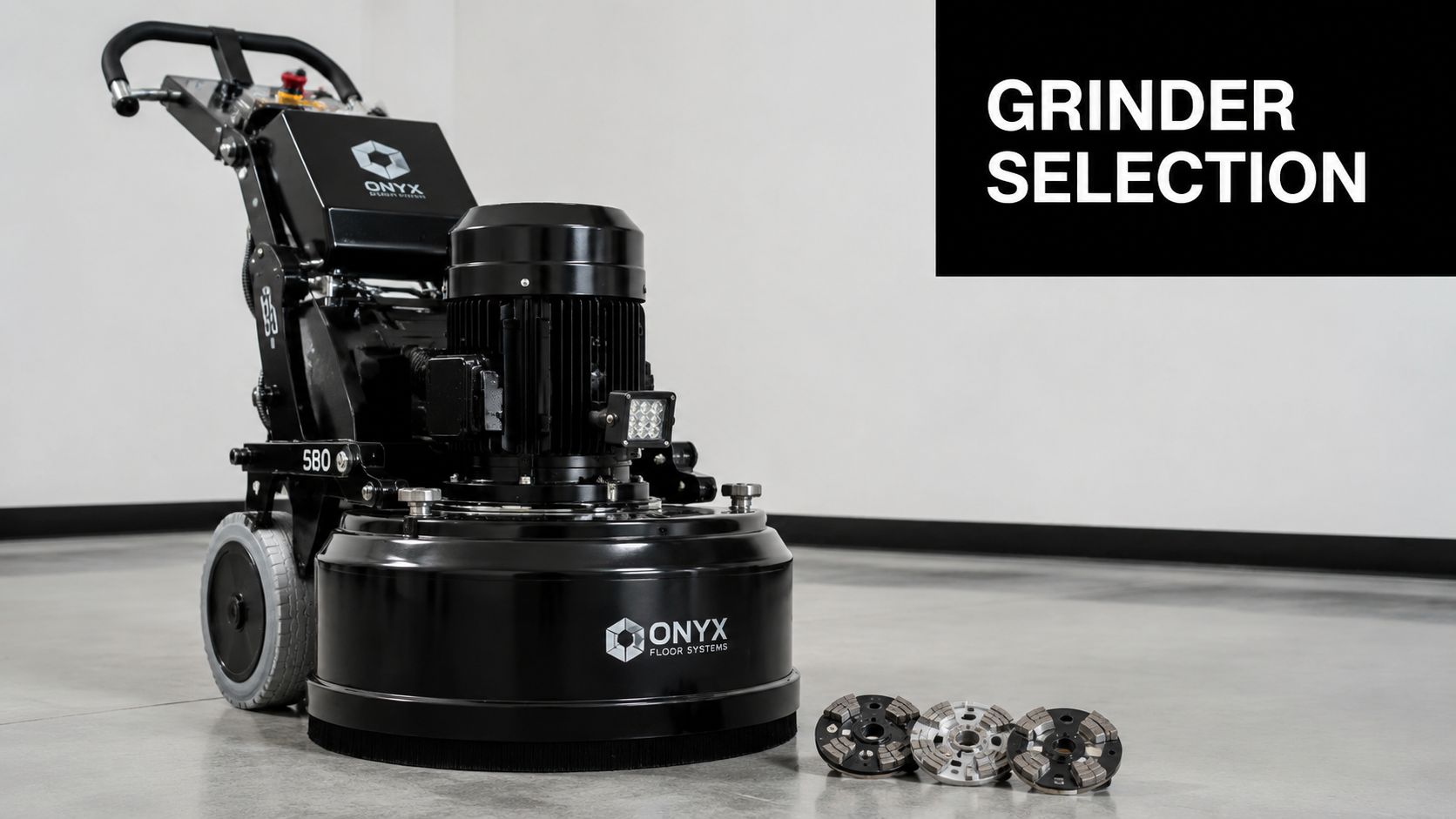
For residential garage work, a walk-behind grinder is usually the right starting point. It has enough weight and width to cut efficiently, but it still fits a one-car or two-car garage without becoming hard to control around door openings, stem walls, and apron transitions. Analysts at Mordor Intelligence note in their floor grinding machine market analysis that walk-behind grinders hold a large share of the market, which fits what contractors use every day on garage slabs.
In practice, garage prep usually takes two machines:
- A walk-behind grinder for the main field
- A hand-held angle grinder or edging grinder for corners, wall lines, and around posts or steps
That pairing matters. If the edge work is done with the wrong cup wheel or skipped until the end, the perimeter often ends up looking like a different floor.
Diamond tooling does the cutting
Homeowners focus on horsepower. The diamonds decide the result.
The grinder carries the tooling and keeps it in contact with the slab. The diamond segment determines how aggressively the surface opens, how cleanly coatings come off, and what scratch pattern is left behind for the next step. That matters whether the floor is getting an epoxy system, a densifier, or repairs tied into a bigger slab correction.
| Tooling type | Best use on a garage floor | What happens if it's used wrong |
|---|---|---|
| Metal-bond diamonds | Removing coatings, opening the surface, flattening small high spots | Leaves a heavy scratch pattern if you stop here |
| Transitional or finer diamonds | Refining the surface after the first cut | Struggles if paint, mastic, or sealer is still present |
| Edge tooling | Matching the perimeter to the main field | Leaves visible halo lines if grit and bond do not match |
Bond hardness has to match the slab
An experienced hand saves both time and money.
Hard concrete needs a softer bond so fresh diamonds keep exposing as the tool wears. Softer concrete usually needs a harder bond so the segments do not wear out too fast or cut too aggressively. Get that wrong and the symptoms show up fast. Tooling can glaze over on a hard slab, stop cutting, and start polishing spots you still need to open. On a soft slab, an aggressive setup can burn through segments and leave a profile that is too rough for the finish you planned.
A good operator checks the slab instead of guessing. On garage projects in PA, MD, DE, and NJ, that also includes looking at the bigger picture. Surface hardness, moisture history, salt exposure, and prior patching all affect tooling choice. If there are signs the slab has moisture coming up from below, it is smart to review whether the floor was built with proper protection such as a garage floor vapor barrier before spending money on coatings.
I also look at what the grinding is meant to support. Prep for a simple coating is one standard. Prep before crack repair, slab stabilization, or a larger garage foundation correction is another. The machine and tooling have to match the actual job, not the rental counter description.
What to ask before you start
Whether you plan to do the work yourself or hire a contractor, ask specific questions.
- What grinder size and weight are being used for a residential garage slab?
- What diamond bond and grit are being used first, and why do they fit this concrete?
- How will the edge work be matched to the main floor so it does not show through the final finish?
- Will a test area be ground before full production starts?
- If the slab shows moisture, weak surface cream, or previous failed repairs, does the plan change?
Safety belongs in that conversation too. Dry grinding creates fine silica dust, and even small edge tools can throw chips unpredictably. Homeowners doing any part of the work should spend a few minutes on choosing the right safety glasses and the rest of their PPE before the machine starts.
Vague answers are a warning sign. A contractor who knows garage slabs should be able to explain the grinder, the tooling, the test patch, and when grinding is only part of a larger repair plan.
Preparing the Slab and Your Workspace
Grinding starts long before the machine touches the floor. A clean garage and a safe setup save time, protect the tooling, and reduce the chance of turning a straightforward prep job into a mess.
What gets done before grinding
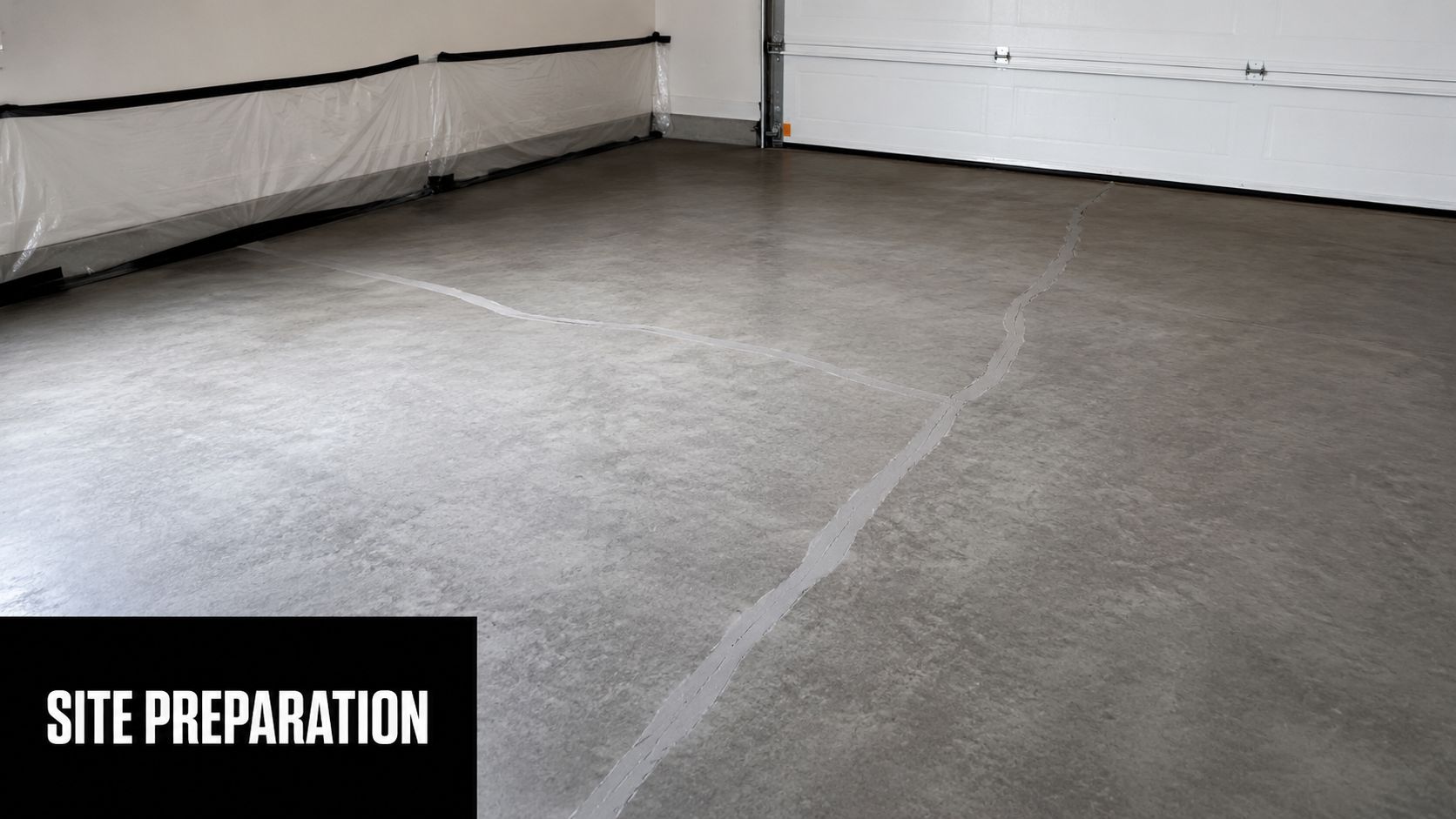
The garage needs to be emptied completely. Not mostly empty. Completely. Shelving, stored items, loose tools, and anything attached near the floor line should be addressed before work begins.
Then the slab gets inspected closely. Professional guidance warns that skipping dust vacuums or pre-inspection for high spots can lead to unsafe conditions, damaged tooling, and an inconsistent finish, as covered in WerkMaster's article on common mistakes to avoid with a concrete floor grinder.
Here's the prep sequence that works:
- Clear the space fully so the operator can make full passes without stopping and weaving around stored items.
- Sweep and vacuum the slab to expose the true surface condition.
- Mark cracks, spalls, and high spots before the machine starts moving.
- Check for old coatings, adhesive, paint, or contaminants that may affect tooling choice.
- Protect adjacent surfaces with plastic where dust and debris could migrate.
Dust control is not optional
Concrete dust is the part homeowners underestimate most. In an attached garage, that mistake gets expensive fast. Dust travels, settles, and finds its way into storage, vehicles, and living areas if the setup is sloppy.
The machine should be connected to a vacuum system with a proper shroud. That isn't a nice add-on. It's basic jobsite discipline. For homeowners doing some research beforehand, this guide on choosing the right safety glasses is useful because eye protection gets overlooked almost as often as respiratory protection.
A few essentials belong on every job:
- Respiratory protection rated for fine dust exposure
- Safety glasses that seal well enough for active grinding
- Hearing protection because grinders and vacuums run loud
- Work boots with solid footing on dusty concrete
- Wall and doorway protection to contain the work area
Skipping the vacuum setup usually doesn't save time. It creates poor visibility, missed spots, and a cleanup problem that keeps growing.
Don't ignore moisture and slab condition
A garage floor finish isn't only about the top surface. If vapor is moving through the slab, the prep and coating plan should account for it. Homeowners comparing repair options should understand the role of a garage floor vapor barrier before they commit to a new finish over a questionable slab.
The slab also needs an honest read. Minor surface damage can often be repaired and ground smooth. Bigger movement, broken sections, or chronic moisture problems can point to a larger concrete issue than grinding alone can solve.
The Professional Grinding Process Explained
A homeowner usually notices the problem right after the coating goes down. The floor looked fine during prep, then the light hits it and every swirl, edge line, and low spot shows up. By that point, the grinding was the make-or-break step.
On a professional job, the grinder is only part of the system. The result comes from the sequence, the scratch pattern, and the operator's ability to read the slab as conditions change. That matters even more when the garage floor ties into a larger repair, slab replacement, or foundation project. In PA, MD, DE, and NJ, we see plenty of garages where surface prep exposes movement cracks, weak patches, or repairs from an older pour. A homeowner needs to know whether the floor only needs prep, or whether the concrete itself needs attention before any finish goes on.
How the passes are made
The machine runs in overlapping passes at a steady pace. The cut stays more even that way, and the floor is less likely to end up with waves or dish-outs. Parking the grinder in one spot, or trying to force a low area flat in a single pass, usually creates more repair work.
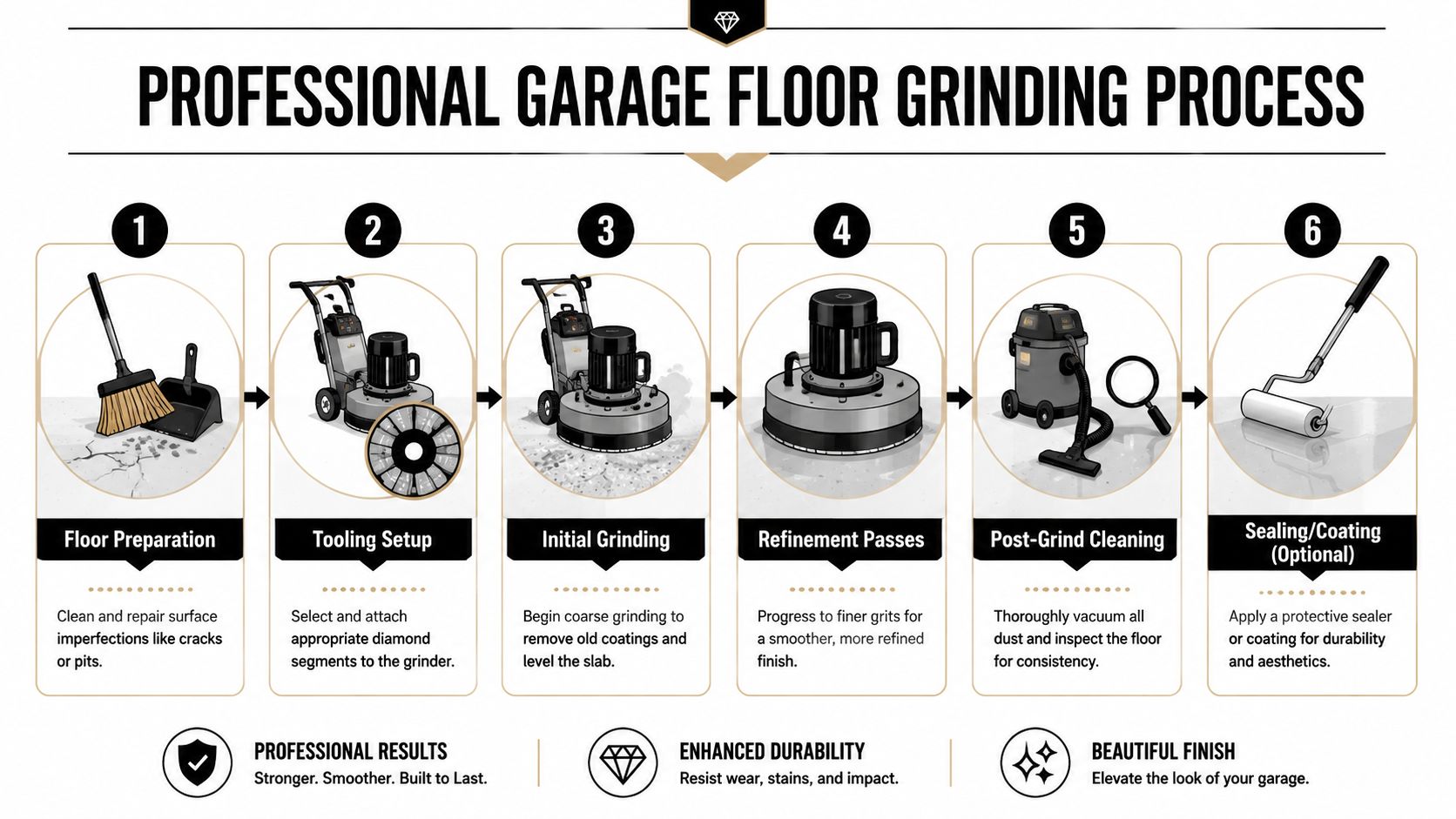
A clean process usually looks like this:
- Start with a test patch to confirm the tooling is cutting the slab the way it should.
- Run the main passes in one direction with consistent overlap and controlled walking speed.
- Inspect the scratch pattern and check tool wear before committing to the full floor.
- Grind edges and tight areas separately so the perimeter matches the field.
- Step up through the grit sequence only after the previous cut is complete.
- Vacuum and inspect between stages when the slab, patching, or old coating calls for it.
That sequence sounds simple. It is not forgiving.
Why grit progression matters so much
Each grit has a job. The early cut removes material, old coating, or surface contamination. The next stages refine the profile left behind. Skip a step and the finer diamonds ride over damage instead of removing it.
That is how garage floors end up with:
- Swirl marks under epoxy or sealer
- Uneven texture across the slab
- Edge-to-field mismatch
- Random scratch lines that only show after the floor cures
Woodworkers deal with the same problem when they rush sanding. Concrete is less forgiving, especially once a coating adds gloss and makes every flaw easier to see.
If the floor shows chatter, patchy texture, or visible scratch changes from one lane to the next, the previous pass was not finished correctly.
What the operator watches during the job
Professional grinding is constant adjustment. The operator watches how fast the slab is cutting, whether the diamonds are glazing over, how repairs are blending, and whether the scratch pattern stays consistent from the center of the floor to the walls.
For homeowners who want to see the process in action, this short video gives a useful field view of garage floor grinding:
Some garage slabs grind cleanly. Others have hard-troweled spots, soft repairs, old tire staining, or coating residue that cuts unevenly. On larger projects, that information matters beyond appearance. It helps determine whether the slab is sound enough for a finish, or whether the garage is showing signs of a bigger concrete issue that should be handled before money goes into coatings or cosmetic work.
That judgment call is one reason strong contractors do more than run equipment. They also communicate clearly, document what they find, and present the work in a way homeowners can understand. The same discipline that produces a clean floor also matters in building a lead-generating website. People hire firms they trust to explain the process and stand behind the result.
The finish goal
For most garage floors, the target is a uniform, properly opened surface that matches the system going on top. Sometimes that means stopping at a coating-ready profile. Sometimes it means refining the slab further for a cleaner exposed-concrete finish.
The right endpoint depends on the condition of the slab, the product being installed, and whether the floor is part of a bigger repair plan. That is the standard homeowners should use when they decide between a rental grinder and a contractor who can guarantee the result.
DIY vs Hiring Foundation Contractors in PA
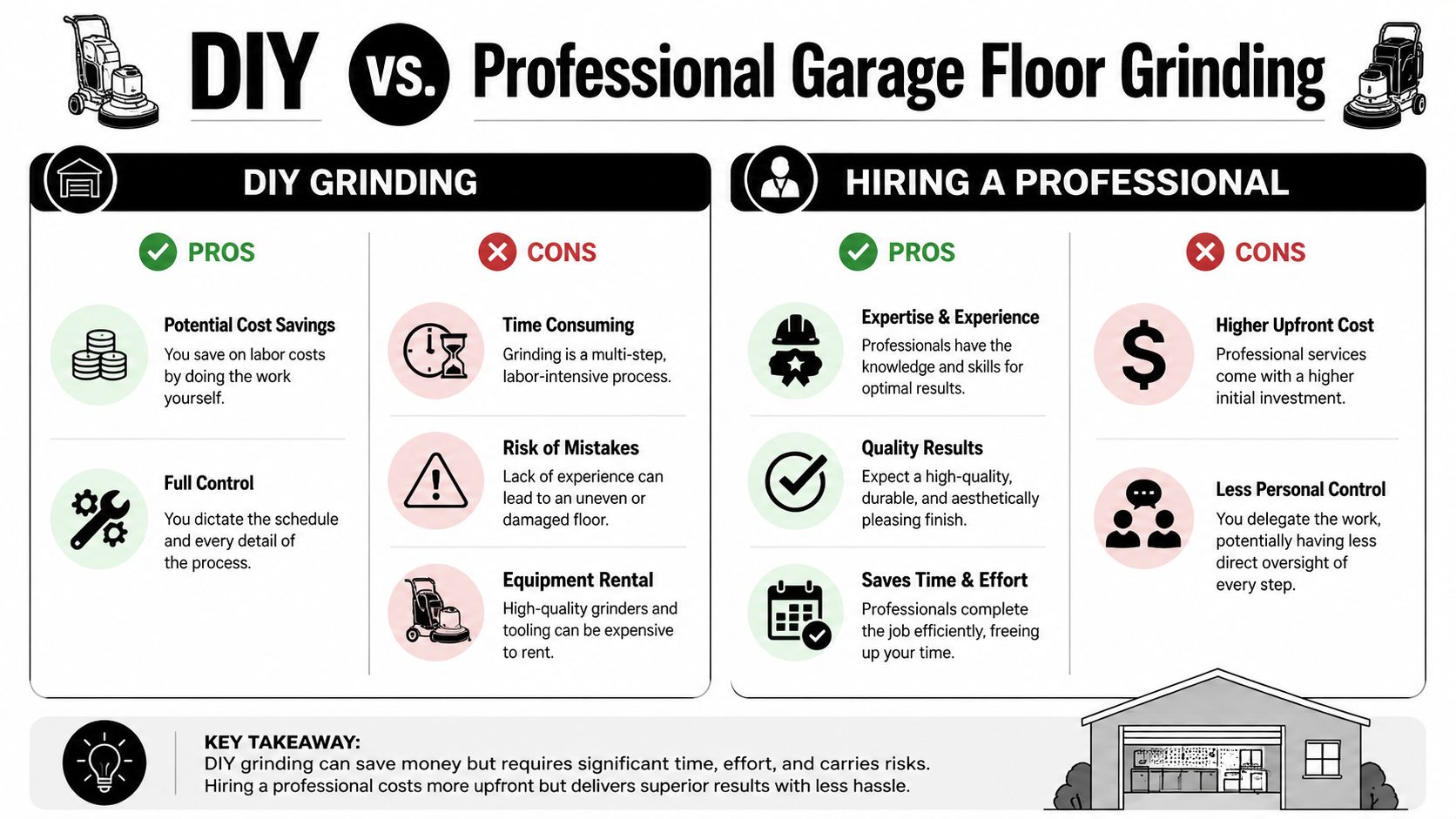
Most homeowners pause at this point. Can you rent a garage floor grinder and do it yourself? Sometimes, yes. Is that always the smart move? No.
The biggest issue isn't effort. It's judgment. You can rent a machine. You can't rent experience with slab condition, tooling match, dust control, and finish requirements.
When DIY can make sense
A rental approach can be reasonable when the slab is basically sound and the goal is modest. If you're removing light surface contamination, opening the slab for a coating, or correcting small imperfections, a garage floor grinder rental may be enough.
But homeowners need to understand the limitation. A low-speed surface grinder removes only a very small amount of concrete, which makes it the wrong tool for major resurfacing or serious slab correction, as explained in For Construction Pros guidance on surface grinder dos and don'ts.
If the floor has significant settlement, major heaving, widespread failure, or structural cracking, this isn't a grinder problem anymore. It's a slab problem.
When hiring out is the better call
If the garage is attached, if dust control matters, if the floor needs coating-ready uniformity, or if you're not sure whether the slab is even a good coating candidate, a pro is usually the safer path.
That matters even more when the garage floor question is tied to a broader project such as:
- Garage footings and foundations
- A new cement foundation for garage construction
- Excavation near me searches tied to drainage or grade issues
- Concrete foundations that need repair before any surface finish makes sense
The same kind of practical clarity matters in the business side of construction too. For contractors trying to communicate their work clearly online, this resource on building a lead-generating website shows how strong service presentation helps customers make better decisions before they ever call.
Side-by-side comparison
| Factor | DIY (Rental) | Hiring Firm Foundations |
|---|---|---|
| Equipment | Limited to available rental units and whatever tooling is in stock | Access to professional-grade equipment selected for the job |
| Surface evaluation | Homeowner has to judge slab condition and concrete hardness | Experienced review of slab condition, repair needs, and prep approach |
| Dust control | Often the biggest weak point | Controlled setup designed for cleaner, safer work |
| Finish consistency | Depends heavily on operator skill | More reliable, uniform prep for coating or repair work |
| Risk of damage | Higher risk of gouges, missed edges, and uneven profile | Lower risk because the process is managed start to finish |
| Best fit | Small, simple projects with realistic expectations | Higher-stakes floors and projects tied to repairs or foundation work |
A grinder can fix a prep problem. It can't hide a slab that's failing for deeper reasons.
The real trade-off
DIY gives you control. Hiring out gives you fewer surprises.
If you're dealing with a small cosmetic prep job, a rental may be worth the effort. If you're trying to protect a serious coating investment, fix a problematic slab, or decide whether the floor points to a bigger foundation issue, professional help usually costs less than doing the project twice.
Your Next Step to a Perfect Garage Floor
A better garage floor starts underneath the coating. That's the part many homeowners learn the hard way. The grinder isn't just there to make the slab look cleaner. It's there to create the surface the next step depends on.
If your garage slab is in decent shape, correct grinding can make it ready for a finish that looks better and lasts longer. If the slab has larger issues, the grinding process often reveals that early, before more money gets buried in a coating that won't hold. That's especially important for homeowners in Pennsylvania, Maryland, Delaware, and New Jersey who may already be weighing repairs, a new garage slab, or broader site work.
One of the smartest things you can do before choosing a finish is think about long-term protection too. After prep and repair, a good concrete slab sealer can play an important role when a floor isn't getting a full coating system or when you're protecting new concrete work in other parts of the property.
The main takeaway is simple:
- Grinding is the foundation of a good garage floor finish
- Tooling choice matters as much as machine choice
- Dust control and slab inspection aren't optional
- Some floors need prep, while others need repair or replacement
- Knowing the difference saves money and frustration
If you're not sure where your floor falls on that spectrum, that's the moment to get an experienced opinion instead of guessing.
If you need help with a garage slab, concrete repairs, excavation, or a new foundation project, Firm Foundations serves homeowners across PA, MD, DE, and NJ with practical guidance and straightforward quotes. Whether you're planning a coating-ready garage floor, comparing options for a concrete foundation for garage use, or trying to decide if the slab needs more than a grinder, reach out for a no-obligation estimate and a clear next step.