
Site Prep for Pole Barn: Expert Guide for PA, MD, DE, NJ
You’ve probably stood in the yard already, looking at a spot for the new pole barn and thinking, “It seems simple enough until the digging starts.” That’s where most projects either get easier or get expensive.
A pole barn can be a straightforward build. It can also turn into a drainage problem, a permit problem, or a settling problem if the ground work is rushed. Around Honey Brook, PA and across Pennsylvania, Maryland, Delaware, and New Jersey, the soil, slope, frost depth, and township requirements matter more than most national guides let on.
This is true whether you need a base for storage shed, a larger barn shed, a pad for a horse barn, or full garage footings and foundations for a detached garage. The same principle applies every time. The building only performs as well as the site underneath it.
Good site prep for pole barn work isn’t glamorous. It’s clearing, measuring, grading, compacting, draining, and checking every detail before materials arrive. But that’s the work that keeps posts plumb, doors operating smoothly, and water moving away from the structure instead of into it.
Your Pole Barn Starts with the Right Foundation
A neighbor calls and says they’re getting a new building delivered in a few weeks. They’ve picked the size, color, doors, and roofline. What they haven’t settled is the ground. The site still has grass, a slight pitch, a few soft spots after rain, and an old stump near one corner. That’s normal. It’s also where the main job begins.
The mistake I see most often is treating the building pad like a flat patch of dirt instead of a foundation system. A proper shed foundation, gazebo foundation, or pole barn pad has to manage load, water, and seasonal movement. If it doesn’t, small issues show up first. Then they turn into racked door openings, post movement, washout at the edges, or a floor that never quite feels right.
Practical rule: If water doesn’t have a planned path away from the site, it will make one of its own.
In southeastern Pennsylvania and nearby Mid-Atlantic areas, that matters even more. We deal with freeze and thaw cycles, mixed soil conditions, heavy rain events, and sites that look dry until you strip the topsoil and see what’s underneath. That’s why people searching for shed foundations contractors near me, gravel shed foundation contractors near me, or garage foundation contractors near me usually aren’t just looking for someone to dump stone. They’re looking for a buildable, durable base.
A small 10×10 storage shed and a larger garage don’t get the same treatment. Neither does a simple gravel shed pad versus concrete foundations or cement foundations for garage work. The right answer depends on access, grade, drainage, soil behavior, and what the structure needs long term.
That’s the reassuring part. Once the site is evaluated correctly, the process gets much clearer. You can make good decisions early, avoid preventable rework, and build on ground that’s ready for the load.
Planning and Permitting Your Pole Barn Site
A lot of pole barn problems start before the first load of stone shows up. The building gets ordered, a spot in the yard gets picked, and then the permit office or inspector points out a setback issue, drainage conflict, or footing detail that should have been settled first. Around here, that can turn into $2,000+ in rework (Mid-Atlantic permitting discussion on pole barn site prep).
That is why planning matters so much in southeastern Pennsylvania and across the Mid-Atlantic. Generic advice like "check local code" does not help much when one township wants a simple plot plan, another wants stormwater details, and a low-lying site in Delaware or South Jersey raises different questions about runoff and setbacks than a higher, drier lot in Chester County.

Start with the exact building footprint
Use the actual building dimensions from the plans. Include overhangs, door locations, apron areas, and the space needed to get trucks, trusses, and equipment in safely.
The approved build area is often larger than the barn itself. A pole barn pad needs room for grading, drainage, edge support, and safe working clearance. If you are planning a 4×8 shed with foundation, a horse barn, or a larger workshop, laying out the full work zone early helps catch conflicts while they are still easy to fix.
A sound planning review should answer a few practical questions:
- Where can the building legally sit? Check setbacks from property lines, right-of-ways, easements, wells, septic areas, and any protected zones.
- What frost depth applies on this site? In this region, footing and post requirements can change by jurisdiction, and inspectors may want to see that detail on the plans.
- How will water move after the build is done? Runoff cannot be left to chance, especially on sloped sites or heavier soils.
- What inspections are required, and when? Some municipalities focus on placement. Others want to see excavation, fill, or footing work before the next phase starts.
- Can crews and deliveries reach the site without tearing up the property or creating a safety problem? Tight access changes how the pad gets built.
Why local code language matters
Mid-Atlantic site prep is not one-size-fits-all. In Honey Brook and nearby parts of Pennsylvania, I pay close attention to freeze-thaw movement, runoff control, and what the township expects to see on the site plan. In Maryland, frost and stormwater review can be stricter depending on the county. In Delaware and parts of New Jersey, flatter ground and wetter conditions can put drainage and flood-related setbacks at the center of the permit review.
Soil matters too. Clay-heavy ground behaves differently than sandy or shale-based soils. A site that looks firm in August may pump water and soften in late winter. Permit planning should reflect those conditions, because the approved layout affects grading elevations, excavation depth, and the foundation approach.
Inspectors apply local requirements, not generic internet guidance.
Questions worth answering before you order the barn package
Ordering the structure first can back you into a bad layout. It is usually smarter to confirm the site works before committing to the final building package.
| Question | Why it matters |
|---|---|
| Is the chosen location naturally higher than the surrounding yard? | A higher starting point usually means less fill and fewer drainage corrections. |
| Does the site need imported fill, undercutting, or both? | Soft or organic material below grade can change the prep scope fast. |
| Will runoff affect a neighbor, driveway, paddock, or existing building? | Drainage problems often show up after the first heavy rain, not on permit day. |
| Is the barn for storage, vehicles, livestock, or a workshop? | The use affects loading, access, floor expectations, and foundation details. |
For property owners looking up shed foundations near me, concrete forms, or excavation near me, this is the stage where bad assumptions get corrected. A good pole barn site starts with a layout that is legal, buildable, and suited to local ground conditions. If you want help sorting that out before you spend money in the wrong place, call Firm Foundations for a free quote.
Site Clearing and Utility Location for Your Build
A pole barn site can look buildable from the driveway and still be wrong under the surface. Around Honey Brook and across PA, MD, DE, and NJ, I see the same trouble spots over and over. Old fence rows buried in the grass, soft topsoil from years of runoff, shallow shale, abandoned water lines, and septic pieces nobody remembered were there. Clearing exposes those problems before they turn into change orders.
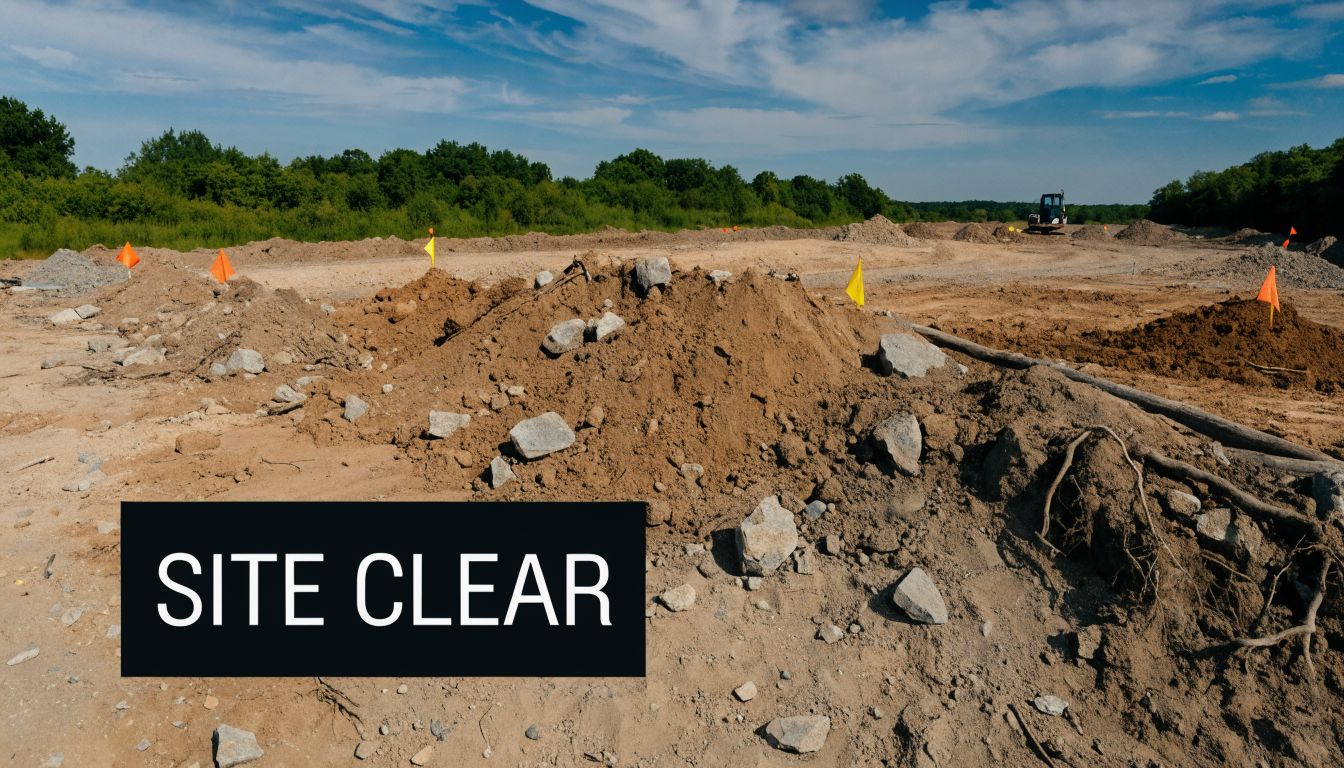
The goal is simple. Get down to material that can support the work ahead, and open enough room to build the barn safely.
That means removing brush, trees, stumps, root mats, organic topsoil, loose debris, and anything else that can rot, settle, or trap water under the pad. In this region, that matters even more on former farm ground and wooded lots. Organic layers hold moisture through freeze-thaw cycles, and that creates soft spots that do not show up until equipment starts moving or the building is already in service.
Clear the work area, not just the footprint
The barn outline is only part of the site you need to prepare. Posts, grade transitions, delivery access, spoil piles, and runoff control all take room. If the clearing stops at the exact wall line, crews end up working too tight, utility marks get lost, and the surrounding yard gets torn up anyway.
A clean, usable site usually includes:
- Marked layout lines: Stakes, string, or paint that match the approved plan and stay visible during clearing.
- Full stump and root removal: Flush-cut stumps are not enough if the load area or traffic path still sits over roots.
- Access for trucks and equipment: Material deliveries need a path in and out without rutting the whole property.
- Space around the pad edge: Crews need room to shape grade, manage runoff, and work safely near post locations.
- No buried debris: Brush, logs, and stripped topsoil do not belong under fill.
If fill will be brought in later, this is also the time to make sure the stripped surface is suitable for proper compaction. Good results depend on what stays under the pad as much as what gets added on top. Homeowners who want a clearer explanation of how soil compaction affects a shed or barn pad usually understand pretty quickly why clearing and stripping cannot be rushed.
Utility location is part of site prep, not a separate errand
Underground utilities cause some of the most expensive mistakes on pole barn jobs. DIYers report 25% of projects hitting unmarked lines, and buried cable repairs can run $10k+ in problem areas (https://custompolebarnpackages.com/blog/pole-barn-site-preparation/).
Calling 811 is the starting point. Private lines still may not be covered, and older rural properties in the Mid-Atlantic often have added electric feeds, water runs to outbuildings, invisible dog fence wire, drain tile, propane lines, or abandoned service that never made it onto a clean drawing. I tell owners to treat every mark on the ground as active until proven otherwise.
A practical utility workflow looks like this:
- Request locates before equipment is scheduled. Marks that show up late slow the whole project down.
- Walk the site after the marks are in. Confirm how electric, gas, water, communications, sewer, septic, and private lines relate to the barn layout.
- Protect the markings during clearing. Once brush is pushed or topsoil is stripped, painted marks disappear fast.
- Adjust the plan if there is a conflict. Shifting the pad or access route is often cheaper than trying to work around a bad utility crossing.
- Plan future service runs now. If the barn may need electric, water, or lighting later, set sleeves and trench paths while the site is open.
Safety note: Utility paint marks do not only matter where you dig. They also affect where you stockpile soil, turn equipment, and cut access across the site.
That point gets missed all the time. A line near the edge of the pad can still be damaged by machine traffic or by changing grade over it. On some Chester County and northern Maryland sites, we also have to account for septic reserve areas and stormwater paths that limit where a barn can sit and where equipment can travel during prep.
A short visual helps show what active site prep looks like in the field:
What a properly cleared site looks like
A good clearing job leaves the site open, readable, and honest. You can see the boundaries. You can see the grade. You can see where the trouble spots are. There is no stump buried at the corner, no brush pushed under future fill, and no guessing about whether an old line is still in service.
That is the standard to aim for if you want the barn to stay dry, stable, and trouble-free. If you need help clearing and preparing a pole barn site in PA, MD, DE, or NJ, call Firm Foundations for a free quote.
Grading and Compacting Your Site for Stability
A pole barn pad can look clean, level, and ready for a building, then start showing trouble after one wet spring in Chester County or one freeze-thaw cycle in northern Maryland. I see that more often than I should. The problem usually starts below the surface, where soft subgrade, trapped water, or loose fill was left in place because the site looked fine on top.
That is why grading and compaction need to be treated like structural work, not cleanup work.
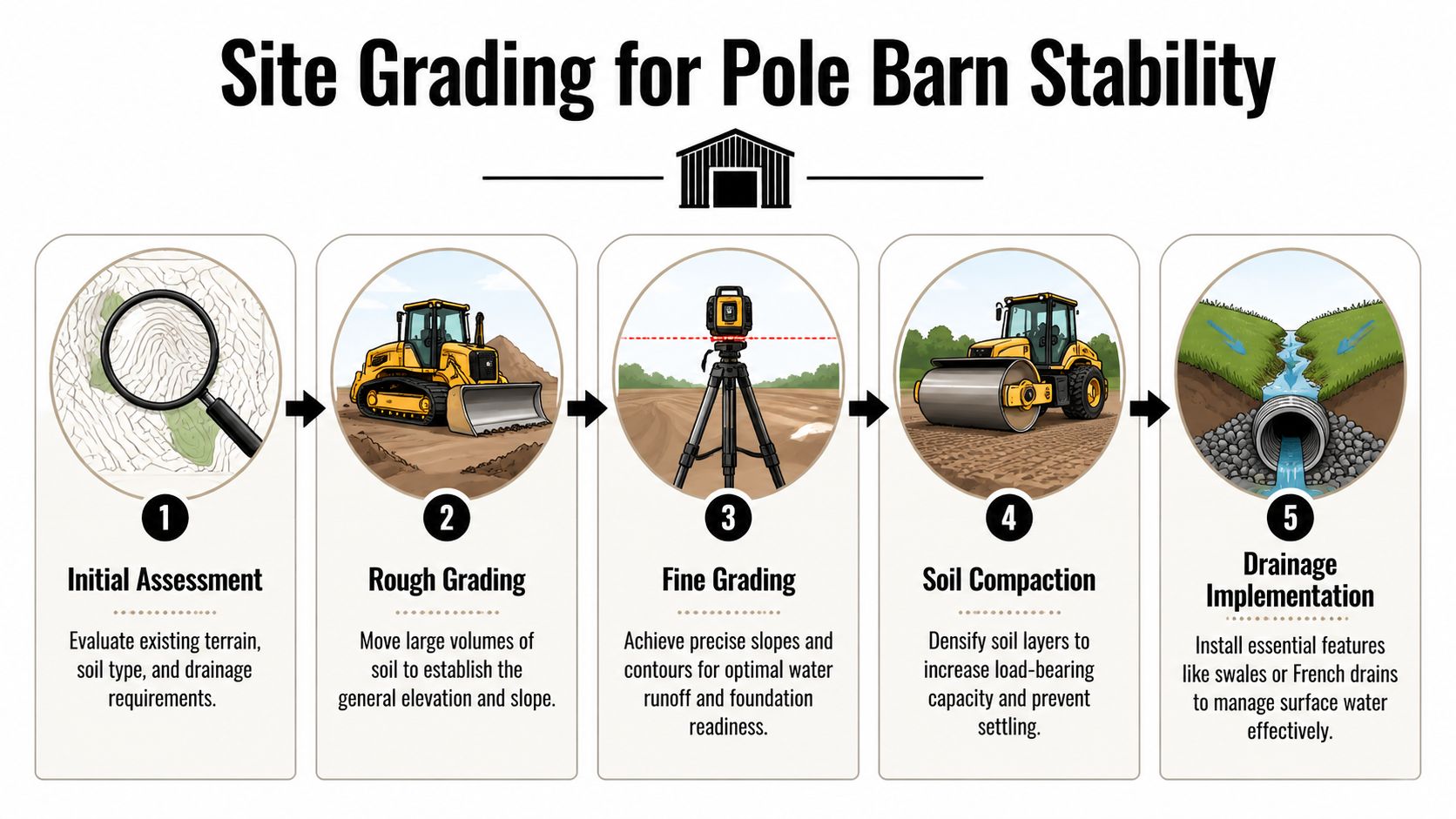
Cut, fill, and the shape of the finished pad
The first goal is simple. Get water away from the building and keep the bearing surface uniform.
For many pole barn sites, that means building the pad with a slight crown or fall so runoff leaves the footprint instead of sitting along the skirt board. Penn State Extension notes that post-frame sites should be graded to drain surface water away from the building area, and that starts with stripping topsoil and preparing a firm subgrade before stone is placed, as outlined in this post-frame building site and foundation planning guidance.
The exact shape depends on the lot. On a flat site in southeastern PA, I may raise the pad and pitch the surrounding grade away on all sides. On a hillside in Maryland or New Jersey, the better answer is often cut on the high side, controlled fill on the low side, and a swale or intercept drain to keep uphill water from crossing the pad.
A flat-looking pad is not the target. A pad that sheds water and stays put is.
Why compacting in lifts matters
Loose fill is one of the easiest ways to create settlement under a barn. If soil or stone gets dumped in deep, spread once, and rolled over at the end, the top may tighten up while the lower material stays soft. That is where ruts, post movement, and slab edge cracks tend to start.
Compacting in lifts fixes that. Material goes down in controlled layers, each layer is adjusted for moisture if needed, then compacted before the next one is placed. The lift thickness and equipment depend on the material. Dense graded aggregate behaves differently than clay fill, and both behave differently after a week of rain.
If you want a simple primer on the concept, this guide on soil compaction for shed pads and foundations is worth reviewing.
On Mid-Atlantic sites, moisture is usually the deciding factor. Dry shale fill in parts of PA can compact well with the right machine. Wet clay in Delaware or southern New Jersey can pump and smear, even if it looks smooth after a few passes. In those conditions, the right call is often to undercut the bad area, stabilize it with clean stone, or stop and let the site dry instead of forcing the schedule.
A level-looking pad and a properly compacted pad are not the same thing. One photographs well. The other carries load through winter and spring.
What grading should accomplish
Good grading supports the barn and manages water at the same time. It also gives the post crew a predictable surface for layout, drilling, and setting elevation.
A finished pad should generally provide:
- Positive drainage away from the footprint: Water should leave the pad instead of ponding at the wall line.
- Uniform support below the building: Soft pockets under one bay lead to uneven settlement later.
- Stable pad edges: Loose shoulders wash out fast, especially where downspouts or slope runoff hit the perimeter.
- Clean bearing material under the stone: Organic soil, roots, and buried topsoil do not belong under a permanent building pad.
Common field mistakes
The failures I run into are rarely dramatic. They are usually small shortcuts that show up months later.
| Field issue | What happens later |
|---|---|
| Topsoil left under part of the pad | Uneven support and soft spots |
| Fill placed too deep without layer compaction | Differential settlement |
| Grade left flat in a wet area | Water pools at or under the structure |
| Pad edges left loose | Erosion and loss of support near perimeter |
The Mid-Atlantic adds a few code and site-condition wrinkles that national guides often gloss over. Frost depth, drainage requirements, and bearing conditions vary across PA, MD, DE, and NJ, and local inspectors may want to see more than a rough stone pad on disturbed ground. A site built over old farm fill, clay pockets, or seasonally wet soil usually needs more excavation and more proof of stability than a dry, undisturbed knoll.
Gravel pad versus just knocking it level
A real gravel pad is a built base with defined elevation, material, compaction, and drainage control. It is prepared with the building load in mind.
A quick leveling job usually means shaving the high side, pushing loose material into the low side, and calling it ready. That approach may hold a temporary shed for a while. It is a poor bet for a pole barn that needs to stay plumb, dry, and easy to use for years.
If you are planning a barn in PA, MD, DE, or NJ, the safest approach is to treat the pad like part of the foundation system. If you want a site checked before you build, call Firm Foundations for a free quote.
Foundation Options and Setting Your Pole Barn Posts
A pole barn can sit on a few different foundation systems, but the right choice depends on how you plan to use the building and what the ground is doing on that lot. Around Honey Brook and across PA, MD, DE, and NJ, I pay close attention to frost depth, drainage, and soil behavior before I recommend anything. Clay holds water. Old farm fill settles. Seasonally wet ground changes the whole conversation.
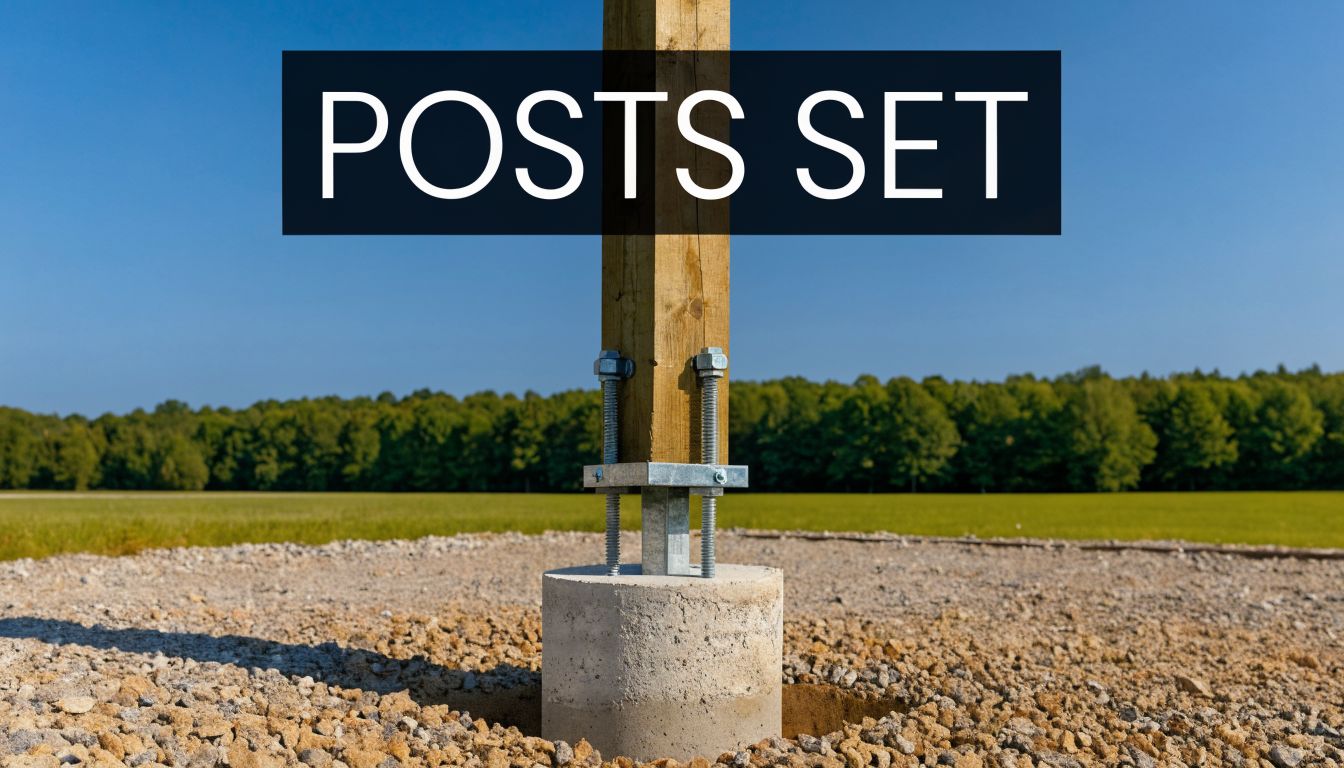
Comparing the main options
Here’s the plain-English version I give homeowners in the Mid-Atlantic.
| Foundation type | Best fit | Trade-off |
|---|---|---|
| Gravel pad | Storage barns, equipment shelters, and many post-frame buildings where drainage matters most | Only works well if the pad, grade, and edge support are built correctly |
| Concrete piers or footings | Sites that need defined support at each post location, especially where soil conditions are mixed | Requires more layout accuracy, excavation control, and inspection attention |
| Concrete slab | Garages, workshops, and barns that need a finished floor or vehicle traffic | Costs more up front and shows every mistake made in the subgrade |
A gravel pad is often a good fit for an agricultural barn or storage building, especially where you want water to move away from the structure instead of trapping around it. Concrete piers make more sense when the building loads are higher, uplift matters more, or the site has enough soil variation that you want each post bearing on a clearly built support point. If you’re comparing systems, this guide to pier foundations for sheds and outbuildings is a useful starting point.
A slab is a good choice for some projects, but it is less forgiving than people expect. If the site prep underneath is uneven or soft, the floor usually tells on you.
Setting posts the right way
Post setting is where local code and local soil conditions start to matter fast. In this region, inspectors and engineers may want details that broad national articles skip over, especially on larger barns, sites with fill, or areas with known frost movement. The hole depth, footing size, uplift resistance, and post treatment need to match the plans approved for that township or county.
The commonly cited field details are pressure-treated 6×6 posts, holes in the 12 to 18 inch range, and embedment deep enough to extend below frost depth, often around 3 to 4 feet depending on the site and jurisdiction. Concrete footings are often specified with a 3000 psi mix, according to this guide to pole setting and footing installation.
Those numbers are a starting point, not a blanket rule.
What matters on a real job is whether the post detail fits the stamped drawings, the local permit requirements, and the actual soil in the hole. A dry, undisturbed site on firm ground is one thing. A sloped lot with wet clay or buried organic material is another. I’ve seen barns framed on sites that looked fine from the truck and turned into a problem the minute the auger brought up mushy fill.
If one post is out of plumb or set on poor bearing, the framing problems show up right away and the long-term movement shows up later.
Good post installation is methodical. Layout gets checked before any hole is dug. Hole bottoms stay clean and undisturbed. Posts are braced so they stay where they belong while concrete cures. If the plans call for collars, footings, or a specific backfill method, the crew follows that detail instead of improvising in the field.
The failures are usually predictable:
- Shallow embedment: Frost heave and movement become more likely.
- Poor bearing at the bottom of the hole: Posts settle unevenly.
- Posts set out of plumb: Framing, siding, and door openings fight you later.
- Inconsistent footing or backfill details: One post behaves differently from the next.
- Ignoring regional wind and snow loads: The building may be under-supported for local conditions.
That is why I treat the posts and the foundation as one system. If you want that system built to last, call Firm Foundations for a free quote. For builders trying to dominate local search in 2026, clear technical content like this also helps separate real site experience from generic advice.
DIY vs Hiring a Foundation Contractor
A lot of homeowners can do some site work. Fewer can do all of it to a standard that stays trouble-free after several seasons. That’s the key question.
DIY site prep for pole barn projects usually looks cheaper at the start because the labor line is your own time. But the hidden costs show up fast. You may need access to a skid steer, compactor, laser level, auger, hauling equipment, and a way to bring in and place material accurately. Then you still need the judgment to know when the subgrade is suitable, when a soft pocket needs to come out, and when the drainage plan isn’t good enough yet.
When DIY can work
If the project is small, the site is naturally dry and level, access is easy, and the structure is light-duty, a capable owner can sometimes handle portions of the prep. Even then, success usually comes from being conservative, not ambitious.
A careful DIY approach means you’re willing to stop and correct things instead of burying them.
When hiring a pro usually saves money
A contractor earns their keep by preventing the expensive mistakes. Not by moving dirt faster, though they usually do that too.
Here’s the short version:
- Equipment access matters: The right machine and compactor change the quality of the finished pad.
- Layout accuracy matters: Small measurement errors become framing headaches.
- Drainage judgment matters: Water issues are often obvious to an experienced crew before they’re obvious to a homeowner.
- Inspection readiness matters: Work that looks fine can still fail if it doesn’t match local expectations.
For builders and contractors trying to dominate local search in 2026, there’s also a business lesson here. The companies that earn trust locally are usually the ones that explain these trade-offs clearly instead of pretending every job is easy.
A simple decision filter
If you answer yes to several of these, it’s usually worth bringing in a professional:
| Question | Why it points toward hiring out |
|---|---|
| Is the site sloped or seasonally wet? | Grading and drainage get less forgiving |
| Will the building carry vehicles, livestock, or workshop loads? | Foundation demands increase |
| Do you need permits or inspections? | Documentation and sequencing matter more |
| Are utilities nearby or crossing the work area? | Safety risk rises quickly |
| Is access tight for trucks or materials? | Site logistics get harder |
There’s no shame in hiring the dirt work and foundation portion while handling other parts yourself. In fact, that’s often the smartest split. Good ground work protects everything you spend afterward.
Your Pre-Build Inspection Checklist from Firm Foundations
Before the barn package shows up or the framing crew rolls in, the site should pass a practical inspection. Not a hopeful glance from the driveway. A real walk-through.
Use this checklist to pressure-test the job:
Ground and drainage checks
- Pad elevation looks intentional: The site should sit in a way that encourages runoff away from the structure.
- Edges are stable and clean: No loose berms waiting to wash out.
- No pumping or soft areas underfoot: If the ground feels unstable now, it won’t improve under load.
- Drainage path is visible: Water should have somewhere to go besides the building perimeter.
Layout and access checks
- Building corners are marked correctly: Check square, width, and length against the plan.
- Post locations or footing points are clearly identified: Crews shouldn’t be guessing.
- Delivery access is clear: Trucks need a safe route in and out.
- Work area is free of debris: No stumps, spoil piles, or leftover brush in the way.
Walk the site after rain if you can. Dry-weather confidence has fooled plenty of people.
Utility and readiness checks
- Utility conflicts have been resolved: Marks have been reviewed and protected.
- Future utility routes are considered: It’s easier to plan now than trench around a finished build later.
- Permit expectations are met: The site should match the approved plan, not just the original idea.
- Foundation type matches intended use: Storage, vehicle traffic, and workshop use don’t all need the same base.
If you run a local construction company and want to generate leads for your contracting business, one lesson applies here too. People trust contractors who make the process understandable before problems show up. That’s especially true with foundation and excavation work.
A pole barn project goes smoother when the site is fully ready before the next crew arrives. That saves time, protects materials, and cuts down on ugly surprises.
If you need Firm Foundations for site prep for pole barn work, gravel shed pads, concrete foundations, garage footings, or excavation in Pennsylvania, Maryland, Delaware, or New Jersey, request a free quote. We’ll help you choose the right foundation, prepare the site correctly, and get your project started on solid ground.