
Structural Integrity Assessment: Secure Your Home

A lot of homeowners don't start by searching for a structural integrity assessment. They start with a smaller worry.
A crack shows up near the garage door. A shed site that looked level last season now seems a little off. One basement wall feels damp after heavy weather. A back door suddenly drags, and you're left wondering whether it's normal settling or the start of a bigger problem.
That uncertainty matters whether you're protecting an existing home or planning new concrete foundations, a shed foundation, a gazebo foundation, or a full garage footing and foundation project in Pennsylvania, Maryland, Delaware, or New Jersey. If you want a structure to last, the smart question isn't just “Is there damage?” It's “Is the support system still doing its job?”
Is Your Foundation Secure? A Homeowner's Guide
A homeowner might notice one hairline crack in a garage slab and ignore it for months. Another might be planning a base for a storage shed and feel overwhelmed by conflicting advice online about gravel, concrete, drainage, and what lasts over time. Both situations lead to the same concern. You want confidence that the structure is supported properly and won't become a recurring headache.
That concern is common across PA and MD, especially with detached garages, outbuildings, patios, small barns, and additions. A floor can look mostly fine while the ground below it shifts. A shed pad can look flat on install day but still fail later if water movement wasn't handled correctly. A home can feel solid overall while small clues start showing up around doors, trim, and exterior concrete.
A foundation problem rarely begins as a dramatic event. More often, homeowners notice a pattern of small changes that don't quite make sense on their own.
For homeowners searching for shed foundations near me, garage foundation contractors near me, or dependable help with cement foundations for garage projects, the hard part is knowing when a concern deserves a professional review and when it's just cosmetic. Guessing usually doesn't help. Waiting without a plan helps even less.
Common situations that deserve closer attention
- Existing structures with new symptoms like fresh cracking, water intrusion, or sticking windows and doors.
- Planned builds such as a 4×8 shed with foundation, a 10×10 storage shed, or a larger barn shed that needs proper site prep before delivery.
- Property changes including grading, drainage updates, hardscaping, or added loads that may affect how a slab or footing performs.
A secure foundation isn't just about concrete thickness or how clean the finish looks. It's about support, drainage, soil behavior, and whether the structure above still has a reliable path to transfer loads safely into the ground.
What a Structural Integrity Assessment Really Means
A homeowner usually asks a simple question: is this structure still sound, or is it starting to move in a way that needs attention? A structural integrity assessment is the process of answering that question with field evidence, not guesswork.
For a house, garage, or shed in PA, MD, DE, or NJ, the goal is practical. Determine whether the foundation and the structure above it are carrying weight properly, staying reasonably level, and responding normally to moisture, soil conditions, and time. That applies to an older home with new symptoms, a detached garage, or a new pad planned for a small outbuilding.
More than a surface inspection
Surface appearance can be misleading.
A wall can have minor cracking that stays stable for years. A slab can look clean and intact while one corner is losing support below. A door that suddenly rubs, a settled garage slab, or movement tied to drainage changes often tells us more than a fresh coat of patch material ever will.
A proper assessment usually looks at three things:
- Stability. Is the structure supported the way it was intended to be supported?
- Serviceability. Are floors, doors, walls, and connected parts still functioning the way a homeowner should expect?
- Durability. Are present conditions likely to stay manageable, or are they likely to get worse with seasonal moisture, added loads, or continued settlement?
In plain terms, the assessment separates cosmetic defects from structural concerns. It also helps identify whether the right next step is repair, drainage correction, monitoring, or no action at all.
The practical questions homeowners should ask
The term sounds technical, but the decision behind it is not. Property owners usually need clear answers to a few jobsite questions:
| Question | Why it matters |
|---|---|
| What changed? | New cracking, sticking openings, water issues, or site work often point to the source of the problem. |
| Is the structure still transferring weight correctly? | If support conditions changed, stress may be concentrating where it should not. |
| What evidence supports the next step? | A good assessment should lead to a clear recommendation, not a vague warning. |
One common issue is uneven settlement. Homeowners who want a plain-language explanation of how one part of a structure can drop more than another can review this guide to differential settlement and what it means for foundations.
At Firm Foundations, we treat the assessment as a decision tool. Homeowners do not need theory for theory's sake. They need to know what changed, how serious it is, and what can be done now to protect the structure and avoid spending money in the wrong place.
Warning Signs Your Foundation Needs a Professional Look
A lot of foundation problems do not start with a dramatic crack. They start with a garage door that suddenly drags, a shed slab that looks a little out of level, or a damp corner in the basement after a hard rain. Homeowners across PA, MD, DE, and NJ often notice these changes in pieces. The concern is not one symptom by itself. The concern is when several signs point to the same underlying movement.
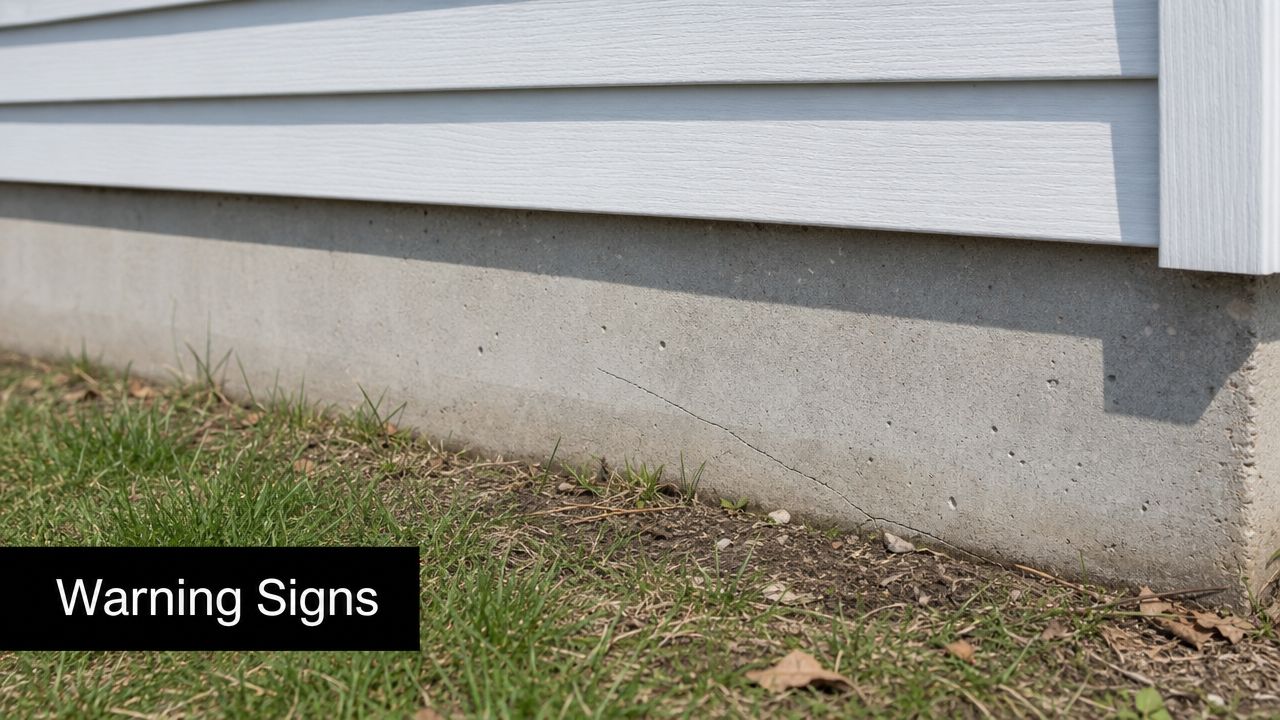
A single hairline crack in concrete does not always mean the structure is in trouble. Concrete shrinks as it cures, and minor surface cracking can be normal. What matters is the crack pattern, where it shows up, and whether it appears alongside water, settlement, or framing changes inside the structure.
Signs that deserve attention
The warning signs below matter because they affect performance, not just appearance.
- Cracks that change over time. If a crack gets wider, longer, or comes back after patching, the cause needs to be checked.
- Uneven or sloping floors. This can point to movement below the slab, shifting supports, or weakened soil under part of the structure.
- Doors and windows that stick or will not latch cleanly. Frames often tell the story before the foundation does.
- Gaps at trim, drywall joints, or where walls meet ceilings. Finish separation can be an early clue that part of the building is moving differently from the rest.
- Basement or crawl space dampness. Water changes soil behavior and can reduce support under footings and slabs.
- Exterior drainage problems. Ponding water, short downspouts, erosion at slab edges, and negative grading all deserve attention.
Smaller structures count too. We see the same warning signs under sheds, detached garages, and small home additions. In this region, a minor drainage change or seasonal soil movement can affect a backyard building first, then show up at the house later.
Property changes that often get missed
One of the more common mistakes is treating foundation movement like it appears out of nowhere. In reality, the trigger is often a recent change on the property.
A new hot tub beside a slab. Regrading that pushes runoff toward the foundation. A downspout that now empties at one corner. A new opening cut for a door, utility line, or garage modification. Added equipment in the attic or on the roof. Repeated freeze thaw cycles around an older shed or garage.
Each of those changes can alter loading, moisture, or support conditions. On site, that is the trade-off we look at. A repair may not be the first need if drainage is the actual problem. On the other hand, waiting too long on active movement usually makes the repair larger and more expensive.
If you want a plain-language explanation of uneven movement, this guide on what differential settlement means for foundations explains why one part of a structure can drop while another stays put.
Here's a short visual overview of what to watch for in the field.
What does not solve the problem
Surface patching has its place, but it only helps when the issue is cosmetic. Caulk, resurfacer, and paint can hide a symptom for a while. They do not fix poor drainage, settlement, soft subgrade, slab edge washout, or overloading.
The practical question is simple. Is the condition stable, or is it still changing?
If symptoms keep returning, or if several signs are showing up at once, it is time for a professional look. Firm Foundations helps homeowners sort out what is minor, what needs monitoring, and what should be repaired before the structure loses more support.
The Assessment Process With Firm Foundations
Most homeowners feel better once they know what the process looks like. A good structural review shouldn't feel vague or mysterious. It should be organized, understandable, and focused on what you need to know to make a decision.
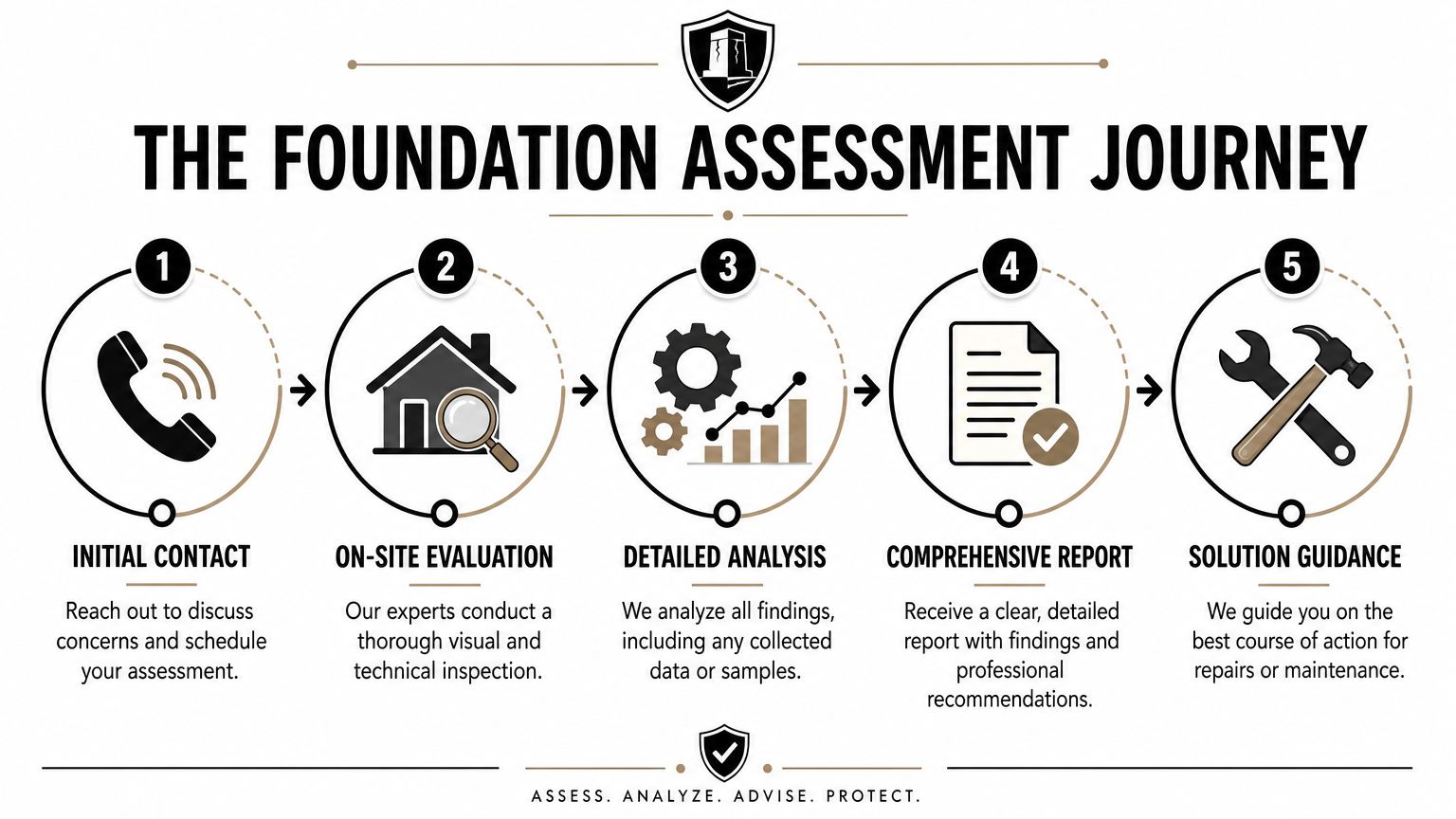
Step one through step three
The process usually starts before anyone sets foot on the property.
Initial contact
The first conversation should identify the actual concern. Is this about an existing crack, a planned shed site, water near a house foundation, or a slab for a garage? The history matters. So do recent changes to the site.On-site evaluation
The inspection itself should look at the structure and the conditions around it. That includes visible cracking, floor performance, edge support, drainage patterns, grading, moisture clues, and any signs that the support below the slab or footing may have changed.Detailed analysis
Not every property needs advanced testing, but some do. If symptoms suggest hidden movement or uncertain support conditions, the next step may include crack tracking, elevation checks, probing surrounding conditions, or reviewing the build details that affect performance.
What a good site visit should answer
A site visit is useful when it produces decisions, not just observations.
| What gets reviewed | Why it helps |
|---|---|
| Site drainage and grading | Water often explains why support conditions changed |
| Slab or footing behavior | Helps separate cosmetic defects from movement concerns |
| Load conditions | Added weight can stress a foundation differently than originally intended |
| Surrounding soil response | Softening, washout, frost effects, and settlement all leave clues |
The best assessment doesn't bury the homeowner in jargon. It turns field observations into a plain answer about risk, cause, and next steps.
Reporting and solution guidance
After evaluation, the findings should be translated into plain English. Homeowners need to know what's happening now, what may happen next, and what action fits the situation.
That recommendation may be one of several paths:
- Monitor it if the issue appears stable and limited.
- Correct drainage first if water is driving the movement.
- Repair or reinforce if the structure has lost support or is likely to continue moving.
- Redesign before building if this is a planned pad, slab, or excavation project and the current site conditions aren't adequate.
For planned projects, this process is just as valuable as it is for problem-solving. A proper review before excavation can prevent the common mistakes that lead homeowners to search later for repairs to a failed shed foundation gravel base, an undersized slab, or poorly supported concrete forms.
Methods and Standards We Use for Solid Results
A reliable assessment uses more than one lens. No experienced contractor should rely on a single crack, one damp spot, or a quick walkaround and pretend that's the whole story.
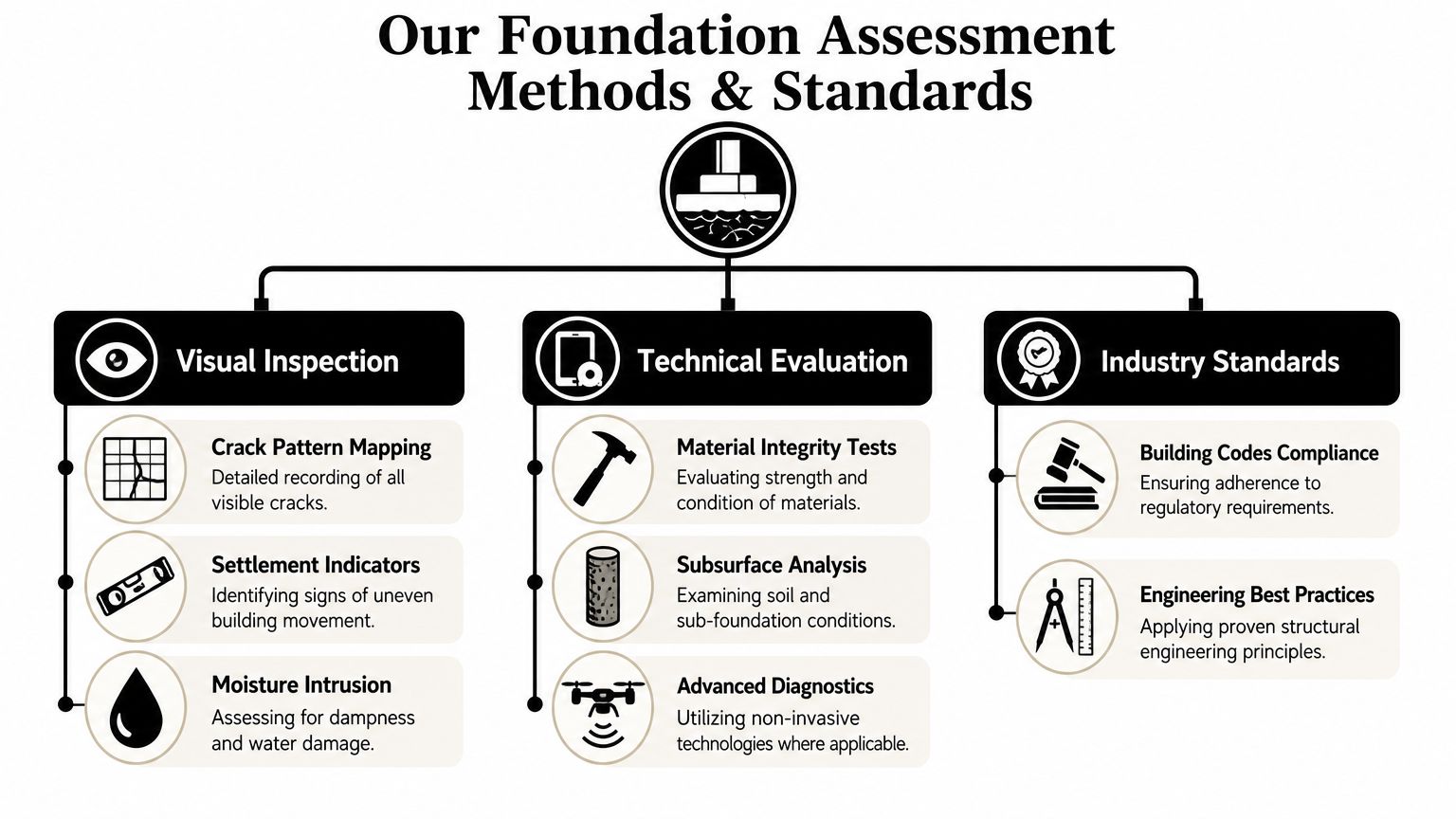
Field methods that produce useful answers
The foundation world still starts with the basics, because the basics work when they're done carefully.
- Visual inspection remains the first step. Crack pattern mapping, slab edge review, signs of settlement, and moisture staining all help build the story.
- Crack monitoring helps determine whether an issue is active or appears stable.
- Grade and drainage review often reveals why one area is moving while another is not.
- Subsurface and support evaluation may be needed if the symptoms point below the visible surface.
These methods matter because they connect symptoms to cause. A homeowner doesn't just need confirmation that a crack exists. They need to know whether it came from shrinkage, settlement, drainage failure, frost movement, or added loading.
Standards matter because consistency matters
Good foundation work isn't guesswork. It follows established practices for excavation, base preparation, forming, reinforcement, drainage planning, and concrete placement. That's true whether the project is a gravel shed foundation, a residential slab, or cement foundations for garage construction.
Industry best practices, including standards associated with organizations such as ACI, matter because they create consistency in how a foundation is built and evaluated. In practical terms, that means fewer shortcuts, clearer tolerances, and a better chance that the structure performs as intended over time.
For homeowners dealing with water around a slab or pad, this guide on foundation drainage design for long-term performance helps explain why drainage details often make or break the project.
Some foundation failures come from bad concrete. Many more come from poor preparation under and around the concrete.
What works and what usually fails
Here's the trade-off contractors see all the time:
| Approach | Likely result |
|---|---|
| Proper excavation, stable base, drainage planning, and correct forming | More predictable long-term performance |
| Fast install over questionable subgrade | Early movement and recurring repair questions |
| Surface patching without diagnosing cause | Better appearance, same underlying risk |
That's why experienced concrete contractors spend so much time on what homeowners can't see. The hidden work is usually the work that determines whether the visible structure stays put.
Local Foundation Considerations for PA MD DE and NJ
Foundations don't perform in a vacuum. They perform in local soil, local weather, and local drainage conditions. That's why a detail that works on one property may not be enough on another just a short drive away.
Pennsylvania and Maryland conditions
In Pennsylvania, repeated freeze-thaw exposure can be rough on slabs, footings, and surrounding soils. Smaller structures often show the first signs around edges, corners, and drainage paths where water enters, freezes, expands, and changes support conditions over time. That's one reason a simple base for storage shed workup can't be treated like a flat patch of ground and a delivery date.
Maryland presents a different mix depending on location. Some areas have firmer ground conditions. Others bring variable clay content, mixed subgrade behavior, or slope-related drainage issues that affect how a house foundation or detached garage slab should be planned. If clay holds water and then dries unevenly, movement can become seasonal and confusing for the homeowner.
Delaware and New Jersey considerations
Delaware and New Jersey often introduce more variable coastal plain conditions. Sandy soils can drain quickly, which sounds helpful, but they can also behave differently under load if the base isn't prepared correctly. In some areas, fill quality and water movement become just as important as the slab design itself.
For sheds, shipping containers, garages, patios, and outbuildings, that means local judgment matters. A homeowner searching for shed foundations contractors near me, gravel shed foundation contractors near me, or driveway contractors near me usually isn't just buying concrete or stone. They're buying decisions about site prep, runoff control, compaction, and how that structure will behave through changing seasons.
Why local experience changes the result
A contractor with regional experience tends to ask better questions up front:
- Where does water go after a storm?
- Has this area been filled or regraded before?
- Does frost heave show up on nearby slabs or walks?
- Will this garage, gazebo, or shed carry more load than the original site was prepared for?
Those questions matter in Honey Brook Township and across the surrounding service region because the wrong assumption at the beginning often turns into the repair call later. For garage footings and foundations, concrete foundations, and even smaller pads for a playset or hot tub, local conditions should drive the build plan.
A strong foundation design isn't just about strength on paper. It's about matching the support system to the ground and weather it will face.
Take the Next Step to a Secure Foundation
A homeowner in PA, MD, DE, or NJ usually calls us after something changes. A garage floor starts sloping. A crack looks wider than it did last season. A new shed or patio is planned, and the question becomes simple. Will the ground support it properly, or will it turn into another repair later?
A secure structure starts below grade. That applies to homes, detached garages, gazebos, patios, and a shed foundation kit that still depends on proper site prep to perform the way it should. When the support system is wrong, the same symptoms tend to return, even after surface repairs.
Most property owners do not need engineering language. They need clear answers, practical recommendations, and an honest opinion about whether the issue is cosmetic, drainage-related, or a true support problem. A good structural integrity assessment provides that direction.

When it makes sense to call
Reach out when one of these situations applies:
- You've noticed new movement around a slab, footing, wall, or garage floor.
- You're planning a project such as a new shed, garage, barn, patio, or excavation and want the base built correctly from the start.
- You've changed the site with grading, drainage work, added loads, or nearby improvements and want to confirm the foundation still has proper support.
For contractors and property managers, responsive communication matters almost as much as field execution. Teams that want to optimize communications for your contracting business often find that better scheduling, lead handling, and follow-up improve the customer experience before the crew even arrives.
A foundation issue does not always lead to a major repair. It should lead to a qualified evaluation before a small concern becomes a more expensive decision.
Across Pennsylvania, Maryland, Delaware, and New Jersey, the goal is usually the same. Property owners want peace of mind and a clear plan. Whether the concern is a crack in a basement wall, questions about garage foundation contractors near me, or a stable base for a new 10×10 storage shed, the right next step is a site review from a team that understands how local soil, water, and seasonal movement affect real structures.
If you're seeing warning signs or planning a new pad, slab, or excavation project, Firm Foundations can help you get clear answers and a solid path forward. Request a free quote and talk with a team that serves Pennsylvania, Maryland, Delaware, and New Jersey with durable gravel pads, concrete foundations, and site preparation built for long-term performance.