
Mini Barn Shed Guide for PA & Mid-Atlantic Homeowners
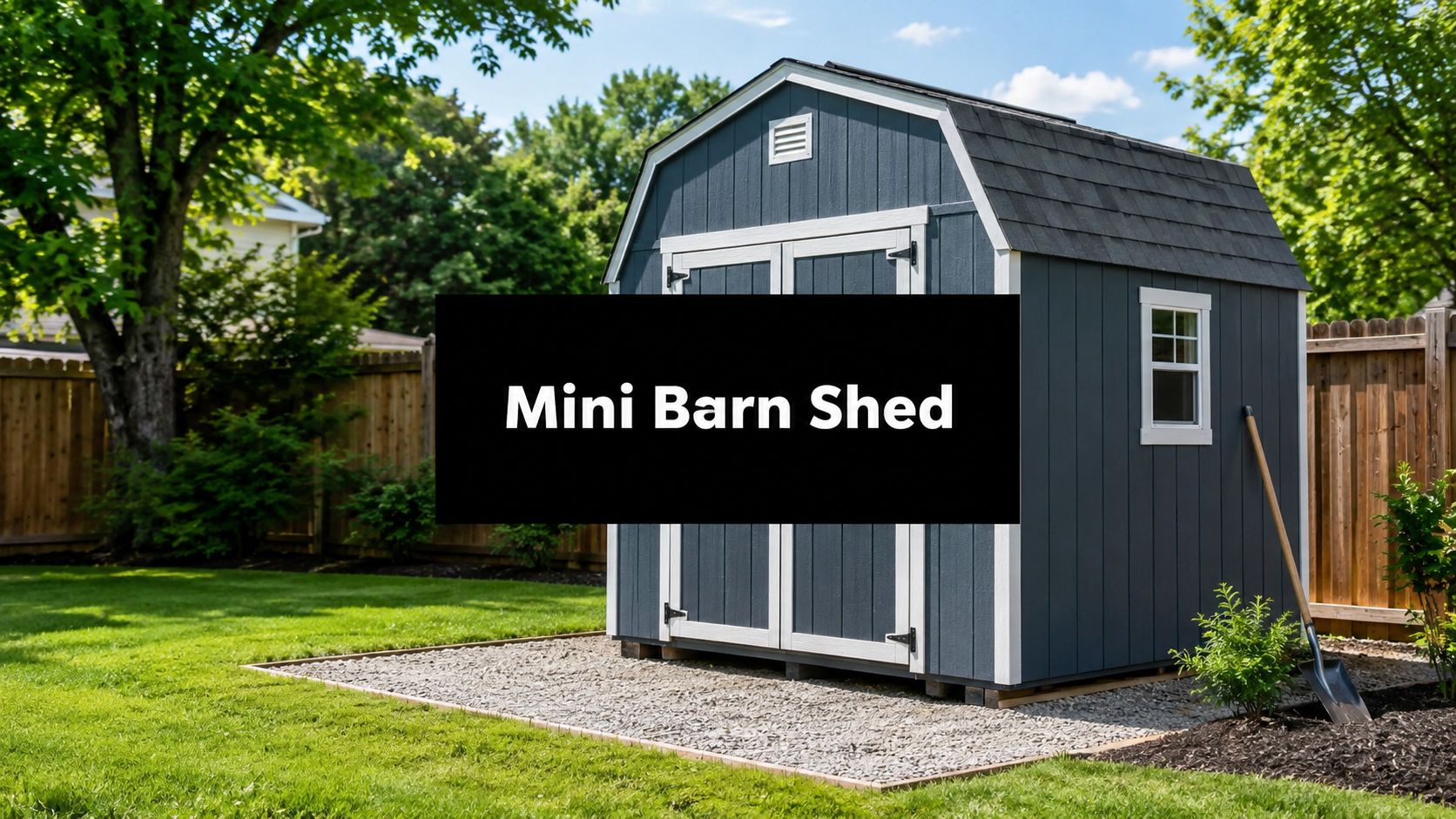
You've picked out the mini barn shed. You know where you want it. You can already see the mower, bikes, feed bins, or workshop tools finally getting out of the garage. Then the project stalls on the question most homeowners in Pennsylvania, Maryland, Delaware, and New Jersey run into next. What should it sit on?
That question matters more than the shed style, the paint color, or even the delivery date. A mini barn shed can look great on day one and still become a headache if the base holds water, settles unevenly, or doesn't match local permit rules. In this part of the Mid-Atlantic, wet seasons, clay-heavy soils, sloped yards, and winter freeze-thaw cycles expose weak prep work fast.
Interest in sheds isn't slowing down. The global Sheds and Outdoor Storage market was valued at USD 7,242.7 million in 2024 and is projected to reach USD 11,986.63 million by 2032, which reflects strong demand for structures like mini barn sheds among homeowners, according to Credence Research's sheds and outdoor storage market report.
For homeowners searching shed foundations near me, gravel shed foundation contractors near me, or concrete foundations in PA, MD, DE, and NJ, the job starts before the shed arrives. The base needs to drain, stay level, and fit the site. That's what keeps doors working properly, walls from twisting, and water from wicking into the floor system.
Your Mini Barn Shed Starts with a Solid Foundation
A common scenario goes like this. A homeowner orders a barn shed for the backyard, clears a spot near the fence, and assumes the installer will “make it work.” Delivery day gets close, and suddenly there are questions about slope, mud, access, property lines, and whether the shed can sit on gravel, concrete, or blocks. That's usually the moment people realize the foundation is the project.
What goes wrong when the base is an afterthought
Mini barn sheds are forgiving in style, but they're not forgiving about support. The gambrel roof gives extra volume and overhead space, which makes these sheds useful for bulky storage and loft setups. It also means the structure needs even bearing and a stable footprint.
When the base is undersized or poorly compacted, a few problems show up again and again:
- Doors stop lining up because one side settles faster than the other.
- Water splashes onto sidewalls when the pad sits too low or too tight to the shed footprint.
- Mud builds around the perimeter and holds moisture against the structure.
- Delivery becomes difficult when the site hasn't been graded for access.
Practical rule: If the foundation plan is vague, the project isn't ready for delivery.
What homeowners in PA, MD, DE, and NJ need to think about first
The Mid-Atlantic isn't one-size-fits-all. A backyard in Honey Brook doesn't behave like a shore property in Delaware, and a sloped lot in New Jersey won't prep the same way as a flatter suburban yard in Maryland. Soil type, runoff, tree cover, drainage paths, and township rules all affect the right answer.
Homeowners often start with search terms like base for storage shed, shed foundation, garage footings and foundations, or even gazebo foundation because they know the structure needs more than a patch of level dirt. That instinct is right.
A good shed base does three jobs at once:
| Foundation job | Why it matters |
|---|---|
| Supports the load | Keeps the shed square and usable |
| Manages water | Reduces splashback, moisture, and rot risk |
| Handles local conditions | Helps the structure perform through seasonal change |
If you're planning a mini barn shed anywhere in Pennsylvania, Maryland, Delaware, or New Jersey, the best next step isn't guessing between gravel and concrete. It's matching the foundation type to the structure, the soil, and the site.
What Exactly Is a Mini Barn Shed
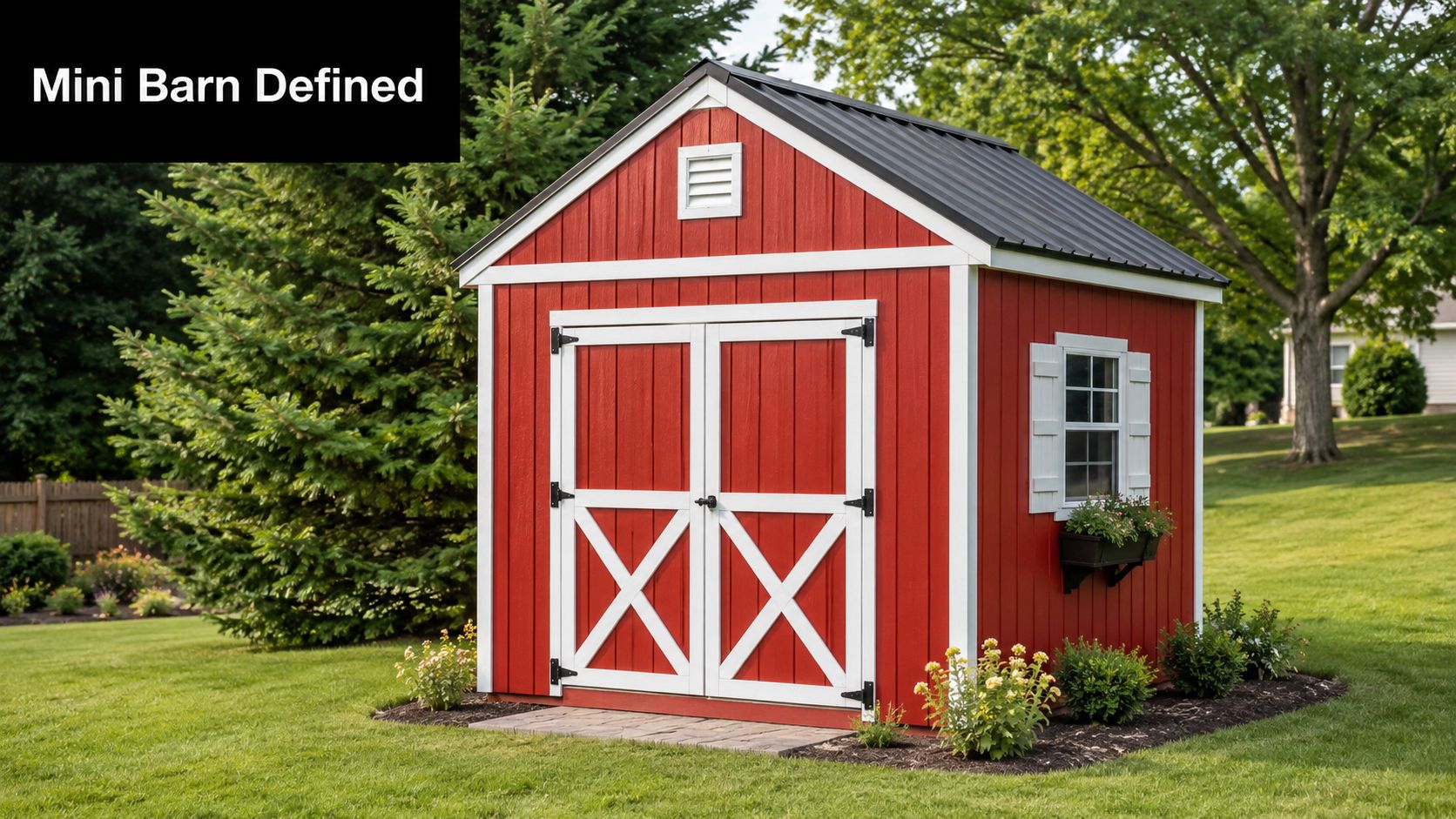
A Mini Barn shed is easy to recognize once you know what to look for. Its signature feature is the gambrel roof, which gives the shed that classic barn profile with extra headroom through the center. That roof shape is what makes a mini barn different from a standard A-frame storage shed.
Why homeowners choose this style
The shape isn't just about looks. That upper volume gives you better storage flexibility, especially if you want loft space for seasonal bins, lightweight tools, or overflow items you don't need every week.
A mini barn shed is often a smart fit when you want:
- Lawn and garden storage for mowers, trimmers, hoses, and hand tools
- Workshop space for a bench, shelving, and project materials
- Overflow household storage for bikes, totes, and holiday items
- Small property support space for feed, tack, or animal-related supplies
The barn-style roof also works well when homeowners want a shed that looks more at home in a rural or semi-rural setting than a plain utility box.
Mini barn shed versus other shed styles
If you compare a mini barn to a lower-profile shed, the biggest difference is usable volume. A standard shed may give you enough floor area, but a mini barn often gives you more room above shoulder height. That matters when you're storing tall tools, stacking bins, or planning interior shelving.
A mini barn shed makes sense when you need more than floor space. You need cubic space.
That added capacity is one reason homeowners also search for terms like 10×10 storage shed, barn shed, and 4×8 shed with foundation while planning a backyard project. The shed itself may vary in size, but the reason people choose this style stays fairly consistent. They want storage that feels bigger and works harder without taking over the entire yard.
There's also a practical construction side to that choice. A taller-looking structure with more interior volume puts more pressure on the foundation to stay level. If the base moves, the shed shows it. Doors rack. Trim gaps open. Floors feel off. That's why the style decision and the foundation decision belong together.
Choosing the Right Shed Foundation Type
Foundation choice is where homeowners usually need the clearest guidance. A mini barn shed can sit on gravel, concrete, or piers, but those options don't perform the same way across Pennsylvania, Maryland, Delaware, and New Jersey. Drainage, frost movement, slope, and shed weight all matter.
To make the options easier to compare, start with this visual.
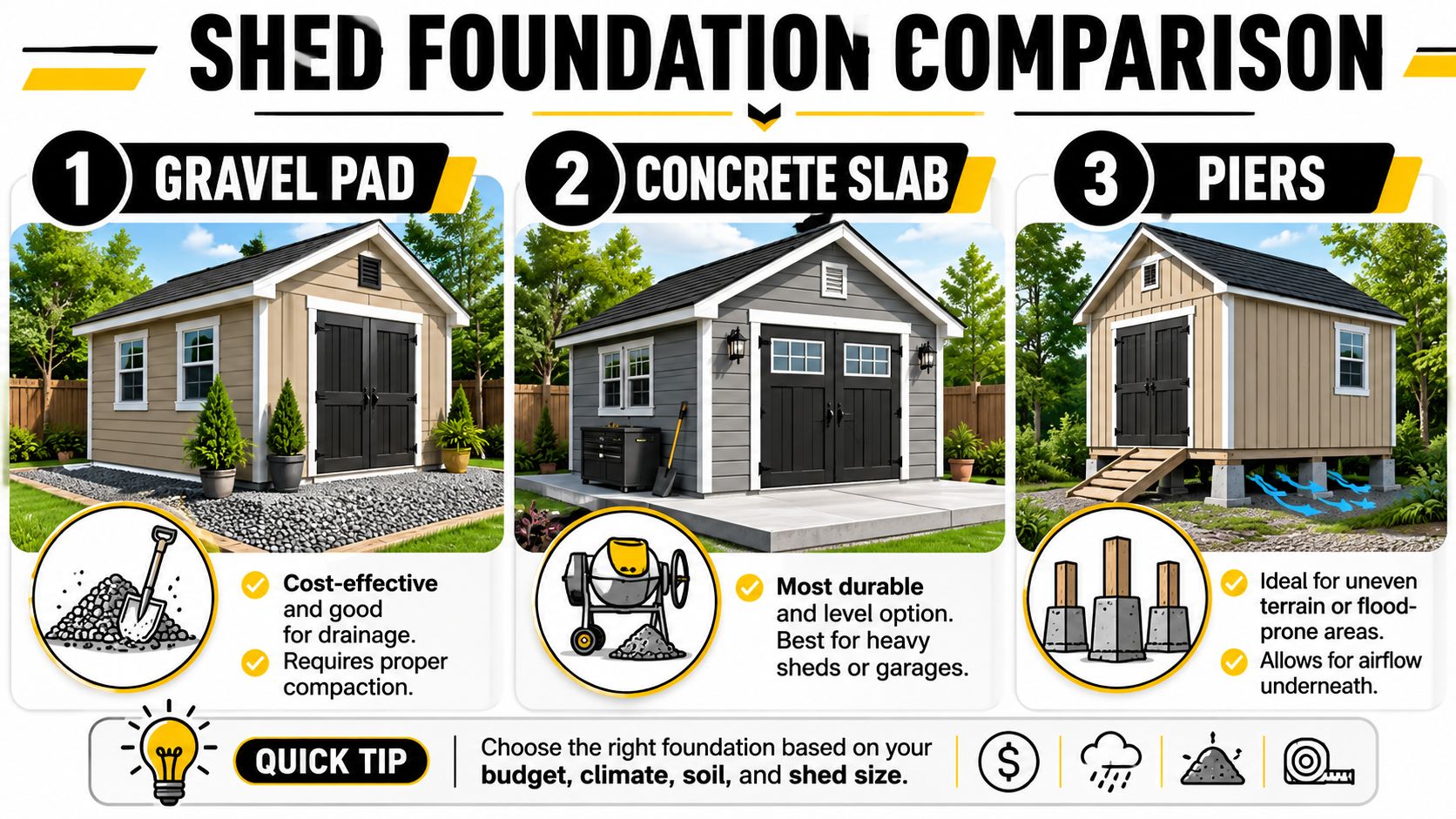
Gravel pad, concrete slab, or piers
Here's the practical side-by-side view.
| Foundation type | Where it works best | Main advantage | Main limitation |
|---|---|---|---|
| Gravel pad | Most backyard shed installations | Drainage and value | Must be excavated, framed, and compacted correctly |
| Concrete slab | Heavy sheds, garage-style use, high-load storage | Strong, level, durable base | Higher cost and more site commitment |
| Piers | Uneven ground or places needing airflow below | Works on difficult terrain | Not every shed manufacturer prefers this setup |
A gravel shed foundation is often the best fit for a typical mini barn shed. It drains well, handles normal storage use, and can be sized to protect the structure from splashback and perimeter erosion. But this is also the option most often done poorly. Dumped stone on top of grass is not a foundation.
A concrete slab is the right call when the shed is heavy, the contents are heavy, or the owner wants the feel of a permanent, highly stable base. That becomes more compelling in freeze-thaw areas. A 2025 study by the National Concrete Masonry Association found that concrete pads in freeze-thaw zones like Pennsylvania reduce structural shifting by 40% compared to gravel, according to this review of prefab small barn foundation considerations.
What freeze-thaw changes in the Mid-Atlantic
In this region, winter isn't just cold. The repeated cycle of freezing, thawing, refreezing, and spring saturation is what exposes shortcuts. Gravel can perform very well, but only when the base is built for drainage and compaction. Concrete can outperform it for movement resistance, but that doesn't mean every mini barn shed needs a slab.
Homeowners often need help from shed foundations contractors near me or concrete contractors who understand local soil and drainage conditions, not just flat-site installs.
A few rules help narrow the choice:
- Choose gravel if the site drains reasonably well, the shed is a standard storage structure, and the pad can be properly excavated and compacted.
- Choose concrete if you're storing heavier equipment, want a more permanent base, or your site has a history of movement and moisture issues.
- Choose piers when grade changes make a full pad difficult or when the structure design specifically allows raised support.
If you're considering perimeter framing for a gravel pad, material choice matters too. Homeowners comparing treated lumber types can use this guide on choosing lumber for outdoor projects to understand why outdoor ground-contact materials are worth getting right.
For sloped sites, pier systems can solve problems a slab or pad can't solve efficiently. This overview of pier foundations for sheds is helpful if your yard drops off, stays wet in one corner, or needs clearance below the floor system.
A quick visual walkthrough can help if you're still comparing options.
The right foundation isn't the cheapest option on paper. It's the option that fits the shed, the yard, and the climate without creating avoidable repair work later.
Our Turnkey Shed Foundation Installation Process
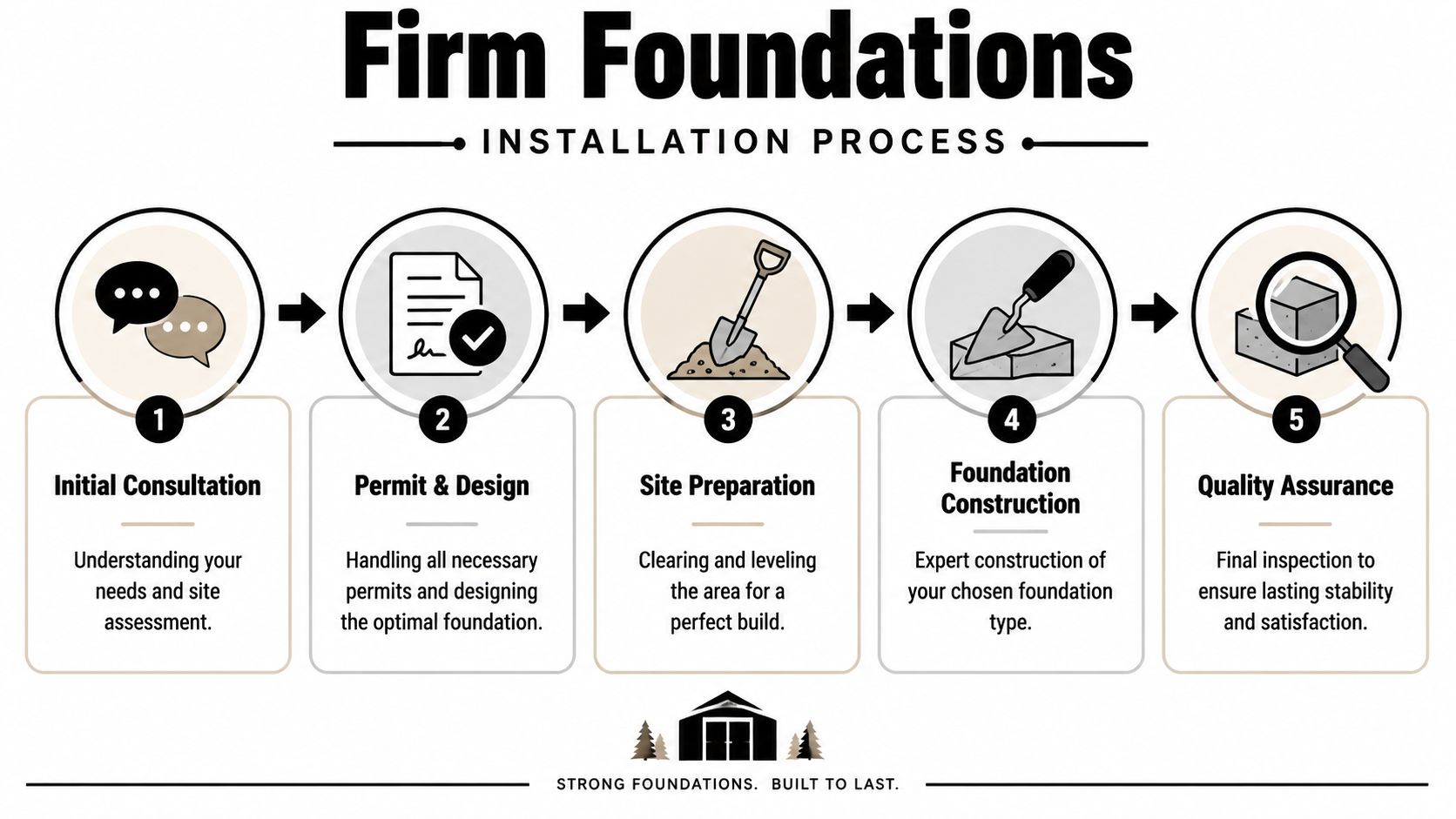
Homeowners usually feel better once they know what the actual work looks like. A professional shed pad or slab install shouldn't feel chaotic. It should feel organized, measured, and clean from the first site visit through final grading.
Step one through site layout
The job starts with the site itself, not the shed brochure. Grade, drainage direction, access width, overhead clearance, and soil condition all affect how the base should be built. A yard may look flat until measurements show that one corner drops enough to create water issues.
The early stage usually includes:
- Site review to confirm the shed location, access path, and drainage pattern.
- Layout and measurements so the foundation matches the actual structure and leaves proper perimeter space.
- Excavation planning based on slope, soft spots, and the amount of cut or fill needed.
Building a gravel pad the right way
For homeowners searching gravel shed foundation contractors near me, this is the part that separates a professional install from a shortcut. The perimeter frame needs to be square, secure, and sized beyond the shed footprint so water doesn't dump right against the walls.
For a professional gravel shed pad, the total perimeter should be 18 to 24 inches wider than the shed to create a 1-foot buffer, built with pressure-treated lumber and secured with rebar stakes every 6 feet, according to Sheds Unlimited's gravel shed pad preparation guide.
That buffer matters. It gives the stone shoulder room to drain, helps keep mud off the siding, and creates a cleaner finished edge.
On-site reality: If the perimeter isn't square before stone goes in, the shed delivery crew ends up fighting the base instead of setting the building cleanly.
What changes for concrete foundations
A concrete foundation takes a different sequence. The site still needs excavation and grading, but then the work shifts into forming, base prep, pour coordination, and finishing. At this point, people often broaden their search from shed foundations near me to garage foundation contractors near me, cement foundations for garage, or concrete foundation for garage, especially if the structure may evolve into a heavier-use building later.
The keys are straightforward:
- Accurate formwork so the slab is square and the dimensions are right for the delivered structure
- Stable sub-base prep so the slab performs over time
- Clean finish and edge control to avoid a rough, chipped, or poorly drained result
Good crews also keep the site orderly. Spoil piles, equipment access, and final cleanup make a bigger difference to homeowners than many contractors realize. A foundation job should leave you with a ready site, not a mess to sort out before the shed even arrives.
Navigating Local Permits and Site Preparation
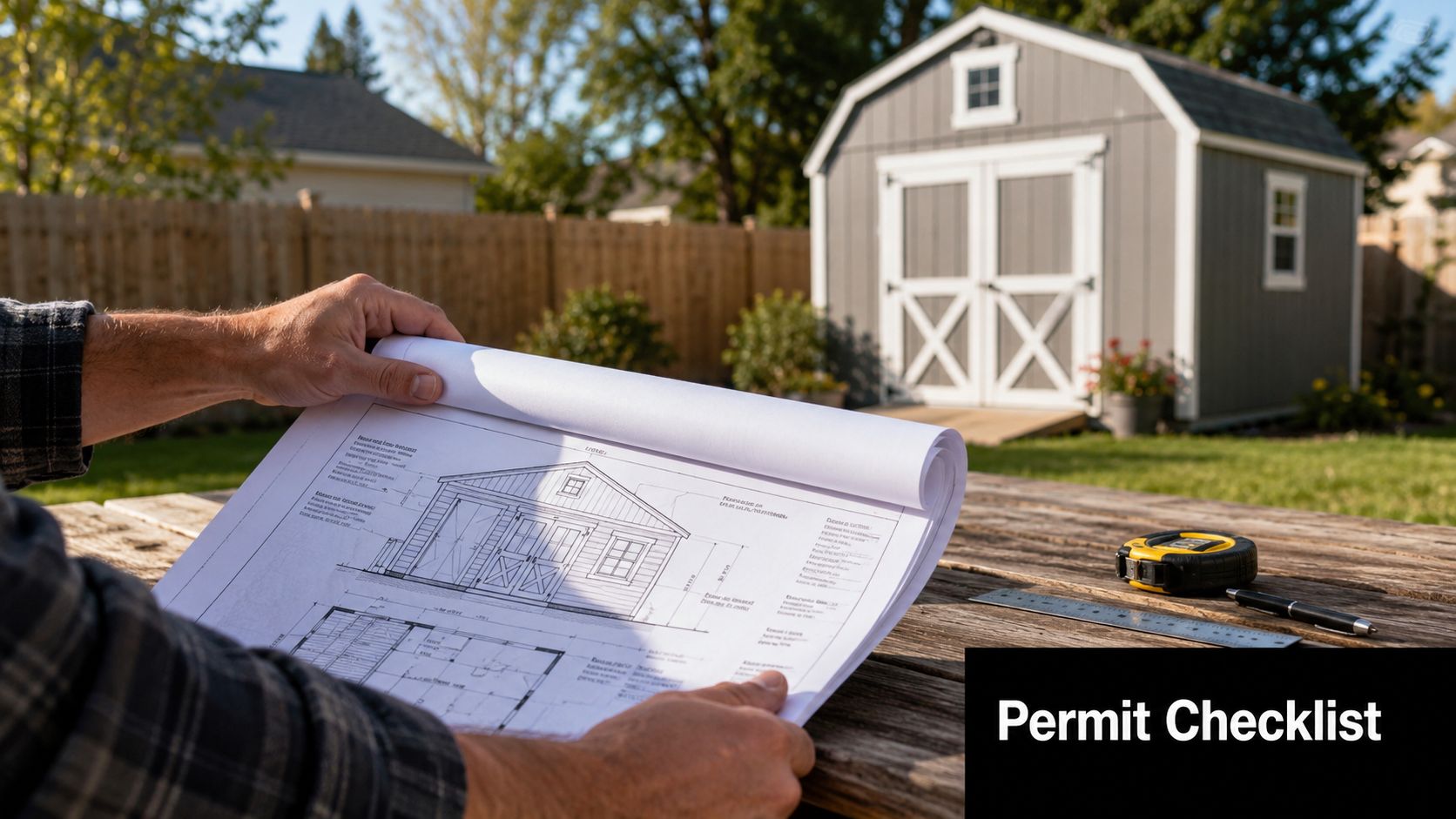
Permits are where a lot of backyard shed projects get delayed. Homeowners assume a small accessory structure won't trigger much review, then find out the township cares about height, setbacks, drainage, or distance from property lines. That's especially common in Pennsylvania, but similar issues show up across Maryland, Delaware, and New Jersey too.
Why permit details matter more than people expect
Recent 2024 updates to Pennsylvania's accessory structure codes show that 30% of rural homeowners face unexpected permit denials due to unmeasured setbacks, according to this Pennsylvania shed buyer's guide discussing zoning issues.
That's not a paperwork annoyance. It can mean moving the location after the site is cleared, changing shed size, or delaying delivery while a variance is reviewed. In places with smaller yards, side-yard and rear-yard setbacks can squeeze the usable footprint more than homeowners expect.
What site preparation actually includes
“Site prep” sounds simple, but it covers several practical steps that affect whether the build goes smoothly:
- Clearing the footprint so brush, roots, debris, and soft organic material are removed
- Confirming access for excavation equipment, material delivery, and shed placement
- Checking grade and runoff so water doesn't collect at the uphill side of the structure
- Verifying setbacks before excavation begins, not after
If you're comparing a shed project to other backyard upgrades, it helps to think of the space as part of a larger outdoor-use plan. Homeowners weighing storage, patio, and yard layout priorities may find these Guelph outdoor space options useful for thinking through how one structure affects the whole backyard.
Most permit mistakes happen before construction starts. The problem usually isn't the build. It's the location.
For requirements that vary by municipality, this overview of building requirements for a shed is a good starting point. It won't replace local township review, but it helps homeowners understand why size, height, and setback questions need real answers before equipment shows up.
In practical terms, homeowners in PA, MD, DE, and NJ should expect local rules to influence both the placement and the foundation choice. A narrow side yard, a steep rear slope, or drainage easements can all change the best layout. Getting that sorted early protects the whole project.
Estimating Costs Timelines and Maintenance
Most homeowners don't need a perfect budget number at the idea stage. They need to know what drives the price and what affects the schedule. For a mini barn shed foundation, the biggest variables are usually the foundation type, site access, yard slope, soil condition, and how much excavation the area needs.
What changes the cost
A gravel base is often the more economical route for a standard storage shed, while a concrete slab usually costs more because it involves additional forming, material, finishing, and site coordination. But the cheapest option up front isn't always the best fit. If the yard stays wet, drops off sharply, or needs significant cut-and-fill work, the price gap can narrow once proper prep is added.
Homeowners looking for base for storage shed, shed foundation gravel base, shed foundation blocks, or concrete foundations should pay attention to scope, not just surface material. The work below the top layer is what usually determines whether the shed stays level.
What a realistic project timeline looks like
Timelines depend on weather, permit status, and site conditions. A straightforward job with clear access and no permit delays moves much faster than a project with setback questions, limited machine access, or substantial grading.
Most delays come from one of three things:
- Wet ground that can't be compacted properly
- Permit hold-ups or zoning questions that weren't resolved early
- Site surprises like buried roots, soft fill, or drainage issues
How to protect the investment
For prefab sheds in Pennsylvania, the industry standard recommends a 4- to 6-inch modified stone base, extending at least 12 inches beyond the shed footprint, to keep the structure dry, usable, and stable long-term, according to Wyomissing Structures' Pennsylvania shed foundation and site prep guidance.
That standard points to the bigger maintenance lesson. Keep water moving away from the shed and keep the perimeter clear.
A few simple habits help:
- Watch runoff after storms and correct low spots before they become standing-water areas.
- Keep the edge clean so mulch, dirt, and leaves don't build up against the shed base.
- Check for settlement if doors begin rubbing or the floor feels out of level.
- Maintain surrounding grade so nearby landscaping doesn't redirect water toward the pad.
Concrete also benefits from routine observation. If adjacent soil washes away from the slab edge, address the drainage issue early instead of letting water undermine the perimeter over time.
Frequently Asked Questions About Mini Barn Sheds
Can I put a Mini Barn shed directly on the ground
No. Bare ground holds moisture, shifts with weather, and settles unevenly. Even if the shed looks fine at first, direct ground contact usually leads to a soft base, splashback on the walls, and floor support problems. A real shed foundation gives the structure drainage, separation from soil, and stable bearing.
How do I know if my yard is level enough for a shed
Most homeowners can spot major slope, but smaller grade changes are harder to judge by eye. A yard can look flat and still fall enough across the shed footprint to create door and drainage issues. If the site has any noticeable pitch, water flow, or soft ground after rain, it's worth having the area measured before delivery day.
A few warning signs suggest the site needs preparation:
- Water sits in the area after storms
- The mower tilts or bounces through that part of the yard
- Fence lines or nearby structures reveal grade changes
- One side of the planned spot feels soft underfoot
What's the difference between a mini barn and a high-wall barn shed
A mini barn shed usually emphasizes the gambrel roof profile and compact barn look, while a high-wall barn shed often provides taller sidewalls for more wall-mounted storage and easier movement along the perimeter. Both can be useful, but the better option depends on what you're storing and how you want to use the inside space.
If you're storing long-handled tools, adding shelving, or planning a workshop layout, wall height may matter more than roof shape. If you want classic barn styling and overhead storage potential, a mini barn often fits the goal well.
Do shed foundation blocks work for all mini barn sheds
Not always. Blocks may be used in some situations, but they aren't a universal answer for Mid-Atlantic properties with drainage issues, frost movement, or softer soils. For many homeowners, a properly built gravel pad or concrete base gives a more predictable long-term result than piecing together support points and hoping the site stays stable.
Should I choose gravel or concrete for my mini barn shed
It depends on the shed size, weight, site drainage, and how permanent you want the installation to be. Gravel is often a strong choice for standard backyard storage. Concrete makes more sense when the shed will carry heavier loads or when maximum stability is the priority. The right answer comes from the site, not from a generic rule online.
If you're planning a mini barn shed and want clear guidance on the right base, Firm Foundations can help homeowners across Pennsylvania, Maryland, Delaware, and New Jersey sort out the foundation type, site prep, and permit considerations before problems start. Reach out for a free quote if you need a gravel pad, concrete slab, excavation, or a full shed-ready foundation built to fit your property.