
How to Level Uneven Ground for Your Shed or Garage


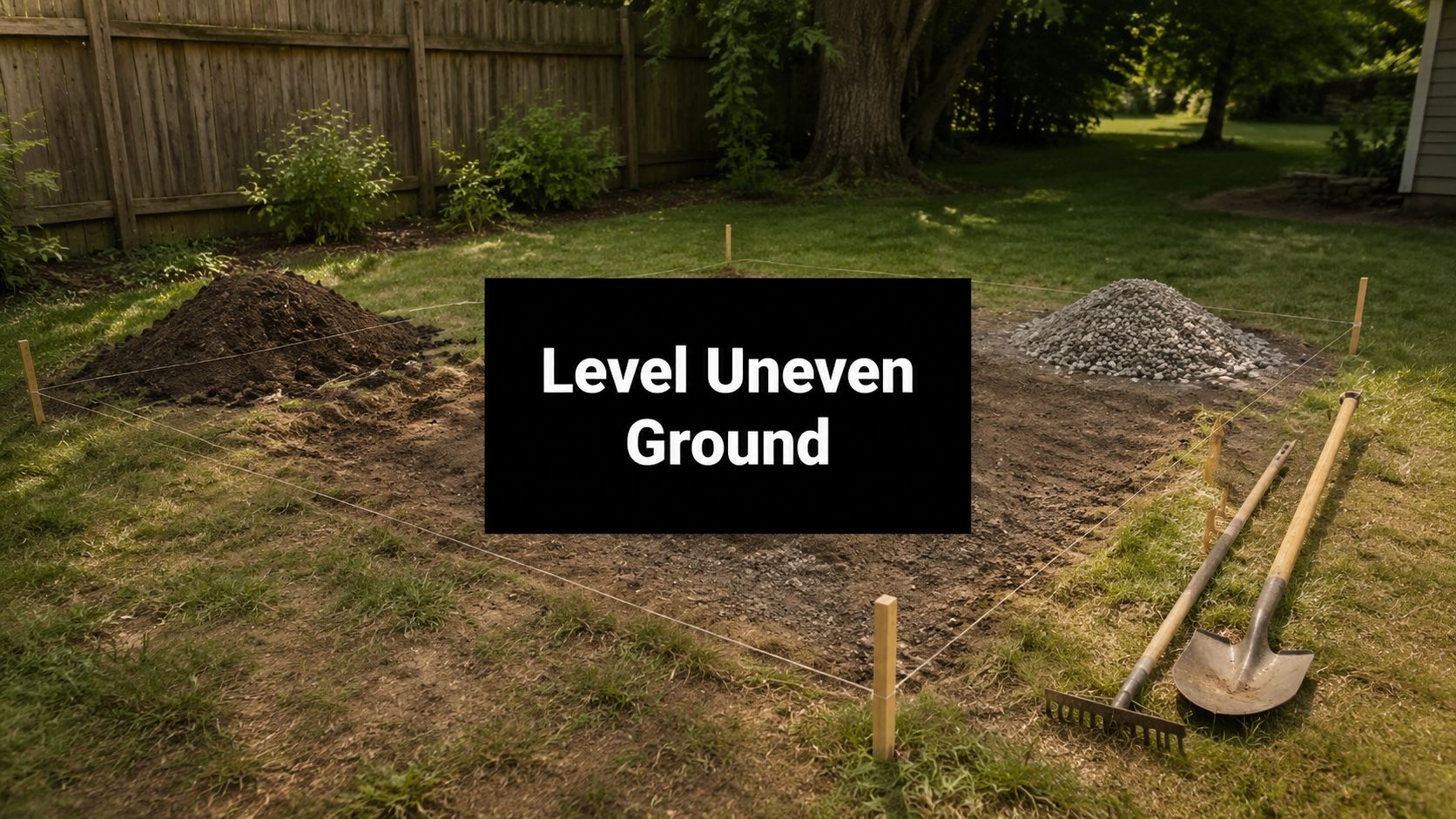
You find the shed you want. Or you finally decide it’s time to build a garage. Then you step into the backyard and notice the problem you can’t ignore anymore. The ground isn’t close to ready.
That’s common across Pennsylvania, especially in places like Honey Brook Township where yards often have old settling, shallow swales, soft spots, and gradual slopes that don’t look serious until you try to build on them. A storage shed can rack out of square on a bad base. A garage slab can crack or hold water if the grade is wrong. Even a simple gazebo foundation starts with the same requirement. Stable soil, controlled drainage, and a surface that’s prepared for the structure you’re putting on it.
Homeowners ask how to level uneven ground because they want a clean DIY answer. Sometimes there is one. Sometimes there isn’t. The difference usually comes down to how much elevation change you’re dealing with, how heavy the structure will be, and whether the finished area needs to support a true foundation instead of just looking flat from a distance.
Planning a Shed or Garage? Start with a Level Base
A lot of projects start the same way. A homeowner marks out a spot for a 10×10 storage shed or starts talking through a future garage with family, only to realize the chosen area falls off toward the fence line or has old mower ruts and settled patches. It doesn’t seem dramatic until you start measuring.
For a light backyard project, that unevenness might mean doors that won’t swing right, skids that lose support, or puddling around the base. For a concrete foundation for garage work, the stakes are higher. Water pressure, frost movement, and settlement all show up later if the prep work was rushed.
Why the base matters more than the structure above it
Homeowners often focus on the building itself. The shed style. The siding. The overhead garage door. But the structure only performs as well as the ground beneath it.
A bad base creates predictable problems:
- Twisting and movement: A shed foundation that isn’t uniformly supported can shift season to season.
- Water problems: Surface runoff heads toward the low side unless the grade is planned.
- Premature repairs: Doors, trim, and slabs start telling you the ground work wasn’t right.
- Limited upgrade options: A site that barely supports a barn shed or playset today won’t be ready for a larger structure later.
A level pad isn’t just about appearance. It controls load, water, and settlement before those problems reach the structure.
Some sites need more than dirt work. If overgrowth, roots, or large trees are crowding the build area, it helps to review practical guidance on tree removal for construction before layout begins. Clearing the footprint the right way protects access, drainage paths, and equipment movement.
Start by matching the base to the project
A simple shed can sit on a gravel system, while a garage usually needs more deliberate excavation, compaction, and concrete work. If you’re still comparing approaches, this guide on how to build a concrete pad is useful for understanding how site prep connects directly to slab performance.
That’s the part many online guides skip. They explain how to move soil. They don’t explain why some jobs stay level and others settle back out.
Assess Your Yard and Choose the Right Leveling Method
Before you shovel anything, read the yard. Most leveling mistakes happen because people guess at the slope instead of measuring it.
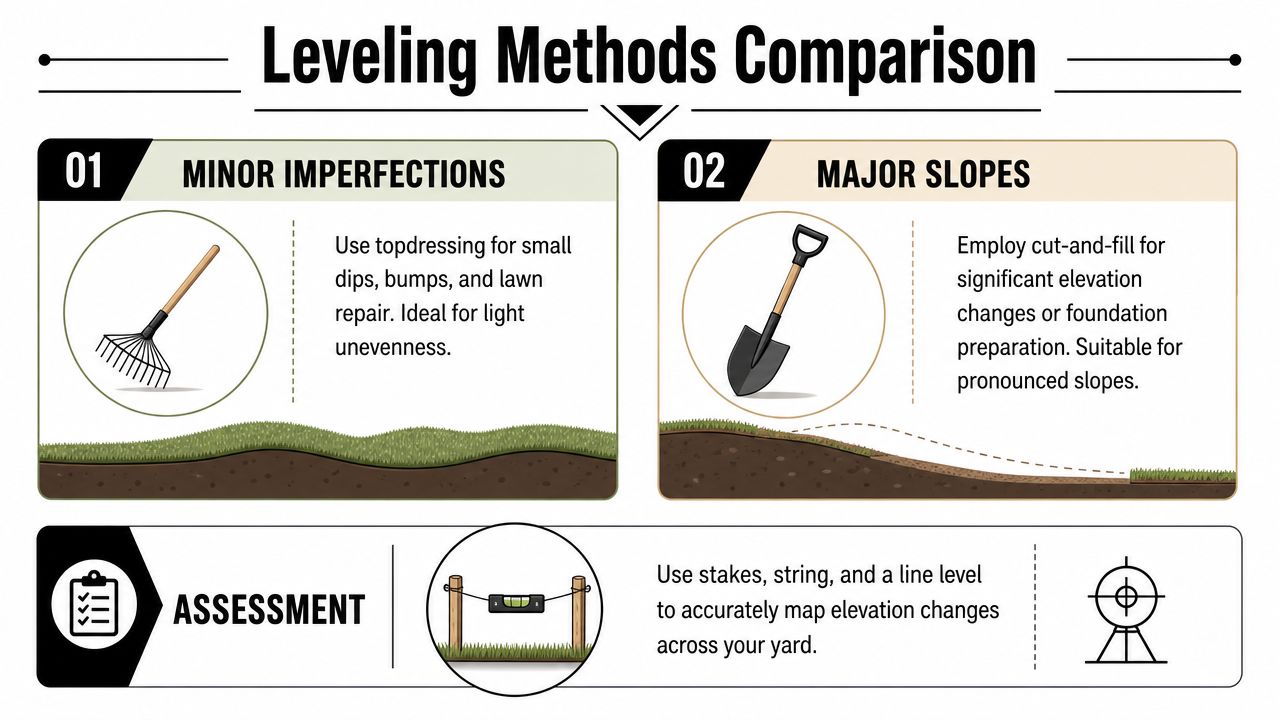
Use stakes, string, and a line level if you’re working on a modest shed site. For larger areas, a laser level or water level gives a clearer picture. The goal is simple. Identify the high points, the low points, and whether the whole area falls in one direction or has isolated depressions.
How to map the site
Drive stakes around the footprint of the shed foundation, base for storage shed, or garage area. Run string between them and level the string. Then measure down to the ground at several points across the area.
Those measurements tell you three things:
- Where you need to cut soil away
- Where you need to add fill
- Whether the site is a minor lawn repair job or a true grading project
If the differences are slight and the lawn is mostly intact, a topdressing approach may be enough. If one side of the footprint is clearly lower, or you’re preparing for garage footings and foundations, you’re into cut-and-fill territory.
Leveling Method Comparison
| Method | Best For | Effort Level |
|---|---|---|
| Topdressing | Small dips, shallow bumps, light lawn correction | Low |
| Cut-and-fill | Noticeable slope, deeper low spots, foundation preparation | Moderate to high |
What works and what usually fails
Topdressing works when the existing grade is basically right and only needs refinement. It does not work when you’re trying to build up significant depth quickly under turf or prepare for heavier loads.
Cut-and-fill works because it treats the yard like a foundation problem instead of a cosmetic one. You remove soil from high areas, place fill where needed, and compact as you go. That creates a stable mass rather than a loose patch.
Practical rule: If you can see the slope from across the yard, don’t assume a rake and a few bags of soil will fix it.
For homeowners learning how to level uneven ground, the fundamental choice isn’t between easy and hard. It’s between a method that matches the site and one that creates more work later.
Fixing Small Dips and Bumps with Topdressing
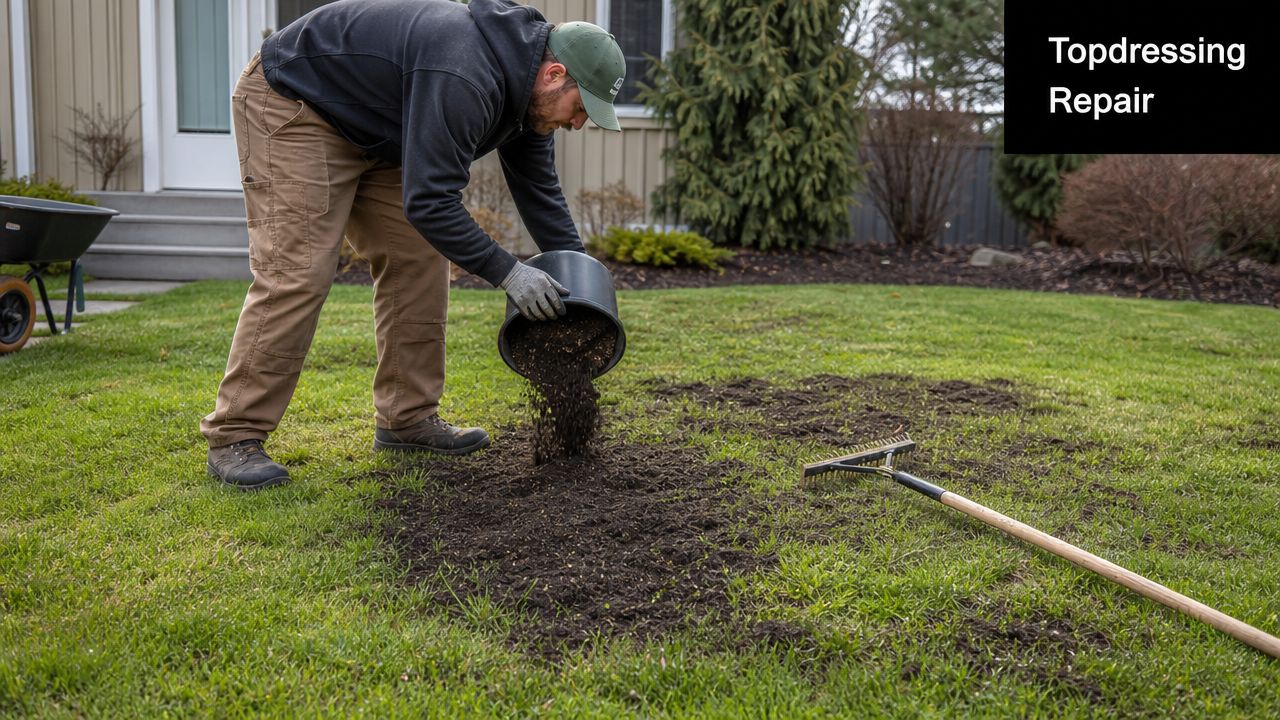
Topdressing is the right move when the yard has minor unevenness and you want to preserve the grass. This is the method for shallow depressions, light heaving, and bumpy lawn areas where the existing surface is close to usable.
How to apply topdressing the right way
Use a dry, workable blend such as sand, screened topsoil, compost, or a mix that matches your lawn conditions. The exact blend matters less than consistency. You want something that spreads evenly and settles without turning into clumps.
Follow a careful sequence:
- Mow the area short: You need to see the surface clearly.
- Break up the material: Lumps leave high spots after raking.
- Spread lightly: Work the mix into the low areas first.
- Rake across the surface: A rake or leveling rake helps feather the edges.
- Water and wait: Let the material settle before judging the final result.
The key limit is thickness. For minor unevenness, guidance recommends applying only about 1/4 to 1/2 inch of material at a time because thicker layers can smother grass, according to The Grass Outlet’s lawn grading guidance.
Why this method has limits
Topdressing improves the surface. It doesn’t rebuild the subgrade. That distinction matters.
If you keep adding shallow layers over a deeper problem, the lawn may look smoother for a while, but the ground underneath still settles unpredictably. That’s why this method works well for cosmetic lawn repair and site touch-up, but not for a gazebo foundation, a heavy shed foundation gravel base, or anything that needs structural support.
A lot of homeowners try to force this method too far because it feels less invasive. The problem is that shallow fixes don’t change the load-bearing behavior of the soil below.
If grass health is part of the goal, thin passes are the safe approach. If structure support is the goal, topdressing alone usually isn’t enough.
For a very light-use area, topdressing can absolutely help. For a future shed or any project involving concrete contractors or excavation near me type work, think of it as finish work, not foundation work.
Tackling Major Slopes with the Cut-and-Fill Method
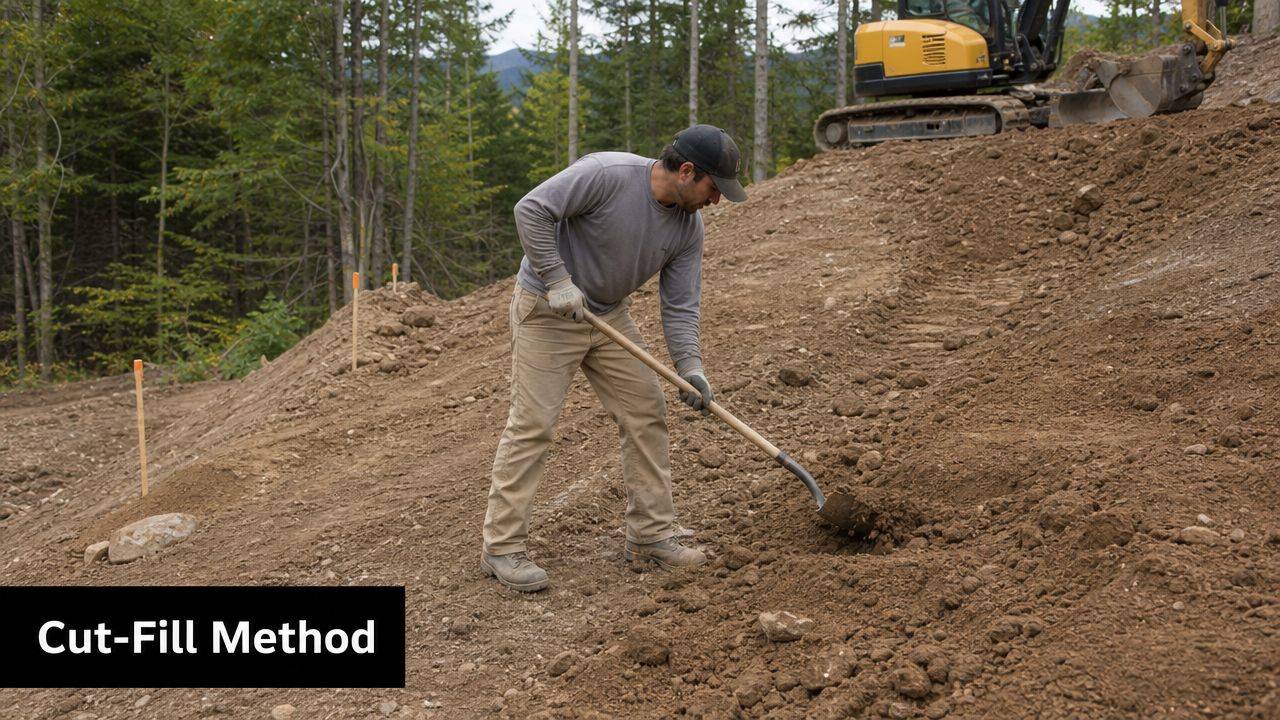
When the site has a real slope or a deeper depression, cut-and-fill is the method that makes sense. This is the approach used to create a usable footprint for a shed foundation, a gravel pad, or the early grading stage of cement foundations for garage construction.
Start by cutting the highs, not just filling the lows
Mark the full project area first. Remove sod if you need to preserve a clean work zone. Then begin cutting down the highest points. That soil can often be reused in lower sections if it’s suitable fill.
This works better than bringing in random loose soil and dumping it into the low side because cut-and-fill creates a balanced grade across the entire footprint. The shape of the site becomes intentional.
For deeper uneven ground, guidance recommends filling most of a depression with fill dirt, compacting it, and then capping it with a 2–3 inch layer of topsoil, as noted in this lawn leveling guide from Mountain High Landscape Supply.
Compaction is what makes the repair last
A homeowner can move dirt in an afternoon. Building a stable base takes longer because every layer has to be tightened before the next one goes in.
Loose fill almost always settles. Sometimes it settles quickly after rain. Sometimes it shows up later when the structure is already in place. That’s why repeated light compaction matters so much. It reduces voids and forces the soil mass to behave more like one stable layer instead of a stack of soft additions.
If you’re dealing with a hillside or a more complex site, CJMC Build’s hill construction guide is a useful outside reference for understanding how slope changes the whole build strategy.
Here’s a practical visual overview of grading on uneven ground:
Where DIY often goes wrong
The most common problem isn’t using too little soil. It’s skipping the step-by-step shaping and compaction.
Watch for these mistakes:
- Dumping fill in one thick lift: The top may look firm while the lower material stays loose.
- Leaving organic material in place: Roots, sod, and debris decay and create voids.
- Ignoring edge support: The outer perimeter often settles first.
- Stopping at “close enough”: A shed foundation gravel base or garage site needs a controlled footprint, not just a flatter-looking yard.
One practical option for this kind of work is a gravel pad built by Firm Foundations, which is designed as a compacted base for sheds and similar structures. It’s one of several ways to create a stable building area when a simple lawn fix won’t do the job.
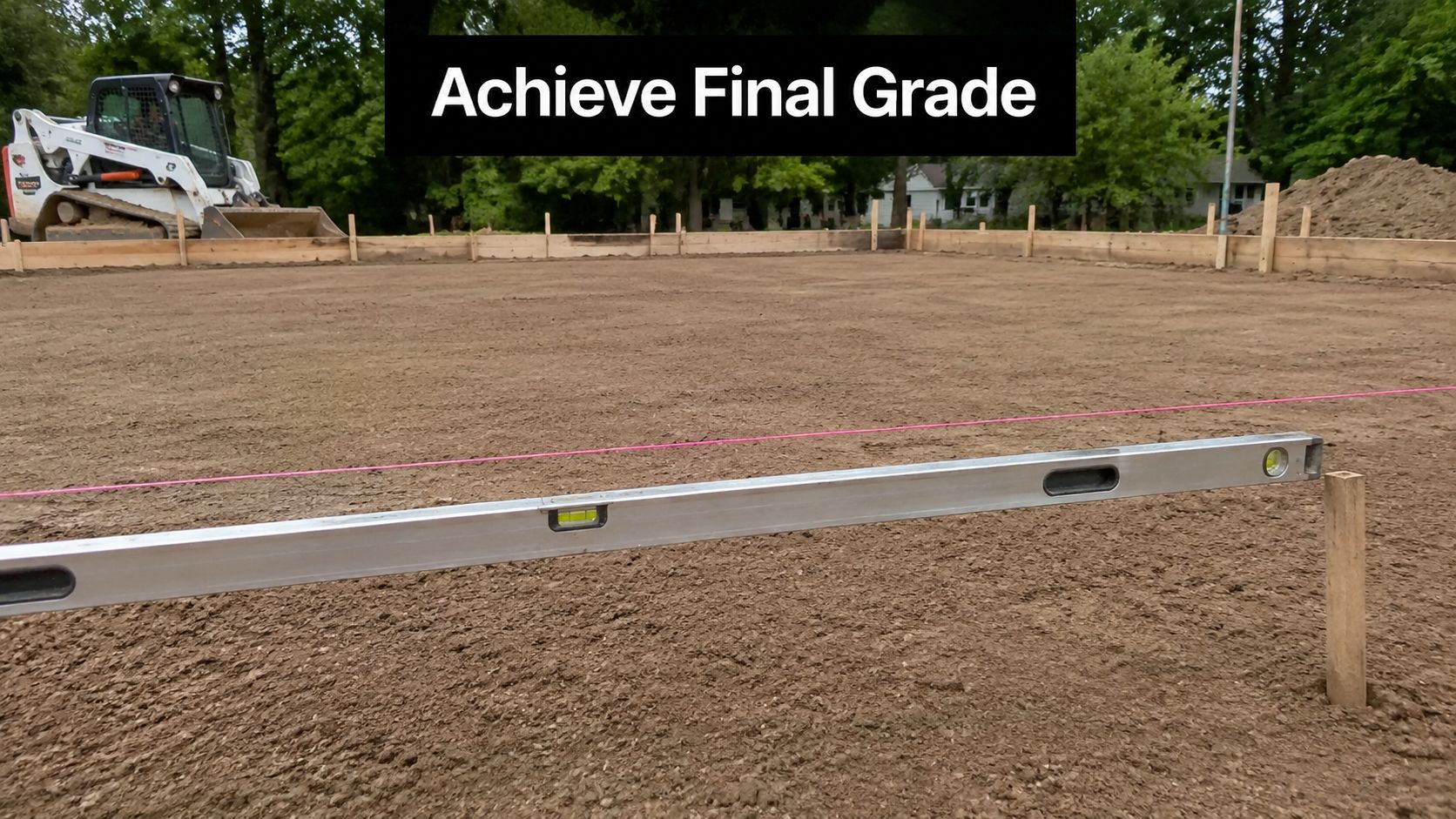
Achieving the Final Grade for Long-Term Stability
To hear ‘level’ and assume ‘perfectly flat’ is a common error. That’s not how a successful exterior foundation site works.
The pad itself needs to be level where the structure bears. The surrounding finished grade needs to direct water away. If you miss that distinction, you can build a straight shed pad or concrete slab and still create drainage problems around it.
Why flat ground can still be wrong
Water always tells you whether the grading was done properly. If runoff stalls around the perimeter, seeps back toward the slab, or ponds against the uphill side of a shed, the site wasn’t really finished. It was only flattened.
For larger outdoor areas, professional guidance recommends building finished grades that drain away from structures at roughly 2-3 inches of fall per 10 feet to help prevent ponding and structural drainage problems, according to Angkor Landscape & Decking’s grading guidance.
That standard matters because it connects earthwork to long-term performance. It’s not cosmetic. It protects the base.
How to check the final grade
Use a line level, laser level, or water level after the bulk grading is done. Recheck the finished surface after compaction, not before. Soil often looks right when it’s loose and changes once it tightens.
A smart final pass includes:
- Confirming runoff direction: Water should move away from the structure.
- Checking for birdbaths: Small low spots hold water and soften the surrounding soil.
- Reviewing compaction: If the surface feels spongy, it isn’t ready.
- Fine-tuning the finish layer: Precision is paramount at this stage.
If you want a clearer understanding of why that step matters, this explainer on what soil compaction is connects the grading work to the stability you’ll live with.
Proper grading protects the investment twice. It supports the structure from below, and it keeps water from attacking it from the outside.
Where this matters most
This is often the line between a casual backyard project and real site preparation. A shed foundation near me search might lead you to gravel options. A garage foundation contractors near me search usually points to a more exacting standard because garages, driveways, and slabs punish bad drainage quickly.
The final grade decides whether the project stays dry, stable, and serviceable. That’s why pros spend so much time on it.
When to Call a Professional Foundation Contractor
DIY grading makes sense in some situations. It stops making sense when the project starts behaving like a foundation problem.
If you’re leveling a small patch of lawn for appearance, you can usually handle it with hand tools, patience, and careful measurement. If you’re preparing for a house foundation, a garage slab, a heavy barn shed, or a large concrete foundation, the cost of getting it wrong rises fast.
Clear signs the job is bigger than a DIY fix
Call a contractor when any of these apply:
- The area is large: Bigger footprints are harder to keep consistent across the full grade.
- The slope is obvious: Noticeable elevation change usually means more excavation, fill management, and drainage planning.
- The soil stays wet or soft: A wet site needs more than cosmetic leveling.
- The project needs structural support: Garages, slabs, and reinforced pads demand better prep than a simple lawn repair.
- Access is tight or equipment is needed: Hand labor alone can turn into a drawn-out, uneven result.
- You’re planning related hardscape work: Driveways, patios, and site drainage should work together.
Why professional work often saves money later
The big advantage isn’t just having machines. It’s knowing how to sequence the work so the grade, compaction, and runoff all support each other.
That matters if you’re comparing gravel shed foundation contractors near me, driveway contractors near me, or concrete contractors for a broader project. The site prep has to match the load and the intended use. A garage, for example, doesn’t forgive soft edges or trapped water.
If you’re still evaluating who should handle the work, this outside article offers practical advice for your home renovation project and the contractor selection process.
Firm Foundations works with homeowners and builders across Pennsylvania, Maryland, Delaware, and New Jersey on gravel shed pads, excavation, and concrete foundation work for sheds, garages, patios, gazebos, and other structures. If your site needs more than a rake and a few wheelbarrows, getting the grade right from the start is usually the cheaper path.
If you’re planning a shed, garage, gazebo, or patio and need a base that stays stable through weather and use, Firm Foundations can help you sort out the right approach. Request a free quote to compare gravel pads, excavation, and concrete foundation options for your property in Pennsylvania and the surrounding service area.