
How to Build a Concrete Porch Slab: A 2026 Guide


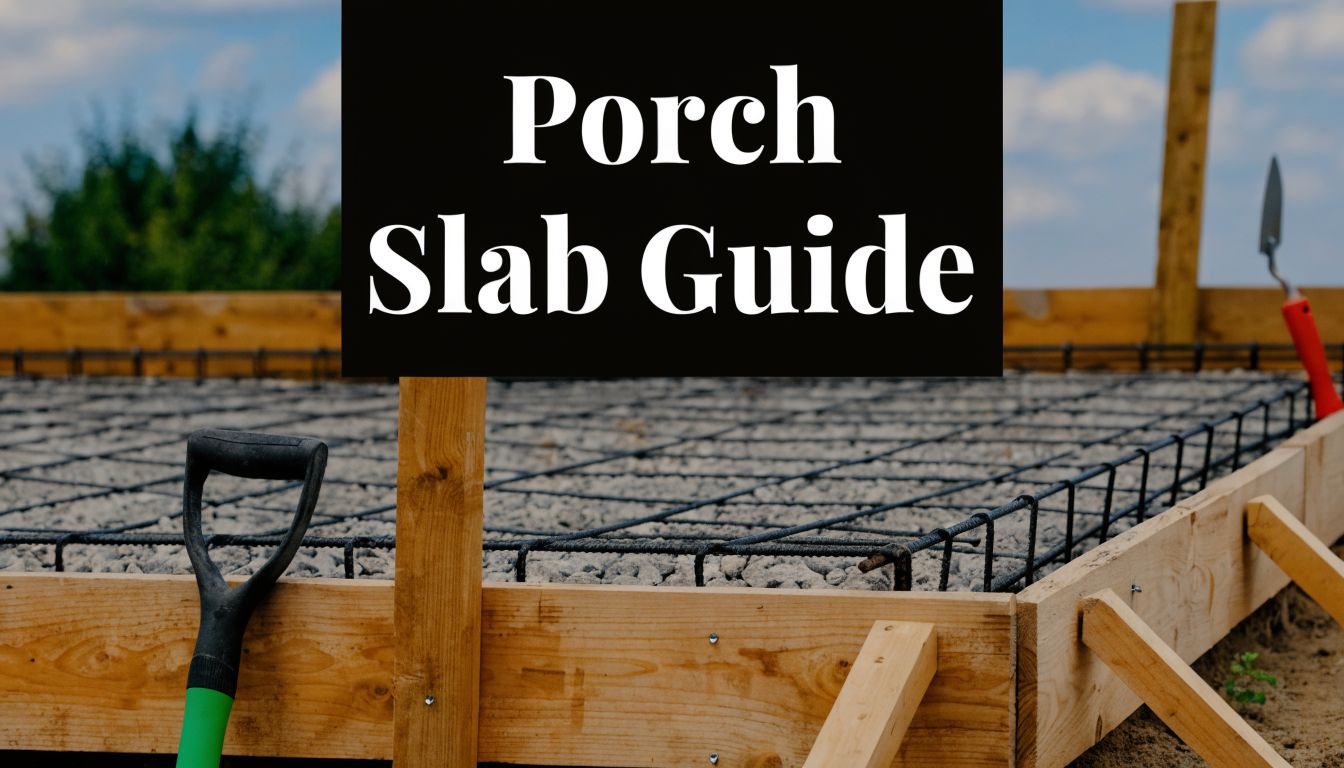
A new porch usually starts as a simple idea. You want a clean place for chairs, a safe step out of the house, and a front entry that looks finished instead of patched together. Then the project gets real. You start thinking about excavation, drainage, forms, gravel, rebar, concrete delivery, and whether your yard in Pennsylvania, Maryland, Delaware, or New Jersey is going to move when winter hits.
That's where many homeowners hit the same wall. The porch itself sounds manageable. The slab under it is the part that decides whether the whole thing stays level, drains properly, and still looks good years from now. If you've searched for shed foundations near me, garage foundation contractors near me, or even a gazebo foundation, you've already seen the same truth in other projects. The finish only performs as well as the base underneath it.
Your New Porch Starts with a Solid Foundation
A porch slab has to do more than hold weight. It has to stay put through rain, runoff, freeze-thaw cycles, and seasonal soil movement. That matters even more in places like Honey Brook Township and across the Mid-Atlantic, where soil conditions and winter weather can punish work that looked fine on pour day.
One common scenario looks like this. A homeowner has the design picked out, the railings chosen, and outdoor furniture saved in a cart somewhere. What stalls the project isn't the surface finish. It's the part below grade. How deep do you dig? How much stone goes under the slab? How do you keep water moving away from the house instead of back toward it?

The part people underestimate
Concrete work looks simple from a distance because the final result is flat and clean. The hard part is hidden. Grade control, base prep, compaction, forming, reinforcement placement, and timing during the pour all happen before anyone admires the finished porch.
Practical rule: A porch slab that looks great on day one can still fail if the base wasn't prepared correctly.
That's why homeowners often find themselves comparing more than just porch ideas. They start looking at broader site-work needs like concrete foundations, a base for storage shed projects, or excavation support for future pads and walkways. The same principles carry across all of it. Water has to move away. Soil has to be stable. The slab has to be built for the site you have, not the generic one shown in a national DIY article.
Style matters, but structure comes first
Design still matters. Edge profiles, broom finish, step layout, and how the slab ties into the house all affect curb appeal. If you're gathering inspiration, it can help to see how regional style influences porch design. A good example is this roundup of Florida concrete front porch styles, which shows how climate and use shape the final look.
But style decisions should come after the structural decisions. That's the honest order of operations when you're learning how to build a concrete porch slab that lasts.
A porch is a small project only on paper. In the field, it's a foundation job.
Planning and Permitting Your Porch Slab Project
A lot of porch problems start before the first shovel goes in. I've looked at plenty of Mid Atlantic porch jobs that failed on paper first. The slab was sized wrong for the entry door, the grade pitched water back to the house, or the plan treated an attached porch like a simple backyard pad. In Pennsylvania, Maryland, Delaware, and New Jersey, that shortcut can put you on the wrong side of both the building department and the weather.
Attached porch slabs in this region often fall under frost protection rules in the International Residential Code. Footings for structures that support loads typically have to extend below frost depth under IRC Section R403.1.4. The exact depth is set locally, and that matters here. South Jersey shore soils behave differently than clay-heavy ground in southeastern Pennsylvania. Parts of Maryland and Delaware can drain well in one neighborhood and stay wet in the next. A generic national guide usually skips that part, but local inspectors do not.
Start with a real site plan
A workable porch plan is simple, but it has to be accurate. Before permits or concrete orders, confirm these items:
- House connection point, including the exact door threshold height
- Finished slab dimensions, including steps, landings, and any thickened edges
- Drainage direction, so runoff moves away from the house and does not trap water at the siding
- Obstacles and utilities, such as downspouts, gas meters, AC lines, window wells, hose bibs, and service entries
- Setbacks and easements, based on your lot and local zoning rules
Height is one of the easiest details to get wrong. A porch set too high can bury siding clearance and create moisture problems at the wall. A porch set too low can leave an awkward step down from the doorway and expose the slab edge to runoff.
Soil should be part of the plan too.
In our area, clay soils hold water and expand through freeze-thaw cycles. Sandy soils drain better, but they can wash out at the edges if runoff is not controlled. Fill soil around newer homes is another common problem. If the porch is being placed over disturbed ground, the support conditions need a closer look before anyone decides on slab thickness, base depth, or footing layout.
Figure out materials before you order
Material takeoff should be done from the final dimensions, not a rough sketch on a notepad. For concrete volume, the NRMCA concrete calculator is a reliable way to estimate cubic yards based on slab length, width, and thickness. It is a better approach than guessing, especially once porches include steps, bump-outs, or thicker bearing sections.
A basic residential porch slab is often poured at 4 inches thick for the slab section itself, but that does not mean every porch in PA, MD, DE, or NJ should be built the same way. An attached porch that carries columns, ties into foundation work, or sits over questionable subgrade may need a different detail. The gravel base also has to match site conditions, drainage, and soil behavior. Ordering concrete by a simple rule of thumb without checking those factors is how small jobs end up short on material or built too lightly for the site.
A quick reference helps:
| Slab item | Common residential baseline |
|---|---|
| Concrete slab thickness | 4 inches |
| Gravel base | Compacted base sized for site and soil conditions |
| Concrete estimate | Calculate from length, width, and slab thickness |
| Example 10 ft x 10 ft slab at 4 inches thick | About 1.23 cubic yards |
That sounds manageable until the truck shows up. Even a modest porch gives you limited working time to place, screed, edge, and finish the concrete properly. If the order is wrong, the crew is forced to patch a short load or deal with waste from overordering.
Permits are local
Permit requirements change by township, borough, county, and city. They also change based on whether the porch is freestanding or attached to the house. Local reviewers may check:
- How the porch connects to the home
- Whether footings are required and how deep they must go
- Drainage and final slope away from the structure
- Setbacks from property lines
- Any columns, railings, roofs, or framing supported by the slab
A permit office is checking the site in front of them, not a porch detail copied from a video.
That local review matters more in this region because frost depth, wet soils, and freeze-thaw movement are real design factors, not theory. A porch plan has to fit the municipality, the lot, and the ground conditions under it. That is the difference between a slab that stays put and one that starts moving after a couple of winters.
Site Preparation and Building the Concrete Forms
Good porch slabs are built from the ground up. This stage is where the project earns its lifespan. If excavation is shallow, the stone base is loose, or the forms aren't rigid, the finish work won't save it later.
Professional porch prep typically means excavating to an 8 to 10 inch depth so there's room for a 4 to 6 inch gravel base, and that base is compacted to 95% Proctor density. Formwork should be staked every 2 feet to hold pressure during the pour. Regional contractor guidance also notes a 25% rework rate on slabs with less than a 4-inch gravel base in Mid-Atlantic frost conditions, as explained in this article on patio and slab base preparation.
Excavation is where drainage begins
The excavation should remove topsoil, roots, and soft material until you reach stable subgrade. Topsoil doesn't belong under a porch slab. It holds organic matter and moisture, and it moves.
Once the area is opened up, the next step is grading for drainage. That means shaping the subgrade so water won't sit under the slab or run back toward the structure. A flat-looking yard can still have subtle low spots that trap water.
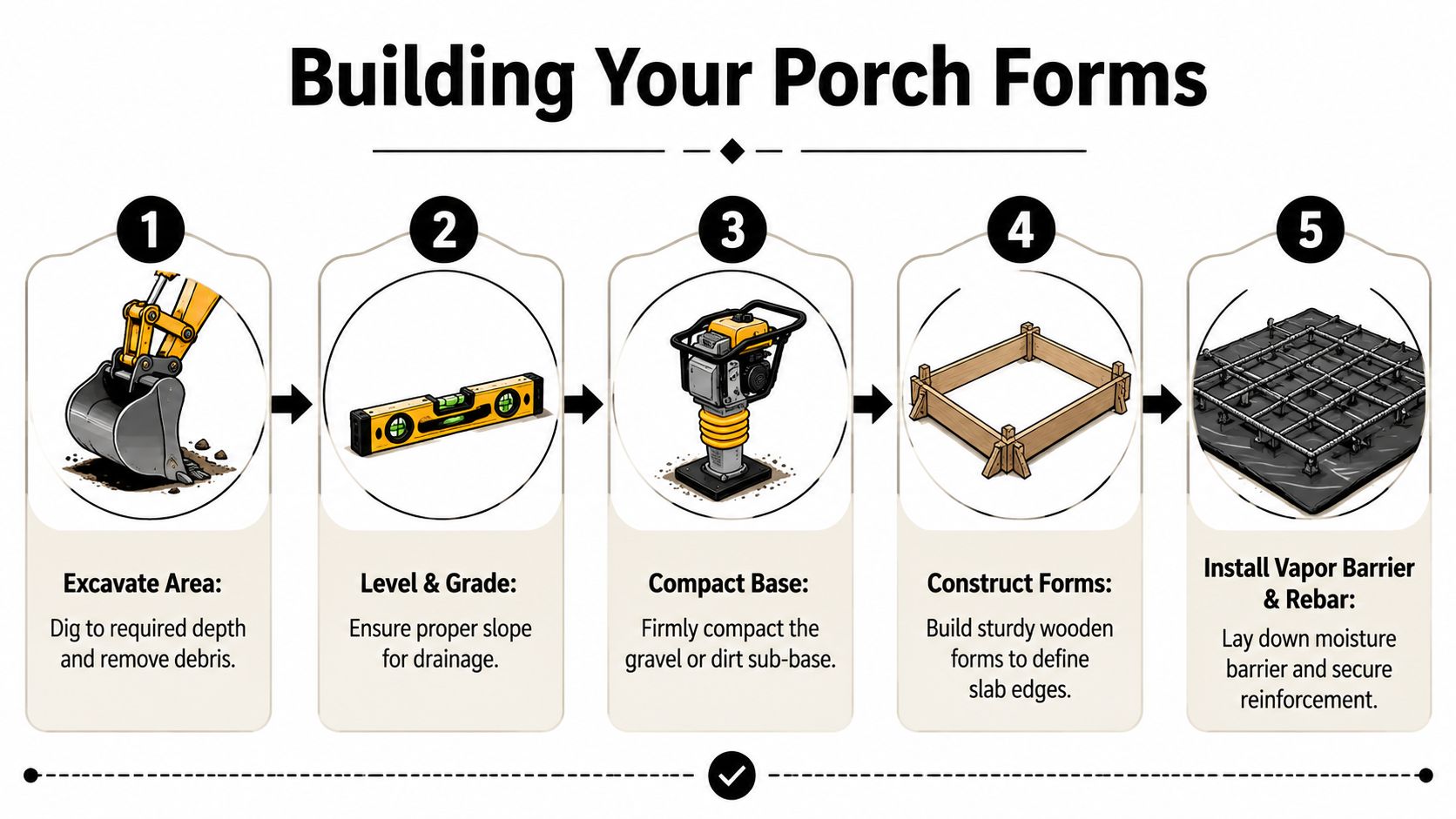
Base prep that actually supports the slab
A proper base isn't just dumped gravel. It's spread, leveled, and compacted in lifts so the slab has consistent support.
A practical field sequence usually looks like this:
- Excavate the full footprint to the required depth.
- Remove loose and organic material from the bottom of the cut.
- Install crushed stone base in manageable lifts instead of one deep loose layer.
- Compact each lift with a plate compactor.
- Check grade repeatedly before forms go on.
What doesn't work is rushing this part. A slab can crack because the soil under one corner settled after the pour. It can also crack because one edge sat on well-compacted stone while another sat on loose fill.
If the base feels uneven underfoot before the pour, the slab will tell on you later.
Building forms that stay straight
Forms define the slab, but they also resist wet concrete pressure. That pressure is enough to bow weak boards, push out corners, and ruin your elevations. On porch work, clean form lines matter because the slab edge is visible every day.
For typical residential slab work, many installers use 2×4 form boards for a nominal 4-inch depth. The critical part is not just the board size. It's staking, bracing, squaring, and leveling the form so it doesn't move during placement.
A strong setup includes:
- Straight lumber with minimal crown
- Tight corners that stay square
- Frequent stakes driven firmly
- Level checks across the full slab
- String lines or laser checks before concrete arrives
What homeowners often miss
This is the stage where many people searching for excavation near me or local concrete forms help realize the project is heavier than expected. Digging by hand, hauling stone, compacting properly, and setting accurate forms takes more labor and precision than the average weekend plan allows.
It also takes judgment. Wet soils, clay pockets, hidden roots, and grade changes around an existing house can force changes on the fly. That's one reason a porch slab often separates professional work from improvised work. The slab doesn't forgive shortcuts underneath it.
Reinforcement Pouring and Finishing Your Slab
Once the forms and base are ready, the job speeds up. This is the stage frequently imagined when considering concrete work, but the timing is tighter than it looks. Reinforcement has to be placed correctly, the pour has to move continuously, and the finish has to match the condition of the concrete, not the clock.
For porch durability, pros often use minimum 4000 PSI concrete and install a #3 or #4 rebar grid, which can boost tensile strength by 300% against shrinkage cracks. After placement, the surface should be floated with a magnesium bull float only after bleed water evaporates, which commonly takes 30 to 90 minutes, because floating too early is tied to 40% of surface failures in the referenced guidance on concrete pad construction and finishing.

Reinforcement has to sit in the slab, not under it
Rebar helps the slab hold together when concrete wants to shrink and crack. But it only works if it's positioned correctly. Steel lying flat on the stone base isn't doing the same job as steel supported within the slab depth.
For slabs over 100 square feet, the same Lowe's guidance recommends a #3 or #4 rebar grid. That's one reason larger porches need more than simple hand-mixed concrete and guesswork. Reinforcement layout, overlap, and support all matter.
A solid checklist looks like this:
- Use chairs or supports so steel stays where it belongs during the pour
- Tie intersections securely so the grid doesn't drift
- Keep spacing consistent across the slab
- Plan control joints before the concrete arrives, not after
If you want a quick related overview on slab sizing before you order material, this article on how thick a patio concrete slab should be is a useful companion read.
Pouring without losing the slab
Concrete placement should be continuous enough to avoid weak transitions. That's why ready-mix delivery is usually the practical choice for porch slabs of meaningful size. Even on a smaller porch, wheelbarrow access, chute position, and crew timing can make the difference between a controlled pour and a scramble.
Wet concrete needs to be worked into corners and around reinforcement without overworking the mix. Then comes screeding. A straight 2×4 or screed board rides the forms and cuts the slab to final elevation. After that, the concrete rests until the surface condition is right for floating.
The finish should follow the concrete. If you force the timing, the slab usually shows it.
This video gives a good visual sense of placement and finishing sequence:
Finishing for traction and appearance
Porch slabs need a finish that looks clean and stays safe when wet. That usually means a broom finish, not a slick hard-troweled surface. The edge is then cleaned with an edger so the perimeter looks intentional and resists chipping better than a raw corner.
A straightforward finish sequence is:
| Stage | What happens |
|---|---|
| Screed | Cut slab to grade and remove excess |
| Float | Smooth ridges after bleed water is gone |
| Edge | Round exposed slab edges |
| Joint | Tool or cut control joints in planned locations |
| Broom | Add slip-resistant texture |
The hard part isn't knowing the names of the tools. It's knowing when to use them. That timing is what separates a neat, durable porch slab from one that dusts, flakes, scales, or holds footprints forever.
Curing Concrete and Avoiding Common Mistakes
The slab isn't done when the crew leaves. It's done when the concrete cures correctly. That's the stage many homeowners underestimate because the porch already looks finished. In reality, curing is one of the biggest factors in whether the slab reaches the strength and surface durability it was meant to have.
Exterior slabs also need the right slope from the start. A common professional baseline is 1% to 2% slope away from the house, described as roughly 1/4 inch per foot, and for a 10-foot-deep porch that equals a 2.5-inch drop, according to this guide on pouring a slab with proper drainage. That same source ties the slope to a 3 to 6 inch compacted gravel base as part of the standard slab profile.
The biggest mistake is thinking the job is over
Fresh concrete needs moisture retention while it hardens. If it dries too fast, the surface can weaken, craze, or cure unevenly. One common method is covering the slab with polyethylene sheeting. Another is using a curing compound suitable for exterior concrete.
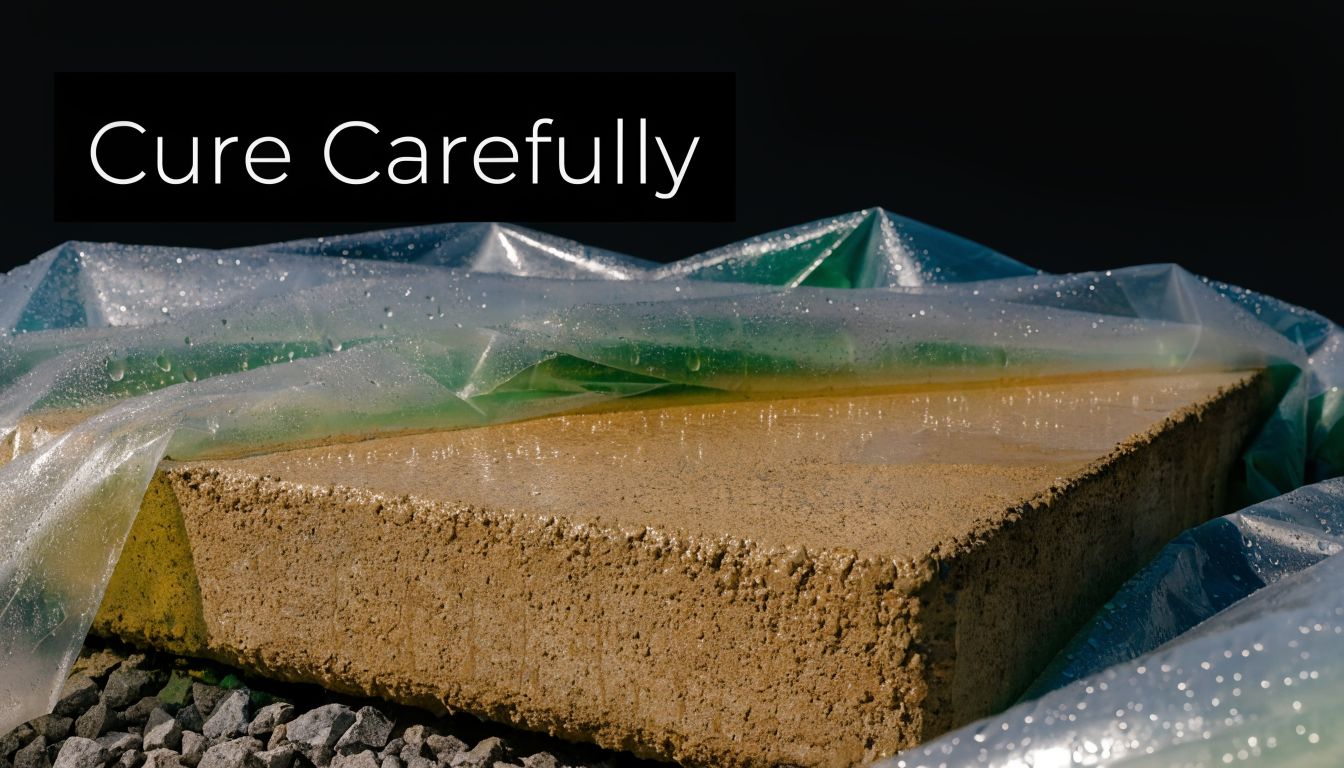
If you're comparing timelines, this overview of how long a concrete slab takes to cure gives a practical summary of what to expect after the pour.
Mistakes that show up later
Most porch slab problems start earlier than people think. They don't begin with visible cracks. They begin with decisions that seemed small during prep or finishing.
A few of the most common ones are:
- Too little slope so water lingers against the house or ponds on the surface
- Weak or inconsistent base support that allows settlement
- Poorly timed finishing that damages the surface paste
- Skipped control joints so cracks form wherever the slab chooses
- Rushed curing that leaves the top vulnerable
A porch slab should shed water on purpose. If it doesn't, the house usually pays for it first.
What works better in this region
In Pennsylvania, Maryland, Delaware, and New Jersey, porch slabs deal with rain, winter freezing, and thaw cycles that exploit every weakness. That's why durable slab work in this region depends on discipline more than tricks.
A practical field standard is simple:
| Detail | Why it matters |
|---|---|
| Slope away from house | Protects the home and reduces ponding |
| Stable gravel base | Supports the slab evenly |
| Planned joints | Helps control where cracking happens |
| Proper curing | Preserves strength and surface quality |
The porch doesn't need exotic methods. It needs the basics done correctly, with patience after the pour instead of a rush to use the space immediately.
Get Your Project Done Right with Firm Foundations
A porch slab looks simple after it cures. The hard part is everything that has to be right before the truck shows up.
In Pennsylvania, Maryland, Delaware, and New Jersey, that means more than basic formwork and a clean finish. Frost depth, drainage patterns, expansive or soft soils, and local inspection requirements all affect how the slab should be planned and supported. A generic online guide rarely accounts for that. A slab that performs fine in a milder climate can crack, settle, or hold water against the house here if the prep and elevations are off.
Homeowners often start out thinking about a porch, then realize the job touches the same concerns as concrete foundations, garage footings and foundations, cement foundations for garage projects, and other long-term site improvements. Once a slab is tied to the house, placed near existing footings, or built on questionable fill, mistakes get expensive. Water management can suffer. Doors can bind. Settlement can telegraph through the finished surface.
That is also why people searching for gravel shed foundation contractors near me, garage foundation contractors near me, or a dependable shed foundation installer often end up hiring the same kind of crew for porch slab work. The overlap is real. Good slab work comes from grading judgment, compaction discipline, form control, and knowing what local code officials expect to see.
If you're comparing methods used in other parts of the country, this article on Sacramento home improvement concrete work is a useful outside example of how planning shapes the result. The principles carry over. The build details still need to match Mid-Atlantic soil and weather conditions.
A porch slab should feel easy to live with for years. Getting it there takes experience.
If you want a porch slab, shed pad, garage slab, gazebo foundation, or excavation project built for real Mid-Atlantic conditions, Firm Foundations is ready to help. We serve Pennsylvania, Maryland, Delaware, and New Jersey with durable site prep, gravel pads, and concrete foundations built for drainage, stability, and long-term performance. Reach out for a free quote and get your project started on solid ground.