
Hot Tub Foundation Kit: A PA & NJ Homeowner’s Guide
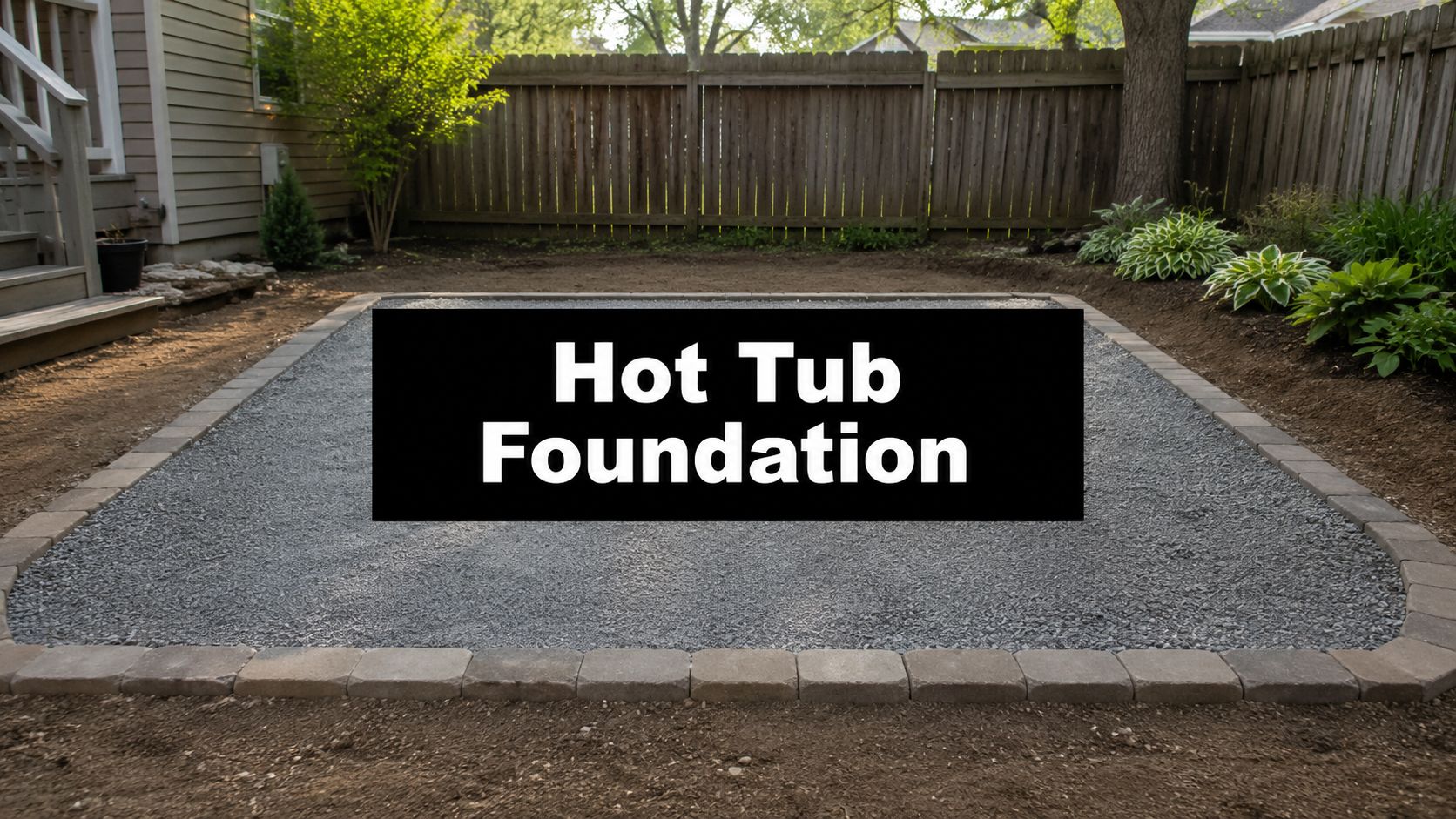
You've picked the spa. You've mapped out the corner of the yard. You can already see the steam on a cold evening in Pennsylvania, Maryland, Delaware, or New Jersey. Then the practical question hits: what is this thing going to sit on?
That's the part many homeowners don't think about until delivery is close. A hot tub foundation kit looks like a quick answer, especially if you've also looked at a shed foundation kit, a base for storage shed, or other modular site products. But a hot tub isn't forgiving. If the base shifts, settles, or drains poorly, the spa can end up out of level, hard to service, and at risk of long-term damage.
In this region, the base matters even more. Wet seasons, winter freeze-thaw cycles, clay-heavy pockets, and soft topsoil can turn a “simple backyard setup” into a rework job if the prep underneath wasn't done correctly. Homeowners searching for concrete foundations, shed foundations near me, gravel shed foundation contractors near me, or excavation near me are often solving the same underlying problem: the structure is only as good as the ground below it.
Your New Hot Tub Needs a Solid Start
A lot of installations follow the same pattern. The homeowner orders a spa, plans the electrical work, clears a path to the yard, and then finds out the manufacturer expects a stable, level, properly prepared base before the unit arrives. That surprise creates stress because the schedule suddenly gets tight.
The primary issue isn't just having “something flat” in place. It's having a foundation that protects the investment from day one. A bad base can lead to movement, poor drainage, uneven stress on the shell, and service headaches later. It can also create warranty problems when the installation doesn't match the manufacturer's guidance.
What homeowners usually discover too late
Many people start by considering whatever seems easiest:
- Bare ground in a level-looking area because it feels firm enough underfoot
- Old patio sections that already exist in the yard
- Loose block or brick setups pieced together over soil
- An existing deck that hasn't been checked for this kind of concentrated load
Those are common starting points, but they're not the same as a purpose-built foundation. The difference shows up after heavy rain, after winter, or after the spa has been full for a while.
Practical rule: If the base isn't level, compacted, and designed to stay stable through the seasons, the hot tub installation isn't finished yet.
That's why homeowners who first searched for things like gazebo foundation, shed foundation, or garage footings and foundations often end up treating the hot tub base with the same seriousness. The logic is identical. You're supporting a permanent load outdoors, on real soil, through changing weather.
Why local site conditions matter
In PA, MD, DE, and NJ, the challenge often isn't the visible surface. It's what sits below it. Organic topsoil, soft fill, trapped moisture, and drainage paths all affect how the base performs over time. A yard can look solid in dry weather and still move when the ground gets saturated or freezes.
That's why a solid hot tub pad should be approached the way an experienced contractor approaches foundation builds for a shed, cement foundations for garage work, or a long-lasting gravel base. The visible surface matters. The prep below it matters more.
Understanding Your Hot Tub Foundation Options
A hot tub foundation kit usually means a prefabricated base system marketed as faster and easier than a poured slab. Some are useful in the right setting. The key is understanding what they are, what they're designed to do, and where they fall short.
The main options homeowners will see
Popular hot tub foundation options include poured concrete slabs, paver patios, modular synthetic spa pads, and crushed gravel with framing, according to PDC Spas' hot tub base overview. That same guidance notes that modular synthetic pads are made from durable plastic or composite material and come as pre-formed interlocking pieces.
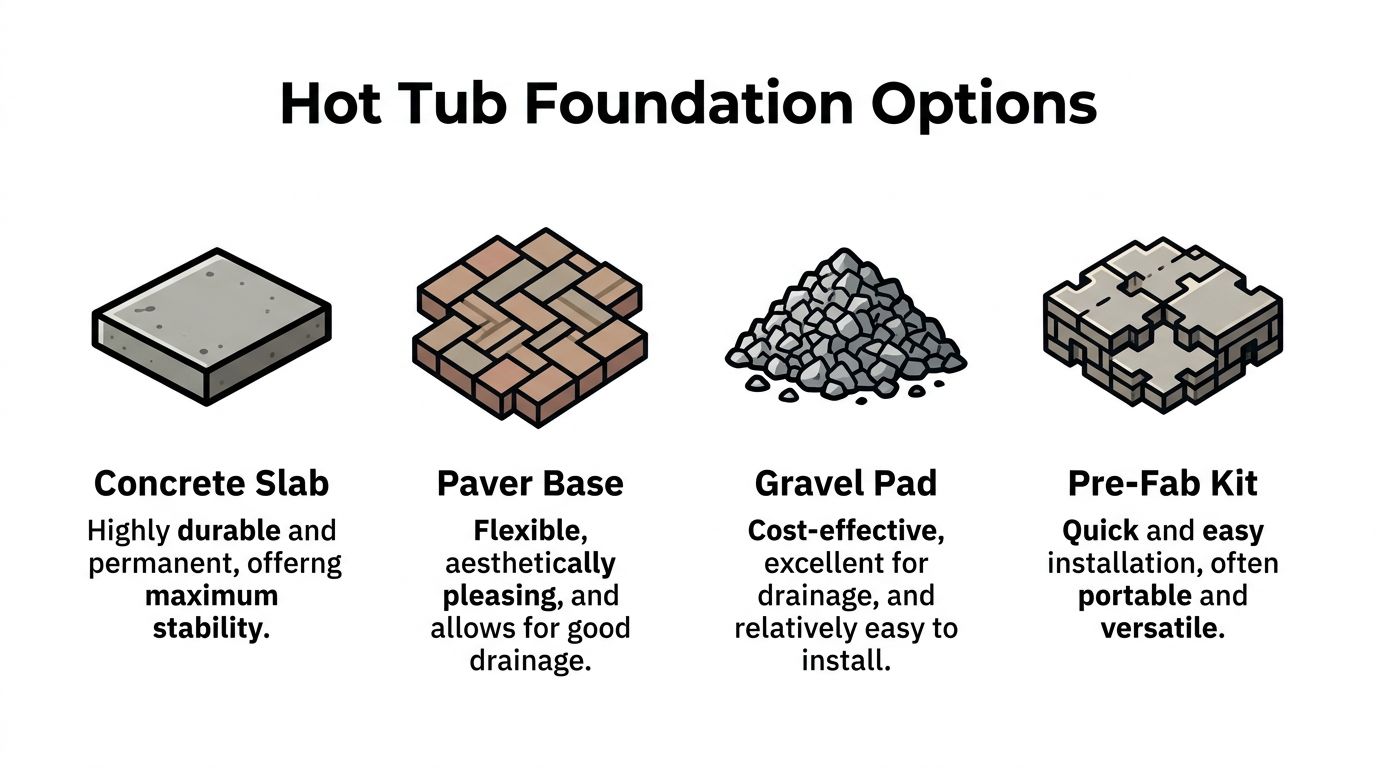
Here's how those choices usually break down in the field:
Concrete slab
This is the most permanent option. It works well when the hot tub location is final and the homeowner wants a long-term surface that won't move around seasonally under normal conditions.
A slab also fits well with larger outdoor improvement plans, especially if the spa sits near a patio, a walkway, or a future covered area.
Paver base
Pavers can look excellent and blend into existing hardscaping. The catch is that the pavers are only as good as the base under them. If the gravel base and leveling work weren't done carefully, the finished surface may look clean at first and still shift later.
Homeowners comparing layouts often review hot tub base paver options because pavers can bridge the gap between appearance and function, but only if the sub-base is right.
Gravel pad
A compacted gravel pad is practical, drains well, and can be a strong choice for many properties. It's especially useful where surface water needs somewhere to go instead of pooling around the tub.
This is also the option that overlaps most with searches like shed foundation gravel base, base for storage shed, and barn shed pad work. The method is familiar, but the finish and compaction standards still need to match the load.
Pre-fab kit
Pre-fab kits usually come as modular panels, grids, or synthetic sections. They appeal to DIY buyers because they seem portable, clean, and simple to assemble.
A kit can be part of a good installation. It is not a substitute for proper excavation, leveling, compaction, and drainage planning.
What the term kit can hide
The word “kit” makes many homeowners think the system itself does all the heavy lifting. It doesn't. In most yards, the success of a kit depends on the base below it, not the plastic or composite material you see at the top.
That's why a hot tub project often belongs in the same decision category as concrete contractors, garage foundation contractors near me, or shed foundations contractors near me. The product on the surface matters. The site prep is what decides whether it lasts.
The Critical Role of Support and Drainage
A hot tub asks a lot from the ground below it. A fully loaded hot tub can weigh more than 4,000 pounds, and foundations must be engineered to handle at least 100+ lbs per square foot, according to Hot Tub Village's foundation guidance. The same source warns that even minor slopes can create uneven stress that leads to structural failure or performance issues.
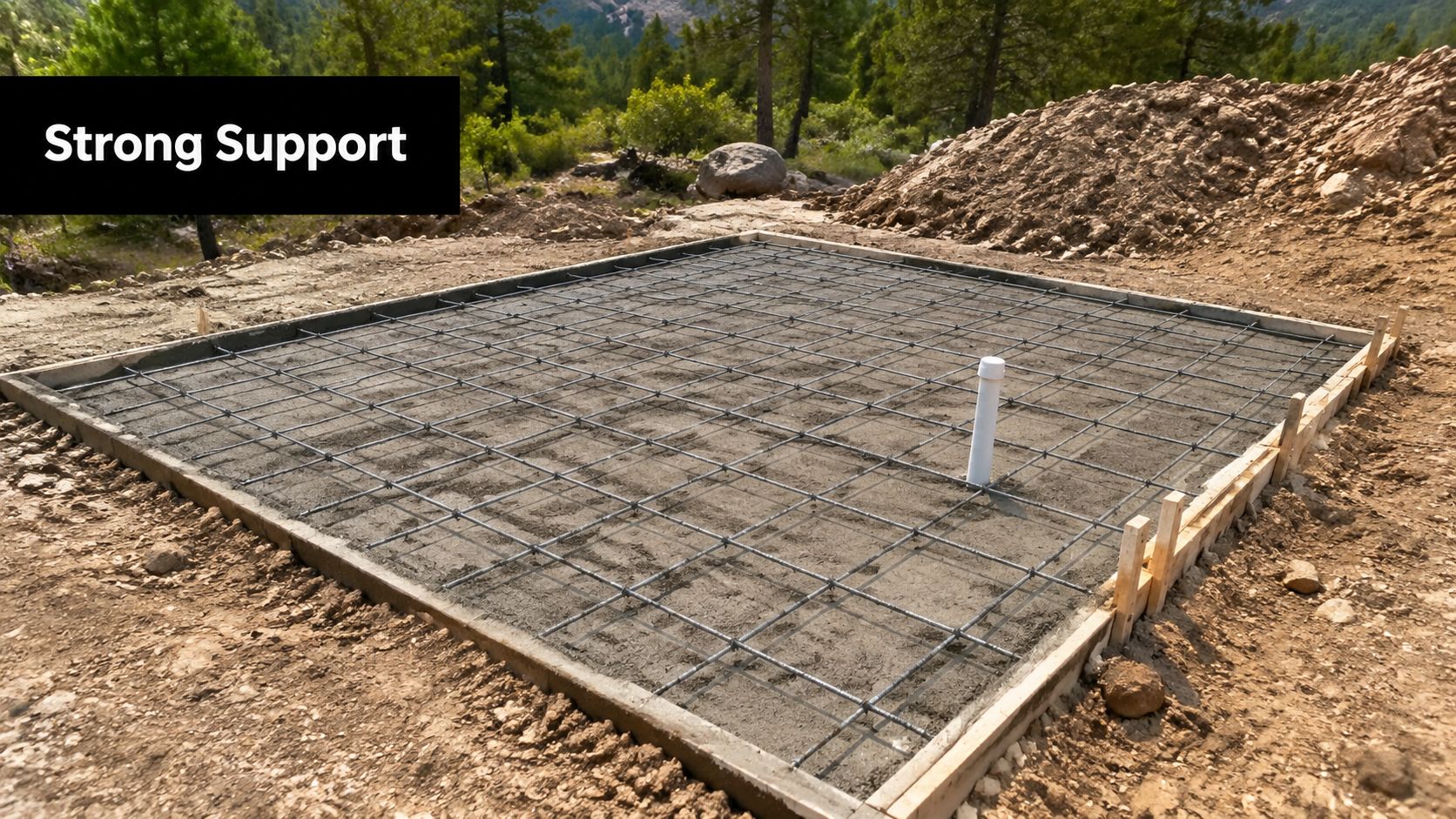
That's the part homeowners need to take seriously. The tub doesn't care whether the yard “seems pretty level.” Once it's full and occupied, small errors become load problems.
Support is about more than flatness
A base can look level on install day and still fail if the ground below it wasn't prepared correctly. Soft soil compresses. Wet soil moves. Fill dirt settles. In this region, repeated freezing and thawing can push and pull surfaces over time.
That's why a properly built concrete foundation or compacted gravel pad often beats a quick assembly approach. The work below grade controls whether the top surface stays where it belongs.
Three things matter most:
- Subgrade stability so the base doesn't settle unevenly
- Compaction so the load is carried by dense material, not loose fill
- Drainage so water doesn't sit under or around the pad
Drainage is where many installs fail
Water is the hidden problem on a lot of hot tub sites. If runoff flows toward the spa, or if the pad traps moisture, the ground can soften and shift. In freeze-thaw conditions, that becomes even more of a risk.
For homeowners who want a deeper look at how water movement affects pad performance, this guide to foundation drainage design is useful. It helps explain why the area around the pad matters almost as much as the pad itself.
A strong hot tub base should shed water, stay level, and remain serviceable after wet weather, not just right after installation.
There's also a practical side to drainage and service access. Water supply, nearby hardscape, and surrounding utilities all need to work together. If you're coordinating the site with mechanical work, it can help to review outside trades too. For example, homeowners dealing with broader backyard utility planning may find expert plumbing assistance for Boerne helpful as an example of how plumbing scope connects to outdoor installation decisions.
Why regional weather changes the recommendation
In PA, MD, DE, and NJ, the best base isn't just the one that looks cleanest on day one. It's the one that handles rain, winter ground movement, and normal seasonal moisture without telegraphing that movement into the shell of the spa.
That's why professionals usually steer homeowners toward properly installed gravel pads or reinforced concrete instead of relying on a “kit-only” solution.
DIY Kits vs Professional Concrete and Gravel Foundations
A homeowner in eastern PA orders a spa, sets a kit on what looks like solid ground, and everything appears fine until the first wet winter. By spring, one corner sits low, the access panel binds, and water hangs around the base after every rain. I see that pattern more often than kit sellers admit, especially in PA, MD, DE, and NJ where clay pockets, fill soils, and freeze-thaw cycles expose weak prep fast.
DIY foundation kits have a place. They can work on small, flat, well-drained sites with strong native soil and careful sub-base preparation. The problem is that many backyards in this region are not simple sites. A hot tub is a concentrated load, and the base has to carry that weight evenly year after year, not just look level on installation day.
Foundation Type Comparison DIY Kit vs Professional Installation
| Feature | DIY Foundation Kit | Professional Gravel Pad | Professional Concrete Slab |
|---|---|---|---|
| Site prep | Often left to homeowner judgment | Excavation, grading, and compaction are part of the install | Excavation, base prep, forming, reinforcement, and finishing are controlled throughout |
| Load support | Depends heavily on sub-base quality | Strong for many spa installations when built over properly compacted stone | Highest rigidity and uniform support when designed for the spa load |
| Drainage performance | Varies by yard slope and installer skill | Very good when built with clean stone and correct grade | Good when surrounding grade directs water away from slab edges |
| Best use case | Flat, simple sites with excellent soil and an experienced DIY owner | Homeowners who want drainage, serviceability, and dependable support | Homeowners who want a permanent, low-movement base |
| Risk of settlement | Higher on disturbed or wet soil | Lower when the base is excavated and compacted correctly | Lower when the slab and subgrade are built correctly |
| Future adjustment | May require partial teardown | More practical to correct or top-dress if conditions change | Durable, but revisions after the pour take more work |
The weak point is usually not the plastic grid or panel itself. The weak point is what sits under it.
Manufacturers of ground reinforcement products make that clear. For example, TRUEGRID installation guidance explains that grid systems still depend on proper excavation, base preparation, and compaction. That is the part many homeowners underestimate, especially on yards with soft topsoil, old landscaping fill, or damp areas near downspouts.
Where DIY installs usually go wrong
I rarely see failures caused by a bad kit straight out of the box. I see failures caused by rushed prep, shallow excavation, and a base that was never compacted enough for a filled spa and its occupants.
Common trouble spots include:
- Topsoil or roots left below the pad, which decay and create voids
- Hand tamping where plate compaction was needed, especially on larger pads
- Edges without restraint, allowing stone or fill to spread outward
- Uncorrected slope, which leaves one side carrying more of the load
- Water discharge nearby, such as gutter downspouts or low spots that keep the subgrade wet
Those issues matter more in this region than they do in generic national how-to videos. Coastal plain soils in parts of Delaware and New Jersey can stay wet. Heavier soils in parts of Pennsylvania and Maryland can hold water, soften, and then move with winter freezing. On a hot tub base, small movement is not really small. It can transfer stress into the cabinet, plumbing connections, and shell support points.
Why professional gravel and concrete hold up better
A professional gravel pad gives you drainage and serviceability. It works well when the crew removes organic material, excavates to stable bearing soil, installs the right stone, and compacts it in lifts. For many backyard spas, that is the best balance of cost, drainage, and long-term performance.
Concrete makes more sense when the tub location is fixed and the owner wants the stiffest, most permanent platform. A properly built slab costs more up front, but it reduces the chance of rutting, edge washout, and uneven support. If you're comparing pricing logic before deciding, this overview of Atlanta concrete pad cost gives a useful picture of the labor, prep, and material factors that usually drive slab cost, even though local pricing in PA, MD, DE, and NJ will be different.
My advice is simple. If the yard has questionable soil, any slope, a history of standing water, or recent fill, skip the kit-only approach and build the base the way a loaded spa demands. A well-prepared gravel foundation or a properly poured concrete slab costs less than replacing a failed pad after the tub is already in place.
Local Codes and Site Prep in PA MD DE and NJ
Delivery day is when site mistakes show up. The truck arrives, the spa is heavy, and suddenly the spot that looked flat from the patio has soft edges, a little fall across the yard, and nowhere for water to go after a hard rain.
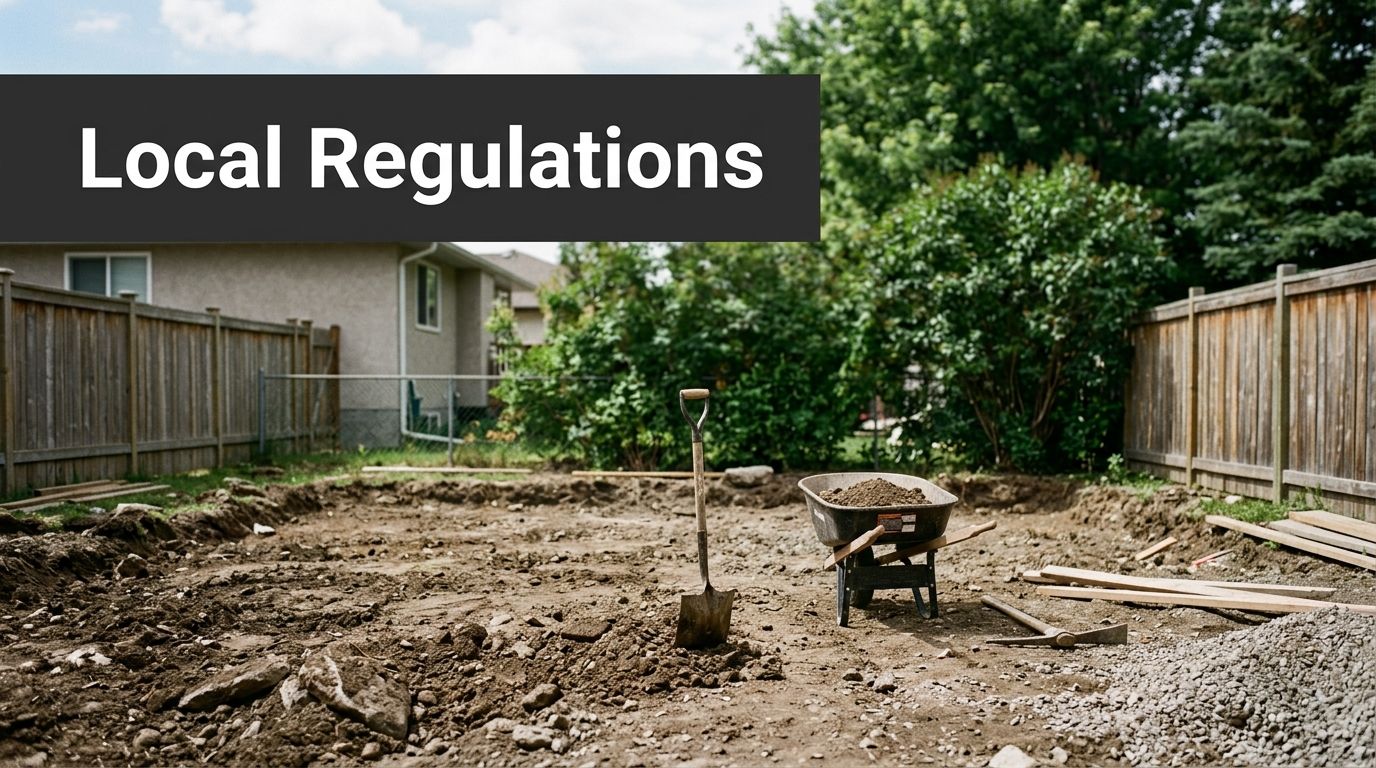
That scenario is common in PA, MD, DE, and NJ because the region brings freeze-thaw cycles, mixed soil conditions, and older lots that were regraded years ago with no record of what fill went where. A base that holds up in a dry, sandy yard in another state may not last the same way here.
The site prep sequence that actually matters
Good prep starts below the surface. Grass, roots, topsoil, mulch, and any soft organic layer have to come out until the crew reaches material that can carry weight. After that, the area gets graded to control water, not just to look level from the house.
That distinction matters. A base can appear flat and still fail if runoff sheets across it, if one edge sits on disturbed fill, or if the subgrade was never compacted.
For gravel-based systems and panel kits, the manufacturer instructions usually detail the actual requirements. The prep is doing the work. For example, the CORE Foundation Kit covers about 62 sq. ft. with dimensions of 90.6" x 98.4" and calls for 3 inches below grade excavation, 2 inches of 25mm road crush, and 10mm washed rock in the panels, according to CORE Gravel's hot tub foundation kit details. That is not a drop-it-on-the-lawn system. It still depends on excavation, proper stone, and compaction.
In this region, I pay close attention to three site conditions before approving any kit-based approach: soft clay pockets, recent fill near the house, and low spots that stay damp after storms. If any of those are present, a professionally built gravel pad or concrete slab is usually the safer answer.
What local permit rules often look like
Code questions also come up sooner than many homeowners expect. In Pennsylvania, the Uniform Construction Code generally exempts accessory structures under 1,000 sq ft from building permits, but local municipalities can still require zoning permits or site plan reviews, especially for foundation type and property line setbacks, according to Wyomissing Structures' Pennsylvania site prep guidance.
The same pattern shows up across PA, MD, DE, and NJ. State rules are only part of the job. Township, borough, county, or HOA requirements may still control setbacks, impervious coverage, drainage discharge, electrical clearances, and how close the tub can sit to a property line or septic area.
Homeowners get tripped up when they hear “no building permit required” and stop there. That does not answer the zoning question. It does not answer the drainage question either.
For a quick visual overview of the kind of site work that goes into a durable pad, this short video is useful:
One overlooked issue with recessed installations
Recessed hot tubs need more planning than surface installations because the base is only one part of the structure. Service access, wall support, drainage around the vault, and safe entry all have to be resolved before the tub is set.
A detail that gets missed often is side clearance for future repairs. The service space may require a concrete vault with 2.5 to 3 feet of access on all four sides, as highlighted in this recessed hot tub access discussion. If that space is not built in from the start, routine service can turn into concrete cutting, decking removal, or expensive relocation work.
That is why regional site prep should be handled as a construction project, not a shopping decision. The right base in PA, MD, DE, and NJ has to match the soil, carry the load, shed water, and satisfy local rules before the spa ever shows up.
Get Your Free Hot Tub Foundation Quote Today
A hot tub is a comfort upgrade. The base under it is a protection decision. If the foundation is wrong, everything above it stays at risk.
That's why the smart choice for most homeowners isn't just finding a hot tub foundation kit online and hoping the yard cooperates. It's matching the foundation type to the soil, drainage pattern, and permanence of the installation. In some yards, that means a compacted gravel pad. In others, a reinforced concrete slab is the better long-term answer.
Signs you should bring in a pro
If any of these sound familiar, it's worth getting expert help before delivery day:
- The yard has slope and you already know water moves across the area
- The soil feels soft after rain or has a lot of topsoil and organic material
- You want a permanent setup near a patio, gazebo, or outdoor living area
- You don't have compaction equipment or experience reading grade
- You're also planning nearby improvements like a gazebo foundation, driveway contractors near me, or additional flatwork
What a smooth process should look like
A good foundation project shouldn't feel confusing. The process should be straightforward:
- Site review to look at grade, drainage, access, and soil conditions
- Foundation recommendation based on whether gravel or concrete makes more sense
- Clear quote so you understand the scope before work starts
- Excavation and prep done to create a level, durable base
- Final install that leaves the site ready for spa delivery
“A well-built pad isn't just there to hold weight. It keeps the entire installation predictable.”
Homeowners looking for shed foundation blocks, gravel shed foundation contractors near me, concrete contractors, concrete forms, or driveway companies near me often discover they need one contractor who understands the whole site, not just one surface product. That's especially true when the yard has drainage or access challenges.
If you're in Pennsylvania, Maryland, Delaware, or New Jersey, getting a quote before the hot tub arrives is the easiest way to avoid rushed decisions and last-minute compromises.
If you need a reliable hot tub pad, gravel base, or concrete slab in Pennsylvania, Maryland, Delaware, or New Jersey, Firm Foundations can help. The team handles excavation, site prep, drainage-focused gravel pads, and long-lasting concrete foundations for hot tubs, sheds, garages, gazebos, and more. Reach out for a free quote and get a base built to stay level, drain well, and protect your investment for the long haul.