
Horse Loafing Sheds: Expert Planning Guide
If you own horses in Pennsylvania, Maryland, Delaware, or New Jersey, you already know the moment. The sky turns dark, the wind shifts, and you start looking out toward the pasture to see whether your horses have somewhere dry to get out of the weather.
That worry usually starts long before the shed is delivered. It starts when a low area stays wet for days, when a gate line turns into mud, or when last winter showed you exactly where water sits on your property. A shelter helps, but horse loafing sheds only work when the base under them stays firm, drains well, and holds up through our regional freeze-thaw weather.
For most owners, the goal isn't complicated. You want a safe run-in shelter, less mess around the entrance, and a setup that doesn't need to be redone after a couple of hard seasons. If you're searching for shed foundations near me, or trying to sort out whether you need gravel or concrete under a horse shelter, the right answer comes down to the same thing every time. Build the shelter around the site conditions, not the other way around.
Why a Proper Shelter Matters for Your Horses in PA and MD
A horse standing in open pasture can handle a lot, but that doesn't mean open exposure is a good management plan. In this part of the Mid-Atlantic, weather changes fast. Summer storms roll in hard. Winter wind finds every open field. Shoulder seasons bring the kind of wet ground that seems manageable until hooves start churning it into a mess.
What horse owners usually notice first
Most owners don't start with the shelter itself. They start with the problem around it.
One pasture gets slick after heavy rain. Another has decent grass but no wind break. A temporary setup worked for a while, then a wet winter exposed the weak point. Bare ground at the shelter opening became mud, then ruts, then standing water.
That pattern matters because horses don't use shelter the way people use a garage. They move in and out constantly. They crowd the entrance. They paw, turn, and loaf in the same spots. If the area underfoot stays wet, the shelter stops feeling like a solution and starts creating a new maintenance issue.
Practical rule: A horse shelter should solve exposure problems without creating drainage problems.
Why loafing sheds make sense
A loafing shed, also called a run-in shed, gives horses freedom to enter and leave on their own. That open design fits pasture life well. Horses can get out of rain, sun, and wind without being confined in a full barn setup.
It also fits owners who want a simpler shelter option than enclosed horse barns in PA or a larger stable build. For smaller herds, turnout areas, and secondary pasture shelter, loafing sheds are often the most practical choice.
Shelter only works when the base works
Many projects fail at this stage. Owners spend time choosing siding, roof color, and dimensions, then place the shed on ground that was never prepared for traffic, runoff, or winter movement.
In our region, that's asking for trouble. If the subgrade stays soft, the shelter won't stay clean at the threshold. If the site isn't graded correctly, water will find the low side and sit there. If the foundation choice doesn't match the animals and the location, the shed won't perform the way you expected.
That's why the smartest horse owners think about the base first. The shelter protects the animal. The foundation protects the shelter, the footing around it, and the investment you've made in both.
Understanding Horse Loafing Sheds Types and Sizes
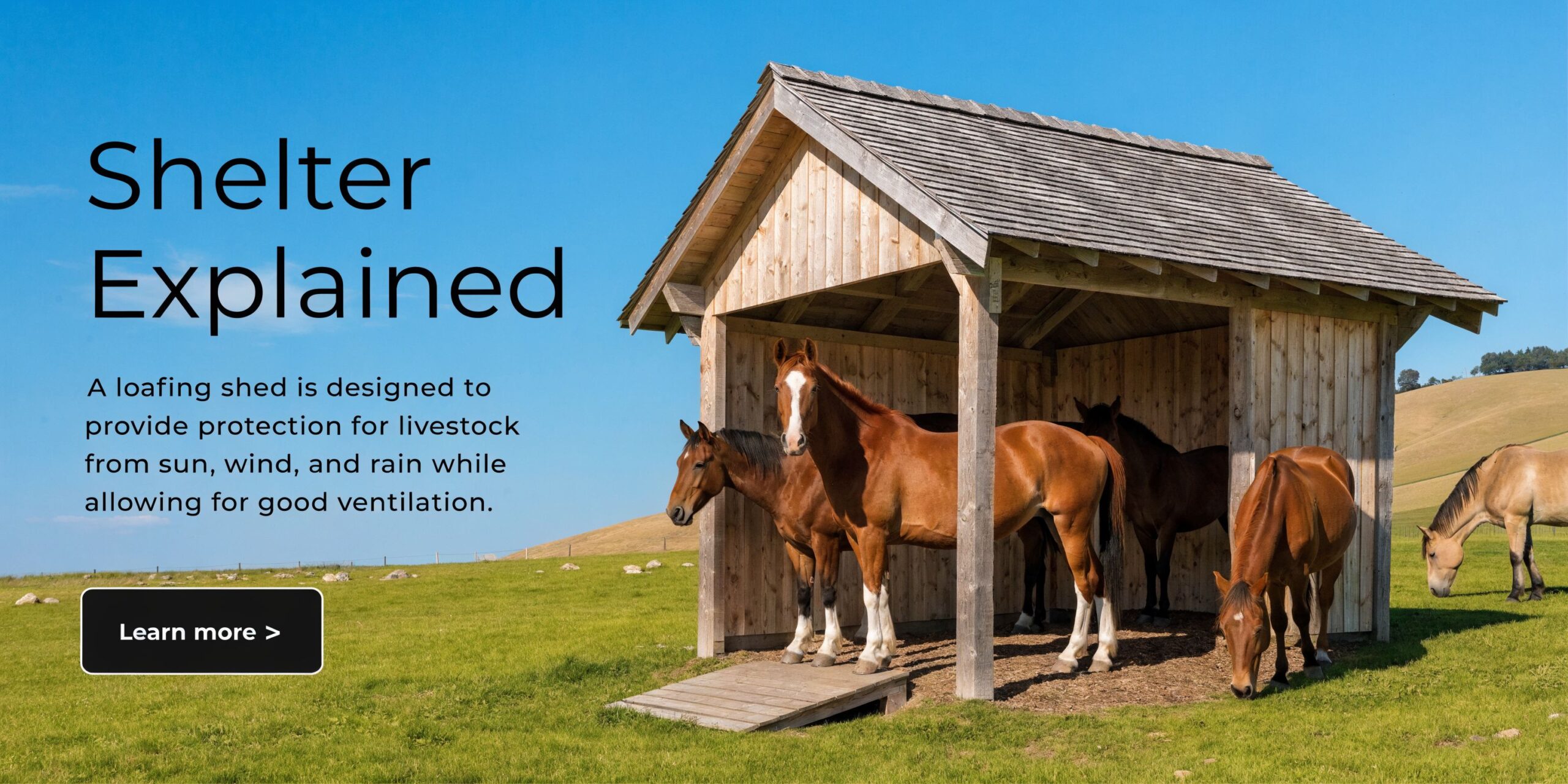
A loafing shed is a three-sided run-in shelter placed in a pasture or dry lot so horses can get out of weather while keeping free movement. It's simple by design, but simple doesn't mean casual. The material, size, and layout all affect how well the shed works day to day.
Wood vs metal in real use
Wood sheds appeal to owners who want a traditional farm look. They can blend nicely with fencing, barns, and existing outbuildings. They also tend to be easier to customize visually.
Metal sheds usually win on lower upkeep. They don't have the same warping and splitting concerns that show up over time with wood, especially in exposed pasture conditions. For many owners, the better choice comes down to what level of maintenance they're willing to handle and how permanent they want the structure to feel.
Neither material fixes a poor base. That's the part that doesn't change.
Size the shed for the herd, not the price tag
Too many horse loafing sheds get chosen by what's easiest to fit into a budget or onto a trailer. That often leads to a shelter that looks acceptable on paper but creates tension in the field.
According to industry sizing guidance for loafing sheds, 80 to 120 square feet per horse for the first two horses is the standard range. That makes a 10×18 shed with 180 square feet a common fit for 1 to 2 horses. The same guidance says each additional horse requires about 60 square feet, which makes a 12×24 shed with 288 square feet the minimum for 3 to 4 horses. Heights typically slope from 8 feet at the back to 10 to 12 feet at the front.
That gives owners a practical starting point:
- One horse: A 12×12 is the absolute minimum often discussed in horse management conversations, but many owners prefer more room if the horse spends a lot of time using the shelter.
- One to two horses: A 10×18 is a common working size.
- Three to four horses: A 12×24 is the minimum range where the shed starts functioning comfortably for a small group.
Why more space matters in an open-front shelter
Open-front sheds create freedom, but they also create social pressure. A dominant horse can control access if the shelter is undersized or awkwardly placed. When that happens, the timid horse doesn't benefit from the shed even though the structure is technically there.
A better setup often includes:
- Enough width at the front: Horses need clear entry and exit.
- Practical depth: Deep enough to get out of weather without crowding.
- Room to move: No dead-end feel inside the shed.
Here's a quick visual overview before you finalize a design:
Bigger isn't always better
A lot of owners assume one big shed is the answer. Sometimes it is. Often it isn't.
If you have herd dynamics issues, multiple smaller shelters can work better than one oversized structure because horses don't all have to negotiate one entrance area. That's especially useful in turnout groups where one horse tends to guard space.
The best shed size is the one your whole group can use without conflict, not the one that looks largest on the invoice.
The Health and Management Benefits of Loafing Sheds
A loafing shed earns its keep in two ways. It helps the horses, and it makes daily management easier for the people caring for them.
Better comfort through changing weather
Pasture horses still need relief from exposure. An open-front run-in gives them a place to step out of summer heat, wind, rain, and winter weather without forcing them into a full stall routine.
As noted in this horse run-in shed overview, run-in sheds help prevent heat stress in summer and respiratory risks in winter, while improving horse calmness and overall herd well-being. That's the practical value owners see. Horses settle better when they can choose cover instead of standing exposed in a field.
A good shelter also supports more consistent pasture use. Horses have a retreat area, which helps keep them from clustering in the same fence corners or gate areas during rough weather.
Less stall work and less bedding
For owners moving away from full-time stabling, this is often the biggest day-to-day advantage. The same source notes that run-in sheds can eliminate daily cleanouts and cut bedding use by up to 80 to 90 percent compared to traditional stabling.
That doesn't mean a loafing shed is maintenance-free. It isn't. You still need to manage manure, wet spots, and traffic areas.
But the workload changes in a useful way:
- You spend less time on full stall-style cleaning.
- You use less bedding in a pasture shelter setup.
- You focus more on footing and drainage around the shelter entrance.
Why the management savings depend on the ground
This is the part owners sometimes miss when comparing a run-in shed to a stall barn. The labor savings only show up if the area around the shed stays usable.
If the entrance turns into a muddy churn, you'll trade stall work for footing problems. If runoff cuts through the pad, you'll keep hauling material back into the same area. If the shed sits in a wet pocket, the horses may avoid it or track that mess everywhere.
A loafing shed reduces chores when the shelter area stays dry enough to function like a shelter, not a mud hole with a roof.
A simpler setup that still supports good horse care
Not every property needs a full barn. Some owners need turnout shelter for a small herd. Others need a secondary structure in a back pasture. Some want a practical solution for horses that live outside and only need weather cover, not enclosed housing.
In those cases, horse loafing sheds often hit the right balance. They support natural movement, reduce labor compared with full stalls, and give horses a calmer place to ride out rough weather. Done right, they feel simple because the planning was solid.
Choosing Your Loafing Shed Foundation Gravel vs Concrete
The shed gets the attention. The foundation decides whether the whole setup stays usable.
That isn't an exaggeration in PA, MD, DE, and NJ. Our weather exposes bad site work fast. Water gets underneath, heavy traffic breaks down the entrance, and winter movement starts shifting what looked level when the shed arrived.
Why the base is non-negotiable
According to this foundation guide for loafing sheds, poor foundations are a primary cause of shed failure. The same source notes that frost heave in PA and NJ winters, with 50+ cycles per year, can crack slabs without proper 36 to 48 inch footings. It also states that professionally installed gravel pads 6 to 12 inches thick with a crown reduce erosion by 80 percent compared to bare dirt.
Those aren't small details. They explain why a shed placed directly on native soil rarely performs the way owners hope it will.
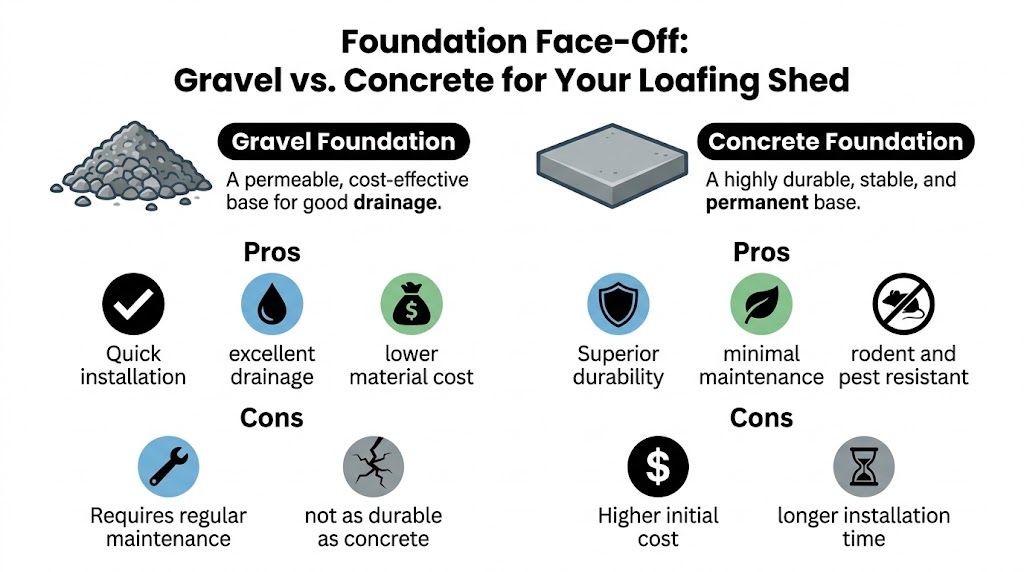
Gravel pad vs concrete slab at a glance
Some horse owners assume gravel is the budget option and concrete is the premium option. That framing is too simple. Each has a right use case.
| Feature | Gravel Pad Foundation | Concrete Slab Foundation |
|---|---|---|
| Drainage | Excellent when built correctly with proper grading and crown | Strong surface stability, but drainage has to be designed around the slab |
| Upfront cost | Often lower than a slab | Usually higher because of forming, pouring, and finishing |
| Maintenance | May need periodic topping and edge attention in high-traffic areas | Lower routine maintenance once installed correctly |
| Permanence | Flexible and practical for many shed installations | More permanent, stable, and finished |
| Best fit | Pasture shelters where drainage is the top priority | Sites needing a hard surface and long-term fixed installation |
When gravel works best
For many horse loafing sheds, a gravel shed foundation is the right answer. Horses track moisture in and out. Water needs somewhere to go. A properly prepared gravel pad supports drainage instead of trapping it.
Gravel also makes sense when:
- The site is exposed: Water moves across the area during storms.
- The entrance gets repeated hoof traffic: You need a surface that drains well.
- You want a practical base for a run-in shed: Especially in pasture settings.
The key phrase is properly prepared. Dumped stone isn't a foundation. A real gravel pad needs excavation, base prep, compacted material, and grading that moves water away from the structure.
If you're comparing base options and want a practical reference point, these plans for outdoor shed foundations help show how foundation planning affects the whole installation.
When concrete makes more sense
A concrete foundation can be the better choice when the shed is part of a more permanent layout, when the owner wants a cleaner finished floor, or when the site calls for a hard surface with minimal routine upkeep.
Concrete tends to fit owners who want:
- A fixed installation that won't be moved
- A cleaner interior floor surface
- A more finished look near other concrete foundations, driveways, or hardscape elements
It has to be done correctly. In this region, that means respecting frost conditions, edges, drainage, and the way runoff behaves around the slab. A flat slab in the wrong location can become a water collection point.
What doesn't work
A few approaches almost always cause trouble:
- Bare ground under the shed: It starts cheap and ends expensive.
- Stone spread without excavation: The stone disappears into soft soil and the shelter settles unevenly.
- A level pad with no drainage plan: Water stays where horses stand.
- Choosing by price alone: The less expensive option upfront can become the more expensive one after repairs.
Choose the foundation based on drainage, traffic, and permanence. Don't choose it based on whichever material sounds simpler.
The right decision for most owners
If the shelter sits in active pasture and drainage is the main concern, gravel usually wins. If the shed is part of a fixed, long-term layout and the site can support a slab design, concrete may be the better fit.
The fundamental decision isn't gravel versus concrete in the abstract. It's which system matches your land, your horses, and the way the shelter will be used through every season.
Site Preparation Drainage and Placement Best Practices
A loafing shed can be well-built and still fail at the site level. That's what happens when placement is treated like an afterthought.
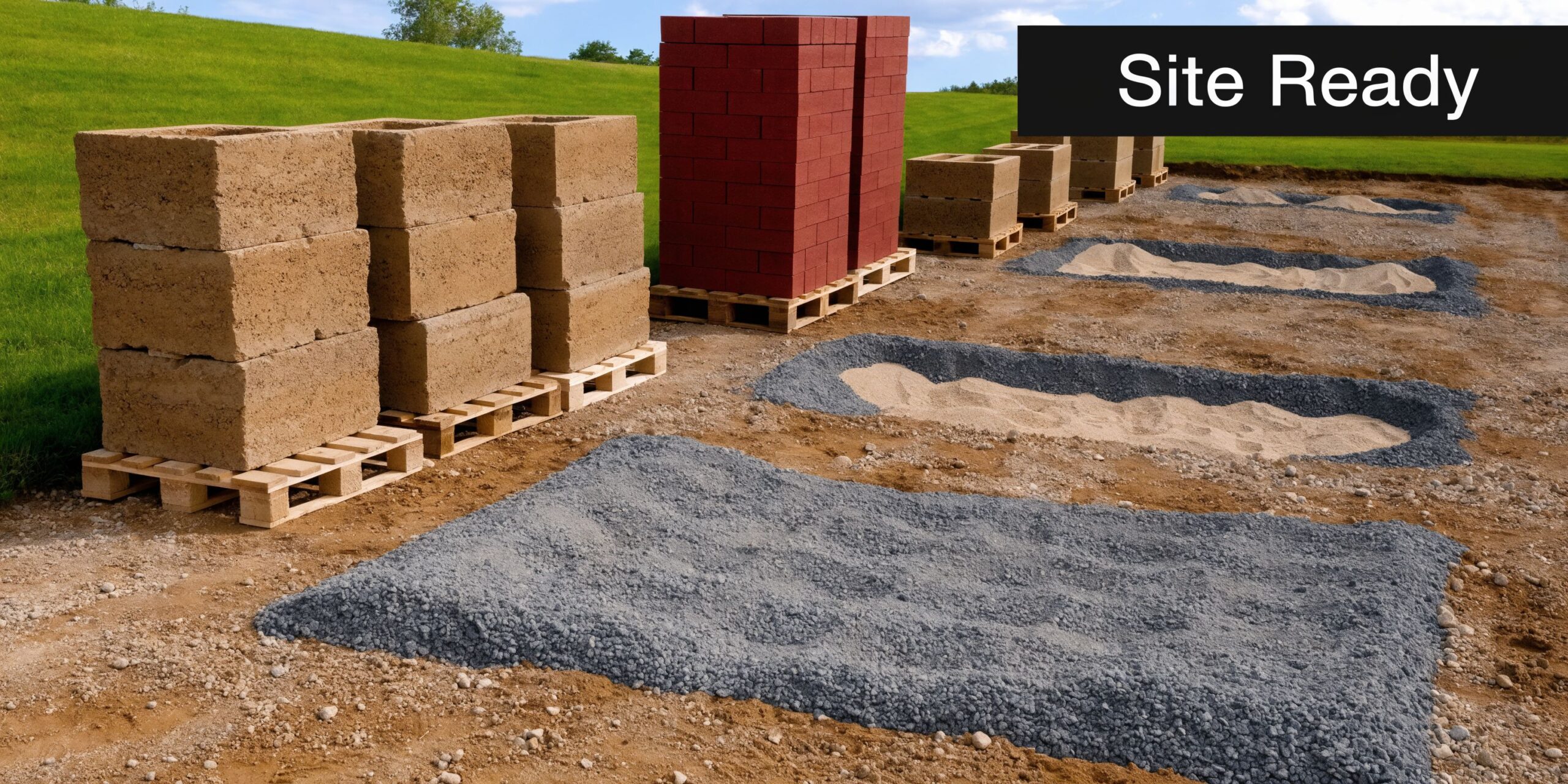
The best horse shelter locations are usually the least dramatic parts of the property. Slightly higher ground. Predictable drainage. Good access for installation and maintenance. Enough room around the shed so the approach doesn't become a funnel of churned mud.
Start with the ground you already have
Walk the site after heavy rain if you can. That tells you more than a dry-weather visit ever will.
Look for:
- Low spots: If water stands there now, the shed won't fix that.
- Traffic patterns: Horses will wear the same approach areas repeatedly.
- Runoff direction: You need water moving away from the structure.
- Access for equipment: Excavation and material delivery need working room.
Placement affects behavior as much as drainage
A shed can be on a solid base and still be inconvenient for the horses if it's facing the wrong way or tucked into a cramped corner. Open-front shelters need enough clear area in front for horses to enter, exit, and sort themselves without feeling trapped.
Good placement usually means:
- Shelter access that isn't blocked by fencing pinch points
- Room in front of the opening for dry footing
- Orientation that avoids driving weather straight into the opening when possible
You also want enough surrounding space to maintain the site. A shed jammed too close to a fence line or tree line may save room on paper but make grading and cleanup harder.
Drainage is built, not hoped for
Most mud problems around horse loafing sheds don't come from the shed. They come from poor water control around the shed.
That means proper site prep should include:
- Excavation of weak top material where needed
- Grade correction so water leaves the area
- Compaction so the base doesn't pump and settle
- A defined surface system such as gravel or concrete
- Runoff management around the perimeter
On some sites, surface grading does most of the work. On others, you may need a swale or a simple drain solution to keep runoff from crossing the pad area.
Water doesn't need much room to cause trouble. If it can slow down at the shed, it will.
Common site mistakes
Owners usually regret the same decisions:
- Putting the shed in the flattest spot without checking drainage
- Using an area that's convenient for delivery but wet year-round
- Skipping excavation because the ground looked firm in summer
- Ignoring the approach area and only preparing the footprint
That last one matters a lot. Horses don't stand neatly inside the perimeter lines. They gather at the front edge, just outside the opening, and that area takes abuse.
Think beyond the footprint
The foundation should support the structure. The surrounding grade should support the way horses use it.
That's why experienced site prep for horse shelters always looks a little bigger than expected. The useful work area includes the shed, the entrance, the runoff path, and the access route. If one of those fails, the whole installation feels disappointing even when the shed itself is fine.
Budgeting and Hiring a Foundation Contractor in Your Area
Most horse owners don't mind paying for the job once. They mind paying for it twice.
That's why budgeting for horse loafing sheds should include more than the shelter price. The total project cost includes the foundation, site prep, drainage work, access for equipment, and any corrections needed to make the location usable through wet seasons.
Budget for the whole installation
The shed and the base should be planned together. A lower shed price can get wiped out quickly if the site needs unexpected excavation or if the chosen location turns out to be too wet without drainage work.
It's also smart to check local zoning and permit requirements before delivery day. Requirements vary across Pennsylvania, Maryland, Delaware, and New Jersey, and they can differ by township or county. A simple pasture shelter on one property may be treated differently on another depending on placement, setback rules, and whether the structure is considered portable or permanent.
What to ask before you hire anyone
If you're searching for shed foundations contractors near me, gravel shed foundation contractors near me, or concrete foundations contractors, ask direct questions.
A solid checklist includes:
- License and insurance: Verify both, and don't rely on a verbal answer alone. If you want a practical reference, this guide on how to verify a contractor's license lays out the basic process clearly.
- Local climate experience: A contractor who works in PA, MD, DE, and NJ should understand wet sites, frost movement, and rural access conditions.
- Excavation capability: Many pad problems start before the base material arrives. You want someone who can handle grading, not just dump stone.
- Scope clarity: Ask what's included. Excavation, compaction, grading, stone depth, forming, cleanup, and drainage details should all be clear.
- Photos of similar work: Not generic construction photos. Look for actual shed pad, barn shed, gazebo foundation, and garage footing projects.
The details that separate a good quote from a risky one
One sentence proposals create the most problems. If a quote says only "install shed pad," you still don't know much.
A useful quote should tell you:
- What foundation type is being installed
- Whether the site includes excavation
- How drainage will be addressed
- What the finished area includes outside the structure footprint
- How access or difficult terrain affects the work
For a useful example of what a specialized contractor offers on this side of the work, review these concrete foundations contractors services.
Match the shed size to the herd before you sign
Foundation planning and shed sizing belong together. An undersized shelter often creates behavior issues inside the shed, and that stress tends to show up as wear at the structure edges. According to this loafing shed fact guide, a proper foundation helps prevent structural issues, and undersized sheds often show increased damage to kickboards, which should be 4 feet high and pressure-treated. The same source notes that pairing the right shed with a professionally installed gravel pad sloped at 1 to 2 percent for drainage is essential for preventing mud-induced hoof issues and foundation erosion.
That matters for budgeting because a foundation isn't separate from horse behavior. If the shelter is too small, the site around it gets punished harder.
The cheapest bid often assumes the site is easier than it is. The most reliable bid usually shows that the contractor looked closely at drainage, access, and animal use.
What a trustworthy hiring process feels like
It should feel straightforward. Clear communication. Specific scope. No fuzzy language about what "might" be included. No pressure to make the site fit a shortcut.
For horse owners, that kind of contractor is worth waiting for. You're not just buying a base for a shed. You're buying a setup that should stay usable when the pasture is wet, the weather turns rough, and the horses test every weak point in it.
Frequently Asked Questions About Loafing Shed Foundations
Can I place a horse loafing shed directly on bare ground
You can, but it's usually a short-term decision with long-term consequences. Bare ground breaks down under hoof traffic, especially at the entrance. In wet weather, that area turns to mud quickly. In dry periods, it can rut, shift, and settle unevenly.
For this region, a prepared base is the safer choice for the structure and for the footing around it.
Is gravel or concrete better for horse loafing sheds
It depends on the site and how the shelter will be used. Gravel often works very well for pasture shelters because it supports drainage and handles wet conditions more forgivingly. Concrete can be the better fit for a fixed installation where a hard, finished surface makes sense.
The right answer comes from the land, not a one-size-fits-all rule.
How much area should be prepared beyond the shed footprint
More than just the exact shed outline. Horses gather at the front opening, and that entrance area takes heavy wear. If only the footprint is prepared, the first problem usually shows up just outside the shelter where horses stand, turn, and wait out weather.
A useful site plan treats the approach area as part of the job.
Does site slope automatically rule out a loafing shed
No. Many sloped sites can work well with proper excavation, grading, and drainage planning. Trouble starts when someone tries to force a level structure onto an uncorrected slope without addressing runoff.
A sloped property needs more thoughtful prep, not abandonment.
What site access does a contractor usually need
Enough room to bring in excavation equipment, base material, and any tools needed for grading or concrete work. Narrow gates, soft lawns, overhead limbs, and steep turns can all affect how the work gets done.
It's smart to walk access routes before scheduling the project so there aren't surprises on installation day.
How long should a properly built foundation last
A well-built foundation should serve the shed for the long term, provided the site was selected well and drainage continues to function. The exact lifespan depends on use, weather exposure, maintenance, and whether the installation matches the conditions on the property.
The key factor isn't luck. It's whether the base was designed and installed correctly from the start.
Should I install the shed first and figure out the base later
That usually creates more work. Once the structure is in place, access gets tighter and corrections become harder. It's far easier to prepare the site first, set grades correctly, and build the right base before the shed arrives.
That sequence saves money, time, and frustration.
If you're planning horse loafing sheds and want the base done right the first time, Firm Foundations serves Pennsylvania, Maryland, Delaware, and New Jersey with gravel pads, concrete foundations, excavation, and site preparation built for long-term performance. Whether you need a pasture run-in shed pad, a barn shed base, or a full concrete foundation for a more permanent structure, the team can help you choose the right solution for your site and provide a clear quote before work begins.