
Gravel Driveway Drainage Solutions in [City, State]
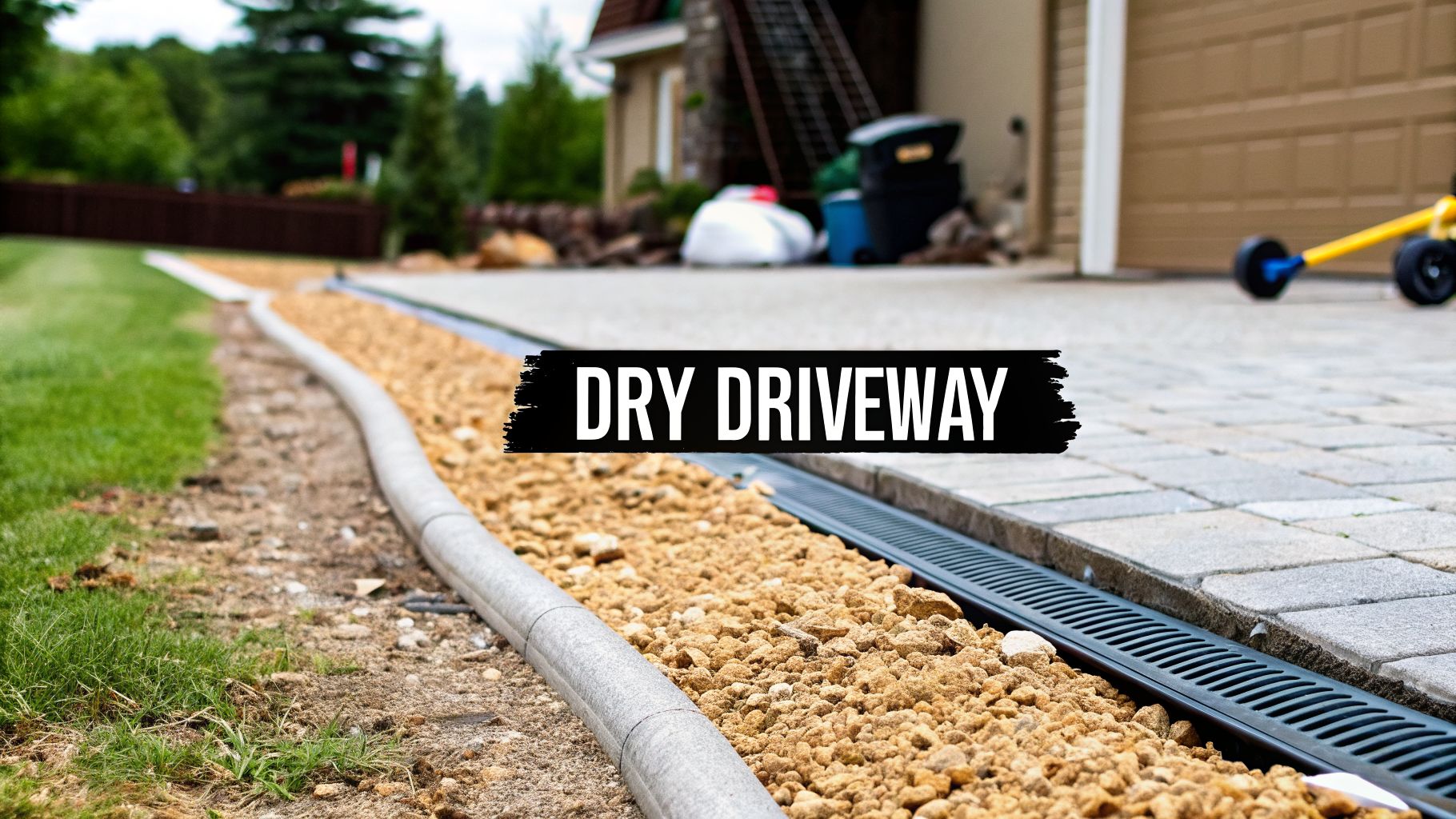
A beautiful gravel driveway offers a timeless look to homes across Pennsylvania and Maryland. But after every storm, that classic charm can turn into a frustrating mess of ruts and puddles. If you're tired of your driveway washing out, we're here to help you find a real fix.
At Firm Foundations, we understand the headaches that come with poor drainage. This isn't about temporary patches; it's about building a stable, long-lasting surface that handles whatever the weather throws at it. As your local shed foundations contractors near me, we apply the same principles of solid construction to every project, ensuring your driveway is as reliable as the foundation for your new shed or garage.
Your Guide to a Puddle-Free Gravel Driveway
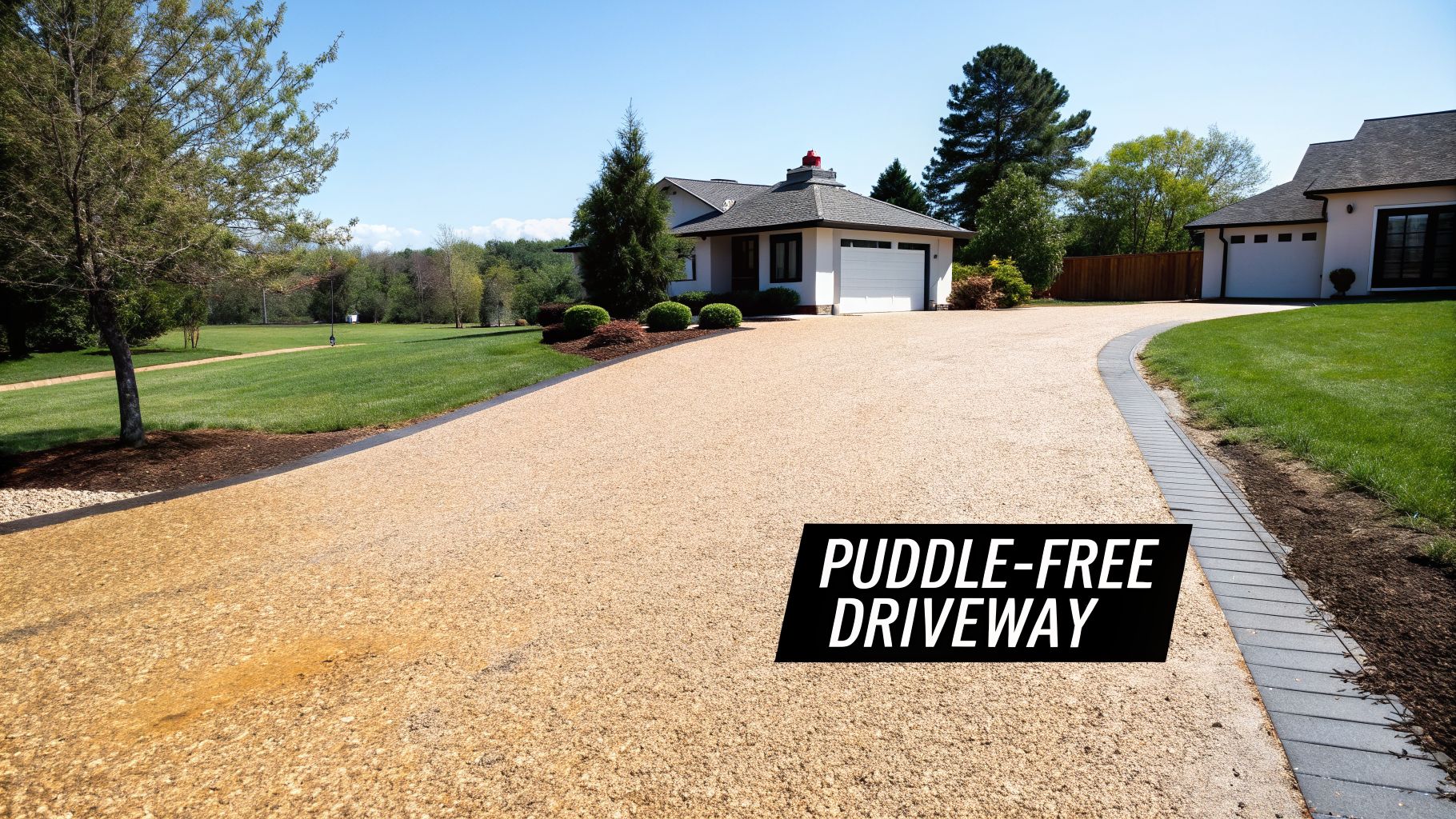
The secret to protecting your investment lies in professional site prep, proper grading, and intelligent drainage. As a trusted local contractor serving PA, MD, DE, and NJ since 2011, our team at Firm Foundations builds driveways designed for our region's specific climate. We know a dry, reliable driveway isn’t a luxury—it's a necessity for homeowners and businesses alike. Whether you need a simple base for a storage shed or a complete driveway overhaul, our commitment to quality remains the same.
Why Your Driveway Keeps Failing
Many homeowners think dumping another load of gravel will solve their drainage problems. While it might help for a little while, it's just a band-aid. The real issue is almost always hidden below the surface, rooted in poor initial site work and a lack of water management.
To get a permanent solution, you have to address what’s actually causing the water to stick around. From our experience building everything from concrete foundations to durable driveways in [City], it usually comes down to a few key problems:
- Improper Grading: Water always finds the lowest point. If your driveway is flat or has dips, that’s exactly where puddles will form, creating a constant headache.
- Compacted Base: Over the years, the ground beneath the gravel can get packed down so hard that water can't soak through, essentially creating a waterproof barrier right where you don't want it.
- Lack of a Crown: A proper driveway should have a slight arch in the middle—what we call a "crown." This shape directs water to run off the sides instead of pooling in the tire tracks.
- External Water Runoff: Water from your lawn, roof, or a nearby slope can easily overwhelm a driveway that isn't equipped to divert it, leading to washouts and erosion.
A driveway built to last should actively manage water, not just sit there and take a beating. When we take on a project, we focus on getting everything right from the start—excavation, base compaction, and final grading—to prevent that endless cycle of costly repairs. As your local excavation near me experts, we have the skills to solve these issues for good.
This focus on water management is a crucial part of property ownership. It fits right in with other essential spring home maintenance tips that help protect your home from water-related issues.
To help you pinpoint what's going on with your specific driveway, we've put together a quick guide to the most common issues we encounter.
Quick Guide to Common Drainage Problems and Solutions
Identify your driveway issue and see the most effective professional solution Firm Foundations recommends.
| Common Problem | Primary Cause | Recommended Solution |
|---|---|---|
| Puddles in the middle | Lack of a crown or improper grading | Regrade the driveway to create a central crown |
| Washed-out edges | Uncontrolled runoff from the driveway surface | Install swales or shallow ditches along the sides |
| Deep ruts & soft spots | Saturated sub-base and poor foundation | Excavate and install a proper base with geotextile fabric |
| Water flowing onto the driveway from the yard | Landscape slope and external runoff | Install a French drain or culvert to intercept water |
| Gravel washing away down a slope | Steep grade and heavy water flow | Add check dams or underdrains to slow and manage water |
Whether you need a full excavation and regrading or a targeted system like a French drain, our team has the local expertise. We are the driveway contractors near me that residents in Pennsylvania and Maryland rely on for results that last.
How to Diagnose Your Driveway's Drainage Failures
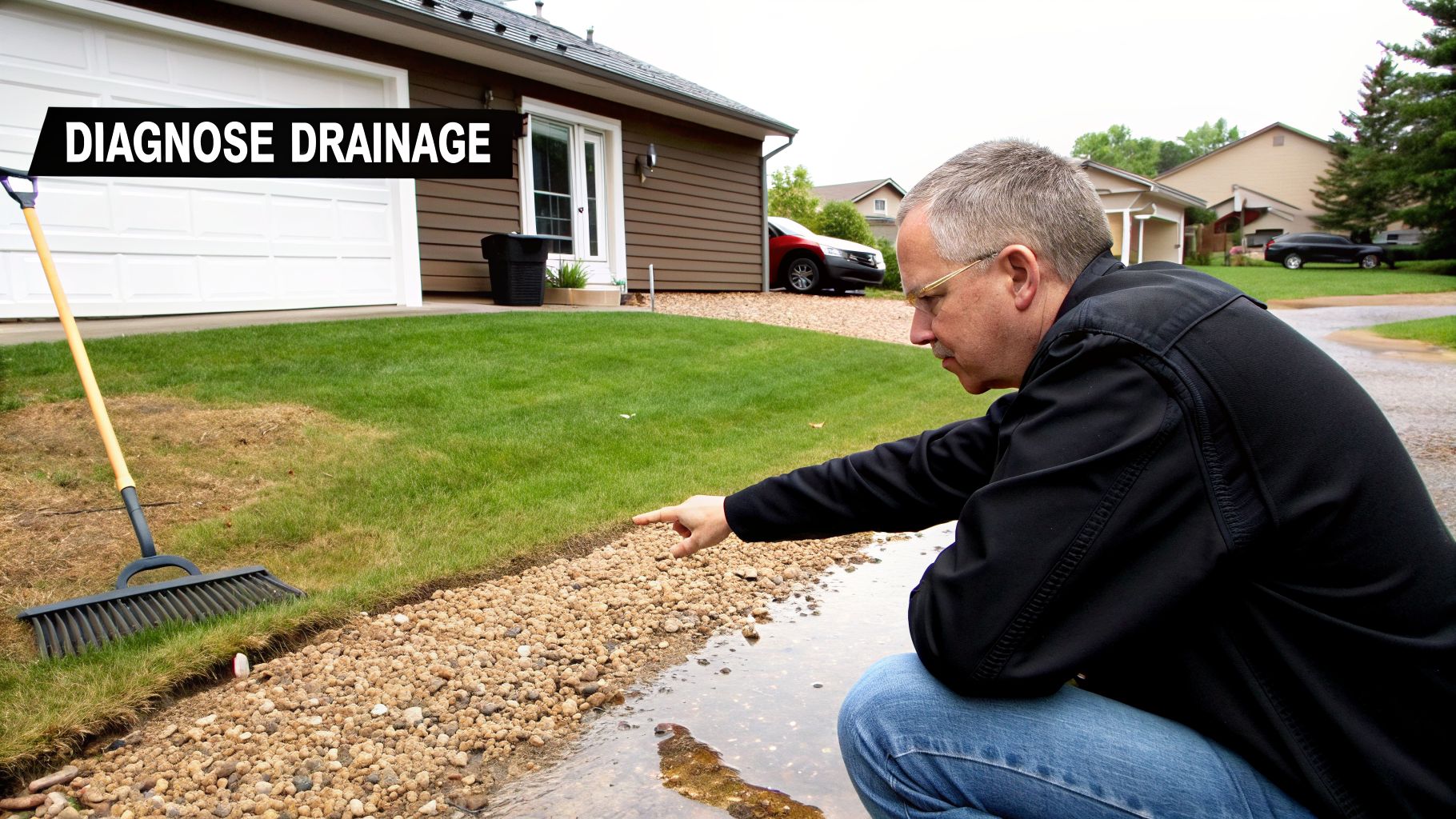
Before you can put the right gravel driveway drainage solutions into place, you have to play detective. The first step toward a lasting fix is to understand exactly where and why water is creating problems. This is less about technical know-how and more about careful observation.
The best time to see what’s really going on is during or right after a good, steady rain. This is when the weak points in your driveway become impossible to miss. So, grab an umbrella, take a walk, and pay close attention to how water is behaving.
Pro Tip: Use your phone to take photos or a quick video. Having a clear record of where water pools, how it flows, and where gravel is washing out is incredibly valuable when you discuss solutions with a contractor like Firm Foundations.
Spotting the Telltale Signs
As you walk your property, keep an eye out for specific clues. These symptoms will tell a story about the root cause, whether it’s a problem with the grade, a failing base, or something else entirely.
- Puddles and Standing Water: Where does water collect and sit? Is it in the tire paths, along the edges, or in a big low spot near your garage? This is the clearest sign of poor grading.
- Ruts and Soft Spots: If you see deep tire tracks, it means the sub-base is completely saturated and can't support a vehicle's weight anymore. The gravel and the ground beneath it are essentially turning to mud.
- Gravel Migration: Notice loose gravel washed into your lawn, spilling onto the street, or piling up at the bottom of a slope? This erosion is a red flag that water is moving too quickly and with too much force across the surface.
- Exposed Geotextile Fabric: If you can see the black landscape fabric peeking through the stone, your top layer of gravel is too thin and has been pushed aside by water and traffic.
Tracing the Water Source
Now, widen your view from the driveway itself to the surrounding landscape. A driveway doesn’t exist in a vacuum; it’s part of your property’s larger water management system. Figuring out where all that water is coming from is critical, especially for homes in the hilly parts of Pennsylvania or Maryland.
Think about these common sources of excess water:
- Roof Downspouts: Are your gutters dumping hundreds of gallons of water directly onto or next to your driveway during a storm? This can easily overwhelm a small area.
- Sloping Lawns or Hills: A driveway located at the bottom of a slope, a common situation in places like Honey Brook Township, PA, can act as a natural channel for all the runoff from the higher ground.
- Adjacent Paved Surfaces: Is water sheeting off a nearby patio, sidewalk, or neighbor’s property directly onto your gravel? This adds significant volume that your driveway has to manage.
This big-picture view helps you know if the issue is just the driveway’s construction or if an overwhelming amount of water is the real culprit. This insight is also driving industry innovation. For instance, the market for specialized gravel pavers is growing as property owners look for better ways to handle stormwater. These systems can drastically cut down on runoff, a huge plus in regions with heavy seasonal rain like ours. You can learn more about the rise of permeable driveway solutions and their effect on modern construction.
By pinpointing these issues, you go from feeling frustrated to being empowered. You’ll have a clear grasp of your driveway’s challenges, which makes your conversation with a professional driveway contractor near me far more productive and ensures you get the right fix the first time.
The Critical Role of Grading and Compaction
Diagnosing your driveway's drainage problems is the essential first step, but creating a lasting solution truly starts from the ground up. The real secret to a durable gravel driveway—one that stands up to heavy Pennsylvania storms and Maryland downpours—isn't just the stone on top. It’s all about how the ground beneath is expertly prepared. This is where professional grading and compaction become absolutely critical.
Many people think a gravel driveway is just a simple layer of rocks. The truth is, a properly built driveway is an engineered system designed specifically to handle water. Just dumping more gravel on a soggy, rutted surface is a short-term patch that wastes both your time and money. Before long, the underlying issue will surface again, and those ruts and puddles will be right back where they started.
A correctly graded and compacted base is the single most important element of a long-lasting gravel driveway. It’s what separates a driveway that lasts for decades from one that requires constant, frustrating repairs.
Shaping the Land for Water Control
Effective water management starts with grading, which is the process of shaping the land to create a precise slope. This isn't about making the surface look perfectly level. It’s about creating a dedicated path for every single raindrop to follow, directing water away from your home, garage, and other structures where it could cause costly damage.
As local excavation near me experts serving PA, MD, DE, and NJ, we’re familiar with the unique challenges of the regional terrain. Our objective is always to establish a consistent, gentle slope, usually around 2%. This slight incline is subtle enough that you won't notice it while driving, but it’s powerful enough to put gravity to work, preventing water from ever sitting still. This level of precision is a cornerstone of our site preparation process, ensuring every foundation we lay is built for long-term success.
A key part of expert grading is creating a crown. This is a slight, almost invisible arch we build down the center of the driveway, making it the highest point. Think of it like the gentle curve of a country road. This shape ensures rainwater immediately sheds off to the sides of the driveway, where it can drain away safely instead of pooling in the tire paths and creating muddy messes.
Why Compaction is Non-Negotiable
Once the driveway’s shape is perfectly graded, the next vital step is compaction. This involves using specialized heavy machinery to compress the sub-base—the layer of earth beneath your gravel. A properly compacted base provides the solid footing your driveway needs to support vehicles without shifting, sinking, or settling over time.
Here’s why this step is so crucial:
- It Creates Stability: Compaction removes air pockets from the soil, creating a dense, firm foundation that won’t form ruts or sink under the weight of cars and trucks.
- It Controls Water: While the top gravel layers should be permeable, the sub-base needs uniform density. This prevents water from seeping down and creating hidden soft spots that can undermine the entire driveway structure.
- It Prevents Future Problems: Skipping compaction is the root cause of countless driveway failures. A loose, uncompacted base is a guaranteed recipe for potholes, ruts, and a driveway that feels spongy after every rain.
This principle of managing water through carefully constructed layers is gaining global recognition. Sustainable drainage systems (SuDS) built with permeable gravel can reduce surface flooding by 25-40% in areas that adopt them. These systems allow rainwater to infiltrate the ground at rates 10-20 times higher than concrete, a crucial factor in reducing stormwater runoff pollution by up to 80%. You can explore the research on these sustainable drainage solutions and their impact.
Achieving the proper grade and compaction requires more than just a shovel and a rake; it demands professional excavation expertise and the right equipment. We don’t take shortcuts. We understand that the unseen work done below the surface is what guarantees a beautiful, functional gravel driveway that stands the test of time and weather.
Advanced Drainage Systems for Tough Water Problems
Sometimes, a perfectly graded surface just isn't enough. When you’re up against the kind of water volume we see here in Pennsylvania and Maryland—from hillside runoff, high water tables, or those intense summer storms—it’s time to bring in the big guns.
Advanced drainage solutions aren't just a nice-to-have; for many properties, they're an absolute necessity. These aren't just simple ditches. They're engineered systems that work with your driveway's grading to actively manage water and protect your investment.
Before we even think about these systems, though, the foundation has to be perfect. Every single successful project we've ever completed starts with these three fundamental steps.
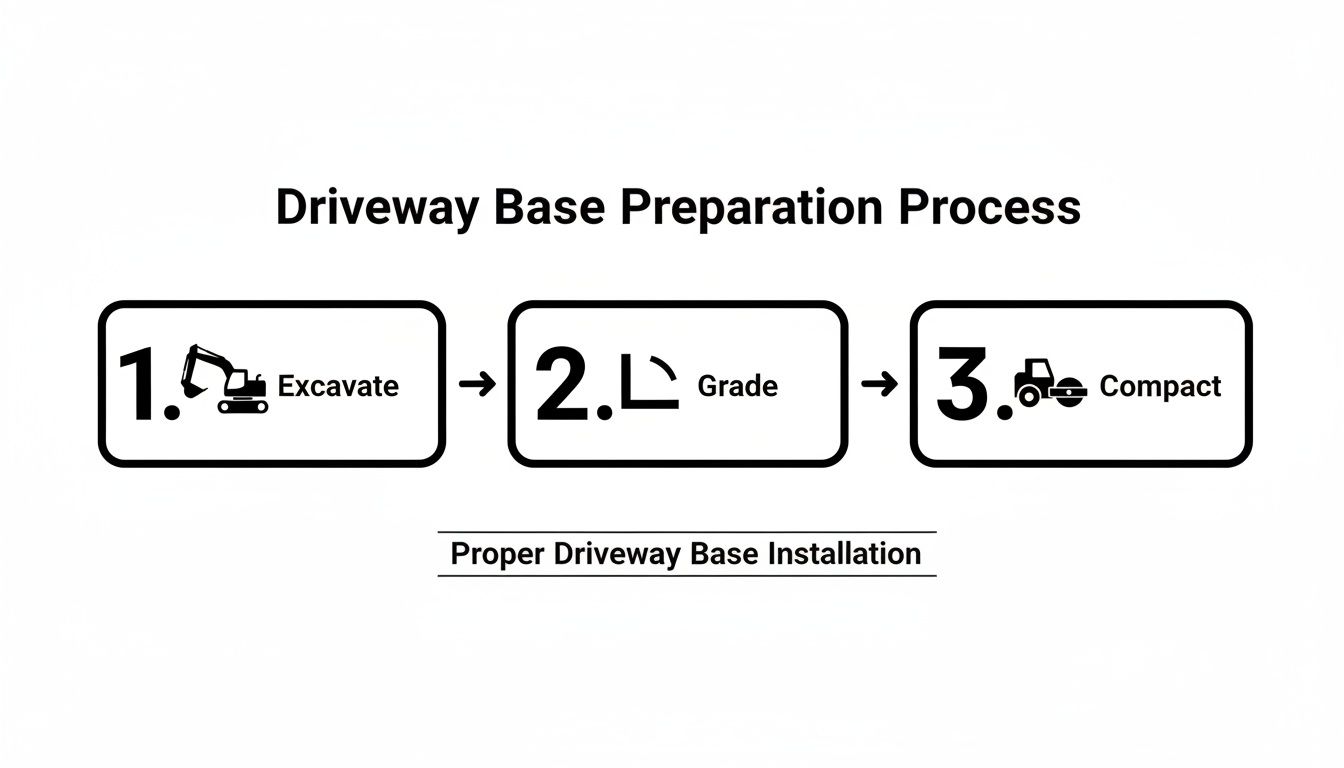
Excavation, proper grading, and solid compaction—this is the non-negotiable groundwork. Get this wrong, and nothing else matters.
The Power of a French Drain
One of the most effective tools in our drainage toolbox is the French drain. It’s an underground workhorse that excels at intercepting and moving subsurface water before it can cause problems. If your driveway sits at the bottom of a slope, a French drain can be the difference between a solid surface and a soupy mess.
Building one that will last for decades involves a precise process:
- First, we excavate a trench, usually along the edge of the driveway where water naturally pools.
- Next, we line it with a heavy-duty, non-woven geotextile fabric. This is a crucial step that many people skip, but it’s what keeps silt from clogging the pipe and making the whole system useless.
- A perforated pipe goes in the bottom, then we surround it with clean, washed drainage stone, typically 1/2 to 1 inch in size.
- Finally, we wrap the fabric over the top of the stone, creating a self-contained "burrito" that allows water in but keeps dirt out. The trench is then topped with more gravel to blend in.
The result is a completely hidden system that captures groundwater and safely channels it away. For more complex sites, like those near steep embankments, similar engineering is used in retaining wall drainage systems to handle the immense hydrostatic pressure.
Swales and Culverts for Surface Water
Of course, not all your water problems are happening underground. When you have a large amount of water flowing across the surface, you need a different approach.
A vegetated swale is often the perfect solution. Think of it as a wide, shallow, engineered channel with gentle slopes, usually planted with grass. It looks much more natural than a sharp ditch and works by slowing water down, encouraging it to soak into the ground, and guiding the excess safely away from your drive.
But if you have a significant channel of water—like a small stream or a major runoff path—that needs to cross under your driveway, a culvert is the only real answer. This is a large pipe installed beneath the driveway's surface that gives water a clear path to flow under, not over. Sizing this pipe correctly is critical. We see too many undersized culverts that act like a bottleneck in a storm, leading to washouts. As experienced garage foundation contractors near me, we make sure the culvert is sized, angled, and buried correctly to handle peak flow.
The performance of traditional gravel in drainage applications is well-documented. In fact, research shows that gravel layers can handle significantly more water than some modern alternatives.
This is why we trust it. In lab tests, gravel achieved peak flow rates of 140 dm³/min, absolutely dwarfing some geodrains which topped out at only 40 dm³/min. In the Northeast, where a summer storm can drop inches of rain in an hour, that kind of capacity is essential.
Choosing the Right Materials for a Lasting Driveway
A great gravel driveway is built from the ground up, much like a highway. The key to longevity and proper drainage isn't just the gravel you see on top; it's the carefully selected layers working together underneath. A common misstep is to just dump a single layer of stone, which is a surefire recipe for ruts, weeds, and water problems down the road.
As experienced driveway contractors near me serving communities across Pennsylvania, Maryland, Delaware, and New Jersey, we know that the right combination of materials is everything. A properly built driveway is a system, not just a surface.
The most resilient gravel driveways are built with at least two distinct layers of stone over a prepared subgrade. Each layer serves a specific purpose, working together to create a stable, well-draining surface that lasts for years.
The Foundation: A Strong Sub-Base
The real workhorse of your driveway is the part you'll never see: the sub-base. This is the first and most critical layer of stone, laid directly onto the compacted soil. Its job is to distribute the immense weight of vehicles and create a solid platform that won’t sink or shift over time.
For this foundational layer, we always use a larger, angular crushed stone. The sharp edges are crucial because they interlock tightly when compacted, forming a rigid, stable mat. The ideal size for this sub-base stone is typically between 1 to 2.5 inches. This larger stone not only provides incredible structural support but also creates natural voids, allowing water to drain through so the base never becomes saturated. We never use rounded river rock here—its smooth surfaces just slide against each other like marbles, failing to create a locked, stable base. This is the same durable approach we use for a gravel shed foundation or a gazebo foundation.
The Surface: The Top Layer
Once that sub-base is compacted and rock-solid, it’s time for the top layer. This is the gravel you’ll see and drive on every day. Its role is twofold: providing a smoother ride for your vehicles and creating a clean, finished look for your property.
The best material for this surface layer is a smaller, crushed, angular stone, usually around ¾-inch in size. It's the perfect middle ground—small enough for a comfortable driving surface but large enough to resist washing out during a heavy downpour. Using angular stone is just as important here as it is for the base, ensuring the surface gravel locks together and stays put. This is the detail that homeowners in places like Honey Brook Township, PA, really notice; the driveway not only performs well but also looks sharp.
The Unseen Protector: Geotextile Fabric
One of the most important—and most often skipped—components of a truly durable gravel driveway is geotextile fabric. This tough, permeable membrane is installed over the prepared soil before any stone is laid down. Think of it as a barrier that separates the clean stone above from the dirt and mud below.
Without this fabric, the pressure from vehicles and the natural movement of water will inevitably cause soil and silt to work their way up into your expensive gravel base. This process, known as "pumping," turns your driveway's foundation into a muddy mess, which is what causes those deep, persistent ruts and soft spots. Geotextile fabric stops this problem before it can ever start, keeping your stone layers clean and your driveway stable for years to come. This is a non-negotiable step for any serious shed foundation or driveway project.
Practical Tips for Long-Term Maintenance
Even the best-built driveway needs a little TLC to stay in prime condition. A few simple, routine tasks will go a long way in protecting your investment.
- Rake It Smooth: Grab a landscape rake every so often and pull surface gravel back into any minor low spots or ruts that might appear in high-traffic zones.
- Keep It Clean: Make a habit of clearing leaves, twigs, and other debris from the driveway surface and any drainage features like swales or culvert openings. This prevents clogs that can cause water to pool.
- Refresh the Top Layer: Every few years, you might find it beneficial to bring in a small load of fresh ¾-inch gravel. Spreading a thin new layer helps replenish any stone that’s been displaced or broken down, keeping the driveway looking and feeling new.
By choosing the right materials from the start and performing some simple upkeep, you can ensure your gravel driveway remains a functional, attractive, and durable asset to your home for many years.
Why Professional Drainage Solutions Are Worth It
While some minor raking can be a weekend task, addressing persistent and significant drainage issues in a gravel driveway is a project best left to professionals. Attempting a major drainage overhaul without the proper equipment and deep-seated knowledge often results in greater expense and more complex problems down the road. Recognizing when a project is beyond a DIY fix is the first step toward a lasting solution.
The indicators that professional intervention is necessary are often quite clear. If you're observing substantial erosion, large pools of standing water that persist long after a storm, or deep ruts that make for a jarring ride, it’s time to call for an expert opinion. These are not superficial issues; they point to a foundational failure that a few bags of stone from a big-box store cannot resolve.
The Firm Foundations Advantage
Engaging an experienced, licensed, and insured contractor like Firm Foundations removes the liability and guesswork from your project. Our extensive experience serving homeowners and businesses throughout PA, MD, DE, and NJ gives us an understanding of the regional soil types and weather patterns that impact driveway stability and garage footings and foundations.
Choosing to work with us provides several key advantages:
- Permitting and Compliance: We possess the necessary expertise to navigate local building codes and township regulations. Our team manages the entire permitting process, ensuring your project is fully compliant.
- Commercial-Grade Equipment: Achieving the precise grading and compaction required for long-term durability demands heavy machinery. Our crews utilize commercial-grade equipment to guarantee a stable, correctly sloped foundation.
- Structural Integrity: We do more than just move earth; we engineer a comprehensive drainage system. From the installation of the correct geotextile fabric to the selection of the proper stone base, every action is taken to ensure the structural integrity of your driveway for years to come.
A professionally installed driveway is an investment in your property's value, safety, and curb appeal. Do not settle for another season of frustration with a soggy, rutted drive.
If you are ready to address your driveway drainage problems permanently, our team is prepared to assist. We invite homeowners and businesses in our Pennsylvania, Maryland, Delaware, and New Jersey service areas to contact us.
Allow us to build you a driveway that stands the test of time. Contact Firm Foundations today for a free, transparent quote, and let’s lay the groundwork for a beautiful, functional driveway you can depend on.
Frequently Asked Questions About Driveway Drainage
When it comes to gravel driveway drainage, we get a lot of the same questions from homeowners across PA, MD, DE, and NJ. It makes sense—nobody wants to deal with a soupy, rut-filled mess every time it rains. Here are a few of the most common things people ask, along with our straightforward answers.
How Much Does a Professional Drainage Solution Cost?
This is usually the first question on everyone's mind, and the honest answer is: it depends. The final cost of fixing a gravel driveway hinges on a few key things, like the length of your driveway, the specific solution we need to implement (is it a simple regrading or a full French drain system?), and how easily we can get our equipment to the site.
The only way to get a real number is with a free on-site quote. A member of the Firm Foundations team can come out, take a look at the root of the problem, and give you a detailed, transparent estimate. No strings attached.
Can I Just Add More Gravel to Fix Puddles?
We see this all the time, and it's probably the biggest mistake homeowners make. It might seem like a logical quick fix, but piling on more gravel is just a temporary band-aid. It doesn't solve the real issue.
The underlying problem is almost always poor grading or a compacted base that simply can’t drain. Pouring more stone on top won’t fix a flawed foundation. The puddles and ruts will always return, wasting your time and money. Professional site preparation is the only way to get a permanent solution.
How Long Does It Take to Fix My Driveway's Drainage?
Most homeowners are pleasantly surprised by how quickly we can get these projects done. For a typical residential driveway, our experienced crews can complete a full regrading or install a new drainage system in about 1 to 3 days. We work efficiently to minimize the disruption to your daily life while making sure the job is done right the first time.
After we've fixed the drainage, you'll want to keep it in top shape. For more on that, take a look at our guide on maintaining your gravel driveway for longevity.
Do I Need a Permit for Driveway Work in PA or MD?
Permit requirements can be a headache, as they often change from one township to the next and depend on the scope of the project. But that’s not something you need to worry about. As professional driveway contractors near me, we handle the entire permitting process from start to finish.
Firm Foundations takes on the responsibility of securing all necessary permits, ensuring your project is 100% compliant with local regulations. It’s just one less thing for you to deal with.
Don't let a soggy, rutted driveway frustrate you for another season. The team at Firm Foundations has the expertise to deliver a beautiful, functional driveway that lasts. Request your free, no-obligation quote today!