
Build Storage Shed Cost Guide for PA, MD, DE & NJ
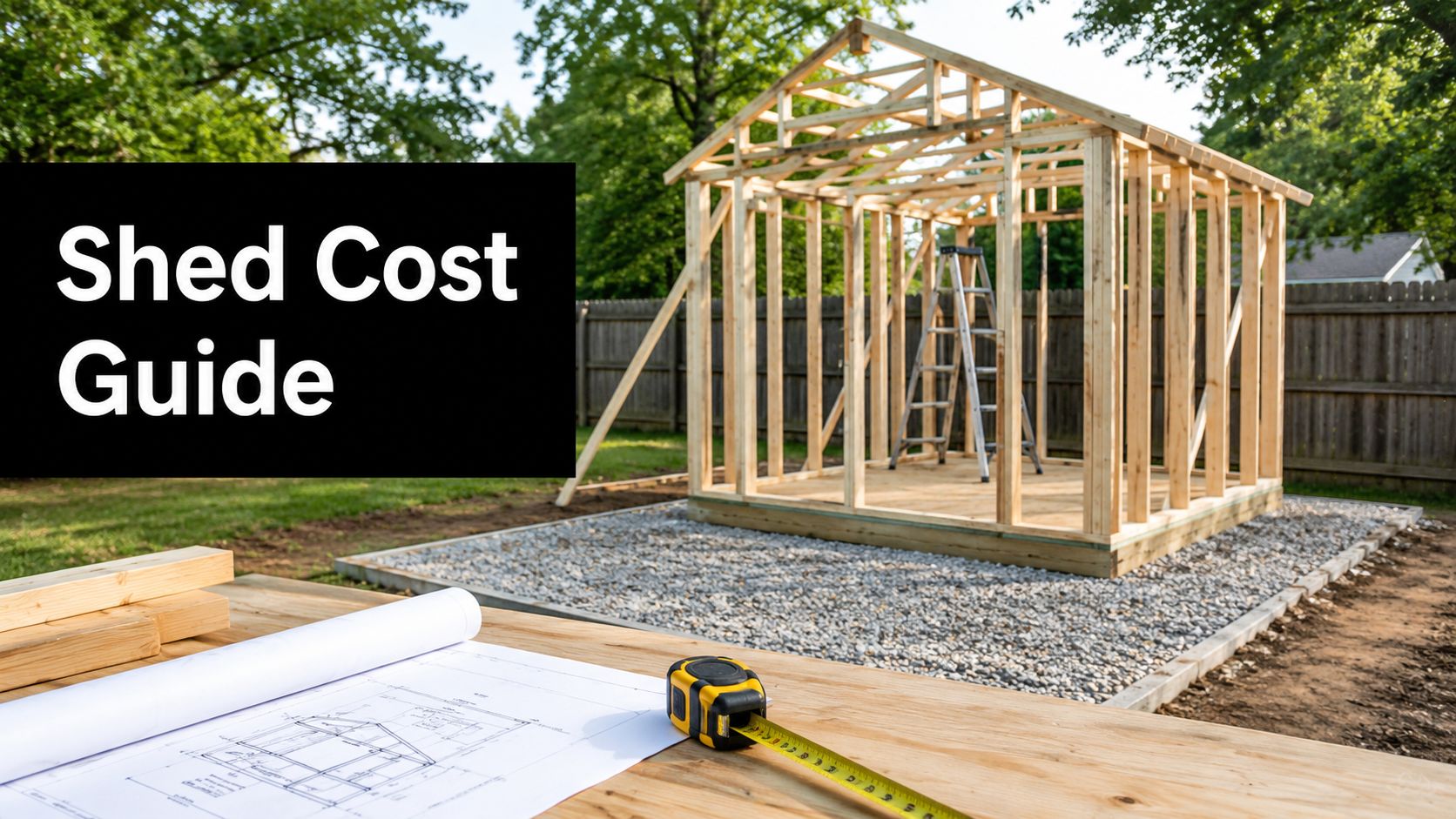
A complete shed project often starts around $17 to $24 per square foot when you account for materials, labor, and site work, but that number can move fast once the ground prep is real and the foundation isn't treated like an afterthought. In PA, MD, DE, and NJ, the biggest mistake I see is budgeting for the shed and forgetting that the base for storage shed work often decides whether the whole project stays level, dry, and worth the money.
If you're shopping for shed foundations near me or trying to pin down your real build storage shed cost, you're probably in the same spot as a lot of homeowners. The shed quote looks manageable. Then delivery, grading, excavation, drainage, and the pad show up, and the budget suddenly feels different.
That surprise usually comes from one issue. People price the box, not the ground under the box.
In the Mid-Atlantic, that approach doesn't hold up well. Freeze-thaw movement, soft spots, runoff, and poor drainage can turn a simple shed project into a long list of problems. Doors rack out of square. Flooring goes soft. Siding sits too close to wet soil. What looked cheaper on day one starts costing more later.
Understanding Your Total Storage Shed Cost in Pennsylvania
A lot of shed projects in Pennsylvania start with a simple online search, then end with budget shock. Someone sees a kit price for a 10×10 storage shed or a small barn shed, assumes that's close to the full number, and then learns the project also needs delivery access, a level site, and a foundation that can handle moisture and movement.
That gap matters because general shed pricing only gives you a starting point. Broad construction guidance often places a full storage shed project at about $17 to $24 per square foot, including materials, labor, and related site work, whether the building is site-built or installed as a kit, according to storage shed build cost guidance from HowMuch.
What that square foot number misses
Square-foot pricing sounds neat, but sheds don't behave like a simple commodity. The final number changes based on:
- Ground conditions. A flat, dry yard is one budget. A sloped lot with soft soil is another.
- Access for equipment. If crews can't get close with trucks, stone, or forms, labor goes up.
- Foundation type. A gravel shed foundation and a poured slab solve different problems.
- Use of the building. Storing rakes is different from parking equipment or building a workshop.
- Local requirements. Setbacks, drainage concerns, and permit rules can all affect the plan.
Practical rule: If the quote only covers the shed itself, you still don't know your total project cost.
Why the base comes first
For homeowners around Honey Brook Township and across southeastern Pennsylvania, the pad or slab should be one of the first decisions, not the last. The shed installer needs a proper target. If the foundation is undersized, out of level, or poorly drained, the structure inherits those problems immediately.
Those seeking shed foundation contractors near me, garage foundation contractors near me, or concrete foundations are usually looking for the part of the project that keeps surprises from piling up later. That's the right instinct. A good cost plan starts at the ground level and works up.
A realistic budget includes the structure, the foundation, the site work, and the small line items people skip over until they become expensive.
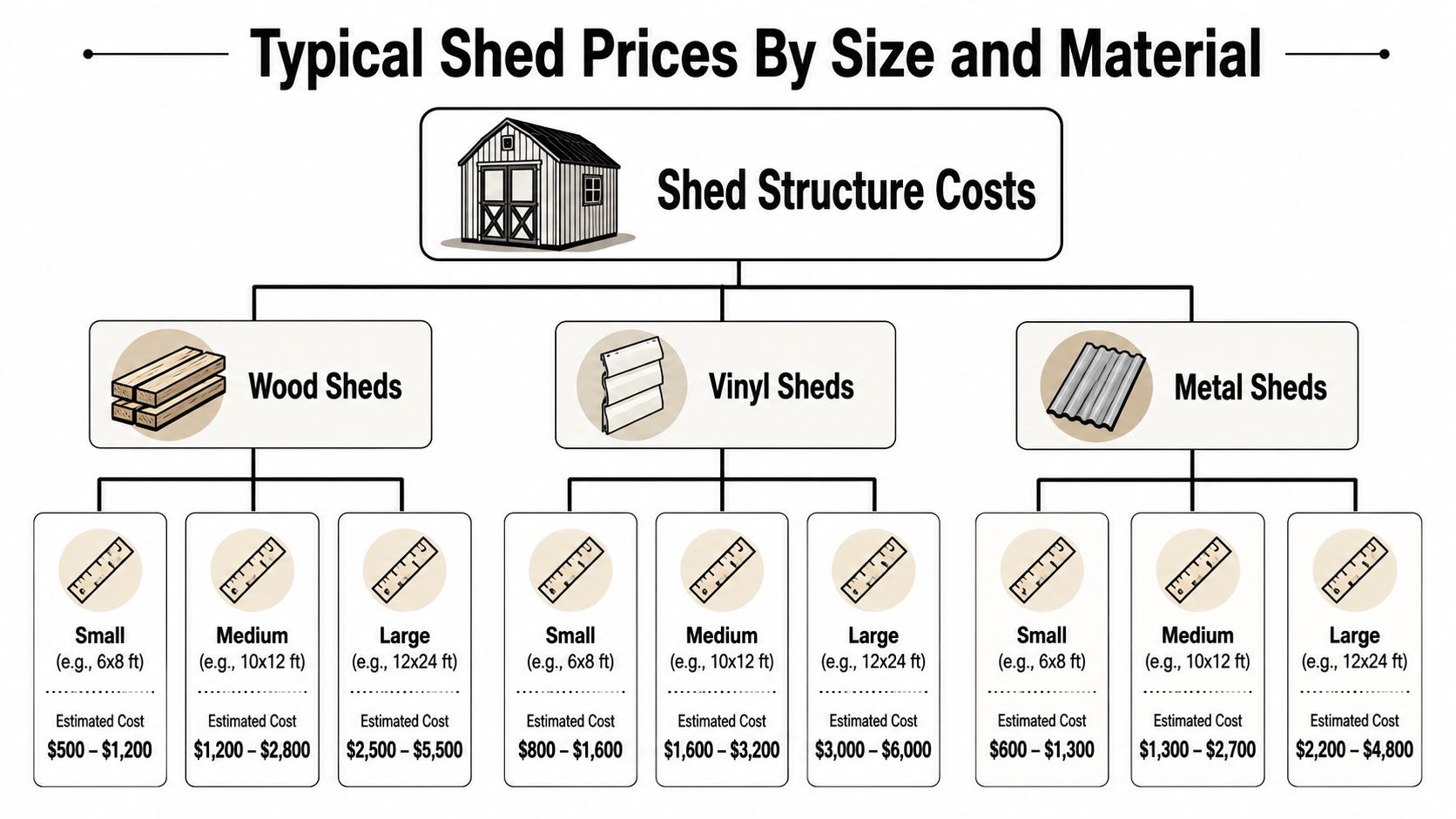
Typical Shed Prices By Size and Material
The shed structure itself still matters, and size is the biggest driver. Material choice matters too, especially if you're comparing a plain utility building to a workshop-style shed with windows, upgraded doors, or interior finishing.
For wood sheds, the installed price in the United States spans roughly $10 to $100 per square foot, and a 10×12 shed commonly lands around $5,000 to $6,000, or about $40 to $50 per square foot, based on wood storage shed pricing examples from Sheds by Design.
What size does to the budget
Small sheds are usually the easiest place to stay on budget. Once you move into the common Mid-Atlantic range of 8×10, 10×12, 12×12, or 12×16, the cost picture changes because you aren't only adding wall area. You're adding roof span, framing load, doors, trim, roofing, and foundation demands.
A simple utility shed can land near the low end of the wood range. A larger workshop, insulated shed, or multi-use building can push much higher. That's why a small backyard unit and a finished hobby shed shouldn't be priced the same way, even if both are called “storage sheds.”
Material and feature choices that move the number
Wood gives you the most flexibility. It also creates the widest price range because owners often add details after the first quote. Common add-ons include:
- Extra doors and windows. These improve access and light, but they also add framing and finish work.
- Lofts and interior upgrades. Great for storage or workshop use, but they raise both structure and base demands.
- Heavier roofing and trim packages. Better curb appeal often comes with more material and labor.
- Electrical plans. Once a shed becomes a workspace, the whole project usually gets more involved.
Metal and vinyl sheds can work well in the right situation, especially for lighter-duty storage. But when owners want long-term utility, custom layout, or a structure that feels more like an outbuilding than a kit, wood is usually where the range broadens most.
The cheapest shed to buy isn't always the cheapest shed to own. A light structure on a poor base often becomes the most expensive combination.
A practical way to read shed quotes
If you're pricing a 4×8 shed with foundation, a 10×10 storage shed, or a larger barn shed, separate the quote into two buckets. First, the building itself. Second, everything required to support it. That simple split makes apples-to-apples comparison easier and keeps a low sticker price from hiding expensive site work.
The Critical Cost of a Proper Shed Foundation
A lot of shed projects look affordable until the base gets priced. That is usually the point where a homeowner realizes the shed itself was only part of the budget.
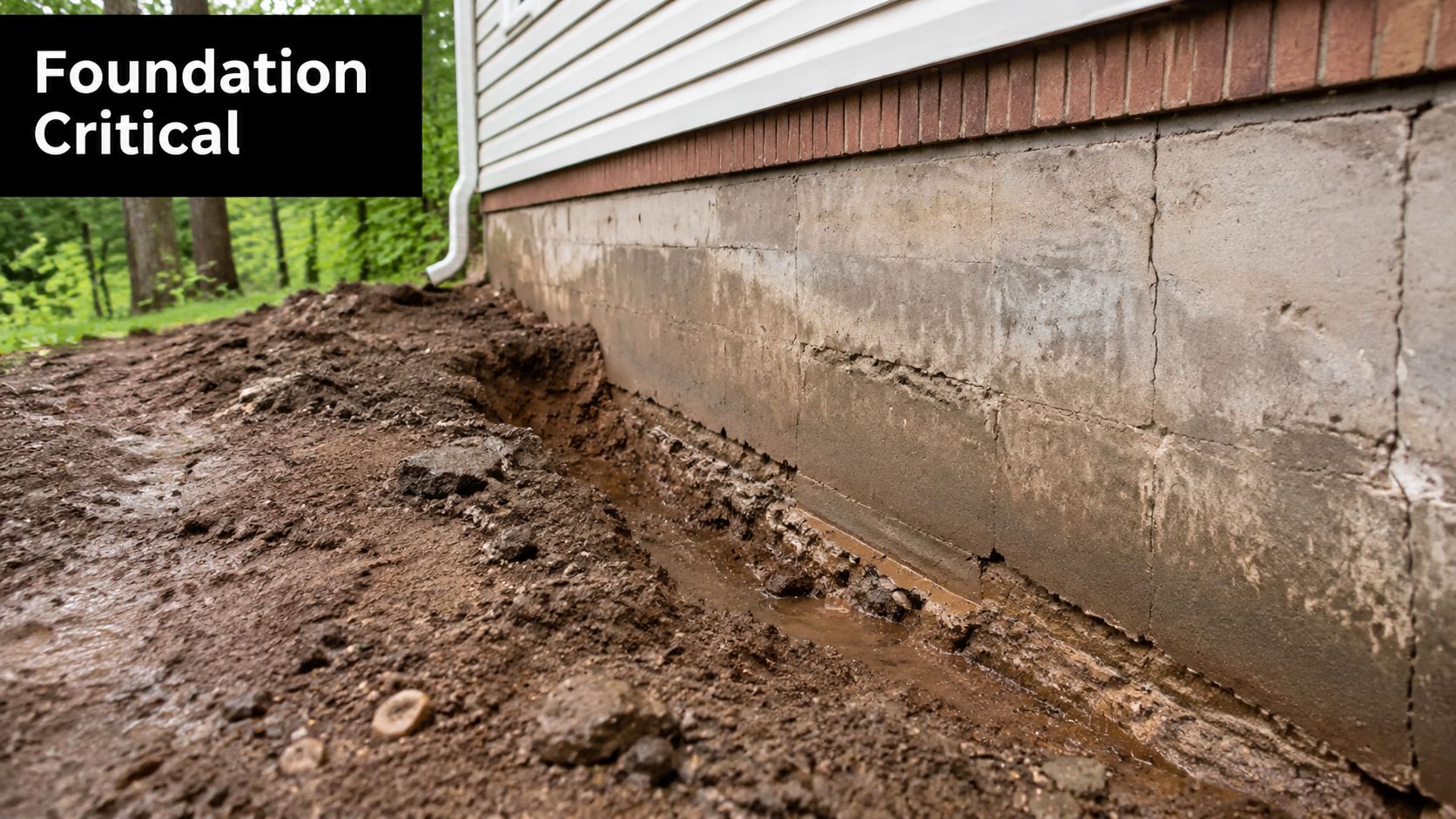
In Pennsylvania and the surrounding Mid-Atlantic states, a properly prepared gravel or concrete pad often accounts for 20 to 40 percent of the total installed cost. On a midsize shed, that can be the difference between a project that stays square for years and one that starts shifting after the first wet winter. I see homeowners underestimate this part of the job all the time, especially when they are comparing shed packages that make the building price look lower than its total installed cost.
Why PA, MD, DE, and NJ foundations fail
The problem is rarely the shed first. It is the ground under it.
PA, MD, DE, and NJ all deal with freeze-thaw cycles, heavy rain, spring saturation, and soils that move more than people expect. A shed set on blocks, loose stone, or poorly compacted fill may look fine on day one, then start settling unevenly as water works through the site.
That leads to familiar trouble:
- Doors that drag or won't latch
- Floor framing that twists out of level
- Moisture under the building
- Rot at skids or lower wall framing
- Cracking and settlement around support points
Those repairs are never cheap in practice. Once the base moves, the whole structure starts fighting itself.
What a real foundation does
A proper shed foundation has to do three jobs. It has to carry the load, spread that load over stable soil, and control water around the structure. Miss any one of those, and the shed pays for it later through movement, moisture, or both.
That is why base prep matters as much as the material you choose. Excavation depth, compaction, grade correction, edge restraint, and runoff control decide whether the pad holds up in January and April, not just whether it looked level the day it was installed. If you are weighing slab pricing, this breakdown of concrete slab foundation costs for shed and garage projects gives a useful look at what drives the number.
For some projects, a compacted gravel pad is the right answer. For others, a reinforced slab makes more sense because of shed size, planned use, or site conditions. If you're comparing anchoring details or support hardware for adjacent outdoor structures, this overview of deck foundation hardware is a useful reference for understanding how different footing systems are designed to transfer load.
A short visual helps show what happens when those details are skipped.
One place to start for local quotes
If you're comparing gravel shed foundation contractors near me, cement foundations for garage, or gazebo foundation work, get quotes that break out excavation, stone or concrete, and finish details separately. One option in PA, MD, DE, and NJ is Firm Foundations, which handles excavation, gravel pads, and concrete foundation work for sheds, garages, patios, and similar structures.
Gravel Pad vs Concrete Slab Foundation Costs
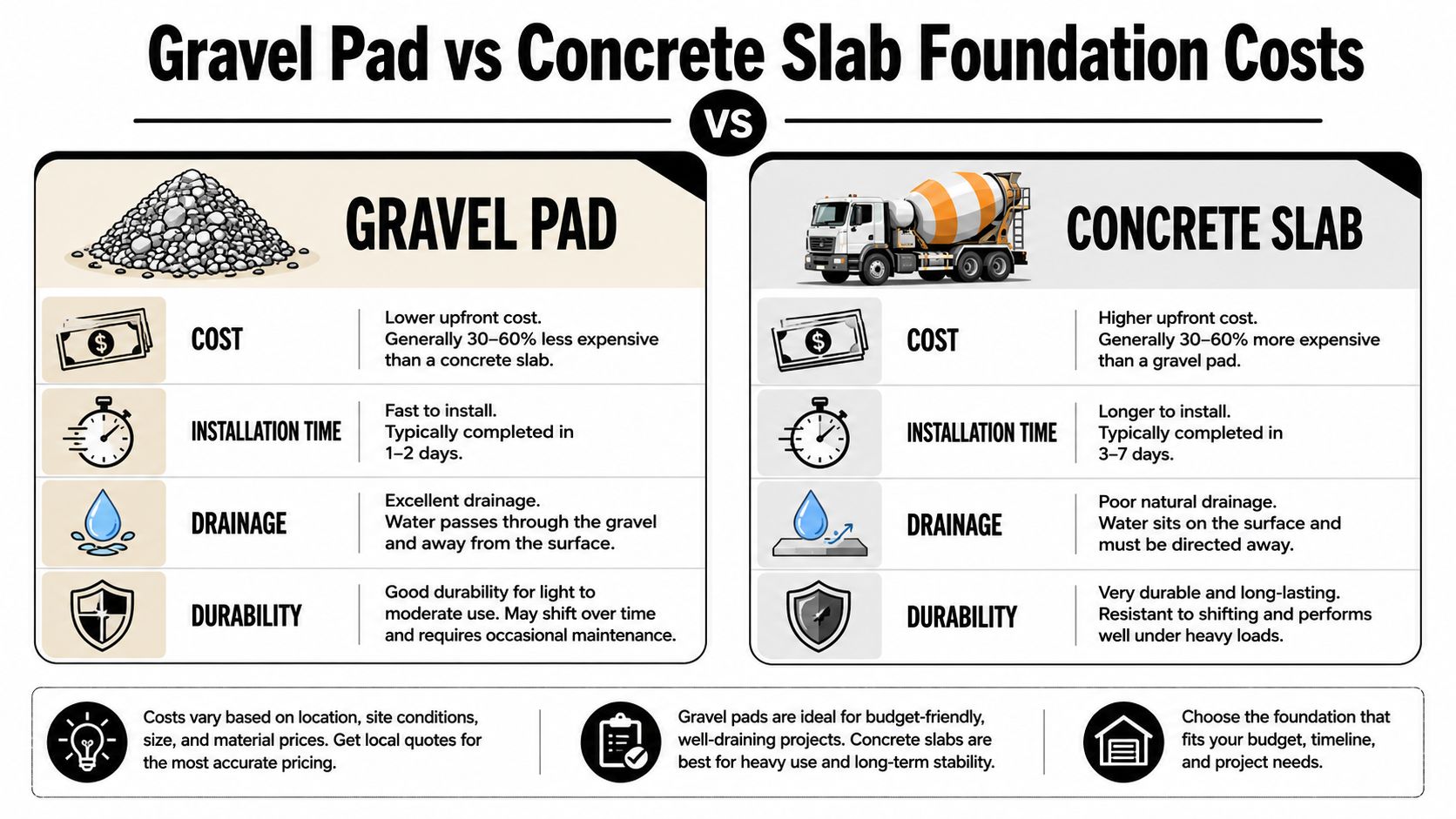
Most homeowners narrow the choice down to two foundation types. A shed foundation gravel base or a concrete slab. Both can work. The right one depends on how heavy the shed is, how you plan to use it, and how long you want the base to stay trouble-free with minimal correction.
A reinforced concrete slab typically costs more up front. Moving from gravel to a reinforced slab raises initial foundation cost by roughly 50 to 100 percent, but it can improve usable life by 15 to 25 years in frost-prone climates. The same pricing guidance places a 10'x12' gravel pad at about $1.50 to $3.00 per square foot and a concrete slab at about $4.50 to $8.00 per square foot in that scenario, according to the earlier Sheds by Design data summarized above.
When gravel makes sense
A gravel pad is often the practical choice for standard storage sheds. It drains well, it can be an excellent base when compacted correctly, and it usually fits homeowners who want dependable support without paying for a full slab.
Professional installation for a typical 10×12 gravel pad is commonly cited around $5 to $9 per square foot, with the pad usually built larger than the shed footprint for edge support and drainage, according to Northwood Outdoor's 10×12 shed foundation overview. Small shed pad pricing can also land around $9 to $13 per square foot, with larger pads dropping closer to about $5 per square foot or lower as size increases, based on Sheds Unlimited's shed pad pricing FAQ.
Gravel is often the right fit when:
- The shed is used for storage rather than as a finished workspace
- Drainage is a priority on a site that sheds water well
- The owner wants lower upfront cost
- Future relocation is possible
When concrete earns the extra cost
A slab is a stronger answer for heavy use. If the building will store machinery, support a workshop setup, or act more like a detached garage, concrete usually wins on rigidity and maintenance.
For homeowners researching slab pricing in more detail, this breakdown of concrete slab foundation cost is a practical next step.
A slab isn't automatically better. It's better when the use case justifies the extra structure, finish, and permanence.
Drainage still matters with concrete. A slab placed in a wet pocket without proper grade can create a different kind of headache. That's why understanding stone base and runoff is useful even if you aren't building a retaining wall. This guide for Austin retaining wall gravel does a good job of explaining base stone function in plain language.
My rule for choosing
For a typical backyard shed, gravel often gives the best balance of price and performance. For a larger garage footings and foundations project, a workshop, or a structure carrying concentrated loads, concrete usually makes more sense. The wrong choice isn't always the cheaper one. It's the one that doesn't match how the building will be used.
A Complete Breakdown of Your Shed Project Costs
The shed and the foundation are the big pieces, but several smaller items decide whether your quote feels clear or confusing. If you want a useful budget, break the job into line items and ask which ones are fixed versus site-dependent.
The cost buckets most people miss
The hidden costs usually start before the first stone or concrete arrives.
- Site clearing and grading. If brush, roots, or slope are involved, the job may need real prep before foundation work starts.
- Excavation near me searches for a reason. Some lots need cut-and-fill work, soil removal, or imported stone just to create a stable footprint.
- Delivery access. Shed delivery crews need a route. Tight gates, overhead wires, or soft ground can complicate installation.
- Permits and township requirements. Some municipalities care about size, setbacks, drainage, or where the structure sits relative to property lines.
Foundation-specific line items
Foundation quotes get more accurate when they are separated into parts. Ask whether the number includes excavation, base prep, compaction, forms, reinforcement, and cleanup. If you're comparing concrete contractors or driveway contractors near me who also do slabs, don't assume every quote covers the same scope.
A clean estimate may include items like:
| Cost Area | What to check |
|---|---|
| Shed structure | Size, material, doors, windows, roof package |
| Site prep | Clearing, grading, haul-off, imported fill |
| Foundation | Gravel pad or slab, edge size, thickness, finish |
| Concrete forms | Whether form setup and removal are included |
| Reinforcement | Rebar, mesh, or other support details if used |
| Delivery and install | Shed transport, on-site assembly, equipment access |
| Drainage | Slope correction, runoff control, perimeter treatment |
| Permit-related work | Layout changes or compliance items required locally |
Why transparent scopes matter
Two quotes can look close and still be miles apart. One may include forming, compaction, and cleanup. Another may price only the visible pour or the top layer of gravel. That's how “cheap” pads become expensive jobs.
Ask one direct question: “What would I still need to pay for after this quote is complete?”
That question usually reveals whether you're reviewing a partial number or a full project number.
For foundation builds, house foundation prep, gazebo foundation work, or a concrete foundation for garage, scope clarity matters just as much as price. The more weight the structure carries, the more expensive a missing line item becomes.
How to Estimate Your Total Shed Cost
A useful estimate doesn't need to be complicated. It just needs to separate the structure from the ground work, then leave room for the details that depend on your site.
A simple worksheet that works
Start with the shed you want, not the lowest online teaser price. Then add the foundation based on your intended use, then the site-related items. If you need help sizing materials for the building side, this shed material estimator is a practical planning tool.
Use a worksheet like this:
| Cost Component | Example Cost (10×12 Shed) | Your Estimate |
|---|---|---|
| Shed structure | $5,000 to $6,000 | |
| Foundation | ||
| Site prep and grading | ||
| Delivery and installation | ||
| Permit or township-related costs | ||
| Drainage improvements if needed | ||
| Total estimated project cost |
How to fill it out
For the structure, use the actual shed quote. For a wood 10×12, the national installed example above gives you a reasonable reference point for the building itself.
For the foundation, choose the type first. A gravel pad and a slab serve different goals, so don't estimate both at once. If you're comparing quotes for a shed foundation kit, shed foundation blocks, or contractor-built base options, keep them in separate columns so you don't blur unlike systems together.
Then add the site conditions. A level backyard with easy truck access is simpler than a fenced yard, wet ground, or a rear-lot location where materials have to be moved farther by hand or machine.
A better way to avoid surprises
I always tell homeowners to price the shed second in their decision-making, not first. The ground tells you what the project needs. Once you know whether the site wants a gravel pad, a slab, excavation, or drainage help, the total cost gets much easier to trust.
If you already have a specific structure in mind, ask every contractor to quote from the same dimensions and intended use. A storage-only shed, a small workshop, and a light garage-style building may look similar on paper, but the right base often changes with the job.
Saving Money and When to Hire a Pro in PA
A lot of shed budgets go sideways the same way. The building price looks manageable, then the actual site work shows up late. By that point, many homeowners are deciding whether to spend properly on the base or hope a cheaper shortcut holds up through a few Mid Atlantic winters.
The safest place to save is usually above the foundation, not under it. Standard shed sizes are easier to price. Simple rooflines and stock doors keep material and labor costs in check. If you want to trim the quote, clear movable items, improve access, and settle the shed size before contractors arrive. That keeps paid labor focused on excavation, grading, compaction, and base work that affects how the shed performs.
Where cutting corners usually backfires
Groundwork gets underestimated all the time. Shed cost guides often focus on the structure and treat the base like a small add-on, even though the foundation can take a meaningful share of the total project budget. In Pennsylvania, Maryland, Delaware, and New Jersey, that is the part I would protect first because wet seasons, freeze-thaw movement, and soft spots in the yard expose weak prep fast.
A shed can look fine on install day and still start telling on the job within a year. Doors drag. Water sits along one side. The floor feels out of level. Skids sink at different rates, and small framing issues turn into repair bills that cost more than doing the base right the first time.
Alan's Factory Outlet's shed cost discussion makes a similar point. Homeowners in this region often regret spending too little on site prep and the base because the long-term result is rot, settling, and sticking doors in a humid, freeze-thaw climate.
When a pro is the safer call
Bring in a contractor when the site or the shed leaves little room for error:
- The yard slopes or stays wet after rain
- The shed is large, heavy, or built for more than basic storage
- You want a concrete slab or a garage-style foundation
- The job needs excavation, forms, compaction, or accurate finish grading
- You want the base to stay level for the long haul
Utilities deserve the same early planning. If the shed will have power, review conduit routes, entry points, and intended use before the pad or slab is built. Jolt Electric's electrician questions is a good checklist for avoiding expensive retrofits after the foundation is already in place.
Spend carefully on finishes if you need to. Spend confidently on the part that keeps the building level, dry, and usable.
For homeowners searching shed foundations contractors near me, gravel shed foundation contractors near me, garage foundation contractors near me, or concrete foundations in PA, MD, DE, and NJ, the goal is not just a low number. The goal is a base that matches the shed, handles drainage, and stays stable through the region's weather.
If you're ready to price your project with fewer surprises, Firm Foundations can help you sort out the cost of the pad, slab, excavation, and site prep before you commit to the shed itself. Request a quote and get a clear scope for your shed foundation, garage slab, or gravel base in Pennsylvania, Maryland, Delaware, or New Jersey.