

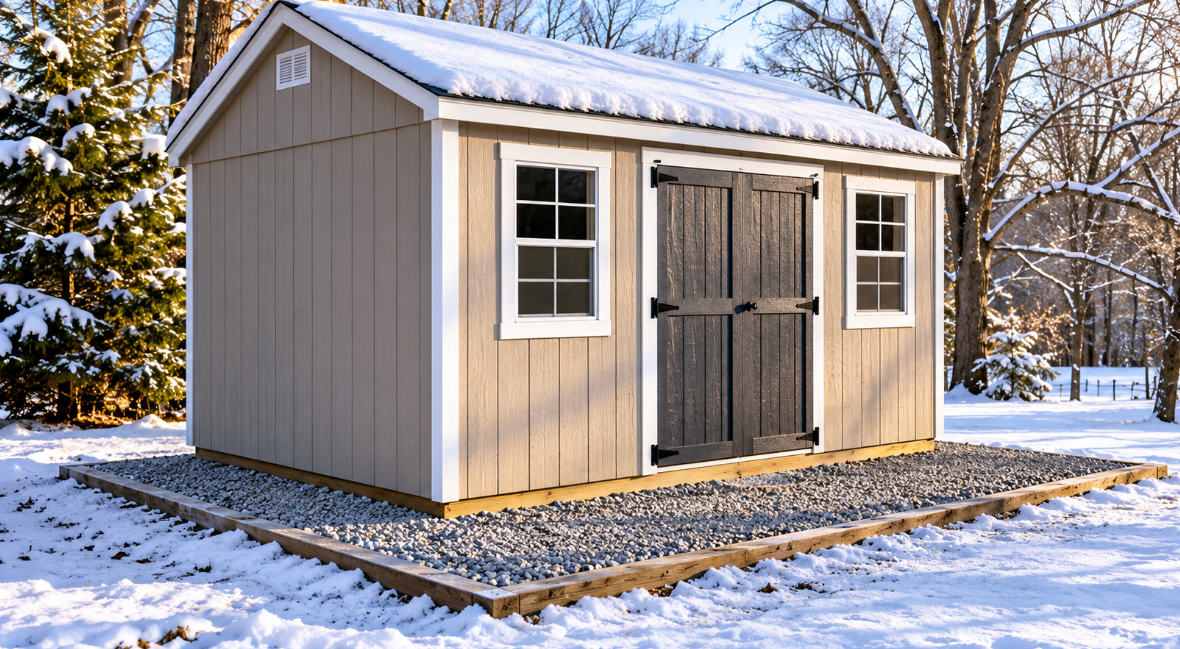
Winter weather can put considerable stress on outdoor structures, especially those built on improperly prepared ground. Snow, ice, freezing temperatures, and repeated freeze-thaw cycles can affect the soil supporting a shed, potentially causing uneven settling, shifting, and foundation damage. For homeowners in Pennsylvania, Maryland, Delaware, and New Jersey, understanding these seasonal conditions is important when planning and maintaining shed foundations.
A properly installed foundation helps distribute the shed’s weight, manage moisture, and provide a stable base throughout changing weather conditions. Whether you have a gravel pad or concrete foundation, taking the right precautions before winter can help protect your structure for years.
How Freeze-Thaw Cycles Affect Shed Foundations
Freeze-thaw cycles occur when temperatures repeatedly move above and below freezing. Water in the soil freezes and expands, potentially creating pressure that lifts or displaces the surrounding ground. When temperatures rise, the ice melts and the soil can settle again.
Repeated cycles can cause movement beneath a shed, particularly when the ground contains frost-susceptible soil and has poor drainage.
Some common problems include:
- Frost heave: Frozen ground can push sections of a shallow or poorly supported foundation upward.
- Uneven settling: As the ground thaws, different sections may settle at different rates.
- Foundation movement: Repeated ground movement can affect the level and alignment of the shed.
- Cracking and surface deterioration: Moisture entering concrete cracks and pores can contribute to damage during repeated freezing and thawing.
These problems are more likely when the foundation was installed without adequate excavation, compaction, and drainage planning.
Why Proper Drainage Matters During Winter
Water management is one of the most important factors in protecting a shed foundation. When rainwater and melting snow collect around the base of a shed, the surrounding soil can become saturated. If temperatures drop, this moisture can freeze and contribute to frost-related ground movement.
Proper grading helps direct surface water away from the structure instead of allowing it to accumulate beneath or around the foundation.
Homeowners should regularly check for:
- Water pooling around the shed after rainfall.
- Downspouts directing roof runoff toward the foundation.
- Blocked drainage paths caused by leaves and debris.
- Soil erosion around the edges of the foundation.
- Low areas where melting snow collects.
Professional excavation and site preparation can help establish suitable ground elevations and drainage conditions before a foundation is installed.
Gravel vs. Concrete Shed Foundations in Cold Weather
Both gravel and concrete foundations can provide dependable support when properly designed and installed. However, they respond differently to moisture and seasonal ground movement.
Gravel Shed Foundations
A gravel shed pad is a popular option because crushed stone provides a stable supporting surface while allowing water to drain through the base. Proper excavation, compaction, and edge containment help prevent the gravel from spreading or settling unevenly.
For many standard storage sheds, a professionally prepared gravel base can be an effective solution for managing seasonal moisture.
Explore our gravel shed pad installation services to learn more about preparing a stable foundation.
Concrete Shed Foundations
Concrete foundations provide a solid, durable surface for sheds, garages, and workshops. However, concrete is not immune to freeze-thaw damage.
Water that enters small cracks or porous concrete can freeze and expand, potentially contributing to surface scaling, cracking, and deterioration over time. Proper concrete specifications, curing, reinforcement where required, and drainage planning all play important roles in long-term performance.
Learn more about our concrete shed foundation services and the considerations involved in building a durable concrete base.
Signs Your Shed Foundation Needs Attention After Winter
Once temperatures begin to rise, inspect your shed and the surrounding foundation. Winter ground movement may reveal problems that were not noticeable during warmer months.
Watch for these warning signs:
- Uneven shed floors: Changes in ground support may cause sections of the floor to feel sloped or uneven.
- Sticking doors and windows: A shed that has shifted out of alignment may develop problems with opening and closing doors.
- Visible foundation cracks: New or widening cracks in concrete should be inspected.
- Water pooling: Standing water around the foundation can indicate grading or drainage problems.
- Erosion around the pad: Missing gravel or washed-out soil may indicate that water is affecting the supporting base.
If you notice significant movement, large cracks, or structural changes, have the foundation evaluated before attempting repairs.
How to Prepare Your Shed Foundation for Winter
Preventive maintenance can help reduce the effects of winter weather on your outdoor structures. Before temperatures drop, take time to inspect the foundation and surrounding property.
Consider these practical steps:
- Clean the surrounding area: Remove leaves, branches, and debris that may block natural drainage paths.
- Check the ground slope: Make sure surface water can move away from the shed.
- Inspect the gravel base: Look for areas where gravel has washed away or become uneven.
- Check concrete surfaces: Identify visible cracks, surface deterioration, and areas where water collects.
- Manage roof runoff: Keep gutters and downspouts clear and direct water away from the foundation.
- Inspect after heavy snowfall: Watch for excessive water accumulation as snow begins to melt.
Regular inspections can help identify small problems before they develop into more significant foundation concerns.
Why Professional Shed Pad Installation Matters
Preparing a foundation for changing weather conditions starts before the shed is installed. The ground must be evaluated, unsuitable material removed where necessary, and the supporting base properly prepared.
Firm Foundations provides professional gravel pad installation, concrete foundations, and excavation services for homeowners across Pennsylvania, Maryland, Delaware, and New Jersey. Our team considers site conditions, drainage, structure requirements, and ground preparation when planning foundation projects.
Whether you are installing a new backyard shed or replacing an existing foundation, choosing the appropriate base can help reduce the risk of seasonal movement and drainage-related problems.
You can also explore our recently completed foundation projects to see examples of our gravel and concrete installations.
Frequently Asked Questions
1. Can freeze-thaw cycles damage a shed foundation?
Yes. Repeated freezing and thawing can cause moisture in the surrounding soil to expand and contract. This may contribute to frost heave, uneven settling, and foundation movement, particularly when drainage and ground preparation are inadequate.
2. Are gravel shed foundations suitable for cold climates?
Gravel foundations can work well in cold climates when properly excavated, compacted, and graded. Crushed stone allows water to drain through the base, helping reduce moisture accumulation beneath the shed. However, site conditions and the structure’s requirements must determine the appropriate foundation design.
3. Does concrete crack during freeze-thaw cycles?
Concrete can develop cracks or surface deterioration when moisture enters its pores or existing cracks and repeatedly freezes and thaws. Appropriate concrete specifications, installation practices, curing, and drainage help improve durability.
4. How can I prevent frost heave beneath my shed?
Proper site preparation, effective drainage, and selecting a foundation appropriate for the soil and structure can help reduce frost-related movement. Some structures and sites may require frost-protected or deeper support, depending on local requirements.
5. Should I inspect my shed foundation after winter?
Yes. Inspect the foundation for cracks, uneven surfaces, gravel loss, erosion, and water accumulation. Also check whether doors and windows open properly, as these can indicate changes in the shed’s alignment.
6. Which shed foundation is better for winter, gravel or concrete?
Neither option is automatically better for every property. Gravel offers good drainage when properly installed, while concrete provides a solid and durable surface. The right choice depends on the shed’s size, intended use, soil conditions, drainage, and site requirements.
Protect Your Shed Foundation Through Every Season
Winter weather can challenge even well-built outdoor structures, but proper planning and maintenance can help reduce the effects of freezing temperatures, snowmelt, and repeated freeze-thaw cycles.
A stable foundation begins with suitable excavation, proper ground preparation, and effective drainage. Whether you need a gravel shed pad or a concrete foundation, Firm Foundations can help you find an appropriate solution for your property.
Contact Firm Foundations at (717) 629-0689 or request a free quote to discuss your upcoming shed foundation project.