
French Drain Installation Cost: 2026 Guide for PA, MD, DE
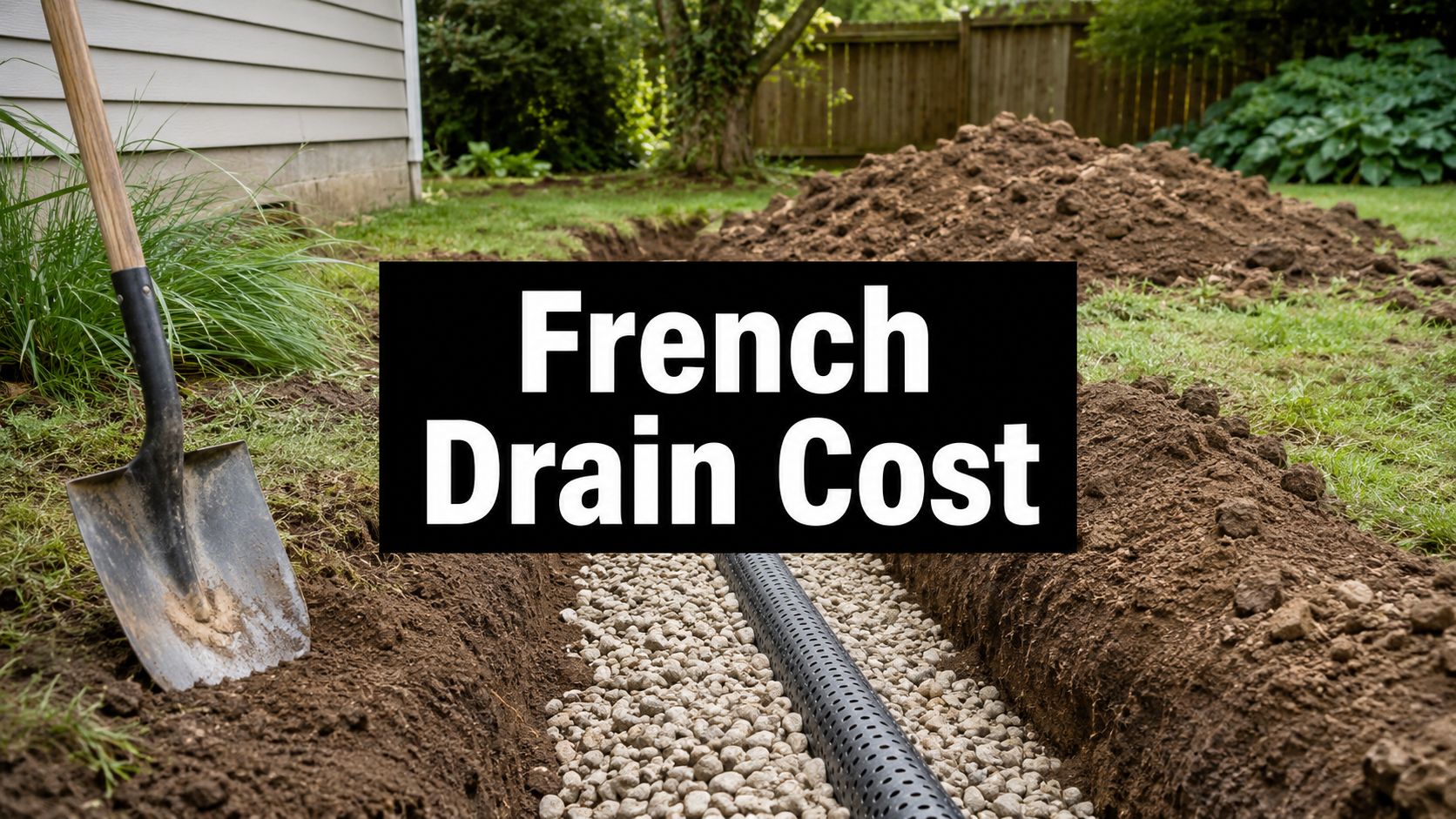
Most homeowners spend $2,800 to $6,500 for professional French drain installation, with a national average of about $5,000. In Pennsylvania, Maryland, Delaware, and New Jersey, though, local labor, excavation conditions, and drain type can push the final price well outside a generic online estimate.
If you're reading this after another storm left water standing beside your house, a shed pad staying soft for days, or a basement wall showing moisture again, you're asking the right question. Water problems rarely stay cosmetic. They creep into gravel bases, undermine garage footings and foundations, and shorten the life of concrete foundations that were supposed to last.
Homeowners looking for shed foundations near me, garage foundation contractors near me, or a reliable base for storage shed often focus on the slab or pad first. That makes sense. But drainage is what protects that investment. A french drain isn't just a landscaping add-on. In many cases, it's part of the foundation system that keeps a shed foundation, gazebo foundation, barn shed base, or house foundation performing the way it should.
Protect Your Property from Water Damage
After a hard rain, the warning signs are easy to spot. Water sits along the garage slab. The soil beside the house stays soft. A new shed foundation or cement foundation for garage looks fine on top, but the ground around it never really firms up.
I see this on properties across Pennsylvania, Maryland, Delaware, and New Jersey. Homeowners often call after they have already paid for the pad, the slab, or the building. Then the runoff shows up, the gravel starts washing out, and the question becomes how much it will cost to correct the drainage before that investment starts to move or break down.
Price matters, but location and layout matter just as much. A drain installed to protect a house foundation, garage footing, or shed base has to match the slope, soil, discharge path, and access on that specific site. Generic online averages can help set expectations. They do not tell you what it takes to keep water off a foundation line in this region, where clay soils, freeze-thaw movement, and tight side yards can change the scope fast.
A well-planned drain system protects the structure you already paid for. That includes the base under a shed, the soil supporting a garage slab, and the foundation around a home where repeated saturation can lead to settlement, cracking, or moisture intrusion. Homeowners comparing options for perimeter protection can also review perimeter drain systems for foundations and pads to see how drainage fits into the larger support system.
Water problems rarely stay in one place
Standing water at the surface is only part of the issue. Once runoff starts collecting in the same area, it can soften subgrade, wash fines out of gravel, and keep pressure against foundation walls longer than those materials should have to handle.
That has real consequences for:
- Gravel shed foundation contractors near me projects where edge erosion starts small and gets worse each season
- Concrete foundations for garages that depend on stable, compacted soil below
- Gazebo foundation and patio areas that settle after repeated saturation
- Garage footings and foundations that perform better when water is carried away instead of left to soak in
Roof runoff adds to the problem on a lot of properties. If gutters overflow or discharge right beside the structure, the drain trench ends up handling more water than it should. Homeowners dealing with both issues may also find useful guidance in Gutter care for Flagstaff homes, because good drainage starts with controlling roof water before it reaches the soil.
What Is a French Drain and Why You Need One
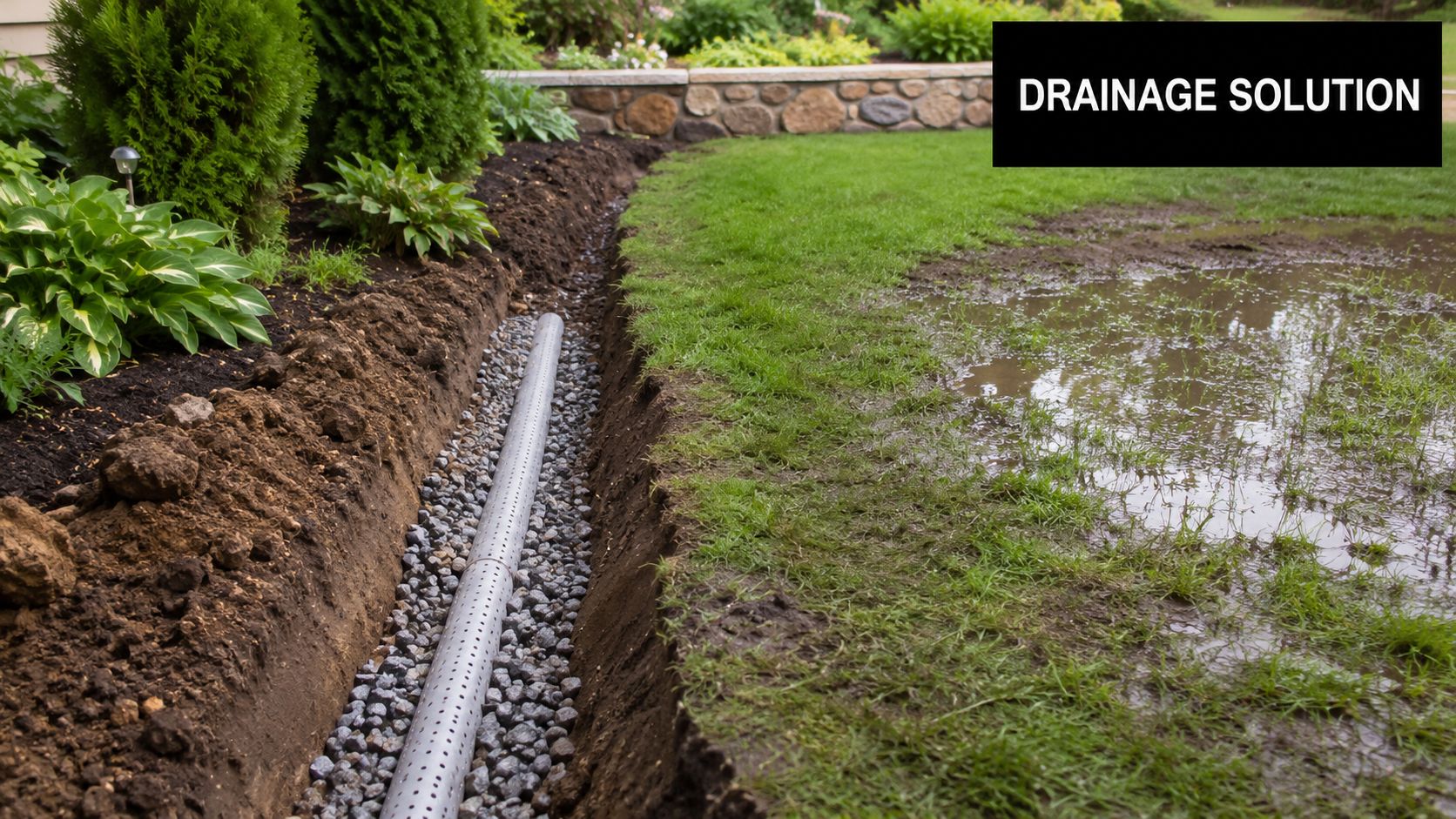
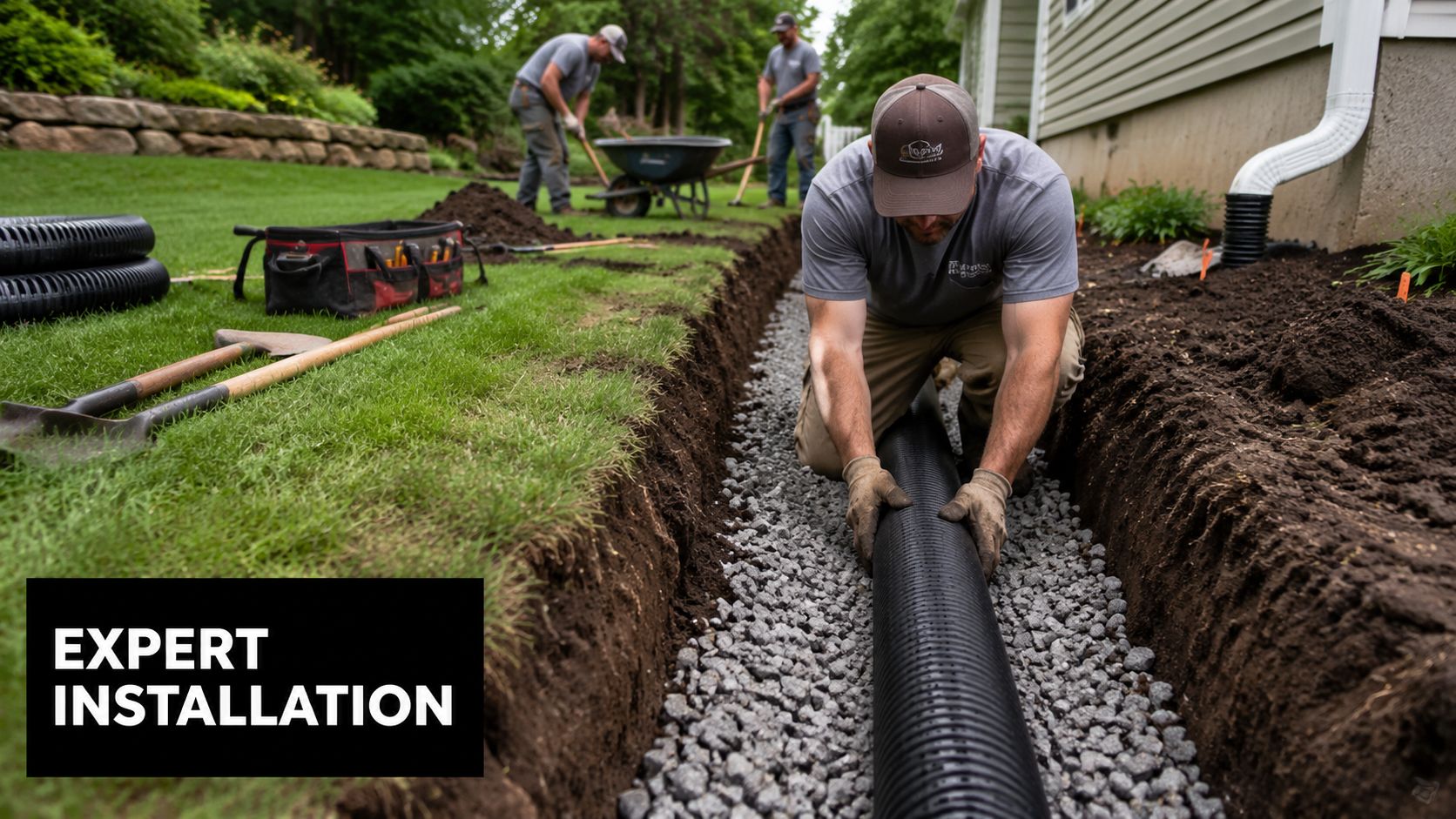
A French drain is a gravel-filled trench with a perforated pipe that collects and redirects water before it can pool where you don't want it. The simplest way to think about it is this. It works like a hidden gutter for groundwater and surface runoff.
Instead of letting water sit beside a house foundation, against a garage slab, or around a shed foundation gravel base, the system gives that water an easier path to follow. Water moves into the gravel, enters the perforated pipe, and exits at a safer discharge point.
Exterior and interior drains do different jobs
An exterior French drain is usually installed in the yard or along the outside perimeter of a structure. This is often the right choice when water is moving across the lawn, collecting behind a retaining area, or saturating the soil around a slab, garage, or 4×8 shed with foundation area.
An interior French drain is a basement waterproofing system. It's installed inside the basement perimeter and directs water to a sump pump when outside excavation isn't enough or when groundwater pressure is the primary issue.
For homeowners planning a new slab or gravel pad, perimeter drainage should be part of the conversation early. If you're comparing site prep options, these perimeter drain systems show how drainage and foundation performance work together.
Why drainage protects foundations, not just lawns
Water changes the behavior of soil. Dry, compacted subgrade supports load much better than saturated soil. When the ground holds water, you can see:
- Soft edges around a shed pad that start shifting under load
- Water against concrete forms and slabs that contributes to settlement problems
- Freeze-thaw movement around a concrete foundation for garage or house addition
- Muddy access areas that make future excavation near me work harder and more expensive
A strong slab on weak, wet ground is still sitting on weak, wet ground.
That's why drainage belongs in the same discussion as foundation builds, house foundation planning, and garage footings and foundations. The concrete may be the visible investment, but moisture control is what helps protect it over time.
Some properties need more than one solution. If your issue starts with surface runoff, swales, grading, and downspout management may work alongside a drain. For ideas that pair well with foundation work, homeowners can discover backyard drainage ideas that help reduce the amount of water reaching the problem area in the first place.
Local French Drain Costs in PA MD DE and NJ
A homeowner in this region can get two very different prices for what sounds like the same drain. One yard has open machine access, a clear downhill outlet, and shallow trenching through lawn. Another needs hand digging along a garage foundation, deeper excavation, stone backfill, and restoration near a slab or walkway. That difference is why national averages only go so far.
As noted earlier, broad installed costs often rise with depth, access limits, discharge complexity, and whether the work is outside or inside a basement. Around homes, sheds, and garages, the question is not just price per foot. It is what the system has to protect, and how hard the site makes the installation.
What Pennsylvania homeowners should expect
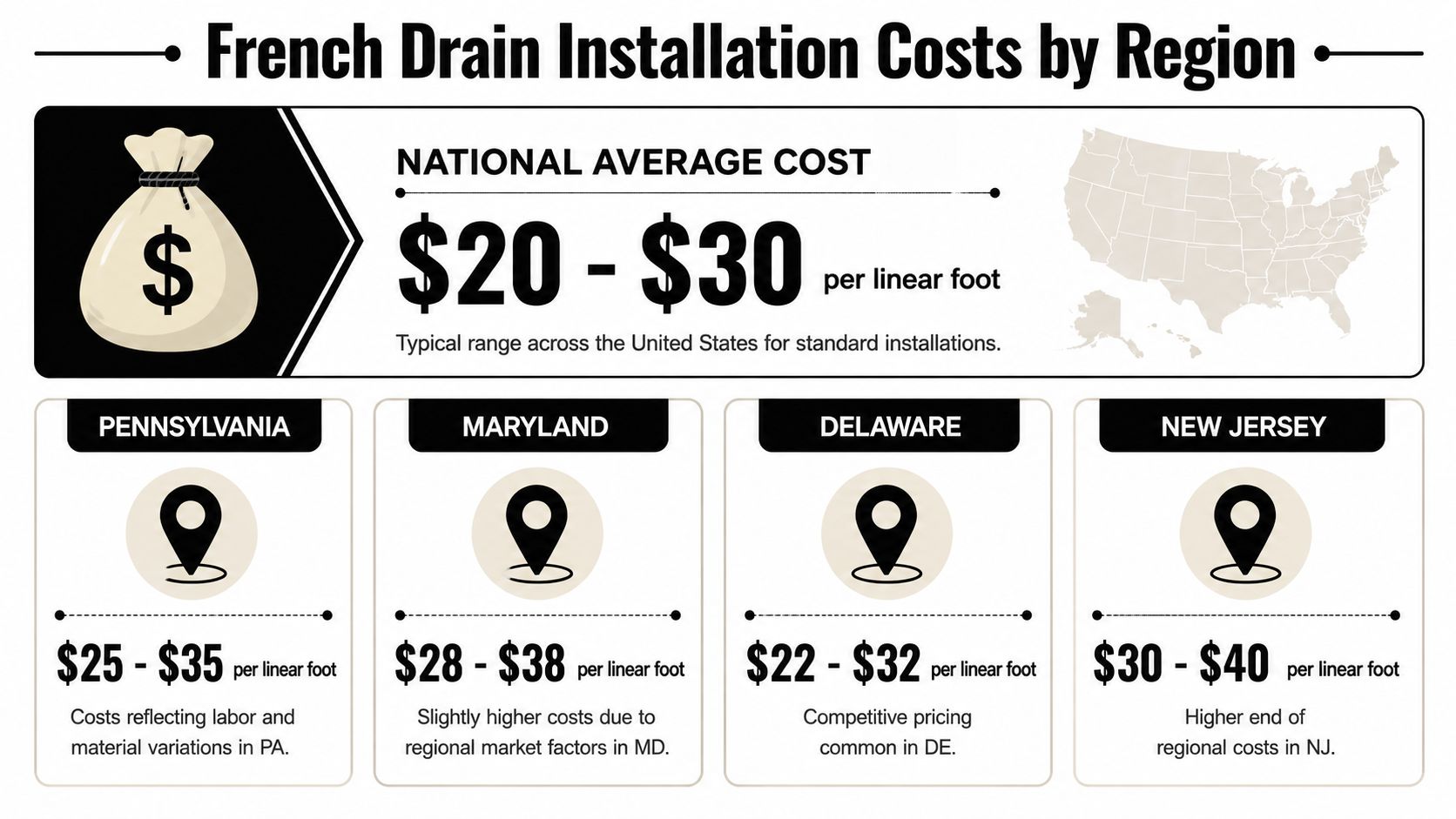
Pennsylvania usually lands above the bargain numbers you see in generic cost roundups. In southeastern PA, pricing often climbs for older properties, tighter lot lines, heavier clay content, and projects where drainage has to work around additions, patios, detached garages, or existing utility runs.
Published regional pricing from Bucks County points to installed French drain costs that commonly fall in the midrange rather than the low end, with foundation-related work and basement systems running higher because they involve more excavation, more material, and more labor-intensive detailing. Homeowners comparing drainage with other site work can get a better sense of local digging and access variables by reviewing typical excavation costs for foundation work.
I see the same pattern across Chester, Montgomery, Bucks, and the Philadelphia suburbs. A simple yard interceptor drain is one budget. A perimeter system protecting a garage slab, shed pad, or house foundation is another.
New Jersey is often higher
New Jersey projects often cost more than similar work across parts of Pennsylvania and Delaware. Labor rates are typically higher, disposal can be stricter, and access is often tighter on developed suburban lots. If the drain has to protect a basement wall, tie into a sump system, or run around hardscape, the price moves up quickly.
State-specific cost guides for New Jersey consistently show a wide spread. That matches field conditions. A short, open run in lawn is straightforward. A deeper perimeter drain near a structure, with careful grading and restoration, is a different job entirely.
A useful comparison from outside the region is this 2026 Eastbourne drain unblocking guide, not because the prices match, but because it shows how drainage work becomes highly local once labor, access, and system complexity enter the conversation.
Here's a practical budgeting view:
| Project type | Typical cost picture |
|---|---|
| Short shallow yard drain | Usually the least expensive if access is open and the outlet is simple |
| Standard exterior system around 100 feet | Often lands in the middle range for residential drainage work |
| Foundation perimeter drain | Costs more because trench depth, stone volume, and restoration usually increase |
| Interior basement system | Commonly the highest due to concrete cutting, sump components, and cleanup |
This video gives a helpful visual of how these systems come together in the field.
What about Maryland and Delaware
Maryland and Delaware pricing can swing based on county, soil conditions, and where the water can legally discharge. The same length of pipe may price very differently if one property has easy fall to daylight and the other needs a sump basin, solid outlet line, or careful routing around a driveway, fence, or foundation planting.
The honest way to budget in both states is to look at the whole site. Drainage protecting a low spot in the yard is one level of work. Drainage protecting a shed base, garage slab, or home foundation carries more responsibility because failure can affect settlement, frost movement, interior moisture, and future repair costs.
That is why a clear local quote matters more than a national calculator. In PA, MD, DE, and NJ, good drainage is part of protecting the structure sitting above it.
An Itemized Look at Your Installation Quote
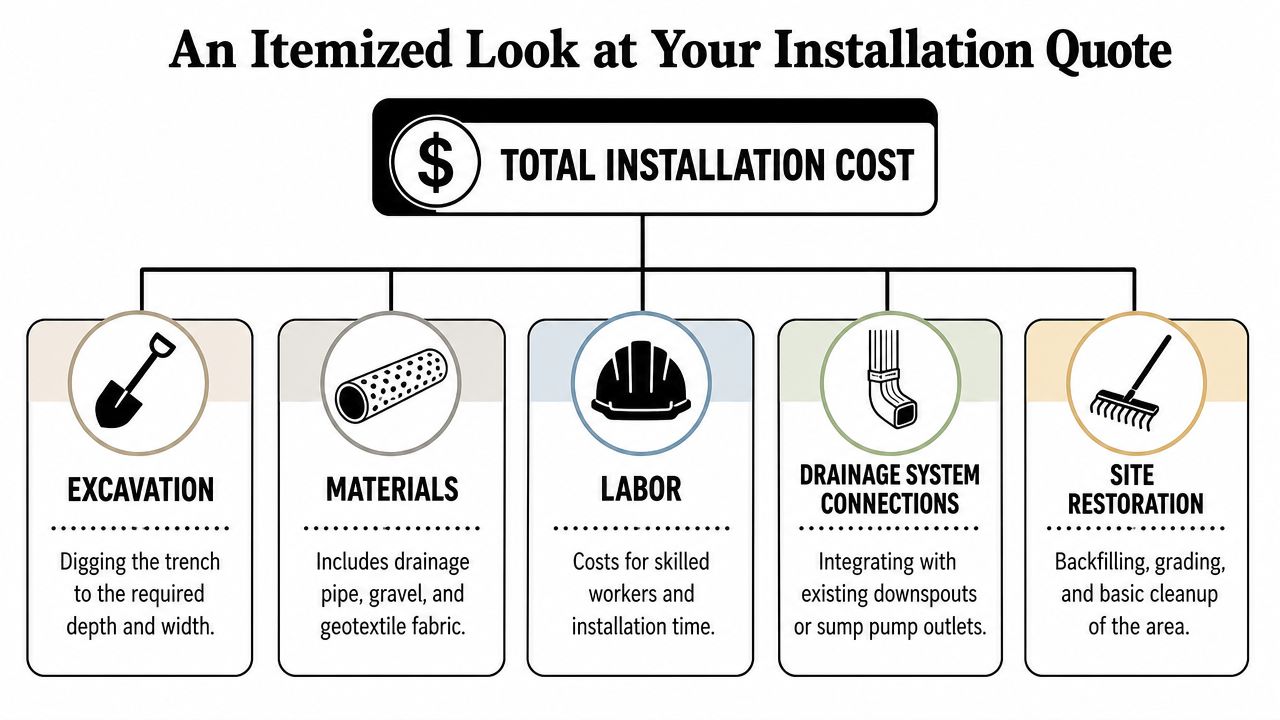
A good quote should show what the contractor is building. If it only gives one lump sum with no breakdown, it's hard to judge quality. Drainage systems fail when one piece is skipped, downsized, or installed carelessly.
Most residential quotes are built around the same core categories. The details inside those categories are what separate a durable system from a trench that fills with mud after a wet season.
What the main line items usually include
| Quote item | What it covers |
|---|---|
| Excavation | Trenching to the required depth and width, machine time, hand digging where access is tight |
| Materials | Perforated pipe, clean drainage gravel, fabric, fittings, and outlet components |
| Labor | Layout, grade control, installation, cleanup, and testing |
| Connections | Tying into downspouts, sump discharge, or approved outlet points when needed |
| Site restoration | Backfill, grading, and basic surface repair after the drain is installed |
If your project also includes a new pad or slab, the same crew may be coordinating drainage with foundation prep. Homeowners comparing site work can get a better sense of broader project budgeting by reviewing excavation cost for foundation.
The materials matter more than many homeowners realize
Not all gravel is equal. For drainage work, contractors usually want clean, washed stone that lets water move. Muddy or mixed fill can choke the system. The same goes for fabric. A proper non-woven geotextile fabric helps keep surrounding soil from migrating into the gravel trench and clogging the pipe.
Pipe choice matters too. The drain needs the correct perforation pattern, the right diameter for the expected water load, and fittings that don't create weak points. A cheap material package can lower the quote, but it often lowers the service life too.
Field note: When a bid looks unusually low, one of the first places to look is whether the quote quietly reduced gravel, fabric quality, restoration work, or outlet planning.
Labor is not just digging
Many homeowners assume the price jumps because of pipe and stone. In practice, labor and equipment often drive the number. The trench has to be set at the right line and grade. Spoil has to be removed or managed. Utilities must be respected. Water has to be directed to a legal, workable discharge point.
For a site with a 10×10 storage shed, a shed foundation kit, or a small garage addition, the drain may be straightforward. For a larger house foundation perimeter or an interior basement trench, the labor is far more involved.
Quality quotes usually account for:
- Access limits if machines can't reach the work zone
- Depth changes near footings and foundations
- Outlet design so collected water leaves the site
- Restoration so your yard, driveway edge, or foundation bed isn't left rough when the crew leaves
A quote should help you see what you're buying, not just what you're paying.
The Risks of DIY vs The Value of a Professional
DIY French drains look simple on video. Dig a trench. Add gravel. Lay pipe. Cover it up. That's why homeowners often compare a material list against a contractor quote and assume the labor gap is excessive.
The problem is that drainage doesn't forgive small mistakes. A French drain that doesn't move water is just buried expense.
The slope is not optional
DIY installation can reduce cost to about $700 for materials alone, while professional installation averages around $3,000, but that gap often ignores equipment rental and the risk of improper grading, according to this DIY versus professional French drain analysis.
The same source explains the critical technical requirement. A French drain needs a 1% to 2% slope, roughly 1 inch of drop per 8 feet, to function correctly. Many DIY installers don't have the surveying tools to verify that grade, and the result can be total system failure.
If the pipe doesn't maintain the right fall, water won't leave the trench the way you expect. In some cases, the drain holds water. In others, it moves it to the wrong place.
What homeowners often underestimate
A professional crew brings more than labor. They bring layout tools, trenching equipment, experience reading grade, and the judgment to know when a drain alone won't solve the problem.
DIY projects often run into trouble in these areas:
- Grade control because a hand level or visual guess isn't enough over a long run
- Outlet planning when there's no clear place for water to discharge
- Soil conditions that collapse the trench or contaminate the gravel
- Tie-ins and transitions around downspouts, sump discharge, sidewalks, or a concrete foundation for garage
The risk gets even higher if you're trying to protect a new shed foundation, a gazebo foundation, or a slab near your home. Saving money up front doesn't help if the system fails and the foundation stays wet.
The better comparison is certainty versus rework
A homeowner can absolutely dig a trench. That's not the hard part. The hard part is building a drainage path that still works after the first heavy season, after soil settles, and after debris starts moving through the system.
That's where professional installation has real value. You're paying for a system that was laid out, excavated, sloped, connected, and restored with the goal of protecting the property, not just burying a pipe.
How to Get a Clear and Accurate Quote
The best drainage quotes start with a site visit. Photos help, but they don't always show grade, outlet options, or how close the water problem is to a slab, footing, or fence line.
If you're reaching out for pricing, it helps to have a short description ready. Where does water collect. How long does it sit. Is the issue near a basement wall, a shed foundation blocks layout, a garage apron, or the edge of a driveway.
What to have ready before the visit
A little preparation makes the quote more accurate and saves time on both sides.
- Photos after rain show the actual water pattern better than dry-weather pictures.
- Project goals matter. Protecting a barn shed pad is different from drying out a basement wall.
- Known utility locations are helpful if you already have marking information, though the contractor should still follow proper utility-location procedures.
- Any planned concrete work should be mentioned, especially if you're also pricing concrete foundations, concrete forms, or a new slab.
What a thorough estimator will look at
A contractor should inspect the source of the water, not just the low spot. Sometimes the drain belongs near the foundation. Sometimes the problem starts with roof discharge, grading, or runoff entering from a neighboring slope.
Expect them to assess:
- The collection area where water currently builds up
- Available fall so the system can drain properly
- Discharge options that make sense for the property
- Access for excavation and whether machine work is possible
- Protection priorities if the drain is supporting a future garage footings and foundations or shed foundations contractors near me project
A reliable quote explains the path of the water, not just the path of the pipe.
Questions worth asking
During the estimate, ask direct questions:
- Will this be an exterior yard drain, a perimeter drain, or an interior solution?
- Where will the water discharge?
- What restoration is included after trenching?
- Is this drain being designed to protect an existing or planned foundation?
Good answers are usually clear and practical. They shouldn't sound evasive or overly complicated. If the quote process feels organized, that's often a good sign the installation process will be too.
Frequently Asked Questions About Drainage Projects
Do I need a permit for a French drain in Pennsylvania
Sometimes yes, sometimes no. It depends on where the drain discharges, how much site disturbance is involved, and whether the work affects other drainage infrastructure or nearby structures. Rules can also vary by township or borough.
The safest approach is to ask your contractor to review local requirements for your municipality before work begins. That matters even more if the drainage is tied to a new house foundation, a concrete foundation for garage, or other excavation work that may already involve approvals.
How long does installation take
The honest answer depends on scope. A short exterior yard drain with easy machine access moves much faster than a deep perimeter trench around a house or an interior basement drain that requires concrete removal and sump work.
Weather, access, spoil handling, and restoration all affect timing. If the project is being coordinated with a shed foundation gravel base, new slab, or driveway work, the schedule should be considered as one site package rather than separate tasks.
Is a French drain worth it for a shed or garage project
Yes, when water is the reason the ground won't stay stable. A base for storage shed or a new garage slab performs better when surrounding water is controlled. If runoff keeps soaking the area, drainage can help protect the investment in the gravel pad, slab, and adjacent grading.
This is especially relevant for homeowners searching for gravel shed foundation contractors near me, shed foundations contractors near me, or garage foundation contractors near me because drainage problems often show up before the building even arrives.
Can a French drain replace grading or gutter corrections
Not always. A French drain is one tool, not a cure-all. If roof water is dumping beside the structure or the yard slopes back toward the building, those issues may need to be corrected too.
The strongest drainage plans usually treat the full water path. That can include downspout relocation, reshaping grade, protecting the edge of a shed foundation, and adding a drain where underground collection is still necessary.
What's the long-term value of a professional drainage system
The return is mostly protective. You're reducing the chance that water keeps attacking the same part of the property year after year. For homeowners with concrete work, that can mean better support conditions, less erosion around the edges, and fewer moisture problems near the structure.
Drainage also helps preserve usability. A shed area that stays muddy, a garage entry that never dries, or a side yard that remains soft becomes a maintenance problem. A functioning drain turns that space back into something usable and easier to maintain.
If you need a quote for drainage, excavation, concrete foundations, a shed foundation, or garage footings and foundations in Pennsylvania, Maryland, Delaware, or New Jersey, Firm Foundations can help you plan the job the right way. The team builds with drainage, structural integrity, and long-term performance in mind, whether you need a gravel pad for a shed, a reinforced garage slab, or site prep that solves the water problem before it damages the foundation.