
Expert Shipping Container Leveling in PA, MD, DE, NJ
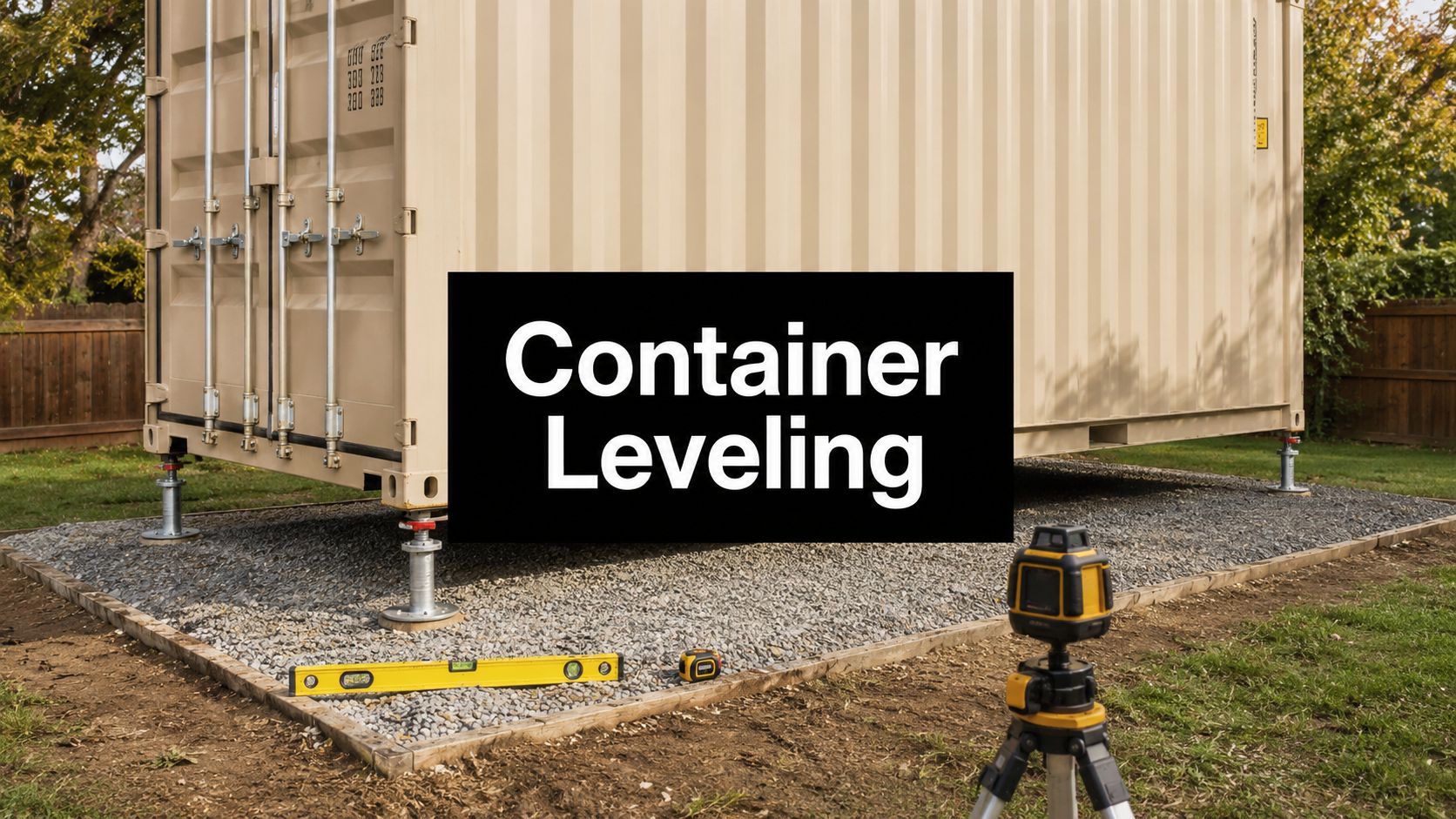
A shipping container often looks simple to set down. The truck arrives, the driver drops it where you pointed, and from a distance it seems done. Then the doors drag, one corner feels off, water starts collecting where it shouldn't, and a strong steel box begins acting like it's under strain.
That's why shipping container leveling matters so much for property owners across Pennsylvania, Maryland, Delaware, and New Jersey. Whether you're planning storage behind a shop, adding a workshop beside a barn shed, or preparing a permanent setup that needs the same care as other concrete foundations, the base decides how well the container performs years from now. People searching for a base for storage shed, shed foundation, garage footings and foundations, or even shed foundations contractors near me are usually dealing with the same core issue. Ground movement never stops, and shortcuts at the start tend to show up later as repairs.
Your Guide to a Stable Shipping Container Foundation
A common call starts the same way. A homeowner has a container delivered onto a spot that looked flat enough from the driveway, but once the container is on the ground, the problems show up fast. One door takes a hard shoulder to close. The floor feels slightly off. Rain doesn't move the way it should. What looked like a quick placement suddenly feels risky.
That situation is familiar throughout PA, MD, DE, and NJ because yards rarely behave the way they look. A site can appear close enough, yet still have soft pockets, slope changes, drainage problems, or topsoil that won't hold a load consistently. The container may sit there today, but uneven support starts stressing the structure right away.
What goes wrong when the container isn't supported correctly
A shipping container doesn't forgive “almost level.” If the base is off, the frame can twist, doors can bind, and the stress moves into places that were never supposed to carry it that way. Those are the kinds of issues people often mistake for a bad container when the foundation under it is the problem.
Practical rule: If the doors don't open and close cleanly after placement, check the base before blaming the container.
That's also why homeowners searching for shed foundations near me, garage foundation contractors near me, or concrete contractors often end up asking the same broader question. What foundation type will still be working after seasons of rain, freeze, dryness, and settlement?
The long view matters more than the drop day
The key isn't getting the container off the truck. The key is building support that keeps it usable. That applies whether you need a simple shed foundation gravel base for storage, a gazebo foundation, a concrete foundation for garage use, or a more permanent pad tied into larger foundation builds.
A well-supported container is easier to use, easier to maintain, and less likely to become an expensive correction project. The right approach depends on the site, the intended use, and how permanent the installation needs to be. That's where foundation planning starts to separate a temporary fix from a base that lasts.
Choosing the Right Foundation for Your Container
A container can look fine on delivery day and still be headed for expensive trouble if the foundation choice is wrong. I have seen doors start sticking months later, corner loads shift unevenly, and clients end up paying twice because the first base was built for speed instead of long-term support.
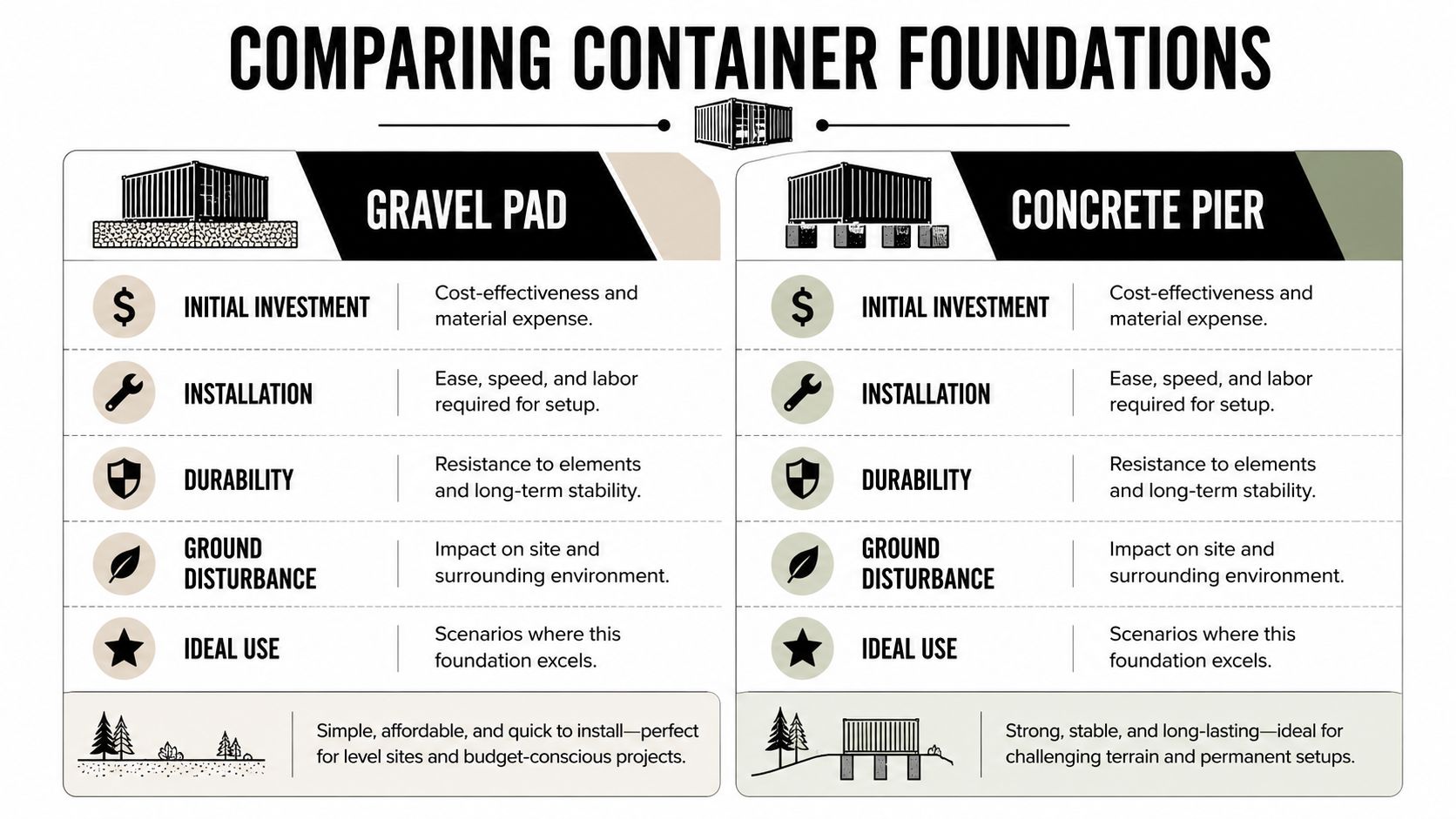
The right foundation depends on three things. How the container will be used, what the ground is likely to do over time, and how much future movement you are willing to risk. At Firm Foundations, we start there because the cheapest base upfront is often the most expensive one to correct later.
Gravel pads
A compacted gravel pad can work well for basic storage on stable, well-drained ground. It is a common starting point for smaller outbuildings and containers alike because it drains well and usually goes in with less disruption than concrete.
The catch is below the stone. Gravel performs only as well as the subgrade under it and the compaction work put into it. If the soil stays wet, pumps under load, or was never prepared properly, the gravel surface can settle unevenly and the container starts transferring stress into the frame instead of into the ground.
As noted earlier from HZ Containers, gravel beds offer some adjustment flexibility, but they do not match concrete for raw support. That trade-off matters if you want a forgiving install on good ground. It matters even more if you do not want to revisit the job after a wet season.
Concrete piers
Concrete piers are often the best fit when the site is sloped or the ground conditions make a full pad less practical. They let us establish a level bearing plane at the support points without forcing the entire site into one elevation.
That approach works well, but only when pier depth, spacing, and bearing conditions are correct. A container does not need support everywhere. It does need support where the loads are meant to go. For longer containers, center support may also be needed depending on use, exposure, and the foundation design. Missing that detail is one of the mistakes that turns a decent-looking install into a service call later.
Piers usually cost more to build than gravel, but they often save money over time on uneven sites because they control movement better.
Poured concrete slabs
A poured slab makes sense when the container is part of a permanent setup, will carry heavier use, or needs a very controlled base. It takes more planning, more excavation, and more upfront cost, but it also removes a lot of the variables that create headaches later.
For workshops, container offices, and long-term placements, a slab often gives the best result because the support is consistent across the footprint and easier to keep in plane. That can mean fewer door and frame issues, less maintenance, and less chance of needing midstream corrections after seasonal movement.
If you are comparing options, this guide on shipping container foundation cost considerations is a useful starting point for balancing budget, permanence, and site demands.
Shipping Container Foundation Options at a Glance
| Foundation Type | Best For | Typical Cost | Durability | DIY-Friendliness |
|---|---|---|---|---|
| Gravel Pad | Basic storage on stable, well-drained ground | Varies by site and material needs | Moderate to strong when built on good subgrade | Moderate |
| Concrete Pier | Sloped yards, uneven terrain, long-term support | Varies by excavation and forming needs | High | Lower |
| Poured Concrete Slab | Permanent installations and heavier long-term use | Typically the highest of the three | Very high | Low |
The right foundation is the one that still carries the container correctly after rain, frost, heat, and settlement have had time to test it.
Site Preparation and Assessment Essentials
Most container problems start below the foundation, not above it. If the site isn't evaluated correctly, even a well-built pad or pier system can end up fighting poor drainage, soft ground, or settlement from decomposing material left in place.
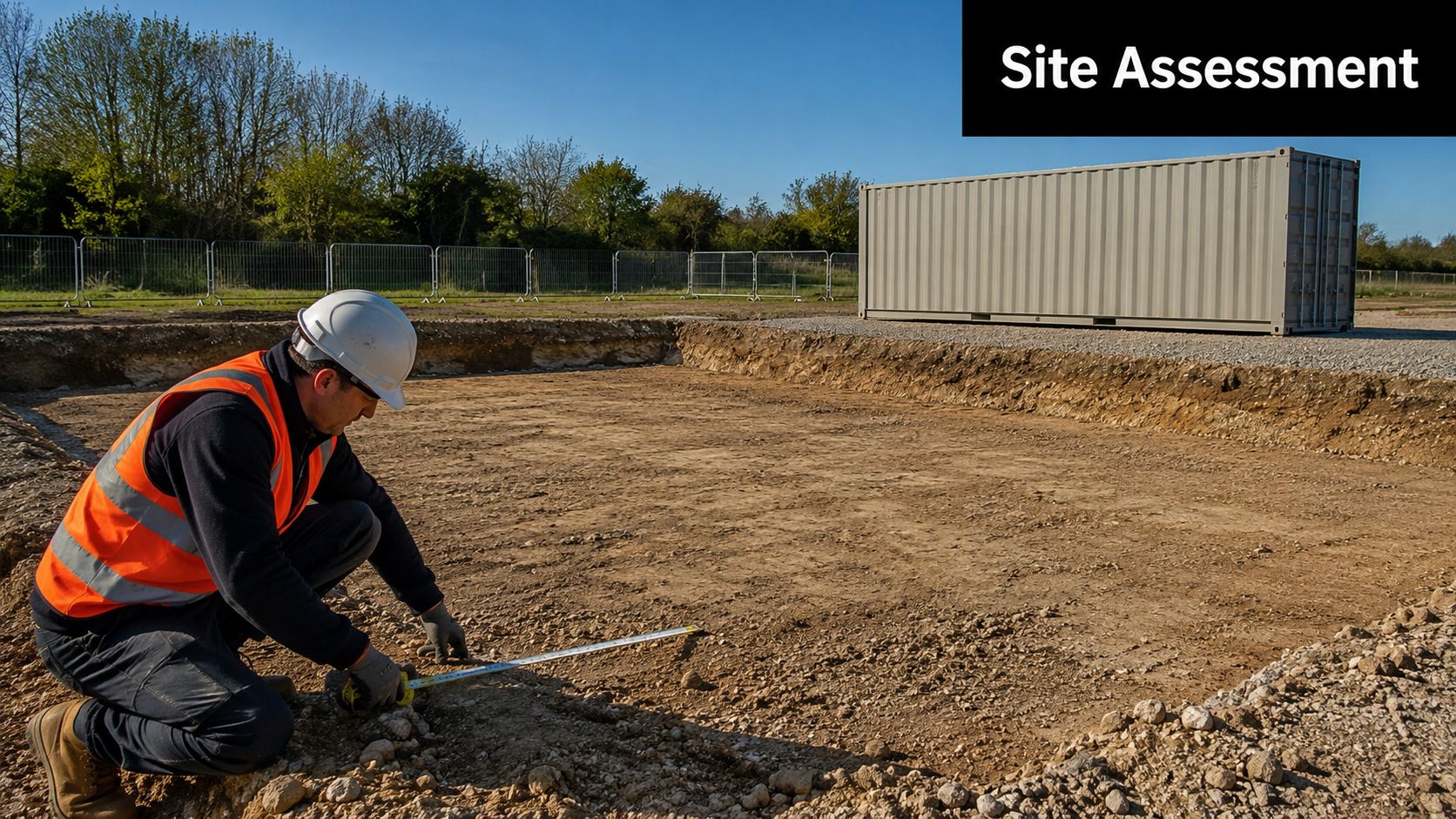
Start with slope, soil, and water movement
Walk the site before you decide on materials. Look at how water already behaves after rain. Notice whether the container location sits low, whether the ground stays damp, and whether the soil feels firm or disturbed. If the area has topsoil, roots, or organic material still in place, that material has to come out before foundation work begins.
Many DIY installs often go sideways. The spot looks solid enough in dry weather, but underneath there's soft soil or fill that hasn't been compacted properly. Once weight is added and seasons change, the support shifts.
Clear to a real working base
Topsoil is not a foundation. Grass is not a foundation. Loose fill is not a foundation. A reliable base starts after those layers are removed and the area is shaped for support and drainage.
For anyone comparing excavation near me services, this is the part that separates a lasting install from a quick one. Site prep often includes:
- Removing organics: Grass, roots, mulch, and loose topsoil keep breaking down and settling.
- Correcting grade: High spots and low spots need to be addressed before support points are set.
- Compacting the subgrade: Loose ground needs to be densified so it doesn't move under load.
- Planning drainage: Water must move away from the foundation area instead of collecting under it.
Match the prep to the intended use
A basic storage container and a long-term residential or commercial setup don't ask the same things from the ground. If the container is temporary, you may accept a simpler approach on stable soil. If it's permanent, the prep should be treated with the same seriousness as other foundation builds on the property.
If a site already has drainage trouble, the container won't fix it. The foundation has to be designed around that reality.
People shopping for a shed foundation kit or comparing shed foundation blocks sometimes underestimate how much site prep drives the result. The visible part of the job gets attention, but the hidden work is what keeps a container from moving later. When the base is compacted, drained, and shaped correctly, the leveling process becomes more precise and the finished support lasts longer.
Measuring and Adjusting for a Perfect Level
A container can look fine on day one and still cause expensive trouble later. I have seen installs where the owner only noticed a slight door drag at first, then months later the frame was under stress, the supports had shifted, and the fix cost far more than getting the level right at the start.
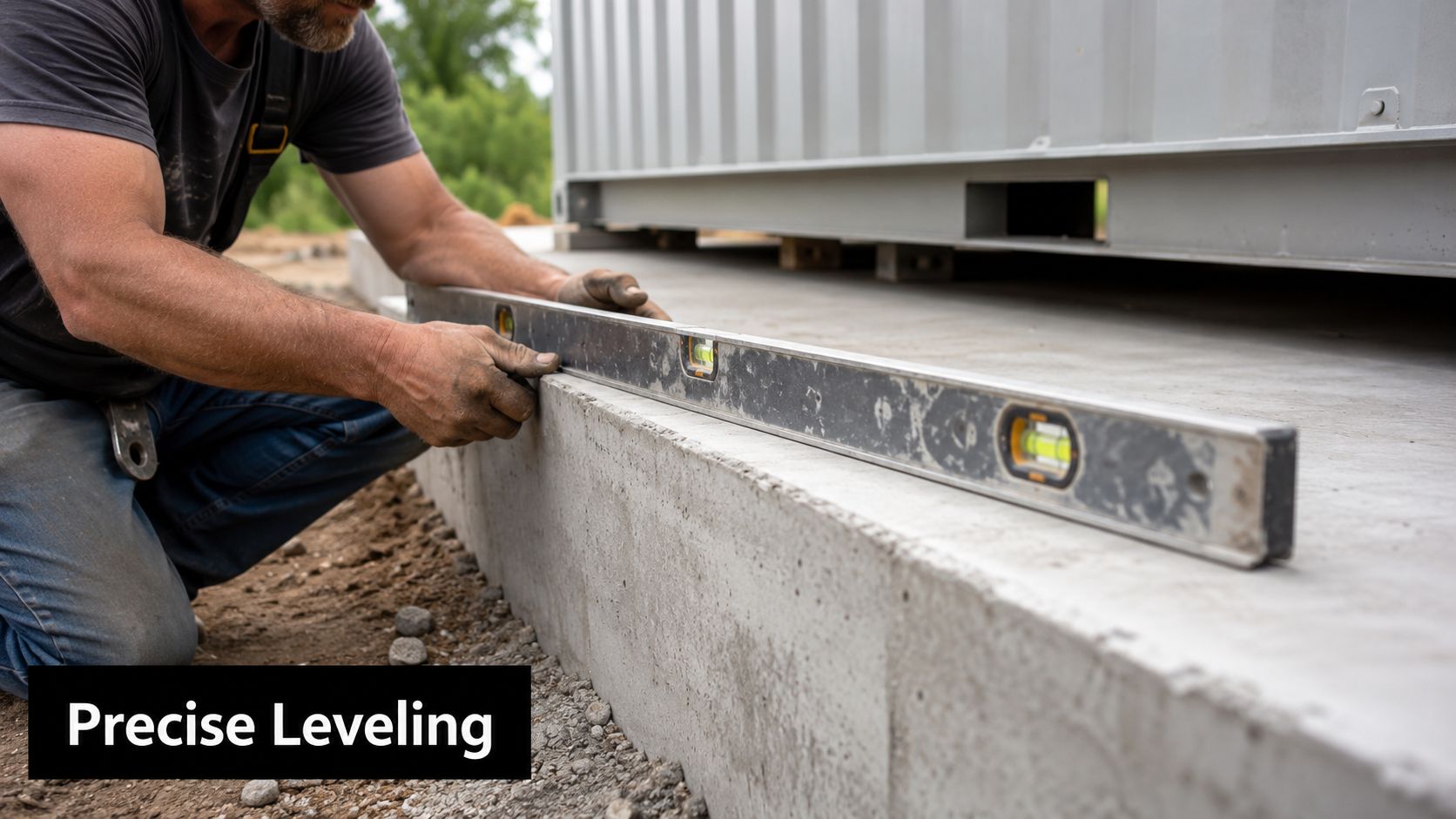
Use the right tools
A short homeowner level does not tell you enough. For container work, crews usually check with a long spirit level, and many also use laser levels, string lines, hydraulic jacks, and solid shimming materials that will hold their thickness under load.
The goal is not to make one corner look right. The goal is to confirm that all support points are carrying the container in the same plane. If adjustable feet are part of the foundation design, they need to be sized and installed so the container stays low, stable, and properly supported at the castings. Too much adjustment height can create a setup that is harder to brace and more vulnerable to movement over time.
What “level” means
Level means the readings agree across the container, including the diagonals. A container can show a decent reading on one side and still be sitting in twist. That twist is what leads to sticking doors, uneven load transfer, and long-term frame stress.
A practical check sequence looks like this:
- Check one long side. This shows the obvious high or low end.
- Check the opposite long side. Differences between the two often point to twist.
- Check both short sides. That confirms each end is bearing properly.
- Check the diagonals. This tells you whether the support plane is true.
For sloped or irregular sites, the groundwork usually decides how easy this step will be. If you are dealing with grade problems before final adjustment, this guide on how to level uneven ground for a solid foundation gives helpful context.
Make small corrections, then recheck
Small adjustments are safer and more accurate. Raise the low point carefully, add a durable shim or correct the pier height, set the load back down, and check again. If you make a large correction at one corner, you often create a new problem somewhere else.
Support location matters just as much as the reading on the level. The container is designed to carry load through its structural points, especially at the corners. Improvised blocking placed wherever it happens to fit can leave the frame doing work it was never meant to do. That may not show up right away, but over time it can lead to settlement, door misalignment, and a container that never operates quite right again.
Here's a short walk-through of the process in action:
Recheck after seasonal ground movement
A good install still needs follow-up. Frost, heavy rain, drought, and repeated loading can all change how the ground supports the container. In our line of work, that is why we recommend checking level again after the first major seasonal change and any time you notice new door resistance, visible gaps at supports, or cracking around piers or pads.
That extra check protects the foundation choice you made earlier. At Firm Foundations, we treat leveling as part of the long-term performance of the whole system, not a final box to check before we leave the site. That approach helps clients avoid the slow, expensive problems that start small and keep getting worse.
Common Mistakes and Pro Troubleshooting Tips
The most expensive shipping container leveling mistakes usually don't look dramatic at first. They look close enough. That's what makes them costly. The container lands, the owner sees it standing, and everyone moves on before the support system has really been proven.
Mistake one: accepting “almost level”
A container can be only slightly off and still create frustrating daily problems. Doors are usually the first warning sign, but by the time those issues show up, the frame has already been asked to do something it shouldn't. If the level reading isn't right, don't rationalize it away.
A good troubleshooting habit is simple. Check the base first, then the container behavior. If the doors drag, don't start adjusting hardware before confirming the support plane.
Mistake two: forgetting support along the span
This one shows up when people rely on a few blocks and assume the rest of the container will take care of itself. It won't. Universal Containers states that to prevent mid-span sagging when using support blocks instead of a solid slab, shims or blocks must be placed under each corner and at every 6 to 8 feet along the container's sides.
That's especially important when the setup is acting more like a permanent structure than a temporary box. A long steel frame still needs proper load support across its length when you're not using a full slab.
Mistake three: poor drainage around a good foundation
A container can sit on a decent pad and still fail if water keeps undermining the surrounding soil. Erosion, softening, washout, and seasonal movement all start getting worse when drainage is ignored. People often focus on the visible support point and forget that the surrounding grade is part of the system.
Good foundation work includes the dirt around the concrete, not just the concrete itself.
Mistake four: weak wind strategy
Wind changes the conversation. On exposed sites, especially with longer containers, anchoring and support layout matter more than many owners expect. If the location is open and wind-prone, the foundation and attachment details should be planned as part of the original job, not added as an afterthought.
For anyone comparing shed foundation blocks, base for storage shed options, or support methods for a larger garage or container project, the lesson is the same. Support has to match use, site exposure, and time. A shortcut that works for a few weeks often becomes the callback later.
When to Call the Pros at Firm Foundations
Some container projects are manageable for a hands-on owner. Many aren't. If the site has steep grade changes, drainage issues, uncertain soil, access challenges, or permanent-use plans, professional installation stops being a luxury and becomes the safer decision.
Permanent use changes the standard
A residential container installation should be treated differently from a simple storage drop. HZ Containers explains in its guide to certified leveling legs that for residential shipping container homes, a poured concrete slab is explicitly recommended over gravel beds for permanent foundation stability and structural integrity. That's a clear dividing line between temporary convenience and long-term support.
The same mindset applies when homeowners are also weighing concrete foundation for garage work, garage footings and foundations, house foundation prep, or other concrete forms for structures that need to stay put.
Why professional help usually pays off
A licensed and insured crew brings more than labor. They bring grading judgment, excavation planning, support layout, forming, drainage strategy, and a better understanding of what local conditions in Pennsylvania, Maryland, Delaware, and New Jersey do to foundations over time.
That matters if you're searching for driveway companies near me, driveway contractors near me, garage foundation contractors near me, or concrete foundations because these projects often overlap. A property owner may start with a container and realize the underlying issue is broader site work. Once excavation, drainage, and permanent support enter the picture, it makes sense to have one experienced foundation contractor handle the job correctly.
The smart time to make the call
Bring in a pro when any of these apply:
- The site is sloped or uneven: Pier heights, excavation, and support points need to be planned carefully.
- The ground stays wet: Drainage design becomes part of the foundation.
- The container is permanent: Long-term use raises the standard.
- The project connects to other work: Garages, driveways, pads, and utility planning often affect one another.
A stable container starts with the same principle as any dependable shed foundation, gazebo foundation, or cement foundations for garage project. The support underneath decides how well the structure performs above it.
If you need a dependable base for a shipping container, shed, garage, gazebo, or other outbuilding in Pennsylvania, Maryland, Delaware, or New Jersey, Firm Foundations can help. As a licensed and insured contractor specializing in gravel pads, concrete foundations, excavation, and long-term foundation builds, the team provides clear recommendations, transparent quotes, and workmanship built around drainage, structural integrity, and longevity. Reach out today to request a free quote and get your project started on a foundation that's built to last.