
Building Requirements for a Shed: Your 2026 Guide
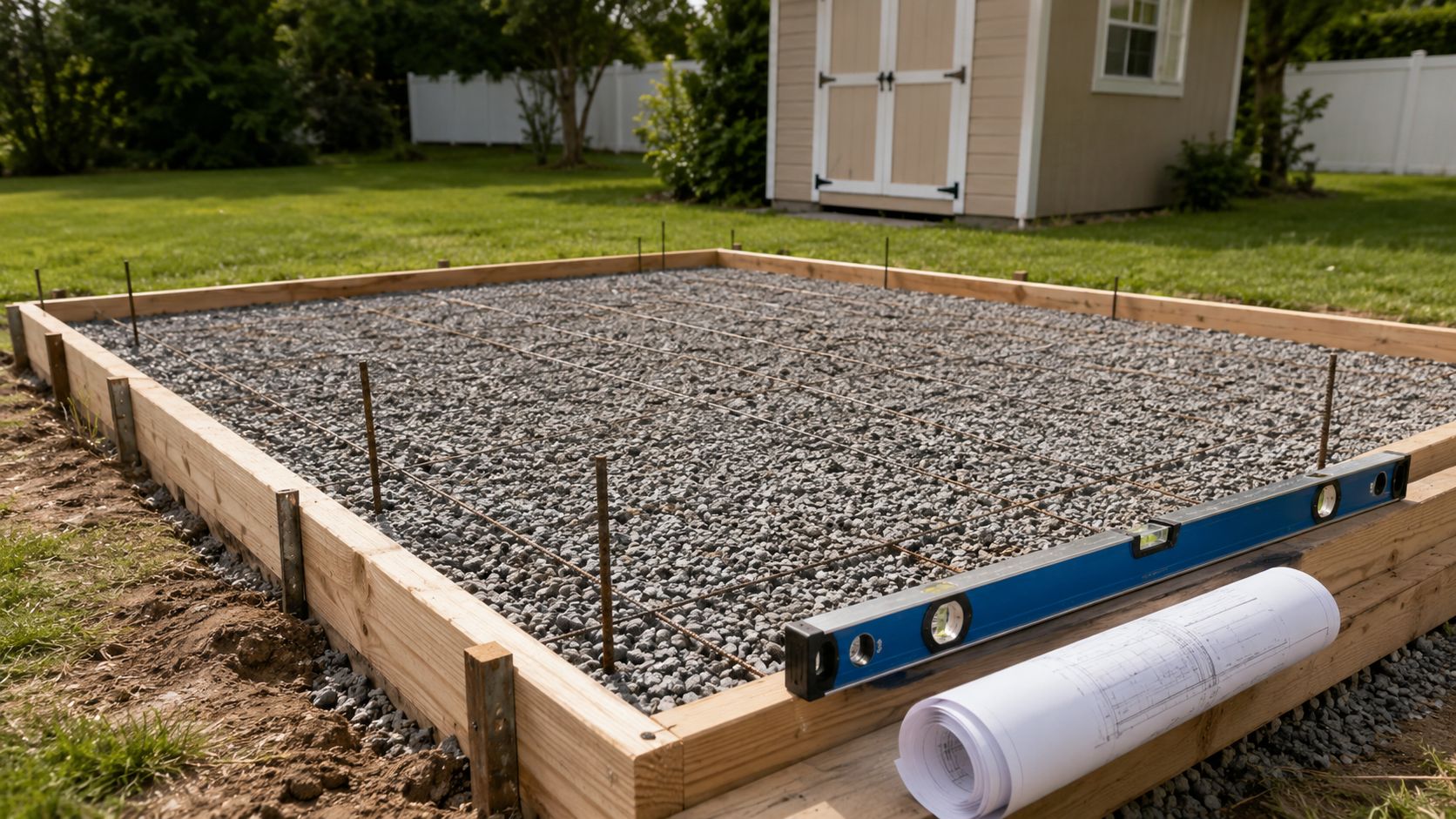
If you’re shopping for a shed right now, you’re probably getting hit with three different answers at once. The dealer says one thing. Your township office says another. A neighbor tells you he dropped his shed on blocks years ago and “never had a problem.”
That’s how people end up with a crooked shed, a muddy base, or a permit issue after the building is already ordered.
In Pennsylvania, Maryland, Delaware, and New Jersey, the building requirements for a shed usually come down to a few practical questions. How big is it. Where will it sit. What kind of base will support it. Are you adding electric or plumbing. And will the township treat it like a temporary storage building or a permanent structure. If you get those answers right before delivery day, the rest of the project goes a whole lot smoother.
Do You Need a Permit for Your Shed in PA, MD, DE, or NJ
Your shed dealer says the building is “small enough to skip permits.” Then the township asks for a plot plan, setback distances, and foundation details. That happens all the time in PA, MD, DE, and NJ because shed rules are set locally, not region-wide.
The practical answer is simple. You might need a permit, and the shed size alone does not settle it.
Across many municipalities, permit thresholds often start with floor area, with common cutoffs at 100, 120, 144, or 200 square feet according to Cincinnati’s residential shed handout. A 10×10 storage shed can be exempt in one township and require review in the next one over.
That’s the question to ask first. How does your municipality classify this shed on this lot?
What local offices usually check first
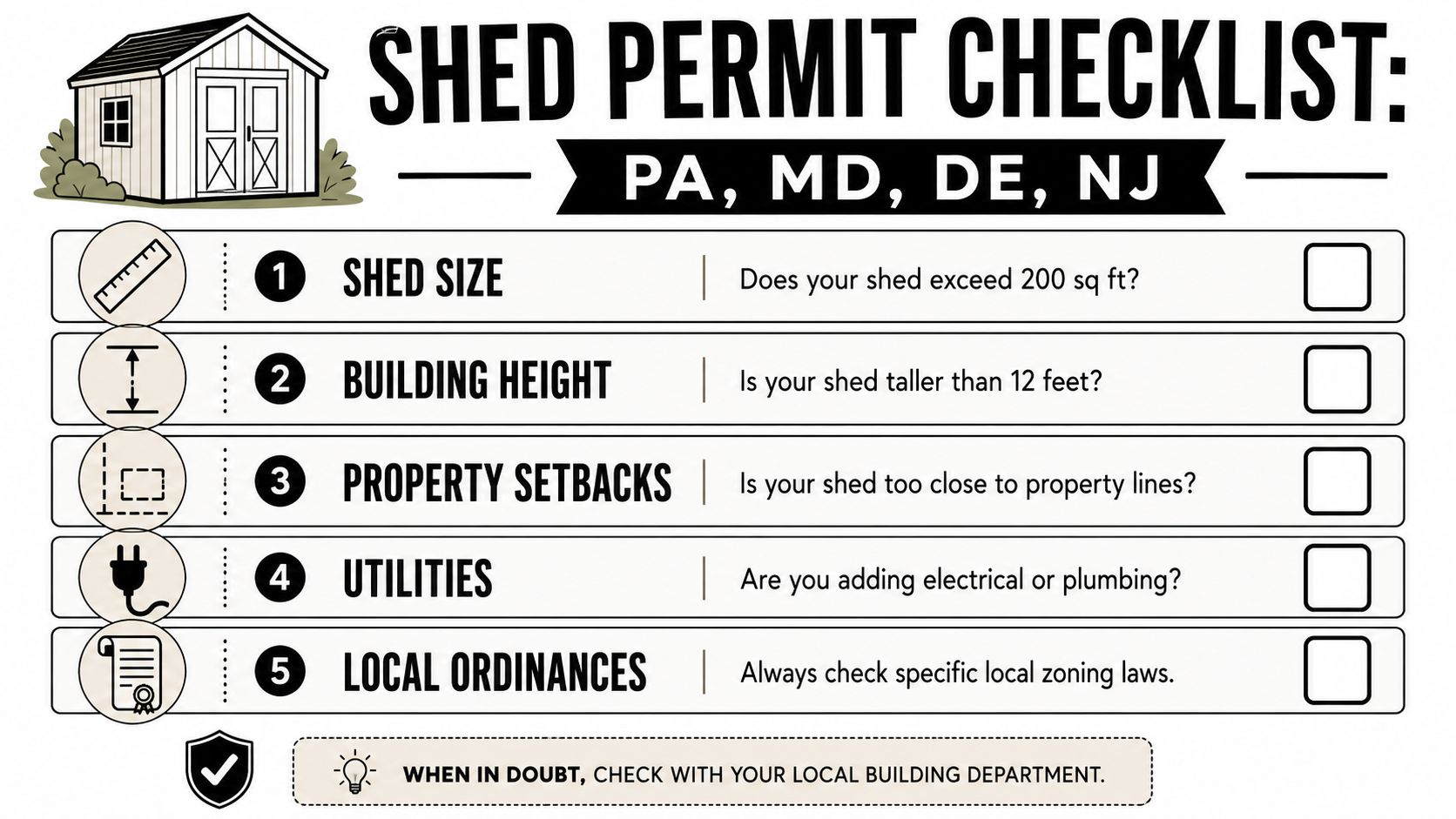
Before anyone delivers a shed or builds a pad, the zoning or code office usually wants the basics:
- Footprint size: Square footage is often the first screen, so confirm the exact shed dimensions before you prep the site.
- Placement on the lot: Rear yard rules, easements, and zoning districts can matter just as much as the structure itself.
- Distance from property lines: Some municipalities require specific setbacks and may apply stricter wall rules when a shed sits close to a line.
- Height and intended use: A simple garden shed is often reviewed differently than a workshop or hobby space.
- Utilities and permanence: Electric, plumbing, or a more fixed installation usually bring more questions.
I’ve seen plenty of homeowners assume a backyard shed is minor work, only to find out the township cared more about where it sat than how big it was.
Why this gets tricky in PA, MD, DE, and NJ
The Mid-Atlantic is full of local variation. One borough in Pennsylvania may focus on rear-yard setbacks. A township in New Jersey may pay closer attention to lot coverage. Parts of Maryland and Delaware may want clearer site sketches or zoning approval before installation.
Climate matters here too. Frost, drainage, and storm exposure affect where a shed should go and how the base should be prepared. Even if the permit office is only asking about location on paper, the ground conditions still decide whether that shed stays level through winter.
That’s why I tell homeowners to settle the ordinance question before they spend money on site work. If the lot needs grading, access improvement, or excavation, it helps to review professional residential excavation services for shed site prep before locking in the final location.
The same pattern shows up on bigger residential jobs. If you’ve spent time planning your Greater Boston addition, you’ve seen how local interpretation, site layout, and paperwork often matter as much as the structure itself.
The safest first move
Call the municipality with three things in hand: shed size, proposed location, and intended use. Ask whether they want a zoning permit, a building permit, or both. Then verify the setback requirements before the pad gets staked out.
That short phone call can save you from rebuilding the base or shifting the shed after delivery.
Beyond Size Other Factors That Trigger Shed Permits
A common scenario around PA, MD, DE, and NJ goes like this. The shed is small enough to look exempt, the delivery gets scheduled, and then the permit office asks a different question: “What kind of base is it going on, and are you running power to it?” That is usually the point where a simple backyard project turns into a permitted structure.
Size still matters, but it is not the only trigger. In this region, local officials often look at how permanent the shed will be, how it will be used, and whether the work includes utilities.
When the foundation changes the conversation
Many municipalities treat the foundation type as part of the permit decision. Guidance summarized by builders in Georgia notes that a permit is often required when a shed has a permanent foundation such as a concrete slab or footers, even if the structure might otherwise be exempt by size, as described in this shed permit overview.
That lines up with what I see on jobs in the Mid-Atlantic. A shed resting on a movable-style base is often reviewed differently than one tied into concrete, anchors, and excavation that clearly signal a long-term installation. In frost-prone parts of Pennsylvania and New Jersey, that distinction can matter even more because inspectors know the base is doing real structural work, not just giving the shed a flat place to sit.
| Foundation choice | How municipalities often view it |
|---|---|
| Temporary-style base | May get lighter review, depending on local rules |
| Slab or footers | Often treated as a permanent installation |
| Heavily anchored install | May require clearer plans or details |
| Utility-ready structure | Usually draws more scrutiny |
Permanent is often the better build. It is cleaner, stronger, and usually lasts longer. But it can change the permit path, so it pays to settle that before excavation, concrete, or delivery is on the calendar. If you are weighing a slab, it helps to review how to build a concrete pad for a shed before you commit.
Utilities change everything fast
Electrical, plumbing, and mechanical equipment are another common trigger.
Once a shed is getting lights, outlets, a mini-split, or water service, most municipalities will want permits and inspections even if the structure itself is fairly small. At that point, the project is no longer just about storage. The base and site plan may need to account for trenching, conduit routes, slab penetrations, utility setbacks, and inspection access.
A shed stays simple until it needs power, water, or HVAC. Then the foundation decision you made on day one becomes much more important.
That is a real trade-off homeowners miss. A basic gravel setup can work well for storage, but future upgrades may be harder and more expensive if nobody planned for utility runs or heavier use.
What homeowners usually miss
The biggest problem is not delivery day. It is the change of use a year later.
A few examples come up all the time across this region:
- Workshop plans later: A shed meant for storage may end up holding heavier tools, benches, and regular electrical use.
- Home office conversion: Once the building is insulated and conditioned, local officials may look at it very differently.
- Concrete after the fact: Some homeowners start with a temporary base, then decide they wanted a slab all along. That usually means paying twice for site work.
The better move is to decide what the shed is likely to become, not just what it is on day one. If there is any real chance it will get utilities, anchoring, or permanent footings, plan for that up front. In PA, MD, DE, and NJ, that early decision usually saves money, avoids permit surprises, and gives you a foundation that still makes sense five winters from now.
Choosing Your Shed Foundation Gravel Pads vs Concrete Slabs
A lot of shed problems start with the wrong base choice.
Around PA, MD, DE, and NJ, I see the same mistake over and over. A homeowner prices a shed for basic storage, picks the cheapest foundation option, and a year later wants to park a mower, add a workbench, or turn the building into a small workshop. The shed did not change much. The foundation decision did.
For most properties in this region, the main options are a gravel shed foundation or a concrete slab. Either one can serve you well. Either one can also turn into an expensive redo if the base does not match the building, the soil, and the way the shed will be used through our wet seasons and freeze-thaw cycles.
When a gravel pad makes sense
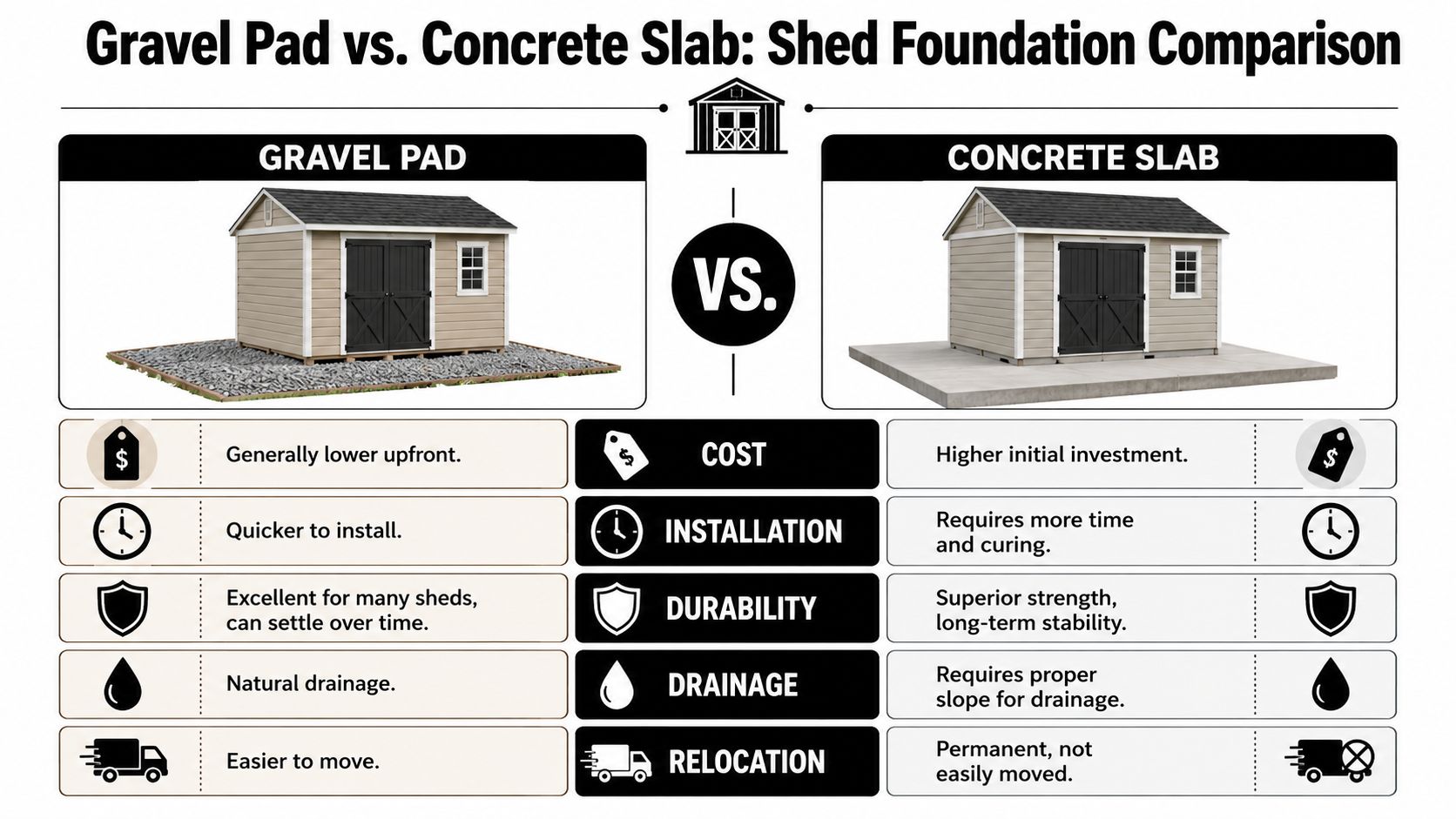
A properly built gravel pad is a good fit for many prefab sheds, garden sheds, and standard storage buildings. It drains well, installs faster than a slab on many sites, and gives you a raised base above surrounding grade, which matters a lot in low or wet yards across this region.
That last point is a big one in the Mid-Atlantic. Clay pockets, runoff from neighboring lots, and winter heaving can punish a poorly prepared site. A gravel pad handles those conditions well when the excavation is correct, the stone is compacted in lifts, and the pad extends far enough to support the full footprint.
A gravel pad usually makes sense when:
- The shed will be used mainly for storage
- The lot tends to stay wet or hold surface water
- You want the shed floor higher than the surrounding yard
- The building may be moved or replaced later
- A prefab shed is being delivered with its own floor system
Gravel also gives you some forgiveness on drainage. That does not mean loose stone tossed on grass. It means a contained, compacted pad built to carry weight evenly.
When a concrete slab is the better answer
A slab is usually the better route for a larger shed, a detached garage-style building, or any outbuilding expected to carry heavier loads and regular foot traffic. It gives you a finished floor, a more permanent structure, and better support for equipment, shelving, and interior build-outs.
That is why homeowners who need garage foundation contractors, garage footings and foundations, or cement foundations for garage are usually solving a different problem than someone buying a small storage shed. The building use is heavier. The tolerance for movement is lower. The cost of getting it wrong is higher.
A proper slab build takes careful base prep, forming, reinforcement, and finishing, as shown in this step-by-step concrete pad guide.
If the shed is going to function like a small building, treat the foundation that way from the start.
A slab often makes more sense when:
- The structure will hold heavier tools or equipment
- You want a finished concrete floor
- The shed may become a workshop, garage, or utility space
- You are planning a more permanent installation
- The manufacturer or local inspector expects a slab-based setup
For roof and wall assemblies above either type of base, quality fasteners still matter. We often recommend products like Contractor’s Den roofing screws when the building package calls for metal-to-wood connections.
Here’s a simple side-by-side view:
| Best fit | Gravel pad | Concrete slab |
|---|---|---|
| Basic storage shed | Strong option | Can be more than needed |
| Wet site | Often favorable because drainage is easier to manage | Needs careful grading and runoff planning |
| Heavier use | May need more planning around support and anchoring | Often preferred |
| Future permanence | Depends on design | Usually the more permanent route |
A short visual can help if you’re comparing base types and install methods:
What works in Mid-Atlantic soil and weather
Local conditions matter more than generic online advice. In southeastern PA, South Jersey, northern Delaware, and much of Maryland, I would rather see a well-executed gravel pad than a poorly prepared slab every time. On the other hand, if the shed is really headed toward workshop or garage use, a slab usually saves money in the long run because you build once instead of rebuilding later.
The right answer comes from the load, the drainage pattern, the access to the site, and how permanent you want the structure to be. Pick the base for the shed you will still own in three to five years, not just the one being delivered this month.
Site Prep Anchoring and Drainage Essentials
Most shed problems start below the shed.
The building looks fine on delivery day. Then the first wet season shows up. One corner settles, doors stop swinging cleanly, water sits along the perimeter, and the owner realizes the “level spot” was never prepared to carry the load.
What proper site prep actually includes
A real foundation build starts with stripping away unsuitable surface material, establishing the finished elevation, and creating a base that supports the entire structure. Grass, topsoil, loose fill, and random debris don’t belong under a shed pad or concrete slab.
For many sites, the work includes:
- Excavation to suitable material: The top layer often needs to come out before any base goes in.
- Compaction in controlled lifts: Stone only performs if it’s compacted correctly.
- Finished grade planning: Water needs a path away from the building.
- Access review for delivery: The best pad in the world won’t help if the shed can’t reach it.
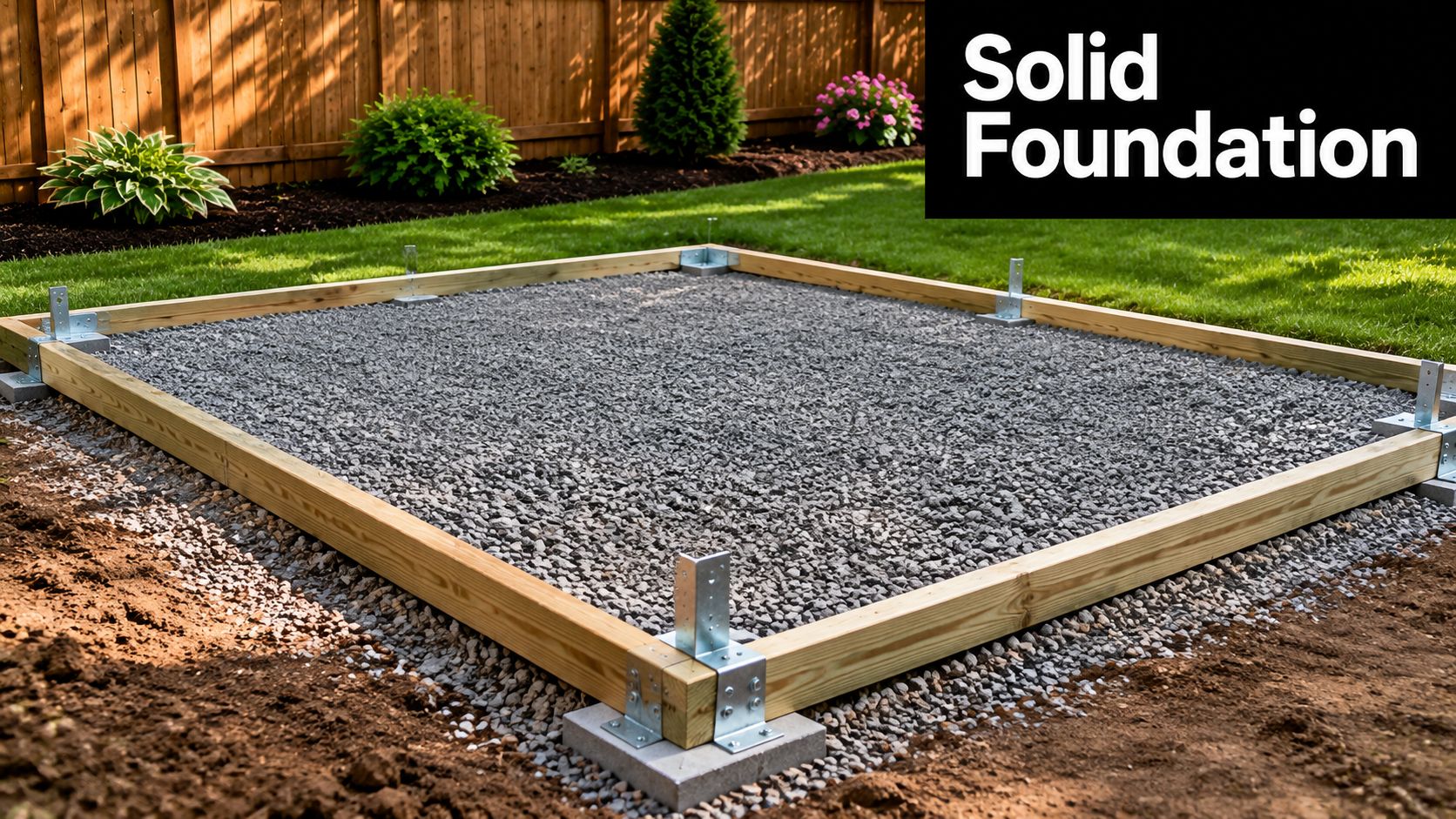
A lot of DIY installs skip that first step and try to build on whatever is already there. That’s when frost movement and washout start showing up.
Anchoring is not optional
For code-compliant performance, a shed foundation has to be selected around uplift resistance and load transfer, not just levelness. Guidance summarized for Florida shed permits notes that permanent sheds are expected to be anchored with concrete footings, anchor bolts, or approved ground anchors, and that placing a shed on blocks or uncontained gravel is often insufficient to resist sliding or lifting, according to this permit and anchoring summary.
That principle matters in the Mid-Atlantic too. Strong wind doesn’t care whether the building is called a shed, a gazebo foundation project, or a small detached workshop. If the structure can rack, slide, or lift, the base system isn’t finished.
Field note: A level shed that isn’t anchored is only halfway built.
Anchoring details also need to match the shed manufacturer’s system. If you’re fastening framing or metal components, the hardware matters. Installers comparing fasteners for framing attachments or accessory work sometimes look at products like Contractor’s Den roofing screws, but the exact hardware should always match the shed design and local approval requirements.
Drainage is what keeps the foundation working
Drainage is where gravel pads often shine, but only if the pad sits above surrounding grade and the water has somewhere to go. On a slab, drainage has to be designed into the surrounding grading because the concrete itself doesn’t solve water movement.
What works:
- A pad that stands proud of the yard
- Clean grading away from the structure
- Compacted material that won’t rut under load
- Anchoring that ties the shed to the support system
What doesn’t work:
- Wood blocks on bare soil
- Loose gravel spilled over grass
- A low spot that collects runoff
- Calling a placement pad a foundation when it isn’t one
That’s the difference between a shed that stays square and one that starts fighting you after the first rough weather.
Your Project Timeline From Quote to Final Inspection
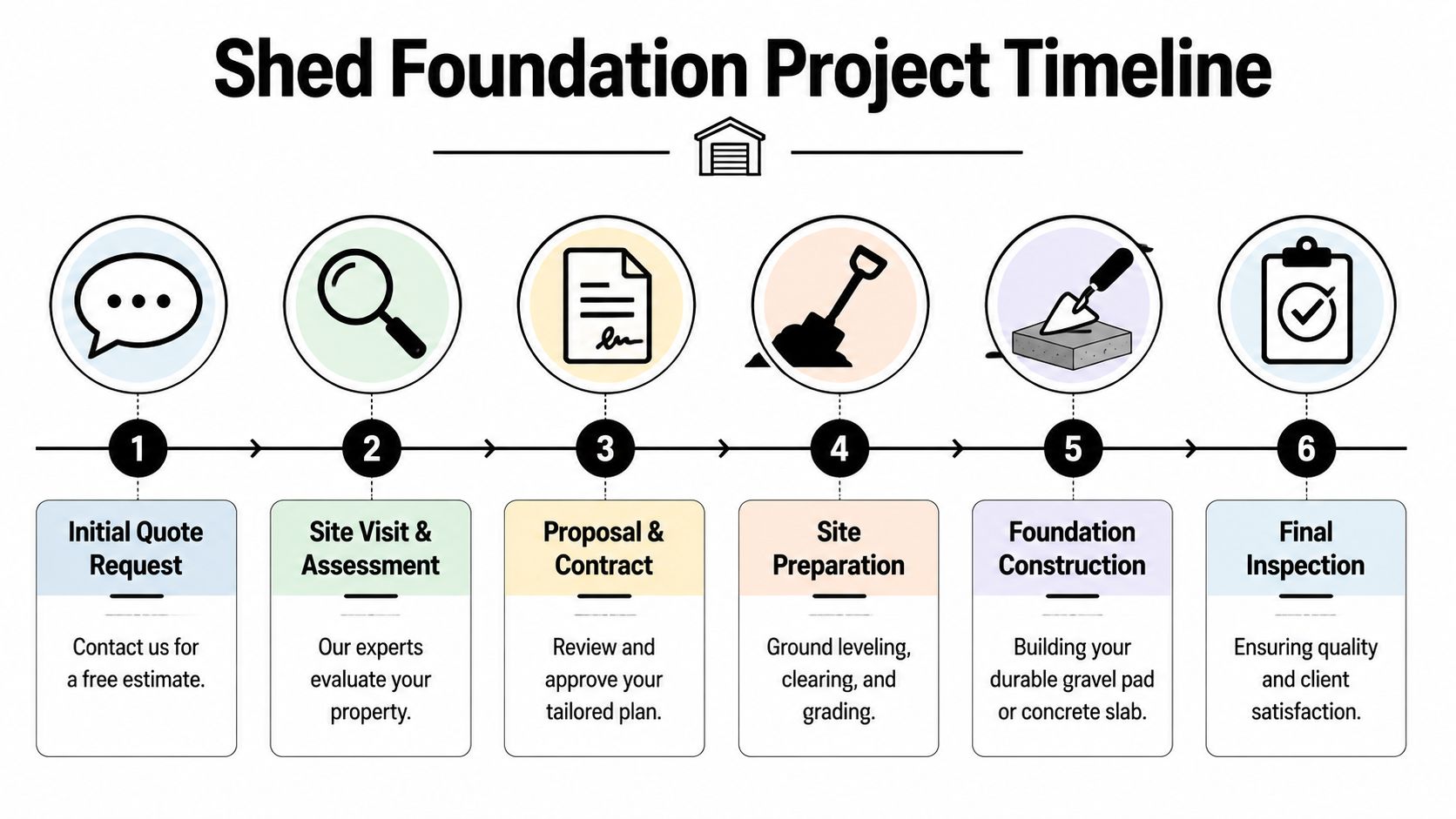
Most homeowners feel better once they know the order of operations. Shed projects are simpler when each step happens at the right time and nobody is guessing on delivery week.
What the process usually looks like
The cleanest projects follow a straightforward path.
-
Initial quote request
The owner shares the shed size, intended use, site photos, and property location. -
Site visit and assessment
The contractor checks slope, drainage, access, and the likely foundation type. -
Plan approval
Final dimensions, elevation, and placement get confirmed before work starts. -
Excavation and preparation
The crew removes unsuitable material, shapes the area, and builds the base. -
Foundation installation
That may mean a compacted gravel shed pad or a formed concrete slab. -
Cleanup and readiness for delivery or inspection
The site gets finished so the shed installer or inspector can do their part.
Why paperwork matters even on a small structure
In many municipalities, the foundation itself is part of the regulated build. Permit rules often require a site plan, construction drawings, anchoring details, and a final inspection before use, as outlined in Panama City Beach shed requirements. That source also notes that all sheds there require a permit and final inspection, with anchoring details included in the submission.
The specific forms in PA, MD, DE, or NJ will differ, but the lesson is the same. Municipalities often want to know exactly where the shed sits and how it’s supported.
Bring your survey, shed specs, and proposed location together early. That’s usually the difference between a smooth review and a stalled project.
Timing issues that cause avoidable delays
The most common scheduling headaches aren’t technical. They’re sequence problems.
| Stage | Common mistake | Better approach |
|---|---|---|
| Before quote | Ordering the shed before confirming the pad | Confirm base size and location first |
| Before excavation | Ignoring access path and grade | Review delivery route and drainage |
| Before install | Assuming no inspection is needed | Ask the township early |
| After install | Missing documents for final approval | Keep drawings and pad details organized |
A well-run project feels calm because the decisions happen in the right order. The homeowner knows what’s being built, the pad matches the structure, and there’s no surprise scramble when the shed truck is already on the road.
Frequently Asked Shed Foundation Questions
Do I need a frost-proof foundation for my shed in Pennsylvania
It depends on the shed, the township, and how permanent the structure is. In PA and the surrounding Mid-Atlantic states, freeze-thaw movement is a real foundation problem, especially on wet sites and clay-heavy soils. The right question is which foundation will stay stable through winter, shed water properly, and match local permit expectations.
How much gravel is needed for a 10×12 shed foundation
The total depends on pad depth, slope, final elevation, and how much grading the site needs. A level yard in Delaware is one thing. A sloped, soft, or poorly drained lot in Pennsylvania or New Jersey usually takes more stone and more prep. Get the pad size and finished height nailed down before material is ordered.
Can a shed sit on blocks
Sometimes, for a very small shed. But blocks by themselves do not handle drainage, compaction, frost movement, or anchoring very well. Around PA, MD, DE, and NJ, that shortcut often turns into a re-leveling job later.
What’s the difference between a shed pad and a small garage foundation
A shed pad is built for a lighter accessory structure. A garage foundation has to carry heavier loads, handle vehicle traffic, and meet a different standard for long-term use. That is why concrete contractors, concrete foundations, and garage footings and foundations usually fall into a different category than a basic prefab shed install.
Can a gravel shed foundation support a prefab building
Yes, if it is sized correctly, compacted properly, and drained well. We install plenty of prefab shed pads on gravel in this region. The failures usually come from pads that are too small, stone that was never compacted in lifts, or edges that let water wash the base out.
Is a concrete slab always the best choice
No. A slab makes sense for heavier use, larger buildings, or sheds that may become workshops later. A well-built gravel pad is often the better value for a standard storage shed, especially where drainage and access matter more than having a finished floor.
Can a contractor work directly with my shed dealer
Yes, and it usually makes the job go smoother. The pad size, elevation, runner layout, and delivery date all need to match. When the shed dealer and foundation crew are working off the same specs, install day is a lot less stressful.
What if I may add electricity later
Plan for it now. In PA, MD, DE, and NJ, a shed that starts as storage can trigger a different permit path once power, lighting, or workspace use gets added. It is cheaper to choose the right base up front than to tear out and rebuild it later.
If you need a shed pad, gravel base, concrete slab, or excavation work in Pennsylvania, Maryland, Delaware, or New Jersey, Firm Foundations can help you build it the right way from the start. Whether you’re comparing local shed foundation contractors, pricing a base for a storage shed, or planning garage footings and foundations, the goal is the same. Build for drainage, stability, and the actual rules in your township, not a generic online checklist. Reach out for a quote and get a foundation plan that fits your shed, your site, and local conditions across PA, MD, DE, and NJ.