
A Durable Shed for Dogs: A PA & MD Foundation Guide
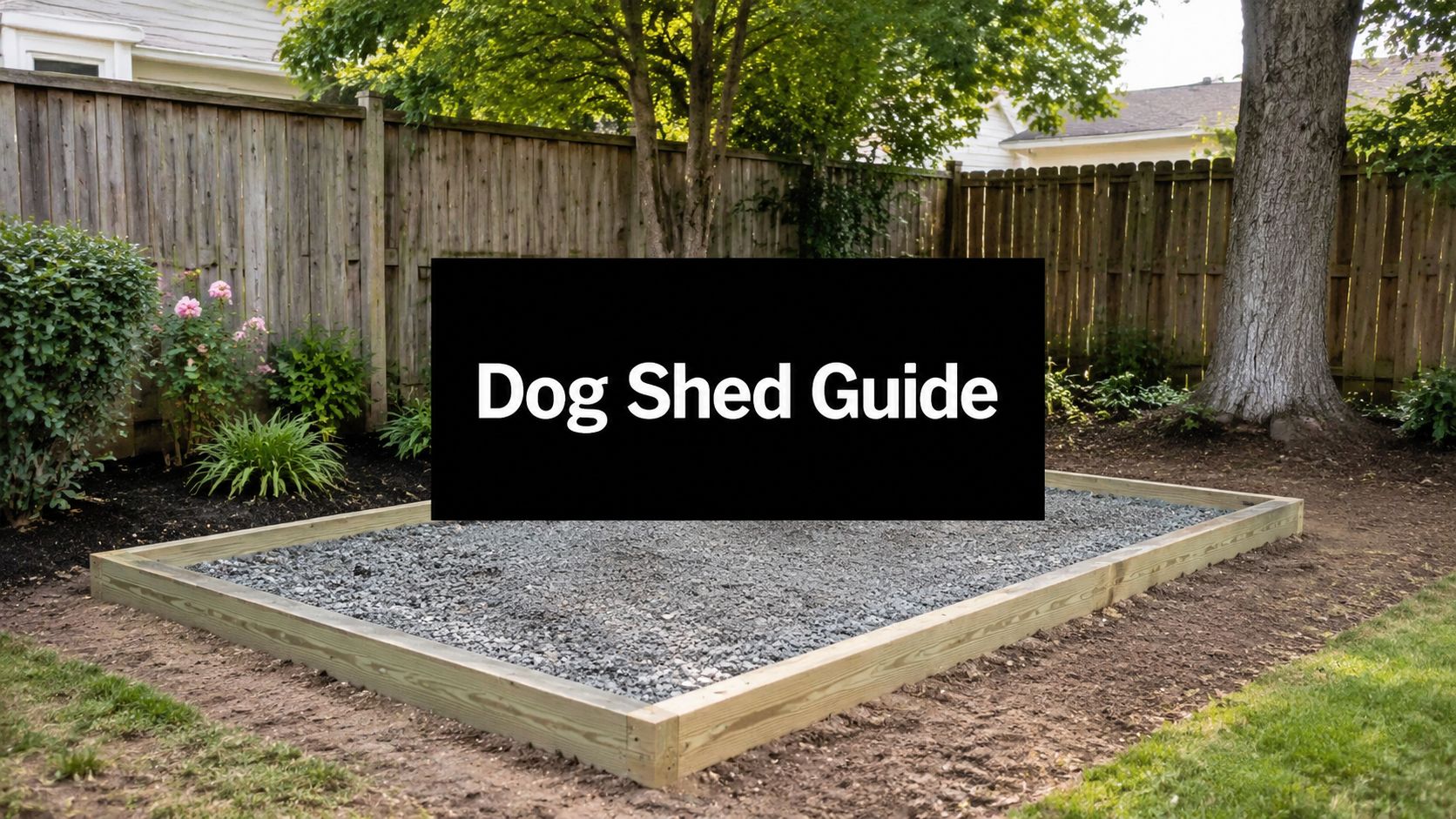
A lot of homeowners start in the same place. They pick the shed style, think about siding color, maybe price out a prefab unit, and only then ask what it should sit on.
For a shed for dogs, that order should be reversed. The base under the structure affects whether the space stays dry, whether cleanup is manageable, whether the floor stays cold and damp in winter, and whether the shed starts shifting or rotting before it should. In the Mid-Atlantic, where rain, humidity, and temperature swings all show up in the same year, the foundation is an animal welfare decision as much as a construction one.
That matters because giving a dog a safe, stable home environment is one of the most important things an owner can do, and the pressure on dog housing is still real. In 2025, approximately 2.8 million dogs entered shelters in the U.S. according to the ASPCA's U.S. animal shelter statistics. If you're building outdoor shelter at home, it makes sense to build it so it protects the dog from damp ground, standing water, and avoidable wear.
Planning the Perfect Dog Shed Starts from the Ground Up
Most failed dog shed projects don't fail because the walls were framed badly. They fail earlier.
A homeowner buys a nice small shed, drops it on bare soil or a few loose blocks, and it looks fine for a while. Then the first wet stretch hits. Water starts collecting along one edge. The floor stays cold. Mud gets tracked inside. The door goes slightly out of square. A season later, the structure smells musty, the dog avoids it, and the owner assumes the shed itself was the problem.
Usually, the shed wasn't the problem. The ground prep was.
The part most people skip
A proper base does four jobs at once:
- Keeps water moving away so the shed floor doesn't stay damp
- Supports the weight evenly so the structure doesn't rack or settle unevenly
- Reduces contact with wet soil that leads to rot, pests, and early material breakdown
- Creates a cleaner, safer environment for the dog using the space
Practical rule: If the ground under the shed stays wet, the shed will eventually show it.
That's why I always tell homeowners to think about the base first and the building second. The roof, siding, and doors matter, but they can't solve a drainage problem under the floor.
Comfort starts below the floor line
A dog doesn't experience the shed the same way a person shops for one. The dog feels the temperature coming off the floor. The dog lies where moisture lingers. The dog notices drafts and dampness long before you do.
That's also why interior comfort matters alongside structural prep. Once the foundation and shed are right, details like bedding make the shelter more usable. If you're comparing sleep setups for different sizes and coat types, Nandog's ultimate dog bed guide is a useful companion resource after the base and shell are handled.
In Pennsylvania, Maryland, Delaware, and New Jersey, the climate punishes shortcuts. Ground moisture, freeze-thaw movement, and humid summer air all expose weak site prep fast. A durable dog shed starts with a dimensioned, stable, dry foundation. Everything above it works better because of that.
Choosing the Right Size and Location for Your Dog Shed
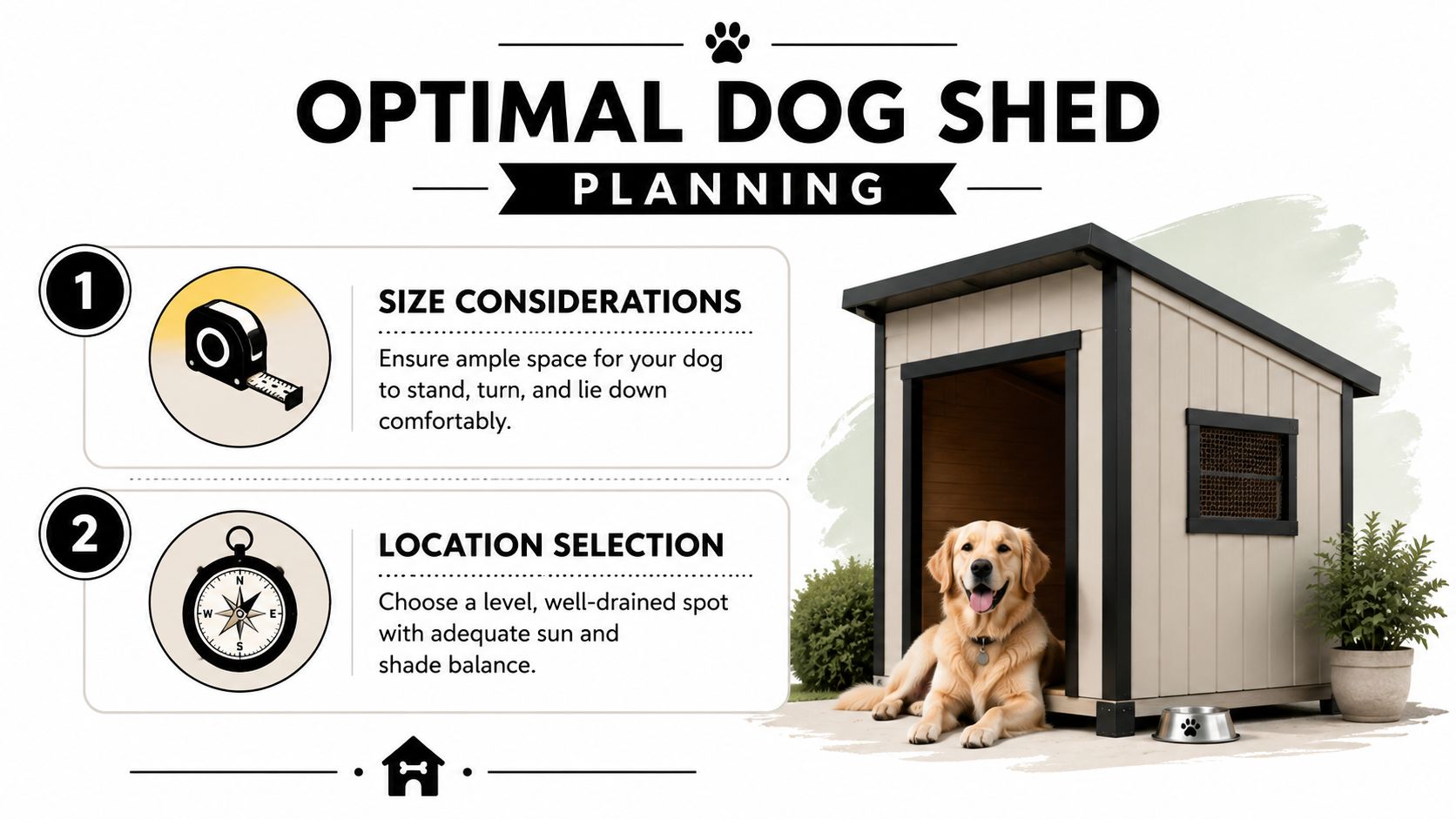
Before any excavation starts, two decisions shape the whole project. One is size. The other is where the structure sits on the property.
Get either one wrong and you'll spend money fixing problems that were avoidable on day one.
Size should match how the dog actually uses the shelter
Military kennel design guidance is useful here because it focuses on function instead of guesswork. It states that kennel spaces should support the dog's resting, standing, and turning needs while still being easy to clean, as outlined in the U.S. Air Force kennel design standard.
That same principle works for a home shed for dogs. The interior should fit the dog comfortably, but it shouldn't be oversized without a reason. Too much enclosed volume can work against comfort if the space is hard to keep dry and temperate.
If you're working through breed-specific sizing questions, this guide on choosing proper kennel dimensions can help you think through proportions before you commit to a structure.
Ask these questions before you choose a footprint
Some dog sheds are just weather shelter. Others need to hold feed bins, cleaning supplies, or a partitioned kennel run. Those uses change the base size and layout.
Use this checklist before you stake out a site:
- Dog use first: Is the shed only for sleeping and getting out of weather, or will it also serve as a kennel area?
- Cleaning access: Can you get in comfortably to wash, disinfect, and replace bedding?
- Entry orientation: Will the opening face into wind-driven rain or winter drafts?
- Supply storage: Do food containers, leashes, or cleaning tools need dedicated room?
A cramped shed is frustrating to maintain. An oversized one can become harder to keep comfortable.
Location matters as much as the shed itself
The location should be level enough to build on, but that isn't enough by itself. The site also needs to stay dry.
On many properties, the spot that looks convenient near the fence or tree line is the exact place where runoff gathers. That's a common mistake in parts of PA, MD, DE, and NJ where yards may look flat but still carry water toward low corners after rain.
Set the shed where the yard wants to stay dry, not where it's easiest to drop a structure.
There's also the zoning side. Township rules, setbacks, easements, and lot-line requirements vary. A dog shed might seem minor, but moving a finished structure because of placement is much harder than checking local requirements first.
Good placement usually has these traits
| Site factor | What works | What causes trouble |
|---|---|---|
| Drainage | Slightly elevated ground with runoff moving away | Low spots where water pools |
| Sun and shade | Balanced exposure through the day | Full sun with no relief, or constant shade that stays damp |
| Access | Easy path for cleaning and maintenance | Tight corners that are hard to reach with tools or materials |
| Wind exposure | Opening positioned to reduce direct drafts | Door facing into prevailing weather |
A well-placed shed is easier to build, easier to clean, and easier for the dog to use year-round.
Gravel vs Concrete Which Shed Foundation Is Best for Your Dog
This is the question most homeowners ask first once they realize bare ground isn't a real option. Should the shed sit on gravel or concrete?
The short answer is that both can work. The better answer is that they solve different problems.
The base choice directly affects a dog's environment through moisture control and insulation tradeoffs. In Mid-Atlantic conditions, guidance on kennel shed conversion notes that gravel pads, concrete slabs, and simple blocks affect dog health through moisture control and insulation, and that this is a welfare issue, not just a structural one, in climates with significant temperature swings, as discussed in this dog kennel shed foundation overview.
When a gravel pad makes more sense
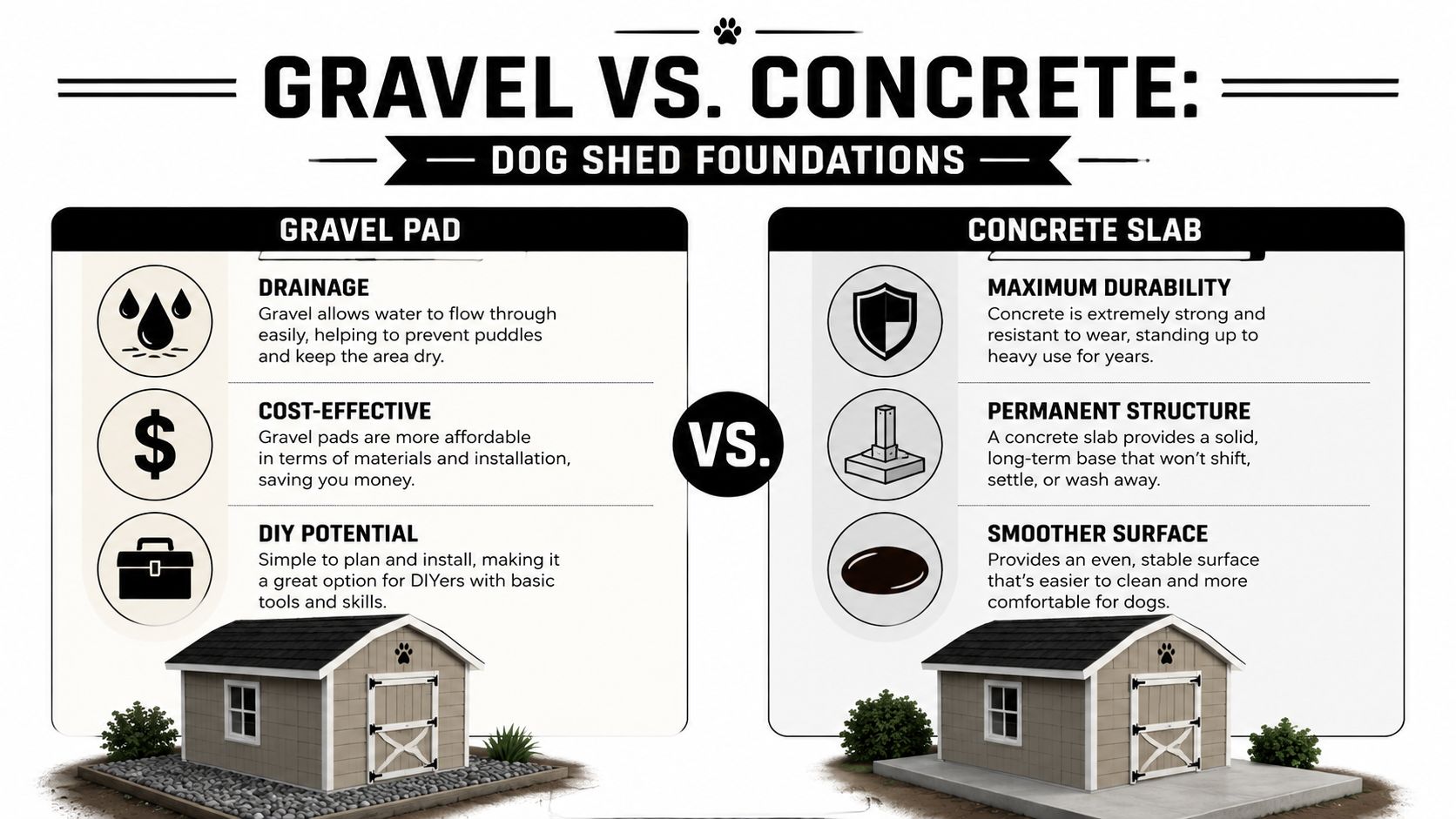
A shed foundation gravel base is often the most practical choice for a dog shed, especially when the shed itself has a floor system.
Gravel drains. That's its biggest strength. Water moves through the stone instead of sitting against the base. For many dog shelters, that helps the interior stay drier and keeps the area around the shed from turning into a muddy mess.
Gravel is also flexible in a good way. On sites where the grade isn't perfect, a properly excavated and compacted gravel pad can create a stable, level footprint without turning the project into a full slab install.
Gravel tends to work well when:
- The shed has its own raised floor
- Drainage is the top concern
- You want a clean, stable base without pouring a permanent slab
- The site needs some grading and correction before placement
For many homeowners searching shed foundations near me or gravel shed foundation contractors near me, this is the option that checks the most boxes.
When concrete is the stronger choice
A concrete foundation changes the project. It creates a more permanent surface and gives you a hard, washable base that's useful when sanitation is a priority.
If the dog shed functions more like a kennel, if frequent washdown is expected, or if you want a long-term structure that behaves more like an outbuilding than a movable shed, concrete starts to make more sense. It's also a natural conversation when people are already comparing other property improvements like garage foundation contractors near me, garage footings and foundations, or a concrete foundation for garage and want the dog structure built with the same long-view mindset.
Gravel usually wins on drainage. Concrete usually wins on washability and permanence.
That doesn't mean concrete is automatically better for every shed for dogs. A slab can feel colder without the right shed design above it. It also asks for more upfront planning because you're creating a fixed structure, not just a prepared base for placement.
Side by side tradeoffs that actually matter
| Factor | Gravel pad | Concrete slab |
|---|---|---|
| Drainage | Strong water movement through the base | Depends more on slab slope and surrounding grading |
| Cleaning around shed | Good outside drainage, less mud | Easy to hose and sanitize on surface |
| Permanence | Stable but less permanent than a slab | Permanent structure approach |
| Comfort concerns | Helps reduce moisture under shed floor | Can feel colder if the floor assembly isn't planned well |
| Budget fit | Often the more budget-conscious route | Higher upfront investment |
A lot of online advice treats this like a simple material choice. It isn't. It's a use-case choice.
If you're still sorting out overall site layout, these plans for outdoor shed placement and preparation are a useful reference point because the pad decision works best when it's tied to the structure, drainage path, and intended use together.
What doesn't work well
Three setups create repeat problems:
- Loose block corners on soft soil: They shift, and the shed follows.
- Bare earth under a dog shelter: It holds moisture, grows odor, and becomes a sanitation issue.
- Thin, poorly compacted stone: It looks fine at first, then starts settling under load.
For a dog shed in PA, MD, DE, or NJ, the right answer usually isn't the cheapest possible base. It's the one that keeps the dog dry, gives the structure a stable footprint, and still makes sense for your budget and maintenance habits.
From Excavation to Finish How We Build Your Foundation
A solid pad never starts with material delivery. It starts with reading the site correctly.
The ground tells you almost everything if you know what to look for. Where does runoff travel. Where is the soft soil. Which side needs cut and which side needs build-up. Homeowners often see a patch of lawn. A contractor sees whether that lawn will hold a shed level through wet weather and seasonal movement.
Site prep decides whether the shed stays square
Consumer DIY dog house guides often get the construction order right. Build the base, frame the walls, then add the roof. But those same guides also note that common failures like water intrusion and cracked framing usually trace back to a flawed base, as shown in Lowe's instructions for building a doghouse.
That lines up with what happens in the field. If the pad is out of level, too shallow, or poorly drained, the shed build above it starts fighting the foundation immediately.
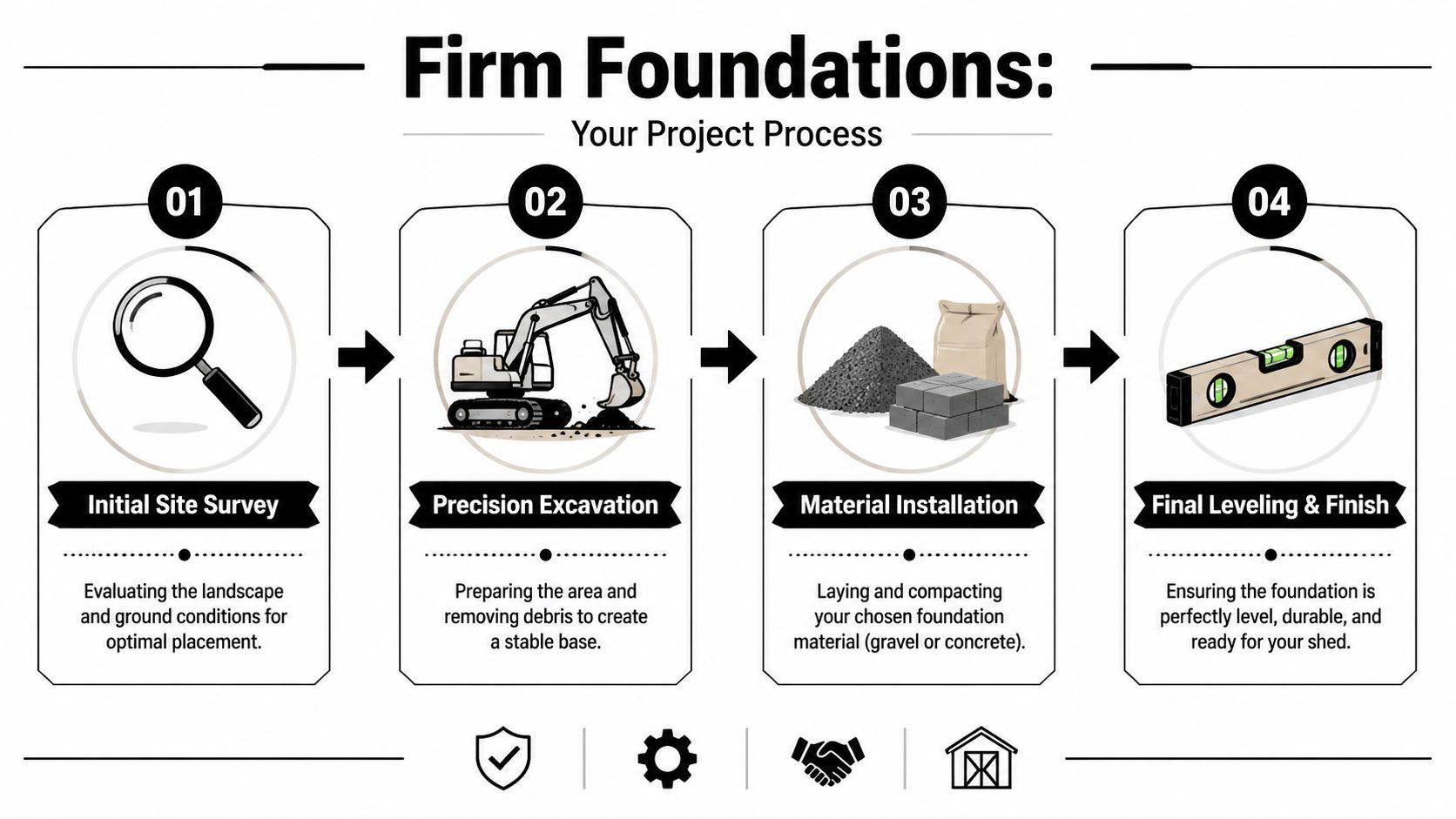
Here's the sequence that matters on a real project:
Survey the site
Check grade, runoff direction, access, and clearance for the shed footprint.Excavate to suitable depth
Remove topsoil and organic material that won't support a long-term load.Establish drainage
Shape the area so water moves away from the structure, not toward it.Install the chosen base correctly
That means framed and compacted aggregate for gravel, or forms and reinforcement for concrete.Verify level before the shed arrives
Small errors at the foundation stage become visible problems later.
Gravel and concrete each require a different kind of discipline
With a gravel shed foundation, the key is compaction and edge control. Clean stone alone isn't enough. If the excavation is shallow or the frame isn't holding the pad properly, the edges spread and the pad loses definition over time.
With concrete, the challenge shifts. Forms must be true, subgrade prep has to be right, and the finish has to support the intended use. A kennel-style surface needs to be durable and cleanable without creating avoidable water issues around the slab.
An unlevel base doesn't stay a small problem. It turns into sticking doors, wall stress, roof-line drift, and wet interior corners.
Homeowners comparing base for storage shed options often focus on what's visible after installation. The hidden work matters more.
Securing the structure matters too
Once the foundation is in place, the shed still needs to be anchored appropriately for the site and structure type. That's especially important in exposed yards and open rural lots. This guide on how to secure a shed to the ground is a good next step if you're thinking beyond the pad itself.
A properly built base should do more than hold weight. It should support drainage, resist movement, and give the shed a stable footprint season after season. That's the difference between a shed that just sits there and one that keeps doing its job.
Budgeting for Your Shed Foundation Costs and Timelines
Most homeowners don't need a lecture on foundations. They need clear answers on price, timing, and whether the project is worth doing right.
The honest answer is that gravel usually costs less upfront than concrete, but the final number depends on the site more than people expect. Access, slope, soil conditions, excavation needs, and shed size all affect what it takes to build a base that will last.
What affects cost most
A small, accessible backyard site is simpler than a tight corner behind fencing or a spot that needs meaningful grading. The material choice matters, but so does the prep.
These factors usually move the quote the most:
- Site access: Tight gates, long haul distances, or difficult equipment access add labor
- Excavation depth: Soft topsoil or uneven grade increases prep work
- Foundation type: Gravel and concrete solve different problems and carry different installation demands
- Drainage correction: Some sites need more shaping to keep water moving away from the shed
For people searching shed foundations contractors near me, concrete contractors, or excavation near me, experience saves money in the long run. A cheaper install that traps water under the shed often becomes the expensive option later.
Permits and timeline
Permit rules vary by township and municipality across Pennsylvania, Maryland, Delaware, and New Jersey. Some smaller sheds may be treated differently than larger permanent structures, but local setback and zoning rules still matter. It's worth checking before the shed is delivered.
As for timing, foundation work itself is usually straightforward once the site is ready and scheduled. Weather, site conditions, and access affect the pace more than the shed size alone.
Durable dog housing is a long-view investment. Shelter Animals Count reported 4,192,443 dog and cat adoptions in 2024, including about 2 million dogs, while community intakes were 1.4% lower than 2023, equal to 83,000 fewer animals, and adoptions were up 0.4% from 2023. That broader context still points to sustained demand for reliable housing infrastructure, according to Shelter Animals Count 2024 statistics.
For a homeowner, the takeaway is simple. If the shed is going to stay on your property for years, the base should be treated like a permanent improvement, not a temporary shortcut.
Why Partner with Firm Foundations for Your Project
A dog can tolerate a lot. Living over a base that stays wet, shifts under load, or holds cold through winter should not be one of them.
Online tutorials make a shed base look simple. On site, small mistakes turn into long-term problems for both the structure and the animal using it. A pad that settles can rack the shed frame. A slab with poor drainage can keep the floor damp. In the Mid-Atlantic, where freeze-thaw cycles, heavy rain, and humid summers are all part of the job, those details affect comfort as much as durability.
The value of a contractor who only does foundations
Foundation crews look at a dog shed differently than a general handyman or delivery crew. The question is not only whether the shed will sit flat on day one. The question is whether the base will stay stable, drain correctly, and support a dry shelter through years of use.
That takes careful grading, compaction, layout, and site judgment. It matters for a small dog shed, a gazebo foundation, a barn shed pad, or larger cement foundations for garage projects. The work changes with the structure, but the principle stays the same. Water must move away from the base, and the base must stay put.
Firm Foundations handles that kind of work across Pennsylvania, Maryland, Delaware, and New Jersey. For homeowners, that means dealing with a crew focused on excavation, gravel pads, and concrete slabs rather than treating the foundation like a side task.
There is also the basic issue of risk. If a crew is bringing equipment, forms, and concrete onto your property, coverage matters. This explanation of protecting concrete crews with insurance gives a helpful summary of why insured contractors reduce owner risk.
What a homeowner is really paying for
Ultimately, the purchase is not just stone, concrete, or labor hours. It is fewer avoidable problems after the shed arrives.
- Pads that stay level so doors work properly and walls are not forced out of square
- Drainage that keeps the interior drier and helps limit muddy, unsanitary conditions around the shed
- Edges that hold up under weather and use instead of breaking down and losing support
- Placement that works with access and setbacks before the shed delivery becomes a headache
That matters more with animal housing than many owners realize. Dogs lie close to the floor. If moisture lingers under the shed, cold and damp conditions carry right into the shelter. If the base shifts, gaps and drafts follow. Good foundation work improves the dog's environment before anyone talks about siding, roofing, or bedding.
A professionally installed pad also makes life easier for the shed builder. The structure lands on a surface that is square, stable, and ready for delivery.
For a closer look at what a finished pad and process can look like in the field, this short video is worth a minute.
For homeowners in PA, MD, DE, and NJ, the right partner is the one who treats the foundation as part of the dog's welfare, not just the construction schedule. Firm Foundations brings that approach to site prep and base installation, with the kind of field experience that helps a dog shed stay cleaner, drier, and safer for the long haul.