
Patio Concrete Calculator: A 2026 PA Guide


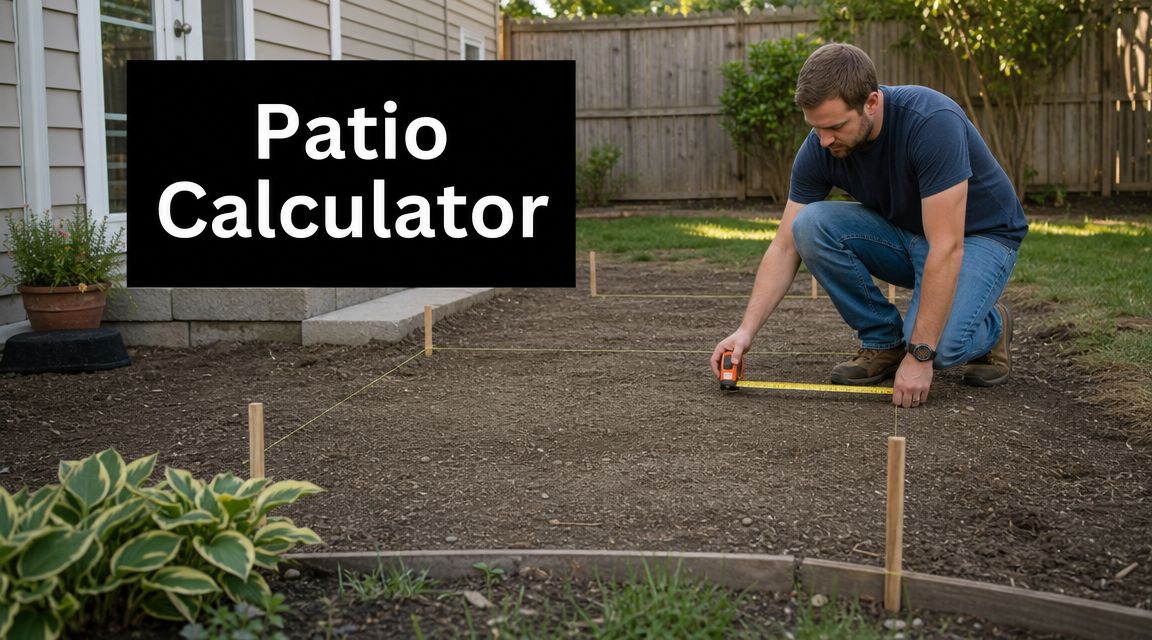
You're standing at the back door, looking across the yard, and the idea is already there. A clean concrete patio for the grill. A place for patio furniture. Maybe a fire-pit pad off to the side. Maybe a solid base for a gazebo or a neat transition from the house to the lawn.
Then the practical question hits. How much concrete do you need?
That's where a Patio Concrete Calculator helps. It gives you a starting number so you can move from a rough idea to a real plan. For homeowners in Pennsylvania, that first estimate matters more than is commonly understood. A patio isn't just a flat square on paper. The shape, the base, the thickness, the grade, and the ordering method all affect whether the job goes smoothly or turns into a frustrating stop-and-start pour.
A calculator is useful because it forces the right questions early. What shape is the patio? What are the exact dimensions? How thick will the slab be after the base is prepared? Are you ordering bags or calling a ready-mix supplier? Those details are what separate a good estimate from a costly mistake.
If you're still deciding on the overall layout and style, the Woodstock Furniture patio building guide is a helpful resource for thinking through how the finished space will be used.
Planning Your Perfect Patio Starts Here
A patio project usually starts with a simple goal. You want more usable outdoor space. Maybe your current setup is muddy after rain, maybe the old pavers have shifted, or maybe you're tired of dragging chairs across uneven ground.
The calculator matters because concrete is ordered by volume, not by how big the patio looks from above. Homeowners often know the length and width they want, but they haven't yet translated that into the amount of material needed for the pour. That's the gap a patio concrete calculator fills.
What the calculator is really helping you decide
A patio slab is part geometry, part jobsite reality. The geometry is straightforward. The jobsite almost never is.
Here's what the calculator helps you lock down:
- Patio footprint. The actual shape you plan to pour.
- Finished slab thickness. Not just what sounds standard, but what makes sense for the use.
- Ordering method. Small projects might use bags. Larger patios usually point you toward ready-mix.
- Allowance for field conditions. A patio on perfectly uniform ground is rare.
A calculator gives you a number. It doesn't check your base, your forms, or your drainage.
That's why the early planning stage matters so much. The more accurately you define the patio before ordering, the fewer surprises you'll have once the truck is scheduled or the bags are stacked in the driveway.
Common patio uses that change the calculation
Not every slab serves the same purpose. A plain sitting area has different demands than a pad that will support a hot tub, a heavy outdoor kitchen, or a gazebo foundation. The same thinking applies to other flatwork around the property, including a base for storage shed, a small equipment pad, or part of a larger project that ties into concrete foundations elsewhere on site.
In Pennsylvania and nearby service areas, that practical approach matters. Freeze-thaw cycles, drainage issues, and soft spots in the yard can turn a simple patio into a project where precision really counts.
Measuring Your Patio Area Accurately
You can be off by only a few inches on paper and still end up short on concrete, fighting crooked forms, or paying for more material than you needed. Accurate measuring does more than feed a patio concrete calculator. It tells you whether the layout will work in your yard.
For homeowners in Pennsylvania, that matters because patios rarely sit on perfectly uniform ground. Slopes, old landscaping beds, buried roots, and soft spots can change how the slab is formed and how consistent the thickness really is. Online tools do not see any of that. They only use the numbers you give them.
Start with the simplest shape possible
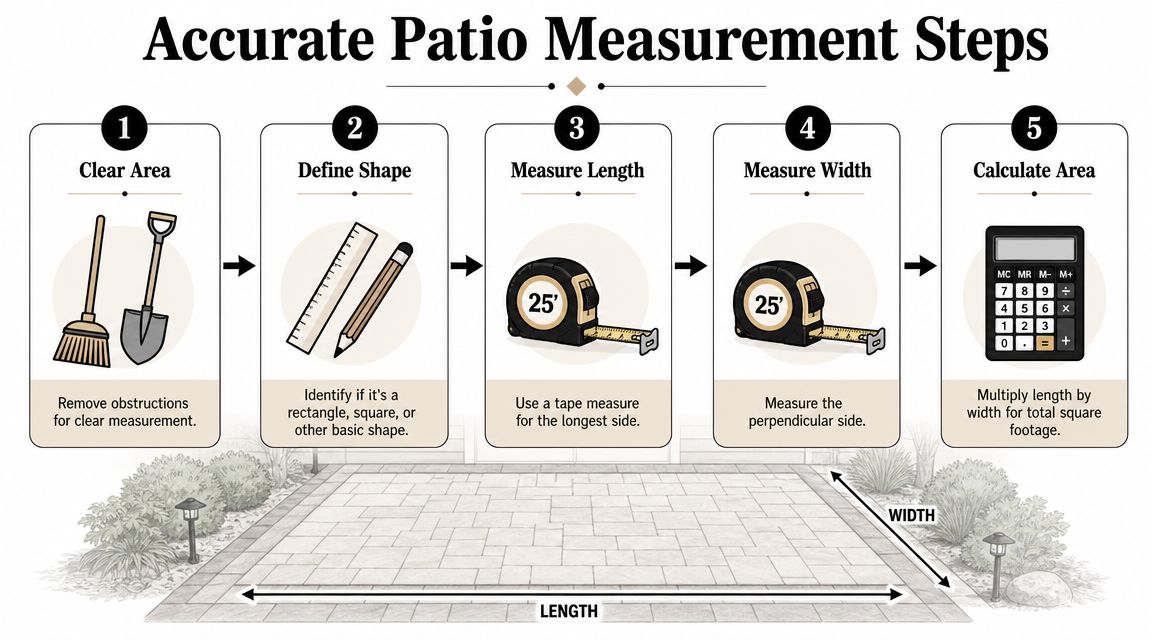
Square and rectangular patios are the easiest to measure and the easiest to form accurately. Pull the full length, then the full width, and confirm the corners are square before you trust the numbers. If one side bows around steps, a landing, or an existing walkway, measure that area as its own section instead of rounding up and hoping it balances out.
That extra care also helps with layout decisions. If you are still working out size and furniture placement, this guide on how to create an inviting patio space can help you match the footprint to how you plan to use it.
A quick visual walkthrough can also help if you're more hands-on than spreadsheet-oriented:
How to handle circles and curved features
Curved patios take more effort because there is no straight outside edge to hook a tape against. The usual approach is to find the center point first, then measure carefully to the edge at several spots so the curve stays consistent.
A fire pit pad or rounded sitting area can look simple in a sketch and still be easy to misread in the yard. I have seen homeowners measure the full width of a circle, treat it like the center-to-edge distance, and throw the whole estimate off before the forms are even set. Curves also expose sloppiness fast. If the arc is uneven, the patio looks off even when the total square footage is close.
Break irregular patios into smaller pieces
This is the method we use in the field because it keeps the numbers honest. An L-shaped patio, a wraparound section at the back door, or a bump-out for steps should be divided into smaller rectangles or other simple shapes. Measure each part on its own, label it on a sketch, and only combine the areas after every segment has been checked.
That same approach works well for related flatwork such as a gazebo foundation, a shed foundation, or a patio tied into a short walkway.
Use this checklist while measuring:
- Clear the perimeter so the tape stays straight.
- Sketch the patio first and write dimensions directly on the drawing.
- Measure each section separately if the shape changes direction.
- Check diagonals to verify square corners.
- Mark height changes or slope areas that could affect form setup and slab thickness.
- Keep thickness notes separate from length and width so they do not get mixed together.
Clean measurements save money, but they also help catch site issues early. If the patio footprint crosses a low spot or an area with loose fill, the concrete quantity on the calculator may still be technically correct while the job plan is not. That is usually where professional help earns its keep. We look at the numbers, then we look at the ground those numbers have to work on.
Calculating Your Concrete Needs with Examples
A patio calculator is only useful if you feed it the right volume. Homeowners usually start with square footage because that is easy to picture, but concrete is ordered by volume. Length and width tell you the footprint. Thickness tells you how much material the slab needs.
The working formula is straightforward:
- Cubic feet = length × width × thickness in feet
- Cubic yards = cubic feet ÷ 27
That last step matters because ready-mix is typically sold by the cubic yard. If you want a quick reference on slab depth before you run the numbers, this guide on how thick a patio concrete slab should be helps put the math in context.
The basic patio formula in plain English
A slab works like a shallow box. The patio length and width give you the surface area, and the thickness gives that area depth.
The mistake I see most often is using inches for thickness without converting them to feet first. A calculator will not catch that for you. It will still give an answer, just the wrong one.
For a patio thickness written in inches, divide by 12 before multiplying.
A worked example for a common patio
Take a 12' x 12' patio at 4 inches thick.
Convert the thickness first:
- 4 inches ÷ 12 = 0.333 feet
Now calculate the volume in cubic feet:
- 12 × 12 × 0.333 = about 48 cubic feet
Convert cubic feet to cubic yards:
- 48 ÷ 27 = about 1.78 cubic yards
That number surprises a lot of homeowners. A patio can look modest on paper and still take close to two yards once the slab depth is included.
There is also a handy shortcut for a 4-inch slab. Divide the total square footage by 81 and you will get a close cubic-yard estimate, based on Concrete Network's calculator guide. A 12' x 12' patio is 144 square feet, and 144 ÷ 81 lands at roughly the same result.
Bag planning for smaller jobs
Bagged concrete makes sense for a very small pad or a repair where delivery minimums do not pencil out. It gets less practical fast as the slab grows. A full patio often takes more mixing time, more labor, and tighter timing than many homeowners expect.
The right order of operations is simple:
- Calculate the total slab volume first.
- Convert that volume into cubic feet or cubic yards.
- Check the stated yield on the exact bag mix you plan to buy.
Bag counts are never universal. Different products yield different amounts, and manufacturers usually note that real output can vary with water content, mixing, and site conditions. That is one reason online patio calculators can mislead people. They handle the clean math, but they do not know whether your base is perfectly graded, whether edges run a little thick, or whether the slab ties into another section of flatwork.
A general overview from AMC Concrete on how concrete calculators are used makes the same point. Bag estimates depend on the product, not just the slab size.
| Estimated Concrete Bag Yield | Bags per Cubic Yard |
|---|---|
| 60-lb bag | Varies by product yield |
| 80-lb bag | Varies by product yield |
That table is plain for a reason. Any contractor giving one fixed bag count for every mix is skipping details that affect the order. On a patio, those details matter.
Factoring in Waste Thickness and Reinforcement
The raw calculator result is only the starting point. Real patios need a buffer for the things that happen on actual jobsites. Concrete sticks to tools, gets lost during placement, settles into slight low spots, and responds to form and grade conditions in ways a screen calculator can't see.
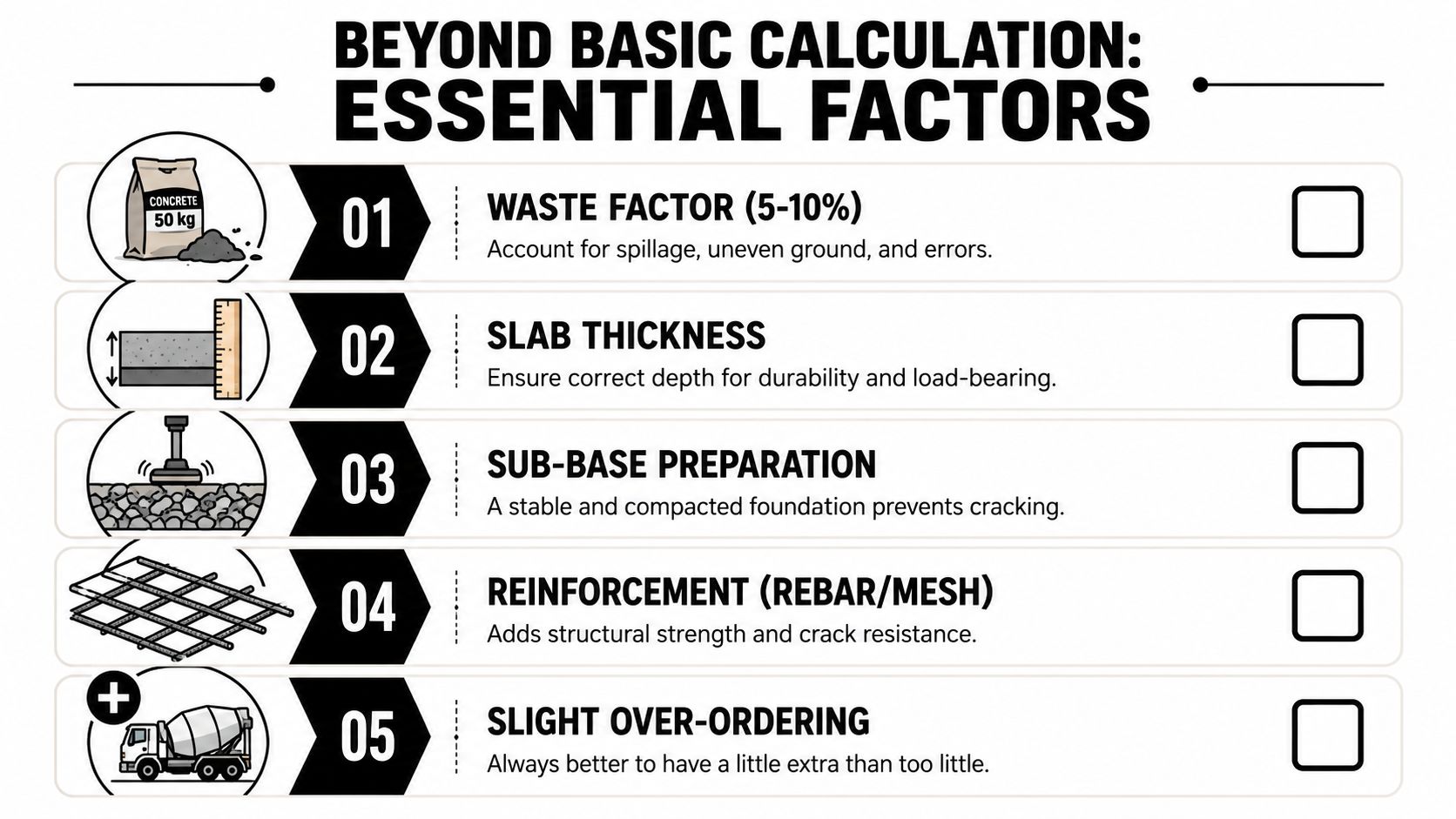
That's why contractor guidance commonly recommends ordering extra concrete, often about 5% to 10% for spillage, handling loss, and small field variances, with some estimating guides also suggesting adding 1/4 inch to the planned slab thickness as a budgeting buffer, according to this contractor guidance video on estimating concrete.
Why exact ordering often backfires
Homeowners naturally want to avoid overbuying. That makes sense. But on a patio pour, being short is usually worse than having a little left over.
If the truck runs dry before the slab is complete, you don't just have an ordering problem. You can end up with a cold joint, a rushed patch, or a finish that never looks right. On a bagged job, coming up short means stopping to mix more while the first section is already setting.
A better mindset is to budget for field conditions, not just for ideal math.
- Spillage happens when concrete is moved from chute to forms.
- Uneven grade matters because small dips increase volume.
- Edge thickening can sneak in even on simple patio layouts.
- Form setup affects depth if the base isn't consistent.
Thickness is a structural choice
A patio isn't the same as a garage footings and foundations project, and it isn't the same as a decorative stepping pad either. Thickness should match the use of the slab and the condition of the base below it.
A standard patio and a heavier-use slab don't ask the same thing from the concrete. If you're trying to decide what slab depth fits your project, this guide on how thick a patio concrete slab should be is a useful reference.
The slab only performs as well as the ground beneath it.
That's where base prep enters the conversation. A compacted stone base helps with drainage, support, and long-term stability. If the sub-base is soft, wet, or poorly compacted, the slab may crack or settle no matter how accurate the calculator was.
Where reinforcement fits in
Reinforcement doesn't replace a good base, but it can support durability when the patio size, intended load, or soil conditions call for it. Wire mesh or rebar may make sense on some pours, especially where loads are heavier or where the slab ties into other work such as cement foundations for garage areas, larger flatwork, or a nearby house foundation project.
What doesn't work is treating reinforcement like a cure-all. If the grade is wrong, the base is loose, or water is trapped under the slab, steel won't solve the underlying problem. Good patio planning always starts with excavation, grading, compaction, and consistent slab depth.
Ordering Concrete Bags vs Ready-Mix Delivery
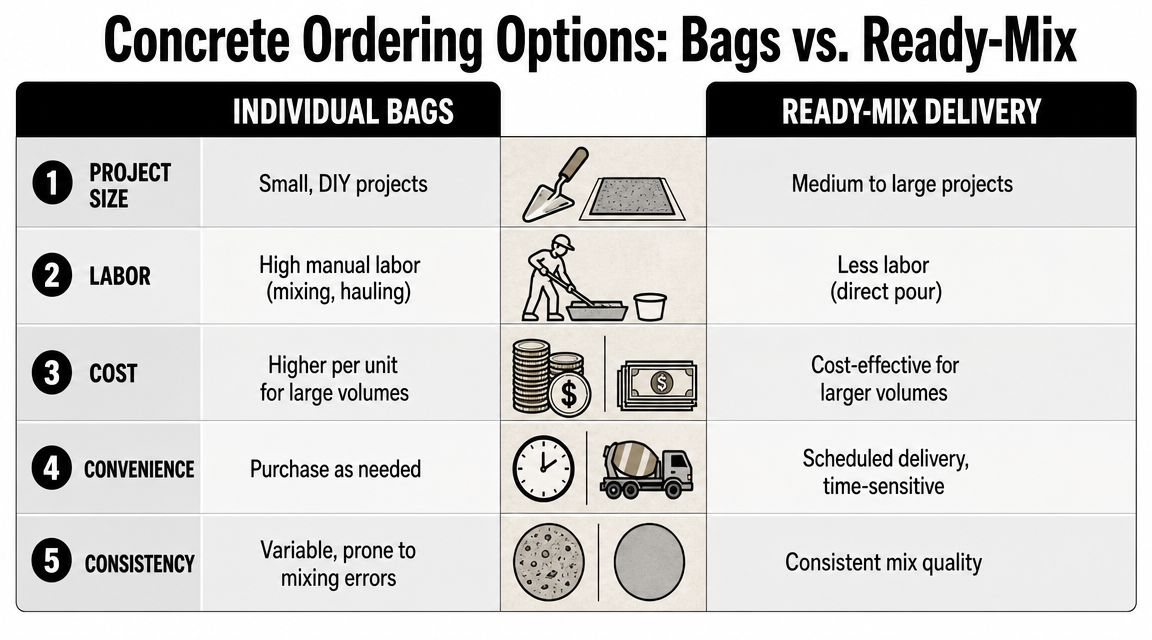
The math can say your patio needs a certain amount of concrete, but ordering it the right way is a separate decision. Homeowners in Pennsylvania often start by comparing bag count to truck delivery, and the better option usually comes down to placement speed, labor, site access, and how much risk you want to carry if the pour runs long.
When bags make sense
Bagged concrete fits small jobs you can mix and place without rushing. A short walk pad, a small equipment pad, or isolated repairs can be reasonable DIY work if you have a mixer, enough help, and time to keep the batches consistent.
That flexibility is the main advantage.
You can buy material locally, avoid delivery scheduling, and work in a tighter space where a truck cannot get close. For a very small slab, that can be practical.
The trade-off is effort and consistency. Every bag has to be lifted, mixed, moved, placed, and finished. Water control matters. If one batch is wetter than the next, the slab can finish unevenly, cure differently, and end up weaker than planned.
When ready-mix is the better call
For an actual patio, ready-mix is often the smarter order. The concrete arrives uniform, the placement goes faster, and you have a better chance of keeping the slab consistent from one end to the other.
That matters more than online calculators suggest. A calculator can estimate volume, but it does not account for how long it takes to mix dozens of bags, how quickly the first section starts setting, or how hard it is to keep the surface even while chasing batch after batch. On a warm day, those problems show up fast.
Ready-mix also gives you a cleaner path on medium and large pours where timing affects the finish. If you are comparing DIY against hiring a crew, it helps to review what experienced concrete patio slab contractors handle during delivery, placement, and finishing.
| Decision factor | Individual bags | Ready-mix delivery |
|---|---|---|
| Labor on site | High | Lower during mixing and placement |
| Mix consistency | Depends on crew and batching | More uniform |
| Best fit | Small DIY jobs | Medium to large patio pours |
| Scheduling | Flexible pickup | Delivery timing matters |
One more practical point. Orders based only on exact calculator output can come up short in the field. Slight grade variation, thicker edges, spillage, and leftover material in the mixer or chute all affect the actual amount needed. That is why I usually tell homeowners to think beyond the raw volume and plan around job conditions, not just the number on the screen.
For a small patch, bags can work fine. For a patio you want to look good and hold up, delivery method often decides whether the pour stays manageable.
When a Free Quote from Firm Foundations Is Your Best Bet
Some patio projects are perfectly reasonable for a careful DIY homeowner. Others stop being simple the moment you look closely at the site.
A patio that seems straightforward on paper can involve excavation, soft subgrade, drainage correction, compacted base installation, form layout, reinforcement decisions, and access challenges for delivery. The same is true if the slab is tied to a barn shed, a 10×10 storage shed, a larger shed foundation gravel base, or a site that also needs excavation near me services before any concrete can be poured.
Signs the project deserves professional help
A free online patio concrete calculator won't tell you whether the yard pitches toward the house. It won't tell you if one side needs deeper base work. It won't tell you whether truck access is realistic or whether the patio should be broken into sections.
Those are the jobs where a professional quote saves money, stress, and rework.
Consider getting expert help when:
- The patio shape is irregular and wraps around steps, corners, or existing structures.
- Drainage is questionable and the yard holds water after rain.
- The project is large enough that ordering, timing, and finishing all need to line up.
- The slab supports more than patio furniture, such as a hot tub, outdoor kitchen, or gazebo.
- The work ties into larger projects like garage foundation contractors near me, gravel shed foundation contractors near me, or shed foundations near me searches you may already be making.
For homeowners comparing options, working with experienced concrete patio slab contractors is often the safest path when the project needs more than a basic pour.
Why this matters in Pennsylvania and nearby areas
In Pennsylvania, Maryland, Delaware, and New Jersey, site conditions change fast from one property to the next. Some yards are easy to prep. Others hide drainage issues, fill soil, or access limits that change the entire installation plan.
That's where experienced crews add value. They don't just calculate volume. They prepare the site, build the forms correctly, account for the base, and pour the slab to match the intended use.
If you'd rather skip the guesswork and get a patio planned the right way, contact Firm Foundations for a free, no-obligation quote. Their team builds durable concrete slabs, shed pads, garage foundations, gazebo foundations, and excavation-ready sites across Pennsylvania, Maryland, Delaware, and New Jersey.