
Steps for Sheds: A PA & MD Foundation Guide
Buying a new shed is the fun part. You pick the size, the siding, the doors, maybe even the windows. Then the harder question shows up fast. What is it going to sit on, and will that base still be solid after a Pennsylvania winter?
That question matters more than most homeowners expect. A shed can be built well and still perform poorly if the ground under it settles, holds water, or shifts with frost. Doors stick. Floors go out of level. Steps become awkward or unsafe. In many cases, the problem starts before the shed is ever delivered.
A lot of online advice about steps for sheds jumps straight to pressure-treated lumber, stringers, or a quick ramp. That skips the part that determines whether those steps stay safe and stable. The finished foundation height, the drainage plan, the soil conditions, and the way the base is compacted all affect how the entry works long term.
Your Guide to Shed Foundations in Pennsylvania and Maryland
Homeowners across Pennsylvania and Maryland are putting more money into outdoor structures than they used to. The global shed and outdoor storage market was valued at USD 7,222.7 million in 2024 and is projected to reach USD 13,213.4 million by 2034, according to shed market projections. That tells you something simple. A shed is no longer an afterthought in the backyard.
For many families, it is tool storage, lawn equipment storage, a workshop, a hobby space, or overflow space that keeps the house less cluttered. Once you look at it that way, the base underneath it stops being a minor detail.
In southeastern Pennsylvania especially, the ground can fool people. A spot may look level enough. It may even stay firm in dry weather. Then the freeze-thaw cycle hits, water sits where it should not, and the shed starts moving in ways the homeowner did not expect.
Why steps start with the foundation
Many consider steps a finish detail. In practice, steps begin with finished shed height.
If the base sits too high, the first step can become awkward. If the base is uneven, the treads will not land cleanly. If the grade around the shed is sloppy, the area at the bottom of the steps turns muddy and unstable.
Key takeaway: Safe shed access is not a carpentry issue alone. It is a site prep and foundation issue first.
That is why homeowners searching for shed foundations near me, gravel shed foundation contractors near me, or concrete foundations are usually asking a bigger question. They want the shed to stay level, dry, and easy to use for years.
What works better in the Mid-Atlantic
In Pennsylvania, Maryland, Delaware, and New Jersey, the right answer depends on the shed size, the soil, how the structure will be used, and where water goes during heavy rain and winter freeze.
Common situations include:
- Small storage sheds: Often do well on a professionally built gravel shed foundation when drainage is handled correctly.
- Workshops or heavier buildings: Often call for a reinforced concrete slab.
- Sheds on sloped yards: Need more careful excavation, grading, and step planning than most DIY guides admit.
- Barn sheds and larger outbuildings: Need a base designed for heavier loading and predictable access.
Good steps for sheds are built after the foundation plan is right, not before.
Choosing Your Shed Base Gravel Pad vs Concrete Slab
The initial decision is not the steps. It is the base for the storage shed itself. In this region, most homeowners narrow it down to two solid options. A gravel shed foundation or a concrete shed foundation.
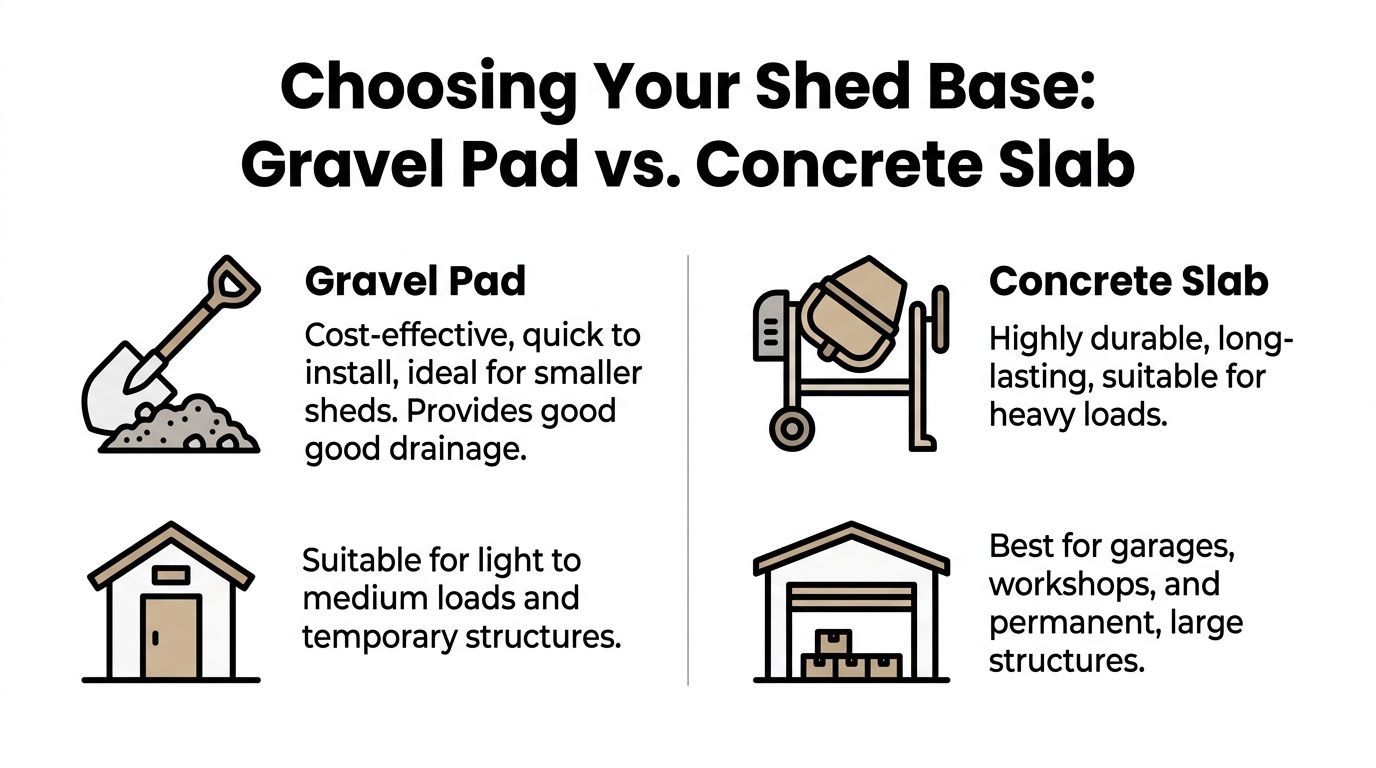
A quick rule of thumb helps. If the shed is a standard prefab storage building, a gravel pad is often the better value. If the building will handle heavier loads, vehicle traffic, or workshop use, a slab often makes more sense.
Gravel pad basics
A gravel pad is not just a pile of stone. When built correctly, it is a compacted, contained base that supports the shed evenly and sheds water away from the structure.
For many homeowners in Honey Brook Township and nearby parts of Pennsylvania, gravel is a smart fit because it handles drainage well and adapts better to a range of backyard conditions. It also works well for common prefab sheds delivered by local builders.
A gravel pad is often the better choice when you need:
- Strong drainage: Water moves through and away more easily than on a flat slab surface.
- A base for a typical prefab shed: Great for many storage sheds, garden sheds, and smaller outbuildings.
- Faster installation: Especially useful when the shed delivery schedule is already set.
- Flexible site prep: Helpful when the yard has moderate slope or variable soils.
If you are still deciding on shed size and layout, this outdoor storage shed plan guide can help you think through the footprint before foundation work begins.
Concrete slab basics
A concrete slab is the heavier-duty choice. It gives you a hard, durable floor surface and works well when the structure needs to support more weight or function more like a garage or workshop.
This is usually the better route for homeowners searching terms like garage foundation contractors near me, garage footings and foundations, or cement foundations for garage.
A slab makes more sense when you need:
- A permanent floor: Especially for garages, workshops, and large sheds.
- Heavier load support: Better for equipment, vehicles, and more demanding use.
- A cleaner interior finish: Helpful when the shed will be used as work space, not just storage.
- Long-term rigidity: Valuable for larger structures that should not tolerate movement.
Gravel Pad vs. Concrete Slab At a Glance
| Factor | Gravel Shed Foundation | Concrete Shed Foundation |
|---|---|---|
| Best fit | Standard prefab sheds, storage sheds, many barn shed applications | Garages, workshops, heavier sheds, multi-use outbuildings |
| Drainage | Excellent when graded and compacted correctly | Depends heavily on proper sub-base and drainage design |
| Floor surface | Shed floor sits above base | Slab can serve as the finished floor |
| Site flexibility | Often better for varied backyard conditions | Best when full slab prep is practical |
| Access planning | Finished height must be coordinated for steps and entry | Finished slab height also affects step layout and door threshold |
| Typical homeowner goal | Cost-conscious, durable shed base | Higher-duty structure with a permanent floor |
What homeowners often get wrong
A lot of people choose based on what seems cheapest at the start. That usually leads to one of two mistakes.
One mistake is using a slab where a gravel pad would have handled the shed just fine, adding cost without adding much practical value. The second is choosing a shortcut gravel base that is not excavated, compacted, or contained correctly.
Tip: The right base is the one that matches the structure, the soil, and the way you will use the shed. Not the one that sounds easiest on delivery day.
For many standard residential projects, a properly built gravel pad is the strongest value. For larger, heavier buildings, concrete earns its place.
Installing a Professional Grade Gravel Shed Foundation
The difference between a gravel pad that lasts and one that starts failing early is almost never the gravel itself. It is the process underneath it.
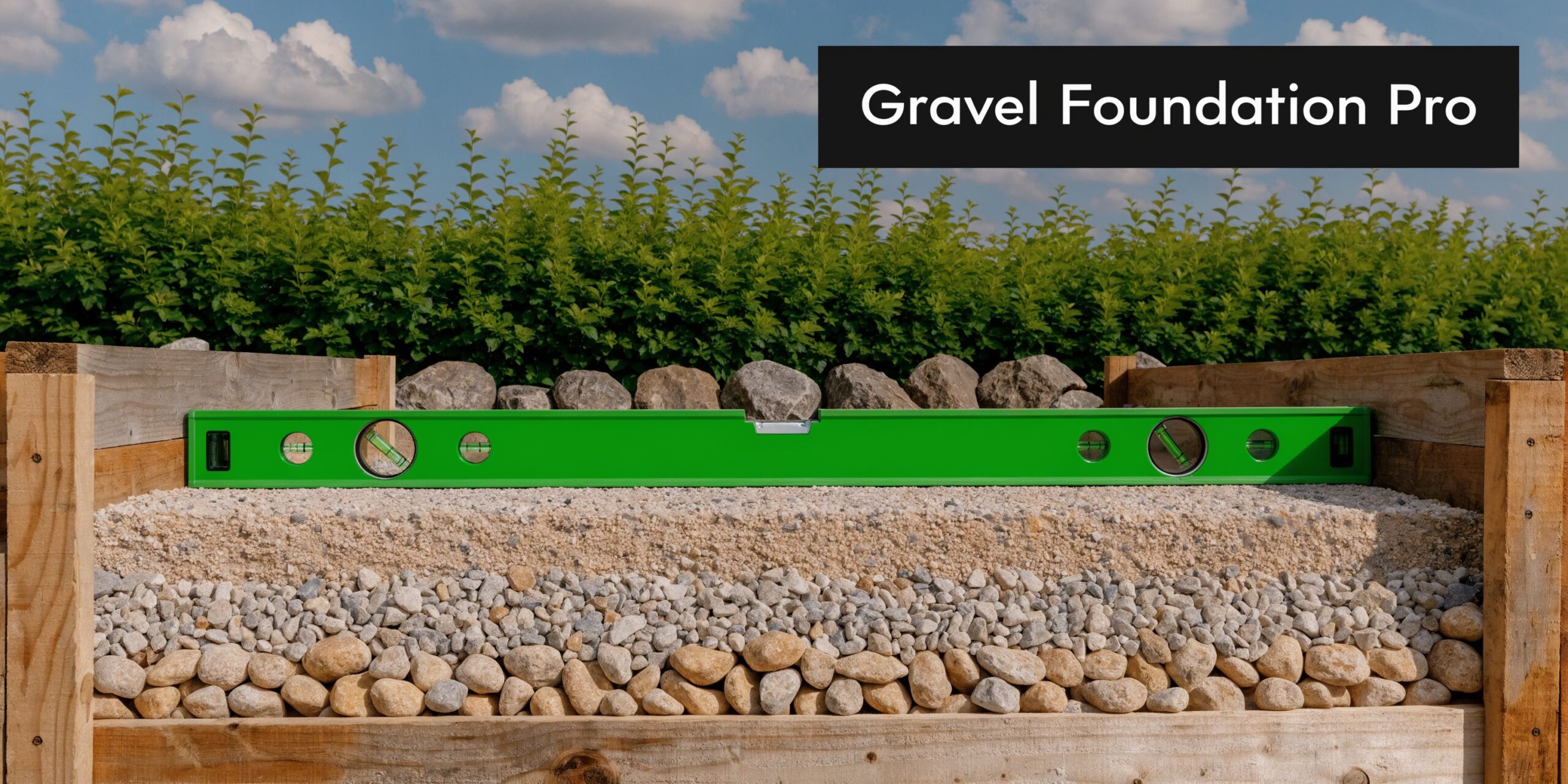
A professional gravel pad follows an 8-step process that includes excavation 4 to 6 inches beyond the shed footprint, a 4 to 6 inch gravel base compacted in 2 inch lifts to 95% Proctor density, and perimeter containment. The same source notes that skipping proper compaction is linked to 40% of pad settling issues within two years in Mid-Atlantic climates, based on this gravel pad foundation process reference. Those numbers line up with what contractors in this region see in the field. The shortcuts are usually invisible at first, then obvious later.
The ground has to be read correctly
A Pennsylvania yard with clay-heavy soil is not the same as a dry, sandy site. Clay holds water longer and reacts differently through wet seasons and winter. That changes how deep the crew may need to excavate and how carefully the subgrade has to be stabilized.
Many DIY attempts go wrong at this stage. The area gets scraped flat, stone gets dumped in, and the base looks finished. It is not.
A durable pad starts with:
- Site assessment: Soil condition, slope, runoff path, and utility awareness.
- Correct footprint sizing: The pad should extend past the shed perimeter, not stop flush with it.
- Accurate layout: A laser level beats eyeballing every time.
Excavation is where the base is won or lost
Good gravel work looks clean at the end, but the true quality is hidden below the top layer. Excavation depth matters because the stone needs room to perform. If the pad is too shallow, the base may not drain or carry load the way it should.
In the field, a proper excavation also gives the crew room to correct for soft spots and organic material. Roots, topsoil, and loose fill have no place under a shed base.
That is one reason homeowners looking for excavation near me are often better served by a contractor who also understands shed foundations, not just machine work.
Fabric, stone, and compaction all have a job
Geotextile fabric is one of those materials homeowners often skip because it is not visible when the job is done. It still matters. It helps separate soil from stone so the base does not slowly disappear into the subgrade.
Then comes the gravel itself. The base layer needs to be installed and compacted in controlled lifts, not spread loosely and left alone. A plate compactor is not optional on a professional build. It is what turns loose aggregate into a stable platform.
For homeowners wanting a better understanding of why compaction matters, this explanation of what is soil compaction is worth reading before choosing a contractor.
The perimeter matters more than people think
A gravel pad without containment can spread over time. The edges soften, the footprint changes, and the shed support becomes less consistent.
That is why professional builds use perimeter containment, often with pressure-treated timbers or other edge restraint suited to the site. The point is not appearance alone. It keeps the system together.
Practical advice: If someone quotes a gravel shed foundation with no excavation details, no compaction plan, and no perimeter containment, ask more questions before you commit.
How this affects steps for sheds
The finished height of the gravel pad controls the first step up into the shed. If the pad sits too proud of grade, the steps become steeper than they should be. If the surrounding area is not dressed and stabilized, the base of the steps will wash out.
That is why a pad should never be planned in isolation. The access path, the threshold height, and the grade around the entry all need to be considered together.
What usually fails on DIY pads
The failures tend to repeat:
- Too little excavation: The stone layer is too thin to perform.
- No separation fabric: Soil migrates into the gravel over time.
- Loose fill instead of compacted lifts: The pad looks fine at first and then settles.
- No edge restraint: The base spreads and loses shape.
- No drainage thought: Water sits at the entry and softens the ground near the steps.
A proper gravel shed foundation is not flashy work. It is measured work. That is why it lasts.
Building a Reinforced Concrete Foundation for Sheds and Garages
Concrete is the right answer when the building demands more from the base. If the shed will hold heavier equipment, function as a workshop, or serve as a garage, a slab gives you a stronger and more permanent platform.
This work has less room for improvisation than homeowners often assume. A reinforced slab depends on layout, sub-base preparation, reinforcement placement, concrete mix, finishing, and curing. Miss one of those, and the slab can still look decent on pour day while heading toward trouble later.
Where a slab earns its keep
Concrete is usually the better choice for:
- Garages and vehicle storage
- Large sheds with higher loads
- Workshop buildings
- Structures where the floor itself needs to be durable and easy to clean
These are the jobs that push homeowners toward searches like concrete foundation for garage, garage footings and foundations, and concrete contractors.
What goes into a slab that holds up
For East Coast slab work, reaching 4,000 PSI compressive strength calls for a 10-step process tied to ACI 332 standards, including a 4 inch compacted gravel base, #4 rebar at 18 inches on center, and a 7-day wet cure that can reduce shrinkage cracks by 50%, according to this concrete slab preparation and curing reference.
Those specs matter because they address fundamental causes of slab failure. Most slab problems do not begin with the concrete truck. They begin with poor prep.
If you want a broader homeowner-friendly overview of subgrade work, this guide on how to prepare ground for concrete slab is a useful companion to the planning stage.
Layout and sub-base come first
Concrete follows the forms. If the formwork is out, the slab is out. Crews use batter boards, string lines, and level checks to set the slab exactly where it belongs.
Below that, the compacted stone base does the quiet work. It helps support the slab evenly and reduces the chance that soft spots below will telegraph into cracks above.
A basic sequence looks like this:
- Lay out the footprint carefully
- Excavate to proper depth
- Remove unsuitable material
- Install and compact the stone base
- Place vapor protection where needed
- Set reinforcement correctly
- Pour, place, finish, and cure with discipline
Reinforcement is not decorative
Homeowners sometimes hear “rebar” and think any steel in the slab is fine. It is not that simple. The reinforcement has to be the right type and placed correctly inside the slab section, not dropped carelessly at the bottom where it does far less good.
For many shed and garage slabs, that means #4 rebar on a regular spacing pattern or welded wire reinforcement suited to the job. The purpose is structural control, not just box-checking.
Here is the project video:
Mix design and curing are where patience pays off
In Pennsylvania, Maryland, Delaware, and New Jersey, freeze-thaw durability matters. The slab mix has to be selected with that climate in mind. Air entrainment and compressive strength are not abstract specs. They affect how the slab handles winter exposure over time.
Curing also separates professional concrete work from rushed work. Fresh concrete needs controlled curing to gain strength and limit cracking. A slab that gets poured and forgotten is not being given the best chance to last.
Key takeaway: A good concrete foundation is built long before the finishers touch a broom. Most of its quality comes from prep, reinforcement, and curing discipline.
How slab height affects shed steps
A concrete slab can make shed access cleaner, but only if the slab elevation is planned around the doorway and the surrounding grade. If the slab lands too high above finished grade, the steps become awkward. If water drains toward the slab edge near the door, the bottom step becomes the weak point.
That is why access and foundation work should be treated as one coordinated scope, not two unrelated jobs.
Drainage and Frost Heave A Mid-Atlantic Guide
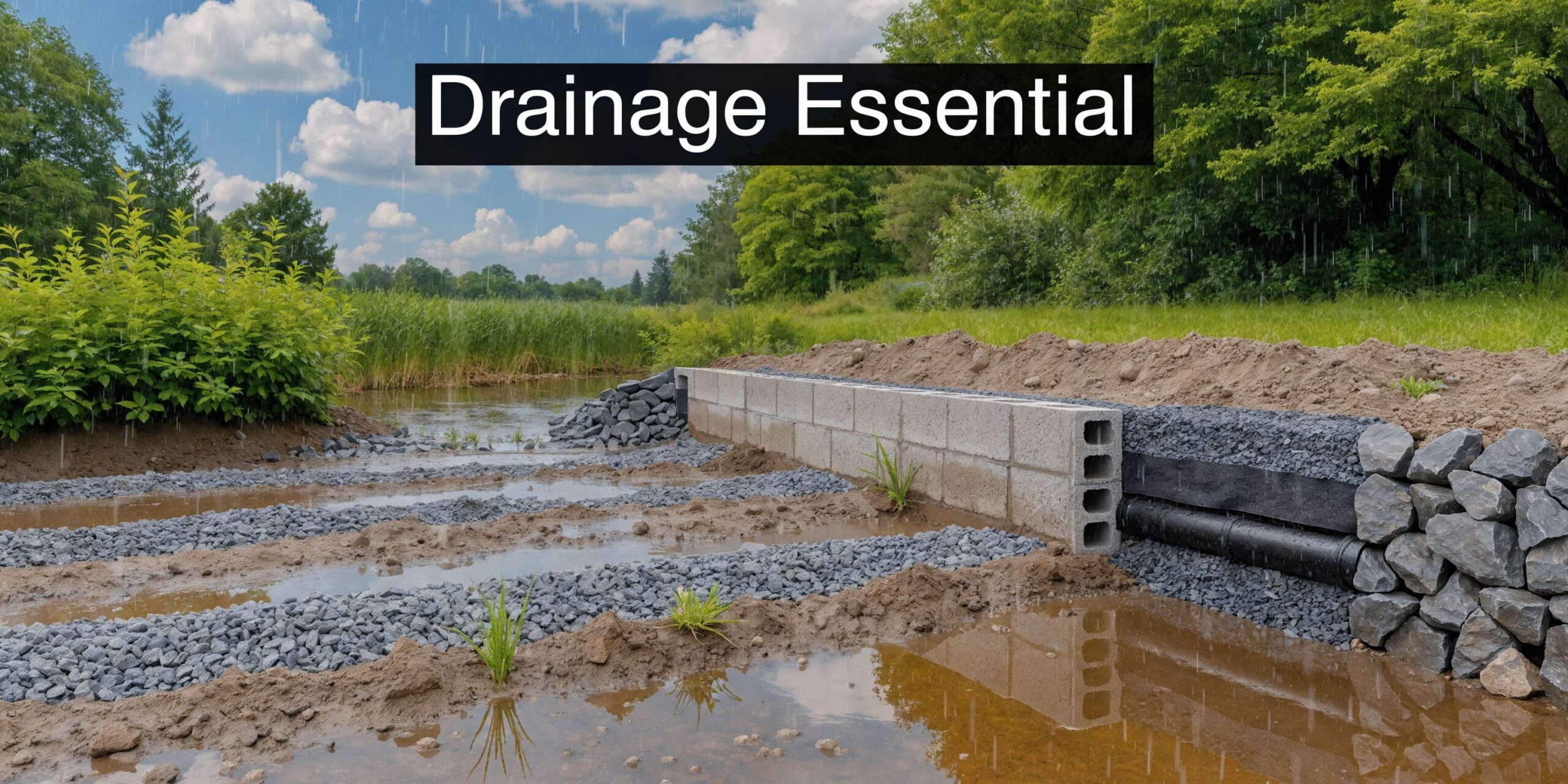
Drainage is where many shed foundations succeed or fail. A pad can be level, square, and strong on installation day, then develop problems because water has nowhere to go.
In the Northeast, that risk is not theoretical. A 2025 HomeAdvisor report notes that 68% of shed-related insurance claims in the Northeast stem from inadequate access and foundations failing within two years, largely due to frost heave and poor drainage, according to this regional shed drainage and frost issue summary.
That is why any serious conversation about steps for sheds has to include the ground around the shed, not just the base under it.
What frost heave does
Frost heave happens when water in the soil freezes and expands. If the soil under or beside a foundation holds too much moisture, winter can lift sections of the base or steps unevenly.
That movement shows up in ways homeowners notice fast:
- Steps tilt or settle unevenly
- Shed doors stop swinging cleanly
- Cracks form near slab edges
- Mud builds up around the entry
- The first step feels higher one season and lower the next
The problem is often worse in yards with poor runoff, low spots, or heavier soils that stay wet longer.
How contractors reduce the risk
The answer is not one product. It is a system.
A durable foundation plan usually includes proper grading away from the shed, clean aggregate where needed, and drainage solutions that move water before it can sit against the base. On some sites, that means swales. On others, it means a French drain or similar runoff control.
The steps area needs just as much thought. The landing at the bottom of the steps should not become a basin. If that spot stays wet, the access point will soften and move.
Why this matters beyond the shed
Cold weather site problems rarely stay isolated. If you are trying to protect other parts of your property during winter, practical home maintenance matters too. Homeowners dealing with freezing weather can also review how to prevent pipe freezing so the shed project and the rest of the property are better prepared for the season.
Tip: Water management is part of foundation work, not a cleanup item after the base is finished.
Signs your site needs more drainage attention
Some yards tell you early that drainage should be a priority:
| Site condition | Why it matters |
|---|---|
| Water stands after rain | The soil is not shedding moisture quickly enough |
| Grass stays soggy near the shed area | Subsurface drainage may be poor |
| Yard slopes toward the planned location | Runoff can collect at the foundation edge |
| Existing blocks or pavers have shifted | Frost and water movement are already active on site |
A foundation that ignores those signs is asking the steps, shed floor, and doorway to absorb the consequences.
Why Smart Homeowners Hire Firm Foundations
Most homeowners are not short on willingness. They are short on margin for error. That is the core issue with shed foundations.
A base that is slightly out of level, slightly under-compacted, or slightly too high at the doorway can create years of frustration. That is especially true when the shed builder expects a ready site and the owner is trying to coordinate delivery, township requirements, and access at the same time.
What professional execution changes
The biggest benefit is not just labor. It is coordination.
A seasoned foundation crew looks at the whole picture before digging starts. That includes the shed footprint, the grade around the building, the finished entry height, drainage paths, and how the steps will function once the shed is in place.
That prevents the common DIY pattern:
- Base height gets guessed
- Stone depth is underestimated
- Water runoff is ignored
- Steps are built after the fact to compensate
- The owner ends up fixing preventable problems
What homeowners usually want most
In practice, many homeowners want three things.
They want the shed to be ready when the delivery truck arrives. They want the doors to work like they should. They want the structure to stay level through wet weather and winter.
That applies whether the project is a 10×10 storage shed, a gazebo foundation, a barn shed, or a larger slab for a garage. The right contractor is not just placing material. They are building a base that matches the structure and the site.
Why local experience matters
Pennsylvania and surrounding Mid-Atlantic service areas have enough variation in soil, slope, and weather that generic advice often falls short. Clay-heavy sites, freeze-thaw cycles, and runoff patterns change the build.
That is why homeowners often start with search terms like:
- shed foundations contractors near me
- gravel shed foundation contractors near me
- garage foundation contractors near me
- concrete foundations
- base for storage shed
The search phrase is local, but the concern is practical. People want a foundation team that has already seen the problems their yard is likely to cause.
Practical advice: If a contractor cannot explain how your grade, entry height, and drainage all connect, keep looking.
A good foundation job removes uncertainty. It gives the shed builder a clean target and gives the homeowner one less thing to worry about.
Frequently Asked Questions About Shed Foundations
Do I need a permit for a shed foundation in Pennsylvania?
Sometimes yes, sometimes no. It depends on your township, the shed size, setbacks, and whether the project includes electrical work or a larger structure.
The safest move is to check local requirements before scheduling the job. Permit and setback issues are easier to handle on paper than after excavation starts.
Can I put my shed on concrete blocks?
For a long-term installation, that is usually not the best approach. Concrete blocks are one of the most common shortcuts behind uneven sheds, shifting floors, and unstable entry steps.
Blocks may look simple and inexpensive at first, but they do not solve drainage, compaction, or frost movement. They also make it harder to get predictable, comfortable steps for sheds.
How do steps get planned correctly?
Residential codes often call for a maximum step riser height of 7¾ inches and a minimum tread depth of 10 inches, according to this residential step code overview. That matters because the finished foundation height directly affects whether code-compliant steps can be built cleanly.
If the base height is off, the steps usually end up awkward, steep, or inconsistent. Good site prep takes the doorway elevation into account before the shed arrives.
How long does a shed pad installation take?
That depends on site access, weather, slope, soil conditions, and foundation type. A straightforward shed pad moves much faster than a site that needs deeper excavation, grading correction, or drainage work.
The best timeline is the one built around proper preparation, not speed alone.
Should I choose gravel or concrete for my shed?
If the shed is a standard prefab storage building, a properly built gravel pad is often the smart choice. If the structure will hold heavier equipment, serve as a workshop, or function like a garage, concrete is often the stronger fit.
The right answer comes from the building use, site condition, and access plan.
What affects the cost of a shed foundation?
Several things move the price:
- Foundation type: Gravel and concrete are different scopes of work.
- Site access: Tight yards and difficult machine access add labor.
- Slope and drainage needs: More grading means more work.
- Soil conditions: Soft or clay-heavy ground can require added preparation.
- Structure size: Larger footprints need more material and excavation.
A quote should reflect the site you have, not a generic flat-yard assumption.
If you are planning a new shed, garage, gazebo, or other outbuilding in Pennsylvania, Maryland, Delaware, or New Jersey, Firm Foundations can help you get the base right from the start. We build gravel pads and reinforced concrete foundations with the grading, drainage, and finished height needed for safe, durable access. Request a free quote and get a foundation plan that fits your site, your structure, and the way you will use it.