
Shed Foundations in PA & MD: The First Step to a Comfortable Shed
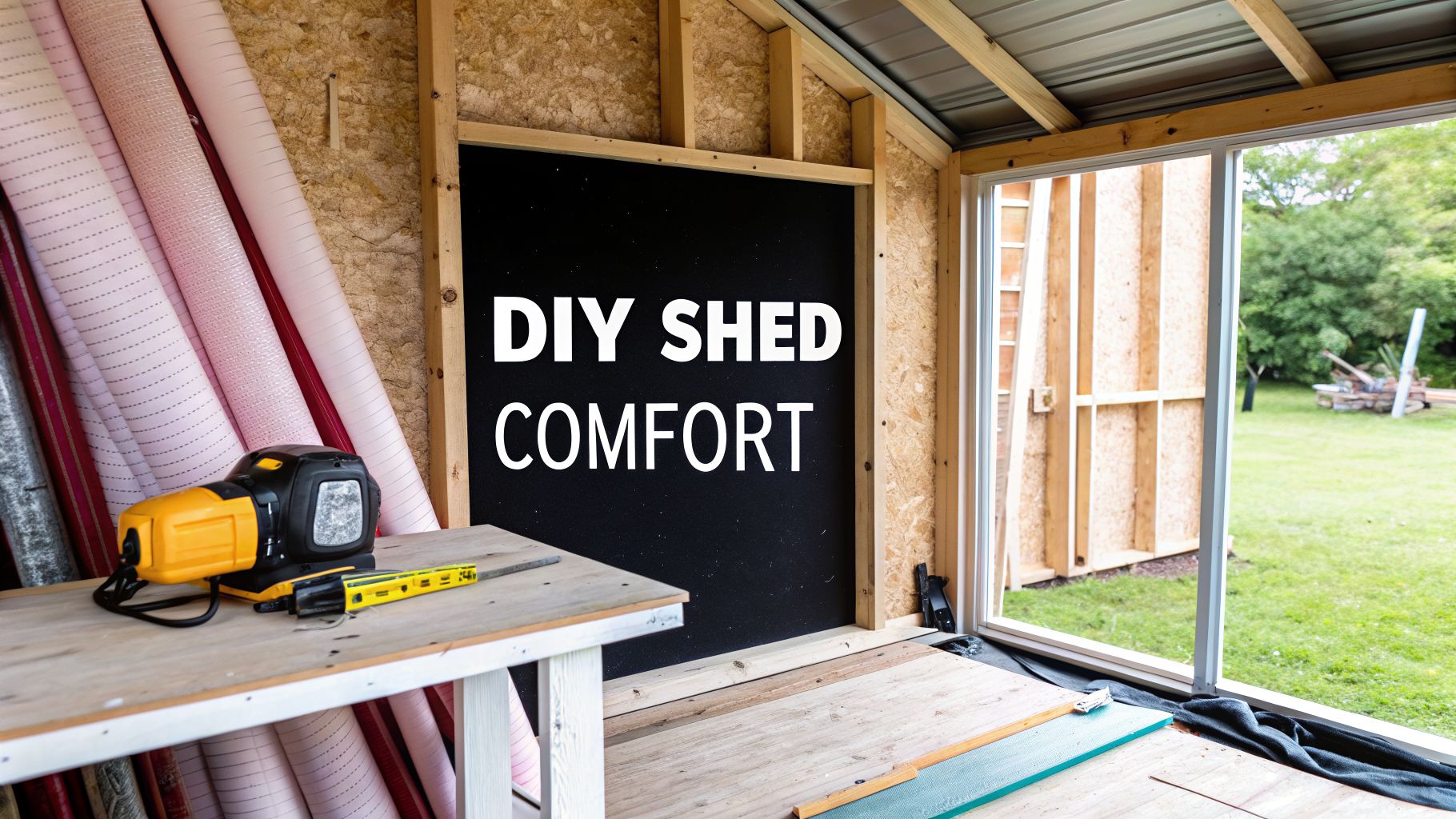
If you're trying to figure out the best cheap insulation for a shed, you might be surprised to learn where our team at Firm Foundations recommends you start. As a trusted local construction company serving homeowners across Pennsylvania and Maryland, we know the most effective strategy begins not with the insulation itself, but with the very ground your shed sits on. A solid, professionally built foundation is the single most important factor in making sure your insulation works correctly and your investment pays off.
Why a Solid Foundation Is Your First Step to an Insulated Shed
Before you spend a dime on foam board or fiberglass batts, you need to understand the connection between your shed's base and its ability to stay comfortable. An unstable or poorly drained foundation can completely sabotage even the most expensive insulation, leading to wasted money and a lot of frustration. As local shed foundations contractors near me, we’ve seen this happen countless times across PA and MD.
A professionally installed gravel shed foundation is your best first defense against the two biggest enemies of any insulated shed: moisture and air leaks.
Preventing Moisture From the Ground Up
The ground under your shed is a constant source of moisture. Without proper drainage, that moisture will wick directly up into your shed’s floor and walls through a process called capillary action. This creates a damp, humid space that’s a perfect breeding ground for mold and mildew.
Think of your insulation as a sponge. In a damp environment, it soaks up moisture, loses nearly all its R-value, gets compressed, and can quickly start to grow mold. At that point, it’s not just useless—it's a potential hazard to your health and property.
Starting with a well-drained base for your storage shed, like the ones our crews at Firm Foundations build, creates a crucial barrier. It stops ground moisture cold, keeping your shed's structure dry and allowing your insulation to do its job effectively for years to come. This is a core part of our service for every shed foundation we build.
Stopping Drafts Before They Start
What happens when a shed is placed on uneven ground or just a few shed foundation blocks? It will inevitably shift and settle over time. As the structure moves, it opens up gaps and cracks around the doors, windows, and along the base of the walls. These gaps are huge sources of drafts and air leakage that will make your insulation pointless.
You could install the highest R-value insulation on the market, but if cold air is constantly blowing in through a gap at the floor, your heater will be running for nothing. A solid, level shed foundation from Firm Foundations prevents this structural shifting, which helps maintain an airtight seal and maximizes your insulation's performance. For homeowners in PA and MD searching for "shed foundations near me," our professional installation is the solution.
The link between a solid base and effective insulation is undeniable. Consider that in the North American building market, where 88.9% of insulation sales are tied to new construction, project failures often trace back to poor site work. Our precision excavation and foundation work since 2011 helps homeowners avoid the common 15% failure rates seen in insulation projects that start with a bad base. This is especially vital for modern materials like polyiso foam, which offers a superior R-6 value per inch but demands a stable, dry structure to perform.
Ultimately, whether you're planning for a 10×10 storage shed or a larger barn shed, starting with expert site prep is the smartest move you can make. It’s the best way to guarantee your insulation project is a success from the ground up. For those weighing different options, you might be interested in our detailed guide on installing a concrete pad for a shed.
Picking the Best Budget-Friendly Shed Insulation Materials
Once your shed is sitting on a solid, dry foundation built by our team, it's time to think about the inside. Finding cheap insulation for a shed that actually holds up to Pennsylvania’s wild weather swings is easier than you think. You just have to know what you’re looking for beyond the big-box store marketing.
Your best bet really comes down to three things: your budget, what you'll be using the shed for, and how much of the work you want to do yourself. Let's walk through the most common and cost-effective materials we see people using in our local service areas.
Fiberglass Batt Insulation
You can't go wrong with the classics. Fiberglass batts are a go-to for a reason: they're everywhere, they're affordable, and they give you a solid R-value for your money. They come in rolls or pre-cut pieces that slide right between standard 16-inch or 24-inch wall studs.
- Cost: Usually runs about $0.60 to $1.20 per square foot.
- R-Value: You get roughly R-3.5 for every inch of thickness.
- Best For: Sheds with traditional framing that you plan to cover up with drywall or paneling. It's a fantastic all-around pick if you're building a workshop or need reliable four-season storage.
Just a heads-up: while the material is cheap, be sure to handle it correctly. The glass fibers are no joke, so always gear up with gloves, long sleeves, and a good mask.
Rigid Foam Board Insulation
Rigid foam is another fantastic and incredibly versatile choice. It comes in big sheets that are a breeze to cut, and it packs a much bigger insulation punch per inch than fiberglass. You’ll mainly see two kinds: Expanded Polystyrene (EPS) and Extruded Polystyrene (XPS).
Expanded Polystyrene (EPS) is the white, slightly crumbly foam you’ve probably seen used as packing material. It's the most affordable rigid foam out there, making it a top contender when you’re looking for cheap insulation for a shed.
Extruded Polystyrene (XPS) is the stuff that’s usually pink or blue. It's denser and handles moisture better than EPS, but it also costs a bit more.
We’ve seen plenty of folks with sheds on a proper gravel pad—which keeps ground moisture way down—get great results with the more affordable EPS. You can install it, tape the seams with house wrap tape, and just leave it exposed. It creates a surprisingly clean, bright interior without the extra cost of finishing the walls.
Getting the structure right from the start is what really matters. As you can see below, most insulation "failures" have nothing to do with the material itself.

The data doesn't lie. A whopping 89% of insulation problems come from issues with the construction itself, which is why we always stress the importance of a solid, well-drained foundation. As your local gravel shed foundation contractors near me, we solve this problem before it starts.
Reflective Foil Insulation
This stuff, often called a radiant barrier, looks just like a roll of metallic bubble wrap. It works differently than other types of insulation. Instead of just slowing down heat transfer (its R-value), it actually reflects radiant heat away. That makes it a secret weapon for keeping sheds from turning into ovens during those scorching Maryland and Delaware summers.
Reflective foil is one of the absolute cheapest ways to insulate a shed, often costing just $0.30 to $0.70 per square foot. It's also super light, non-toxic, and a cinch to put up with just a staple gun. The only catch is that its performance takes a nosedive in cold weather unless you pair it with another insulation type.
Eco-Friendly and Reclaimed Options
If you’re a serious DIYer on a tight budget, don't be afraid to think outside the box. Some unconventional materials can provide fantastic cheap insulation.
- Recycled Denim: Made from old blue jeans, this cotton insulation is pretty amazing. It gives you an R-value of around 3.5 per inch, it’s completely non-toxic, and it’s soft and easy to work with.
- Salvaged Materials: Keep an eye out for reclaimed rigid foam boards or fiberglass from demolition or renovation sites. You can sometimes find this stuff for free or next to nothing. Just give it a thorough check for any signs of water damage, mold, or heavy compression before you use it.
Cost and R-Value Comparison of Affordable Shed Insulation
To help you sort through the options, this table breaks down the key differences between the most popular budget-friendly insulation materials. You can see how the cost per square foot lines up with the thermal resistance (R-value) to find the best fit for your project.
| Insulation Type | Estimated Cost per Sq. Ft. | Typical R-Value per Inch | Best For |
|---|---|---|---|
| Fiberglass Batts | $0.60 – $1.20 | R-3.5 | Traditional framed sheds where interior walls will be finished. |
| Rigid Foam Board (EPS/XPS) | $0.80 – $1.50 | R-4 to R-5 | Unfinished interiors, high moisture areas, and maximizing R-value. |
| Reflective Foil | $0.30 – $0.70 | N/A (Reflective) | Hot climates and keeping sheds cool in the summer. |
| Recycled Denim | $1.00 – $1.80 | R-3.5 | Eco-conscious homeowners looking for a safe, non-toxic alternative. |
Choosing the right insulation really comes down to balancing cost, performance, and your specific plans for the shed. For a simple storage shed in Honey Brook Township, just sealing up air gaps and tacking up a radiant barrier might be all you need. But if you're building a year-round workshop, investing in rigid foam will pay you back in comfort for years to come.
How to Prep Your Shed for a Flawless Insulation Install
A successful insulation project is built on a foundation of solid prep work. Before you cut a single piece of insulation, taking the time to properly prepare your shed is the most critical step. If you rush this stage, you're setting yourself up for drafts, moisture problems, and wasted money, no matter which insulation material you choose.

Think of it this way: even a small, seemingly insignificant gap can undermine the performance of an entire wall of insulation. Your primary goal is to create a structure that is as airtight as possible.
Your First Priority: An Airtight Seal
Your first job is to hunt down every last gap, crack, and hole where outside air can infiltrate your shed. You need to inspect the entire structure, both inside and out, with a keen eye for these common weak points:
- The seam where the walls meet the shed floor
- The corners where wall panels join together
- The framing around all windows and doors
- The roofline and any vents or utility penetrations
Once you’ve found these trouble spots, it's time to seal them. A high-quality exterior caulk is your best bet for smaller cracks, while expanding foam spray works wonders for filling larger voids. This is also the perfect time to replace any old or brittle weatherstripping on your doors and windows. This step alone is one of the most effective and affordable ways to improve your shed's thermal performance.
A thoroughly sealed shed also creates a formidable barrier against pests. For more specific guidance on this, take a look at our detailed article on how to keep mice out of your storage shed.
Understanding Vapor Barriers in PA and MD
In the Mid-Atlantic’s humid climate, moisture management is not optional—it's a necessity. A vapor barrier, also known as a vapor retarder, is a material that prevents water vapor from moving through your wall assembly where it can condense, leading to mold, rot, and ineffective insulation.
The rule of thumb is straightforward: the vapor barrier is always installed on the warm side of the insulation.
For those of us in PA, MD, DE, and NJ, we primarily heat our sheds in the winter. This makes the interior the "warm side." Therefore, you should install the vapor barrier over the insulation, just before you put up your interior finish like drywall or plywood.
If you opt for paper-faced or foil-faced insulation batts, that facing material serves as your vapor barrier. Just be meticulous about stapling the flanges to the studs and taping all the seams to ensure you have a continuous, unbroken barrier.
Preparing Shed Framing and Surfaces
Before you can install insulation like fiberglass batts or rigid foam boards, the structure itself needs to be ready. Give your interior walls a good cleaning to remove any dirt, cobwebs, or debris. You'll also want to pull out any old nails or screws that could rip your insulation or vapor barrier.
What if your shed lacks traditional wall studs? Some shed designs don't have them. If that's the case, you'll need to add your own framing, typically with 2x4s spaced 16 or 24 inches on center. This creates the necessary cavities to hold the insulation batts securely in place.
Turning a basic shed into a more functional, year-round space is a fast-growing trend. The global sheds market was valued at USD 1,841 million and is on track to hit USD 1,936 million by 2026. This growth is fueled by homeowners undertaking projects like adding cheap insulation for a shed.
For instance, you can often insulate a standard 10×12 shed for under $200 in materials. That investment can reduce your heating and cooling expenses by up to 30%, delivering significant savings over time.
By taking these preparatory steps seriously, you ensure your investment pays off, protecting your shed and creating a comfortable space you can enjoy no matter the season.
A Practical Guide to Insulating Shed Walls, Ceilings, and Floors
With your shed sealed and prepped, you're ready to begin the installation. This is the stage where all that careful planning pays off, transforming a basic structure into a truly comfortable and usable space. We’ll walk through the installation process for the most common and effective types of cheap insulation for a shed, focusing on the walls, ceiling, and floor.

While the process itself is fairly straightforward, precision is essential. Even a few small gaps or compressed areas can seriously undermine your insulation's performance. Always wear the proper safety gear—gloves, safety glasses, and a dust mask are non-negotiable, especially if you're working with fiberglass.
Installing Insulation in Shed Walls
The walls are often the most logical place to start. For most sheds with standard wood framing, you have a couple of excellent, budget-friendly choices: fiberglass batts and rigid foam boards.
Using Fiberglass Batts:
If your shed has standard 16-inch or 24-inch stud spacing, this is likely your simplest path forward.
- Measure the Stud Cavity: Start by measuring the height of the wall cavity, from the bottom plate to the top plate.
- Cut the Insulation: Roll out the insulation and cut it to the required length. Use a sharp utility knife and a straight edge, like a 2×4, for a clean cut. It’s always a good idea to cut on a piece of scrap plywood to protect your floor.
- Place and Secure: Gently press the insulation batt into the stud cavity. It should fit snugly but should not be compressed. If you're using paper-faced batts, staple the paper flange to the face of the studs every 8-12 inches.
A critical tip from our experience: Never compress insulation to make it fit around obstacles like wiring or outlet boxes. Instead, carefully tear or split the batt to fit neatly around the obstruction. Compressed fiberglass loses a significant amount of its R-value.
Using Rigid Foam Boards:
Rigid foam is an ideal solution for sheds that lack standard framing or for walls you plan to leave unfinished.
- Measure and Cut: Measure the width and height between your wall studs. For a tight fit, subtract about a quarter-inch from your measurements. You can cut the foam board with a utility knife or a fine-toothed saw.
- Fit and Seal: Press the foam panel firmly into place. The goal is a friction fit, but if any panels are loose, you can secure them with a few dabs of foam-safe construction adhesive.
- Seal the Gaps: After all the panels are installed, use expanding foam spray or a quality caulk to seal the small gaps between the foam board and the wood studs. This final air-sealing step is absolutely crucial for performance.
Tackling the Shed Ceiling
Insulating the ceiling is vital for year-round temperature control, as heat naturally rises. The method you use will hinge on whether your shed has an open rafter design or a finished ceiling with joists.
For open rafters, rigid foam is often the superior choice. You can cut foam panels to fit snugly between the rafters, much like you did for the walls. Secure them in place, and for a more polished look, you can cover them with thin plywood or paneling.
If your shed has ceiling joists, you can simply lay fiberglass batts between them. Just be sure to use insulation baffles near the eaves to maintain proper airflow from any soffit vents up to the roof ridge. This ventilation prevents moisture buildup, a common problem that can lead to rot and ice dams in our Pennsylvania and Maryland winters. Without it, you risk trapping moisture that will destroy your insulation and damage the roof structure itself.
How to Insulate a Wooden Shed Floor
Don't overlook the floor. This is especially important if your shed sits on blocks or runners, leaving an open, unconditioned space underneath. A cold floor can make the entire shed feel uncomfortable, and while this step is a bit more involved, it makes a world of difference.
The most common method is insulating the floor from below:
- Cut Rigid Foam: Measure the space between your floor joists and cut rigid foam panels to fit tightly inside.
- Install Support Mesh: To hold the foam boards in place, staple a hardware cloth or a sturdy plastic mesh to the underside of the joists. This creates a simple but effective cradle for the insulation.
- Insert and Seal: Push the foam panels up into the joist bays until they are held firmly against the underside of the shed's subfloor. To prevent drafts, seal all the edges and seams with caulk or sheathing tape.
This type of underfloor insulation works in perfect concert with a gravel shed foundation like the ones we provide. A proper foundation keeps ground moisture from ever reaching your floor structure, which ensures your insulation stays dry and effective for years to come. Without that solid, well-drained base, any floor insulation you install is at risk of becoming a damp, useless mess. Our work as shed foundation contractors near me in PA ensures your entire building envelope—from the ground up—is set up for success.
Shed Insulation Strategies for PA and MD Climates
Insulating a shed in the Mid-Atlantic isn't a simple, one-size-fits-all job. Our climate, with its sticky, humid summers and damp, cold winters, calls for a much smarter approach than what might work in other parts of the country. For anyone in Pennsylvania, Maryland, Delaware, and New Jersey, just stuffing insulation into the walls isn't going to cut it—you have to actively manage moisture.
Failing to account for our region's humidity is the quickest way to see your investment go down the drain. Condensation is the real enemy here. When warm, moist air inside your shed hits a cold surface, that moisture settles into your insulation, turning it into a soggy, useless mess. This is exactly why the prep work, and especially the foundation, are so critical.
Matching Your Strategy to the Season
How you insulate should directly reflect how you plan on using your shed. The needs for a home office you’ll use during a Maryland summer are completely different from a workshop you want to keep warm through a Pennsylvania winter.
For Hot, Humid Summers (MD & DE Focus): If your primary goal is keeping your shed from feeling like an oven, a radiant barrier is a must. This reflective material is fantastic at blocking the sun's heat. When you pair it with some basic rigid foam boards, you get a powerful and cost-effective way to stay comfortable in the summer.
For Cold, Damp Winters (PA & NJ Focus): When you need to keep your shed warm for projects or hobbies, R-value becomes your focus. A higher R-value means better heat retention. For this, extruded polystyrene (XPS) or polyisocyanurate (polyiso) rigid foam boards are excellent choices, offering the thermal resistance needed to keep the cold out.
The key takeaway for our climate is that moisture control is paramount. A vapor barrier is non-negotiable for any heated shed in this region to prevent indoor moisture from getting into the walls. But your first and best line of defense starts at ground level.
The Foundation Is Your First Defense Against Moisture
No insulation strategy in the world will work if it's sitting on a damp base. This is particularly true in areas with heavy clay soil, which is common all over our service region. A site that doesn’t drain well will let ground moisture wick right up into your shed’s floor and frame.
This is precisely why a Firm Foundations gravel shed foundation is so vital. Our professionally installed gravel pads create superior drainage, giving you a dry, stable platform that stops moisture before it ever has a chance to cause problems. This crucial site prep protects your insulation investment, preventing the dampness that degrades an estimated 20% of cheap insulation jobs every year.
With the global push for energy efficiency, the insulation market is booming and projected to hit US$36.70 billion by 2026. Affordable options like expanded polystyrene (EPS) foam, priced as low as $0.25-$0.90 per square foot, are highly effective—but only if they stay dry. A professional base from a team like Firm Foundations ensures these materials perform as they should for years. You can read more about these trends on Business Wire.
Ultimately, pairing a climate-specific insulation plan with a rock-solid, well-drained base for your storage shed is how you create a durable, comfortable space that's ready for anything our Mid-Atlantic weather can throw at it.
Frequently Asked Questions About Shed Insulation
Even the most straightforward projects can bring up a few questions. To help you move forward with confidence, our team at Firm Foundations has put together answers to some of the most common questions we hear from homeowners in PA, MD, and the surrounding areas about cheap insulation for a shed. Getting these details right can save you a lot of time, money, and headaches down the road.
Is It Worth Insulating a Shed I Only Use for Storage?
Absolutely. Even if you're not planning to work inside your shed, insulation is critical for protecting the items you store. Its primary job is to regulate extreme temperatures and, just as importantly, control humidity.
This simple upgrade can prevent your tools from rusting, stop paint cans from spoiling, and protect sensitive electronics from damage caused by freezing winters or intense summer heat. It's affordable insurance for your belongings. A small investment in insulation can prevent thousands of dollars in damage from moisture and mold, especially when paired with a solid, dry base like a gravel shed foundation to stop ground moisture from getting in.
What Is the Absolute Cheapest Way to Insulate a Shed?
If you're purely looking at upfront cost, reflective foil insulation is typically the most budget-friendly option, sometimes costing as little as $0.30 per square foot. It’s exceptionally good at reflecting radiant heat, which makes it a great choice for keeping a shed cooler during hot summers.
Another very low-cost method is to use salvaged materials. It's sometimes possible to find reclaimed rigid foam boards from construction sites for a low price or even for free. For the best year-round performance on a tight budget, though, we recommend a combined approach. Meticulously sealing every air gap and then installing a radiant barrier is a highly effective and affordable strategy.
Do I Need a Vapor Barrier for My Shed in Pennsylvania?
Yes, for a climate like ours in Pennsylvania and Maryland, a vapor barrier is a smart move if you plan to heat the shed at all, even just occasionally. It must be installed on the "warm-in-winter" side of the insulation—that means on the interior, directly behind your wall panels or drywall.
This barrier is essential for stopping moisture from inside the shed (from your breath, equipment, etc.) from seeping into the wall cavity where it can condense. This condensation leads to mold and rot, which will ruin both your insulation and the shed's framing. Don't forget, your shed foundation is the first line of defense against moisture coming up from the ground.
Can I Insulate My Shed Without Finishing the Interior Walls?
You certainly can, and in this case, rigid foam boards are your best option. Materials like XPS or foil-faced polyiso are designed to be durable enough to be left exposed without needing a cover like drywall. The foil-faced versions give you the added benefit of a built-in radiant barrier and provide a bright, semi-finished look.
If you decide to go with fiberglass batts, make sure you use the paper-faced type. The paper flanges can be stapled directly to the wall studs, which holds the insulation in place and acts as a basic interior surface. This gives you the thermal benefits without the extra cost and work of finishing the walls.
A quality shed project starts from the ground up. Whether you're planning for a new barn shed, need a stable gazebo foundation, or are searching for excavation near me to prepare for a garage, getting the base right is non-negotiable. Let the expert team at Firm Foundations build the solid, reliable pad your structure needs. We are the premier garage foundation contractors near me, specializing in all types of concrete foundations, footings, and slabs for homeowners and businesses in Pennsylvania and Maryland. Get your free, no-obligation quote today and start your project on solid ground.