
Expert Shed Foundations in Pennsylvania, Maryland & Delaware
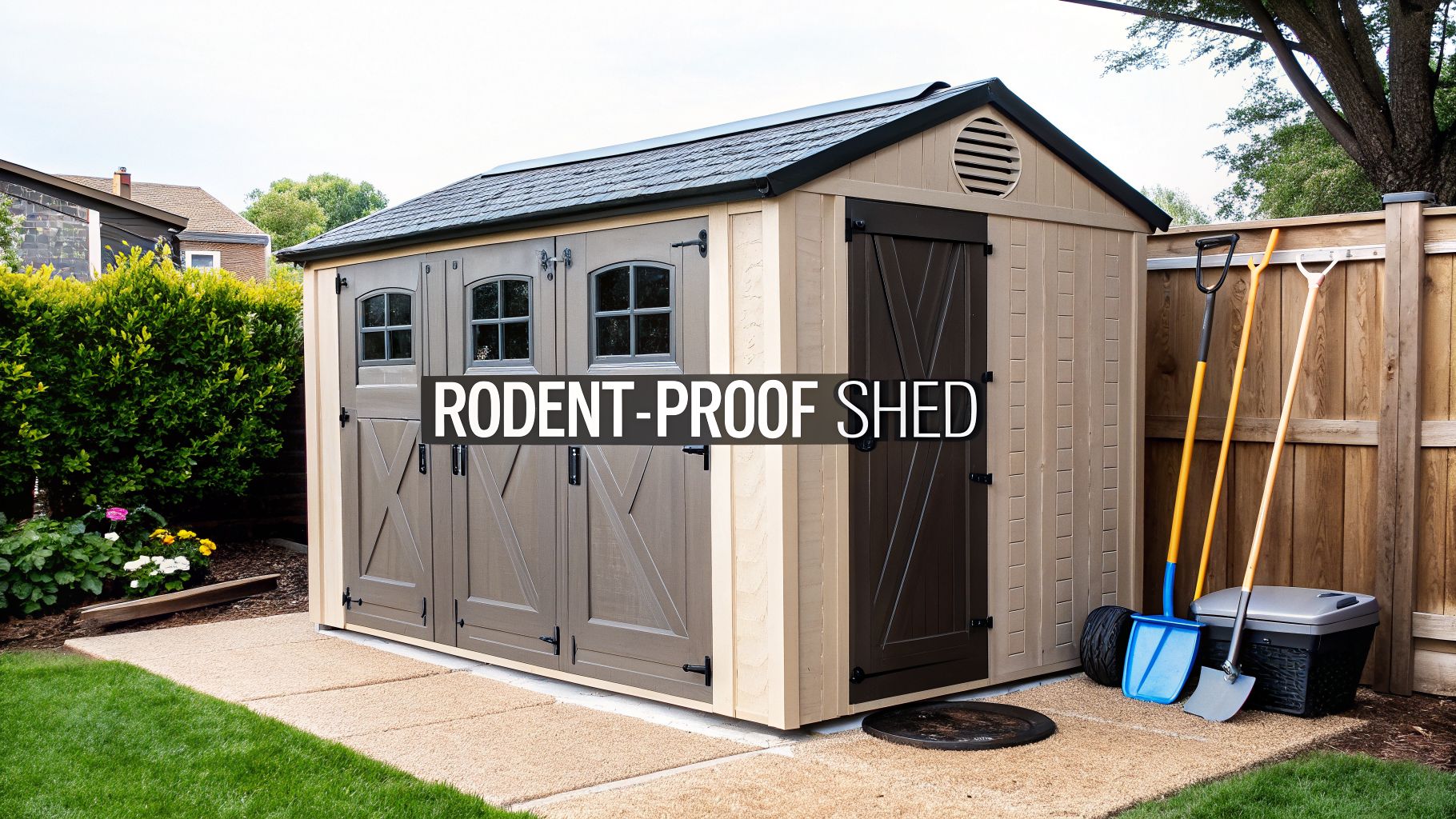
Discovering chewed-up boxes and droppings in your storage shed is a frustrating sign that you have uninvited guests. For homeowners across Pennsylvania, Maryland, and Delaware, the battle to keep mice out of a storage shed comes down to three key steps: sealing every possible entry point, removing potential food sources, and most importantly, starting with a professionally built, rock-solid foundation. A little prevention now saves you from significant headaches and costly repairs later. At Firm Foundations, we're the trusted local experts helping our neighbors protect their property from the ground up.
Why Do Mice See Your Shed as a Perfect Home?
It's a common story we hear from homeowners in Honey Brook Township and throughout our service areas. You open your shed after a long winter, ready for spring cleaning, only to find that a family of mice has made it their home. Whether you have a small 4×8 shed or a large 10×10 storage shed for your business, to a mouse, it’s a five-star resort.
Your shed offers ideal shelter from predators and the harsh Mid-Atlantic weather. It’s a quiet, private spot to build a nest and raise a family.

The real issue is how most sheds are constructed. Many sit on inadequate shed foundation blocks or even directly on the ground, creating an open invitation for pests to burrow right underneath. A mouse can squeeze through a hole the size of a dime. Any small gap under the door, an unsealed seam, or an open vent becomes a "welcome" mat.
More Than Just a Nuisance
Once inside, mice are far from harmless. They cause real, expensive, and sometimes dangerous problems. Understanding these risks is often the motivation homeowners in our community need to get serious about prevention.
- Serious Property Damage: Mice are gnawing machines. They'll chew through cardboard, sentimental heirlooms, furniture, and even the wooden frame of your shed. They are notorious for chewing on electrical wiring, creating a significant fire hazard.
- Real Health Concerns: Rodent droppings and urine aren't just unpleasant; they can carry diseases like Hantavirus and Salmonella. Anything stored in your shed—from camping gear to family keepsakes—can become contaminated, putting your family at risk.
As the weather cools, the instinct to find shelter intensifies. Understanding Why Rodents Are Rushing Indoors This Fall highlights why your shed is a prime target.
The best, most permanent solution starts from the ground up. A professionally installed base for your storage shed isn't just for stability; it's your first and best line of defense. As your local shed foundations contractors near me, Firm Foundations builds impenetrable gravel shed foundations and concrete foundations that seal off that main entry point for good.
Building Your First Line of Defense: A Solid Foundation
When homeowners in Pennsylvania look for how to keep mice out of a storage shed, they often start by patching holes and setting traps. While those steps are helpful, they’re just temporary fixes for a much larger problem: an insecure base.
The most common entry point for rodents isn't a crack in the wall. It’s the ground directly underneath the shed itself.

Think about it. A shed placed directly on the soil or propped on a few cinder blocks is an open invitation for pests. The uneven ground creates endless gaps, and mice can easily tunnel through the soft dirt. This is where a professional shed foundation from a trusted local company becomes your most effective defense.
Why a Professional Base for Your Storage Shed Works
A purpose-built foundation eliminates the structural weaknesses that mice exploit. As expert shed foundations near me installers serving Pennsylvania and the surrounding states, we see firsthand how a proper base transforms a shed from a rodent hotspot into a secure fortress.
We specialize in two options that offer superior protection for your home or business.
- Compacted Gravel Shed Foundations: As the premier gravel shed foundation contractors near me, we know that a professional gravel pad is more than just a pile of stone. We begin with proper excavation near me, then lay and mechanically compact several inches of crushed stone. This creates a dense, stable barrier that mice cannot burrow through. It also provides excellent drainage, keeping the ground under your shed dry and less attractive to pests.
- Solid Concrete Foundations: For the ultimate, impenetrable barrier, a concrete foundation is the gold standard. A reinforced concrete slab, poured by our experienced concrete contractors, creates a seamless and completely sealed floor. There are zero gaps for mice to squeeze through, making it the top choice for garage footings and foundations or a high-value barn shed.
This approach stops an infestation before it starts by addressing the root of the problem. For a deeper dive into the benefits of concrete, you can check out our guide on choosing a concrete pad for your shed.
The Advantage of Sealing From the Ground Up
It’s shocking how small of a gap a mouse needs. A house mouse can squeeze through an opening as tiny as a dime. This makes storage sheds prime real estate for an invasion, especially in areas like Pennsylvania, Maryland, Delaware, and New Jersey.
Pest control experts know that even if you eliminate 96% of a mouse population, the few that remain can cause the infestation to rebound quickly.
By investing in a professional base for storage shed, you are creating a permanent physical barrier. It’s the difference between constantly fighting rodent intrusions and enjoying lasting peace of mind, knowing your property is secure from the ground up.
When you search for a foundation contractor, you're not just looking for stability. You're looking for a permanent solution to pests. That's exactly what we deliver.
Sealing Every Gap and Vulnerable Entry Point
Starting with a rock-solid foundation from Firm Foundations is the best first step, but even a perfect shed foundation won't keep pests out if the structure on top has holes. Mice are incredibly persistent, and if there's a weak spot, they will find it. This next phase is all about inspecting your shed like a detective and fortifying it against these tiny home invaders.
Think of your shed as a locked box. A mouse will test every seam until it finds a way in. A gap the size of a dime is all it takes. Your inspection has to be that detailed. Get on your hands and knees to examine where the shed walls meet the foundation, check every corner, and pay close attention to any openings for utility pipes or wires.
Choosing the Right Materials for the Job
When it comes to sealing those gaps, not all materials are created equal. Many homeowners grab a can of spray foam, but that’s a temporary fix at best. Mice can and will chew right through cured spray foam, turning your hard work into useless confetti.
To create a barrier that actually lasts, you need materials that are tough and indigestible. Here are some of the most reliable options for sealing potential rodent entry points.
Effective Materials For Sealing Shed Entry Points
| Material | Effectiveness Against Mice | Best For | Notes |
|---|---|---|---|
| 1/4-Inch Hardware Cloth | Excellent | Covering vents, soffits, and larger gaps under eaves. | The gold standard. Allows airflow but is completely rodent-proof. |
| Steel Wool | Good | Stuffing into small holes, cracks, and gaps around pipes. | Mice hate chewing on it. Works best when combined with caulk. |
| Silicone Caulk | Fair (when used alone) | Sealing tiny cracks and securing steel wool in place. | Creates a weatherproof seal but can be chewed through if not reinforced. |
| Spray Foam | Poor | Not recommended for rodent exclusion. | Mice will chew right through it. Use only for insulation, not pest control. |
A combination approach is your best bet. Packing a gap with steel wool and then sealing it with high-quality silicone caulk creates a formidable defense that rodents can’t get past.
Targeting Common Mouse Entryways
Now that you have the right materials, let's focus on the most common weak points we see in the field. The gap at the bottom of the shed door is a major vulnerability. Installing a heavy-duty door sweep with a thick rubber or brush seal is a simple and highly effective way to close this mouse superhighway.
Next, look at your vents. Roof and soffit vents are crucial for airflow but are often an open invitation for pests. The solution is to securely fasten a piece of 1/4-inch hardware cloth over the inside of each vent opening. This lets the shed breathe without letting critters in. For oddly shaped openings, you might consider professional custom screen installations for a perfect, pest-proof fit.
Remember, the goal here is total exclusion. Sealing 99% of the gaps is the same as sealing none. A single forgotten entry point is all a mouse needs to bypass your hard work.
By combining an impenetrable concrete foundation or gravel pad from Firm Foundations with a meticulously sealed structure, you’re creating powerful, overlapping layers of defense. This two-pronged strategy is the most effective way to ensure your shed in Pennsylvania, Maryland, or New Jersey stays secure for years to come.
Making Your Shed and Yard Less Inviting
Even with a perfectly sealed shed, a messy yard is like rolling out the welcome mat for rodents. If your property is a haven for mice, they’ll have plenty of time to probe your defenses. Making the entire area less appealing is just as important as sealing the gaps.
This process starts inside. Mice see stacks of cardboard boxes, old blankets, and firewood as a five-star hotel with free bedding. Ditch the cardboard and upgrade to heavy-duty plastic bins with airtight, locking lids. It’s a simple switch that not only keeps your belongings safe but also removes a major nesting temptation.
Strategic Landscaping and Cleanliness
The way you maintain your yard plays a massive role in keeping mice away. Rodents are prey animals and stick to the shadows. Tall grass, weeds, and clutter give them the perfect cover to travel unseen. A little cleanup can make them feel dangerously exposed.
- Create a Clear Zone: Keep a two-foot-wide "no-go" zone around your shed's foundation. This area should be clear of tall grass, weeds, and stored items. A simple border of gravel or mulch helps maintain this buffer.
- Trim Overhanging Branches: Tree limbs and overgrown shrubs touching your shed act as a bridge for rodents, allowing them to bypass ground-level defenses and access your roof or vents.
- Secure Food Sources: Bird feeders and bags of pet food are an all-you-can-eat buffet. Store all pet food and birdseed in chew-proof metal or thick plastic containers, and clean up spills promptly.
Rodent damage is a huge headache. Across the U.S., infestations cause an estimated $18 billion in damages annually. While sealing your shed is a great first step, you're fighting an uphill battle without these basic cleanup habits. You can learn more about the economic impact of rodent infestations and the necessity of complete exclusion here.
This simple process shows how to get ahead of the problem before it starts.

The key takeaway is that rodent control isn't a one-time job; it's a constant cycle of inspecting, sealing, and maintaining your defenses.
When you combine a properly sealed shed with a clean, well-kept yard, you're creating multiple layers of protection. It’s the most effective way to send a clear message that your shed is officially off-limits.
Knowing When to Call a Professional
DIY rodent-proofing is a great skill, but sometimes sealing cracks and setting traps isn’t enough. You need to know when a problem requires a true expert.
The real trick is knowing which expert to call. Is this a job for a pest control company, or do you need a foundation builds contractor like us at Firm Foundations?
If your shed is sinking, the floor feels unstable, or the building is leaning, that’s a foundation problem. Trying to seal gaps in a shed with a failing base is like putting a band-aid on a broken arm. The structure will keep shifting, and new entry points for mice will constantly appear. This is a clear sign that the root cause needs to be handled by a professional.
When Your Shed Needs a Foundation Expert
A compromised base doesn't just let pests in; it puts your entire shed and its contents at risk. If you notice any of these signs, it's time to stop treating the symptoms and fix the source.
- Sinking or Uneven Ground: The shed is clearly lower on one side or appears to be sinking into the soil.
- A Non-Existent Foundation: Your shed is sitting directly on the dirt or propped up on wobbly cinder blocks.
- Large, Recurring Cracks: You seal every gap around the base, only to find new, bigger ones appearing as the shed settles again.
In any of these situations, Firm Foundations is the team you need. As local experts in building solid garage footings and foundations and durable gravel shed foundation installations across Pennsylvania, we solve the problem for good. We don’t just patch holes—we build an impenetrable base that permanently eliminates ground-level access. Contact us for a free quote on a real, lasting solution.
Recognizing a Severe Rodent Infestation
On the other hand, if your shed's foundation is rock-solid but you're still losing the battle against rodents, you likely need a pest control specialist. An established infestation can be tough and even hazardous to tackle on your own.
Invasive rodents cause billions in damages worldwide, and since a single female can produce up to 60 pups a year, a tiny issue can escalate quickly. The scale of the problem is huge; research shows that U.S. households buy 40-50 million control products annually. You can learn more about the significant impact and challenges of rodent infestations.
A professional pest control service has the tools and expertise to safely eliminate a large, active population. Our foundation work then provides the long-term exclusion needed to prevent them from ever coming back, making their efforts permanent.
Shed Rodent-Proofing FAQs
Even the best plans can hit a snag. As you work to keep mice out of your shed for good, a few questions are bound to arise. To help you feel confident, here are answers to questions we hear most often from homeowners in our Pennsylvania, Maryland, and Delaware communities.
What’s the Best Foundation to Keep Mice Out of a Shed?
Without a doubt, a professionally installed concrete slab or a compacted gravel pad is your best defense. A reinforced concrete foundation, poured by specialists like us at Firm Foundations, creates a solid, impenetrable barrier that mice simply can't chew or dig through. It's the same reason this is the gold standard for a garage foundation.
A properly built shed foundation gravel base is also incredibly effective. The compacted crushed stone is too dense and abrasive for rodents to tunnel into. Either of these options, built by trusted shed foundations contractors near me, is far superior to setting a shed on soil or blocks because they eliminate the ground-level entry points mice rely on.
Do Ultrasonic Pest Repellers Actually Work?
Honestly, the results from ultrasonic repellers are inconsistent at best. They might briefly annoy mice, but rodents often get used to the noise and return. You should never rely on these devices as your main line of defense.
It's better to think of them as a minor add-on to the proven methods of physical exclusion: a solid base for your storage shed, completely sealed gaps, and a clean, uninviting interior. When it comes to guaranteed, long-term results, nothing beats a physical barrier.
How Often Should I Check My Shed for Mice?
We recommend a thorough inspection at least twice a year. The most critical times are in the fall, before mice start looking for winter shelter, and again in the spring.
During these checks, look for tell-tale signs like droppings, gnaw marks, shredded nesting materials, and greasy rub marks along walls. It’s also crucial to inspect the exterior to ensure all your seals around doors, vents, and utility lines are holding strong. Staying vigilant makes all the difference.
Remember, a single forgotten entry point is all a mouse needs. Regular inspections ensure your defenses remain strong season after season, protecting your property in Pennsylvania or New Jersey from new invasions.
Can I Mouse-Proof a Shed That’s Already on Blocks?
Yes, you can improve a shed already on blocks, but it’s a labor-intensive workaround. The best approach is to install a skirt of 1/4-inch hardware cloth around the entire base of the shed. This metal mesh must be buried 6-12 inches deep and bent outward into an 'L' shape at the bottom to stop mice from digging underneath it.
While this helps, it's a less permanent fix than having a professional team like Firm Foundations install a proper gravel or cement foundation. Tackling the core vulnerability with one of our foundation builds gives you a permanent solution and true peace of mind.
Your shed deserves a foundation that provides lasting security from pests and the elements. At Firm Foundations, we are the shed foundation contractors near me that Pennsylvania, Maryland, and Delaware trust. We build the impenetrable base your shed needs. If you’re ready for a permanent solution, request your free quote today.