
What to Expect When Hiring Driveway Contractors Near You
What to Expect When Hiring Driveway Contractors Near You
Hiring a driveway contractor is not something most homeowners do often. You may know that your existing driveway is cracked, uneven, too narrow, or no longer meeting your needs, but the steps between requesting an estimate and using the finished driveway may be less familiar.
A new driveway involves much more than placing concrete or spreading gravel. The contractor must evaluate the land, determine how water moves across the property, remove unsuitable material, prepare a stable base, and construct a surface that can handle regular vehicle traffic.
Understanding the process makes it easier to compare driveway contractors near you, ask useful questions, and recognize whether an estimate includes the work required for a lasting result.
The First Conversation Should Cover More Than Square Footage
When you contact a driveway contractor, expect to provide basic information about the property and the work you have in mind.
The contractor will likely ask whether you need a completely new driveway, an extension, a replacement, or a surface leading to a new garage or outbuilding. They may also ask about the approximate dimensions, preferred material, current site conditions, property access, and the types of vehicles that will use the driveway.
Photos can help during the initial conversation, but they do not always reveal changes in elevation, soft soil, drainage problems, or restricted equipment access. An on-site evaluation may be necessary before the final scope and price can be established.
Firm Foundations provides gravel and concrete driveway services in addition to excavation and foundation construction. The company has operated since 2011 and is based in Honey Brook, Pennsylvania.
Expect the Contractor to Evaluate the Site
A professional driveway contractor should look beyond the area where the finished surface will appear.
The contractor needs to understand the existing grade, soil conditions, water flow, driveway entrance, and relationship between the driveway and nearby structures. The position of a garage door, road, sidewalk, drainage ditch, septic system, landscaping, or neighboring property can influence the design.
Access also matters. Excavators, skid steers, dump trucks, and concrete trucks require enough room to enter and work safely. Narrow gates, overhead wires, mature trees, steep slopes, and soft lawns may affect the equipment used and the project cost.
Tell the contractor about any known underground utilities, drainage pipes, septic components, or buried structures. Utility-locating requirements should be addressed before excavation begins.
You Will Need to Choose a Driveway Material
The right material depends on how the driveway will be used, how the property drains, the desired appearance, and the available budget.
Firm Foundations offers gravel and concrete driveway solutions. It is important to distinguish those services from asphalt or decorative paver installation, which may require a contractor specializing in those materials. The company’s website identifies its current driveway work as gravel and concrete.
A gravel driveway may be appropriate when you want a practical, drainable surface with a lower initial investment than concrete. Gravel can also work well for longer driveways, rural properties, access lanes, and areas where a more natural appearance is preferred.
Concrete creates a solid, permanent surface that is easy to walk, park, and move equipment across. It may be a good fit for residential driveways, garage approaches, parking areas, and properties where homeowners want a clean, finished appearance.
Neither material will perform well without proper preparation. The surface is only one part of the driveway. Excavation, base depth, compaction, and drainage often have an even greater effect on how the driveway holds up over time.
The Estimate Should Explain the Complete Scope
A useful driveway estimate should contain more than a total price.
It should explain the proposed dimensions, driveway material, excavation, base preparation, compaction, grading, concrete specifications when applicable, and cleanup. It should also identify work that is not included.
Ask whether the estimate covers removal of an existing driveway, disposal of excavated material, additional stone, soil correction, drainage work, permits, and restoration of disturbed lawn areas.
Two estimates can look very different because the contractors may not be quoting the same work. One may include excavation and a substantial compacted base, while another may assume that the existing ground can remain in place.
Ask the contractor what could cause the price to change. Rock, unstable soil, buried debris, unexpected concrete, poor access, or additional excavation may not be visible until work begins. A reputable contractor should explain how those conditions will be handled before adding work to the invoice.
Permits and Local Requirements Should Be Clarified
Driveway permit requirements vary by municipality. A permit may be needed when creating a new entrance, changing the width of an existing driveway, working near a public road, installing drainage, or altering a curb.
Ask whether you or the contractor will contact the municipality and obtain required approvals. This responsibility should be clear before the project starts.
Homeowners should also confirm whether local rules affect the driveway entrance, setbacks, stormwater management, or the amount of impervious surface permitted on the property.
A contractor’s familiarity with local soil, climate, and construction conditions can be valuable. Firm Foundations serves customers from its Honey Brook location and works on foundation, excavation, and driveway projects in the surrounding region.
Excavation Is Often the First Major Construction Step
Once the driveway layout has been confirmed, the crew may mark the work area and begin excavation.
Grass, topsoil, old gravel, deteriorated pavement, and other unsuitable material may need to be removed. The required excavation depth depends on the driveway design, site conditions, finished elevation, base material, and chosen surface.
This stage is important because topsoil and organic material are not dependable structural support. If they remain beneath the driveway, they can compress or decay, contributing to settlement later.
Excavation also allows the contractor to shape the driveway. The finished elevation must work with the road, garage, sidewalks, surrounding lawn, and drainage pattern.
Property owners should expect heavy equipment, soil piles, truck traffic, and temporary disruption during this phase. Discuss in advance where excavated material will go and how the crew will protect areas outside the work zone.
Base Preparation Is Critical
After excavation, the contractor prepares the material that will support the visible driveway.
A stone base helps distribute vehicle loads and provides a stable surface beneath gravel or concrete. It should be installed to the appropriate depth and compacted rather than simply dumped and spread.
Compaction reduces voids between the aggregate and limits future settlement. If the base remains loose, tire traffic and seasonal soil movement can cause ruts, dips, and cracking.
The appropriate base depth depends on the property, soil, expected traffic, and driveway material. A driveway used by passenger vehicles may have different requirements from one that regularly supports trailers, delivery trucks, recreational vehicles, or heavy equipment.
Firm Foundations emphasizes site preparation as part of its broader gravel, concrete, and excavation work. Its website notes that excavation, base construction, compaction, and drainage are central to long-term driveway performance.
Drainage Should Be Addressed Before the Surface Is Installed
Water can shorten the life of a driveway when it is allowed to collect on the surface, flow beneath the base, or erode the edges.
The contractor should evaluate the driveway’s slope and determine where runoff will go. Water should not be directed into the garage, toward the home’s foundation, onto a neighboring property, or into an area where it will repeatedly wash away supporting soil.
Some projects may need grading changes, swales, drainage pipes, or other water-management measures. Those items should be discussed and priced before installation whenever possible.
The correct approach depends on the property. A solution that works on a flat suburban lot may not work on a long, sloped driveway in a rural setting.
Gravel and Concrete Installations Have Different Final Steps
For a gravel driveway, the crew will place, grade, and compact the specified aggregate. The driveway may be built in layers rather than using one type of loose stone from top to bottom.
The finished gravel should provide a usable driving surface while maintaining the intended slope for drainage. Some movement and periodic maintenance are normal with gravel. Over time, areas may need to be regraded or replenished, particularly where vehicles turn, brake, or enter from the road.
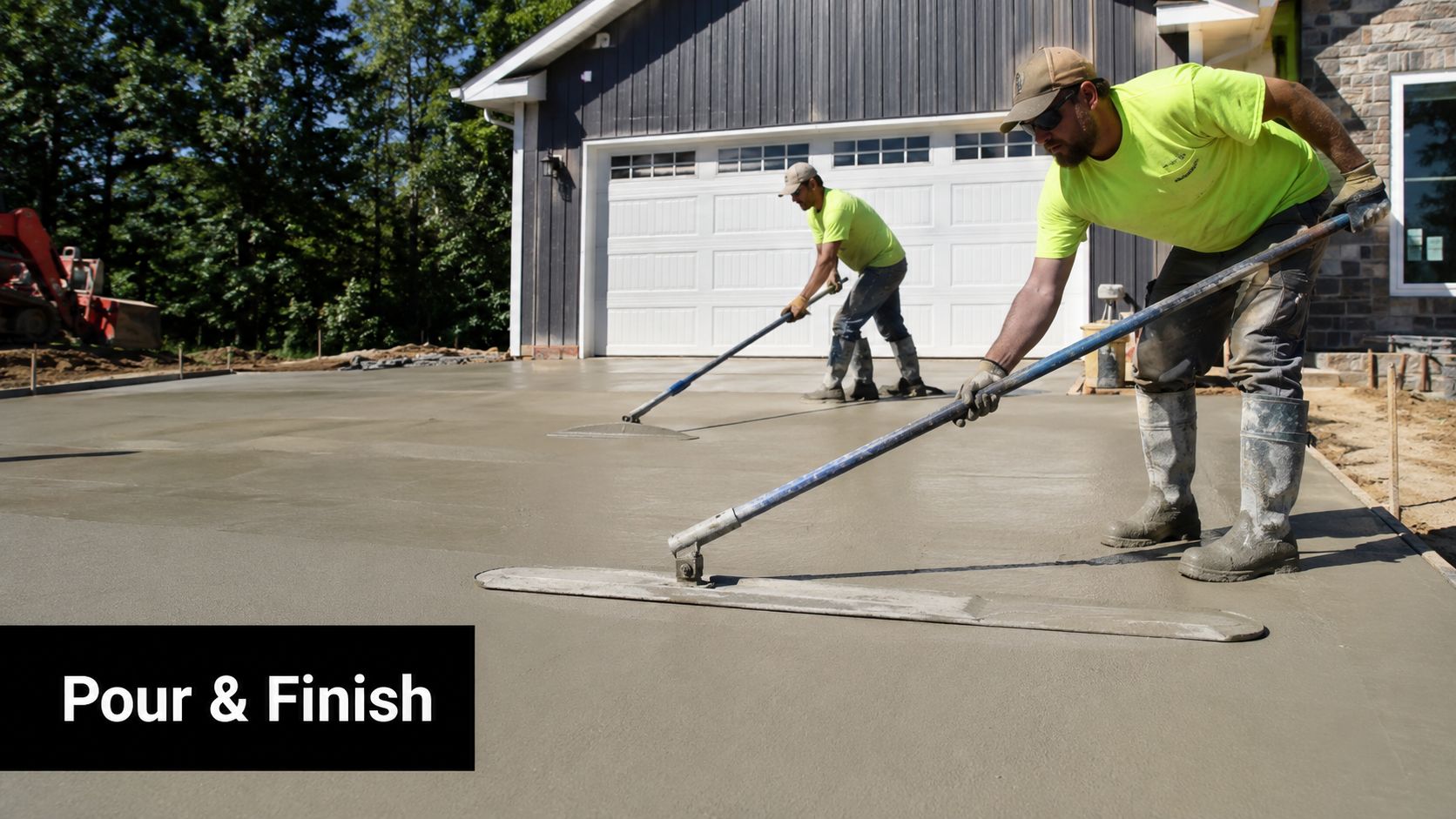
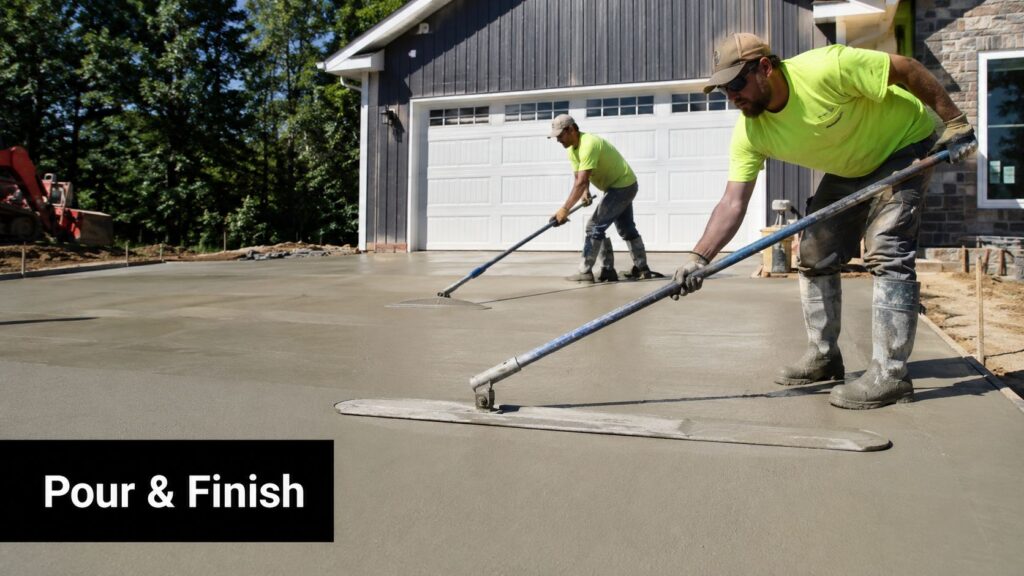
For a concrete driveway, the process may include setting forms, placing reinforcement when specified, pouring the concrete, and finishing the surface. Control joints may be added to encourage cracking to occur in planned locations.
Concrete needs time to cure before it receives normal vehicle traffic. The contractor should explain when the forms can be removed, when people may walk on the surface, and when vehicles may use the driveway. Do not assume that concrete is ready simply because the surface looks dry.
Communication During Construction Matters
A driveway project can be disruptive, especially when it affects the main route to your home or garage.
Ask how you will receive schedule updates and who your main point of contact will be. Weather, material deliveries, inspections, and unexpected site conditions may affect the planned timeline.
You should also know when vehicles need to be moved, whether you will be able to access the home during construction, and how long the driveway will remain unavailable after completion.
Customer feedback on the Firm Foundations website frequently mentions responsiveness, clear explanations, timely arrival, professional crews, respect for the property, and thorough cleanup. These are useful qualities to consider when comparing any local contractor.
Inspect the Work Before the Project Is Closed
Before making the final payment, walk through the completed project with the contractor.
Confirm that the driveway matches the agreed dimensions and layout. Look at the transition to the road, garage, walkways, and surrounding grade. Ask where water is expected to flow during rain.
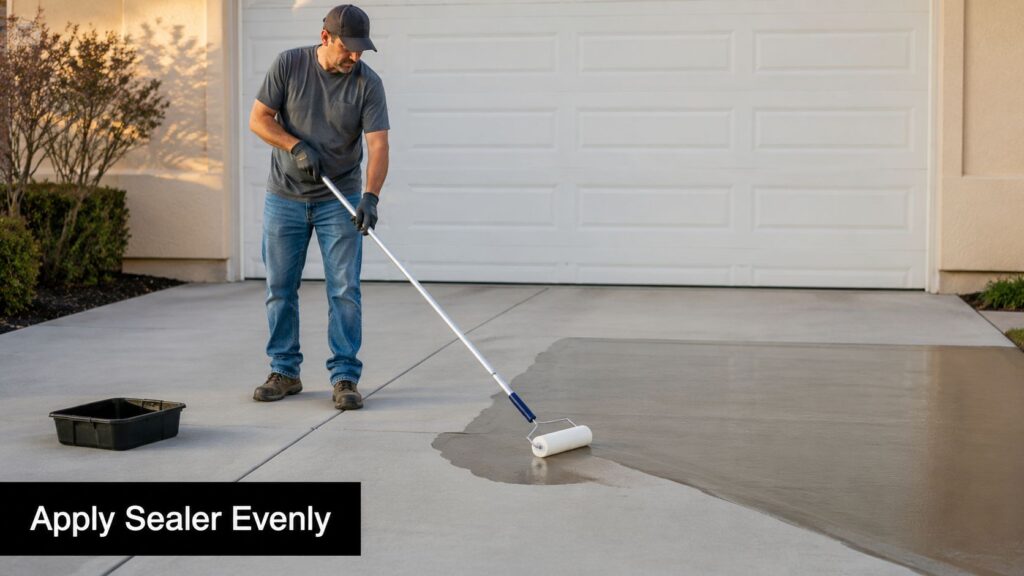
For concrete, discuss curing, normal surface variations, control joints, and maintenance. For gravel, ask about settling, regrading, stone replacement, and how snow should be removed without displacing the surface.
The contractor should also explain any warranty or workmanship coverage in writing. Make sure you understand what is covered, how long the coverage lasts, and which maintenance responsibilities belong to the homeowner.
Choose a Contractor Based on the Work Beneath the Driveway
The most visible part of a driveway is the surface, but the work beneath it often determines whether the project succeeds.
When comparing driveway contractors near you, ask how they handle excavation, unstable soil, base construction, compaction, drainage, equipment access, and cleanup. Make sure the quote describes the complete project rather than only the final material.
Firm Foundations installs gravel and concrete driveways and provides related excavation services from its Honey Brook, Pennsylvania location. The company’s process begins with understanding the project, preparing a quote, and completing the work from excavation through the finishing stages.
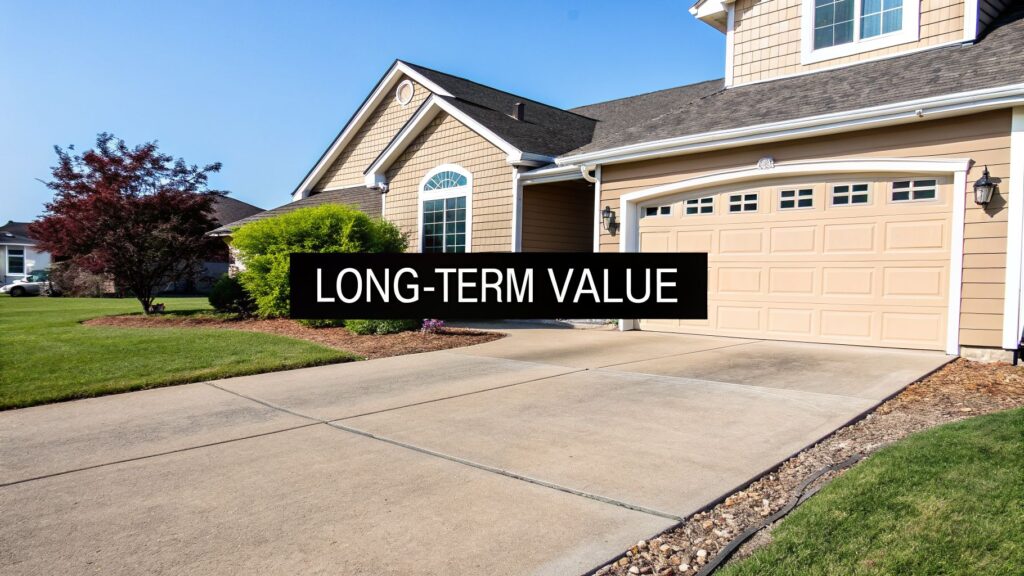
A well-planned driveway should do more than improve the appearance of your property. It should provide reliable access, handle everyday vehicle traffic, manage water properly, and fit the way you use your home. Request a free quote to discuss your driveway dimensions, property conditions, material options, and the preparation needed for a lasting installation.
Firm Foundations LLC
https://maps.app.goo.gl/Uf6XdgtpBTETgNrr7
1535 White School Rd, Honey Brook, PA 19344, United States
(717) 716-7267
https://shedpads.com/