
Shed Foundation Contractors in Pennsylvania: Your Guide to a Flawless Shed Move
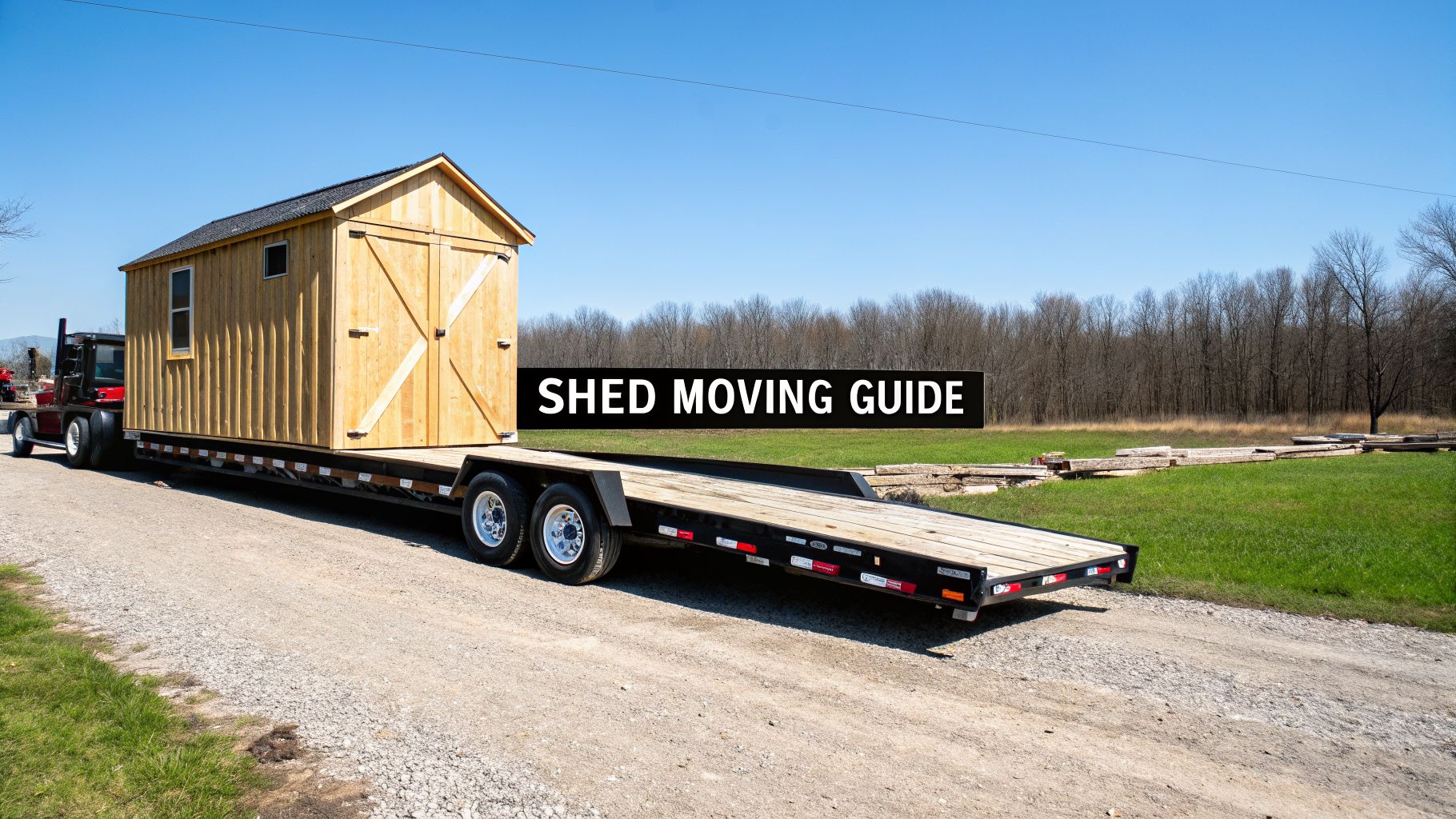
Moving a shed can feel like a monumental task, but it all starts with a solid plan and the right team. While specialized trailers for moving sheds are a key part of the process, the most critical element for a successful relocation is the new foundation waiting at its destination. Trying to place a heavy barn shed on an unprepared patch of lawn is a recipe for disaster, and even a simple 10×10 storage shed needs a proper, level base to last.
As your trusted shed foundations contractors near me in Honey Brook, PA, we at Firm Foundations understand that a successful move begins long before the shed arrives. It starts with creating the perfect landing spot—a professionally installed gravel or concrete pad that guarantees stability and longevity for your investment. We are the local experts in concrete foundations and gravel pads that homeowners and businesses across Pennsylvania trust. If you're planning a move, our goal is to eliminate your worries by providing a seamless, reliable foundation service.
Matching the Right Foundation to Your Shed

Whether you're just moving a shed across your Honey Brook, PA, yard or relocating it from another property, the long-term success of the move hinges on its new foundation. A poorly prepared site can lead to settling, rot, and structural damage, undoing all the hard work of the move itself. As your local shed foundation contractors, we at Firm Foundations have seen it all. We know that a successful placement on a new gravel or concrete pad is the most important step. It begins with our professional site prep and excavation.
Understanding Your Trailer Options for the Move
While we handle the foundation, it's helpful to understand the equipment used for the transport phase. You'll generally run into three main types of trailers for moving sheds. Each one has its place, and knowing the options helps you coordinate with your moving company.
To help you out, here’s a quick-glance table comparing the most common options.
Trailer Comparison for Shed Relocation
| Trailer Type | Best For (Shed Size/Weight) | Key Advantage | Things to Consider |
|---|---|---|---|
| Standard Utility Trailer | Small, lightweight sheds (e.g., 4×8) | Easy to rent and tow with a standard truck. | Low weight capacity; not suitable for most larger sheds. |
| Heavy-Duty Flatbed Trailer | Medium to large sheds; versatile. | Open design and high weight capacity. | Often requires separate ramps or a forklift for loading. |
| Specialized Shed Trailer | Any size shed, especially large/heavy ones. | Purpose-built with tilt beds or rollers for easy loading. | The preferred choice of professional shed movers. |
The trailer market is a good indicator of what works. While basic utility trailers are great for small DIY jobs, it's the heavy-duty flatbed and specialized trailers that truly get the job done for bigger structures.
The global trailer market is booming, and this growth directly benefits homeowners and contractors. Utility trailers are a go-to for many DIY projects, but flatbed and dry van trailers—which command over 48% of global revenue—are ideal for securely transporting larger structures like sheds, ensuring they arrive safely. This trend underscores the importance of choosing a robust trailer for your move. You can explore more about the global trailer market to see how these trends affect construction and transport.
Matching Trailer Capacity to Shed Weight
Before a shed is moved, its approximate weight must be known. A typical 10×12 wood shed can weigh anywhere from 1,500 to 2,500 pounds, and larger or custom-built sheds can easily blow past that.
The hauler must check the trailer's Gross Vehicle Weight Rating (GVWR). That number tells you the absolute maximum weight the trailer can handle. Overloading a trailer isn't just dangerous—it's illegal and can lead to catastrophic failure on the road. Getting this right ensures a smooth journey to the new gazebo foundation or shed foundation we’ve expertly prepped for you at your Pennsylvania property.
Preparing Your Shed for a Safe Move
Alright, the transport is lined up. Now for the part that really separates a smooth move from a total disaster: prepping the shed itself. As your construction partners, we want your entire project to go off without a hitch.
It’s tempting for movers to just get it loaded and go, but a few extra minutes of prep work can save you from serious headaches and repair bills down the road. We've seen it happen.
First things first, the shed must be completely empty. We mean everything—shovels, lawnmowers, dusty old boxes, even the shelving. A lighter shed is far easier and safer to handle, putting less stress on the structure and the trailer. Plus, you don't want a rogue rake handle punching a hole through the wall on the first big bump.
Lock It Down: Securing Doors, Windows, and Walls
With the shed cleared out, the next job is to batten down the hatches. A shed's doors and windows are its most vulnerable spots during a move. The twisting and bumping of the road can easily warp frames or shatter glass.
- Brace Your Doors: Start by locking the doors. For extra reinforcement, a 2×4 can be screwed diagonally across the door from the inside. This simple trick does wonders to keep the frame from flexing.
- Secure the Windows: Close and lock every window. If they don't have locks, a bit of strong tape will do the trick. They can even be temporarily screwed shut to stop any rattling.
- Add Interior Bracing: If a larger or older shed is being moved, adding temporary bracing inside is a smart move. Running a couple of 2x4s across the interior corners will prevent the structure from racking while it’s being transported.
Securing a heavy, oversized load like a shed requires the right equipment. The market for special trailers is projected to grow from USD 16.25 billion in 2025 to USD 25.12 billion by 2034, highlighting the demand for heavy-duty solutions. Lowboy trailers, which held 26.2% of the semi-trailer market in 2024, are particularly effective for moving large sheds because their low deck height enhances stability and prevents damage during relocation. Discover more insights about the special trailer market on fortunebusinessinsights.com.
Anchoring the Shed for the Ride
This final prep step is an absolute must for a safe move. It’s time to anchor the shed firmly to the trailer.
Heavy-duty ratchet straps or chains and binders are used. Straps or chains are draped over the shed's roof and secured to the strongest anchor points on the trailer deck.
They are cranked down until snug—enough to prevent shifting, but not so tight that they crush the siding or roof. The shed must be perfectly centered and balanced on the trailer for a stable ride. This ensures your shed arrives in one piece, ready to settle onto its new gravel shed foundation or a fresh concrete foundation for a garage built by Firm Foundations.
The Art of Safely Loading and Unloading
Getting a shed onto a trailer—and safely back off again—is the moment of truth. This is where patience, proper technique, and a healthy dose of respect for safety are non-negotiable. As the premier shed foundation contractors near me, we’ve seen what happens when people rush this step. It’s a recipe for damaged property or, far worse, serious injury. We want your project to be a success from start to finish.
The right loading method really comes down to the shed’s size and weight. For smaller sheds, the job can often be done with jacks and rollers. But for the heavier structures, like a two-car garage shed, the muscle of a winch or even a forklift is needed.
Mastering the Lift and Placement
The secret to a smooth lift is control. Whether using high-capacity jacks or a forklift, the idea is to raise the shed just enough to clear the ground and slide equipment into place.
- Jacking and Rolling: For most backyard sheds, jacks are placed at the corners to lift it evenly. Once up, steel pipes or heavy-duty dollies are slid underneath to guide the structure onto the trailer bed.
- Winching: With this route, the winch cable is attached directly to the shed’s structural frame—never the siding. A slow, steady pull guides the shed up the ramps and onto the trailer.
- Forklift: For the heaviest sheds, a forklift offers the most control. The forks must be spread wide to distribute the weight evenly, and lift from the strongest part of the shed’s base.
No matter which method is used, clear communication is an absolute must. Everyone involved needs to be on the same page. This prevents accidents and keeps the process controlled and stress-free.
Expert Tip: Never, ever stand between the shed and the trailer during loading. Always work from the sides to stay clear of the path should it slip or slide unexpectedly. Patience is the most valuable tool here.
Before you even think about lifting, you need to prep the shed itself. This is a critical part of the process.

These three steps—emptying, securing, and bracing—are foundational for preventing damage while the shed is in transit.
Unloading with Precision
Once you arrive at the new site—which will hopefully be a freshly prepared gravel shed foundation or concrete pad from Firm Foundations—unloading is simply the reverse of loading. Take your time, maintain absolute control, and guide the shed carefully into its final position.
To ensure your shed doesn’t move an inch during transport, it’s vital to follow the FMCSA Load Securement Regulations perfectly. These aren't just suggestions; they are federal rules designed to guarantee a safe and legal haul on public roads.
Navigating Local Towing Rules and Permits
Getting your shed loaded onto a trailer is a big win, but don't hit the road just yet. In states like Pennsylvania, Maryland, Delaware, and New Jersey, you can't just haul a building down the street. Moving an object as large as a shed is a regulated activity. Ignoring the rules can lead to expensive fines, project delays, or worse, a serious accident.
It's absolutely critical to understand the legal side of transport. The first thing to figure out is whether your shed counts as an "oversize load." In most states, including PA, any load wider than 8.5 feet is officially oversized and requires a special hauling permit. Since even a common 10×10 storage shed blows past this limit, a permit will almost certainly be needed to travel on public roads.
When Are Banners and Escort Vehicles Needed?
Once your shed is an official oversized load, specific safety protocols must be followed. Bright "Oversize Load" banners need to be attached to both the front of the truck and the back of the shed. But that's not all.
Depending on the shed's exact width and the planned route, an escort vehicle might also be needed. In Pennsylvania, for example, a single escort car is typically required for loads between 12 and 14 feet wide on two-lane highways. This extra vehicle alerts other drivers. Your best bet is to always check directly with PennDOT or your local transportation department to get the exact rules for your specific haul.
The semi-trailer market is projected to skyrocket from USD 21.6 billion in 2024 to USD 39.4 billion by 2034, and that growth is fueled by some serious innovation. Advancements in automation and fuel efficiency have helped cut hauling costs for oversized loads by 15-20%. This makes it more affordable for professionals to move large structures like horse barns, keeping projects on budget. These efficiencies also reduce on-site assembly time by up to 40%, getting your structure ready for its gravel or concrete foundation much faster.
Checking State and Local Regulations
Never assume the rules are the same everywhere. Height and width restrictions can change from local roads to state highways. Before planning a route, it's vital to verify the specific regulations with the Department of Transportation for every state you'll pass through.
While this guide focuses on towing permits, remember there are other permits to consider. It’s also important to find out if you need a permit to build a shed at the new site. At Firm Foundations, we'll handle all the foundation builds for you, but making sure your transport is compliant is a crucial step you simply can't overlook.
Building the Perfect Shed Foundation with Firm Foundations

Alright, you’ve navigated the tricky parts of getting your shed onto a trailer and hauled to its new home in Pennsylvania. But the final step is arguably the most critical: setting that shed on a solid, reliable base. You can use the best trailers for moving sheds and execute a flawless transport, but all that effort goes down the drain if the destination site isn't professionally prepared.
A weak or poorly built foundation is a recipe for disaster. It can lead to settling, water damage, and a drastically shorter life for your shed. As the go-to shed foundations contractors near me in Pennsylvania, we at Firm Foundations know that a professional foundation isn’t just a nice-to-have; it's a necessity. It’s what makes the difference between a shed that stands strong for decades and one that develops problems in just a few short years.
Choosing the Right Foundation for Your Shed in Pennsylvania
Foundations aren't a one-size-fits-all solution. The right choice hinges on your shed’s size, its weight, and your intended use. For most typical backyard sheds, a gravel shed foundation is a fantastic option. As experienced gravel shed foundation contractors near me, we know that gravel provides top-notch drainage, which is crucial for stopping moisture from wicking up into the shed’s floor and causing rot.
On the other hand, if you're dealing with a heavier structure like a big barn shed or a two-car garage, you'll need the strength of a reinforced concrete foundation for a garage. Concrete gives you that unyielding stability required to support thousands of pounds without shifting or cracking over time. As expert garage foundation contractors near me, we can pour the perfect cement foundations for your garage.
A well-built foundation starts with a properly prepared building pad. Before you begin, understanding the importance of a solid base is crucial; learn more about What Is a Building Pad? and how it contributes to long-term stability.
Our Turnkey Foundation Process
At Firm Foundations, we are the concrete contractors who handle the entire foundation project from start to finish. Our goal is simple: to have a perfect pad built and waiting for your shed the moment it arrives. We take the guesswork out of building a base for your storage shed.
Here’s a look at how we get it done in your local community:
- Site Evaluation and Excavation: First, we assess your site. We then handle any necessary excavation near me to create a perfectly level area. Proper grading is key to making sure water flows away from your shed, not toward it.
- Material Installation: Whether we’re installing a precisely compacted gravel shed foundation gravel base or expertly building concrete forms for garage footings and foundations, we stick to high-quality materials that are built to last.
- Finishing and Leveling: The final surface is meticulously leveled. This guarantees your shed sits perfectly flat, preventing any undue stress on its frame and ensuring a perfect house foundation or shed foundation.
Coordinating Your Move and Foundation Build
When it comes to moving a shed, timing is everything. The perfect scenario is having your new foundation completely finished and cured before the shed is scheduled for delivery. This makes for a smooth, immediate placement with zero delays.
We work directly with homeowners and shed delivery companies across Pennsylvania to line up our schedules. By communicating timelines clearly, we ensure our crew is done and out of the way well before the shed rolls up on its trailer. This turnkey approach takes the stress of managing multiple contractors off your plate and guarantees a professional result, from the ground up. If you're looking for more details on this process, our guide on a concrete pad for a shed offers additional helpful information.
Got Questions About Your Shed Foundation? We've Got Answers.
Moving a shed isn't something you do every day, so it's natural to have questions. As the trusted shed foundation contractors for homeowners across Pennsylvania, we've heard it all. To help you plan your project with confidence, we've pulled together our expert answers to the most common questions we get.
What Size Trailer Do I Need for a 10×12 Shed?
For a standard 10×12 shed, the mover will want a trailer with a deck that's at least 10 feet wide and ideally 14 to 16 feet long. This gives the right amount of support and a little wiggle room. They'll look for a tandem-axle utility or flatbed trailer with a weight capacity of at least 5,000 lbs. Even though a typical 10×12 shed weighs between 1,500 and 2,500 pounds, the extra capacity is a crucial safety buffer.
Keep in mind, if the trailer deck isn't as wide as the shed, it will have an overhang. That instantly makes the load an 'Oversize Load' in states like Pennsylvania and Maryland, which means the hauler will need to get permits.
Is It Cheaper to Move a Shed Myself or Hire a Pro?
Doing it yourself can look cheaper on paper, especially if you find a good deal on a trailers for moving sheds rental. But once you start adding up the cost of gear, permits, and your own time—not to mention the very real risk of damaging the shed, your truck, or your property—hiring a professional often comes out ahead.
Professional movers bring specialized equipment, years of experience, and most importantly, insurance to the table. They know how to handle the job safely and efficiently. That peace of mind is worth a lot, and we coordinate with them to ensure our foundation work is ready for their arrival.
How Do I Prepare the New Site for My Shed?
The new spot for your shed has to be perfectly prepared before it arrives. That means it needs to be completely clear, stable, and level. The absolute best solution for this is a professionally installed foundation from Firm Foundations. We are the shed foundations near me that you can count on. We almost always recommend a gravel shed foundation for backyard sheds because it provides fantastic drainage and long-term stability.
If you’re moving a heavier structure like a garage shed or a two-story barn, you’ll need to step up to a reinforced concrete foundation to support that extra weight. Having this base for your storage shed completely finished ahead of time ensures the shed can be placed immediately upon arrival, avoiding any frustrating and costly delays.
Do I Need a Special License to Tow a Big Shed?
For personal use—towing your own shed—you generally don't need a special license like a CDL. The real hurdle is the shed's size. If your shed is wider than 8.5 feet, both Pennsylvania and Maryland legally classify it as an 'oversize load.'
This classification means you're required to get an oversize permit directly from the state's Department of Transportation (DOT). Depending on just how wide your load is, you might also need to use special flags, safety lights, and large 'Oversize Load' banners. We recommend leaving the hauling to insured professionals while we handle the critical foundation work for you.
Ready to give your shed the perfect landing spot? A solid foundation is the single most important part of a successful move. Contact Firm Foundations today for a free quote on a professionally installed gravel or concrete foundation that’s built to last. Let us lay the groundwork for a smooth project. Visit us at https://shedpads.com to get started.