
Shed Foundations in [City, State]: Choosing the Right Roof for a Solid Build


![Shed Foundations in [City, State]: Choosing the Right Roof for a Solid Build](https://shedpads.com/wp-content/uploads/2026/03/shed-roof-types-shed-models.jpg)
Planning a new shed, garage, or barn in the [City] area involves more than just picking a size. The roof style you choose directly impacts the structure's longevity, functionality, and how it handles our [State] weather, from heavy snows to summer downpours. But even the best roof can fail without a proper base. A poorly chosen roof can direct water straight toward your shed's walls, compromising a weak foundation and leading to rot, shifting, and expensive repairs down the line.
At [Firm Foundations], we've seen it all since 2011. As the trusted local contractors for shed foundations in [City, State], we help homeowners connect the dots between their shed's design and the critical support system beneath it. This guide explores the most common shed roof types and explains how each one pairs with the right shed foundation, ensuring your investment stands strong for decades.
Understanding these relationships is the first step toward a successful build, whether you need a gravel shed foundation or a full concrete foundation for a garage. Beyond the initial build, considering the long-term shed roof replacement cost is also a crucial part of planning, impacting your choice of materials and design. Let’s dive into the options.
1. Single Slope (Lean-To) Roof
Among the most practical and economical shed roof types, the single slope, or lean-to, roof is defined by its straightforward design. It consists of a single, flat roof plane that angles down from a high wall to a lower one, creating a clean, modern aesthetic. This simplicity makes it a favorite for homeowners and builders in [City] and surrounding communities who need an efficient, cost-effective structure without complex framing.
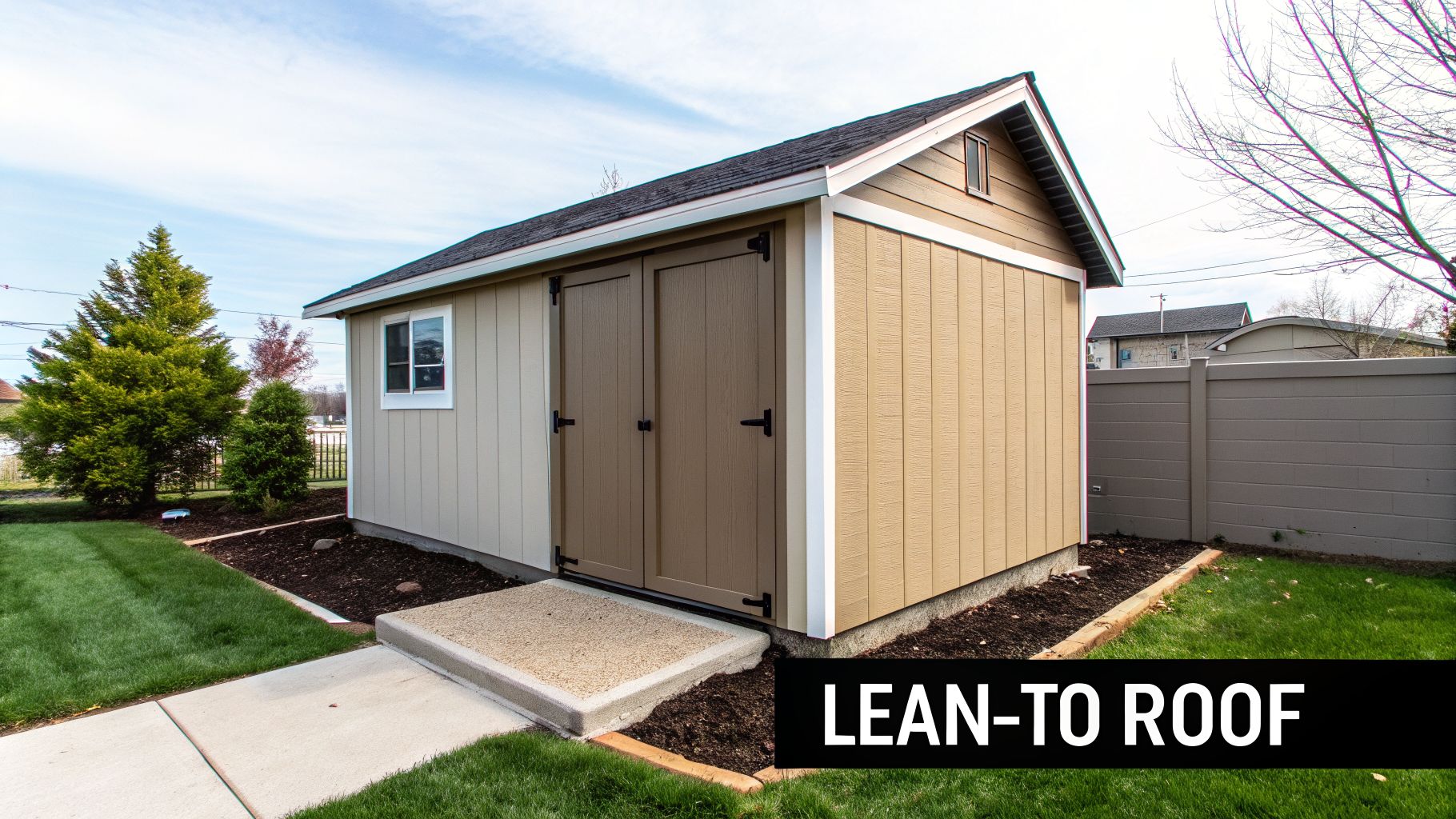
This design is highly effective for managing water runoff. The entire roof surface directs rain and snowmelt to the lower side, away from the shed's entrance and high wall. It’s an ideal choice for a structure placed against an existing building, like a house or garage, as it seamlessly directs water away from both structures.
Best Use Cases & Practical Tips
The single slope roof is incredibly versatile, making it perfect for everything from small backyard tool sheds to larger equipment storage buildings on properties across [State].
- Placement Strategy: For maximum durability, position the higher wall to face the prevailing winds. This orientation provides a more aerodynamic profile, reducing wind load on the structure.
- Drainage Management: Always install gutters and downspouts along the low-side eave. This is critical for channeling water away from the structure and preventing foundation erosion.
- Slope & Snow Load: In regions with heavy snowfall, like we see in [City], a steeper pitch is essential. We recommend a minimum pitch of 3/12 to 4/12, though a 6/12 pitch provides even better shedding of snow and ice, preventing dangerous accumulation.
Foundation Insight: Proper site preparation is key. A single slope roof's effectiveness is amplified when the base for the storage shed is also properly sloped. As your local shed foundations contractors near me, we ensure your gravel or concrete pad is professionally installed to guarantee that water directed off the roof continues to flow away from the structure, protecting your investment from moisture damage. If you're unsure about the requirements, you can learn more about shed foundations to determine the best approach for your project.
2. Gable (A-Frame) Roof
The quintessential choice for backyard structures, the gable roof is easily recognized by its triangular shape. Also known as an A-frame, this design features two sloped planes that meet at a central ridge. This classic look is favored by homeowners and builders in the [City] area because it offers a timeless aesthetic, excellent water drainage, and a surprising amount of interior overhead space.
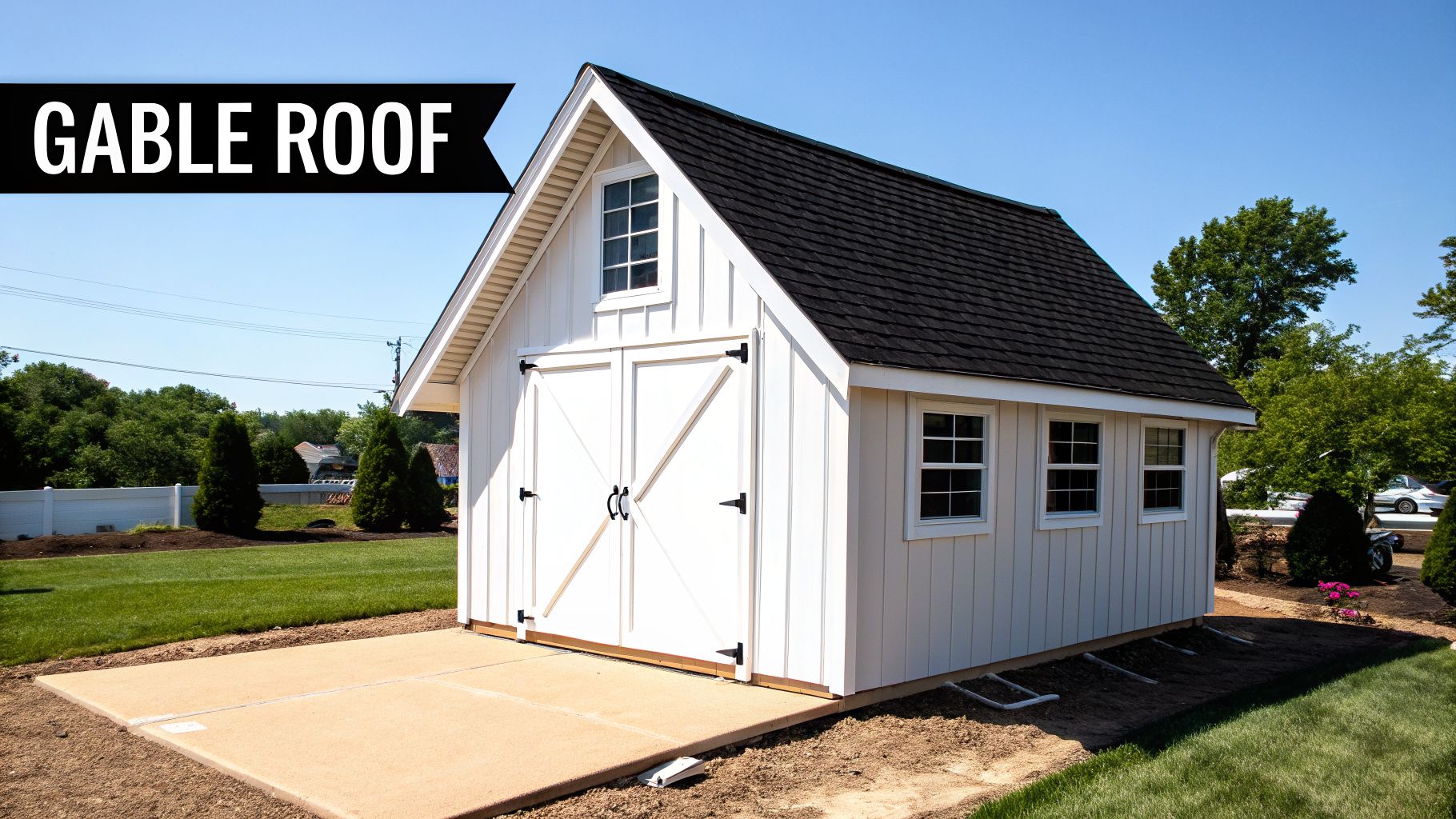
Its popularity stems from both its appearance and its practicality. The dual-slope design efficiently channels rain and snow off both sides, preventing water from pooling. The added interior volume created by the peak is perfect for installing a loft for extra storage, maximizing the utility of a 10×10 storage shed or larger structure. This familiar design is one of the most common shed roof types for a reason.
Best Use Cases & Practical Tips
The gable roof's balanced design makes it suitable for a wide range of applications, from small residential sheds to larger agricultural buildings on local farms.
- Improve Air Circulation: To prevent moisture and heat buildup, install gable vents on the triangular end walls. This promotes airflow, which is critical for protecting stored items and the structure itself.
- Secure the Ridge: The ridge is the most vulnerable point for water infiltration. Always use a high-quality metal or rubber ridge cap to create a durable, waterproof seal where the two roof planes meet.
- Frame for Stability: For robust structural integrity, especially in areas with significant snow load, space the roof trusses 24 inches on center. This standard spacing provides the necessary support for the roof sheathing and shingles.
Foundation Insight: A gable roof distributes weight evenly along the two load-bearing walls. This makes a perfectly level base for the storage shed absolutely essential. A slight imbalance in a gravel or concrete pad can transfer stress unevenly to the frame and roof trusses. Our professional installations ensure your shed foundation is perfectly level, providing the stable support your structure needs. You can explore different storage shed styles that work well with this foundational approach.
3. Gambrel Roof
Instantly recognizable for its classic "barn-style" profile, the gambrel roof is one of the most distinctive and functional shed roof types available. This design features two different slopes on each side of the ridge: a shallow upper slope and a much steeper lower slope. This dual-pitch construction creates a remarkable amount of interior headroom and usable loft space, making it a premier choice for larger, more versatile structures in the [City] region.
The iconic shape is not just for aesthetics; it’s an engineering solution for maximizing volume. This makes it a go-to design for premium backyard workshops, two-story sheds, and agricultural buildings where ample storage is a necessity. Its historic charm is frequently seen in custom-built sheds, like a barn shed, designed to complement traditional farmhouses and historic properties.
Best Use Cases & Practical Tips
The gambrel roof is ideal for anyone needing more than just basic storage. It's perfect for creating a loft for seasonal items, a hobby space, or even a small studio. Its applications range from luxury backyard structures to large-scale horse barn restorations.
- Expert Construction: Gambrel framing is more complex than a simple gable or lean-to. It is crucial to hire experienced framers who are familiar with the specific angles and structural supports required for this design.
- Ventilation Planning: The large internal volume requires careful ventilation planning from the start. Incorporate ridge vents and soffit vents to ensure proper air circulation, preventing moisture buildup and heat accumulation in the upper loft area.
- Flashing is Key: The transition point between the upper and lower roof slopes is a critical area for water intrusion. Ensure high-quality, professional-grade flashing is installed at this joint to maintain a watertight seal for years to come.
Foundation Insight: A gambrel-style shed is significantly heavier than a single-slope structure, especially when a second-floor loft is added and loaded with stored items. The base for the storage shed must be robust enough to handle this concentrated load. An oversized, professionally installed shed foundation gravel base or concrete foundation is essential for distributing the weight evenly and preventing foundation settling or failure. This ensures your high-capacity structure remains stable and secure.
4. Hip Roof
For those seeking superior durability and a refined architectural appearance, the hip roof is an outstanding choice. This design features four sloped sides that meet at a central ridge line, completely eliminating flat gable ends. The result is a self-bracing structure with exceptional wind resistance, making it one of the most robust shed roof types available. Its classic, finished look is often seen on high-end residential sheds, luxury garage structures, and custom garden buildings throughout [City, State].
The inward slope on all four sides makes a hip roof inherently stronger against high winds compared to gable roofs, which can act like sails. This design is particularly popular in areas that experience strong storms. The construction is more complex, requiring more intricate cuts and framing, but the payoff is a visually appealing and incredibly resilient structure.
Best Use Cases & Practical Tips
A hip roof adds a touch of elegance to any outbuilding, matching the style of many modern homes in the [City] area. It is the premier choice for premium sheds where both aesthetics and storm-proof performance are top priorities.
- Professional Framing: Due to the compound angles and complex joinery, we recommend hiring framing specialists experienced with hip roof construction. This ensures the structural integrity and longevity of your shed.
- Valley Protection: The valleys where roof planes meet are critical points for water intrusion. Always install a high-quality ice and water shield in all valleys before roofing materials are applied to prevent leaks.
- Material Choice: The sophisticated look of a hip roof is best complemented by premium materials like architectural shingles or metal panels. These materials not only look great but also contribute to the roof's overall durability.
Foundation Insight: The superior strength of a hip roof deserves an equally robust base for the storage shed. A precisely leveled gravel or concrete foundation is essential to support the structure and manage runoff effectively. Because a hip roof channels water off four sides, a proper shed foundation ensures this drainage is directed away from the building on all sides, preventing moisture problems. If you're looking for shed foundations near me, our team can design a solution that provides lasting support for your high-end structure.
5. Saltbox Roof
A nod to classic colonial architecture, the saltbox roof is one of the most distinctive and historically rich shed roof types. This asymmetrical design features two roof planes of unequal length, with one side having a much steeper, shorter slope and the other a long, gradual slope that often extends down to the height of a single-story wall. It blends the triangular shape of a gable roof with an off-center ridge, creating a unique profile that adds significant architectural character.
This design is prized for its historic charm, making it a popular choice for custom garden sheds in older neighborhoods or as a complementary outbuilding for colonial-style homes in our [City] community. The asymmetrical shape isn't just for looks; it creates a practical interior with a high ceiling on one side and a lower, more protected area on the other, offering versatile storage options.
Best Use Cases & Practical Tips
The saltbox roof excels in situations where both style and unique spatial needs are important. It’s an ideal choice for everything from a colonial-style garden shed to a larger workshop on a sloped property.
- Weather Orientation: To maximize durability, position the long, gradual slope to face the prevailing winds and harshest weather. This aerodynamic profile helps reduce wind load and encourages rain and snow to slide off more effectively.
- Expert Construction: This is not a beginner-friendly design. We recommend working with framers experienced in colonial or custom construction who can execute the complex angles and ensure structural integrity. Detailed architectural plans are a must.
- Flashing is Key: Proper flashing is critical at all roof junctions, especially where the two different slopes meet at the ridge and at the gable ends. High-quality, professionally installed flashing will prevent leaks and protect the underlying structure from water intrusion for years to come.
Foundation Insight: The unique footprint and weight distribution of a saltbox design demand a robust foundation. A level, professionally installed base for the storage shed is non-negotiable. Whether you opt for a compacted shed foundation gravel base or a full concrete foundation, ensuring the base is perfectly prepared is essential for the structure's longevity. This prevents settling and stress on the complex roof frame, protecting your investment from costly future repairs.
6. Mansard Roof
For those seeking a touch of European elegance, the Mansard roof is a distinguished choice among shed roof types. This French-inspired design features two distinct slopes on all four sides of the structure. A very steep, almost vertical lower slope transitions into a much flatter, sometimes nearly flat, upper slope. This unique profile provides a sophisticated architectural appearance while maximizing usable interior space.
This design’s primary benefit is the creation of a full-size upper story, often called a garret or loft, without adding a complete second floor. It's a statement piece, perfect for luxury guest houses, high-end pool houses, or historic barn conversions where both style and function are top priorities. While more complex and costly to build, its commanding presence is unmatched.
Best Use Cases & Practical Tips
The Mansard roof turns a simple outbuilding into a significant architectural feature, ideal for upscale properties in the [City] area that demand more than basic storage. It's often seen on premium residential outbuildings or even high-end agricultural structures with integrated living quarters.
- Professional Design: This roof style requires careful engineering. Always engage a structural engineer or an architect experienced with Mansard design to ensure structural integrity, especially regarding load distribution.
- Plan the Loft: The main advantage is the loft. Plan the layout, window placement (dormers are common), and ventilation during the initial design phase to make the space comfortable and functional.
- Premium Materials: Due to the low-slope upper section and steep lower section, material choice is critical. Use premium roofing like standing seam metal or slate, and insist on a full ice and water shield on all surfaces to prevent leaks.
- Budget Accordingly: The complex framing and dual pitches mean higher labor and material costs. Plan for a larger budget and include professional maintenance to protect your investment.
Foundation Insight: A structure with the weight and complexity of a Mansard roof demands a robust and perfectly level foundation. A professionally installed concrete foundation for a garage or large shed is non-negotiable. Our expertise in garage footings and foundations ensures the structure's significant weight is evenly supported, preventing shifting and structural stress that could compromise the intricate roof framing.
7. Clerestory (Monitor) Roof
A clerestory roof, also known as a monitor roof, introduces a distinctive vertical element to a shed's design, making it one of the most functional shed roof types for specific needs. This style features a raised central section that runs along the ridge, with vertical walls that house a series of windows. The result is a structure that excels at bringing natural light deep into the interior and promoting passive ventilation, creating a bright, airy, and open space.
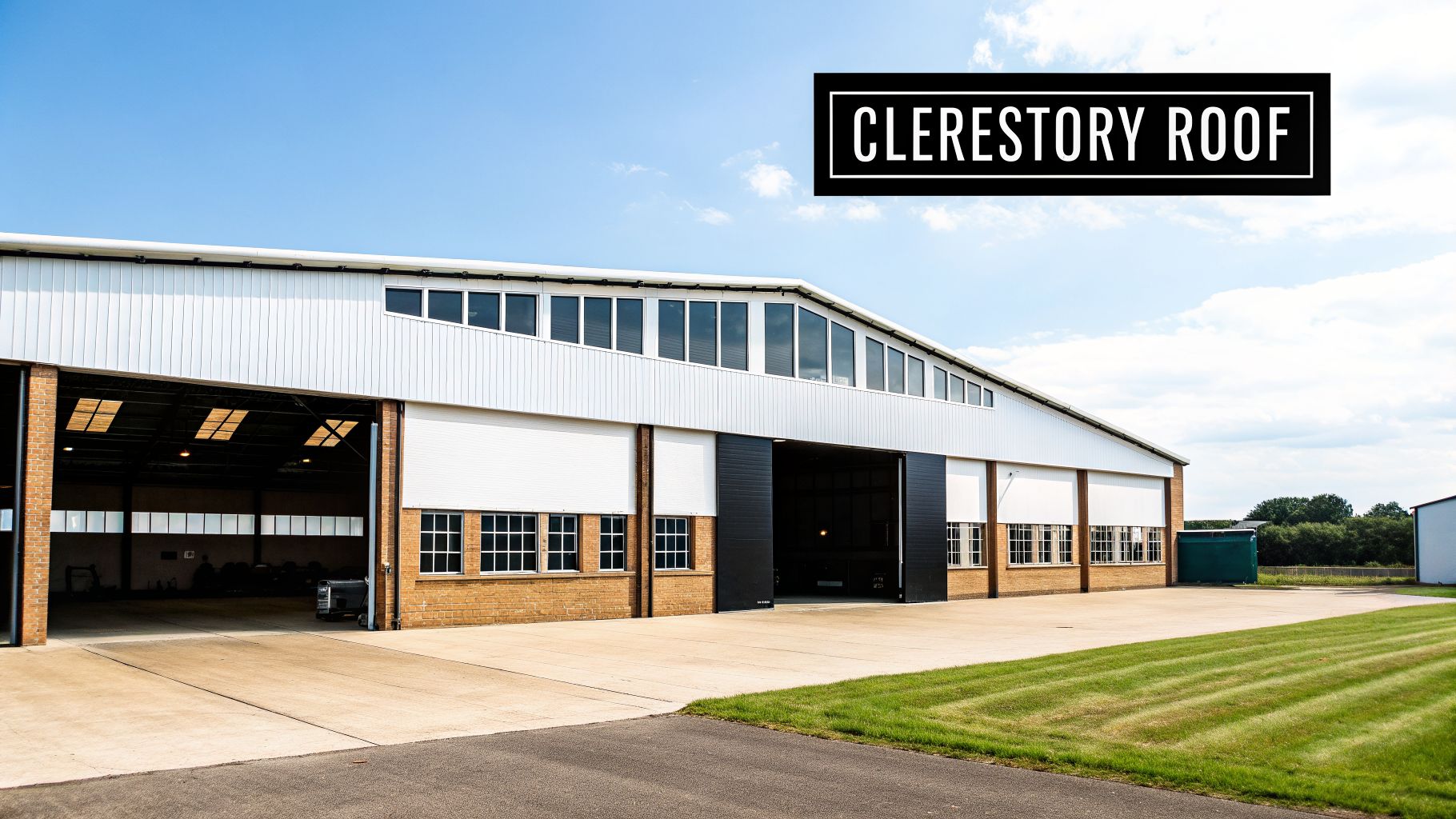
This design is highly sought after for modern agricultural buildings, equestrian facilities, and workshops where light and air quality are paramount. In [City] and surrounding areas where barns and studios are common, the clerestory roof provides an ideal solution for creating a comfortable and productive environment year-round. It effectively combines the water-shedding capabilities of a gabled roof with the daylighting benefits of strategically placed vertical windows.
Best Use Cases & Practical Tips
The clerestory roof is the perfect choice for structures that serve as more than just basic storage, such as artist studios, large workshops, or even contemporary poultry and livestock buildings.
- Window Functionality: To get the most out of the design, install operable windows in the monitor section. This allows for excellent control over airflow, letting you vent hot air in the summer and seal the space during colder months.
- Weatherproofing Focus: The intersections where the monitor walls meet the main roof planes are critical points for potential leaks. Insist on high-quality flashing and professional-grade sealants to ensure a durable, watertight structure.
- Temperature Regulation: For workshops or studios where temperature consistency matters, consider using low-emissivity (low-E) glazing for the monitor windows. This special coating helps reflect heat, keeping the interior cooler in the summer and warmer in the winter.
Foundation Insight: The larger, more complex structure of a clerestory shed demands a robust and perfectly level foundation. A professionally installed base for the storage shed, such as a reinforced concrete pad, is essential to support the additional weight and intricate framing. The foundation must provide unwavering stability to prevent shifting that could compromise the numerous joints and seals in the roof. If you're searching for "garage foundation contractors near me" in the [City, State] area, ensure your contractor understands the specific loads of a monitor design.
Shed Roof Types: 7-Point Comparison
| Roof Type | Implementation Complexity | Resource Requirements | Expected Outcomes | Ideal Use Cases | Key Advantages |
|---|---|---|---|---|---|
| Single Slope (Lean-To) Roof | Very low — simple single-plane framing | Minimal materials and labor; basic flashing and gutters | Economical, quick drainage to one side; limited snow/wind performance | Small storage sheds, lean-to additions, budget projects | Cheapest and fastest to build; low waste |
| Gable (A-Frame) Roof | Low–moderate — standard rafters/trusses and ridge | Moderate materials; skilled carpentry for ridge and vents | Good water/snow shedding; increased headroom and attic potential | General residential sheds, garages, versatile applications | Versatile, attractive, proven structural performance |
| Gambrel Roof | High — multi-slope per side, complex joints | High materials and experienced framers; extensive flashing | Maximizes interior/loft space; distinctive barn profile | Large barns, storage-heavy sheds, loft conversions | Greatest usable upper-level volume; strong storage capacity |
| Hip Roof | High — hips and valleys require precise framing | High materials and expert labor; more flashing/waterproofing | Superior wind and weather resistance; uniform eaves protection | Coastal/storm-resistant sheds, high-end residential builds | Excellent all-around protection and premium appearance |
| Saltbox Roof | Moderate–high — asymmetrical slopes and valleys | Moderate–high materials; specialized carpentry for asymmetry | Asymmetrical interior volume; historic aesthetic; complex flashing | Colonial restorations, sloped lots, custom architectural sheds | Distinctive historic look; works well on uneven sites |
| Mansard Roof | Very high — dual slopes on all four sides, intricate bracing | Very high materials, engineering, expert framing and maintenance | Maximizes attic/loft floor area; high cost and maintenance needs | Luxury guest houses, high-end conversions, estate buildings | Maximizes usable upper-level space; elegant architecture |
| Clerestory (Monitor) Roof | High — raised monitor, glazing and junction detailing | High materials (windows/glazing), careful flashing and engineering | Superior daylighting and passive ventilation; open interior sight lines | Workshops, studios, agricultural buildings needing light/vent | Strong natural light and ventilation; modern, functional interior |
Build with Confidence: Partner with [City]'s Foundation Experts
Selecting the right roof is a significant step in designing your new shed, barn, or garage. As we've explored, the choice between various shed roof types—from the classic Gable to the spacious Gambrel—directly impacts your structure's functionality, aesthetic appeal, and long-term durability against the [State] climate. Each design offers unique benefits, whether you need maximum overhead storage, better water and snow shedding, or a specific architectural look to match your home.
However, the most beautifully designed roof and expertly constructed building will fail if its base is not secure. The ultimate success of your project rests squarely on the ground it's built upon. As your trusted local concrete contractors, we know this is where the true work begins and it’s the most critical factor in protecting your investment.
Key Insight: The longevity of any shed, regardless of its roof design, is determined by the quality of its foundation. A poor foundation leads to settling, warping, and structural failure, rendering even the best roof ineffective.
From Blueprint to Build: The Foundational Connection
The specific roof you choose has direct implications for the type of foundation you'll need. A heavy, complex structure like a two-story Gambrel barn requires a more robust base, such as a cement foundation for a garage, compared to the simpler gravel shed foundation needed for a small lean-to shed. Understanding these connections is vital.
- Weight Distribution: Heavier roofs, especially those on a large frame, demand stronger garage footings and foundations to prevent sinking and shifting.
- Drainage Strategy: Your roof's slope dictates how water is directed. Your foundation plan must account for this runoff to prevent erosion. A properly graded gravel pad or a concrete slab with correct drainage is essential.
- Project Scale: Larger buildings with intricate rooflines like a Mansard or Clerestory need a precisely engineered concrete foundation, often requiring professional excavation near me and formwork.
For homeowners and businesses in [City, State] and beyond, navigating these requirements can be complex. This is why partnering with specialized "gravel shed foundation contractors near me" is not a luxury; it's a necessity for a successful build. At [Firm Foundations], we are the experts in creating the solid ground your project needs. We understand that a base for a storage shed is more than just a patch of dirt; it’s the engineered start that ensures decades of stability.
Whether you’re finalizing plans for one of the many shed roof types or need an expert to prepare your site, the team at Firm Foundations is ready to help our [City] neighbors. We build the stable, level, and durable pads and foundations that protect your investment from the ground up. Contact us today for a free quote and start your project with the confidence that comes from a solid base.