
Shed Electrical Wiring: Safe Installs in PA, NJ, MD, DE
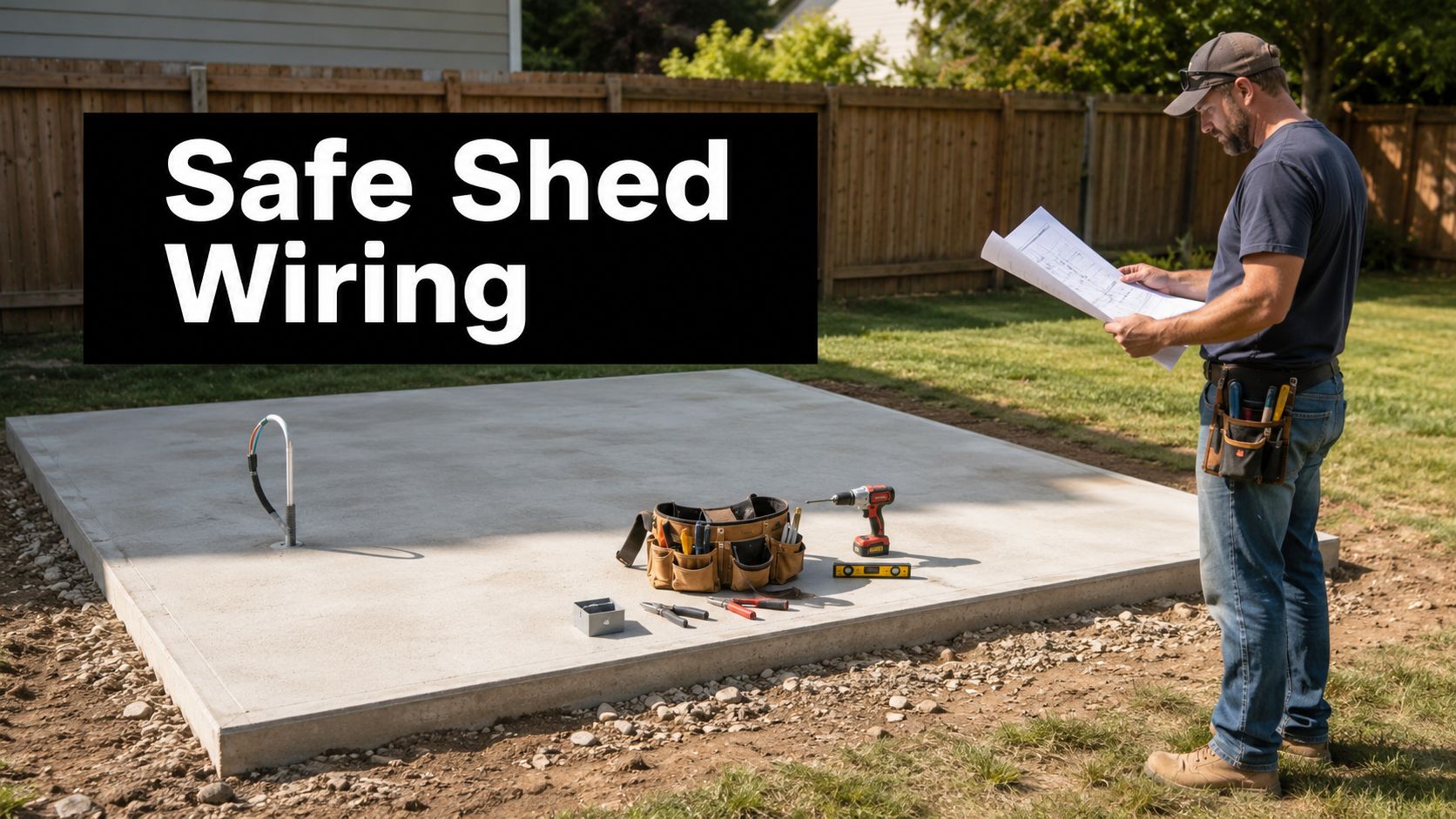
You've picked the shed style, the size, and the spot in the yard. Then the practical questions show up. Where will the lights go? Can it handle a miter saw, a freezer, or a mini-split? Will you need a subpanel? And the big one. How do you get power there without tearing up the yard you just finished grading?
That's where most shed projects either stay simple and organized, or start collecting avoidable problems. The electrical side of a detached shed doesn't begin when the electrician arrives. It starts when the pad, slab, trench path, and entry point are still on paper. If you wait until the gravel is compacted or the concrete is cured, every electrical decision gets harder.
Homeowners across Pennsylvania, Maryland, Delaware, and New Jersey run into the same issue. They plan the building first and the power second. For a basic storage shed, that might be workable. For a workshop, office, gym, or hobby space, it usually means rework. Good shed electrical wiring depends on the route, the depth, the grounding plan, and the way the utility line enters the structure. Those details connect directly to excavation and foundation layout.
Powering Your Dream Shed Starts With a Plan
A typical backyard project starts with excitement. A homeowner wants a clean base for storage shed use, maybe a compact barn shed, maybe a bigger building that can double as a work area. They compare shed foundations near me, look at gravel versus concrete, and focus on where the doors and windows should face. Then they remember they'll want light, outlets, maybe a heater, maybe a computer.
That's the point where the job becomes more than just setting a structure on level ground.
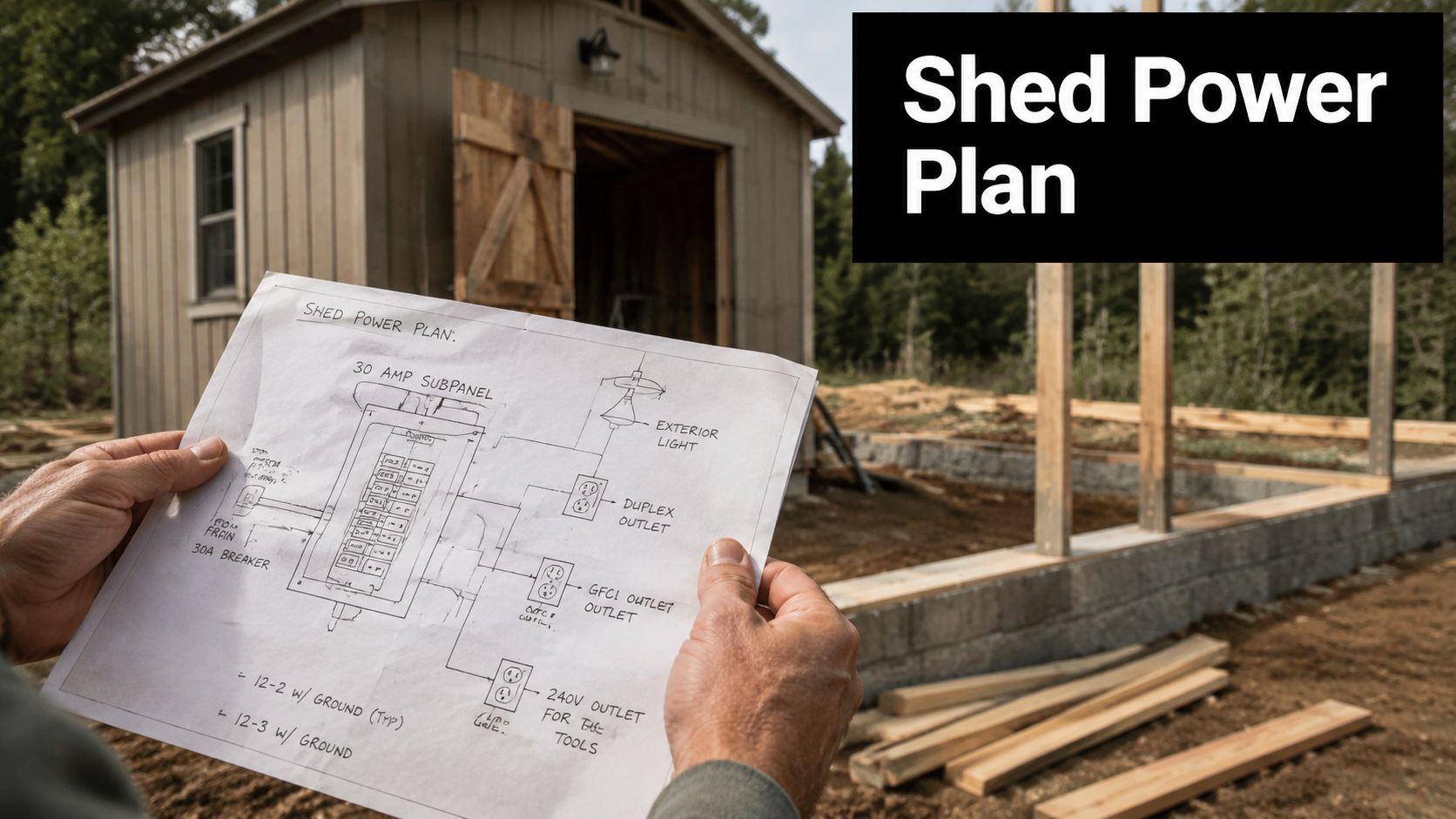
The shed pad and the power plan belong together
For detached buildings, the smartest projects treat the foundation and power route as one plan. If the shed will need electricity, the pad location has to work with the house panel, trench path, drainage, and where conduit will rise into the building. That matters whether you're building a simple 10×10 storage shed, a home office, or a larger outbuilding that starts to overlap with garage footings and foundations planning.
A foundation contractor sees problems early that homeowners often don't. A trench route that crosses a drainage swale. A slab edge that leaves no clean service entry. A conduit run that interferes with future patio work. A gravel pad that needs a protected sleeve before the shed arrives.
Good shed electrical wiring is easier when the conduit path is decided before the first bucket of stone or the first truck of concrete shows up.
Real-world planning avoids expensive rework
The homeowners who end up happiest usually aren't the ones with the most elaborate setup. They're the ones who made early decisions. They knew whether the shed was staying storage only, or becoming a workspace with real electrical demand. They picked a foundation that fit the use. They left room for the service entrance. They avoided cutting through a finished slab later.
That's especially important in local markets across PA, NJ, MD, and DE where homeowners often search for shed foundations contractors near me, gravel shed foundation contractors near me, garage foundation contractors near me, and concrete foundations because they want one coordinated job instead of several disconnected ones.
A well-built shed starts from the ground up. If power is part of the plan, the base needs to support that plan from day one.
Your Project Blueprint Planning and Local Permits
Before any excavation starts, write down what the shed will do. Not the dream version five years from now. The version you expect to use in the first year. That one decision shapes the electrical plan, the service route, and even whether a shed foundation gravel base or concrete slab makes more sense.
Start with actual power needs
A storage shed with one light and a couple of receptacles has one kind of electrical plan. A workshop with corded tools has another. A detached office with stable lighting, device charging, and climate control needs a more deliberate layout. If the building may function like a small studio, gym, or hobby room later, leave room for expansion now.
Use a simple planning list:
- List the fixed items first. Think interior lights, exterior lights, outlets, garage-door-style openers, ventilation fans, or a mini-split.
- Add tool or appliance use. Saws, air compressors, freezers, treadmills, and workbench equipment change the load and breaker layout.
- Think about simultaneous use. A shed that runs one thing at a time is very different from one that powers lights, tools, and heating together.
- Plan the wall layout early. Receptacle placement affects where conduit should enter and where the panel belongs.
Permits matter in Pennsylvania
Permits aren't just paperwork. They're a checkpoint that helps catch bad routing, wrong materials, and unsafe assumptions before they're buried under stone or concrete.
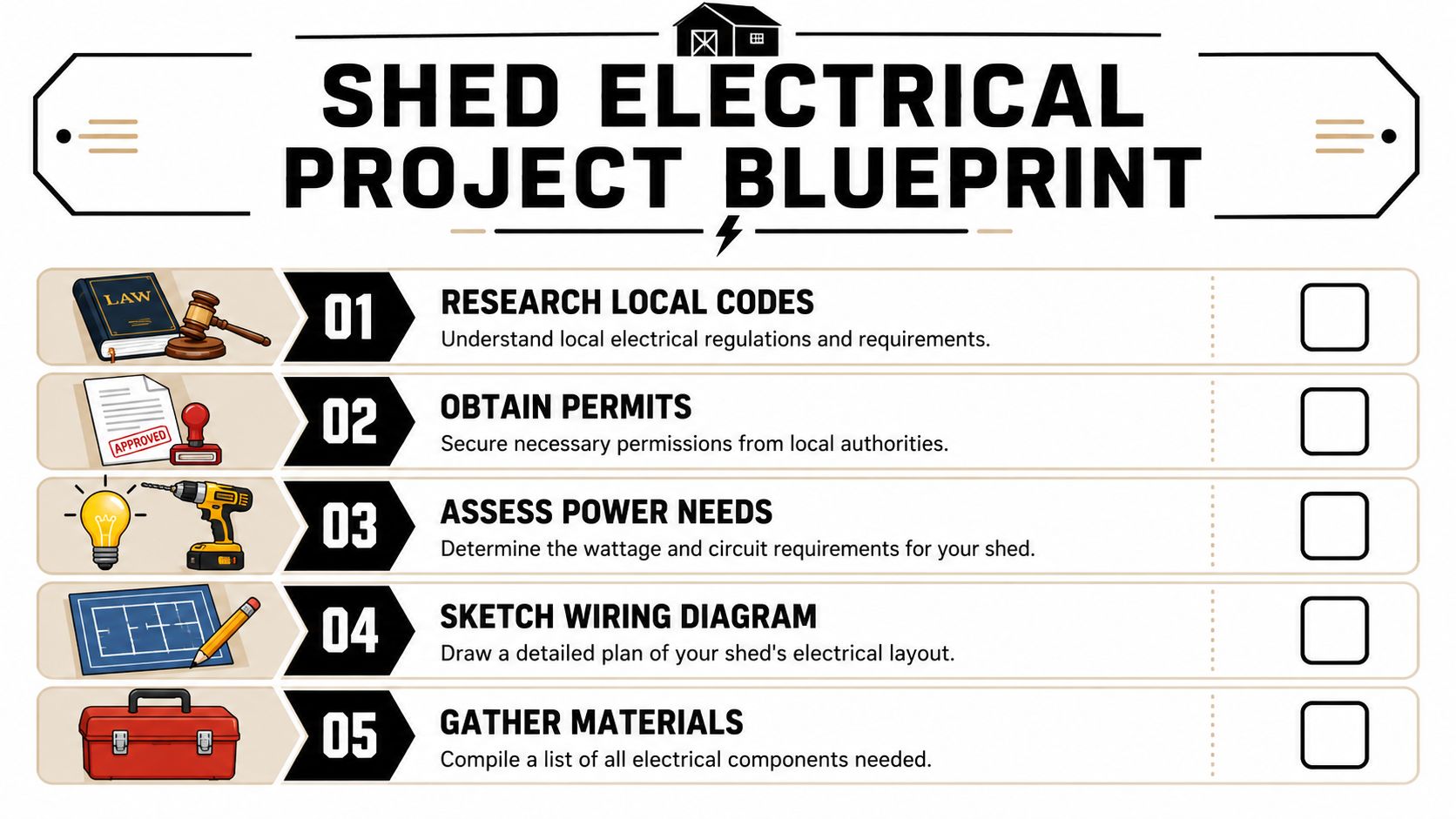
In Pennsylvania, detached sheds under 1,000 square feet are exempt from a PA Uniform Construction Code building permit if they're used solely for storage and contain no electrical, plumbing, or heating systems. Once the shed includes electrical wiring, separate trade permits for electrical work are required regardless of size, and a building permit may also be required, according to Pennsylvania shed permit guidance.
That one detail changes a lot. Homeowners often hear that a small shed “doesn't need a permit,” but that usually applies only to a storage-only structure. Once power enters the picture, the job changes.
For a broader look at siting and setup issues before construction starts, it also helps to review building requirements for a shed.
Practical rule: If the shed will have lights, outlets, HVAC, or any future electrical upgrade, treat permit research as part of the site plan, not a last-minute task.
Tie the blueprint to the foundation layout
Many projects save time when the electrical route is settled before the pad is installed, by allowing the crew to leave a clean path for conduit, preserve drainage, and avoid later demolition. That's true for a gazebo foundation, a shed foundation, and larger cement foundations for garage projects alike.
The foundation isn't separate from the wiring plan. It's the physical framework that makes safe access possible.
Choosing Your Path Overhead vs Underground Wiring
A common shed mistake starts before any wire is pulled. The pad gets built, the shed goes up, and only then does someone ask how power is supposed to reach it. At that point, the cheapest route is rarely the best route, and the cleanest route often costs more because finished work has to be cut, trenched, or patched.
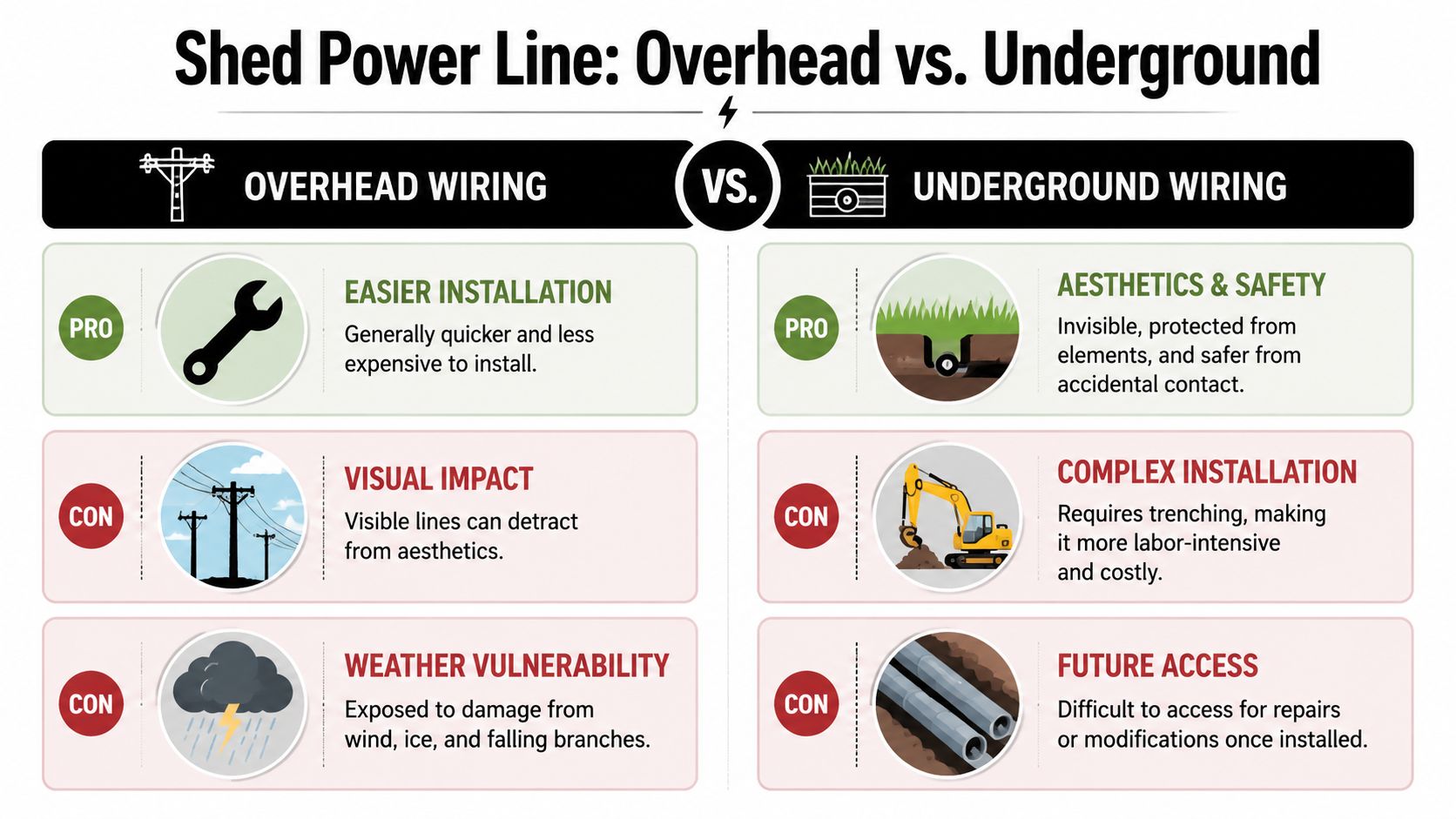
The choice isn't just overhead versus underground. It is whether the electrical path is being planned with the foundation layout or forced in afterward. That decision affects cost, appearance, drainage, and how much of the yard gets disturbed later.
A side-by-side look at the trade-offs
| Option | What works well | What tends to cause regret |
|---|---|---|
| Overhead wiring | Faster in some layouts, less excavation, easier to inspect visually | Visible lines, more exposure to weather and tree damage, less appealing near a finished backyard |
| Underground wiring | Cleaner appearance, protected route, better fit for permanent-looking sheds and finished lots | Requires trenching, conduit planning, and coordination before the foundation is complete |
Overhead service still has a place. It can make sense where the shed is far from hardscape, the run is simple, and appearance matters less than first cost. For a backyard workshop, office, or finished storage shed, underground service is usually the route homeowners are happier with years later.
That is especially true when the shed is being built to look like part of the property, not a temporary add-on. If you are already investing in grading, drainage, and base work, exposed conductors overhead can work against the finished result.
Underground wiring works best when it is tied to the pad layout
Foundation planning gives the electrical work a clean path. If Firm Foundations knows where the shed wall, panel location, and service entry will land, the crew can leave room for conduit, avoid conflict with thickened edges, and protect drainage patterns instead of having them disturbed later.
On a slab project, that may mean setting a sleeve location before concrete is placed. On a gravel or pier-supported build, it often means preserving the trench route before final compaction and shed placement. Homeowners researching a concrete pad for shed installation usually save time and repair costs by settling that route before the pour, not after the shed is already sitting in place.
I have seen the opposite sequence plenty of times. A homeowner finishes the pad, adds a walkway, spreads stone, and then learns the electrician needs to trench straight through the completed work. The wiring still gets done, but the project costs more and never looks as clean as it would have with early coordination.
Later in the process, it helps to see the general difference in route choices and layout options:
Why trenching details matter
Underground service looks straightforward from the surface, but the code details are strict. The National Electrical Code sets minimum cover requirements for wiring methods and locations, and those depths vary by wiring type, conduit type, and whether the circuit has GFCI protection, as shown in NEC Table 300.5 summarized by the Copper Development Association.
Wire selection matters too. Outdoor shed feeders often require conductors and raceways rated for wet locations, even inside underground conduit, because moisture gets in. Miss those details and the job can fail inspection or create a repair problem that is buried under your yard.
That is why route planning should start with the foundation contractor and continue with the electrician. Firm Foundations can help set the project up so the electrical line has a protected path from day one, instead of becoming an expensive adjustment after the shed and pad are already finished.
Calculating Your Shed's Electrical Load
The biggest mistake in shed electrical wiring isn't always unsafe wire. Sometimes it's undersizing the whole setup for how the building will be used. A shed that only stores rakes and bins doesn't need the same electrical layout as a backyard office or woodworking space.
Think in use cases, not formulas
Homeowners don't need to become electricians to understand load planning. They just need to describe the actual use accurately.
A simple storage shed may only need a few lights and convenience outlets. That kind of setup is straightforward. A workshop is different because tools cycle on and off, often with higher draw at startup. A shed used as an office or gym is different again because it may need reliable comfort and several dedicated circuits instead of one all-purpose line.
One recent video source notes that 30% of shed owners now convert spaces into usable offices or gyms, and that those spaces often need multi-circuit subpanels with weatherproof boxes and labeled breakers. The same source says 90% of existing wiring guides still focus mostly on basic lights and outlets, which is why many homeowners underestimate what their “simple shed” will become.
A practical way to size the plan
Use these questions before anyone chooses breaker sizes or panel locations:
Will the shed stay storage only?
If yes, the layout can stay simple and compact.Will tools run one at a time or together?
A single saw used occasionally is different from a setup with dust collection, task lighting, and chargers all operating in the same work session.Will the space need comfort equipment?
Heating, cooling, and dehumidification change the design fast.Will you want future circuits?
It's far easier to plan for expansion before the service is installed than after walls are finished.
Why a subpanel often makes sense
Detached sheds that serve as working spaces often benefit from a subpanel because it gives the building its own organized distribution point. That means clearer breaker labeling, easier shutoff, and room for more than one circuit. It also keeps the electrical system easier to troubleshoot when the shed becomes more than a single-light outbuilding.
For homeowners comparing a small 4×8 shed with foundation pricing against a larger custom setup, the shed's intended use matters more than its footprint. A modest shed used as an office may need a more thoughtful electrical layout than a larger storage-only building.
If the shed will hold a desk, treadmill, compressor, mini fridge, or mini-split, don't plan it like a garden closet.
Match the load to the foundation choice
Load planning also influences the base. A simple prefab storage shed often fits well on gravel. A heavier-use outbuilding with fixed equipment, frequent occupancy, or a finished interior may justify a slab or reinforced approach, similar to what homeowners expect from foundation builds, garage footings and foundations, or a more substantial concrete foundation for garage layout.
The electrical plan and the foundation choice should support the same end use. If one is designed for light storage and the other is expected to support a full workshop, the project starts fighting itself.
Safe Wiring Practices for a Protected Workspace
A lot of shed wiring problems start before any wire is pulled. The slab is poured or the gravel pad is finished, then someone realizes the conduit path crosses the thickened edge, the panel location fights the door swing, or the feeder has to come in through a spot that now needs to be cored. I see that kind of rework all the time. It costs money, slows the job, and can leave a clean-looking shed with avoidable electrical compromises.
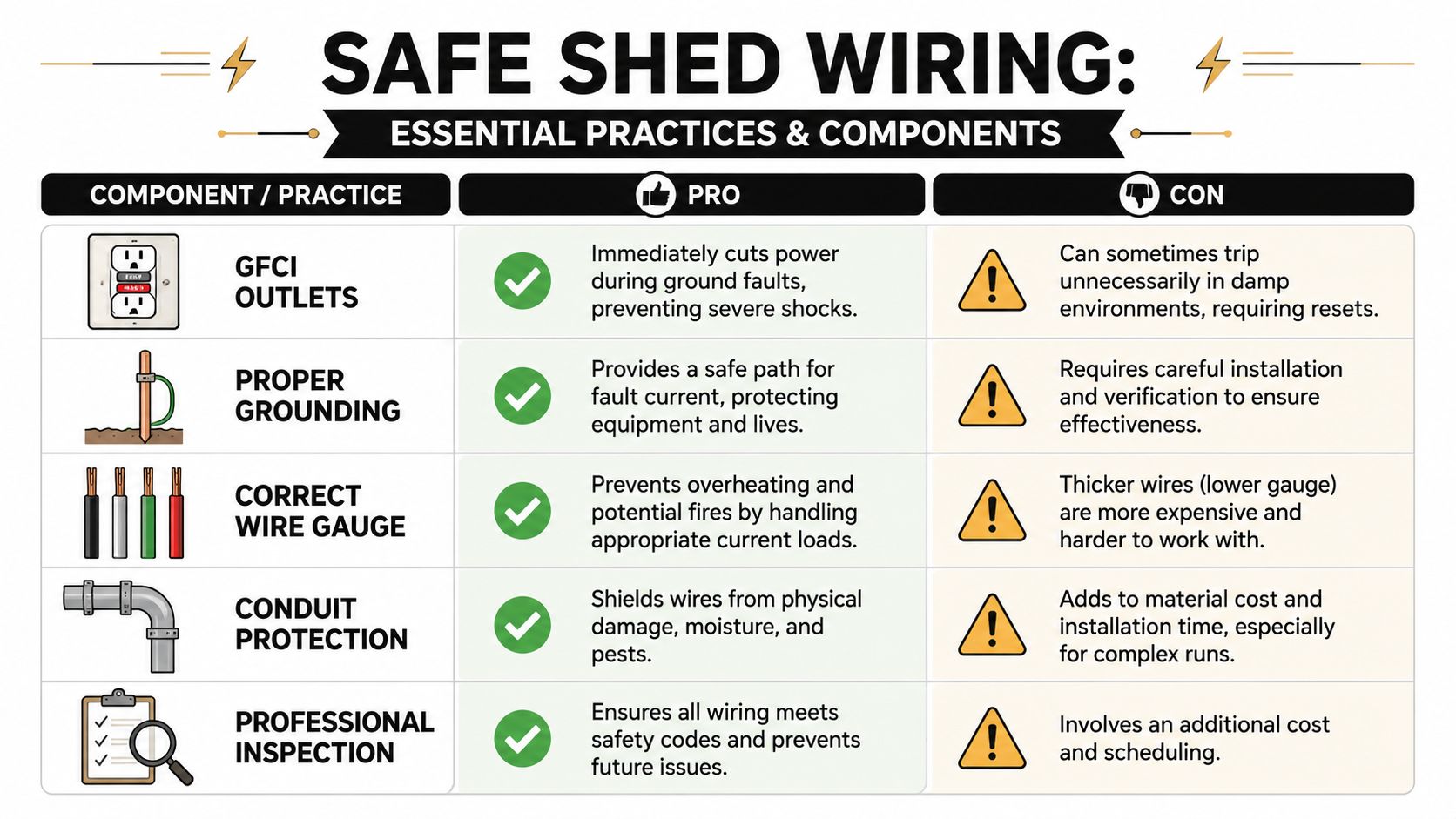
Use the right materials for the environment
A shed is a harsher space than a finished room inside the house. Moisture, dust, temperature swings, and occasional damp floors change the wiring method, the box selection, and the protection required at the receptacles.
According to electrical safety guidance covering NEC-related shed requirements, receptacles in outdoor or wet environments like sheds need GFCI protection. That same source also points out that electrical injuries and fatalities still happen every year. The practical takeaway is simple. Code rules in a shed are about preventing shock, fire, and hidden damage in a building that sees rougher conditions than a bedroom or hallway.
Material choice should reflect that reality:
- Use wiring methods approved for damp or exposed conditions. Indoor-only materials cause problems fast in a detached structure.
- Protect conductors where they can be bumped, cut, or exposed to moisture. Conduit is part of the protection system, not an afterthought.
- Match wire size to the breaker and the actual run. Long feeder runs and undersized conductors create heat and voltage drop issues.
- Use boxes, fittings, and devices suited to the location. A shed workspace gets more abuse than a closet light circuit.
- Install GFCI protection where required. That protects people using tools, chargers, and appliances on a concrete or damp floor.
Grounding and panel details need to be right the first time
Detached buildings deserve careful grounding and feeder work. This is one of the areas where a job can look neat and still be wrong behind the walls or below grade.
Southwire's guide to wiring a shed or detached structure walks through the need to choose conductors and equipment based on the installation method and the detached building setup. That matters because a shed with a feeder, a disconnect or subpanel, and branch circuits has to be assembled as a system. Grounding, conductor identification, protection methods, and terminations all have to agree with each other.
This is also where early foundation coordination pays off. If Firm Foundations knows where the service will enter, we can place sleeves, protect conduit stub-ups, and keep the electrical path clear of footings, anchors, and slab edges from the beginning. That avoids field fixes later, and it gives the electrician a cleaner, safer installation to work with.
What a good plan sounds like
Homeowners do not need to memorize code language, but you should hear clear answers to basic safety questions.
- Where will the conduit come up through or beside the foundation?
- How will the feeder be protected from the house to the shed?
- What grounding method is planned for the detached building?
- Will the panel or disconnect stay accessible after the shed is finished?
- Which receptacles and circuits will have GFCI protection?
Vague answers are a warning sign. Good contractors can explain the route, the protection method, and the grounding approach in plain language.
For a broader refresher on understanding electrical safety for homes, that resource gives useful background on cable sizing and protective devices before detached-building wiring begins.
Safe shed wiring comes from coordination as much as hardware. When the foundation crew and electrician plan the conduit path, service entry, and panel location together from day one, the finished workspace is easier to inspect, easier to use, and far less likely to need expensive corrections later.
Budgeting Your Project and Avoiding Costly Mistakes
By the time homeowners price a shed, site work, and delivery, the electrical portion can feel like one more line item to squeeze. That's usually where the expensive mistakes start. The cheapest path on paper often becomes the most expensive path once failed inspections, trench rework, damaged pads, or replacement materials get added back in.
What the electrical portion usually costs
Angi's cost guide for running power to a detached structure says the average cost to run electricity to a shed is $2,500, with a typical range of $1,000 to $3,800. The same source notes that trenching alone can add $5 to $12 per linear foot, and that distance from the main panel is the single biggest cost driver.
That tracks with what homeowners experience in the field. Short, direct runs are simpler. Long routes across developed yards, driveways, or obstacle-heavy sites cost more because every foot affects labor, materials, and layout.
The same source also notes that a 200-foot run can push costs to $2,000 to $5,000, and that the typical U.S. average varies largely by how far the shed sits from the main power source.
The mistakes that cost the most
These are the issues that usually hit budgets hardest:
- Late electrical planning. If the shed pad is already in and no conduit path was planned, the yard may need to be reopened.
- Shallow or poorly located trenching. A trench that doesn't meet requirements can force full rework.
- Wrong materials. Using indoor-rated products outdoors or mismatching wire and conduit leads to failed inspections and replacement labor.
- Undersized service. A shed that keeps tripping breakers often needs redesign, not just a quick fix.
- No permit coordination. Delays and corrections usually cost more than doing the paperwork correctly from the start.
Why the smartest first call often isn't the electrician
That surprises some homeowners, but it makes sense on detached-structure projects. Before the wiring can be right, the location, grade, access path, trench route, and foundation type need to be settled. If the shed sits on the wrong spot or the slab leaves no clean service approach, even excellent electrical work becomes harder and more expensive.
This matters whether you're comparing garage foundation contractors near me, excavation near me, concrete contractors, driveway contractors near me, or looking for a straightforward base for storage shed installation. The sequence matters as much as the workmanship.
A well-run shed project starts with the ground conditions, the pad, and the access plan. Then the electrical work can be installed cleanly, safely, and without undoing finished work.
If you're planning a shed, garage, gazebo, or other backyard structure in Pennsylvania, Maryland, Delaware, or New Jersey, start with the part that affects every step after it. Firm Foundations builds gravel pads, concrete slabs, and excavation-ready sites that make shed electrical wiring easier to plan from day one. If you need a durable shed pad, concrete foundations, a gazebo foundation, or support from a team that understands how conduit routes, grading, drainage, and structure placement all work together, reach out for a free quote. It's the cleanest way to avoid rework and get the whole project built right from the ground up.