
Expert Shed Foundation Contractors in PA and NJ
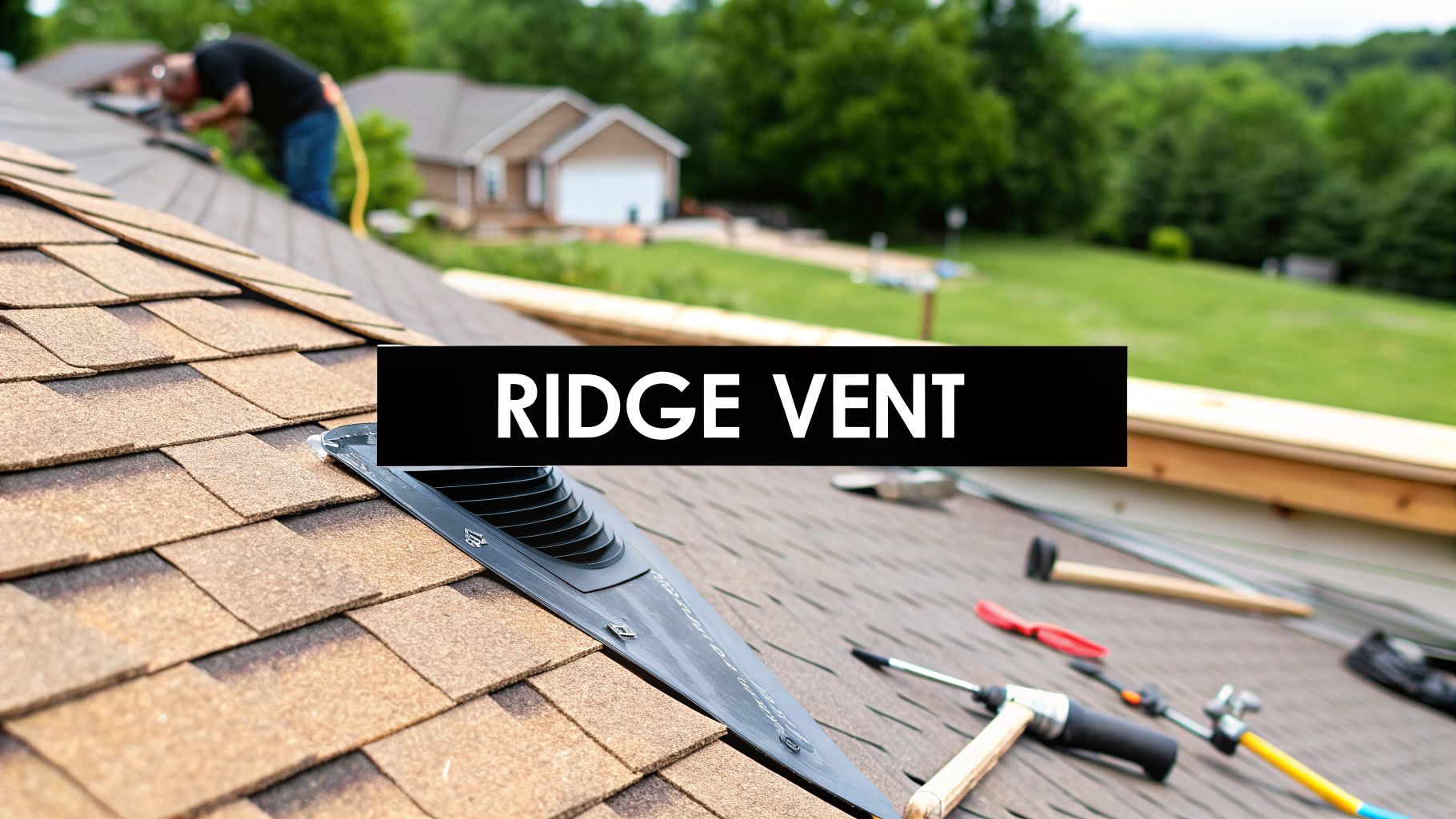
A sturdy shed foundation is where every great shed starts, but what protects it from the top down? A ridge vent for shed is more than just an add-on; it's a vital part of a complete system designed to protect your investment. By creating a channel for continuous airflow, it lets hot, moist air escape from the highest point of your roof. For homeowners in Pennsylvania and New Jersey, it’s one of the simplest yet most effective ways to head off moisture damage, extreme heat, and the premature aging of your entire structure. At Firm Foundations, we believe a solid base deserves a well-protected building.
Why a Ridge Vent Is Your Shed's Best Defense

It’s easy to overlook ventilation, but think about what’s happening inside a sealed shed during a humid Pennsylvania summer or a damp New Jersey winter. Trapped heat and moisture are silent destroyers. These issues can lead to warped wood, peeling paint, and the growth of destructive mold and mildew, common problems we help local homeowners solve.
This isn’t just about comfort—it's about actively stopping costly damage that can dramatically shorten your shed's lifespan. A shed, after all, is only as good as the shed foundation it rests on. As your local shed foundations contractors near me, Firm Foundations knows that proper ventilation is a critical piece of long-term care for any structure we help build. Without proper airflow, a shed can quickly become a breeding ground for problems that compromise its structural integrity and the valuable items stored inside.
Shed Problems Caused By Poor Ventilation
| Problem | Symptom | Ridge Vent Solution |
|---|---|---|
| Moisture Buildup | Condensation on walls, ceiling, and tools; musty odors. | Allows warm, moist air to escape before it condenses. |
| Mold & Mildew Growth | Black or green spots on surfaces; health hazards. | Keeps the interior dry, removing the conditions mold needs to thrive. |
| Heat Entrapment | Extreme temperatures inside, making the space unusable. | Vents hot air from the peak, drawing in cooler air from below. |
| Structural Damage | Warped wood, delaminating plywood, and peeling paint. | Reduces moisture that causes materials to swell, warp, and degrade. |
| Pest Infestations | Damp conditions attract insects and other pests. | Creates a drier, less hospitable environment for pests. |
A ridge vent, when paired with adequate intake vents, effectively mitigates these common issues by establishing a healthy, balanced air exchange.
The Science Behind Shed Ventilation
A ridge vent for shed operates on a natural principle known as the "stack effect." As the sun warms your shed, the air inside heats up, becomes less dense, and naturally rises to the highest point—the roof peak. The ridge vent provides an exit path right where that hot air collects.
As this warm air flows out, it creates negative pressure inside the shed. This pressure pulls in cooler, drier air from intake vents located lower down, such as soffit or gable vents. The result is a constant, passive cycle of air exchange that works around the clock without needing any electricity.
A common misconception is that sheds are "just for storage" and don't need the same protection as a house. But the tools, equipment, and materials you store are just as vulnerable to moisture damage as the structure itself.
The Local Climate Challenge in PA and NJ
Ridge vents are a cornerstone of effective shed roofing, particularly in regions like Pennsylvania, Maryland, Delaware, and New Jersey. Our humid summers and cold, damp winters demand robust moisture control. In fact, studies show that proper ridge venting can extend a shed's lifespan by up to 50% through balanced airflow, cutting summer heat buildup by 30-40% and minimizing winter ice dams. You can find more data on how ventilation market trends impact building longevity.
At Firm Foundations, we understand that a shed built on a solid gravel shed foundation or concrete foundation deserves to last for decades. Integrating a ridge vent ensures the structure you place on our expertly built base is protected from the top down. As your trusted partner for shed foundations near me, we know this small addition makes a huge difference in the long-term integrity and usability of your shed.
Is a Ridge Vent What Your Shed Really Needs?
While a ridge vent is a fantastic tool for keeping your shed healthy, it isn't a one-size-fits-all solution. Before you start cutting into your roof, it's worth taking a moment to figure out if it's the right move for your specific shed. The choice hinges on a few things: your shed's design, the local climate, and what you're actually doing inside it.
Here at Firm Foundations, we help homeowners across Pennsylvania and New Jersey with total site planning. That means we don't just build a rock-solid gravel shed foundation or concrete slab; we also advise on the details that make the whole project successful. A well-ventilated shed sitting on a proper base—whether it's for a shed, garage, or gazebo foundation—is a structure that's truly built to last.
Your Roof's Pitch is a Big Deal
The effectiveness of a ridge vent is directly linked to your roof's pitch—basically, how steep it is. Roofs with a steeper angle, typically 4/12 or greater, are perfect candidates. This angle creates a powerful "stack effect," which is just a fancy way of saying hot air naturally picks up speed as it rises to the peak, making it easy for the vent to pull it out.
On the other hand, sheds with very low-pitched or nearly flat roofs just don't get enough natural airflow going. In those situations, a ridge vent can’t do its job properly, and you’d be better off looking at other ventilation options.
You Need Intake Vents, No Exceptions
A ridge vent is only half of the equation. It's an exhaust vent, meaning its job is to let hot, stale air out. For that to happen, you need a way for cool, fresh air to get in. That’s where intake vents come in.
Take a walk around your shed and look for existing vents. They’re usually in a few common spots:
- Soffit Vents: These are the small, screened vents you see on the underside of your roof's overhang. They're the most common and generally the most effective type of intake vent.
- Gable Vents: You might find these louvered vents installed high up on the gable walls of your shed, right near the peak.
- In-Wall Vents: Some sheds have smaller vents installed right into the walls, usually closer to the floor.
If your shed has zero intake vents, installing a ridge vent by itself won't accomplish much. You have to create a balanced system to get that continuous airflow moving, which is what actually carries heat and moisture out of your shed.
How Do You Plan to Use the Shed?
The way you use your shed makes a huge difference in its ventilation needs.
For a simple 10×10 storage shed that just holds a lawnmower and some garden tools, basic ventilation might be enough. But if you're planning to use that space as a workshop, an art studio, or for storing sensitive things like paint and chemicals, a ridge vent becomes critical for keeping the environment stable and safe.
In the end, deciding on a ridge vent is about creating a complete ventilation system that works. By looking at your roof, checking your intake options, and thinking about how you'll use the space, you can make the right call. Proper planning—from the base for storage shed all the way to the peak of the roof—is what makes an outbuilding durable and functional.
If you're still in the planning stages, our guide on the costs of storage sheds can help you budget for the entire project.
Your Guide To Installing A Shed Ridge Vent
Alright, let's get our hands dirty. Installing a ridge vent for a shed is a totally manageable project, but you’ve got to be precise if you want it to be weatherproof and effective. This isn't just some generic tutorial; it’s a real-world walkthrough based on what we’ve seen work (and not work) for homeowners across Pennsylvania and New Jersey.
Think of it as having one of our expert team from Firm Foundations right there with you. As your trusted garage foundation contractors near me, we’ll give you the practical tips that make sure the job gets done right the first time, preventing leaks and getting that air moving.
Gathering Your Tools And Prioritizing Safety
Before you even think about getting on that roof, let's get your gear in order. Having everything you need laid out and ready to go makes the whole process smoother and, more importantly, safer. You’re working at the highest point of your shed, so safety absolutely comes first.
Here’s a quick list of what you’ll probably need:
- Safety First: A good, sturdy ladder, safety glasses, and work gloves. These are non-negotiable.
- Measuring & Marking: A tape measure, a chalk line, and a pencil are your best friends for getting those cuts just right.
- Cutting Tools: You'll need a circular saw with the blade depth set correctly. A simple utility knife is also handy for trimming shingles.
- Fastening & Sealing: Grab a power drill, galvanized roofing nails or screws, and a caulking gun loaded with high-quality roofing cement.
Always, always make sure your ladder is on solid, level ground. If you can, have a buddy on the ground to spot you. And never, ever work on a roof that’s wet or icy.
This flowchart breaks down the key things to consider—your roof's pitch, those all-important intake vents, and what you’re using the shed for.

As you can see, all these pieces have to work together. If one part of the system is off, it can throw off the effectiveness of the entire setup.
Measuring And Cutting The Ridge Opening
This is where your accuracy really counts. The goal is simple: create an opening at the very peak of the roof for hot air to escape, but do it without messing with the shed's structural integrity.
First things first, you need to get those old ridge cap shingles out of the way. Gently pry them up with a flat bar, doing your best not to tear up the shingles underneath. Once the peak is clear, it's time to mark your cutting lines right onto the roof sheathing.
A good rule of thumb is to create a 1-inch gap on each side of the ridge peak, giving you a 2-inch total opening. Snap a chalk line on both sides to give yourself a perfectly straight guide. Before you fire up that saw, set your blade depth to be just a hair deeper than the roof sheathing itself (usually 1/2" or 5/8"). This is critical—it stops you from accidentally slicing into the rafters or trusses below.
Expert Tip: Don't cut all the way to the edges of the roof. Start your cut a few inches in from one side and stop a few inches short on the other. This leaves you solid wood at the gable ends to secure the ridge vent's end caps, which is a crucial detail for preventing future leaks.
Aligning And Securing The Ridge Vent
With the slot cut, you're ready to put the vent in place. Lay the ridge vent section over the opening, making sure it’s centered and running straight. Most modern vents come with built-in filters and baffles designed to keep out rain, snow, and critters.
Now, secure the vent to the roof deck using whatever fasteners the manufacturer recommends. This is usually 2.5 to 3-inch galvanized roofing nails. Drive them through the pre-marked holes on the vent, making sure they bite through the sheathing and into the rafters or trusses for a rock-solid hold. Just work your way from one end to the other, keeping the vent laying flat and snug against the roof.
The market for this stuff is growing. We're seeing more sheds built on cement foundations for garage and shed projects in Delaware and Maryland getting ridge vents to meet that crucial 1:150 ventilation ratio, which has been shown to slash moisture problems by 80% since the IRC code updates back in 2000. It's just smart building.
Final Sealing For A Leak-Proof Finish
The last major step is covering the ridge vent with cap shingles that match the rest of your roof. This isn't just for looks; it's the final layer of protection against the weather. Nail the cap shingles right over the vent, making sure your nails go through both the shingle and the vent's flange, anchoring everything securely to the roof deck.
If you happen to have a metal roof on your shed, things are a bit different. You may want to check out some specific metal roofing installation considerations, especially if you’re working on a project in a place like Berks County, PA.
Finally, apply a nice, generous bead of roofing cement to seal the end caps and cover any exposed nail heads. This final seal is your absolute best defense against water getting in. It’s this kind of attention to detail—the same we apply to building every foundation—that ensures a project is built to last. To see the quality of work we stand behind, take a look at some of the premier shed builders in our network.
The Critical Role Of Intake Ventilation

Think of a ridge vent as just one half of a powerful partnership. For it to truly work its magic, your shed needs a way for fresh, cool air to get in. Without proper intake, a ridge vent for shed is like a chimney with no fireplace—it’s just a hole in the roof. You need that intake to create a current.
The whole system relies on a simple principle called the "stack effect." As hot, humid air naturally rises and escapes through the ridge vent, it creates a subtle vacuum. This vacuum then pulls cooler, drier air in from vents located lower down on the shed. It's this continuous, passive airflow that keeps your shed dry and stops that oppressive heat buildup.
Finding The Right Intake Vents For Your Shed
So, where does this intake air come from? You have a few solid options, and the best choice really depends on how your shed is built. As a company that builds durable concrete foundations and gravel shed foundations across PA and NJ, we see firsthand how a successful structure accounts for every detail, from the ground up to the peak of the roof.
Here are the most common intake vents we see:
- Soffit Vents: These are the gold standard. Tucked under the roof overhangs, they provide the perfect low-level airflow that works in tandem with a ridge vent.
- Gable Vents: You’ll find these placed high on the walls at either end of the shed. While they're not as efficient for intake as soffits, they are much, much better than nothing.
- In-Roof Vents: These are more specialized vents installed directly on the lower part of the roof itself, creating another pathway for fresh air to enter.
Calculating Your Ventilation Needs
A balanced system is absolutely key. The rule of thumb is to have an equal amount of intake (low) and exhaust (high) ventilation. For most sheds, you should be aiming for 1 square foot of net-free vent area for every 150 square feet of the shed's floor space. You then split that total number evenly between your ridge vent (exhaust) and your intake vents.
A common mistake we see is installing a great ridge vent but completely forgetting to add enough intake. This can actually create negative pressure that pulls rain or snow in through the vent, which completely defeats the purpose.
Making sure your shed has a complete and balanced ventilation system is just as crucial as the shed foundation it sits on. It’s all about seeing the big picture—something we at Firm Foundations are committed to, whether we're laying a perfect slab for a 4×8 shed with foundation or offering advice to protect the structure sitting on top of it.
Common Ridge Vent Installation Mistakes To Avoid
Learning from someone else's mistake is the cheapest lesson you’ll ever get in home improvement. When it comes to installing a ridge vent for a shed, even tiny errors can snowball into big problems like leaks or poor performance. Here at Firm Foundations, we’ve seen our share of DIY projects around Pennsylvania and New Jersey that needed a fix-up, and we want to help you get it right the first time.
Avoiding these common pitfalls is the key to making sure your shed's ventilation system actually works, protecting your building for years to come. As leading gravel shed foundation contractors near me, our goal is your long-term satisfaction. Here are the most frequent slip-ups we see and, more importantly, how to sidestep them.
Cutting The Roof Opening Too Wide
One of the most common—and damaging—mistakes is cutting the slot at the roof's peak too wide. An oversized opening can weaken the roof deck itself and makes it nearly impossible for the ridge vent to securely cover the gap. This leaves your shed wide open to leaks and unwanted pests.
A good rule of thumb is to aim for a 1-inch opening on each side of the ridge peak, which creates a total gap of no more than 2 inches. Always snap a chalk line to mark your cuts; this is the best way to ensure they are perfectly straight and precise.
Forgetting The End Caps
Many ridge vent kits come with separate end caps or plugs, and it's shockingly easy to forget to install these small but vital pieces. Without them, the ends of your ridge vent are just open tunnels, creating a direct path for driving rain, snow, and pests to get right into your shed.
Always seal the end caps thoroughly with a high-quality roofing cement. This simple step is one of the most important for creating a truly watertight and vermin-proof installation.
Using The Wrong Fasteners
Just grabbing whatever nails or screws you have lying around is a recipe for disaster. Standard fasteners will rust and corrode when exposed to the weather, especially in the damp climates we see in PA and NJ. Once those fasteners fail, the ridge vent can loosen or even blow off in a strong storm, leading to major water damage.
- The Right Choice: Always use the fasteners recommended by the manufacturer. These are typically 2.5 to 3-inch galvanized or stainless steel roofing nails or screws.
- Why It Matters: These are specifically designed to resist rust and provide a secure, long-lasting hold that can withstand years of harsh weather.
Installing a Ridge Vent Without Intake Vents
This is the classic blunder that makes the entire project useless. A ridge vent is an exhaust vent; it can only let hot air out if cool, fresh air can get in. Without soffit vents, gable vents, or another form of intake, you just create a sealed system with no airflow at all. You might as well not have installed a vent. Proper ventilation is a balanced system, and ensuring adequate intake is just as critical as the exhaust.
The impact of proper ventilation is huge. For a typical 10×12 shed, experts recommend ridge venting that covers at least 8-10 linear feet, which can lower peak attic temperatures by as much as 50°F. Historically, the shift to continuous ridge vents in the early 2000s helped cut ventilation failures by 60% in residential homes, a trend that directly benefits modern sheds. You can explore more data on ridge vent installation trends and their benefits.
Frequently Asked Questions About Shed Ridge Vents
As we help folks across Pennsylvania, New Jersey, and beyond prepare their sites with solid shed foundations, we get a lot of great questions. Ventilation is always a big one, so we’ve put together answers to the most common queries we hear about adding a ridge vent for shed projects.
Here's some straightforward advice from your local concrete contractors to help you move forward with confidence.
How Much Does It Cost To Add A Ridge Vent To A Shed?
The final number can vary. If you're comfortable with DIY projects, you can probably pick up the materials—the vent itself, the right fasteners, and a good sealant—for somewhere between $50 and $150.
However, there's a lot to be said for having a professional handle the installation. It costs more upfront, but it’s your best defense against leaks that could cause far more expensive damage down the road. Just like with a concrete foundation for garage or shed, investing in expert work is really an investment in the long-term health of your structure.
Can I Install A Ridge Vent On A Metal Shed Roof?
You absolutely can, but you have to use the right stuff. You can't just grab a standard vent meant for asphalt shingles and expect it to work on a metal roof. You'll need to find a ridge vent specifically designed to fit the profile of your metal roofing panels.
The installation is a bit different, too. You’ll be using special cutting tools for the metal and specific sealants, like butyl tape, to ensure everything is completely watertight. Always take a close look at the manufacturer’s guidelines for both the vent and your roofing to make sure they're a good match.
Do I Need A Permit In PA Or NJ To Add A Ridge Vent?
For the most part, no. Adding a ridge vent is typically seen as a minor repair or alteration, so most townships in Pennsylvania and New Jersey don't require a permit for it. This is especially true if you’re just swapping out an old vent or adding one to an existing shed.
That said, we always tell our clients it’s better to be safe than sorry. A quick call to your local zoning or municipal office, whether you're in Honey Brook or somewhere in Chester County, is a smart play. It shows you’re committed to doing things by the book—a value we live by here at Firm Foundations.
What If My Shed Was Built Without A Ridge Board?
That's not an issue for most modern sheds. A lot of today's sheds, both prefab and custom-built, use engineered trusses instead of the old-school rafter-and-ridge-board construction. Ridge vents are designed to work perfectly with this setup.
When installing on a truss-built roof, you simply cut the opening in the sheathing on either side of the peak, leaving the truss structure underneath untouched. The vent is made to sit right over this gap, fastening directly to the roof deck itself. It’s a design that works with just about any common shed you’ll find.
Ready to make sure your shed is built right from the ground up? A durable, precisely installed foundation is the first step to protecting your investment. Trust the experts at Firm Foundations to get the job done right.
Request your free, no-obligation quote today and let's get your project started on solid ground.