
How Weather and Soil Conditions Impact Your House Foundation
How Weather and Soil Conditions Impact Your House Foundation
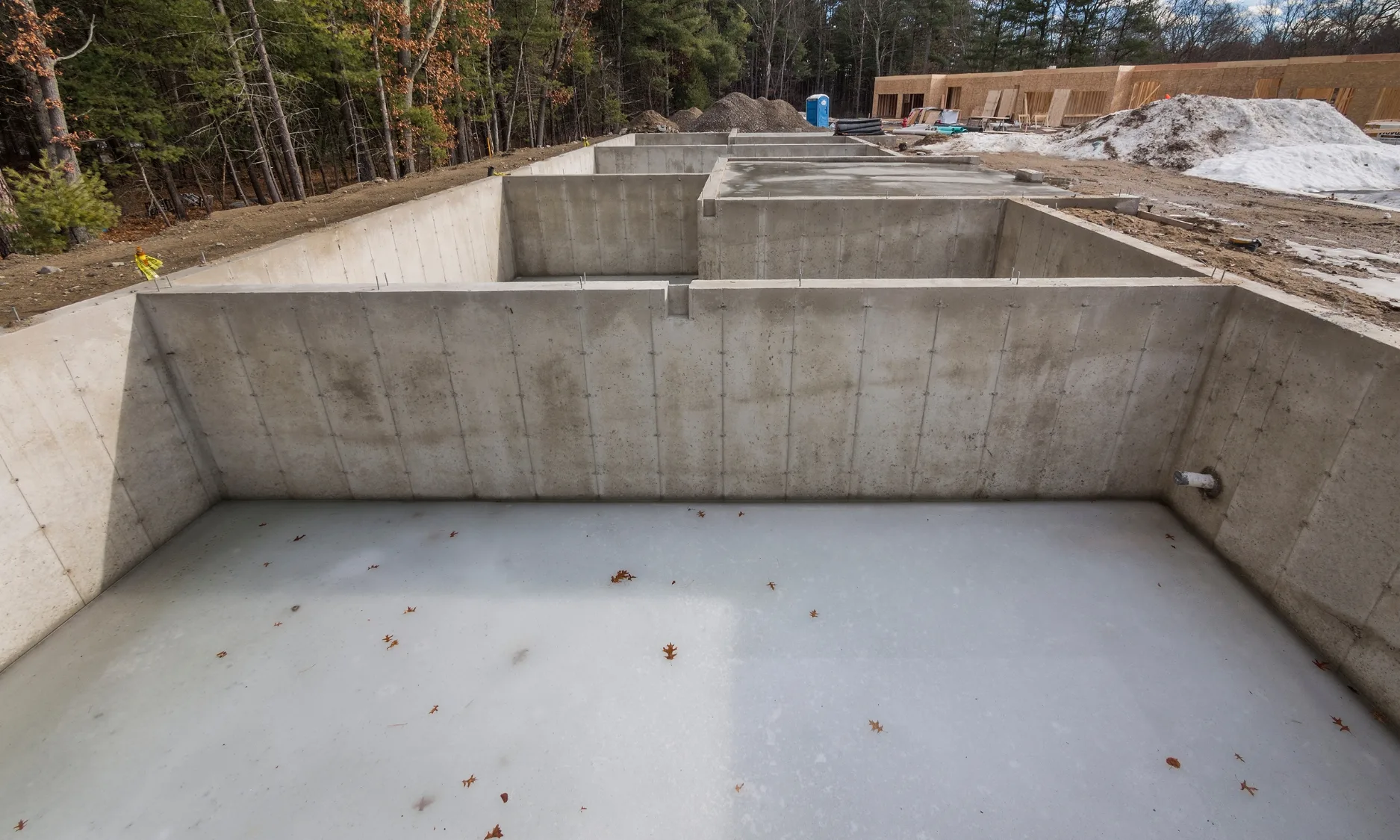
A house foundation is designed to support the weight of an entire home, but it does not operate separately from the ground around it. Soil moisture, drainage, seasonal temperature changes, and the quality of the original site preparation all influence how well a foundation performs over time.
This is particularly important in Pennsylvania, Maryland, Delaware, and New Jersey, where a property may experience heavy spring rain, humid summers, dry periods, freezing winter temperatures, and repeated freeze-thaw cycles in the same year. The foundation must be planned for the site beneath it, not just the structure above it.
Whether you are preparing for new construction or evaluating an existing home, understanding the relationship between weather, soil, and concrete can help you recognize risks early and make better decisions about excavation, grading, drainage, and foundation design.
Soil Is Part of the Foundation System
A concrete foundation may appear to carry the home by itself, but the soil beneath it ultimately supports the load. Footings spread that load over a larger area, while the prepared base and surrounding ground help keep the structure stable.
Problems can begin when the soil cannot provide consistent support. Loose fill may compress. Wet ground may soften. Clay-rich soil can change volume as its moisture level changes. Organic material, such as buried roots or topsoil, can decompose and leave voids beneath the foundation.
The USDA Natural Resources Conservation Service explains that soil shrink-swell potential is largely related to the interaction between clay minerals and water. As moisture levels rise or fall, some soils can change volume enough to damage building foundations and other structures.
This is why the condition of the building site should be evaluated before excavation and concrete work begin. What looks like firm, level ground at the surface may behave very differently several feet below it.

Heavy Rain Can Soften and Erode Supporting Soil
Periods of heavy rain affect foundations in several ways.
When soil becomes saturated, it may lose some of its ability to support weight. Water can also carry fine soil particles away from the foundation, particularly on sloped properties or sites with poor runoff control. Over time, this erosion may create unsupported areas near footings, walls, or slab edges.
Rainwater can also expose mistakes in the surrounding grade. If the ground slopes toward the home, water may collect beside the foundation instead of moving away from it. Downspouts that discharge too close to the house can concentrate even more water in one area.
The goal is not to prevent soil from ever becoming wet. That would be unrealistic. The goal is to keep large amounts of water from collecting against the foundation or repeatedly flowing through the supporting soil.
Firm Foundations provides excavation and site-preparation services alongside its concrete foundation work. Evaluating elevation, soil conditions, and drainage before construction helps address the entire site rather than focusing only on the visible concrete.
Dry Weather Can Cause Soil to Shrink
Homeowners often associate foundation problems with excessive water, but extended dry periods can also affect the soil.
Clay-rich ground may shrink as it loses moisture. If the soil beneath one side of a home dries more than the soil beneath another, the support may change unevenly. This can contribute to differential settlement, where one part of the foundation moves differently from the rest.
Large trees and vegetation can influence moisture levels because their roots draw water from the ground. The effect depends on the type of soil, the location of the plants, weather patterns, and the foundation design.
The NRCS recommends minimizing major fluctuations in soil moisture around structures built on expansive soils. It also emphasizes maintaining surface drainage and directing downspout outlets away from the house.
This does not mean homeowners should continuously soak the ground around a foundation. Adding too much water can create a different set of problems. The appropriate approach depends on local soil conditions and should be discussed with a qualified professional when shrink-swell soil is known or suspected.
Freeze-Thaw Cycles Create Seasonal Movement
Winter weather can place additional stress on foundations and the soil around them.
When water in the ground freezes, it expands. Under the right conditions, that expansion can lift or displace soil. When temperatures rise and the ground thaws, the soil may not return to exactly the same position.
One isolated freeze rarely causes a properly designed house foundation to fail. The concern is repeated movement over many seasonal cycles, particularly when drainage is poor, footings are improperly designed, or the base contains frost-susceptible soil.
Exterior concrete can also be affected by repeated freezing and thawing when moisture enters cracks or porous surfaces. Over time, this may contribute to scaling, flaking, or wider cracks if the underlying cause is not addressed. Firm Foundations notes that Mid-Atlantic concrete and foundation projects must account for seasonal temperature changes, frost exposure, drainage, and soil movement.
Foundation depth, concrete specifications, reinforcement, and drainage details should follow the approved plans and applicable local building requirements.
Different Soil Types Behave Differently
There is no single soil condition found across every property in Pennsylvania, Maryland, Delaware, or New Jersey. Even neighboring lots can have different layers, drainage characteristics, or histories of disturbance.
Sandy soil generally allows water to move through more quickly, although loose sand may still require compaction and stabilization. Clay retains more water and may have greater shrink-swell potential. Silty soil can be vulnerable to erosion and frost-related movement. Mixed or previously disturbed soils can be more difficult to predict.
Fill material deserves special attention. A property may contain areas that were raised or leveled during earlier construction. If that fill was placed in thick layers without proper compaction, it may continue settling after the house is built.
Local soil testing can provide information about bearing capacity, moisture conditions, drainage, and compaction. Firm Foundations recommends treating soil evaluation as an early part of planning for larger structures, particularly when the site has visible drainage problems, questionable fill, or variable ground conditions.
For a full house foundation, the plans, local code requirements, and any engineering or geotechnical recommendations should guide the work.
Slope Changes How Water and Soil Move
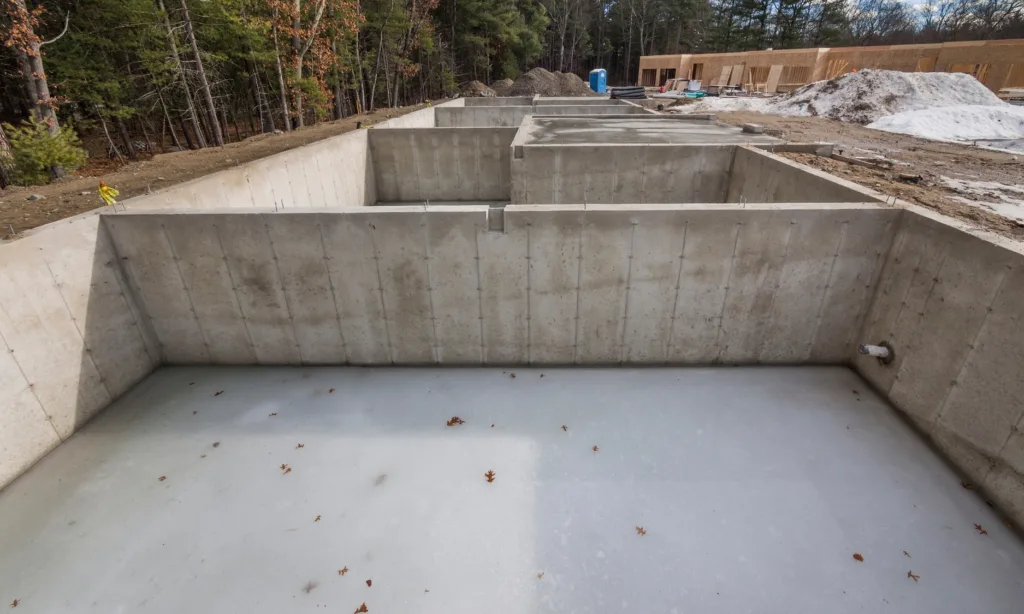
A sloped lot can provide attractive views and natural drainage, but it also creates additional foundation-planning considerations.
Water moves downhill, often following paths that are not obvious during dry weather. A foundation placed across that path may experience concentrated runoff on the uphill side. Excavated soil on a slope may also be more vulnerable to washing away before vegetation or another erosion-control system becomes established.
The cut-and-fill process must be handled carefully. Simply cutting into a hill and placing loose excavated soil on the low side does not automatically create a stable building platform. The grade, retaining conditions, soil compaction, and drainage plan must work together.
Recently excavated ground is especially vulnerable because the soil has been disturbed and may not resist runoff as effectively as established ground. Roof discharge, repeated storms, and bare slopes can gradually carry supporting material away.
A professional site evaluation can help determine how the property should be excavated and graded before foundation construction starts.
Weather Conditions Also Affect Concrete Installation
Weather does not only influence a foundation after the home is built. It also affects the construction process.
Very hot, cold, rainy, or windy conditions can influence concrete placement, finishing, curing, and scheduling. Fresh concrete needs appropriate conditions to gain strength and develop the intended durability.
Rain during excavation can fill footing trenches, soften the subgrade, and make equipment access difficult. Freezing temperatures can slow concrete strength development and require cold-weather precautions. Hot, dry, or windy weather may increase moisture loss from the concrete surface.
A contractor should provide a realistic schedule that accounts for site preparation, forming, reinforcement, concrete placement, curing, inspections, and weather delays. The foundation should not be loaded simply because the surface looks hard.
Firm Foundations constructs concrete foundations for homes and other structures and bases project specifications on the plans, soil conditions, intended use, and local requirements rather than applying one standard solution to every site.
Warning Signs Around an Existing Foundation
Weather-related foundation movement does not always create an immediate or obvious structural failure. The first signs may appear gradually.
Homeowners may notice recurring cracks around doors or windows, floors that feel uneven, doors that no longer close correctly, gaps between walls and ceilings, or water entering the basement or crawl space. Outside, the ground may be pulling away from the foundation, settling near one corner, or directing water toward the house.
Minor cracks can occur for several reasons and are not automatically evidence of a serious structural problem. What matters is whether the cracks are widening, returning after repair, appearing with other signs of movement, or allowing water inside.
The NRCS recommends consulting a structural engineer when foundation cracks, gaps, or alignment concerns raise questions about the stability of an existing home.
Firm Foundations focuses on foundation construction, excavation, and site preparation. Existing structural problems should be properly diagnosed before a repair method is selected.
Good Drainage Begins With Final Grading
Even a well-built concrete foundation can be affected by poor conditions around it.
After construction, the surrounding grade should encourage surface water to move away from the home. Downspouts should discharge where they will not saturate the soil beside the foundation. Bare areas disturbed during excavation should be stabilized so runoff does not begin carrying soil away.
Homeowners should continue observing the property after major storms. New landscaping, patios, walkways, driveways, and drainage changes can alter how water moves years after the foundation was completed.
Maintenance is especially important near additions or newly constructed homes, where backfilled soil may continue settling. Low areas should not be allowed to develop beside the foundation and collect water.
Build for the Ground and Climate You Have
A durable house foundation begins with understanding the property.
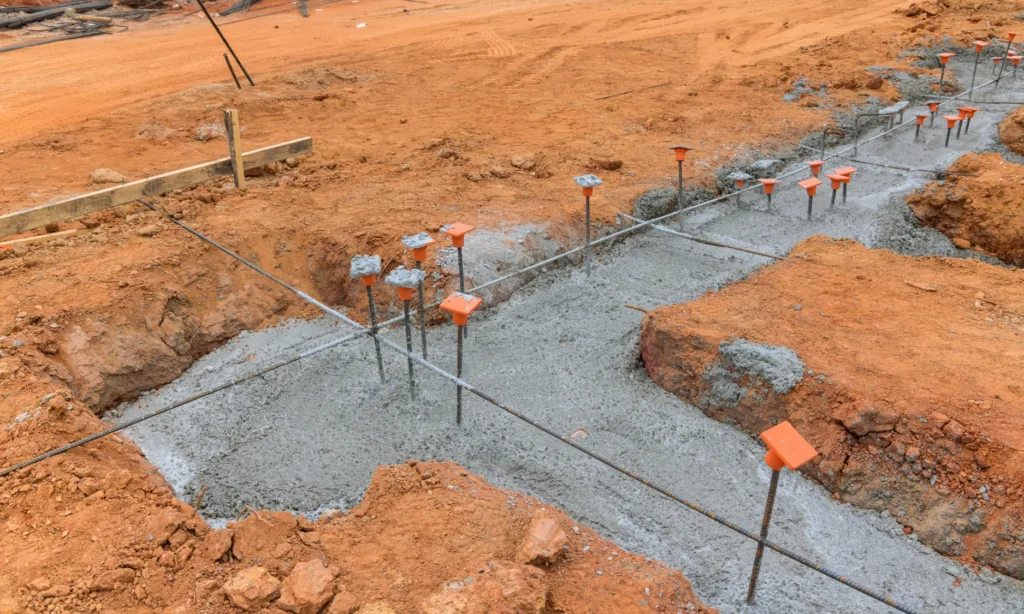
Soil composition determines how the ground responds to weight and moisture. Weather controls how often that soil becomes saturated, dries, freezes, and thaws. Excavation, compaction, drainage, reinforcement, concrete construction, and final grading must account for those conditions as one connected system.
Firm Foundations has served property owners since 2011 and provides house foundations, concrete construction, excavation, and related site preparation throughout Pennsylvania, Maryland, Delaware, and New Jersey.
Before beginning a new home or foundation project, provide the contractor with accurate building plans and as much information about the property as possible. Careful preparation below ground helps create a foundation that can support the home through changing soil conditions and every season the Mid-Atlantic climate brings.
Firm Foundations LLC
https://maps.app.goo.gl/Uf6XdgtpBTETgNrr7
1535 White School Rd, Honey Brook, PA 19344, United States
(717) 716-7267
https://shedpads.com/