
Shed Foundation & Anchoring Services in Lancaster, PA
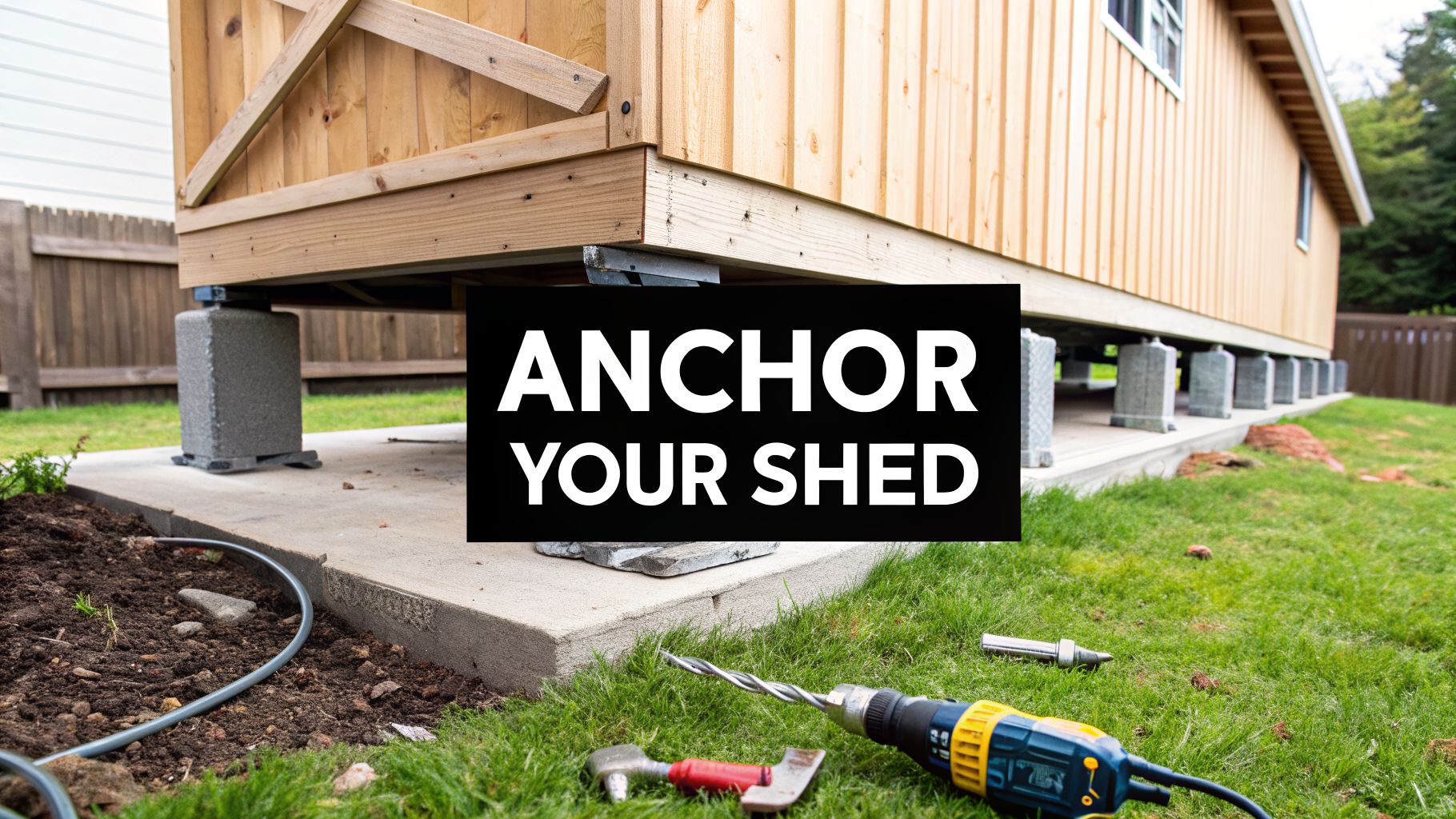
Investing in a new shed is a great way to add value and utility to your property in Lancaster, PA, but its long-term stability hinges on one crucial step: anchoring it securely to the ground. A proper foundation and anchoring system is not just a good idea; it's the only way to protect your investment from the unpredictable weather we see across Pennsylvania, Maryland, Delaware, and New Jersey. This guide outlines how our team at Firm Foundations handles this critical process, ensuring your structure remains safe and sound for years to come.
Why Properly Anchoring Your Shed Is Not Optional
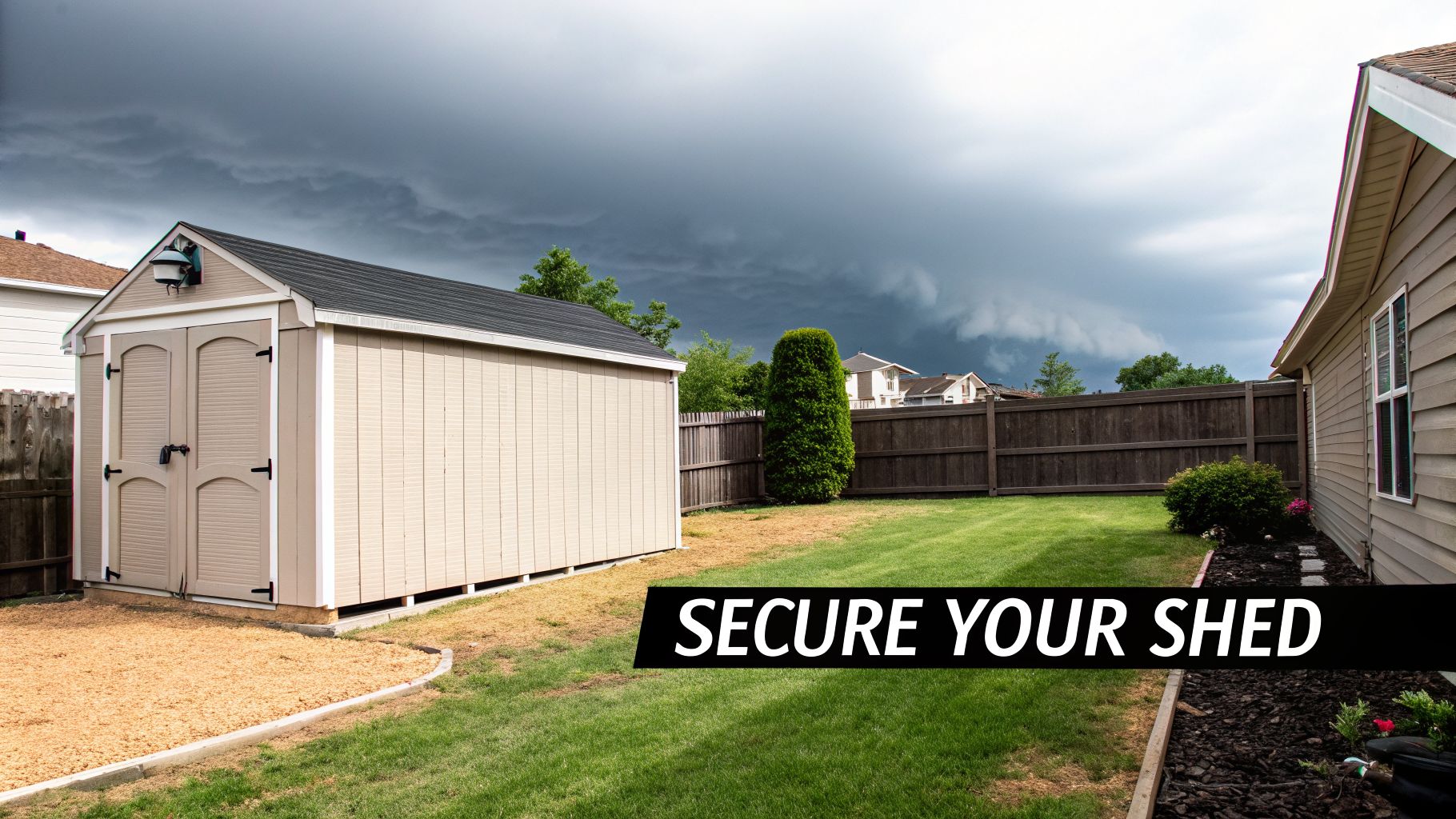
Think of shed anchors as the essential seatbelt for your new building. While your shed may feel heavy and unmovable, high winds and shifting ground can easily turn it into a safety hazard, causing damage to your property or a neighbor's. Anchoring isn't about just checking a box; it’s about safeguarding your family, your home, and ensuring your shed provides lasting value.
Here in Lancaster and the surrounding service areas, we see it all—from powerful coastal storms to intense summer thunderstorms. An unsecured shed is vulnerable to lifting, shifting, or even overturning, posing a serious risk.
A properly anchored shed is a secure asset. An unanchored shed is a potential liability waiting for the next big storm.
This guide is designed to give you the confidence you need, whether you're considering a DIY project or want to understand what to expect when hiring a professional. As your local shed foundations contractors near me, we at Firm Foundations have seen firsthand the expensive consequences of cutting corners on this vital step.
The Growing Need for Secure Outdoor Structures
More and more homeowners are investing in high-quality outdoor structures. The North American outdoor shed market, valued at $1,783.37 million in 2021, is projected to expand to $2,511.03 million by 2028. This growth is largely driven by a surge in home renovation spending. As more of our neighbors in Lancaster acquire a 10×10 storage shed or a larger barn shed, the need for professional site preparation and secure anchoring becomes crucial to protect these investments. You can explore more data on the expanding outdoor shed market and its drivers.
A well-constructed gazebo foundation or a sturdy base for a storage shed is only as good as the anchors holding it down. The process begins with a solid plan that considers your specific location and foundation type.
Key Factors for a Secure Shed Installation
Before starting any work, it's vital to understand the factors that will determine the best anchoring strategy for your property. A correct approach ensures your shed remains stable through every season in Pennsylvania.
To help you plan, here’s a quick overview of the essential factors to consider when planning to anchor your shed.
Key Anchoring Considerations at a Glance
| Factor | Why It Matters | Best Practice |
|---|---|---|
| Foundation Type | The anchor must match the base (e.g., concrete, gravel, or soil). A mismatch can lead to anchor failure. | Select anchors specifically designed for your foundation. Concrete foundations require different hardware than a gravel pad. |
| Soil Conditions | Local soil density determines the holding power of ground anchors. Loose, sandy, or wet soil offers less resistance. | Have a professional assess your soil. Auger-style anchors work best for soft soil, while other types may be needed for rocky ground. |
| Local Weather | Wind-uplift forces and frost heave are the primary threats. Our region's climate dictates the required anchoring strength. | We consult local building codes for wind load and frost line depth requirements to ensure your shed is fully protected. |
These primary considerations will guide you toward the most effective and durable anchoring solution for your specific needs.
As your trusted local team in Lancaster, PA, Firm Foundations helps homeowners like you navigate these decisions every day. We make sure every shed foundation we build includes an anchoring system engineered for maximum durability and your complete peace of mind.
Choosing the Right Anchor for Your Shed Foundation
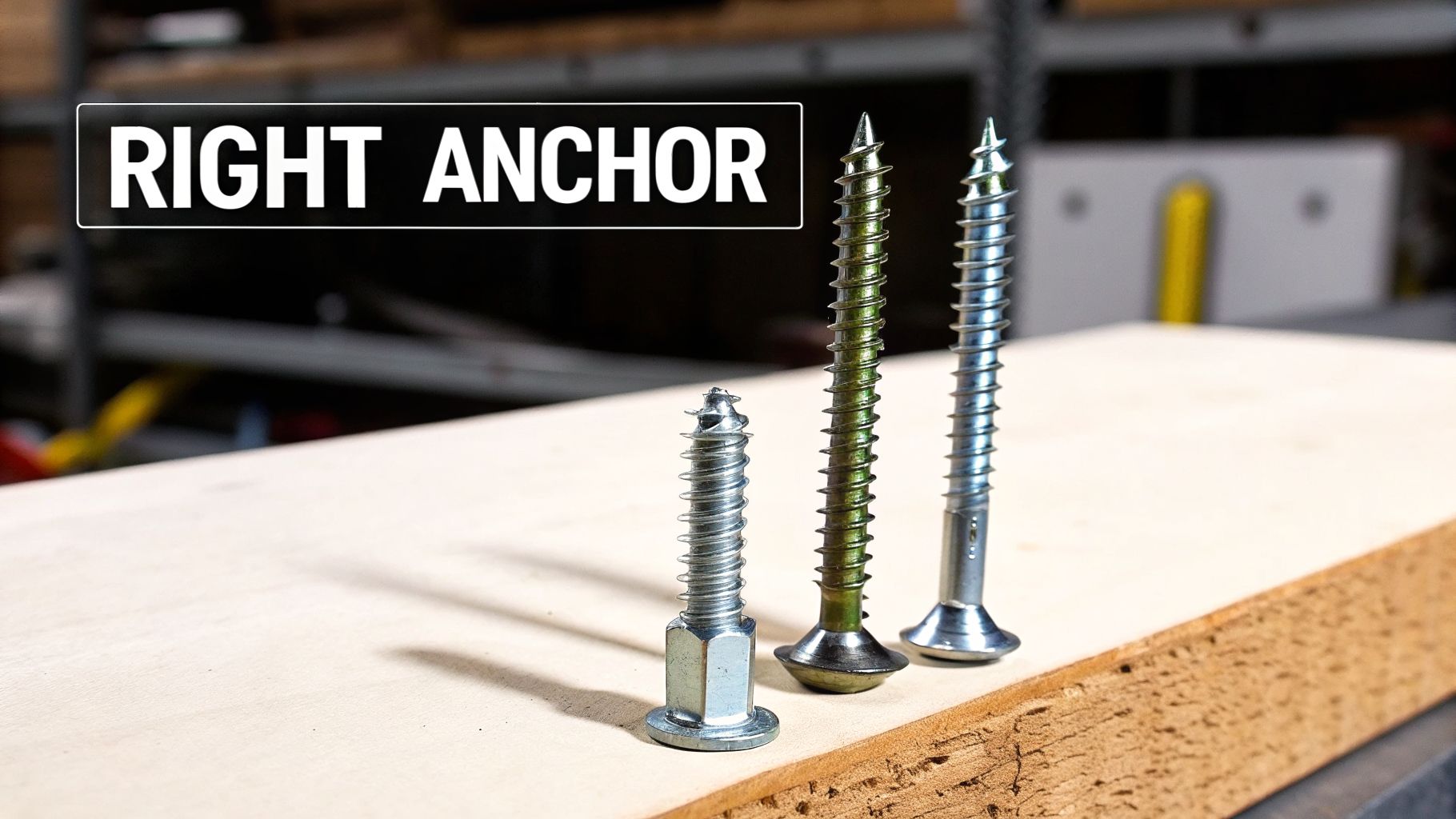
Choosing the right anchor isn't a one-size-fits-all decision. The security of your shed is directly tied to using the correct anchor for your specific shed foundation and the soil conditions here in Pennsylvania, Maryland, Delaware, or New Jersey.
You must choose an anchor that’s compatible with its base. For example, if you have a professionally poured concrete foundation for a garage or shed, your best options are concrete sleeve or wedge anchors. These are designed to expand once inserted, creating a powerful grip against the solid concrete.
On the other hand, if your shed is built on a gravel shed foundation, concrete anchors are useless. The industry standard here is auger-style anchors, also known as earth anchors. These large, corkscrew-like devices are driven deep into the ground below the gravel, securing a firm hold in the underlying soil.
Anchors for Concrete Foundations
When your shed rests on a solid concrete slab—a service we specialize in as a top garage foundation contractor near me—you have several strong options. The goal is to create a secure mechanical bond with the concrete itself.
- Sleeve Anchors: These are placed into a pre-drilled hole. As you tighten the nut, a sleeve expands to press firmly against the inside of the hole. They are reliable and relatively easy to install.
- Wedge Anchors: This is a heavy-duty option. Wedge anchors are hammered into the prepared hole and then tightened. A clip at the bottom expands, "wedging" the anchor securely in place for superior strength, ideal for larger structures or high-wind areas.
- Strike Anchors: Also known as hammer-set anchors, these are simply driven into a pre-drilled hole with a hammer. They are permanent, so getting the placement right from the start is crucial.
For property owners in our Lancaster community, a professionally poured slab from a concrete contractor like Firm Foundations creates the perfect base for these anchors, ensuring your shed is truly immovable.
Anchors for Gravel or Soil Foundations
If your shed sits on a gravel pad or directly on the soil, the anchoring strategy is different. Instead of bonding with the foundation, you are securing the shed to the earth below it. This requires anchors that can grip firmly in the soil.
An anchor’s strength is only as good as the ground it’s in. The rocky clay common in many Pennsylvania suburbs provides a much different challenge than the sandy, looser soils you might find closer to the coasts of Delaware or New Jersey.
- Auger Anchors (Earth Anchors): These are the go-to choice for non-concrete foundations. Looking like giant screws, they are twisted deep into the ground. Their helical plates provide excellent resistance against being pulled out.
- Ground Screws: Similar to augers, these large-diameter screws are driven directly into the earth. They are often used not just for anchoring but as part of the base for a storage shed, offering both support and security.
- Strap Tie-Downs: Often used with auger anchors, these heavy-duty straps are run over the shed or fastened to the walls, connecting the structure directly to anchors in the ground. They are especially good at preventing wind uplift.
The choice between these options depends on your soil type. In the dense, rocky soil found across much of our service area, auger anchors provide a fantastic grip once installed past the first layer of stones. For softer soil, you may need anchors with larger helical plates to get the same holding power.
If you're unsure about your soil or the right anchor to use, it’s always best to consult a professional. As your local shed foundations contractors near me, we have the expertise to assess your site and recommend the correct anchoring system to keep your investment safe.
Preparing Your Site for a Rock-Solid Installation
You can buy the best anchors, but they’re only as strong as the ground you put them in. That’s why professional site preparation is the most critical part of the entire project. Here at Firm Foundations, we've seen it all as the go-to excavation near me crew for homeowners in Lancaster, PA and the surrounding areas. A secure installation starts long before you even open the first anchor box.
Proper site prep isn't just about clearing grass. It’s about building a stable, level, and well-drained platform that will keep your shed standing strong for decades. Cutting corners here is a surefire way to end up with a wobbly shed or a failing foundation that will cost you more to fix later.
Dealing with Slopes and Uneven Ground
One of the first challenges many homeowners in our area face is a sloped yard. Simply placing a shed on an incline is asking for trouble. The building will be under constant stress, causing doors to jam, windows to stick, and the entire frame to twist over time.
The correct way to handle this is with a "cut and fill" pad. Our team digs out soil from the high side and uses it to build up the low side, creating a perfectly level area for the shed. This ensures the shed's weight is distributed evenly, preventing structural strain. If you're doing it yourself, you’ll need a string level and stakes to map out a level perimeter before moving any dirt.
We once got a call from a homeowner in a hilly Lancaster suburb where a shed was placed on a poorly graded site. In less than a year, water had pooled on the uphill side and washed away the gravel base. One corner of the shed had sunk several inches. It’s a common and expensive mistake that good site work easily prevents.
Why You Can't Ignore Drainage
Water is the number one enemy of any foundation—period. If rainwater and snowmelt can't drain away, they will pool around and under your shed, leading to serious problems:
- Foundation Erosion: Water will wash away the material in a gravel shed foundation, making it unstable.
- Frost Heave: In our cold PA, MD, DE, and NJ winters, wet ground freezes, expands, and can push your shed upwards. When it thaws, it settles unevenly.
- Rot and Mold: Constant dampness is a death sentence for the wooden parts of your shed, like the floor joists and skids.
A professionally prepped site always includes a slight grade away from the shed on all sides. For very wet properties, we often install a French drain. A well-built gravel pad is also excellent for drainage, wicking moisture away from the shed’s base. If you're going with concrete foundations, there's a specific process for site preparation for a concrete slab that ensures water stays out.
Compacting the Base Is a Must
Whether you use gravel or soil for your base, it has to be compacted. Loose material will settle under the shed's weight, leaving you with a crooked, unstable building. After grading the site, the base material—usually crushed stone for a gravel shed foundation—is spread in layers.
Each layer is then compacted with a mechanical plate compactor. This creates a dense, interlocked base that won't shift or sink. This isn't an optional step; it’s essential for creating a truly durable base for a storage shed.
Before you can think about anchors, you need to get the site prep right. For many, this means learning how to build a gravel shed foundation correctly. Getting this part perfect is foundational to everything else.
How to Install Shed Anchors Like a Pro
Once your site is perfectly prepped, it's time for the final, critical step: securing your investment. This guide walks you through the two most common scenarios we handle for our clients across Pennsylvania and our neighboring states—anchoring into concrete and into a gravel pad.
We’ll cover the right methods and highlight the precision a professional concrete contractor brings to every job. Understanding these steps will not only help you tackle the installation but also show you why so many homeowners in PA, MD, DE, and NJ trust a team like Firm Foundations for guaranteed results.
This visual guide shows the core stages of site preparation, a critical precursor to anchoring.
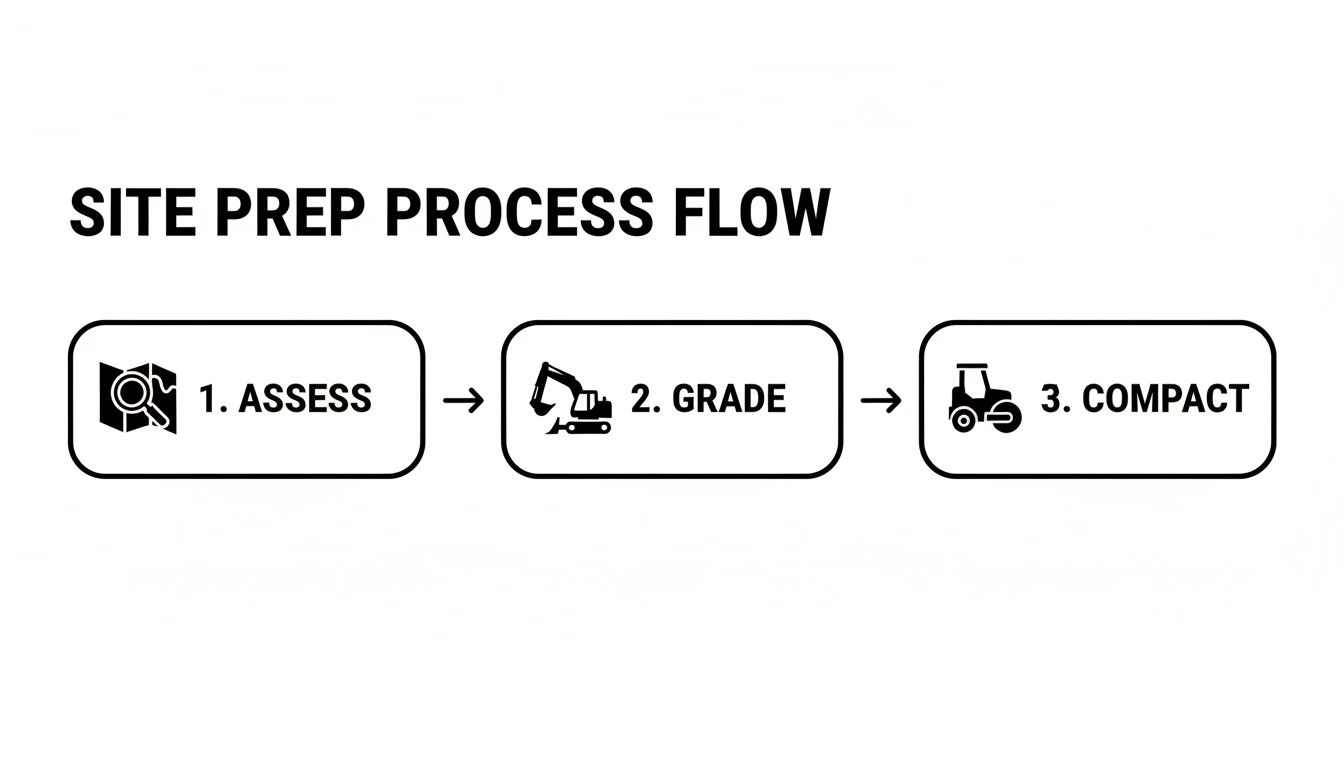
The flowchart drives home an important point: a solid anchoring job starts with meticulous groundwork. You have to assess, grade, and compact the site properly to ensure a truly stable base for your shed.
Anchoring into a Concrete Foundation
If your shed sits on a concrete slab, you have the most secure base possible. The goal is to bolt the shed's bottom plate directly to the concrete using special expansion anchors.
First, you need to position the shed exactly where you want it on the slab. Once it's set, you’ll drill holes through the wooden bottom plate and down into the concrete. A hammer drill is essential for this; don't even try without one. It’s also vital to use a quality masonry bit that perfectly matches the diameter of your wedge or sleeve anchors.
A common mistake is drilling too shallow or making a messy hole, which weakens the anchor's grip. Our pros always ensure the hole is deep enough for the entire anchor and then blow out all the concrete dust with compressed air. It's a small detail that ensures the anchor makes maximum contact, preventing it from loosening over time.
Pro Tip: To prevent hairline cracks in your slab, never drill too close to the edge. We always maintain a buffer of at least 4-6 inches from any edge. This simple practice goes a long way in preserving the integrity of your concrete foundations.
After the anchor is in, it needs to be tightened to a specific torque setting with a torque wrench. If you overtighten, you risk cracking the concrete or stripping the anchor. If you under-tighten, the connection will be loose. Hitting the manufacturer-specified torque is one of those fine points that separates a professional job from an amateur one.
Anchoring into a Gravel Pad or Soil
When your shed is on a gravel shed foundation or just sitting on soil, you'll need a different approach: auger anchors, sometimes called earth anchors. Think of them as massive corkscrews designed to get a powerful grip deep in the ground.
You'll start by driving the auger anchor into the ground at a slight angle, pointing away from the shed. That angle is key—it dramatically increases the anchor’s resistance to being pulled out by wind or ground shifts. You just keep twisting the anchor down until only the top loop is visible.
Here's a tip from our local experience: in the hard or rocky soil common around Lancaster, PA, trying to twist an auger in by hand is next to impossible. We use a long, sturdy metal bar or rebar threaded through the anchor's eyelet. This gives you the leverage needed to drive that auger 30 inches or more into the ground, well below our regional frost line.
With the anchors set, you can attach them to the shed using heavy-duty steel cable or galvanized straps that loop through the anchor's eyelet and connect to the shed's skids or frame. We often use turnbuckles to perfectly tension the cables, pulling the shed down firmly onto its base for storage shed. The goal is to get it tight enough to prevent any movement without putting stress on the shed's frame.
When to Call a Professional Foundation Contractor
While some homeowners enjoy a DIY challenge, certain situations demand professional expertise. Knowing how to anchor a shed is one thing, but recognizing when a job requires a seasoned foundation contractor is crucial for safety, longevity, and your peace of mind.
Challenging site conditions and large-scale projects often require specialized equipment and a deep understanding of soil mechanics and local building codes. Attempting these complex installations yourself can lead to costly mistakes and an unstable shed. For homeowners in Lancaster, PA, and our other service areas, the team at Firm Foundations is your local expert for these challenging jobs.
Signs You Need a Professional Foundation Crew
The site itself often presents the biggest hurdles. What may seem like a minor issue can quickly become a major engineering problem without the right tools and knowledge. We recommend calling in our professionals when you encounter any of these scenarios.
- Significant Ground Slope: If your property has a noticeable grade, creating a perfectly level pad requires heavy equipment. Our professional grading and excavation services ensure a stable foundation that resists erosion and shifting.
- Poor Soil Conditions: Soft, sandy, or very rocky ground creates unique anchoring challenges. Our crew can assess your soil and choose the right strategy, whether that involves specialized anchors or a specific type of base for a storage shed.
- Large or Heavy Structures: The bigger the building, the more critical the foundation becomes. A large barn shed, a two-car garage, or any structure needing garage footings and foundations demands an engineered solution to safely manage its weight.
- Strict Local Building Codes: Many townships have specific requirements for foundation depth and setbacks, especially for larger structures. If you're searching for shed foundations contractors near me, it’s likely because you need a team like ours that already knows and manages these local regulations in the Lancaster area.
The Firm Foundations Process for Your Peace of Mind
We believe that hiring a contractor should be a straightforward and reassuring experience. Our process is built on transparency, giving you all the information you need to make a confident decision for your home.
When you contact our Lancaster office, you're starting a partnership. We take the time to visit your property, listen to your goals, and assess any specific challenges. Whether you need concrete foundations in Lancaster, PA, or a specialized gravel pad for a new shed, we provide a detailed plan and a clear, no-obligation estimate.
Your project's success starts with a solid plan. A free, no-obligation quote from a trusted local contractor is the most critical first step you can take. It provides clarity, sets realistic expectations, and ensures there are no surprises down the road.
If you are facing a complex site, planning a large structure, or simply want the assurance that your shed’s foundation is done right the first time, it's time to call in a professional. Reach out to Firm Foundations, and let’s work together to lay the groundwork for your success.
Common Questions About Anchoring Your Shed
When it comes to securing a shed, we hear a lot of the same questions from homeowners across Pennsylvania, Maryland, Delaware, and New Jersey. Getting the anchoring right is one of the most critical steps in any shed foundation project. Here are some straightforward answers based on our years of experience in the field.
How Many Anchors Should I Use for My Shed?
The number of anchors you need is about structural safety, not guesswork. A good rule of thumb is to plan for one anchor at each corner. For larger sheds, you should add more, spacing them every 4 to 6 feet along the perimeter. This gives your structure the strength it needs to resist strong winds and ground movement.
Of course, this is just a general guideline. The right number depends on your specific situation. A standard 10×10 storage shed has different needs than a large barn shed. Your local wind load codes and the type of shed foundation you’re using also play a big role.
Always check the shed manufacturer's guidelines and your local township's building codes first. They'll give you the minimum requirements. For a plan that’s guaranteed to be safe and compliant, a professional assessment from us at Firm Foundations is the best way to go.
Using too few anchors or placing them incorrectly creates weak points that can fail in a storm. That's why having a custom anchoring plan is so crucial for protecting your investment.
Can I Anchor a Shed Without a Concrete Foundation?
Absolutely. In fact, many sheds we work on for our neighbors in Lancaster sit on professionally installed gravel shed foundation pads. When done right, these offer incredible stability and drainage without the higher cost of poured concrete.
With a gravel base, the strategy is different. Instead of anchoring the shed to the foundation, we anchor it through the foundation and deep into the earth below. The best tools for this are auger-style anchors (earth anchors) or heavy-duty ground screws, which are designed to drill past the gravel and into compacted soil for immense holding power.
A properly compacted gravel pad is non-negotiable here. It creates a solid, interlocking base that keeps the anchors from loosening. Trying to anchor a shed that’s just sitting on grass or loose dirt is a recipe for disaster—the topsoil doesn't have the density to hold on during high winds. Our team can recommend the perfect anchor and installation depth for your gravel pad to ensure it’s rock-solid.
Do I Need a Permit to Anchor a Shed in Pennsylvania or Maryland?
Permit rules for sheds are incredibly local and can change from one town to the next. Whether you need a permit usually depends on the shed's size and what kind of foundation you’re installing.
Generally, you might not need a permit for smaller sheds (often under 100 or 200 square feet). But you should never assume that's the case. Your first step should always be to call your local municipal building or zoning office in the Lancaster area to get the specific rules for your address before you start any work.
A permit is almost always required for:
- Larger sheds, garages, and other accessory buildings.
- Projects that involve permanent cement foundations for garages or home additions.
- Any installation requiring significant excavation or new electrical wiring.
As your local garage foundation contractors near me, handling the permit process is a core part of our service at Firm Foundations. We ensure all paperwork is filed correctly and every inspection is passed, saving you from major headaches and potential fines.
What Does Professional Shed Foundation and Anchoring Cost?
There's no single price for a professional shed foundation and anchoring service. The final cost depends on the unique details of your property and project.
The main factors that affect the price are:
- Site Accessibility: How easily can our equipment get to the build site?
- Slope and Excavation: Creating a level pad is key. The amount of grading needed is a major cost driver, and a sloped site can increase costs by 30% to 40%.
- Foundation Type: A professionally installed gravel shed foundation on a fairly level lot is often the most budget-friendly choice. A reinforced concrete foundation for a garage is a larger investment due to higher material and labor costs.
- Shed Dimensions: The bigger the pad, the more materials and man-hours are needed.
The only way to get a true cost for your project is to have an expert from Firm Foundations evaluate your site in person. We always recommend you get a free, no-obligation quote from Firm Foundations. Our team will come to your home in the Lancaster area, assess your property, listen to what you need, and give you a detailed breakdown tailored to your exact project, whether it's for a shed, gazebo, or even if you're looking for driveway contractors near me.
Ready to lay the groundwork for a shed that lasts a lifetime? The team at Firm Foundations has the local expertise to ensure your project starts on a stable, secure, and professionally built base. Contact us today for a free, no-obligation quote!