
How Long Does a Concrete Foundation Last? Factors That Affect Its Lifespan
How Long Does a Concrete Foundation Last? Factors That Affect Its Lifespan
A concrete foundation does not come with a fixed expiration date. Two foundations built in the same year can age very differently depending on the soil beneath them, the quality of the concrete, drainage around the structure, construction methods, weather exposure, and ongoing maintenance.
Many conventional concrete structures are designed around service-life expectations of approximately 50 years, while carefully designed and protected concrete can remain functional for much longer. A service-life estimate is not the same as a guaranteed replacement date. Concrete foundations frequently continue performing beyond their original design period when they were properly constructed and remain protected from excessive movement, moisture, and deterioration.
For homeowners planning a shed, garage, house, barn, or another permanent structure, the better question is not simply, “How long will the foundation last?” It is, “What can be done now to help this foundation perform well for as long as possible?”
There Is No Universal Lifespan for Every Foundation
A properly designed concrete foundation may support a structure for many decades. Some remain serviceable for generations, while others develop serious problems much earlier.
The difference usually comes down to how the foundation was planned and built, along with the conditions it experiences after construction. A high-quality concrete mixture cannot compensate for unstable soil. Reinforcement cannot prevent every problem caused by poor drainage. A thick slab may still move if it rests on loose or improperly compacted material.
The type of foundation also matters. A concrete pad for a small shed has different structural demands from a detached garage foundation, full basement, daylight basement, or house slab. Each must be built according to the structure’s weight, dimensions, approved plans, soil conditions, and local requirements.
Firm Foundations installs concrete foundations for sheds, garages, houses, and other structures. The company also performs excavation and site preparation, allowing the visible concrete and the supporting ground to be addressed as one connected project.
Site Preparation Has a Major Effect on Longevity
The lifespan of a concrete foundation begins with what happens before the concrete arrives.
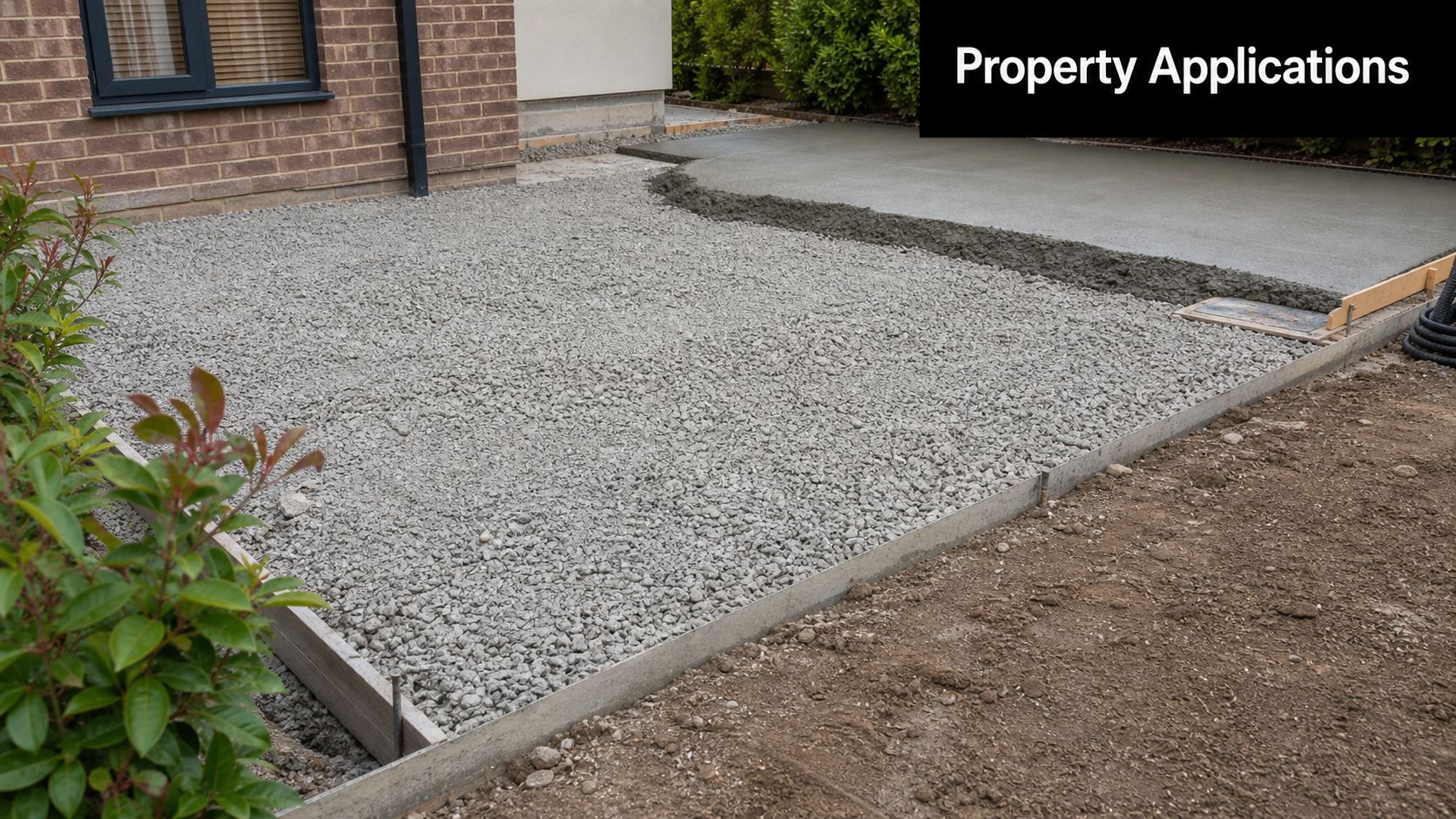
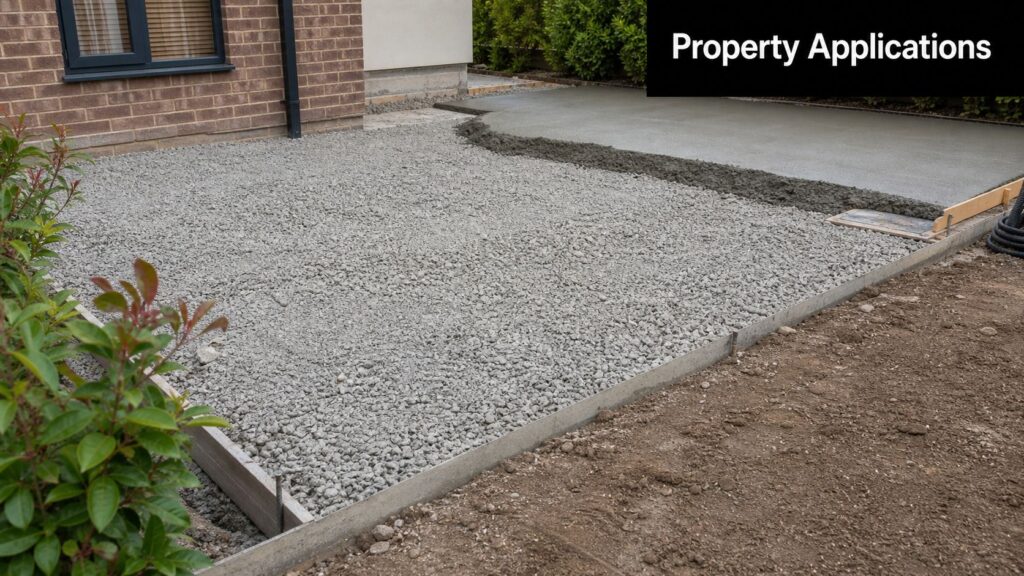
Grass, topsoil, roots, buried organic material, loose fill, and unsuitable soil should not remain beneath a structural foundation unless the plans specifically account for those conditions. Organic material can decay, while poorly compacted soil may compress under the weight of the structure.
Excavation creates room for the required footings, stone base, slab thickness, and finished elevation. The exposed ground can then be evaluated and prepared before forms, reinforcement, and concrete are installed.
A crushed-stone or gravel base is commonly used beneath concrete garage foundations. It creates a stable working surface and helps support the slab when properly placed and compacted. Firm Foundations identifies excavation, crushed-stone base preparation, reinforcement, drainage, and concrete placement as interconnected parts of garage foundation construction.
Skipping or reducing this preparation may save time initially, but it increases the risk of uneven settlement, cracking, and movement later.
Soil Conditions Influence Foundation Movement
Concrete is strong, but it cannot make unstable ground stop moving.
Different soils react differently to weight and moisture. Clay-rich soil may expand when wet and shrink as it dries. Loose fill can settle. Silty soil may erode when water moves through it. Areas containing buried construction debris or organic material may develop voids.
Footings help distribute the structure’s weight over a larger area of soil. Their dimensions, depth, reinforcement, and placement should follow the approved foundation plans. Firm Foundations describes footings as the lowest part of the foundation, typically constructed with concrete and reinforcement to spread structural loads and limit settlement.
When questionable soil conditions are present, additional evaluation or engineering may be required. Pouring more concrete is not always the correct solution. The foundation design must respond to the conditions beneath it.
The Concrete Mixture Matters
Concrete is made by combining cement, water, and aggregates. The proportions and characteristics of those materials influence strength, workability, permeability, and durability.
One of the most important considerations is the water-to-cement ratio. Excess water may make fresh concrete easier to place, but it can leave the hardened concrete more porous and less durable. Proper mixture design helps concrete develop the strength required by the plans while limiting pathways through which water and contaminants can enter.
Concrete intended for freezing and thawing conditions may also require properly controlled entrained air. Small, intentionally created air spaces provide room for freezing water to expand, reducing internal pressure within the concrete. The Federal Highway Administration notes that freeze-thaw durability is influenced by both the air-void system and concrete permeability.
The appropriate mixture should be based on the structure, placement conditions, environmental exposure, and project specifications rather than a one-size-fits-all formula.
Reinforcement Helps the Foundation Manage Stress
Concrete handles compression very well but is less capable of resisting tension. Reinforcing steel helps the foundation manage stresses caused by loads, shrinkage, temperature changes, and limited movement.
Depending on the plans, a foundation may include reinforcing bar in footings, walls, thickened edges, or the slab. Some projects may use welded wire reinforcement or other specified systems.
Reinforcement does not make concrete impossible to crack. Its purpose is to help control movement and keep the structural system working as designed. Placement matters as much as the presence of steel. Reinforcement installed at the wrong height, spacing, or concrete coverage may not provide the intended performance.
The building plans should identify the required reinforcement. Homeowners should make sure the foundation quote is based on the latest drawings rather than only the structure’s approximate outside dimensions. Firm Foundations emphasizes that foundation blueprints establish the dimensions, depths, materials, reinforcement, elevations, and construction details shared by the contractor, property owner, inspector, and building supplier.
Proper Curing Supports Long-Term Durability
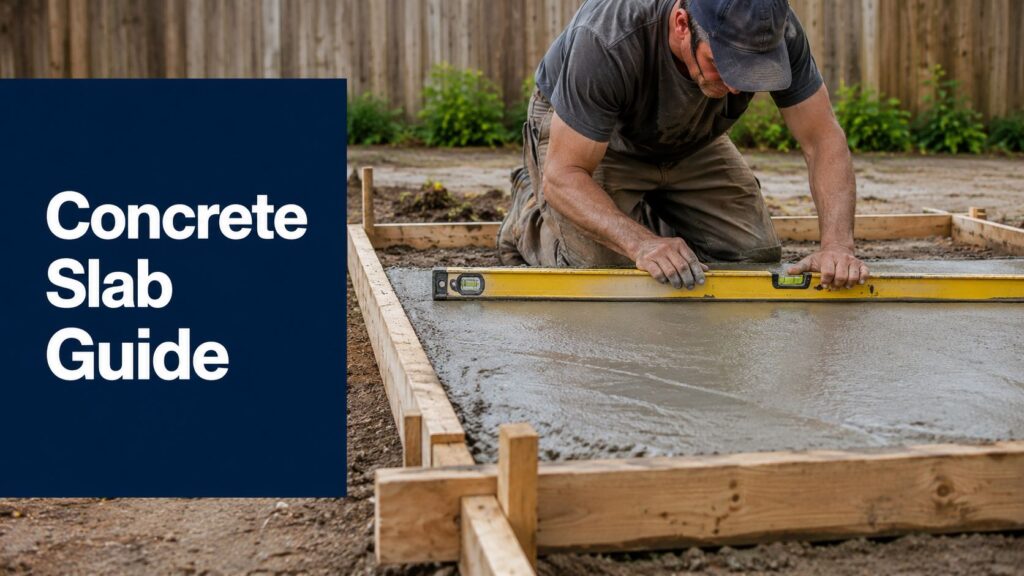
Concrete does not become fully mature as soon as the surface feels hard. It gains strength through a chemical reaction between cement and water, and the early curing period has a significant effect on the finished material.
Concrete that loses moisture too quickly may be more vulnerable to surface cracking, reduced strength, and increased permeability. Cold temperatures can slow strength development, while freezing during the early stages can cause serious damage. Hot, dry, or windy conditions may increase moisture loss from the surface.
The concrete should be protected and allowed to cure according to the mixture, weather, dimensions, and project requirements. Heavy loads should not be placed on a new foundation simply because it looks dry.
This is especially important when coordinating a prefabricated garage, shed, or other building delivery. The foundation contractor and building supplier should agree on when the concrete is ready to receive the structure.
Water Is One of the Greatest Long-Term Threats
Water can affect both the concrete and the soil supporting it.
When runoff repeatedly collects beside a foundation, it may soften the ground, carry away fine soil particles, or increase pressure against foundation walls. Water entering cracks can also expose concrete and reinforcement to repeated wetting, freezing, and thawing.
Drainage should therefore be planned before the concrete is poured. The finished elevation, surrounding grade, downspout locations, roof runoff, driveway slope, and nearby paved surfaces all influence where water travels.
A foundation placed in a low area will not automatically correct the drainage problem. Excavation, grading, stone placement, or additional water-management measures may be needed before construction.
Firm Foundations’ project approach includes evaluating the site, preparing the supporting base, and establishing grading that helps move water away from the completed foundation. The company notes that the excavation, gravel base, compaction, and drainage layout can be just as important as the visible concrete surface.
Freeze-Thaw Exposure Can Shorten Service Life
Concrete foundations throughout Pennsylvania, Maryland, Delaware, and New Jersey experience seasonal temperature changes. Water that enters concrete pores or cracks can freeze, expand, and place pressure on the surrounding material.
Repeated freeze-thaw cycles may contribute to surface scaling, internal cracking, or deterioration, particularly when the concrete is highly saturated or was not designed for the exposure.
Proper air entrainment, suitable concrete strength, controlled permeability, drainage, and curing all help improve resistance to freezing and thawing. Research and industry guidance consistently identify air-void characteristics and moisture exposure as important factors in freeze-thaw durability.
Keeping water from continually collecting around the foundation remains one of the most practical ways to reduce this stress.
Cracks Do Not Always Mean the Foundation Has Failed
Concrete can crack without reaching the end of its useful life.
Small, stable cracks may result from normal shrinkage or limited movement and may not affect structural performance. More concerning conditions include widening cracks, vertical displacement, sections that are sinking, crumbling concrete, recurring water entry, or cracks appearing alongside sticking doors, uneven floors, or wall movement.
The pattern and cause matter more than the presence of a crack alone. Covering a crack without addressing soil movement or drainage may hide the symptom while the foundation continues to move.
Homeowners should document changes and seek an appropriate professional evaluation when cracks grow, return after repair, or accompany other signs of structural movement. A contractor may be able to address concrete or site conditions, while suspected structural problems may require review by a qualified engineer.
Maintenance Can Extend Foundation Performance
Concrete foundations generally require limited routine care, but the surrounding property should still be monitored.
Keep gutters and downspouts working properly. Make sure runoff does not discharge directly beside the foundation. Watch for soil settlement that creates low areas near the building. Avoid allowing roots, vegetation, or landscaping changes to interfere with drainage.
Cracks and exposed surfaces should be inspected periodically, especially after severe weather or significant construction nearby. Early attention may prevent water from entering and worsening a manageable issue.
Future improvements can also affect foundation conditions. A new driveway, patio, walkway, retaining wall, or landscaping project may redirect water toward a structure that previously remained dry.
Professional Installation Protects the Investment
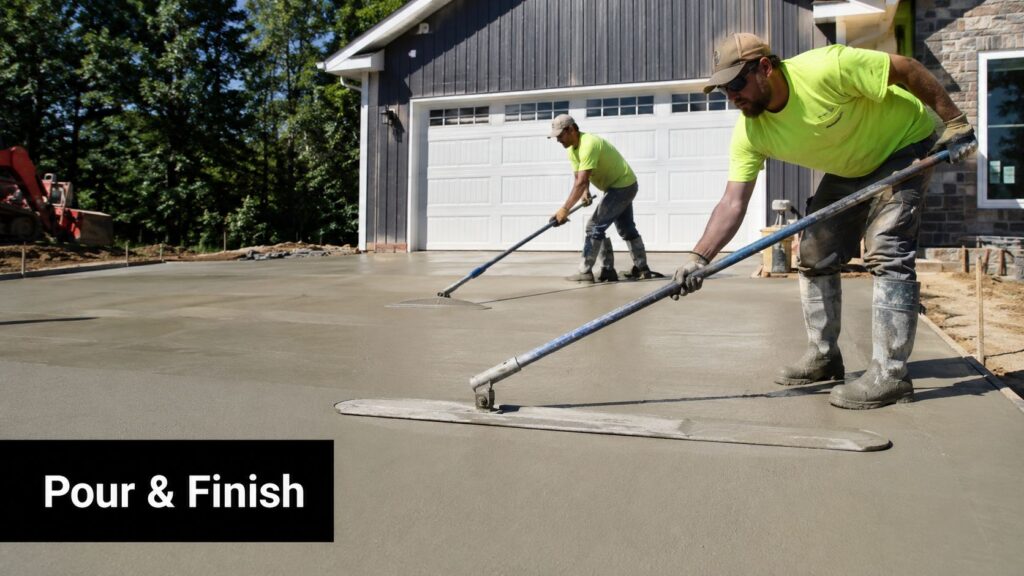
A long-lasting foundation depends on far more than the concrete pour. Accurate plans, excavation, soil preparation, compaction, formwork, reinforcement, drainage, placement, finishing, curing, and final grading all contribute to the outcome.
Firm Foundations has installed gravel pads and concrete foundations since 2011. Its service area includes Pennsylvania, Maryland, Delaware, and New Jersey within approximately 90 miles of its Honey Brook, Pennsylvania location.
The company provides detailed quotes for concrete foundations, gravel pads, excavation, and related projects, with the goal of giving customers a clear understanding of the scope before construction begins.
Build for Decades, Not Just Pour Day
A concrete foundation can last for many decades, and a well-designed foundation may continue performing beyond common service-life expectations. Its actual lifespan depends on the ground beneath it, the concrete mixture, reinforcement, drainage, weather exposure, construction quality, and how the surrounding property is maintained.
The most important decisions are often made before any concrete is visible. Preparing stable soil, following accurate plans, controlling water, using appropriate materials, and allowing the concrete to cure properly can reduce the conditions that cause premature deterioration.
Before beginning a shed, garage, house, barn, or other concrete foundation project, have the site and building plans reviewed together. Firm Foundations provides concrete construction and excavation services throughout its regional service area and offers free quotes based on the structure, property conditions, access, and project requirements.
Firm Foundations LLC
https://maps.app.goo.gl/Uf6XdgtpBTETgNrr7
1535 White School Rd, Honey Brook, PA 19344, United States
(717) 716-7267
https://shedpads.com/