
Concrete Patio Removal Guide for PA & MD Homeowners


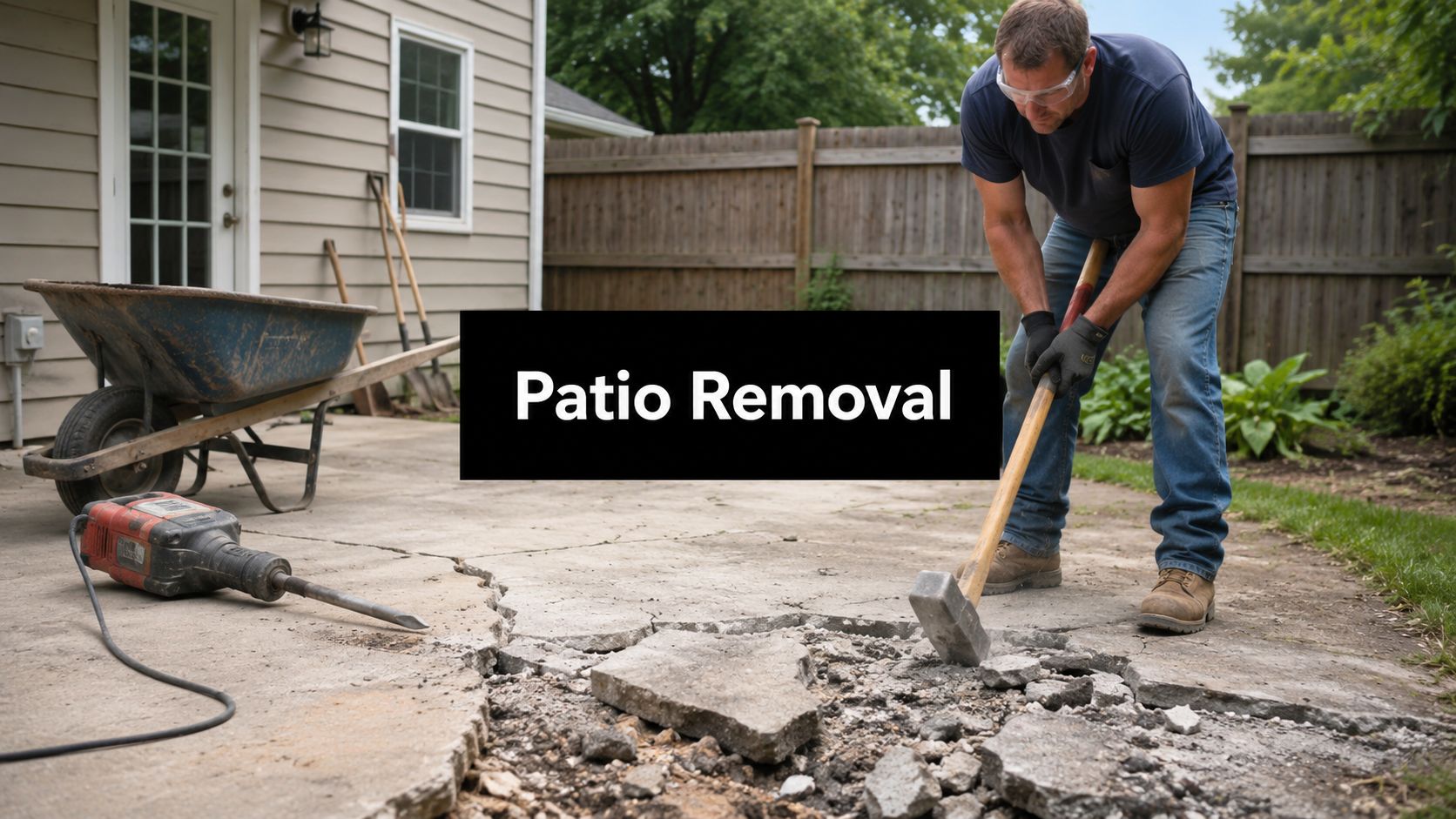
A lot of homeowners reach the same point with an old backyard slab. The concrete is cracked, weeds are pushing through the joints, one corner has settled, and the whole space feels like something you work around instead of enjoy. In Pennsylvania, Maryland, Delaware, and New Jersey, that old patio often becomes the thing standing in the way of the project you want, whether that's clean open yard space, a new shed pad, a gazebo foundation, or a garage foundation that starts on solid ground.
Concrete patio removal sounds simple until you're standing over a slab that won't break cleanly, sits tight against the house, and leaves you wondering what happens after the debris is gone. Homeowners usually aren't just asking how to break concrete. They're asking how to do it safely, how to avoid damage, what it will cost, and whether the cleared area can support the next build.
That Old Patio Has to Go Now What
A common situation goes like this. A homeowner steps into the backyard after another winter and notices the patio has gotten worse again. The cracks are wider. Water is hanging near the house after rain. The surface is uneven enough that moving a grill or patio chairs feels awkward, and nobody wants kids running across it.
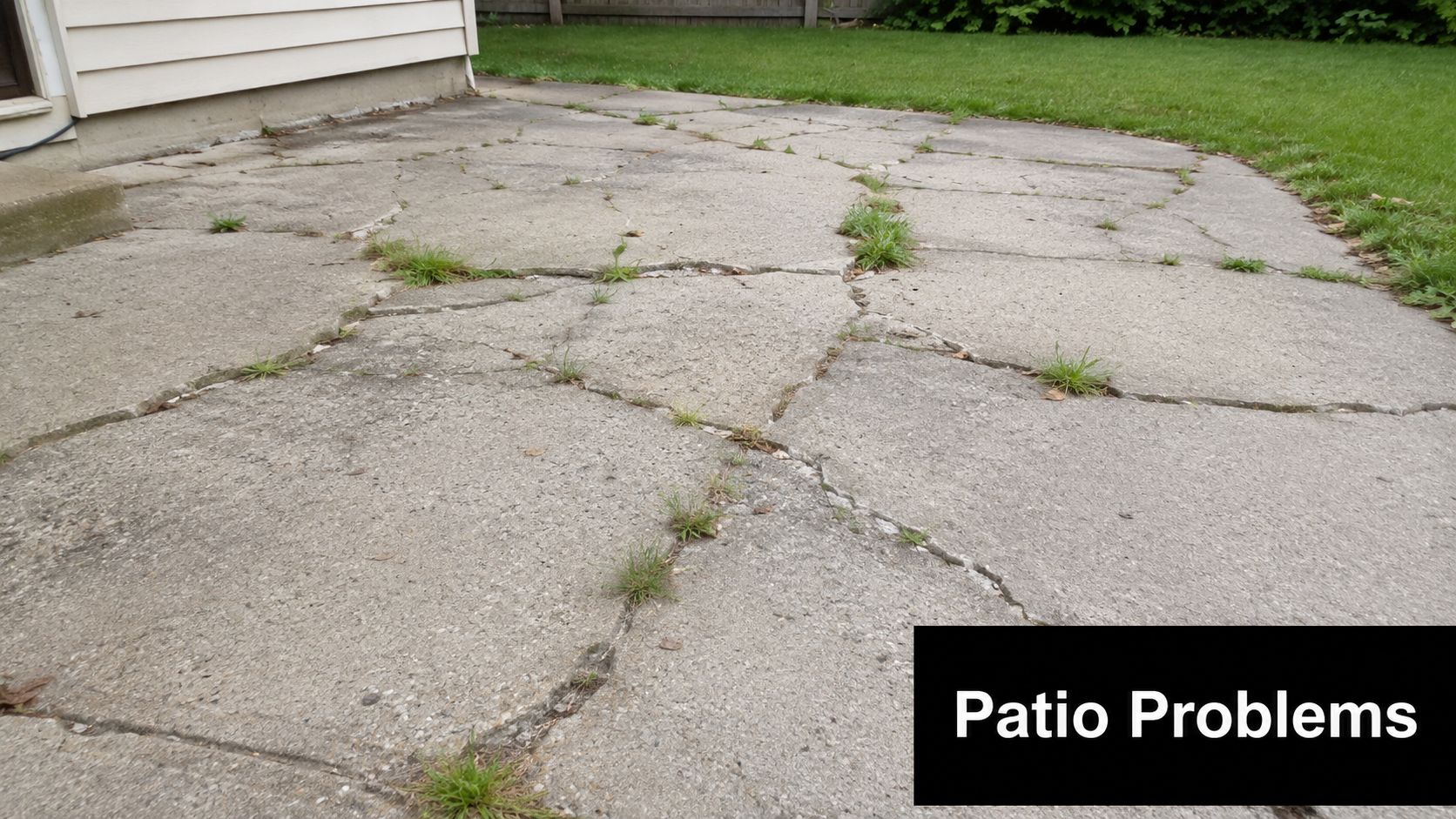
That's usually the moment removal moves from “maybe someday” to “we need to deal with this now.” For some families, it's about appearance. For others, it's a trip hazard or drainage issue. And for plenty of property owners, the old slab is in the way of a better use of the site, like a base for storage shed installation, a gazebo foundation, or site prep for a future concrete foundation.
Removal is often the first real step
An aging patio can block more than your view of the yard. It can complicate grading, limit access for equipment, and keep you from building something more useful in the same footprint. A worn slab also creates false confidence. It looks like “already prepared ground,” but once demolition starts, many homeowners find poor base material, voids under the slab, or a connection to the house that needs careful handling.
A bad patio isn't just an ugly surface. It's often the first sign that the area underneath needs attention before any new construction begins.
If you're comparing advice before deciding whether to tackle the job yourself, this guide for Marion County homeowners offers another practical perspective on what removal involves in real residential settings.
Know the goal before you swing a hammer
The smartest way to approach concrete patio removal is to decide what the space needs to become. That answer changes how the removal should be handled.
- If you want open lawn again: focus on full debris removal, grading, and clean backfill.
- If you're planning a shed foundation: preserve access, protect nearby grades, and avoid tearing up more yard than necessary.
- If the next step is garage footings and foundations: pay close attention to soil condition, elevation, and drainage from day one.
- If the patio sits against the house: treat the slab-to-wall connection as its own problem, not as a minor detail.
That last point matters most. Plenty of patio jobs are straightforward. The attached ones are not.
Planning Your Patio Removal Permits and Prep Work
A patio removal job usually goes off course before demolition starts. The trouble begins with access that is tighter than expected, an attached slab that is harder to separate cleanly, or a replacement plan that needs a different finished height than the old patio provided. If the area is headed for a shed pad, new flatwork, or garage foundation work, prep decisions made now affect the next crew and the long-term performance of the site.
Handle these basics first
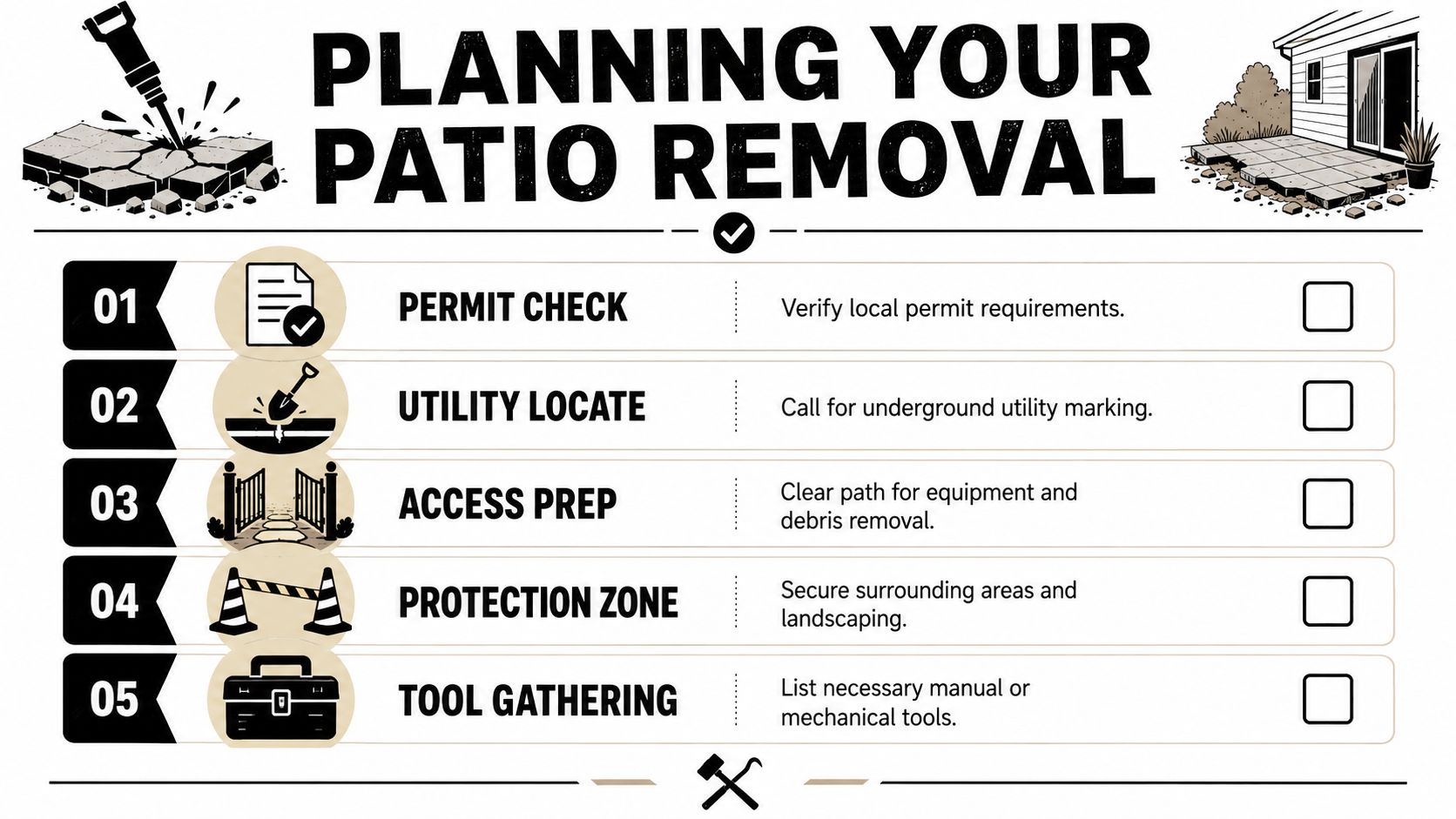
Before any breakup starts, confirm four things. Can the work be done legally, can it be done safely, can debris get out without tearing up the property, and does the removal plan match what will be built next.
- Check local permit requirements. Some municipalities want permits for demolition, dumpsters, replacement flatwork, or grading changes that affect drainage.
- Call 811 before any breaking or digging. Utility markings need to be in place before tools or equipment hit the slab, especially near the house, along fences, or anywhere prior work may have changed line locations.
- Plan the haul path. A narrow gate, soft lawn, decorative concrete, or a long wheelbarrow route can turn a small removal into a slow, expensive cleanup.
- Protect nearby surfaces and fixtures. Windows, doors, siding, AC units, fencing, and outdoor features all need to be covered or cleared out of the work zone.
- Set the target elevation now. That matters if the next step is topsoil and lawn, a compacted shed base, or excavation for a new foundation. Removing concrete is one job. Leaving the site ready for the next one is the part many homeowners miss.
That last point saves rework.
A patio being replaced with grass can often be backfilled and graded after removal. A patio being replaced with a shed pad or garage slab needs much tighter control of base material, slope, and compaction. If the end goal is new construction, it is smart to treat removal as the first phase of site prep, not a separate weekend project.
Attached patios need a different level of caution
Patios that touch the house deserve a slower, more deliberate approach. The risk is not limited to cracked siding or chipped brick. The actual problem is disturbing the joint at the wall, opening a path for water, or damaging an area that will need repair before anything new can be built.
Guidance in this discussion of removing a concrete patio attached to a house points out that the method depends on how the slab connects to the structure. In some cases, the slab has to be separated carefully before it is broken apart. If you cannot clearly identify that connection, the job should be treated as structural-adjacent work, not ordinary demolition.
Practical rule: If the patio is attached to the house and the joint is unclear, stop and get a contractor involved before you create wall, moisture, or drainage problems.
A prep checklist that helps you avoid expensive mistakes
Use a short walkaround to answer the questions that change the job scope:
| Question | Why it matters |
|---|---|
| Is the patio free-standing or attached to the house? | Attached slabs raise the risk of wall, flashing, and drainage damage. |
| Is there a clear access route for labor or equipment? | Access affects demolition speed, debris removal, and yard damage. |
| Where will broken concrete go during the job? | Staging and hauling space determine whether the site stays safe and workable. |
| Are windows, doors, siding, or utility equipment close to the slab? | Those areas need protection before demolition starts. |
| What is being built after removal? | The next use determines finished grade, base prep, and how clean the excavation must be. |
Homeowners who plan around the full project usually spend less in the end. The slab comes out once, the grade gets set once, and the site is ready for the next step instead of needing corrective work later. That is the standard we hold at Firm Foundations. Removal should leave the property ready for what comes next, not just free of old concrete.
Demolition Methods Manual vs Mechanical Options
Choosing the breakup method sets the tone for the rest of the project. Pick the wrong approach, and removal slows down, debris gets harder to handle, and the grade is often left rougher than it should be for the next build. If the plan is a new shed pad, patio, or garage foundation, demolition needs to be controlled from the first strike.
When manual demolition makes sense
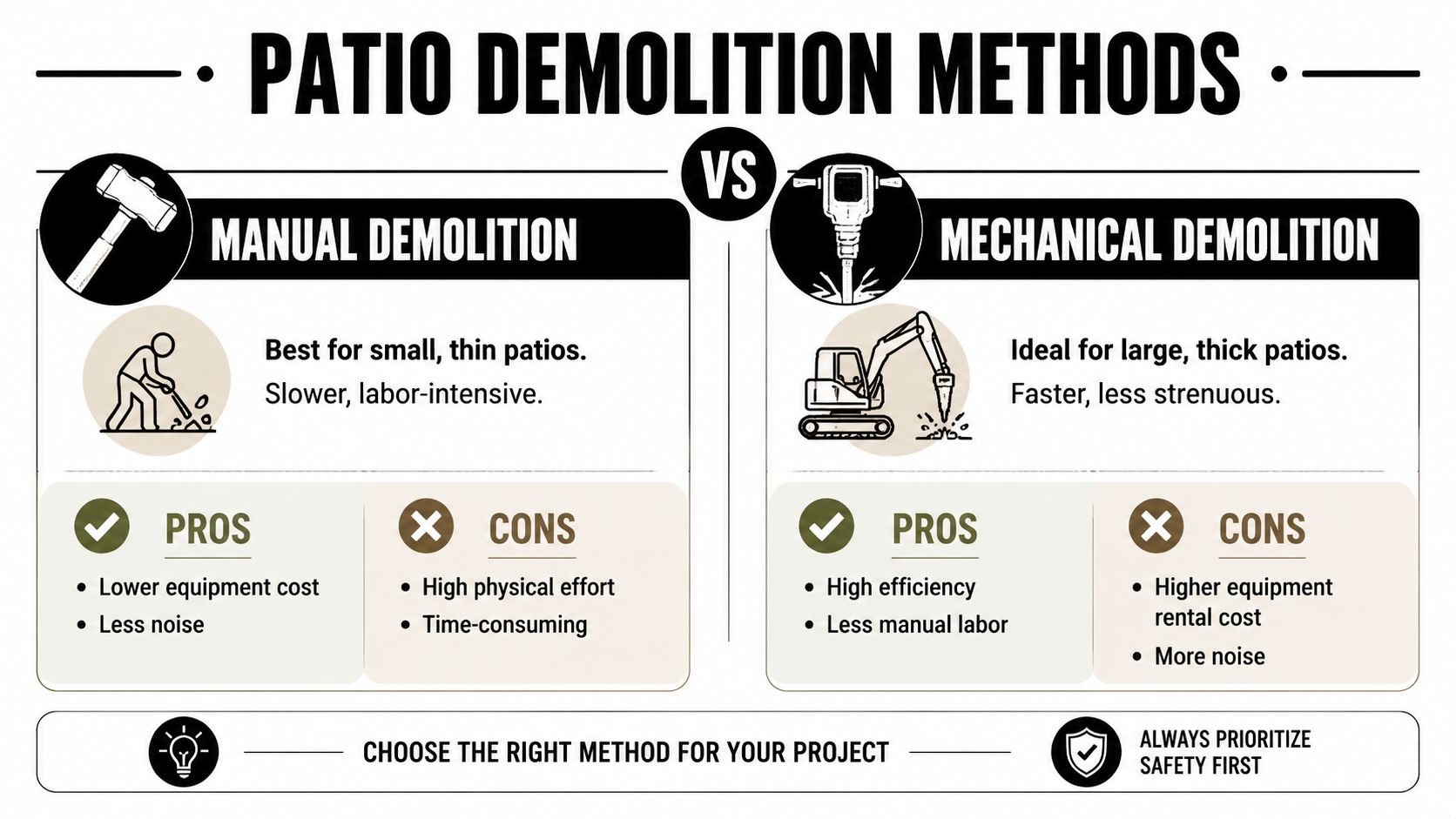
Manual demolition fits smaller patios with thin, unreinforced concrete, especially where there is a clean edge to start from and enough time to work in stages. A sledgehammer, pry bar, and wheelbarrow can get the job done if the slab is already showing cracks and the pieces can be kept to a manageable size.
Manual removal usually makes sense when:
- The slab is thin and unreinforced
- The patio is small enough to break and move in stages
- Access is too tight for larger equipment
- Noise limits rule out heavier tools
- The finished area does not need precision cutting at the perimeter
The trade-off is labor. Hand demolition costs less in equipment, but it takes longer, wears people out fast, and often leaves irregular edges that need more cleanup before the next phase. That matters if the replacement project needs straight lines, clean excavation, or a stable edge form.
Mechanical methods for thicker or reinforced slabs
Mechanical tools are the better choice once the concrete is thick, reinforced, or tied into surrounding hardscape. A jackhammer concentrates force where it counts. Saw-cutting helps control where the slab breaks. On larger patios, compact equipment can speed up production and reduce the amount of hand loading.
Here is where each option usually fits best:
| Situation | Better option | Why |
|---|---|---|
| Thick slab | Jackhammer | Breaks dense concrete without exhausting the operator |
| Reinforced slab | Saw-cutting plus jackhammer | Controls break lines and exposes steel cleanly |
| Tight attachment at house | Controlled cutting first | Protects the wall line and limits accidental damage |
| Larger patio footprint | Mechanical breakup | Keeps the project moving and produces more consistent debris |
A quick test area tells you a lot. If repeated strikes barely mark the surface, or the slab starts exposing wire mesh early, stop forcing manual tools to do a machine job. That is usually the point where DIY removal stops being efficient and starts risking injury, property damage, or a rough subgrade that needs repair later.
Here's a visual look at the process and what controlled breakup looks like in practice.
What works during breakup
Start from an exposed edge or an existing crack whenever possible. Create the first fracture, pry up slightly to put the slab in tension, then keep working the break line across the section. Smaller sections are easier to lift, stack, and haul without tearing up the yard or straining your back.
Random hits across the middle of the slab waste energy. Controlled strikes produce cleaner breaks and make the site easier to manage, especially if the ground underneath needs to stay intact for new base work.
A few field habits make a big difference:
- Wear full PPE. Safety glasses, gloves, sturdy boots, hearing protection, and dust protection should be standard.
- Keep the work zone clear. Flying chips and shifting rubble can injure anyone standing too close.
- Use lift and tension to help the crack run. A pry bar often does as much work as the striking tool.
- Stop when you hit reinforcement. Cut or separate steel properly instead of yanking on it and damaging nearby concrete.
- Watch the subgrade as the slab comes out. If you gouge or disturb the base now, you may have to rebuild it before the next installation.
Good demolition is not just about getting rid of old concrete. It is about removing it in a way that leaves the site safer, cleaner, and ready for whatever comes next. That is the difference between a patio tear-out and a well-run site prep job, and it is why homeowners planning the full lifecycle often bring in a contractor like Firm Foundations before breakup starts.
Safe Debris Handling and Responsible Disposal
Cleanup decides whether a patio removal stays under control or turns into a week of extra labor, torn-up grass, and a truck suspension that takes the hit. Once the slab is broken, the job shifts from demolition to material handling. That requires a different plan.
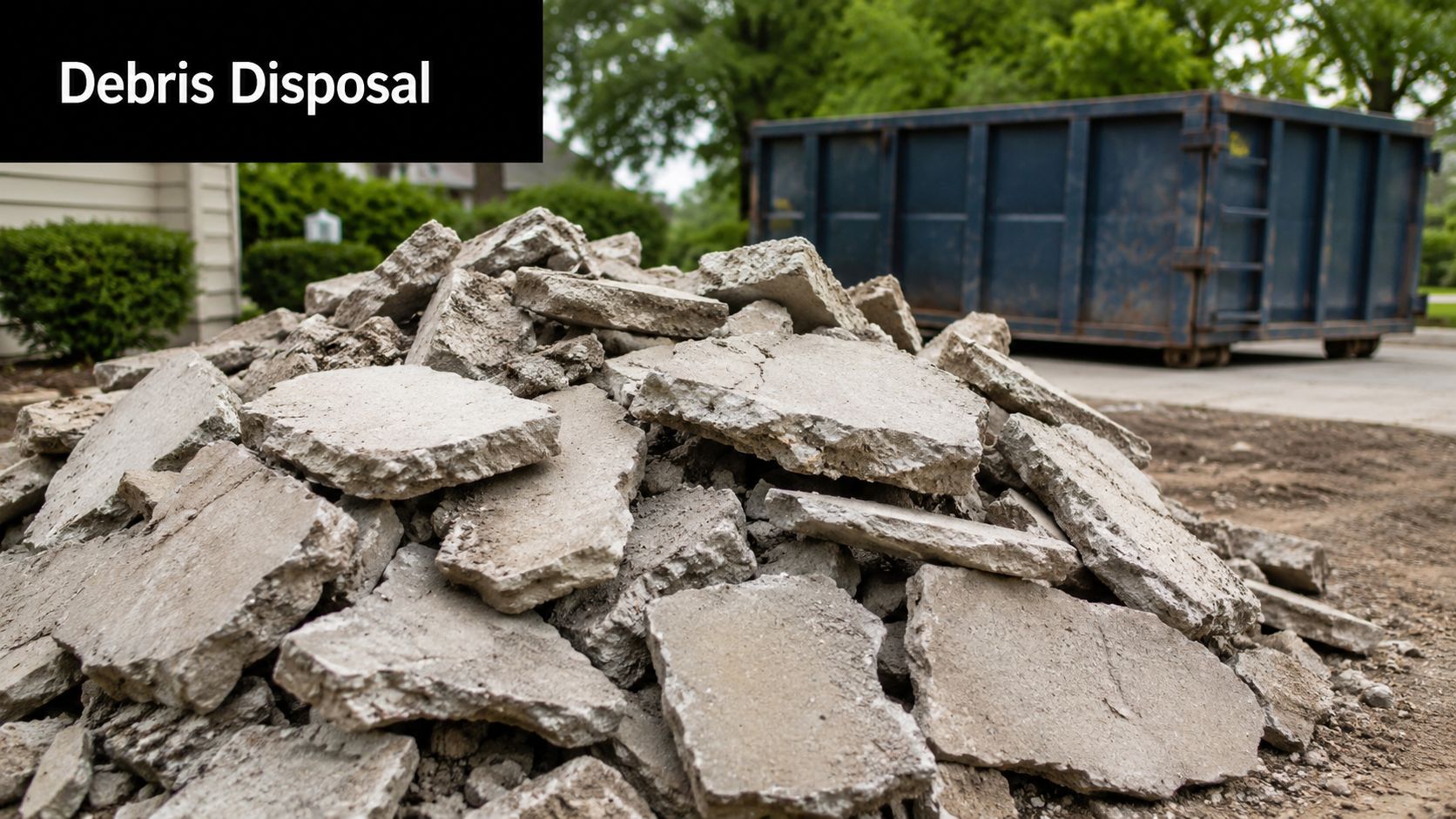
A pile of rubble always looks smaller than it is. Concrete gets heavy fast, and broken pieces rarely stack neatly. If the patio is coming out so the area can support a shed, garage slab, or other new work, cleanup has to protect the subgrade instead of grinding it up with repeated foot traffic and overloaded wheelbarrows.
Broken concrete creates a new set of hazards
The risk changes once pieces start coming up. Stable footing disappears. Sharp corners cut through light gloves. Reinforcement can catch a boot or slice a hand if it is left exposed. Cleanup injuries often happen late in the job, when fatigue sets in and someone tries to carry one piece too many.
Use gear that matches the work:
- Safety glasses: chips still break loose during lifting and loading.
- Heavy gloves: needed for jagged edges and wire or rebar.
- Work boots with solid toe protection: loose rubble rolls underfoot.
- Long pants and sleeves: skin protection matters when you are handling rough broken edges.
- Dust protection and hearing protection: still needed if cleanup includes saw cuts or additional breaking.
Loading technique matters too. Keep pieces small enough to control with two hands. Walk clear paths to the dumpster or trailer. Do not throw chunks blindly into a container where a bounce-back can hit your legs or face.
Disposal starts with sorting, not hauling
Homeowners often lose time because they mix everything together. Clean concrete can sometimes go to a recycler. Concrete mixed with soil, wood, trash, pavers, or metal usually has fewer disposal options and can cost more to get rid of. Sorting as you go saves rehandling later.
A simple rule works well on site. Keep clean concrete in one pile, metal reinforcement in another, and general demolition debris somewhere else. If you already know the replacement plan, this is also the point to confirm how much material is coming out. A patio concrete removal calculator helps estimate volume before you choose a dumpster size or hauling plan.
Choose the disposal method that fits the site
The right option depends on access, volume, and what needs to happen after removal.
| Option | Best for | Main drawback |
|---|---|---|
| Self-hauling | Small patios with easy driveway access | Multiple trips, heavy lifting, and wear on personal vehicles |
| Dumpster or heavy debris container | Medium to large tear-outs with room to stage a container | Weight limits, placement planning, and possible driveway protection |
| Contractor haul-away | Tight schedules, limited access, or homeowners who want the site cleared in one pass | Higher upfront price, but less physical risk and less time spent managing debris |
| Recycling facility drop-off | Clean separated concrete only | You still handle loading, transport, and sorting requirements |
There is no single best answer. Self-hauling can work for a very small patio near a driveway, but it becomes inefficient fast if access is through a side gate or down a slope. Dumpsters save labor, but they need a legal and practical place to sit. Professional haul-away costs more on paper, yet it often protects the yard, the driveway, and the base you may need for the next build.
Responsible disposal protects the next phase of the project
Disposal is not only about getting rid of rubble. It affects what the site looks like tomorrow. Dragging chunks across the yard can rut wet ground. Overloading one corner of a driveway can crack it. Letting fines and dust mix back into the excavated area can contaminate the base that a new shed pad or garage foundation needs.
Frontier Waste notes in its discussion of concrete removal and disposal that concrete waste is a major part of construction debris. On a residential job, the practical takeaway is straightforward. Separate what can be recycled, keep the site clean as you load out, and do not leave disposal decisions until the slab is already in a pile.
That is one reason many homeowners bring in Firm Foundations for the full job instead of only the tear-out. We remove the patio, manage the debris correctly, and leave the area ready for the next step, whether that is a new patio base, a shed pad, or prep for a future garage slab.
Project Cost Timelines and When to Hire a Pro
Most homeowners want two answers before they commit. What's this going to cost, and how long is it going to disrupt the property?
For professional concrete patio removal, typical homeowner guidance places the cost at $1,000 to $2,000, while broader national averages for concrete removal fall around $1,137 to $1,961 and commonly run $2 to $7 per square foot, depending on size, thickness, and disposal volume, based on this concrete removal cost breakdown. Those numbers are useful, but they don't tell the whole story on your specific site.
What pushes a job toward the high end
A patio usually becomes more expensive to remove when one or more of these conditions show up:
- Poor access: narrow gates, fenced yards, or long carry distances slow everything down.
- Extra thickness or reinforcement: tougher breakup means more labor or heavier equipment.
- Tight attachment to the house: separation and repair work require more care.
- Complicated disposal route: long hauls, weight-related charges, and limited staging space add friction.
- Next-step construction needs: if the site has to be ready for a base for storage shed work, a gravel shed foundation, or a concrete foundation for garage use, cleanup standards are higher.
DIY vs Hiring Firm Foundations A Cost & Effort Comparison
| Factor | DIY Approach | Firm Foundations Professional Service |
|---|---|---|
| Upfront price | May look lower at first | Usually higher than bare DIY labor alone |
| Equipment | You source and transport tools yourself | Tools and equipment are handled for you |
| Physical effort | Very high. Demolition, loading, hauling, cleanup | Minimal homeowner labor |
| Disposal planning | You manage dump rules, haul-away, and debris handling | Disposal and job flow are coordinated professionally |
| Risk to house and yard | Falls on the homeowner | Reduced through experienced handling |
| Timeline certainty | Depends on your schedule, stamina, weather, and tool choice | More predictable scheduling and completion |
| Site readiness for next project | May still need grading, excavation, or repair | Easier transition into foundation and site prep work |
A useful starting point for rough size-based planning is this patio concrete calculator, especially if you're trying to understand how slab area affects the scope of removal and replacement.
When hiring a pro is the better call
There's a point where DIY stops being practical and starts becoming expensive trial and error. That point comes earlier than many homeowners expect.
Hire a pro if:
- The slab is attached to the house
- You suspect reinforcement or unusual thickness
- You have limited access for hauling
- You need the site ready for new construction right away
- You don't want to risk injury, property damage, or a stalled project
If your main goal is a finished result, not just broken concrete, professional removal usually makes more sense.
Timeline-wise, no honest contractor should promise the same pace for every site. Access, protection needs, weather, and disposal logistics all matter. What homeowners do get from a professional crew is a tighter sequence: protect the site, demolish efficiently, remove debris, and leave the area ready for the next trade.
After the Patio Is Gone Preparing for What Comes Next
The patio is out, the truck has hauled off the concrete, and the yard looks worse before it looks better. That is the point where a lot of projects drift off course. A demolition crew can leave you with a cleared area. A foundation contractor should leave you with a site that is ready for the next build.
That difference matters.
At Firm Foundations, we do not treat patio removal as an isolated task. We remove the slab with the next phase in mind, whether that means a gravel shed pad, a new garage slab, a gazebo base, or a replacement patio. That changes how the work is handled. We pay attention to subgrade condition, drainage direction, finished elevation, access for equipment, and how much excavation should stay in place so the next crew does not have to undo rough work just to start over.
Turn demolition into site prep that actually helps the next project
Once the concrete is gone, the footprint can head in a few different directions:
- A gravel shed foundation: a strong option for homeowners looking for local shed foundation installers because it drains well and performs well under smaller structures.
- A concrete foundation for garage use: the better fit when the space needs to support vehicles, heavier storage, or workshop loads.
- A gazebo foundation or patio replacement: a good choice when you want outdoor living space back, but on a base that is graded and compacted correctly.
- General excavation and grading: often the right call when the old patio was hiding drainage problems, settlement, or poor fill.
The right choice depends on what you plan to build next, not just what you removed. Homeowners weighing a new slab against a different outdoor surface should review these concrete patio vs deck options before locking in the next step.
The base under the old slab decides how successful the new project will be
Old patios often cover soft spots, washout along the edges, trapped water, and fill that was never compacted well in the first place. If the next project is a shed pad or garage foundation, those conditions should be corrected during removal, not discovered after materials and crews are already scheduled.
That is one reason coordinated work saves headaches.
A removal plan that anticipates the next build can preserve the right elevations, avoid over-excavation, and leave room for proper base stone, forms, and drainage improvements. Homeowners who want a broader cost picture for the earthwork side can review this guide on yard grading pricing for contractors, which helps explain why grading often becomes part of the job after demolition.
Treating removal as phase one usually produces the best result. The site gets cleared, corrected, and prepared for what comes next instead of being left as a rough hole with broken edges and loose fill.
If your plan includes a shed, hot tub pad, gazebo, new patio, or garage slab, lining up demolition and foundation work under one contractor keeps the project tighter and cleaner. Firm Foundations handles both sides of that transition, so the area is not just cleared of concrete. It is prepared to support the next structure properly.