Building the Perfect Concrete Pad Shed Foundation in Pennsylvania & Maryland
You've picked out the perfect shed, but now for the most important question: what are you going to put it on? A concrete pad shed foundation is, without a doubt, the single best investment you can make to protect that shed for its entire lifespan. As a local company serving homeowners all across Pennsylvania, Maryland, Delaware, and New Jersey, our team at Firm Foundations has seen firsthand how a proper concrete base is the ultimate defense against sinking, water damage, and pests.
Why Your Shed Deserves a Concrete Pad Foundation
A professionally installed concrete pad gives your shed a stable, perfectly level, and permanent base. This is what protects your investment from our demanding Mid-Atlantic climate, ensuring it stays a valuable part of your property for years. You might be tempted by other options like a gravel shed foundation or even just cinder blocks, but a solid concrete foundation is the gold standard for a reason—it delivers unmatched longevity and structural integrity. It’s not just a floor; it’s peace of mind for you and your family.
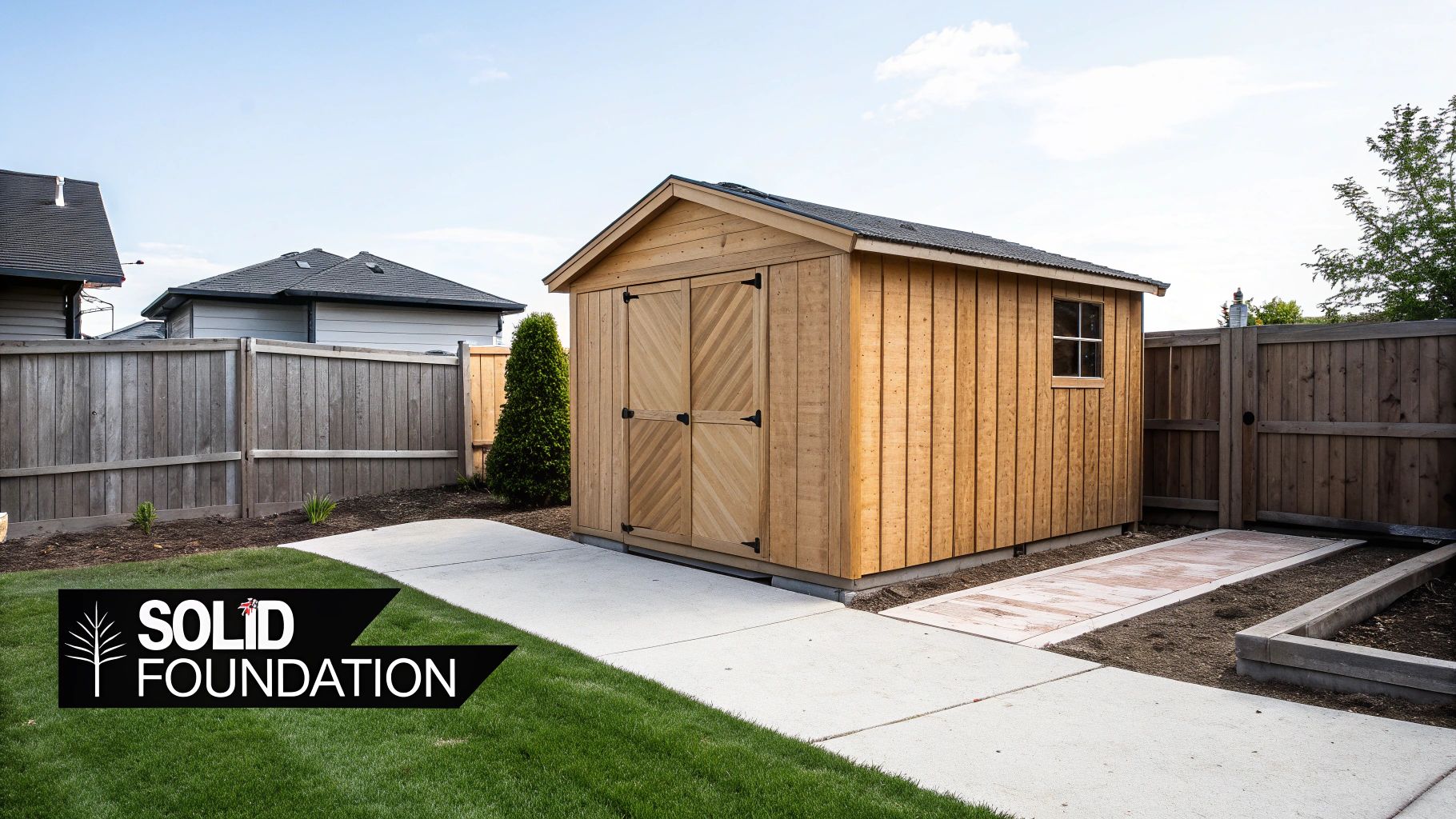
Think about it like building a house. You would never dream of starting without a solid house foundation, right? Your shed is no different. A concrete pad provides a completely flat and solid surface, which is absolutely critical for your shed's doors and windows to work correctly. Without that stable base from a trusted local contractor, the shed's frame can twist and warp as the ground shifts with the seasons, leading to all sorts of frustrating problems like sticking doors and cracked siding.
The Lasting Benefits of a Concrete Base
When you choose a concrete pad from Firm Foundations, you're investing in serious durability for your Pennsylvania or Maryland home. Here’s exactly why it’s the best choice you can make:
- Unmatched Stability: Concrete forms a rigid, unmoving platform. This completely prevents your shed from sinking or tilting, even on the soft or uneven ground we often see in our local area.
- Superior Moisture Protection: The pad elevates your shed off the damp ground. This is key to keeping the wooden base and everything inside dry and free from the rot, mold, and mildew that ground moisture causes.
- Effective Pest Deterrent: A solid slab of concrete is like putting up a "no vacancy" sign for pests. It eliminates easy access for termites, rodents, and other critters that would love to make a home in or under your shed.
- Clean and Usable Interior: The concrete surface itself acts as a built-in floor that’s tough, durable, and easy to sweep clean. It’s the perfect start for a workshop, an art studio, or just a well-organized storage space.
The growing popularity of high-quality sheds is part of a bigger picture. The global market for outdoor storage sheds, where solid foundations are crucial, was valued at USD 6.5 billion in 2021 and is on track to hit USD 10.2 billion by 2030. This boom really shows how much homeowners and shed builders are looking for reliable foundation services. To learn more about what goes into a durable residential foundation concrete, there are some great resources available to explore.
What Goes Into a Great Concrete Shed Pad?
A high-quality concrete pad for your shed is much more than just a simple slab of concrete. You should think of it as a carefully engineered system, designed from the ground up to give you decades of solid, reliable support. Here at Firm Foundations, we want our clients across Pennsylvania and Maryland to really understand what makes a foundation last, so you can feel completely confident in your investment.
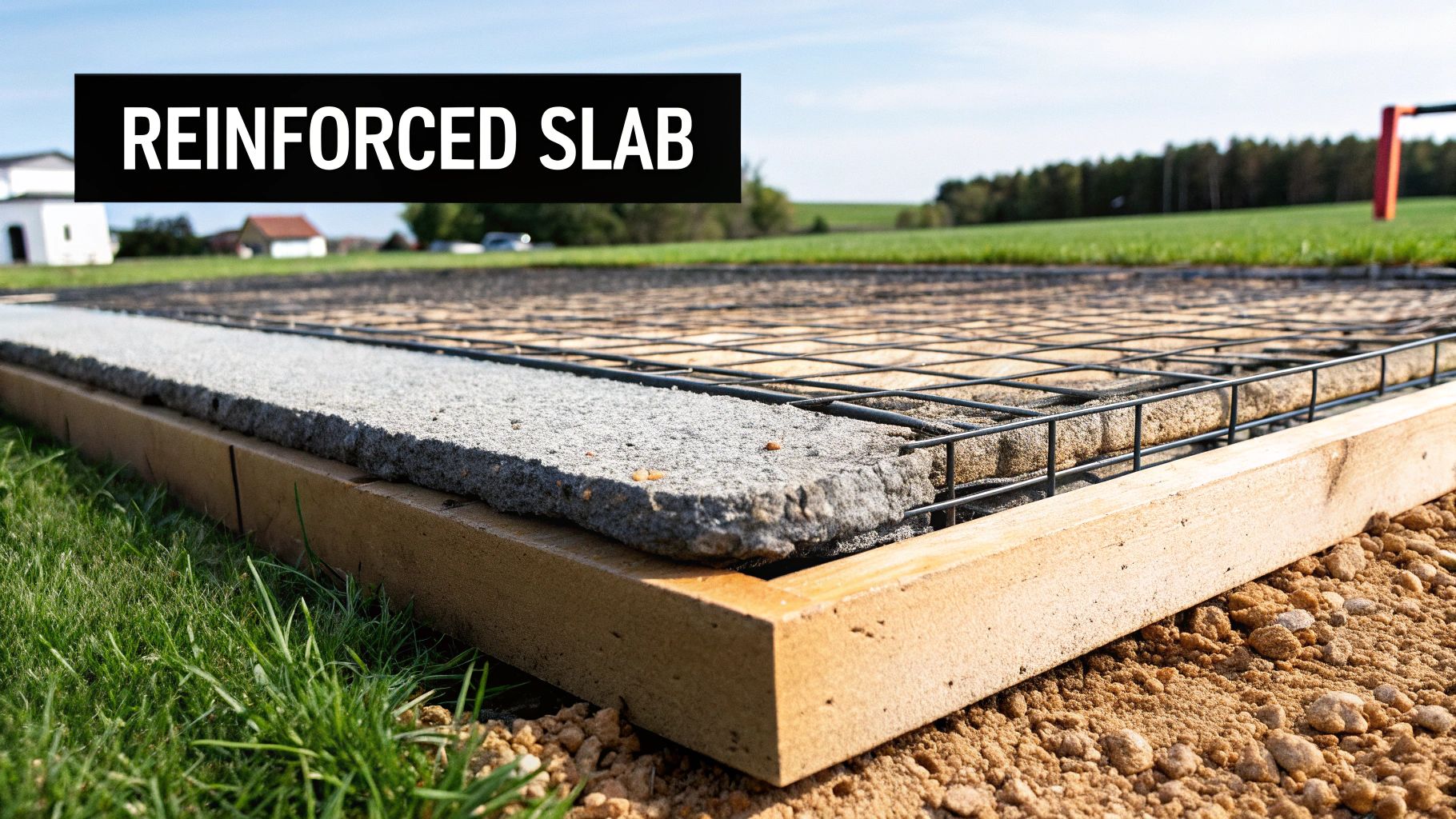
All the different parts of a great concrete pad shed have to work together to create that solid, unmoving base that protects your building. This means getting the thickness just right, adding the proper reinforcement, and preparing a solid sub-base to handle drainage. Nailing these key elements is how we prevent cracks, shifting, and water damage for years to come.
The Right Thickness for Your Shed
Probably the most common question we get from homeowners is, "How thick does my pad need to be?" For the vast majority of storage sheds, a 4-inch thick concrete pad is the go-to standard. It provides more than enough strength to support the building and whatever you plan to store inside. This thickness is perfect for everything from a little 4×8 shed with foundation to a good-sized 10×10 storage shed.
But what if you're planning for something bigger? If you're putting up a barn shed or a garage to store heavy equipment like a tractor or even a car, our team will recommend beefing things up. In those cases, a 6-inch thick slab is a must to handle that extra weight and prevent stress fractures over time. We don’t believe in one-size-fits-all; we tailor every foundation to exactly what it’s going to be used for.
Reinforcement: The Skeleton of Your Concrete Pad
Here's something a lot of people don't know about concrete: it's incredibly strong when you push down on it (compression), but it's not so great when it's being pulled or bent (tension). That's where reinforcement comes in. It acts like a steel skeleton inside the concrete, giving it the muscle it needs to resist cracking from ground movement, freeze-thaw cycles, and heavy loads.
The two main types of reinforcement we use are:
- Wire Mesh: This is a grid of steel wires that’s fantastic for preventing those small surface cracks that can appear as the concrete cures.
- Rebar (Reinforcing Bar): These are thicker steel rods we lay out in a grid pattern. Rebar provides serious structural strength, and it's essential for larger pads or any foundation that will support a heavy load.
A properly reinforced concrete pad can handle the soil expansion and contraction that’s so common in our region, from Pennsylvania all the way to New Jersey. This internal strength is what turns a simple slab into a permanent, bulletproof garage or shed foundation.
This focus on durable, reliable foundations is part of a bigger picture. The global concrete pad market was valued at USD 2.45 billion in 2024 and is projected to hit USD 3.89 billion by 2032, which shows just how much people everywhere are investing in stable infrastructure. You can discover more insights about this growing market and what’s driving the demand.
Why the Gravel Sub-Base Is So Important
Long before the first drop of concrete is poured, our crew is busy with critical site prep, which involves digging out the area and laying down a sub-base. A layer of compacted gravel is one of the most vital—and most often overlooked—parts of a foundation that's built to last. This gravel base does two very important jobs.
First, it creates a perfectly stable, level surface for the concrete forms, which ensures the slab has a consistent thickness from edge to edge. Second, and maybe even more importantly, it acts as a crucial drainage layer. The gravel gives water a place to go, letting it drain away from under the slab instead of pooling, freezing, and causing the ground to heave. Without it, your foundation would be a sitting duck for cracking and shifting, and that’s why we are so meticulous about our excavation and site prep.
Choosing Your Foundation: Concrete Pad vs. Gravel Pad
So you’re ready to put in a new shed. That’s great! But before you pick out the color, you have an important decision to make: what’s it going to sit on? For homeowners here in Pennsylvania, Maryland, Delaware, and New Jersey, it almost always comes down to two choices—a permanent concrete pad or a versatile gravel pad.
Both will give your shed a stable base, but they are worlds apart in terms of benefits, cost, and how they perform over the long haul.
At Firm Foundations, our job isn't just to install something; it's to make sure you get the right foundation for your specific needs. Understanding the real-world differences between a concrete pad shed foundation and a gravel base is the first step. Think of it this way: a concrete slab gives you a solid, permanent floor, while a gravel pad is all about excellent drainage and a lower upfront cost.
This chart breaks down the main pros and cons of each, comparing everything from durability and protection to cost and drainage.
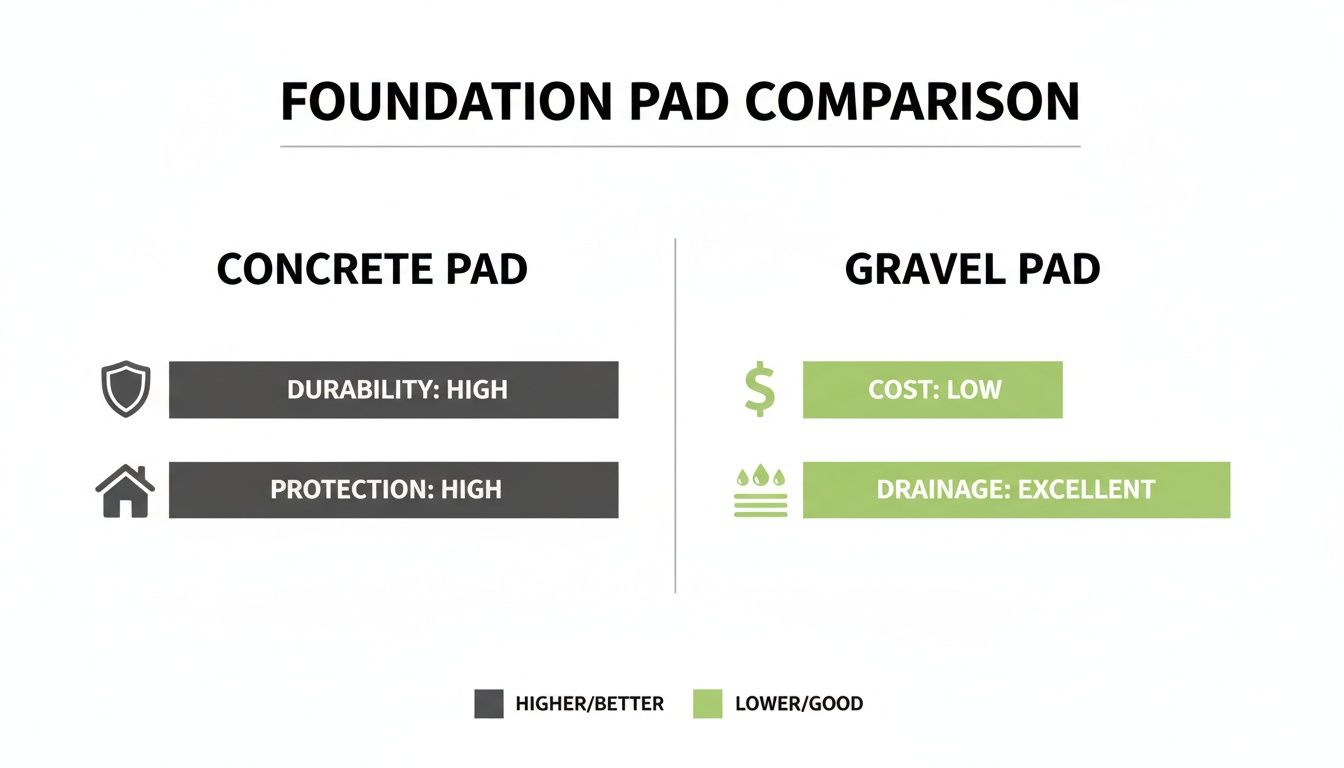
As you can see, the best choice really boils down to balancing long-term performance with your initial budget and the specific conditions of your yard.
To help you decide, we've put together a quick comparison of the two most popular foundation types we install.
Concrete Pad vs Gravel Pad Foundation Comparison
| Feature | Concrete Pad Foundation | Gravel Pad Foundation |
|---|---|---|
| Durability & Longevity | The most durable, permanent option. Lasts for decades. | Very durable but may require occasional maintenance (re-grading). |
| Foundation Floor | The pad itself is a solid, level, built-in floor. | Requires a shed with a built-in floor system. |
| Drainage | Requires proper grading for runoff. | Excellent natural drainage as water filters through the stone. |
| Pest & Weed Control | Creates an impenetrable barrier against pests and weeds. | Requires a weed barrier; pests can still burrow underneath. |
| Initial Cost | Higher upfront investment due to materials and labor. | More budget-friendly and less expensive to install. |
| Installation Time | Longer process due to excavation, forming, pouring, and curing time. | Quicker to install; can often be completed in a single day. |
| Best For | Workshops, garages, home offices, and storing heavy equipment. | Prefab sheds, tool sheds, and properties with drainage issues. |
Ultimately, both are solid choices, but they serve different purposes. The right one for you depends entirely on what you value most.
The Case for a Concrete Pad Foundation
When it comes to pure durability and protection, a concrete pad is the undisputed champion. When our teams pour a reinforced cement foundation for a garage or shed, we’re not just laying down a base; we're creating a permanent part of your property.
Here’s why so many homeowners across our service areas go with concrete:
- Ultimate Longevity: A professionally installed concrete pad is built to last a lifetime. It’ll easily outlive the shed you put on top of it and won't shift, settle, or break down.
- A Clean, Solid Floor: The slab itself acts as a built-in floor that’s perfectly level, a breeze to sweep clean, and blocks moisture from the ground. This makes it perfect for a workshop, home office, or storing anything you want to keep dry and clean.
- Superior Pest Protection: A solid slab of concrete is like Fort Knox for your shed. It creates an impenetrable barrier against rodents, insects, and other critters that would love to make a home underneath it.
- Perfect for Any Use: Whether you need a simple gazebo foundation or a heavy-duty slab for a two-car garage, concrete has the muscle to handle any load you throw at it, no questions asked.
When to Consider a Gravel Pad Foundation
While concrete often gets the spotlight, a gravel shed foundation is a fantastic and highly practical alternative in many situations. In fact, for homeowners searching for "gravel shed foundation contractors near me," it's the go-to choice for most prefab shed deliveries for a reason.
You might want to go with a gravel base if these points hit home:
- Budget-Friendly: A gravel pad is almost always more affordable to install than a concrete slab. If you're keeping a close eye on the project budget, this is a huge plus.
- Exceptional Drainage: This is gravel's superpower. The layers of crushed stone let water drain right through, which is a lifesaver for properties with soggy soil or in areas that get a lot of rain.
- Faster Installation: We can typically get a gravel pad installed much faster than a concrete one, which needs time for forming, pouring, and curing before you can use it.
- Slight Flexibility: A gravel pad is incredibly stable, but it has just enough give to accommodate minor ground shifts over time—something a rigid slab can't do.
The right choice really depends on what you plan to do with your shed, your property's unique quirks, and your goals for the future. If you want to dive even deeper, our guide on the 7 ways to build a shed foundation explores even more options.
Whether you need a simple base for a 10×10 shed or robust garage footings and foundations, our team at Firm Foundations is here to give you straight-up, expert advice. Give us a call for a free, no-obligation quote to get your project started on solid ground.
Our Professional Installation Process from Start to Finish
It’s always exciting to see a project come to life, but we know you need to feel confident in the process long before the work actually starts. Here at Firm Foundations, we’ve honed a clear, step-by-step installation process designed to build your trust and make sure there are absolutely no surprises along the way.
From your first phone call to the final cleanup, we handle every detail with the professionalism you’d expect from a trusted local contractor serving Pennsylvania, Maryland, Delaware, and New Jersey. Our goal is simple: make getting a high-quality concrete pad shed foundation a smooth, stress-free experience. We believe in transparency, so let’s walk through exactly what you can expect when you partner with us to turn an empty patch of your yard into a permanent, reliable base for your new shed.
Step 1: Detailed Site Evaluation and Quote
It all begins with a conversation. When you reach out for a free quote, we take the time to really listen to your needs. What size shed are you getting? What are you planning to use it for? From there, we’ll conduct a thorough site evaluation, checking out the location for any slope, quirks in the soil, and accessibility issues.
This hands-on approach allows us to provide a detailed, completely transparent quote that covers every single aspect of the job. You'll have a crystal-clear understanding of the project scope and cost right from the start.
Step 2: Meticulous Site Preparation and Excavation
Once you give us the green light, our skilled crew gets to work. This is one of the most critical phases of the entire project, where we perform any necessary excavation near me to create a perfectly level area for your new foundation. We carefully strip away the topsoil and organic matter to get down to stable, undisturbed ground.
Next, we lay and compact a gravel sub-base. This layer is crucial—it provides excellent drainage and prevents the ground from shifting or heaving, which is vital for protecting your slab from the freeze-thaw cycles we get here in our region.
We know a foundation is only as good as the ground it’s built on. That’s why we never, ever cut corners on site prep. It’s the key to a concrete pad that will last a lifetime without cracking or settling.
Step 3: Building Forms and Pouring Concrete
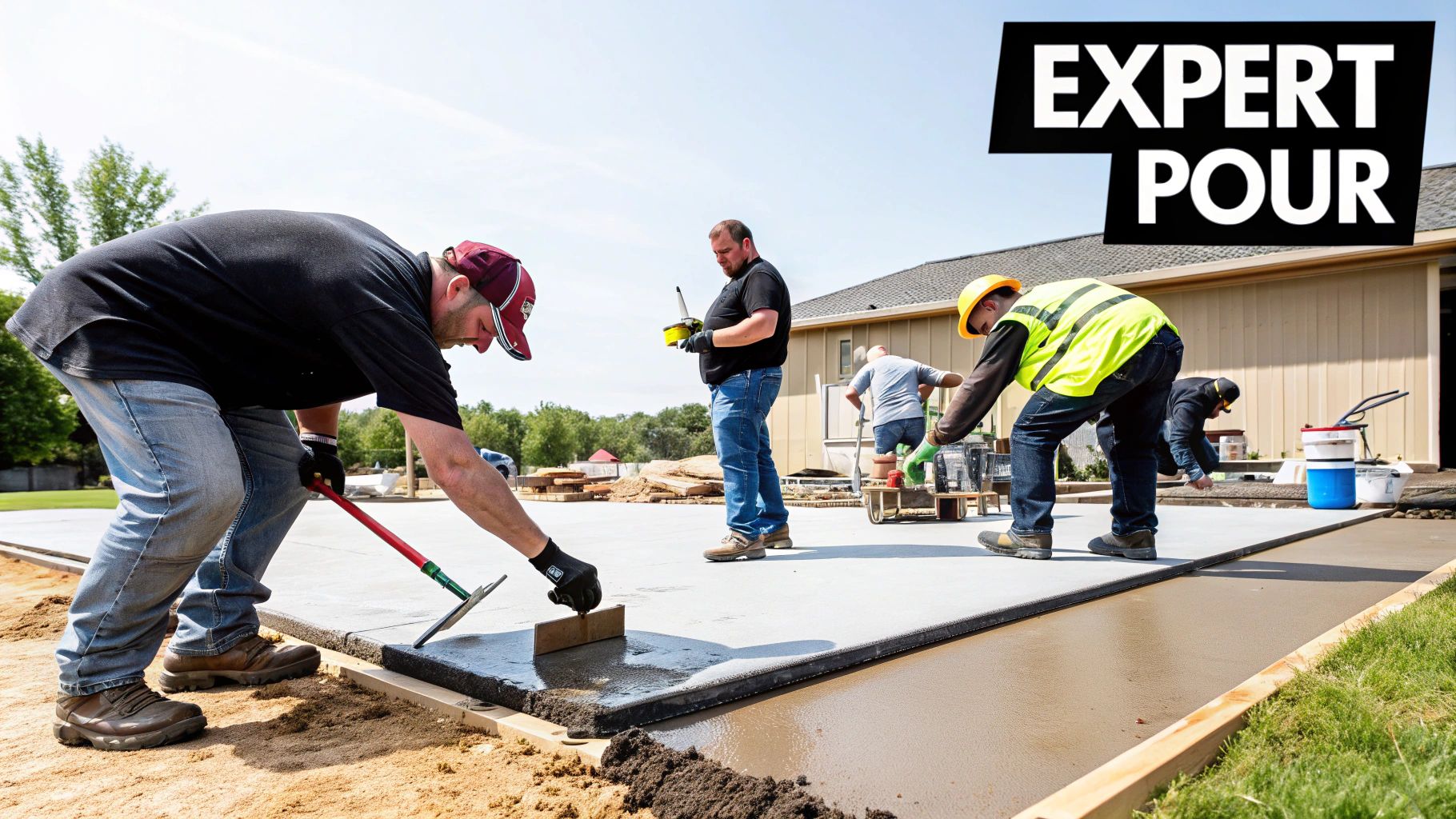
With the site perfectly prepped, we construct sturdy wooden concrete forms. Think of these as a mold that defines the exact shape and dimensions of your new slab, guaranteeing clean, sharp edges. We’ll also install steel reinforcement, like rebar or wire mesh, which gives the concrete the tensile strength it needs to support your structure for years to come.
Then, it’s time for the pour. We use a high-quality concrete mix designed for durability and expertly pour it into the forms. Our team works efficiently to spread and level the concrete, making sure the thickness is consistent across the entire pad. As trusted local concrete contractors, we’ve got this process down to a science, leaving no room for error.
Step 4: Professional Finishing and Curing
The final steps are what give your concrete pad its smooth, professional look and long-term strength. Our finishers expertly trowel the surface, creating a dense, non-porous finish that’s both attractive and incredibly durable. This careful work is what prevents water from seeping in and causing damage over time.
After finishing, the concrete begins to cure. This is a chemical reaction where it hardens and gains its full, impressive strength. We always advise waiting at least 7 days before having your shed delivered. A little bit of patience here allows the slab to cure properly, ensuring your new foundation can easily handle the weight and setting you up for decades of worry-free use.
Getting Down to Brass Tacks: Costs, Permits, and Site Prep
Alright, let's get into the practical side of things. When you're ready to move forward with a concrete pad shed, three big questions always come up: How much is this going to cost? Do I really need a permit? And what do I have to do to get my yard ready?
At Firm Foundations, we’ve answered these questions hundreds of times. Our goal is to make the entire process simple and stress-free for you. We’ll walk you through the costs, help you figure out the local permit rules, and give you a dead-simple checklist for prepping the site. No jargon, no surprises—just clear answers so you can get your project started with confidence.
Breaking Down the Cost of Your Concrete Shed Pad
The final price tag on a concrete pad isn't a one-size-fits-all number; it really depends on the specifics of your property and your project. A great way to get a ballpark idea of the factors involved is by looking at a general guide on how much does landscaping cost, as many of the same principles apply.
The main things that will influence your quote are:
- Slab Size and Thickness: It just makes sense—a bigger, thicker pad for a two-car garage is going to use more concrete and take more work than a standard 4-inch pad for a 10×10 shed.
- Site Accessibility: How easy can we get our equipment to the spot? If we have to navigate tight corners, steep hills, or a long path from the street, that can add to the labor time.
- Excavation Needs: A perfectly flat yard is a rare thing. If your site is sloped or uneven, it's going to require more digging and grading to create that level base, which will be factored into the cost.
We make sure our quotes are detailed and itemized. You’ll see exactly what you’re paying for, with no hidden fees ambushing you later.
Do I Need a Permit? Navigating Local Rules
This is easily one of the most common questions we get from local homeowners, and the honest answer is: it depends on your town. The rules for sheds and foundations can change dramatically from one municipality to the next across PA, MD, DE, and NJ.
A small shed might not need a permit in one town, but drive ten minutes over to a place like Honey Brook Township, PA, and you might find they have very specific requirements. As a general rule, the bigger the shed or the more complex it is (think electricity or plumbing), the more likely you are to need a permit.
The best first step is always a quick call to your local building or zoning office. Taking ten minutes to do this upfront can save you a world of headaches and make sure your project is 100% compliant from day one.
As local contractors who work in this region every day, we can offer pointers to help you navigate this step smoothly.
Getting Your Site Ready for Our Crew
A little bit of prep work goes a long way in helping our team work safely and efficiently. Before we show up, there are just a few simple things you can do to get the area ready for us to build your high-quality base for a storage shed.
Here’s your pre-installation checklist:
- Clear the Area: Move any obstacles out of the way. This includes patio furniture, kids' toys, fallen branches, and any other debris on or around the installation site.
- Mark Utility Lines: This one is crucial. Call 811 a few days before we're scheduled to start. It’s a free service, and they’ll send someone out to mark any underground utility lines so we don't accidentally hit anything.
- Ensure Clear Access: We need a clear path for our crew and equipment to get from the street to your backyard. Please make sure the way is clear!
When you handle this prep, it helps us get right to work on installation day. We see it as a team effort. This collaborative spirit is a big part of the construction industry as a whole. In fact, the market for concrete slabs is projected to hit USD 250 billion by 2033, with the U.S. holding a 25% share of that market. It shows just how vital a solid foundation is for any build. You can learn more about these concrete slab market findings and see why starting with a great base is such a smart investment.
How to Choose the Right Concrete Foundation Contractor
Your new shed is a big investment. The concrete pad it sits on? It's only as good as the crew that pours it. This makes picking the right partner the single most important decision you'll make in the whole process.
When you start searching for shed foundations contractors near me, you need a team that does more than just pour concrete. You need real pros who understand the specific soil and weather we get here in Pennsylvania, Maryland, Delaware, and New Jersey.
Going with an inexperienced or uninsured installer is a gamble you don't want to take. A slab that’s not graded correctly can create a moat around your shed, inviting rot and damage. Concrete that’s mixed improperly can crack and crumble under the pressure of our region's constant freeze-thaw cycles, wrecking the whole structure. These are the kinds of expensive mistakes a true professional knows how to prevent from day one.
Your Checklist for Hiring the Best
As you start talking to potential contractors, make sure you vet them properly. This simple checklist will help you separate the genuine experts from the amateurs, ensuring you get a foundation that's built to last.
- Proper Licensing and Insurance: This is non-negotiable. Any legitimate contractor will have full liability insurance and the right licenses for your state. It’s all about protecting you and your property.
- Proven Local Experience: Don't be afraid to ask for a portfolio of their recent work right here in your area. A seasoned local contractor knows the regional building codes and soil conditions inside and out.
- Positive Customer Reviews: Look for real feedback from other homeowners. A long track record of positive reviews is a huge sign that they're reliable, do quality work, and treat their customers right.
- Transparent, Detailed Quotes: A professional quote won’t be a single number scribbled on a napkin. It should be itemized and clear, breaking down all the costs for materials, labor, and site prep. Vague estimates often hide surprise fees down the road.
At Firm Foundations, we proudly check every one of these boxes. We’ve built our name on being upfront and never compromising on quality, making sure every concrete pad shed we install lives up to our tough standards.
Choosing the right contractor means you get peace of mind. For a deeper dive into why bringing in a pro is so important, check out our guide comparing the risks and rewards of DIY vs. professional foundation installation.
When you’re ready to get your project started on solid ground, trust the local experts at Firm Foundations. Reach out today for your free, no-obligation quote and let us show you what a difference true professionalism can make.
Got Questions About Concrete Shed Pads? We've Got Answers.
Here are the straight-up, no-nonsense answers to the questions we hear most often from folks right here in Pennsylvania, Maryland, Delaware, and New Jersey. We want you to feel confident you're making the right call for your new shed.
How Thick Should My Shed's Concrete Pad Be?
For your average backyard storage shed, say a 10×10, a solid 4-inch thick concrete pad is the go-to standard. It's plenty tough and gives you incredible durability for the structure and all the stuff you'll pack inside.
Now, if you're planning on parking a lawn tractor, a car, or other heavy-duty equipment in there, you'll want to step it up. We strongly recommend going with a 5 or 6-inch pad in those cases. We also beef up these thicker pads with rebar reinforcement for absolute maximum strength. When we chat during your free consultation, we'll figure out the perfect thickness for exactly what you need.
Do I Need a Permit for a Concrete Shed Pad?
This is a classic "it depends" situation. The rules can change quite a bit from one township or county to the next across PA, MD, DE, and NJ. For smaller sheds, you often won't need a permit just for the concrete pad itself.
But if you're putting up a larger structure, or planning to run electricity or plumbing to it, you can pretty much bet you'll need a permit. Our advice? Always check with your local municipal office first. As local concrete contractors with years of experience, we can help point you in the right direction to make sure your project is fully compliant.
The best way to avoid a major headache is with a quick phone call to your local zoning or building department before a shovel ever hits the ground. It's a simple step that ensures your project gets started on the right foot.
How Long Does It Take to Install a Concrete Shed Foundation?
Once we're on-site, the actual work—from digging out the site to pouring and finishing the concrete—usually takes just 1-2 days. Of course, this depends on things like the weather and how easy it is to get to your spot.
After the pad is poured, the concrete needs a little time to work its magic and cure properly. You can typically walk on the new slab within 24-48 hours, but we always tell our clients to wait at least 7 days before the shed gets delivered. Giving it that extra time ensures the concrete is strong enough to handle the full weight of the building without a problem.
What's the Cost of a Concrete Pad for a Shed?
The final price tag is shaped by a few key things: the size and thickness of the pad, how much site prep and digging is needed, and how accessible the location is for our trucks and equipment. Since every single job is different, we provide detailed, itemized quotes so you know exactly what you're paying for—no surprises.
The easiest way to get an accurate price for your base for a storage shed is to reach out for a free, no-obligation estimate. We're committed to offering competitive pricing for top-tier concrete work and delivering real value to homeowners and shed dealers throughout our service area.
Ready to lay the groundwork for a shed that will stand strong for a lifetime? The team at Firm Foundations is here to build a durable, professionally installed concrete pad shed foundation made just for you.