
Signs It’s Time to Replace Your Shed Foundation Instead of Repairing It
Signs It’s Time to Replace Your Shed Foundation Instead of Repairing It
A shed foundation does not have to look perfect to continue doing its job. A small amount of displaced gravel, minor erosion near one edge, or a single low spot may be repairable when the rest of the base remains stable.
The situation changes when the foundation can no longer support the shed evenly or manage water effectively. Repeated settling, widespread deterioration, or an unstable base beneath the foundation may make replacement more practical than another temporary repair.
Knowing the difference can help you avoid spending money on a fix that only hides the underlying problem. Before deciding, look at the shed, the foundation, and the surrounding property as one connected system.
Your Shed Keeps Falling Out of Level
One of the clearest warning signs is a shed that continues to settle after it has already been leveled.
A localized low spot may sometimes be corrected by restoring and compacting part of a gravel pad. However, when different corners keep moving from one season to the next, the problem may be deeper than the visible foundation material.
Soft soil, buried organic material, poorly compacted fill, erosion, or water moving beneath the pad can all cause repeated settlement. Adding a little more gravel or placing another block beneath a corner may improve the shed temporarily, but it does not stabilize the ground underneath it.
A properly constructed shed foundation should distribute the building’s weight, maintain a level surface, and help manage water. When it can no longer perform those basic functions, removing the old base and correcting the subgrade may be the more dependable solution.
The Doors and Windows No Longer Work Properly
Foundation problems often become noticeable inside the shed before the base looks seriously damaged.
A door that rubs, swings open by itself, or will not latch may indicate that the shed frame is twisting. Windows can also become difficult to operate, and gaps may begin appearing around trim or wall connections.
This type of twisting is sometimes called racking. It occurs when different parts of the shed are supported at different elevations. The structure begins adjusting to the uneven base, placing stress on the floor system and framing. Firm Foundations identifies uneven support as a common cause of jammed doors, shifting, and damage to shed components.
One sticking door does not automatically mean the entire foundation must be replaced. The door itself may need adjustment. But when several parts of the building are becoming misaligned and the floor is visibly uneven, the foundation deserves a closer inspection.
Repairs Have Become a Seasonal Routine
A foundation repair should correct a specific problem. It should not become an annual maintenance project.
If you add gravel every spring, reset blocks after every winter, or repeatedly lift the same sinking corner, the existing foundation may not have been built on a suitable base. Seasonal freeze-thaw cycles and wet soil can expose weaknesses that were not apparent when the shed was first installed.
Repeated repairs are especially concerning when each correction lasts for a shorter period. That pattern suggests the soil is continuing to move or water is removing support from beneath the foundation.
At that point, replacement may cost more initially but provide better value than continuing to pay for short-term corrections. A new installation allows the site to be excavated, graded, and prepared before the replacement foundation is built.
Water Continually Collects Around or Beneath the Shed
Drainage is one of the most important parts of a shed foundation. Water that repeatedly sits near the shed can soften the soil, erode supporting material, and expose wooden components to prolonged moisture.
Watch the site during and immediately after heavy rain. Water flowing through the pad, pooling against one side, or emerging beneath the shed points to a larger drainage issue.
A repair may be reasonable when water comes from one identifiable source, such as a downspout aimed toward the shed. Redirecting that water and restoring a small eroded area may solve the problem.
Shed replacement becomes more likely when the entire foundation sits in a natural low point, the surrounding grade directs water toward it from several directions, or erosion has removed support across a large part of the base. Firm Foundations emphasizes that water control, stable subgrade conditions, and proper grading must be addressed for a repair or replacement to last.
Installing fresh foundation material without correcting the drainage pattern will usually lead to the same problem again.
The Perimeter Timbers Are Severely Deteriorated
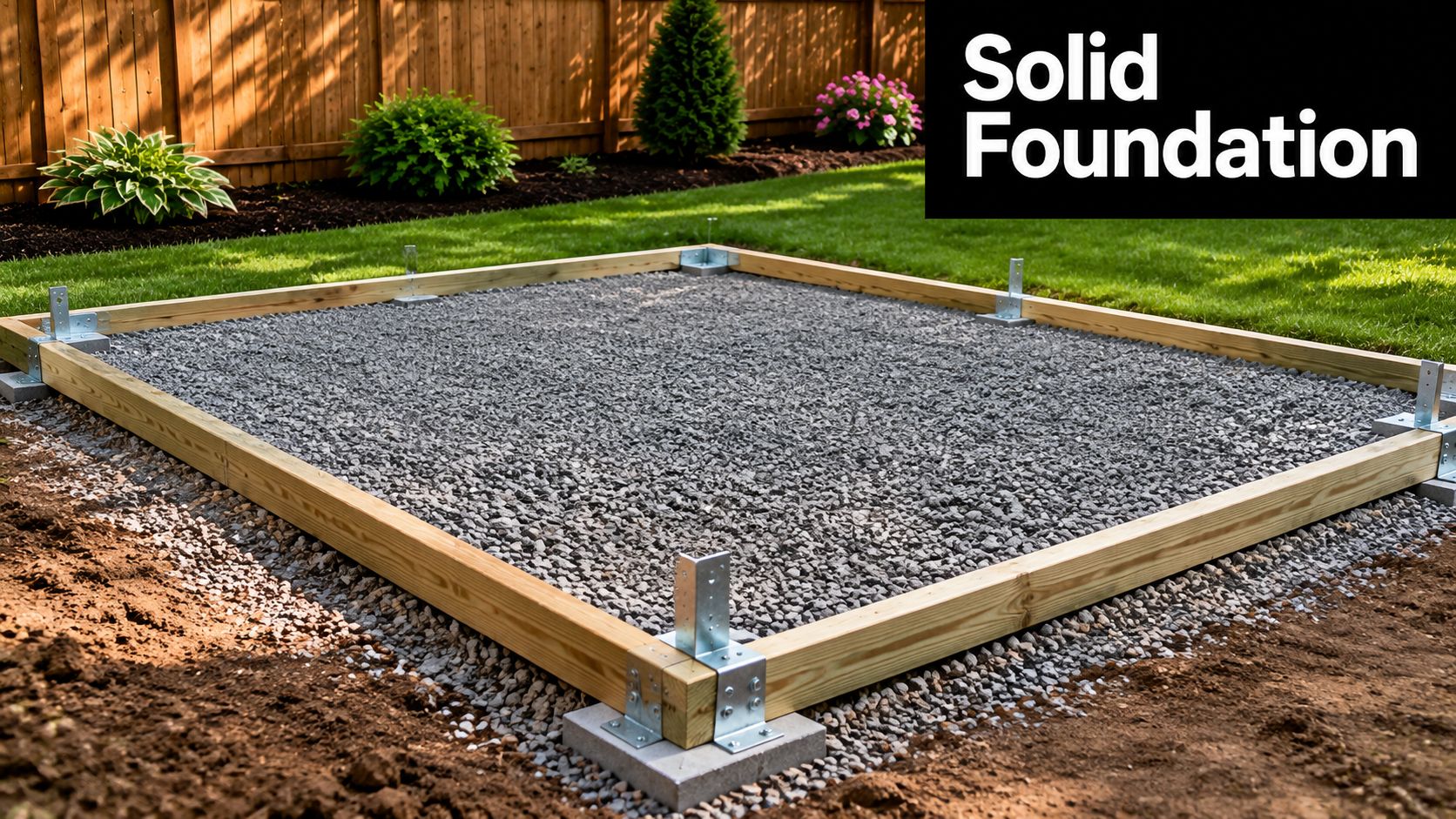
Many professionally installed gravel pads use a timber perimeter to contain the stone and maintain the shape of the foundation.
A limited area of surface wear does not always require complete replacement. However, timbers that are extensively rotted, bowed, separating at the corners, or no longer anchored may be unable to hold the gravel in place.
Once the perimeter begins failing across several sides, stone may spread outward and the edges of the pad can lose their shape. The shed may then receive less support near its runners or outside walls.
Firm Foundations installs gravel pads with 4-by-6 perimeter timbers anchored by rebar, secured corners, and leveled 3/4-inch clean stone. The company also provides a limited warranty for qualifying stone-pad perimeter materials, subject to its maintenance requirements and exclusions.
When evaluating an older pad, consider both the timber condition and the material behind it. Replacing only the visible wood may not be enough if the gravel has become contaminated with soil or the underlying site has settled.
The Gravel Is Mixed With Soil and No Longer Drains
Clean stone performs differently from gravel that has gradually filled with soil, leaves, roots, and organic material.
As fine material works its way into the pad, the base may drain less effectively. Weeds can become established, low areas may remain wet, and the gravel may begin behaving more like compacted soil than a free-draining foundation.
Small areas can sometimes be cleaned out and replenished. Widespread contamination is more difficult to correct because placing new stone over the top does not remove the clogged material below it.
If most of the foundation has become muddy, compressed, or mixed with soil, rebuilding the pad may be the better approach. Replacement allows the old material to be removed and the underlying grade to be inspected before clean stone is installed.
The Shed Rests on Scattered Blocks or Uneven Pavers
A shed supported by individual blocks or pavers may appear stable when it is first installed. Over time, each support can move independently as the soil beneath it freezes, thaws, settles, or washes away.
One block may sink while the next one remains in place. The result is concentrated support beneath only part of the shed rather than consistent support across the structure’s footprint.
Resetting one or two supports may work when the shed is small, the movement is minor, and the ground beneath them can be properly stabilized. Replacement should be considered when many supports have shifted, the shed has already developed structural misalignment, or the same blocks repeatedly sink.
A continuous gravel pad generally provides broader support while also allowing water to drain. Firm Foundations describes professionally prepared gravel as a practical all-around foundation for prefabricated sheds with built-in wooden floors.
A Concrete Foundation Has Significant Movement
Not every crack in a concrete shed pad requires replacement. Small, stable cracks may be cosmetic and could be suitable for sealing or repair.
More serious warning signs include one section of the slab sitting noticeably higher than another, widespread sinking, large open cracks, crumbling edges, or water collecting because the slab has moved out of position.
Surface repairs are unlikely to last when the soil or base beneath the concrete remains unstable. Firm Foundations advises evaluating the subgrade and water conditions before deciding how to repair a cracked or sinking pad. Replacement may be the smarter investment when movement is extensive or the slab no longer supports the structure properly.
The shed may need to be moved or temporarily supported while the old concrete is removed and the site is prepared. The safest approach depends on the building’s size, construction, condition, and accessibility.
The Existing Foundation Is the Wrong Size
A foundation that is too small may leave the shed’s runners or edges inadequately supported. It can also allow roof runoff to land directly beside the base, contributing to erosion and wet soil.
Firm Foundations generally recommends making a gravel pad two feet wider and two feet longer than the shed. This creates a stone border around the building that supports drainage and keeps vegetation and mud away from the walls.
An undersized foundation may sometimes be extended, particularly when the existing material and perimeter remain in good condition. Replacement may be more efficient when the pad is significantly undersized, poorly positioned, or built from materials that cannot be integrated into a new foundation reliably.
The shed’s exact outside dimensions, runner direction, door location, and manufacturer requirements should be confirmed before the replacement base is installed.
The Shed’s Use Has Changed
A foundation that was adequate for an empty garden shed may not be right after the building is converted into a workshop or filled with heavier equipment.
Riding mowers, tool cabinets, machinery, storage racks, and other concentrated loads can place greater demands on the floor and foundation. A shed addition or replacement building may also extend beyond the original pad.
When the structure or its intended use changes substantially, evaluate whether repairing the old foundation will truly meet the new requirements. In some situations, replacing it with a larger gravel pad or a properly designed concrete foundation may provide more appropriate support.
Firm Foundations installs both gravel and concrete foundations, allowing the base to be matched to the structure, site, and intended use.
Inspect the Shed Before Replacing the Foundation
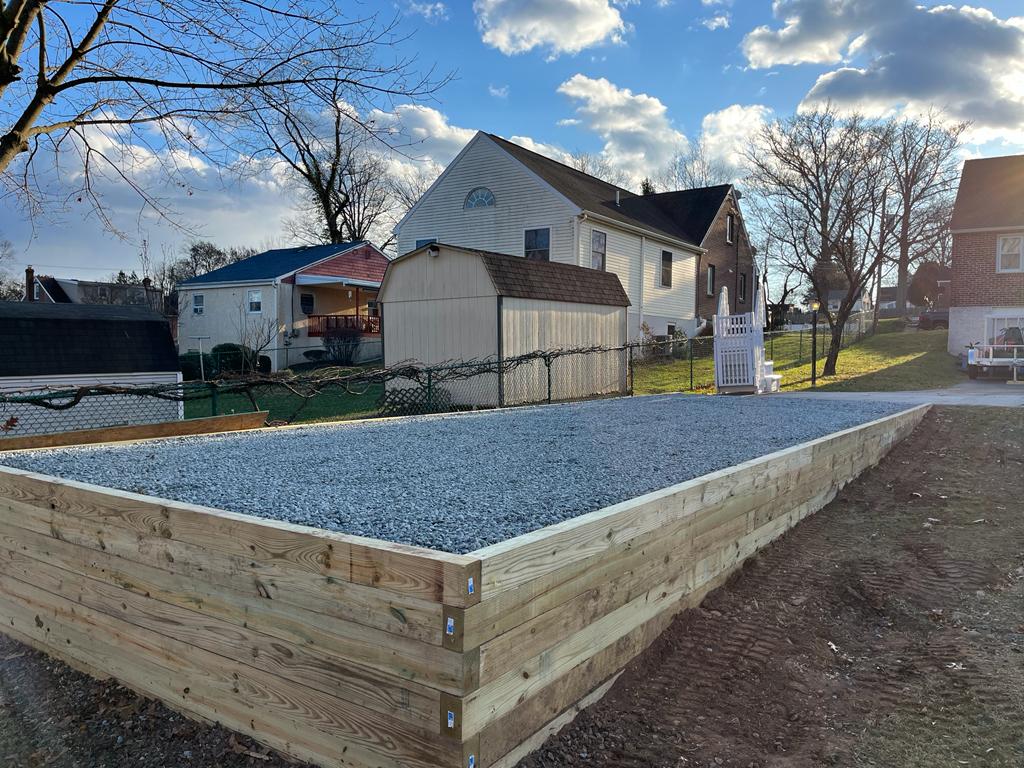
Before investing in a new base, determine whether the shed itself is still worth supporting.
Look for rotten runners, damaged floor joists, soft flooring, severe frame distortion, and deterioration near the lower walls. A new foundation cannot reverse structural damage that has already occurred.
A shed in generally sound condition may return to normal operation once it is placed on a stable, level base. Doors may still require adjustment, and damaged floor components may need repair, but correcting the foundation can prevent the movement from continuing.
When both the shed and foundation are badly deteriorated, replacing them together may be more practical than trying to preserve either one individually.
What Foundation Should Replace the Old One?
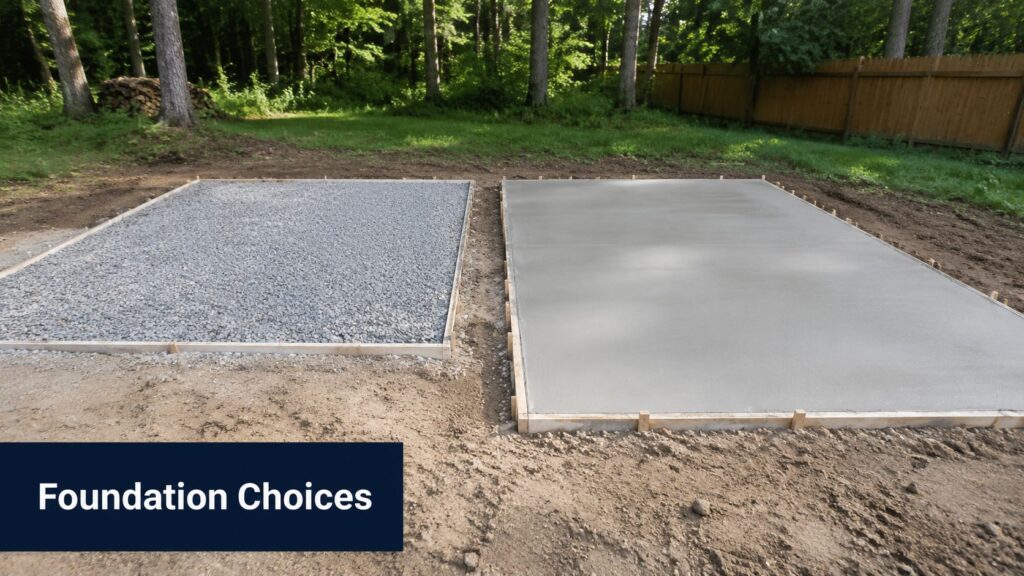
For many prefabricated sheds with built-in wooden floors, a professionally installed gravel pad offers stable support and effective drainage. The installation should include site preparation, an anchored perimeter, clean stone, and accurate leveling rather than loose gravel spread over the existing ground.
A concrete foundation may be appropriate for a heavier, more permanent structure or a building that will use the slab as its finished floor. The shed manufacturer’s instructions should guide the decision because not every structure is designed for direct placement on concrete.
In either case, the replacement project should address why the old foundation failed. That may involve excavation, removing unsuitable material, changing the finished elevation, correcting the surrounding grade, or improving water flow around the site.
Replace the Cause, Not Just the Visible Damage
A damaged shed foundation does not always need to be demolished. Localized settling, minor erosion, or limited material displacement may be repairable when the rest of the pad remains stable.
Replacement becomes the stronger option when movement is widespread, repairs do not last, drainage is fundamentally poor, perimeter materials are failing, or the original foundation was never suitable for the shed.
Firm Foundations provides gravel pads, concrete foundations, repairs, excavation, and site preparation throughout Pennsylvania, Maryland, Delaware, and New Jersey. The company has served property owners since 2011, and customer reviews frequently mention its communication, careful leveling, ability to handle sloped sites, workmanship, and jobsite cleanup.
Before making another temporary correction, have the entire site evaluated. Replacing an unstable foundation with a properly prepared base can help restore the shed’s level, improve drainage, and protect the structure from continued movement.
Firm Foundations LLC
https://maps.app.goo.gl/Uf6XdgtpBTETgNrr7
1535 White School Rd, Honey Brook, PA 19344, United States
(717) 716-7267
https://shedpads.com/