
Concrete Contractors: What to Ask Before Signing Your Next Construction Contract
Concrete Contractors: What to Ask Before Signing Your Next Construction Contract
Hiring a concrete contractor is a significant decision. Once concrete is poured and begins to cure, correcting mistakes can be difficult, disruptive, and expensive. A low estimate may be appealing, but the total price does not tell you whether the contractor has accounted for excavation, drainage, reinforcement, site access, inspections, cleanup, or the specifications required by your building plans.
The construction contract is where those details should become clear. A good contract protects both the property owner and the contractor by defining what will be built, which work is included, how changes will be handled, and when payments are due.
Before signing an agreement with a concrete contractor, ask the following questions and make sure the answers appear in writing.
What Exactly Is Included in the Scope of Work?
The most important part of a concrete construction contract is the scope of work. It should describe the complete project rather than simply stating that the contractor will install a concrete slab or foundation.
Ask whether the quoted work includes:
- Site preparation and excavation
- Removal of topsoil or unsuitable material
- Disposal of excavated soil
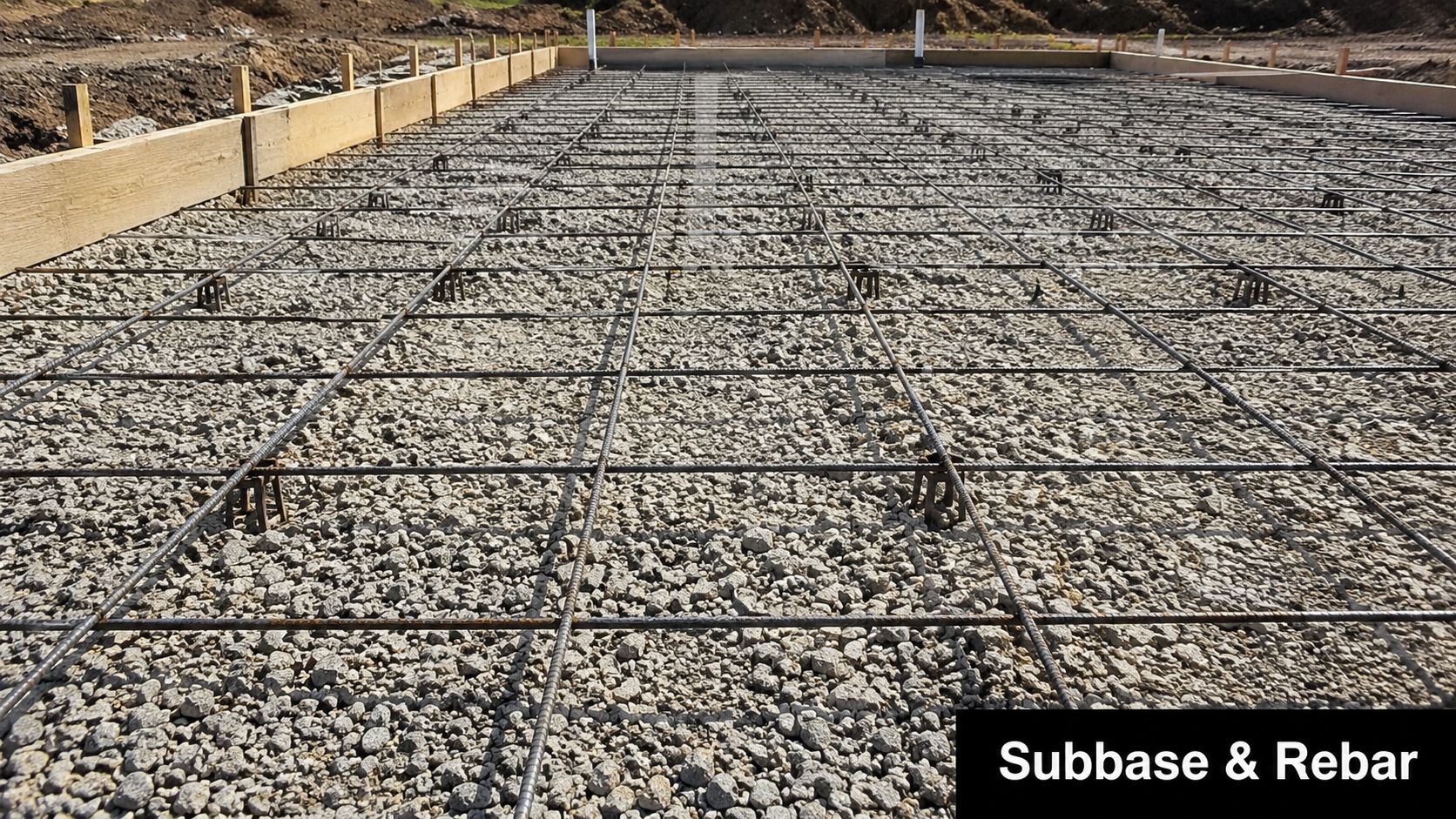
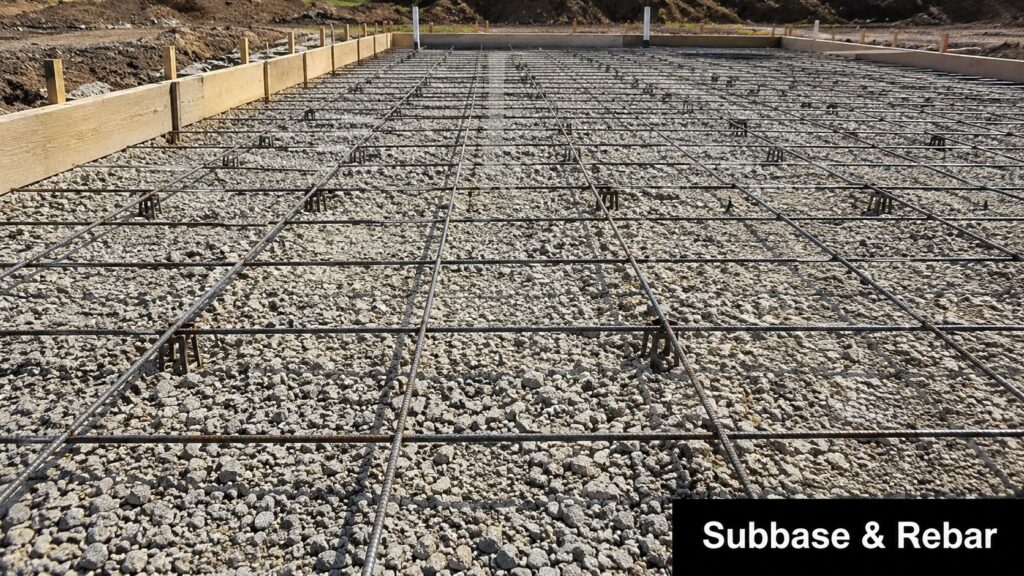
- Installation and compaction of the stone base
- Forms, footings, and foundation walls
- Reinforcement
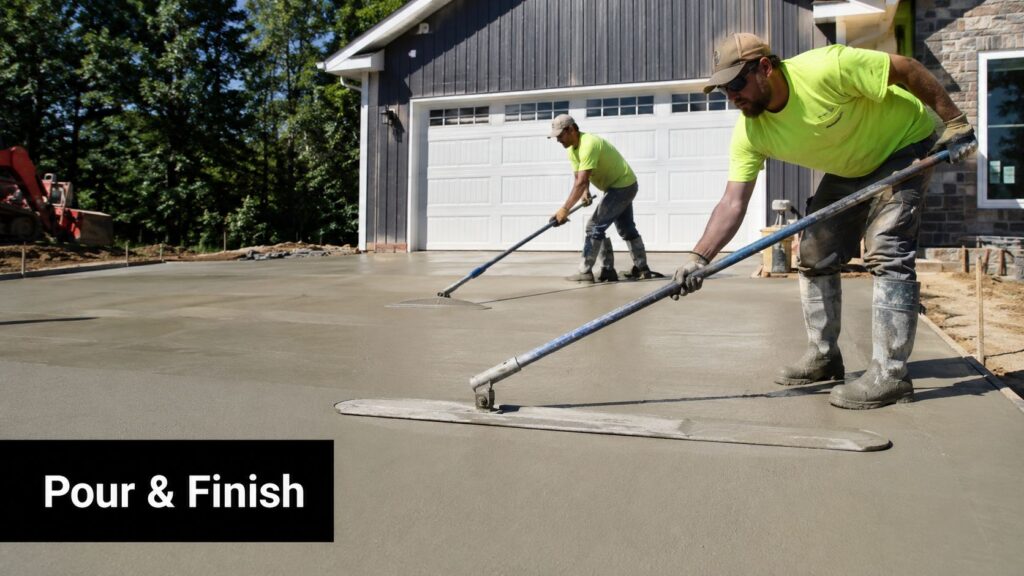
- Concrete placement and finishing
- Anchor bolts or other embedded components
- Final grading and cleanup
Two contractors may submit very different prices because they are not quoting the same scope. One contractor may include excavation, stone, reinforcement, and grading, while another may be pricing only the concrete work.
A lower total is not necessarily a better value when major parts of the project will be billed separately.
Firm Foundations provides concrete foundation and excavation services for projects such as sheds, garages, homes, horse barns, driveways, patios, and other residential or commercial applications. Its quoting process accounts for the structure and site rather than relying only on a generic square-foot price.
Has the Contractor Reviewed the Building Plans?
For a garage, barn, home, or other substantial structure, the foundation should be constructed according to the approved plans.
Provide the contractor with the latest version of the drawings and ask them to confirm that their quote is based on those documents. The plans may specify the foundation dimensions, footing sizes, slab thickness, reinforcement, elevations, anchor locations, and drainage requirements.
Do not assume that everyone involved is working from the same information. A garage manufacturer may provide one set of dimensions, the permit drawings may show another detail, and an earlier estimate may have been based on preliminary plans.
The contract should identify the drawings being used, including the plan date or revision number when possible. This creates a clear reference if questions arise during construction.
Foundation blueprints serve as a shared set of instructions for the property owner, contractor, inspector, and building supplier. Firm Foundations advises homeowners to resolve foundation dimensions and specifications before construction so the quote and finished work are based on the same expectations.
What Site Conditions Could Change the Price?
Concrete contractors cannot always see what is beneath the ground before excavation begins. Soft soil, buried debris, rock, unsuitable fill, old foundations, drainage systems, or underground utilities may affect the work.
Ask the contractor which site conditions are included in the estimate and what would be treated as additional work.
The contract should explain how unexpected conditions will be documented and priced. Ideally, the contractor should discuss the issue with you and receive written approval before completing work that increases the cost.
Site access can also affect pricing. A backyard that cannot be reached by a concrete truck may require additional labor, smaller equipment, or a concrete pump. Narrow gates, fences, septic systems, steep slopes, landscaping, and overhead wires can all influence the installation process.
A detailed estimate should reflect the realities of the property, not just the dimensions of the finished slab.
Who Is Responsible for Permits and Inspections?
Permit requirements vary by municipality and project type. A small concrete pad may have different requirements from a detached garage foundation, structural addition, or commercial project.
Ask whether the contractor or property owner is responsible for obtaining permits. The contract should make this responsibility clear.
You should also determine who will schedule required inspections. Depending on the project, inspections may be needed after excavation, after reinforcement is placed, before the pour, or at other stages.
Never assume that permits are included in the price. Ask whether municipal fees, engineering costs, testing, and inspection-related delays are included or billed separately.
If a contractor tells you that a permit is unnecessary, verify that information directly with the local building department. The property owner may still be responsible when work is completed without required approval.
What Materials and Construction Specifications Will Be Used?
A contract should provide more information than the word “concrete.”
Ask about the concrete strength, slab thickness, footing dimensions, stone-base depth, reinforcement, vapor barriers, insulation, control joints, and finishing method when those details apply to the project.
The appropriate specifications depend on what is being built. A shed pad, garage floor, driveway, patio, and structural foundation do not necessarily require the same design.
Reinforcement should also be clearly defined. Ask whether the project includes reinforcing bar, welded wire reinforcement, fiber reinforcement, or a combination specified by the plans. For structural work, the placement and spacing can be just as important as the material itself.
These decisions should not be left until the concrete truck arrives. They should be established before the contract is signed and confirmed against the approved plans.
How Will Drainage and Finished Elevation Be Handled?
Water management is one of the most important parts of foundation construction.
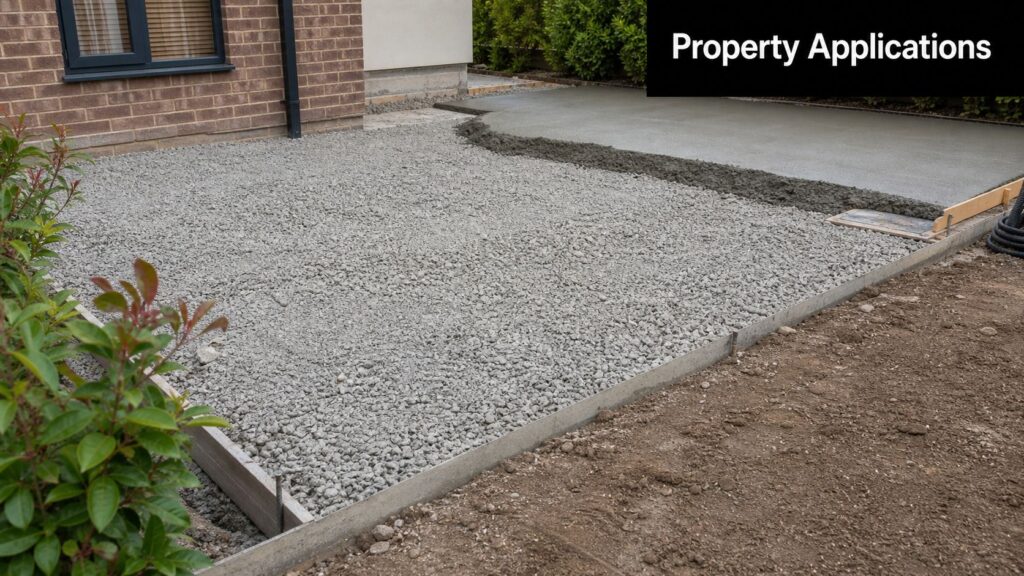
Ask how high the finished slab or foundation will sit compared with the surrounding ground, driveway, walkways, and building entrances. An incorrect elevation can direct water into a garage, create an awkward step, or require expensive grading changes.
The surrounding soil should generally move surface water away from the foundation. Downspouts, roof runoff, slopes, and nearby paved surfaces should also be considered.
The contract should state whether final grading is included and how much of the surrounding area will be restored. If drainage work, swales, pipes, or additional stone are needed, confirm whether they are included in the original price.
Firm Foundations’ garage foundation process may include excavation, reinforcement and footings, concrete foundation placement, and site grading. Treating these steps as one coordinated project helps address the ground beneath the building as well as the visible concrete.
What Is the Payment Schedule?
Be cautious about paying the full project price before work begins.
A reasonable payment schedule may include an initial deposit, progress payments tied to completed stages, and a final payment after the agreed work has been completed. The exact arrangement will depend on the project, material commitments, and local requirements.
Ask what each payment covers and when it becomes due. Payment milestones should be based on specific events rather than vague dates.
For example, a contract may connect payments to scheduling and material procurement, completion of excavation and forms, placement of concrete, and final grading or cleanup.
The contract should also explain which payment methods are accepted and whether any fees apply.
How Are Change Orders Approved?
Changes are common in construction, but they should not be handled through informal conversations alone.
A change order is a written amendment describing work that was not included in the original contract. It should explain the added or removed work, price adjustment, and any effect on the schedule.
Ask the contractor whether written approval is required before additional work begins. This protects you from unexpected charges and protects the contractor from completing unpaid work based on a verbal request.
A clear change-order process is especially important when excavation may uncover unknown site conditions.
What Could Affect the Schedule?
Weather plays a major role in excavation and concrete work. Heavy rain can saturate the site, freezing temperatures may affect placement, and extreme heat can change how quickly concrete must be handled.
Ask for an estimated project window rather than assuming every date is guaranteed. The contract should explain how weather delays, inspection delays, material availability, plan changes, or site-access problems will be addressed.
You should also clarify whether the timeline covers only the pour date or the entire process from excavation through cleanup.
If another company will deliver a garage, shed, gazebo, or other structure, coordinate the schedules carefully. The concrete must have adequate time to cure before it supports the building or heavy loads.
What Cleanup and Property Restoration Are Included?
Construction can disturb more of the property than the exact foundation footprint.
Ask whether the contractor will remove forms, excess concrete, packaging, excavated material, and other construction debris. Determine whether disturbed lawn areas, driveways, or access paths will be repaired.
Concrete trucks and equipment are heavy. Discuss how the crew will access the site and what precautions will be taken around pavement, landscaping, septic systems, and underground utilities.
The contract should clearly state where the contractor’s cleanup responsibility ends. “Jobsite cleanup included” is helpful, but a more specific description is better.
Reviews for Firm Foundations frequently mention communication, punctuality, professional installation, careful leveling, and clean jobsites. These are useful qualities to look for when evaluating any contractor, not just the appearance of the finished concrete.
What Warranty Is Provided?
Ask what the contractor warrants and for how long. A warranty may cover workmanship, but it may exclude cracking caused by soil movement, improper use, drainage changes, severe weather, or work performed by other contractors.
Read the exclusions carefully. Ask how a warranty claim must be submitted and how the contractor determines whether a condition is covered.
Be wary of broad verbal promises that do not appear in the written agreement. The contract should contain the warranty terms or refer to a separate written warranty provided before signing.
It is also helpful to distinguish cosmetic conditions from structural problems. Concrete may develop minor surface imperfections that do not affect performance, while significant settlement or vertical displacement may require a different response.
Are Insurance and Business Information Available?
Before signing, verify the contractor’s legal business name, contact information, and any licensing required in your jurisdiction.
Ask for proof of current insurance and confirm that the coverage is appropriate for the work. Depending on the project, this may include general liability and workers’ compensation coverage.
You can also ask how long the contractor has performed this type of work and request examples of comparable projects. Experience installing decorative patios does not automatically mean a contractor has the same experience with structural garage foundations or complex excavation.
Firm Foundations has served customers since 2011 and provides concrete foundations, gravel pads, and excavation throughout Pennsylvania, Maryland, Delaware, and New Jersey. Its project portfolio includes concrete pads and garage foundations of different sizes and site conditions.
Sign a Contract That Describes the Project You Expect
A dependable concrete contractor should be willing to explain the work in plain language. You should understand what is being built, what materials will be used, who handles permits, how changes are approved, when payments are due, and what happens if unexpected site conditions are discovered.
Do not compare estimates by total price alone. Compare excavation, site preparation, reinforcement, concrete specifications, drainage, grading, cleanup, and warranty terms.
Firm Foundations provides detailed quotes for concrete foundations and related site work within its Pennsylvania, Maryland, Delaware, and New Jersey service region. Before beginning a shed, garage, barn, driveway, or other foundation project, request a quote based on your plans, property conditions, access requirements, and intended use. A clear scope at the beginning is one of the best ways to prevent confusion once construction starts.
Firm Foundations LLC
https://maps.app.goo.gl/Uf6XdgtpBTETgNrr7
1535 White School Rd, Honey Brook, PA 19344, United States
(717) 716-7267
https://shedpads.com/