
What to Know Before Building a 4×8 Shed with a Permanent Foundation
What to Know Before Building a 4×8 Shed with a Permanent Foundation
A 4×8 shed is compact, but that does not make the foundation unimportant. In fact, smaller sheds are often placed on makeshift supports because homeowners assume the building is too light to need much site preparation. Over time, those shortcuts can lead to uneven floors, sticking doors, moisture problems, or a shed that begins leaning to one side.
A permanent foundation gives a small shed stable, level support while helping protect it from changing soil and weather conditions. The right foundation can also make the shed easier to use, maintain, and access throughout the year.
Before installing a 4×8 shed, consider how the building will be used, where it will sit, what the shed manufacturer requires, and whether gravel or concrete is the better foundation for the project.
Decide What “Permanent” Means for Your Shed
A permanent foundation does not always mean a poured concrete slab. For many small storage sheds, a professionally prepared gravel pad can provide dependable long-term support while allowing water to drain beneath and around the structure.
Concrete is a more rigid and permanent option, but it may not be necessary for every 4×8 shed. The best choice depends on the shed’s construction and intended use.
A simple garden shed holding hand tools, planting supplies, and a push mower may perform well on gravel. A shed intended to support heavier equipment or function as a more finished workspace may benefit from concrete.
Before making a decision, check the shed manufacturer’s foundation instructions. Some prefabricated sheds are built with runners designed to sit on a gravel base. Others may be compatible with a concrete pad or require a specific anchoring method.
Confirm the Exact Shed Dimensions
Do not assume every shed sold as a 4×8 model has an exact four-foot-by-eight-foot footprint.
Trim, siding, roof overhangs, runners, ramps, and floor framing may affect the actual dimensions. Ask the shed builder for the outside measurements and the position of the supporting runners before the foundation is installed.
Firm Foundations generally recommends making a gravel foundation two feet longer and two feet wider than the shed. Based on that guideline, a 4×8 shed would typically sit on a 6×10 gravel pad. The additional stone creates a border around the shed that helps with drainage, limits vegetation near the walls, and provides a cleaner finished area.
The foundation installer should also know where the shed door will be positioned. This affects the orientation of the building, the location of a future ramp or step, and the amount of clear space needed in front of the entrance.
Choose the Location Carefully
A small shed can fit into a narrow part of the yard, but fitting physically does not always mean the location is suitable.
Start by watching how water moves across the property during heavy rain. Avoid placing the shed in a low area where runoff collects or where water flows directly through the proposed foundation site.
A damp location can soften the soil below the foundation and create muddy conditions around the shed. Repeated moisture exposure may also affect wooden runners, flooring, siding, or perimeter materials.
Consider everyday convenience as well. A shed used for gardening should be close enough to the garden to be useful. A shed holding trash containers, bicycles, or frequently used tools should have a clear path from the house or driveway.
The location must also be accessible for foundation equipment and shed delivery. Fences, gates, trees, overhead wires, septic systems, steep slopes, and tight turns can all affect the installation process.
Check Zoning and Permit Requirements
A 4×8 shed is only 32 square feet, so it may fall below certain local permit thresholds. However, permit and zoning rules vary between municipalities.
Even when a building permit is not required, setback rules may determine how close the shed can be to a property line, home, road, easement, or septic system. Homeowners may also need approval from a homeowners association.
Contact the local municipality before preparing the site. It is much easier to confirm the location beforehand than to move a shed and permanent foundation later.
Consider a Gravel Foundation
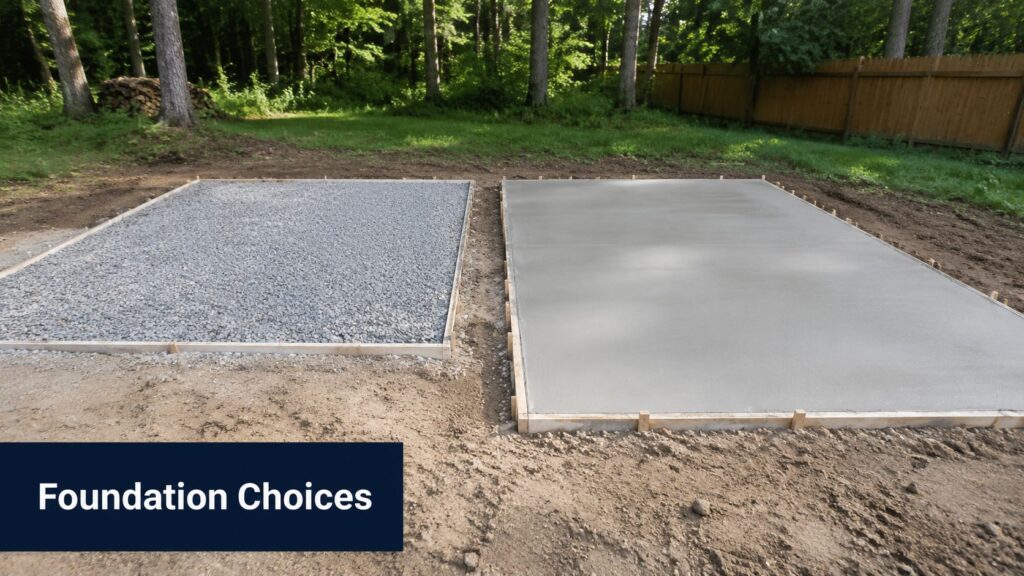
For many 4×8 storage and garden sheds, gravel is a practical permanent foundation option.
A properly installed gravel pad distributes the shed’s weight across a prepared surface instead of concentrating it on a few individual blocks. Clean stone also allows water to drain through the base, reducing the likelihood of moisture remaining directly beneath the building.
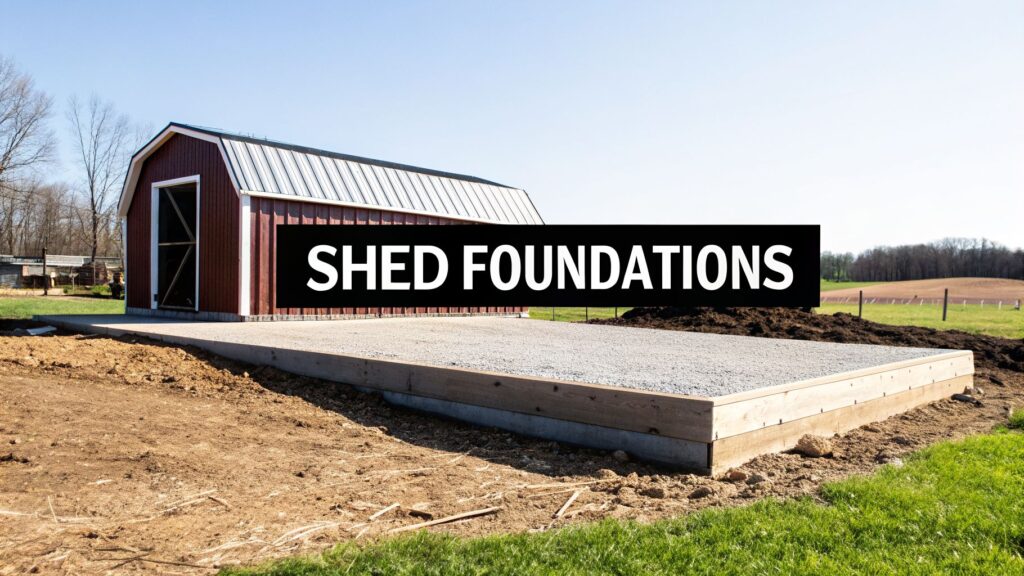
Firm Foundations’ gravel pad process includes basic site grading, placing 4×6 perimeter timbers, anchoring the timbers with two-foot rebar, pinning the corners with galvanized spikes, and filling the prepared area with leveled 3/4-inch clean stone.
This type of foundation is especially well suited to sheds with built-in wooden floors and structural runners. The shed rests on the prepared stone surface while the stone helps manage water around the building.
Gravel is also adaptable to many residential sites. If the proposed location has a moderate slope, the foundation area can be graded and the perimeter built to create a level surface.
The quality of the preparation matters. Placing loose gravel over grass or topsoil does not create the same result as a properly excavated, graded, contained, and leveled pad.
Consider a Concrete Foundation
Concrete may be appropriate when the 4×8 shed will serve a more demanding purpose.
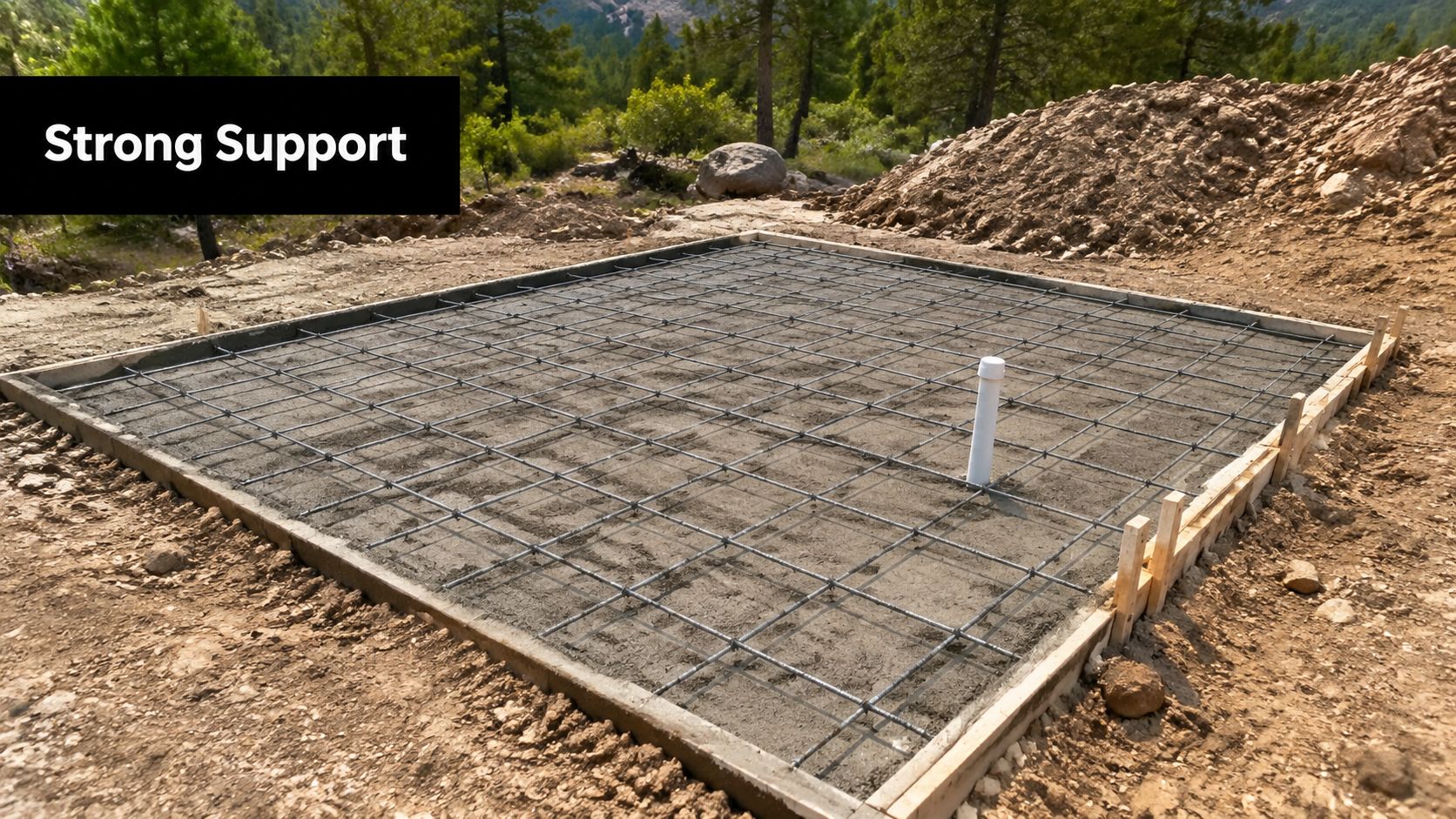
A concrete pad creates a solid, clean surface and may be useful for a small workshop, equipment enclosure, or structure that requires secure anchoring. It can also be considered when the shed has no built-in floor and the slab will become the finished interior surface.
However, concrete should not automatically be selected simply because it sounds more permanent. For a lightweight prefabricated shed designed to sit on runners, a concrete slab may add cost without providing a meaningful advantage over a professionally installed gravel pad.
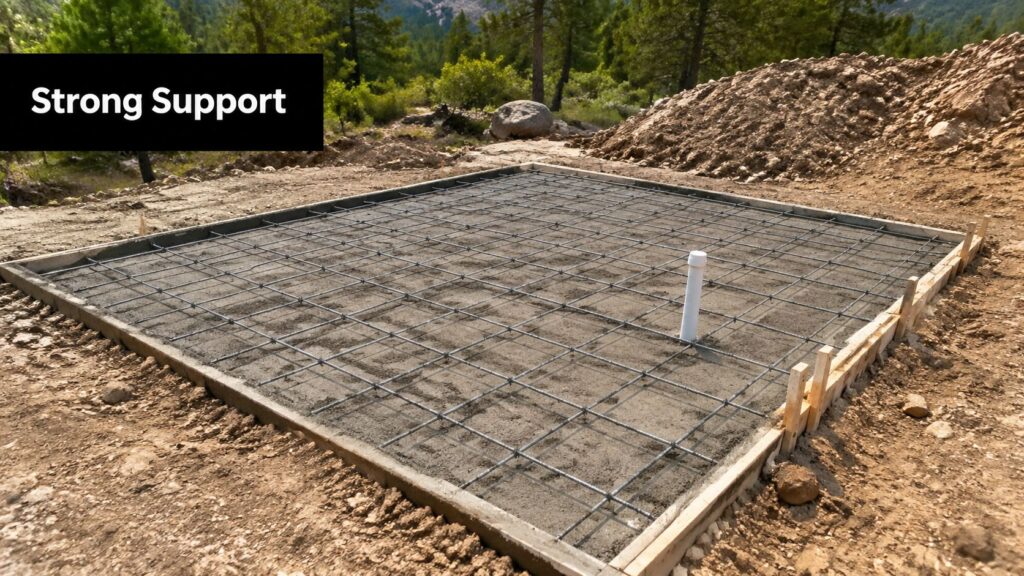
Concrete also requires careful planning before it is poured. The slab size, thickness, reinforcement, elevation, drainage, and anchor locations should match the shed manufacturer’s specifications.
Firm Foundations offers both concrete foundations and gravel pads, allowing the foundation to be matched to the structure and site rather than using the same solution for every shed.
Avoid Isolated Pavers and Loose Blocks
A few pavers or concrete blocks may appear sufficient for a small shed, but each one acts as a separate support point.
If the soil beneath one block settles or washes away, that section of the shed may drop while the others remain in place. This uneven support can place stress on the shed floor and frame.
Firm Foundations notes that sheds can be installed on foundation blocks, but the company does not recommend the approach because it may strain the base and cause damage.
Adding wood scraps, bricks, or extra blocks beneath a low corner may level the shed temporarily, but it does not correct the underlying soil or drainage problem. A continuous prepared foundation is generally more dependable for long-term support.
Plan for the Shed’s Actual Contents
A 4×8 shed does not offer much room for wasted space, so think carefully about what will be stored inside.
A push mower, wheelbarrow, garden tools, bicycles, shelving, and storage bins can add significant weight. Heavy objects should be positioned so the floor remains evenly loaded and the entrance stays accessible.
Door width is especially important. Make sure the opening can accommodate the largest item you plan to store. Account for the space required by a ramp, particularly when rolling a mower or cart into the building.
If you expect to add electrical service, lighting, ventilation, or other features, discuss those plans with the shed builder before installation. Some conduits or penetrations may need to be coordinated with a concrete foundation.
Think About Drainage Beyond the Foundation
A level pad alone cannot protect the shed if the surrounding yard directs water toward it.
The ground around the foundation should encourage runoff to move away from the building. Downspouts should not discharge beside the shed, and soil or mulch should not be piled against the foundation perimeter.
Keep leaves and debris from collecting around the base. These materials can hold moisture and interfere with drainage.
If the site requires more extensive grading or ground preparation, Firm Foundations also provides excavation services in addition to gravel and concrete foundation work.
Schedule the Foundation Before Shed Delivery
The foundation should be completed and ready before the shed arrives.
Provide the foundation contractor with the exact shed dimensions, runner layout, preferred location, door position, manufacturer requirements, and delivery date. Photos of the yard and access route can help identify potential obstacles early.
Firm Foundations serves customers within approximately 90 miles of its Honey Brook, Pennsylvania location, including areas throughout Pennsylvania, Maryland, Delaware, and New Jersey. The company provides gravel pads, concrete foundations, and excavation services across that region.
Reviews on the company’s website frequently mention timely service, communication, workmanship, careful leveling, and leaving the project area clean after installation.
Give a Small Shed a Strong Start
A 4×8 shed may have a modest footprint, but it still needs a stable, level, and well-drained base.
For many small sheds with built-in floors, a professionally installed gravel pad offers an effective combination of drainage, support, and value. Concrete may be the better choice when the shed has heavier demands, needs secure anchoring, or will use the slab as its finished floor.
The key is to match the foundation to the shed instead of choosing based on size alone. Confirm the manufacturer’s requirements, evaluate the site, check local rules, and address drainage before installation begins.
Firm Foundations has provided gravel pads, concrete foundations, and site-preparation services since 2011. Request a free quote before scheduling your 4×8 shed delivery so the foundation can be properly sized and prepared for the structure.
Firm Foundations LLC
https://maps.app.goo.gl/Uf6XdgtpBTETgNrr7
1535 White School Rd, Honey Brook, PA 19344, United States
(717) 716-7267
https://shedpads.com/